info@biomedres.us
+1 (502) 904-2126
One Westbrook Corporate Center, Suite 300, Westchester, IL 60154, USA
Site Map
 ISSN: 2574 -1241
ISSN: 2574 -1241
ISSN: 2574 -1241
Received: October 10, 2025; Published: October 24, 2025
*Corresponding author: Tomáš Hájek, Associazione internazionale mosaicisti contemporanei, Czech Glass Society, Sexological Society of J.E.P. Czech Medical Society, and the Economic and Social Council of the Most Region, Czech Republic
DOI: 10.26717/BJSTR.2025.63.009926
The research and analytical character predominates in this study. On the other hand, the study has its synthetic component, as it builds on the past ten years of the author’s participation in activities of Associazione internazionale mosaicisti contemporanei. On the whole, the study is interdisciplinary, moving between medical sciences, aesthetics of visual arts, urbanism, and architecture, and artistic issues specific to the art of mosaic as a form of visual arts. Starting with research and analysis, the study progresses towards aesthetic normativity; specification of this normativity is at the same time an analytical testimony of the era of the COVID-19 pandemic and an analysis of its unprecedented character. While research and analysis is the focus of the individual parts, the study as a whole is a thought experiment, which has been tested and partially verified at the international level, as the underlying line of thought is based on the author’s presentation entitled Estetica della crisi del coronavirus e l’arte del mosaico (Aesthetics of the Coronavirus Crisis and the Art of Mosaic) at the XVII AIMC congress (Ravenna, Italia, 10 – 11 October 2022).
a) The first chapter of the study introduces the outcomes of research aimed at thought contextualisation of the COVID-19 pandemic and the consequences of the COVID-19 pandemic in visual arts, urbanism, and architecture – adding notes to the research findings.
b) The second chapter summarises the outcomes of research aimed at continuities (as well as discontinuities) between past epidemics and pandemics as regards their impact on visual arts, urbanism, and architecture. Furthermore, this chapter will analyse how continuities (as well as discontinuities) between past epidemics and pandemics can be explained as regards the aesthetic impact on visual arts in the broadest sense, including urbanism, and architecture.
c) The third chapter introduces an experimental attempt at outlining a method of contemplation on how to deal with challenges presented by the ongoing COVID-19 pandemic in the theory of visual arts, urbanism, and architecture. The concept of monumentality in general in visual arts, urbanism, and architecture is researched and analysed; the specificity of monumentality in the art of mosaic within visual arts, urbanism, and architecture is researched and analysed. The activities of AIMC activities are analysed in the sense of aesthetic reaction of art of mosaic creators primarily on the acute onset of the COVID-19 pandemic and are compared with the standpoint of the author of this study.
Based on research of scientific texts, it is firstly important to point out that the aesthetics of the COVID-19 pandemic in its acute onset in the sense of the COVID-19 pandemic as a stimulus for artistic creation has not received much attention. The outcomes of research can be summarised in two parts. The first group of outcomes focus on the topic through thought contextualisation of the COVID-19 pandemic, while the second group focuses specifically on aesthetic consequences of the COVID-19 pandemic in visual arts, urbanism, and architecture.
To quote the work by Maha Tahir Eesa entitled “The Pandemic Sublime: Toward an Aesthetization of Corona Crisis”: “Thus, pandemic sublime is summarized in four sources: the first source of sublimity comes from the accounts of patients or survivals that engage us in an aesthetic act of horror and pleasure in a kind of destructive sublime. The second source of sublimity is from non-infected people who experience the horror of the disease but pleased for being healthy and not infected. The third is to be seen through the lenses of chemists or bio-artists, who would give us digital images of the bacteria and the functions and forms of their molecules. The forth source is aesthetics of separations in lockdowns [1].” The author characterises lockdown as absence or even elimination of traditional social ties that allow for continuity in civilisation. This elimination – as she indicates briefly – may lead to the discovery of new sensations of the body, connection – and even understanding the infection. In her briefly outlined concept, lockdown moves to the closest proximity of the subject, even entering the subject to function as the principle of questioning, thus aesthetically restructuring previously unnoticed automatism of everyday life. In addition, lockdown poses the question how to live everyday life in utter social isolation, while life does not unfold in the midst of ruins (of war). On the contrary, the signs of the external urbanistic and architectural context remain incredibly and shockingly undisturbed.
The subject thus faces curious, unprecedented, disjointed feeling stemming from the anxiety caused by loneliness in contrast with the undisturbed external scenery. This brings into one’s life fundamental lack of understanding of this situation. What’s more, the situation cannot be understood from the current experience of the humanity as a whole and this is crucial. Therefore, the situation is entirely unpredictable even for future. It is essential to reiterate that the anxiety caused by loneliness in lockdown may escalate because it cannot be understood based on historical experience. This is the first side of lockdown. The second side shows lockdown as an external, rather than internal scenery. Lockdown creates massive urban landscapes, materially undisturbed, but lacking any human presence. The deserted urban landscapes reach the sky and present a metaphor for the heaven. This was probably the first time in history that the humanity experienced such massive contradiction between the undisturbed outer urban context and architectural mass and utter desertedness. This contradiction was clearly visible in all of its detail, while resting calmly at the same time. A deserted city, where residents remained, although they cannot be seen, where people appear to have been consumed by the city, perhaps creates an entirely new chapter in the topic of ideal landscapes, ideal cities and perhaps even monumentality as such.
The curious relationship between the monumentality of the global lockdown and the topic of ideal city, as presented in the theory of urbanism, and architecture, is a topic reaching beyond the scope of this study and should be studied subsequently. This study will proceed with another text that should be mentioned – the text entitled “Public space or safe space – remarks during the COVID-19 pandemic” by the author Artur Jasińsky [2]. From the perspective of urbanism, and architecture, specifically from their social aspect, the author clearly sees the consequences of the COVID-19 pandemic in the increased value or even preciousness of the traditional human privacy as the source of autonomous human freedom, because public space and especially public urban space are subject to strict regulation, which culminates in their shutdown in certain cases, during the COVID-19 pandemic. An island as an enclosed environment, as the source of private space becomes invaluable. The immediate negative impact of the COVID-19 pandemic is felt by those who are not wealthy or independent. I.e. the factor of privacy as a luxury, including the space of a private car, necessarily changes the principles of planning future urban construction; the COVID-19 pandemic alters the parameters, for example, of public transport in cities significantly and this is guaranteed to modify the approach to urban planning in the post-pandemic era up to the level of agglomerations. However, it is essential to point out Jasińsky’s remark that the COVID-19 pandemic leads to strong acceleration in the overall strengthening of control mainly over public municipal space and more.
For example, digitalisation of social life has been increasing, for example, owing to camera monitoring systems over the last decade and this trend is augmented by the COVID-19 pandemic, as the use of digital technologies in communication between quarantined individuals allows this control to reach into purely private space. Similarly to Jasiński, D.J. Loew in his study “The Aesthetics of COVID-19 within the Pandemic of the Corona Crisis. From Loss and Grief to Silence and Simplicity – a Philosophical and Pastoral Approach” combines two approaches in his contemplation on the COVID-19 pandemic: on the one hand, the COVID-19 pandemic is unprecedented, on the other hand it is merely a single chapter in the internal dynamics of societal development [3]. The COVID-19 pandemic has shifted the humanity into the midst of the digital revolution after the period of the past decades, when the humanity was on the way from the technological revolution to the digital revolution. The digital revolution is characterised by the following traits: differences between the physical, biological and digital are fading. Artificial intelligence, the so-called Internet of Things and Big Data are moving the world towards a situation where distinguishing boundaries of the digital world is extremely difficult.
Big Data is a digital tsunami, moving digital simulation beyond all imaginable restrictive borderlines. Under the rule of the cyberspace and virtual reality, causal logic, which lead the humanity to the triumphs of the first industrial revolutions, disappears; the cyberspace and virtual reality change the man, including the human physiology, which is very important and dangerous. The decline of causal logic from the perspective of the humanity’s leading principle necessarily leads to the formation of the rule of the unpredictable. As this study focuses on the impact of the COVID-19 pandemic on visual arts, urbanism, and architecture, only the contemplation on the aesthetic dimension of the COVID-19 pandemic is selected from Loew’s multilayered deliberation. Unlike the previously mentioned texts, Loew does not pay attention to visual arts, urbanism, and architecture. The author of this study understands Loew’s work as a study applying the philosophic and theological approach that sees aesthetics as an expression of hope and thus the COVID-19 pandemic may not be the final stage of our history. Aesthetic issues presented as the topmost category in this context even reach further than ethical questioning. The so-called Emotional Epidemiology is also a highly important term in thought contextualisation of the COVID-19 pandemic.
This term was introduced in a highly stimulating and comprehensive study by the authors Jörg Vögele, Luisa Ritterhaus and Katharina Schuler: Epidemics and Pandemics – the Historical Perspective. Introduction [4]. Epidemics of the last decades have had a special character involving the discrepancy between indicators of the current epidemiological situation and the global emotional stress stemming from the fear that the infectious agent will spread rapidly from the original source in the global compression. The paper referred to above is highly cautious and very brief in the description of this phenomenon. However, it is true that the possibility of emotional panic independently of any verified epidemiological data needs to be taken seriously in a global information society. This naturally leads us to the question whether panic alone can be used in a global information society purposefully and towards a specified goal; for example, the SARS epidemic in 2002 is dubious in this regard. The emotional epidemic seems to be rising from nowhere, from the core of the information society, from something which is considered information with characterisation of the Internet. The emotional epidemic is a shell oppressing from all sides the requirement for verifiable exactness of the modern natural sciences, including medical sciences. Thought contextualisation of the COVID-19 pandemic includes approaches building on the traditional leftist perception of reality.
Text Quarantine Aesthetics – Reflections on Arts, Visualities and Body Experience in the era of COVID-19 suggests that comparison of epidemics of infectious diseases that nearly eradicated native Americans with COVID-19 pandemic is possible [5].
5. Outcomes of Research with Relevant Notes: On the Consequences of the COVID-19 Pandemic for Visual Arts, Urbanism, and Architecture
Babitha Justin introduces the proposition that the COVID-19 pandemic with all of its specific manifestations through anti-epidemic measures including physical distance, isolation, quarantine, which all culminated in lockdowns, did not eliminate live art, revolutionising it instead [6]. While calm spread in the world of global lockdown, art moved into environments never before imagined; the world wide web, Zoom... This transfer of gallery, custodian and other activities to the cyberspace was far from hesitant – it was a rush. It is also important to note that even formal institutions were involved in this transfer of artistic activities to the virtual space and their actions were free of the bureaucratic delay one would have expected from renowned institutions operating in arts for many decades. All things bureaucratic seemed to have been forgotten and institutions adapted very quickly and even re-institutionalised in the virtual space. This re-institutionalisation of institutions, such as galleries or museums in the virtual space was dynamic; it was a rapid qualitative change, as cultural institutions were not prepared for this option at all and up to the COVID-19 pandemic limited their presence in the virtual space mainly to secondary information on events taking place traditionally on site [7].
This re-institutionalisation of art institutions in the virtual space – as the author of this study point out – is the revolutionary aspect of the transfer of art into the cyberspace, as a radical change in institutions tends to be considered a revolution. Virtual museums opened and many universities promptly started to organise online art courses at reduced prices. New forms of genres appeared with the form also affecting the content – podcast, art blog, live streaming. However, since the form – and this is important to reiterate – in turn affects the content and as the cyberspace is de facto legitimised by the presence of institutions, creating original artworks is no longer the purpose of live art. Instead, the effort is aimed at recycling and re-adapting past artworks. This study also considers a short text published online on 18 May 2020 under the title “Coronavirus murals: inside the world of pandemic – inspired street art” to be important. Street art and graffiti art represent the only major exception from the paralysis engulfing live art as it moves from reality to the online world. The beginning of the COVID-19 pandemic is marked by an explosive increase in the significance of these two forms of art, as if it were a period of their exclusive authenticity. Street art is a side product of mainstream media, as stories and interpretations presented in this media are reflected and exposed in street art. There is only one correction: anything contrary to the collective notion of boundaries is promptly covered with new artwork. Street art therefore defines what is and what is not socially and culturally acceptable.
However, street art and graffiti art is not exhausted by this standard- making component; they leave evident artistic trail and thus turn the global lockdown into a global carnival [8]. The author of this study would like to point out the following in this context: A global carnival has never had and will never have anything in common with seriously meant rebellion or revolution and their aesthetics. It is a mere aesthetic relief valve with a touch of cultural panic. Indeed, it may present authentically flowing aesthetics arising from violation of minor prohibitive rules, but the highest unwritten rules of the global lockdown are observed all the more; in particular the opinions of the mainstream media are respected. It is rather striking how much the global street art carnival divides or even screens the world’s political representation. Its division of the world is highly political, and its seemingly apolitical character conceals sharp and aggressive politization – and political schematism. The schematically politicising street art carnival in empty streets during the global lockdown is the primary and the core influence of the COVID-19 pandemic in visual arts in the non-virtual space; however, it quickly spreads from the strangely empty streets into the cyberspace, which massively comes alive in the global lockdown, as it is had been waiting for this opportunity.
A minor, one-day sketch in street art is granted the access to eternity in the cyberspace. It is street art and unavoidably subsequent Instagram Art that gives rise to the iconic artwork from the first phase of the COVID-19 pandemic, as the anonymous street artist Banksy creates a prototype of the hero of the COVID-19 pandemic, i.e. a nurse with a face mask, in his picture entitled Game Changer; by creating a certain cultural emblem, the artist overcomes the chaos in identification of the COVID-19 pandemic. Street art and graffiti art during the COVID-19 pandemic are the only forms of artistic expression remaining in the original physician urban and architectural space of cities. While they usurp this space completely, their subsequent spread into the cyberspace is the key domain of street graffiti art. Another significant genre in visual science captured in the research of the impact of the COVID-19 pandemic on visual arts, urbanism, and architecture is artistically autonomous and essentially artistic yet underestimated. Originally, it appeared on traditional carriers of visual arts information and naturally moves into the cyberspace during the COVID-19 pandemic. Its existence in the cyberspace is not crucial for the fact that this genre fittingly represented the visual arts side of the COVID-19 pandemic, as everything was present in the cyberspace during this time. It was comics, also as an instrument used in graphic medicine.
However, visualisation of the SARS-CoV-2 virus as an unprecedented artistic expression of the COVID-19 pandemic has to be discussed first, immediately after street art. The study “Visual Representations of Science in a Pandemic: COVID-19 in Images” by the authors Ana Delicado and Jussara Rowland describes visualisation of the virus as a key visual aspect of the COVID-19 pandemic based on an analysis of the classification of specific depictions on the internet during the COVID-19 pandemic. It is necessary to point out that while the virus as such was made visible through electron microscopy in the 1930s, colours are unknown and impossible in the world of electron microscopy. The virus is a biological unit conceptually assumed and contemplated – and verified by a series of operations instead of being empirically seen, touched and photographed. However, the virus was presented in colours during the COVID-19 pandemic, specifically in deep tones of red, blue and green, in a schematised shape of a sphere with multiple suction cups on stems. Naturally, the artistic presentation of a virus visualisation did not emerge during the COVID-19 pandemic. Robert Koch presented coloured lithography of Bacillus Anthracis as an instrument for documenting the presence of an infectious agent; certain aestheticisation of a virus is also apparent during the HIV/AIDS pandemic [9].
The topic of virus visualisation is described excellently in a text by the art theorist Veronika Lukášová, although it is a short text published immediately after the start of the COVID-19 pandemic. To quote the key statements: “Why does the coronavirus look different in each image? This discrepancy is a current expression of the longterm problem associated with presentation of science that cannot be seen through a human eye. We are looking for a new way of living and this forces us to improvise. We interconnect the visible changes around us – empty streets, face masks – with the invisible threat of the SARS-CoV-2 virus. We have an abstract idea of the virus from the media, which present the image of the virus to us in ambiguous incarnations… The coloured visualisation of the coronavirus as a regular sphere seen, for example, on the iDnes.cz portal in red and yellow or in pink and turquoise on BBC is an example of scientific depiction using the convention of art to achieve greater expressivity [10].” Graphic medicine is a humanistic field aiming to capture the experience of the illness in comics [11]. Comics were traditionally seen as a form of sub-literary genre mainly created for the young, but its prestige has grown significantly over the last several decades.
This genre has the inner aesthetic potential for absorbing the era, process it artistically and present an intensified picture of the era, which mainly expresses motion in relation to certain masked tendency while using comic exaggeration, dark humour, provocation and cultural emblems, such as a superhero, and thus seeks the point of the era in the complex terrain and sees things hardly visible. The COVID-19 pandemic is stagnant on the outside, yet a certain dramatic change is happening inside – as if turbulence was rising towards the surface; at the same time it demonstrates specific external markers at large quantities, such as face masks, isolation, protective clothing of medical staff. Therefore, comics draw on the tension structuring into a story and apparent discontinuity including an entire range of specific symbolic visual arts resources – and they are bound to enjoy their historic golden era. Comics prepared for the current times through the HIV/AIDS pandemic, which was also associated with flourishing comics. Comics are the main means of expression for the visual culture of contagion – and this is also true to a great extent about the COVID-19 pandemic: “Comics of the COVID-19 pandemic are valuable contributions to the outbreak narrative and to the evolving visual culture of contagion. They can help us collectively process and understand this moment [12].”
Owing to their illustrative nature, comics were put to good use in graphic medicine in communication with people with limited cognitive capacity [13]. What is better than comics or consequently graphic medicine for making the transition to telemedicine more bearable for patients and medical staff alike? In this context, it is useful to point out the role of arts, including visual arts, as an instrument of psychological or psychotherapeutic support in a protracted difficult situation. This role eradicates the boundary between professional art and art as a way of surviving. Naturally, professional art also suddenly experiences an existential anxiety that may have been unknown to artists to this point. Professional art also becomes a therapeutic instrument. The following quote summarizes the situation quite clearly: “At this time of COVID-19 artmaking has become widespread and accessible to many artists and non-artists alike. Artists have portrayed their own experiences of the pandemic and shared this widely. COVID-19 has formed the content of street art as well as seen a proliferation of online exhibitions. It is, however, not only artists that have turned to art, but non-professional artists have spontaneously turned to the arts to express and process their experiences during this time too. In addition, art therapists, community workers, humanitarian aid workers have utilized the arts in directed activities with a focus on street release, health and well-being [14].”
To conclude this chapter, the key characteristics of visual arts, urbanism, and architecture during the COVID-19 pandemic, as observed in visual art created by artists during the COVID-19 pandemic, should be summarised [15].
a) Visual arts, urbanism, and architecture discovered – rather rapidly – the cyberspace as an environment where they mainly recycled and re-adapted past artworks.
b) The dividing line between professional and non-professional visual arts was blurred, and even professional visual arts became a psychotherapeutic instrument.
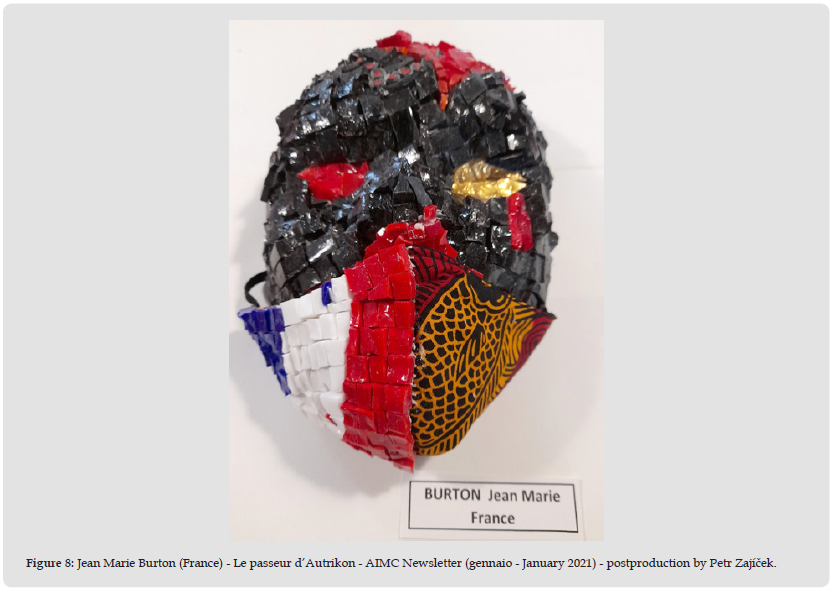
c) Despite this, the COVID-19 pandemic as a dramatic historical event had the potential for inspiring arts as such. For example, the conducted research pointed out the unique artistic project entitled Wearing Mask (Gillian Wearing, 2021), or the interesting ¨play on words expressed in an image under the title “Coronavirus (Coronavirus Has Infected this Masterpiece)” (Kamille Lukrecija Lukosiute, 2020) [16] (Figures 1-8).
Figure 1
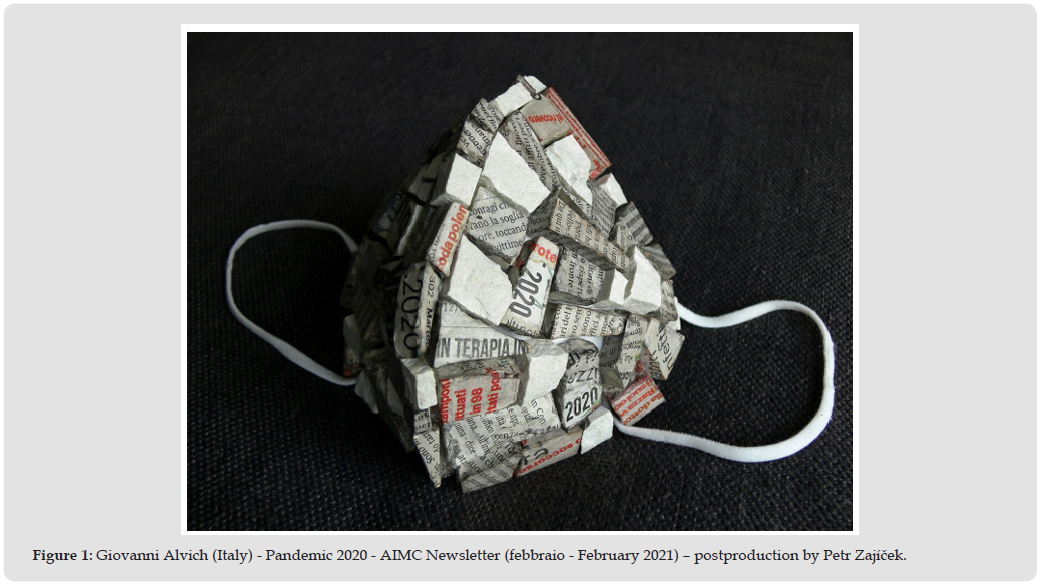
Figure 2
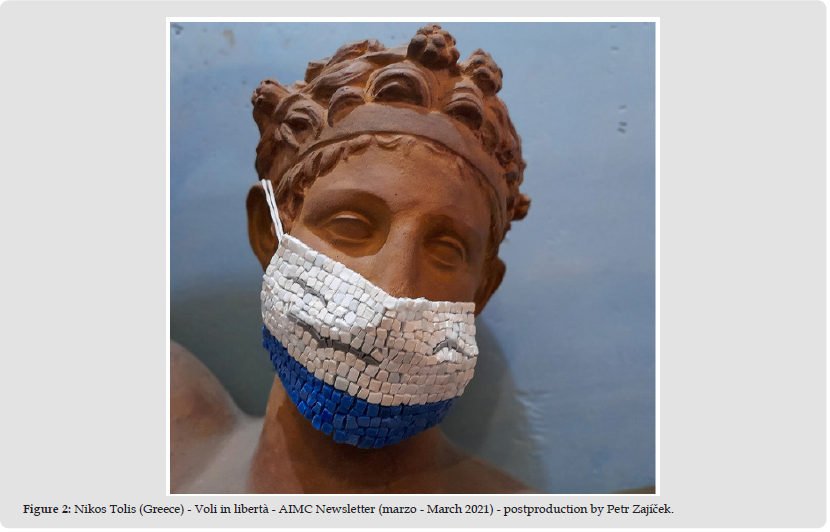
Figure 3
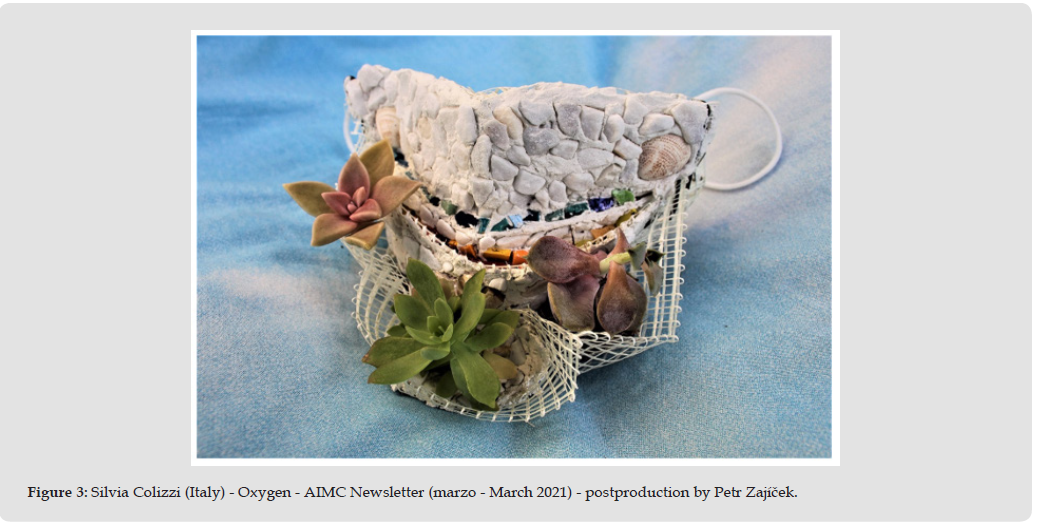
Figure 4
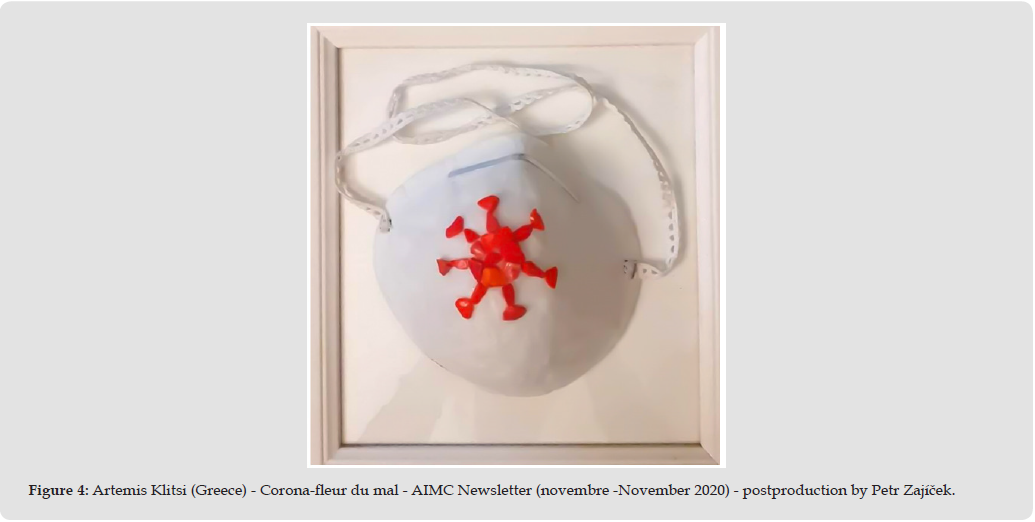
Figure 5
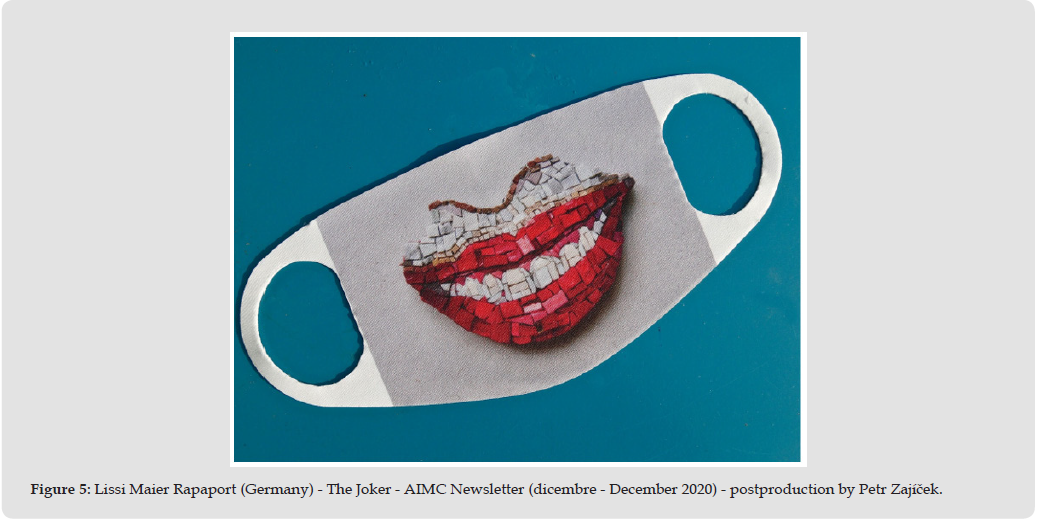
Figure 6
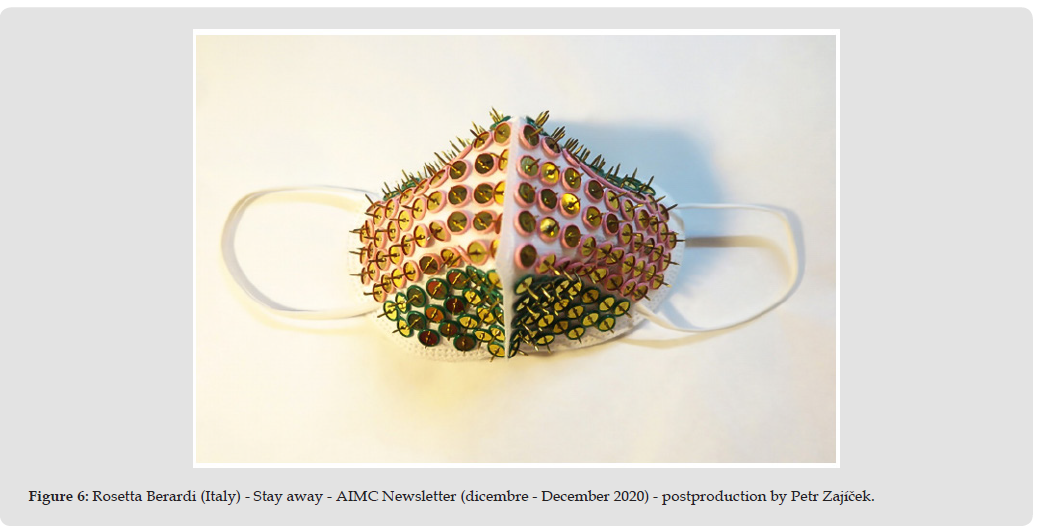
Figure 7
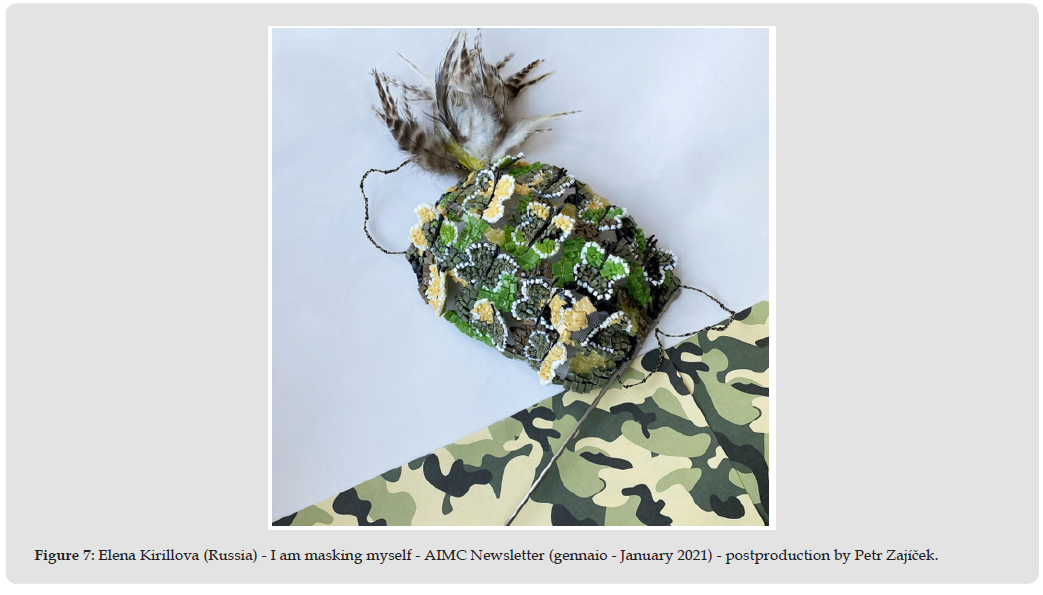
Figure 8
From today’s perspective, the Italian renaissance poet Francesco Petrarca is the most significant witness to the plague epidemic during 1348-1951. Klaus Bergdolt writes the following in his book on pague in the 14th century: “The poet faced plague not only intellectually as a fierce enemy of the academic medicine and physicians, who (as mentioned previously) were practically helpless in 1348 and for whom black death meant an unprecedented decline of their professional prestige, but also in human sadness and shock from the loss of so many relatives (including his only son) and many friends [17].” During the epidemic, Petrarca intensified his direction towards the vanitas topic, but it is important to note that he was attracted to and worked on this topic even before black death. To clarify the state of knowledge in medicine at the time: during the time of plague, physicians build on the ancient Greek personalities, such as Hippocrates and Galen, who worked with the theory of the so-called humoral pathology. According to this theory, diseases are caused by incorrect composition (or dyscrasia) of four bodily fluids: blood, mucus, bile and black bile. Therefore, the basic therapeutic approaches involved cleansing with enema or bloodletting.
The above-mentioned book by Klaus Bergdolt in the comments on the impact of the plague epidemic on visual arts in the 14th century refuses to confirm clear inspiration by plague in visual arts in the second half of the 14th century, as it states: “However, we know today that visual arts in the 14th century (just as previously) were not a direct indicator of political or any other catastrophes.” Visual arts approached the topic of memento mori with great seriousness long before the plague outbreak in 1348 and surprisingly did not reflect this unprecedented tragedy to a great extent in the second half of the 14th century. The Dance of Death iconography is one of the exceptions, as it seems to build on the topic of black death in its authentic form of the emerging Reformation, although the background shows the outline of apocalyptic expectations for the 16th century as the decisive factors. The Dance of Death mainly approaches artistically the abruptness of death; the main risk of the abruptness of death being that sudden death means death without the Eucharist or absolution. An oil panel painting by Pieter Bueghel the Elder entitled “The Triumph of Death” should also be mentioned in this context. It was created around 1562 and is often considered a spectacular reflection of the plague epidemic in the 14th century.
However, some art historians are of the opinion that Bruegel created his artwork without specific historical inspiration; he was inspired by the fantastic landscapes by Hieronymus Bosch, the concept of the Dance of Death in the Nordic culture, and the Dance of Death as a wall painting in Palazzo Sclafani, when he visited Palermo during his travels in Italy [18]. As regards another masterpiece depicting plague, the oil painting entitled “Plague in Ashdod” by Nicolas Poussin dating back to 1630-31, this is not distant artistic reflection of the great plague in the 14th century either. The painter expresses the general principle of memento mori in his painting, being inspired by Rafael’s engraving and the Book of Samuel in the Old Testament. However, the plague outbreak in 1630 in Milan was the direct stimulus for this artwork [19]. When studying the history of Italian visual arts during the renaissance and baroque, one cannot but notice rather frequent outbreaks of plague epidemic of mostly local or regional character. Continuities between the past epidemics and pandemics as regards their impact on visual arts, urbanism, and architecture can also be studies in the context of another specific historical event involving the only pandemic whose impact on the humanity can be compared with that of the plague epidemic in the 14th century – the Spanish flu pandemic in 1918-1920. As regards terminology, Spanish flu may be referred to as pandemic, as the planet Earth and the humanity were intertwined at all levels in the 20th century and this was not the case in the 14th century.
When comparing the plague epidemic in the 14th century and the Spanish flu pandemic at the time of World War I, one cannot but notice the helplessness of the exact knowledge in natural sciences represented by the medical science of the time. Norman F. Cantor states: “When the global epidemic of the disease randomly called Spanish flu broke out in 1918 and subsequently killed around fifty million people, diagnostics and therapies in medicine at the beginning of the 20th century were not much more successful compared to medieval physicians in their fight with black death. The pandemic broke out in 1918 and ended before anyone managed to find the reason, despite the science having a microscope for studying bacteria and viruses, which were invisible to physicians in the fourteenth century [20].” The medical science discovered many interesting aspects of this pandemic over the following decades. These should be summarised before the attention turns to aesthetic reflection of Spanish flu. Spanish flu was caused by influenza virus type A H1N1 (Orthomyxoviridae), which spread throughout the world owing to massive transfers of military personnel during World War I. However, certain aspects of the pandemic course are mystery to this day: the actual number of victims of the pandemic remains unclear; estimates range between 50 and 17 million. The structure of age groups most affected by the pandemic is also very interesting.
Instead of the conventional U-shape curve, the pandemic follows the so-called V-shape curve; the pandemic reached the highest lethality in the age group from 20 to 40 years, i.e. among soldiers and recruits. There are many theories on how to explain this unusual phenomenon [21]. The impact of the Spanish flu pandemic on visual arts, urbanism, and architecture can be discussed now. Unlike the plague epidemic in the 14th century, the aesthetic and artistic reflection of Spanish flu was somewhat stronger (Table 1). The artworks recognised by art historians as pieces iconic for the Spanish flu pandemic were created during the short yet dramatic course of the pandemic. Several essential artworks whose aesthetic and artistic value is broadly accepted are listed in the table below [22]: However, silence, emptiness and oblivion dominated the world of art shortly after, similarly to the situation after the plague in the 14th century. In this sense, there is continuity between the plague epidemic in the 14th century and the Spanish flu pandemic in the 20th century. Its character as regards Spanish flu can be explained with the following opinions.
Table 1: CT Exam Protocol.
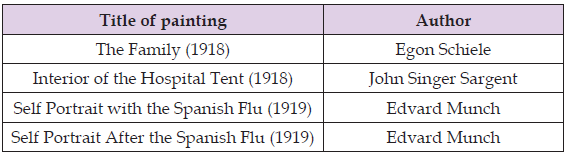
Joseph L. Goldstein states the following in a relatively short but very significant text entitled The Spanish 1918 Flu and the COVID-19 Disease: The Art of Remembering and Foreshadowing Pandemics: “Yet, despite the human disaster of the 1918 flu pandemic, its cultural legacy was overshadowed by World War I and soon forgotten. Artists in particular were more attracted to depictions of war than of bedridden patients. And not surprisingly, there are only a few notable works of art in our museums to remind us of the suffering and devastation caused by the 1918 flu pandemic [23].” Nahum Welang even speaks of collective amnesia in connection with artistic reflection of the Spanish flu pandemic. In his study entitled The Humanities of Contagion: How Literary and Visual Representations of the „Spanish“ Flu Pandemic Complement, Complicate and Calibrate COVID-19 Narratives, Welang further discusses how individual works of art in literature and visual arts contribute to continuity or discontinuity of artistic reflection of pandemics, with continuity being described from the past to the present: “Although Davis identifies and evaluates several Spanish narratives about the spread and impact of the Flu acknowledges that there is a “general inability to remember” the contagion…[24]”. Luisa Ritterhaus and Kathrin Eschenberg observe: “The art of the early 20th century with the Spanish Flu (1918-1920), no longer depicts the epidemic directly. Here, it is rather the chaotic and hopeless mood that is reflected in the works. The disease coupled with the horror of the First World War forms a disoriented society, disillusioned with the governing structures and the increased moral loss.
The art movements that emerged during this period, such a Dadaism, reflect the brokenness of the time without having to depict it directly and show individual ways of dealing with the (personal) crisis [25].”
Firstly, it is important to note that the theme of epidemics of infectious diseases as an instrument of divine retribution is present in both, the Old and the New Testament. Furthermore, it is essential to point out the facts mentioned by Franco Mormando in his paper entitled Introduction: Response to the Plague in Early Modern Italy: What the primary Sources, Printed and Painted, Reveal: “Unlike the chroniclers (medical or otherwise) of the period, early modern painters did not primarily seek to document the gruesome effects of the contagion, its horror and destruction. This was deemed too alien to the nature and purposes of what we now call “fine art”. Rather, during this time of social crisis, the role of plague related art – whether commissioned by confraternities, communes, or private citizens – was, above all, to be an instrument of healing and encouragement, a mirror and a channel of society’s search for solace and cure from the heavens, that is, from God and saints [26]”. According to the viewpoint presented in this study, the explanation of the question concerning continuity and discontinuity also lies in the development of interpretation of the Book of Revelation, specifically in the oscillation between accepting and rejecting the vision of the Apocalypse as a solution to the history of the mankind.
The term oscillation is essential for describing the situation when all epidemics and pandemics of infectious diseases leave some mark in the memory of the mankind, yet this mark is not as significant as one would expect given the massive impact on the society. After all, the plague epidemic in the 14th century is referred to as the start of renaissance. This oscillation is well described in the conclusion to the study entitled Pandemic Patterns: How Artistic Depictions of Past Epidemics Illuminate Thematic and Structural Responses to COVID-19 Today: “Epidemics exist in a space between remembering and forgetting, between memory and oblivion. The influenza epidemic of 1918 has been called the forgotten epidemic because of how eagerly those who suffered through it put it aside…In any case, epidemics, as we know from their depictions in visual art and literature, are only imperfectly and temporally forgotten [27].” This limited space can now be dedicated to the Book of Revelation from two aspects: firstly, it is essential to define a clear ideological and artistic line between the Apocalypse and the consequences of epidemics and pandemics. Secondly, the above-mentioned oscillation between the acceptance and rejection should be documented, albeit very briefly. The Apocalypse according to St. John brings several major iconographic motifs into the European visual arts, including the Four Horsemen of the Apocalypse presented to the readers at the beginning of the 6th chapter of the Book of Revelation.
The name of the last of the horsemen is Death and only the world of the dead follows after this horseman: “They were given authority over a quarter of the Earth, to kill with sword, famine and plague, and by means of the beasts of the Earth”. Therefore, epidemics in the medieval period and further up to the 19th century are interpreted through the Apocalypse according to St. John as instruments of the divine retribution and the divine intention, with the core ethic and aesthetic message being memento mori; this message is the clearest in Danse Macabre (Dance of Death). The Book of Revelation was only included in the New Testament in the 4th century of the Common Era in a process complicated by the ambiguous nature of the text. While the Western Christian eschatology was formed greatly by the Book of Revelation, including its artistic depiction, Eastern elders approached this text with greater caution. Unlike the Western Christian churches, the Eastern Christianity never included the Book of Revelation in the liturgy. For example, the 14th century as the era of the black death epidemic filled with apocalyptic expectations was the peak period for the Book of Revelation, but renaissance in the 16th century was also subject to the turbulence of millennialism. The religious reformation was an invigorating period for apocalyptic expectations, yet at the same time reformation humanists have somewhat reserved attitude to the Apocalypse; the Catholic church at the time and after the Council of Trent limited its usage in the liturgy.
“The Apocalypse as a whole ceased to be a key topic for the visual arts in the modern history, unless, as mentioned before, it appeared in illustrations. Nonetheless, it remained a source of inspiration, an intelligible code used by artists to reflect on complex topic or comment the unfolding events [28].” Science of the 19th century robbed epidemics and pandemics of their divine aura, leaving the image of utterly senseless dying; the dim and almost surreal seriousness of the Dance of Death is replaced in artistic approach by a grotesque, for example in the artwork by James Ensor Le Roi Peste from 1895. The above-described historical scheme depicting epidemics and pandemics as an instrument of the divine retribution on the path to salvation on one side, and as a destructive, yet purely secular chaos with no end on the other side is further complicated by the fact that historically various diseases are used as metaphors. While, for example, tuberculosis represents emotion, passion, as well as poverty, plague as a disease caused by Yersinia Pestis is the divine retribution for sins and turns human existence to an other-worldly dimension [29].
To conclude this chapter, undisputable discontinuities in the continuity of epidemics and pandemics as discussed above should be mentioned. Continuity in the sense of this study and this chapter means the following: neither epidemics, nor pandemics have much impact on visual arts, urbanism, or architecture, or more precisely these impacts on visual arts, urbanism, and architecture precede epidemics and pandemics. Discontinuity means that the impact of epidemics or pandemics on visual arts, urbanism, and architecture is significant. After the Great Plague of Marseille, there is no silence, emptiness or oblivion as in the case of the plague epidemic in the 14th century or the Spanish flu epidemic in 1918-1920. On the contrary, “As historian Régis Bertrand has observed, the plague of 1720 is the most depicted event in the history of Marseille, giving rise to the greatest number of painted, engraved, or sculpted representations, and undoubtedly the most works of any kind, from account given by witnesses to recent historical novels” [30]. The second discontinuity lies in the impact of the plague epidemic in Rome during 1656-1657 on the major modernisation of urban planning of Rome in the 17th century. The random arrangement of buildings from the late medieval Rome had to give way to a modern concept of the city; at this time, Rome was becoming a popular diplomatic destination [31].
The epidemic of plague in Rome was the last plague epidemic in Italy, as further catastrophes may have been avoided owing to urban, architectural and hygiene measures. However, the fear of subsequent epidemics remained for many years after this.
The impact of epidemics and pandemics of infectious diseases on visual arts, urbanism, and architecture is a complex topic. As literature on art does not present a coherent view of the impact of epidemics or pandemics of infectious diseases on visual arts, urbanism, and architecture, this study can only draw on individual summaries standing in parallel next to each other. The metaphors of silence, emptiness and oblivion in this study need to be interpreted in their relative, rather than absolute sense. It can therefore be concluded that the above-mentioned continuities and discontinuities need to be understood as a background of the plastic development (i.e. one with many shapes and dimensions) of the iconography in visualisation of plague epidemics. The key moments in the development of the iconography in visualisation of plague epidemics are the following:
- The Black Death epidemic of plague in the 14th century
- The renaissance era, in particular Cinquecento
- The baroque ideological approach to visualisation of plague epidemics in line with the requirements of the Council of Trent
- Secular French painting of the 19th century
- End of the 19th and beginning of the 20th century as artistic reflection of apocalyptic topics in the atmosphere of fin de siècle and revolutionary discoveries in natural sciences and medicine.
The following table presents a list of several paintings important for the development of the iconography in visualisation of plague epidemics and indirectly any subsequent epidemics and pandemics [32]: The closing note in this chapter should belong to the valuable publication by Christine M. Boeckl entitled Images of Plague and Pestilence – Iconography and Iconology (Table 2). In this work, the author admits that the consequences of the plague epidemic in the 14th century essentially precede the epidemic, which is consistent with the view presented in this study, yet on the other hand states: “Plague iconography relating to the epidemic, did not exist before the momentous year of 1347, when the Black Death began its lethal march across Europe. At that time began to create a rich pictorial language describing the traumatic experience. At the same time, already existing religious subjects not related to pestilence, such as the Madona of Mercy (Misericordia), The Triumph of Death, and the Dance of the Dead (danse macabre), became imbued with new meanings.”
Table 2:
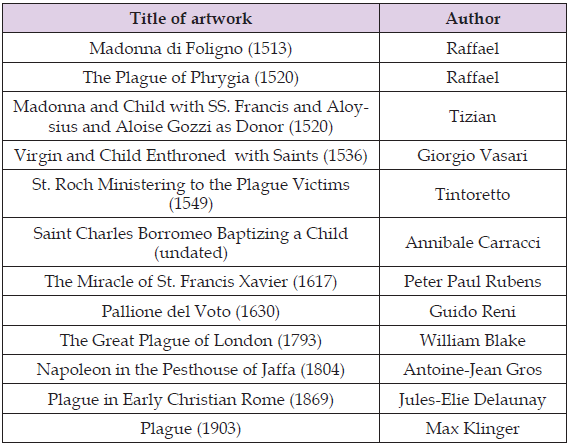
The term monumentality is not an easy one to define, when striving for theoretical accuracy. Art history works with many terms found in its close vicinity and perhaps overlapping with this discipline, such as “harmonious”, “reverend”, “spectacular”. The term may be roughly framed as follows: An artistic intention can be referred to as monumental if it primarily strives to ensure eternity of the achieved artistic outcome; instead of creating an artwork, an artist creates a memento or a memorial in some sense. In monumental art, the free amiable game of talent and imagination of a visual artists seems to be suppressed and replaced with strong will, analysis and calculation of a kind; the artist does not wish or want to leave anything to chance and randomness in the survival of the work of art for the subsequent eras is to be suppressed as much as possible. This study assumes that it is impossible to find a single universal definition that would fully explain what monumentality of visual arts, urbanism, and architecture is. It will attempt to outline individual definitions dynamically overlapping and thus presenting some idea of what monumentality may be:
a) Monumental art is the antipole to decorative art. However, this does not necessarily mean that the outcome of the artist’s efforts should not include decorative layers. The decorative characteristics are the expression of the artistic style of the relevant time, as the artist’s personality strives to create in all styles and at all times and the artist always remains thematically and technically in the time of their life and work. Only the main intention of the artist’s efforts can be fully monumental. The artistic outcome, on the other hand, has to arise from the relevant time.
b) Monumental artistic outcomes can only be produced by art capable of combining compliance with rules, as regards eternal artistic rules, with freedom to create, as was the case in Greek sculpture in the 5th century before the common era [33]. An artist striving to create an eternal artwork by concentrating a single significant proportion of art as such, specifically the relationship between necessity and freedom, can find the interpolation formula for expressing this relationship, and create monumental art. In other words, the act of creation becomes a monument. Attempts at monumentality of this type, i.e. attempts to find a classic order, repeat in history of art; Quattrocento in Florence and activities of the group of renaissance artists and intellectuals under the leadership of Filippo Brunelleschi being an example of this attempt.
c) The author of this study is of the opinion that the spectacular Colosseum as a building created by Roman technical utility construction is not a monumental building. On the other hand, a blast furnace created at the time of the industrial revolution surviving to the post-industrial era is monumental, as it was useful in the good sense, never deviated from its purpose and eventually its function was no longer needed. However, the furnace itself survived as an object, as a symbol. Only art fulfilling the ethical ideal through aesthetic means without any trace of pathetic purposefulness may create a monumental artistic outcome.
In summary: artistic intention in which the artist strives to create eternal values regardless of the styles of the time is monumental. An attempt at monumentality is always rebellious in some ways and necessarily goes against convention of its time; yet, ultimately it always has to accept these conventions in some sense. The act of creation is monumental when it focuses on the core philosophical relationship between necessity and freedom and derives aesthetic rules from contemplation of this relationship. For the resulting artwork being monumental, it has to survive until subsequent eras and alien worlds, and this is probably made possible by its inner strength of a positive purpose.
Specificity of monumentality in the art of mosaic only expands the motifs valid in general for monumentality in visual arts and architecture. In this chapter discussing specificity of monumentality in the art of mosaic, the study draws almost exclusively on previously published texts focusing on the art of mosaic, to which the author contributed.
a) Specific monumentality of the art of mosaic as permanency of the artwork: “Mosaic artworks have been associated with permanency since the ancient times and are a metaphor for eternity of artwork. From the technological point of view, they are free – for example unlike oil painting (yellowing, darkening, altered refraction in linoxyn) – of an encoded inner mechanism of destruction, unless they are exposed to great moisture or are affected by major technological defects (for example the use of plaster in harsh conditions, the use of potash glass in tesserae exposed to external environment [34]”.
b) Specific monumentality of mosaic artworks as tension between decorativeness and inner symbolic effect: “No mosaic work with architectural adjustment can have a purely decorative impact due to the materials used to create mosaics, even if it had been designed and created for this very purpose. Materials used to create mosaics always force the work to exceed the function of a purely external ornament and become art. This is the outcome of the two previously mentioned principles: gradual emanation of light from the depth of mosaics reminiscent of the emanation principle in the hierarchy of being in Neoplatonism, which confirms the eternity of mosaics. The art of mosaic is usually unable to depict a live psychological detail in motion the way, for example, oil paintings of frescos can. Mosaic images may be rigid, static, similar to icons. However, this brings them close to symbolism, which is also static but exceptionally capable of expressing psychological and metaphysical depth [34].”
c) Specific monumentality of the art of mosaic as tension between painting and sculpture: “The technique of mosaic uses fragments (regular or irregular) of various materials to create an image, which is always three-dimensional, regardless of whether the depth of the image is minimal (in which case the mosaic is almost a flat image), or the depth is significant and the mosaic image is closer to a relief or sculpture. It is also important to note that mosaics are usually artworks with architectural purpose and therefore are a part of buildings… This makes mosaic an excellent opportunity for studying the transition from the beauty of material to the beauty of the image (even if it is a relief), or the coaction and mutual interactions between the beauty of material and the beauty of the image. Aesthetics of mosaic as a major chapter in philosophy of material interestingly clarifies the extraordinary dialectics of the influence between the aesthetic value of material and the aesthetic value of the image [34].”
d) Specific monumentality of the art of mosaic as tension between material and light: “In glass mosaics, light is an exceptionally important category with regard to aesthetics. The technique of mosaic (and glass mosaic in particular) allow spectators to fully appreciate the importance of light as a creative force. This is best documented by the fact that instead of full, frontal light, distant light from the side (such as light during sunset) allows mosaics to shine the brightest. A mosaic is essentially an ingenious arrangement of surfaces, “small mirrors” (created by cutting glass tesserae) at various angles, which multiply light, diffusing it in all directions, while creating highly dynamic light effects that come from the depth of the image (as if a lightbulb were installed behind the image) [34]. If Quattrocento in Florence is mentioned as an example in connection with monumentality as such, Cinquecento in Venice must be used as an example in connection with specific monumentality of the art of mosaic, not only owing to the mosaics, but also for the artistic context as such, where light, the art of mosaic represent the horizon on which Tizian’s oil painting unfolds: “Giorgione was at the start of renaissance classicism, the development of which culminated with Tizian in confrontation with the art of the rest of Italy. However, it is obvious that this confrontation only amplified the originality of Tizian’s powerful personality and its essential harmony with genius loci of Venice, with its traditional attraction to beauty, affluence and glamour. Even after the definite acceptance of modern renaissance, Venice maintained an inner connection to the Byzantine culture – as if the fantasy that created the oriental beauty of St. Mark’s Basilica with its facade showcasing gold and colourful marble and its grey interior dominated by golden mosaics never ceased to be active here” [35].
e) Specific monumentality of mosaic works as tension between art and ideological decoration: The relatively young field of monument care is developing dynamically, and its key theoretical approaches are gradually revised, while certain core principles remain unchanged. The Austrian monument care expert Alois Riegl with his concept of the so-called “Alterswert” enjoys great authority within the Central European region. The patina of ancientness is an important value of historical buildings. However, can signs of corrosion that make parts of mosaics blind under a layer of degradation products have their aesthetic value in the art of mosaic? Can tesserae coming loose from the cement underlay of a mosaic increase the monumental value of the art of mosaic? While the signs of ageing in lime paint and its patina may appear aesthetically valuable, the theorem of Alterwert does not seem to apply to the art of mosaic. Corrosion products are not and cannot be considered patina in the art of mosaic. We require that even the smallest of mosaic pieces, such as Gallo Cedrone in Battistero Neoniano painted by Libera Musiani [36] shines like new. This is an attribute required from monuments, i.e. “das gewollte Denkmal” to use Riegl’s terminology. Therefore, even the smallest of mosaics, such as the above-mentioned Gallo Cedrone, is therefore “das gewollte Denkmal” and “das ungewollte Denkmal” at the same time, as it is a monument not only with its historical value, but also with the value of age.
However, if a mosaic is “das gewollte Denkmal”, what does it celebrate? It may not have been the case in cobble or stone mosaics, but mosaic artists using glass in wall mosaics celebrate eternity in the sense of Platonist eternal idea, as well as biblical eternity. If the art of mosaic is always to some extent “das gewollte Denkmal” celebrating eternity and a metaphor for eternity, it is only natural that it can become ideological. The colossal character of ideological mosaics during the Cold War era is often striking. Buildings in particular from the second half of the 20th century are often demolished in Central Europe, and this frequently (save for certain exceptions) leads to destruction of interior and exterior mosaics. While some mosaics from the time of socialism are highly ideological, many of them have undisputed (great or less significant) artistic value, such as the mosaics in Prague underground. This lack of interest in destruction of mosaic artworks among general public shows that perhaps curious thought process has led to the notion that since the art of mosaic can be easily used for ideological purposes, it cannot be art and can only be an ideological ornament. The art of mosaic is therefore suppressed deep in artistic unconsciousness, and the art of mosaic is forgotten. This development occurred in Czechia in the 1990s, but the same development can repeat practically anywhere, because it is caused by the specific character of monumentality of the art of mosaic [37]. This potential for double character of monumentality in the art of mosaic, i.e. including ideological decorativeness, can be naturally observed also in Italy, the heart of the world’s art of mosaic, for example in the mosaic image “Pozzuolo del Friuli” created by Scuola Mosaicisti del Friuli between 1956-1979 [38].
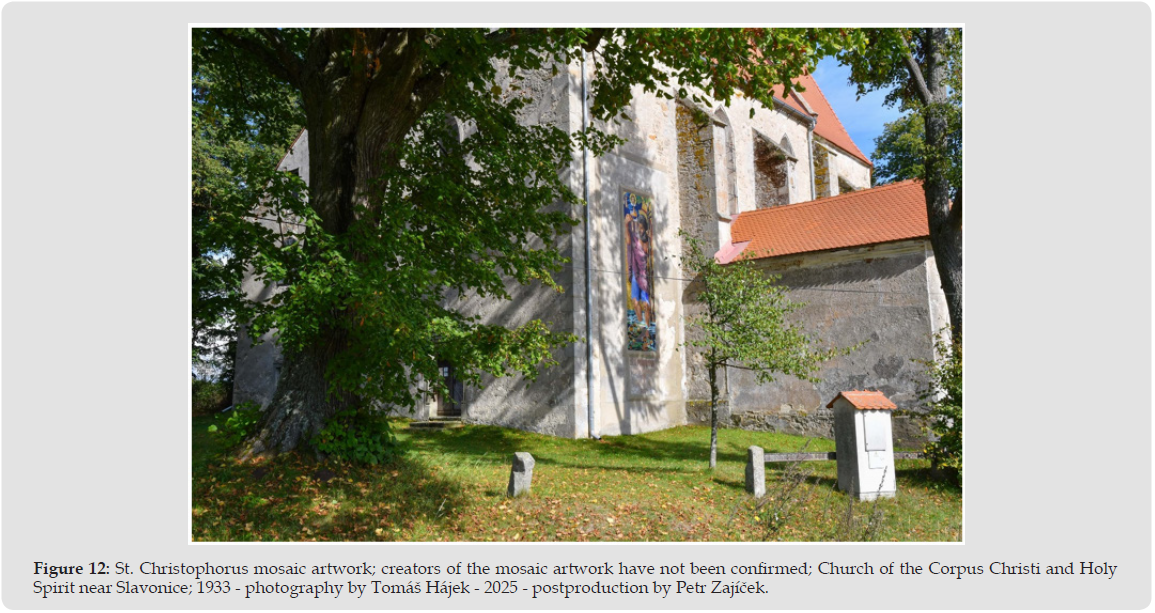
f) The author of this study considers the option that monumentality of exterior mosaic work may stem from its placement as a solitaire on a building in an open landscape to be important and worth discussing. Building on his previous work to some extent [39,40], the author focused on this topic in his lecture Due opere dimenticate di mosaico vetroso nella regione della Boemia meridionale (Two Nearly Forgotten Glass Mosaic Works in South Bohemian Region). The author would like to quote the abstract of the lecture as published in the conference catalogue: “In 2011 and 2012 South Bohemian Region Authority commissioned the author of this paper a study to analyse glass mosaic works on the territory of South Bohemian Region. Within these surveys two undoubtedly interesting mosaic works were discovered and analysed by non-destructive methods. Mosaic work depicting larger-than-life St. Christopher is a part of the pilgrimage church of St. Body and Spirit in Slavonice, a significant architectural solitaire in the landscape. This masterpiece from the early decades of the 20th century with its character completely defies Czech tradition as it began to take shape in the late 19th century. But even more interesting for the general aesthetics of the mosaic is a completely intimate character; despite its monumental size it is almost hidden to eyes of the visitors on the completely visually insignificant side wall. It presents itself in a clash of monumentality and introspection; but the introspective monumentality can be regarded as a significant feature of the general aesthetics of mosaic works at all. The second dealt mosaic work points out to what all the mosaic works can be. The Head of Christ in a medallion with a diameter of 0.7 metres above the portal of the Church of the Holy Trinity above the village of Lnáře made by the technique of glass mosaic is an absolute rarity in this area, because there are no other mosaic works there. The author of the mosaic is unknown. No sources refer to this mosaic work, despite the fact that the mosaic is in excellent condition with no traces of rust. This modest secluded mosaic work reminds in historic Czech lands omnipresent minor exterior architecture (for example calvaries or wayside boundary stones) radiation. Not great history, steeped in great stories and symbols, but the silent drama of almost anonymous everyday life reports in this church mosaic conclusively [41] (Figures 9-12).
Figure 9
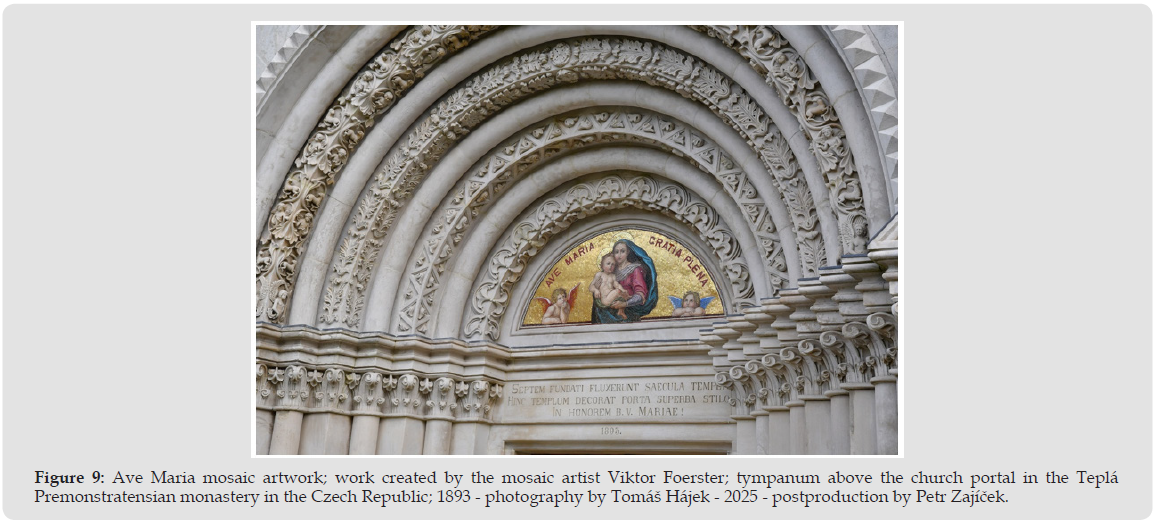
Figure 10
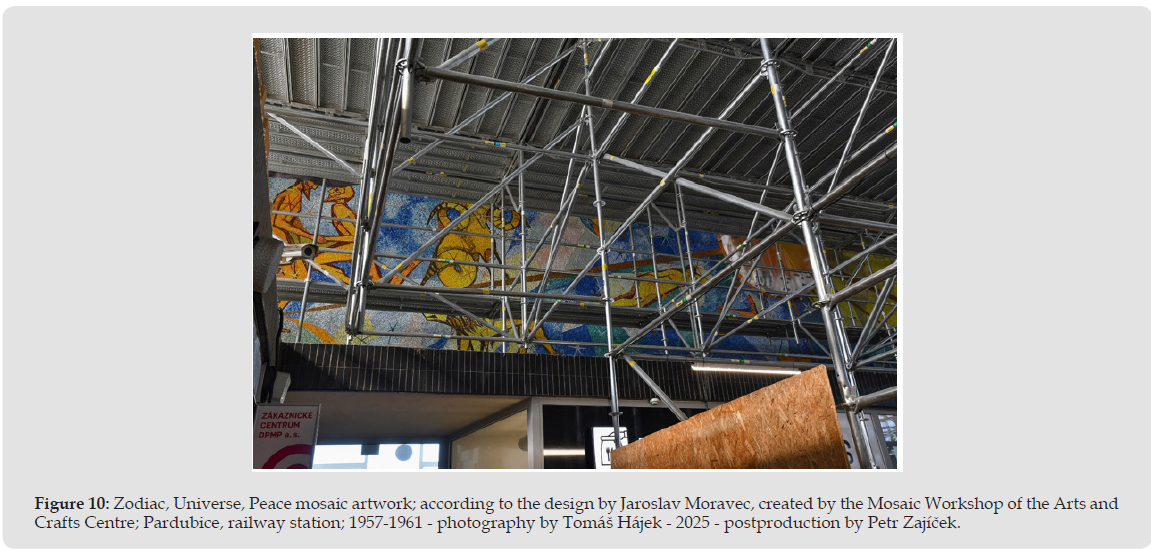
Figure 11
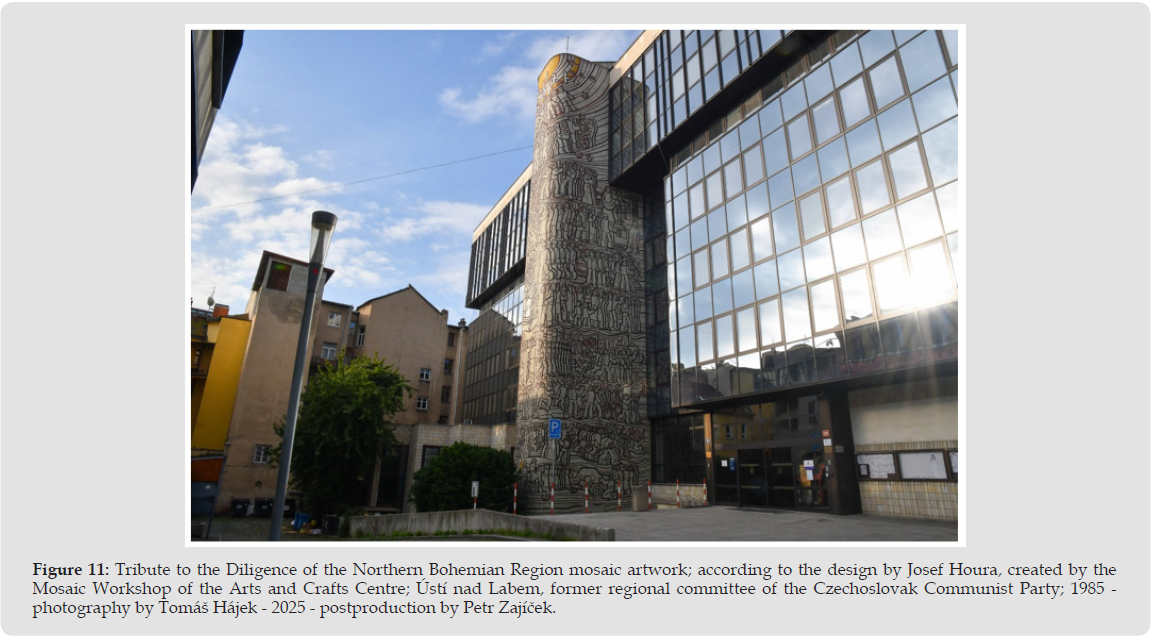
Figure 12
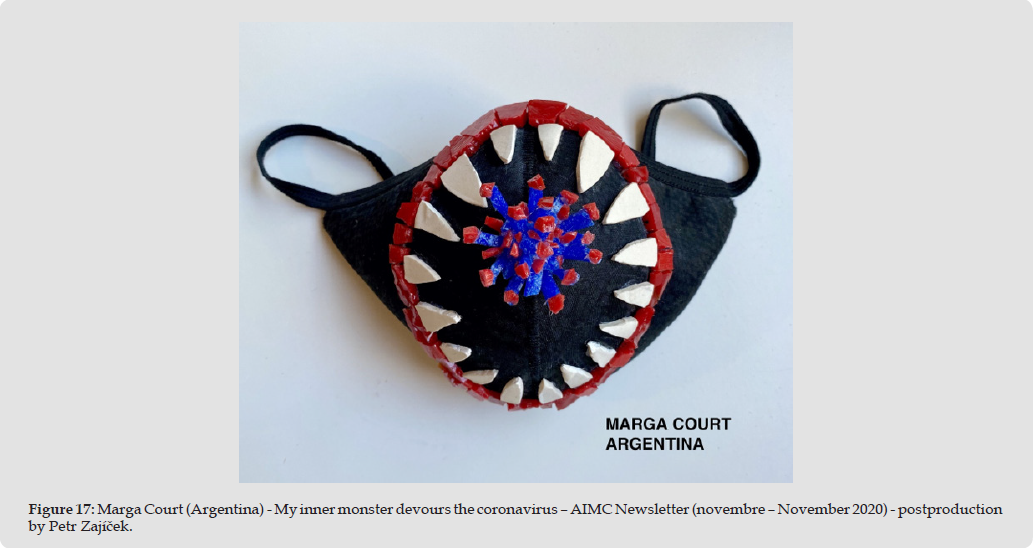
The AIMC organised the project entitled Mascherine volanti (Flying Masks). This study brings examples of work by art of mosaic creators that speak for themselves. The author of this study would like to remark the following as regards the Mascherine volanti project: it is a systematic or even system reaction of a prestigious association of visual artists suggesting that the AIMC may have been aware of the privileged position of the art of mosaic with regard to artistic expression of the COVID-19 pandemic. At the same time, mosaic creators decided to focus on the topic of the face mask; they focused on the topic of communication, the issue of words and silence, as if the meaning of the COVID-19 pandemic was concealed in this specific aspect. As artist is aware that while things unfold in a certain way on the outside, their overall meaning, some decisive second plan is present in the background. The background of the COVID-19 pandemic seems to have involved the issue of dynamics of words and silence, the impossibility of silence in the current world and therefore the subsequent impossibility of words. It is also important that the AIMC did not leave the real world behind in its activities, did not depart into the cyberspace; it continued in its original creation in-situ, even magnifying this work without resorting to recycling and re-adapting past works.
The author of this study believes that the Mascherine volanti project (provided it is further expanded by exhibitions and publications) is comparably significant as global art of mosaic events after Worls War II, such as Mostra di mosaici moderni in 1959 in Ravenna attended by Italian mosaic artists, as well as Marc Chagall and Georges Mathieu, or the Parco della Pace project from the 1980s [42]. One exhibition has already taken place in Paray-le-Monial, France under the title Mascherine volanti (Flying masks) in the Maison de la Mosaique Contemporaine from 09/10/2021 to 17/03/2022, with Florian Perret as the guardian.
On this topic, the author of this study would like to include the full version of the Estetica della crisi del coronavirus e l’arte del mosaico (Aesthetics of the coronavirus crisis and the art of mosaic) lecture abstract at the XVII AIMC congress (Ravenna, Italia, 10 – 11 October 2022), as published in the conference catalogue: “The first part of the presentation includes the outcomes of research of social and aesthetic context of the coronavirus crisis. The second part explains the privileged relationship between the means of expression in the art of mosaic and the crisis. The third part discusses the involvement of the art of mosaic in the aesthetic expression of the crisis. The fourth (information) revolution, the decline of linear thinking with a shift to network thinking and intensifying electronic control over the public space form the context of this crisis, leading to anxiety, scientific confusion, loneliness and economic crisis. While the material decorativeness of towns has not changed, the relationship between the public and the private space has turned around, as clearly not many people can escape the prohibited, emptied public space to an adequate private space. The art of mosaic was privileged to depict what is permanent and sacred. The coronavirus crisis may be revolutionary for mosaic artists, as it suggests direct intervention of divine powers in the world. Our world can be seen as a world overpopulated with words, mainly due to the rise of the global population and development of the internet or social networks.
This is why the mask of the coronavirus crisis is here to save the seriously meant word. The monumental art of mosaic should depict creatively those lapidary shortcuts of (even divine) purposefulness in the crisis [43].” The acute onset of the COVID-19 pandemic was a time of hectic introspection among visual artists, time of seeking visual arts precedents for depicting global lockdown and the culture of quarantine. The American painter Edward Hopper with his aesthetics of human loneliness in the modern civilisation is mentioned as an artist capable of contributing to future understanding of the COVID-19 pandemic. This painter seems to combine inspiration by European painters of the 19th and 20th century, the Chicago neo-gothic style entering the picture, excessive space and archetypal invariance. Some of his work (Compartment C, Car 193, 1938; New York Movie, 1939; Office in a Small City, 1953; South Carolina Morning, 1955; Western Motel, 1957; Sunlight in a Cafeteria, 1958; New York Office, 1962; Intermission, 1963; Chair Car, 1965) [44,45] would almost seem to be a privileged theme for the art of mosaic responding to a great shift in the civilisation possibly looming with the COVID-19 pandemic (Figures 13-17).
Figure 13
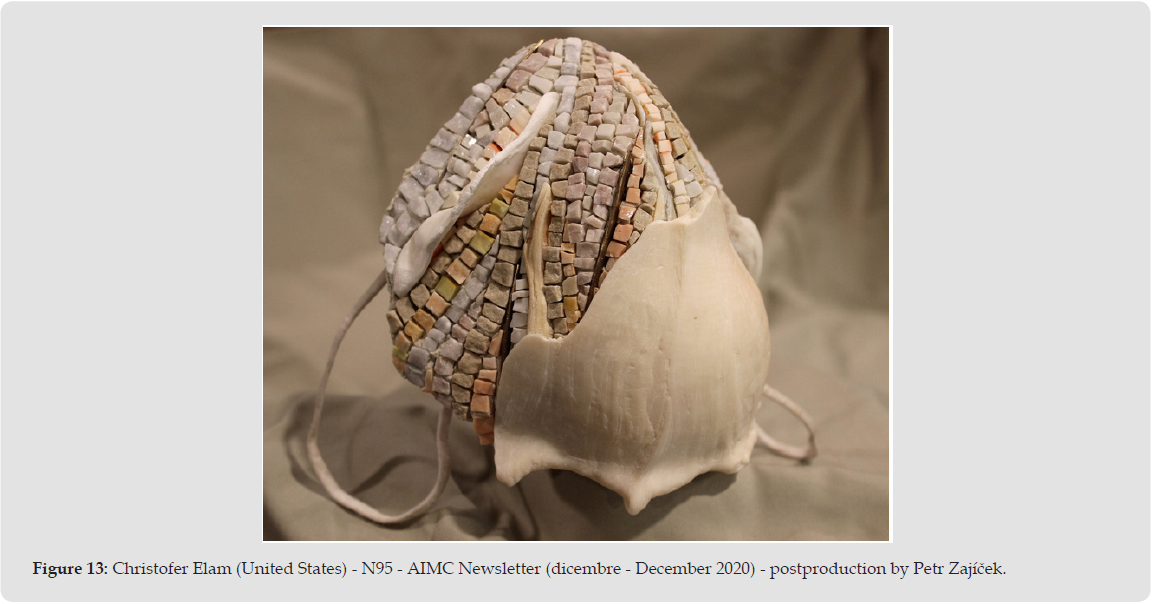
Figure 14
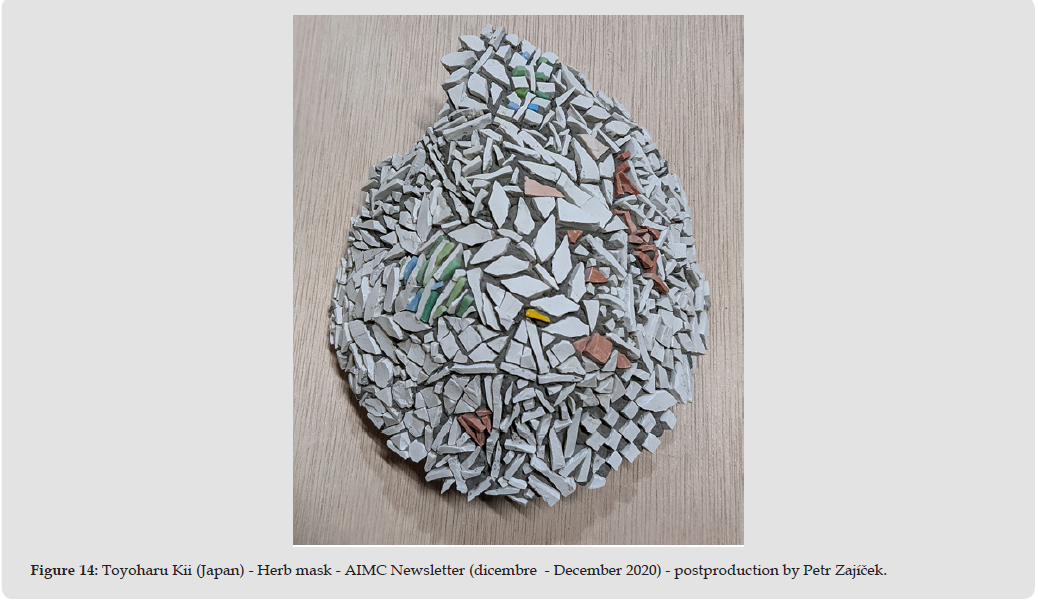
Figure 15
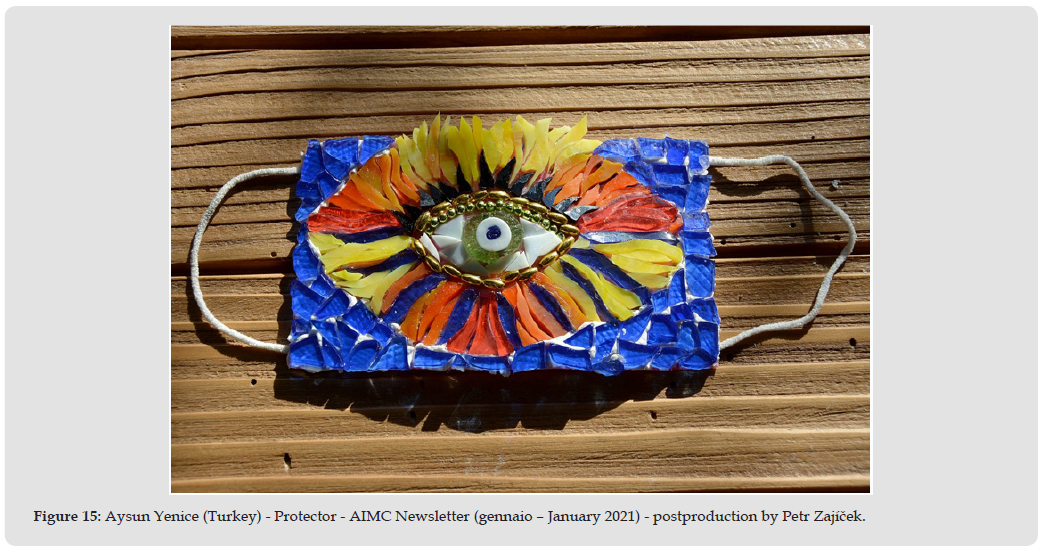
Figure 16
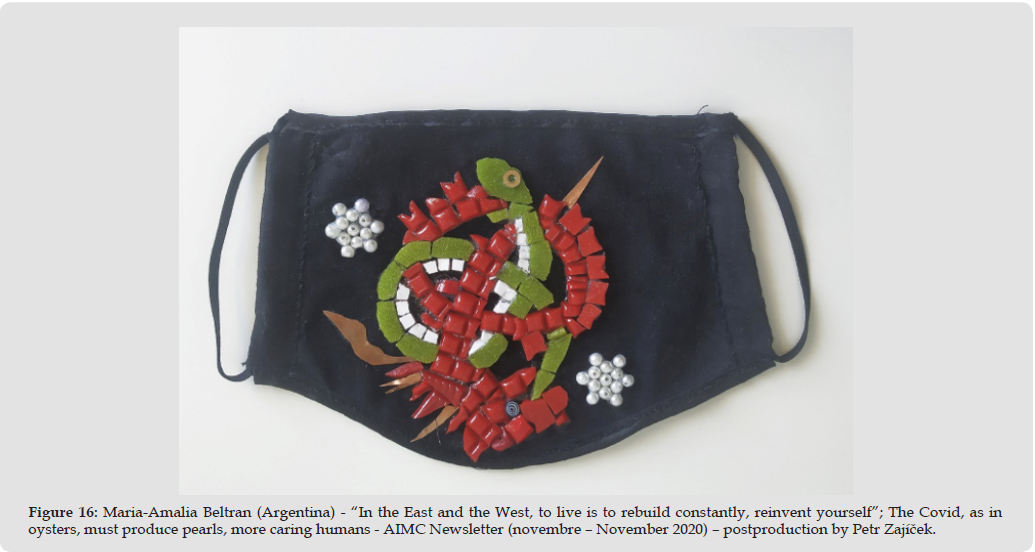
Figure 17
The author would like to thank for assistance with working on
the topic to:
• Jaroslav Šerých (artist with an academic degree)
• František Tesař (mosaic artist)
• Antonín Langhamer (art historian focusing on glass, jewellery
and bijouterie of the 20th century, and the history of glassmaking)
• Petr Kotlík (Chairman of the Society for Technology of Monument
Protection)
• Olga Kotlíková (Society for Technology of Monument Protection)
• The author would like to thank the Study and Scientific Library
of the Plzeň Region for their help with researching the topic.
No conflict of interest.

International Association of Landscape Archaeology, Czech Glass Society, Czech Republic

Department of Chemistry, Semenov Institute of Chemical Physics, USSR Academy of Sciences, Moscow, Russia

Associate Professor at Department of Breast and Thyorid Surgey, Chongqing General Hospital, China

Professor of Nuclear Medicine, Faculty of Medicine and Surgery, University of Milan, Milan, Italy

Department of Pharmaceutical Sciences, South University School of Pharmacy, USA





 Abstract
 PDF
PDF



























