info@biomedres.us
+1 (502) 904-2126
One Westbrook Corporate Center, Suite 300, Westchester, IL 60154, USA
Site Map
 ISSN: 2574 -1241
ISSN: 2574 -1241
ISSN: 2574 -1241
Received: June 23, 2025; Published: July 01, 2025
*Corresponding author: Anupam Chanda, Packaging and Polymer Science Technologist (PG). Principal Consultant: Bioxytran Inc, MA, Boston, USA
DOI: 10.26717/BJSTR.2025.62.009749
Leakage and discolouration of Eye drops are very frequent and market complaint in USA market. In this Article I will try to explain these issues in three different steps like: Eye drop bottle and Cap design problems, Polymer compatibility problems with product and Leachable issues from Bottle Label (Figures 1-6).
Figure 1
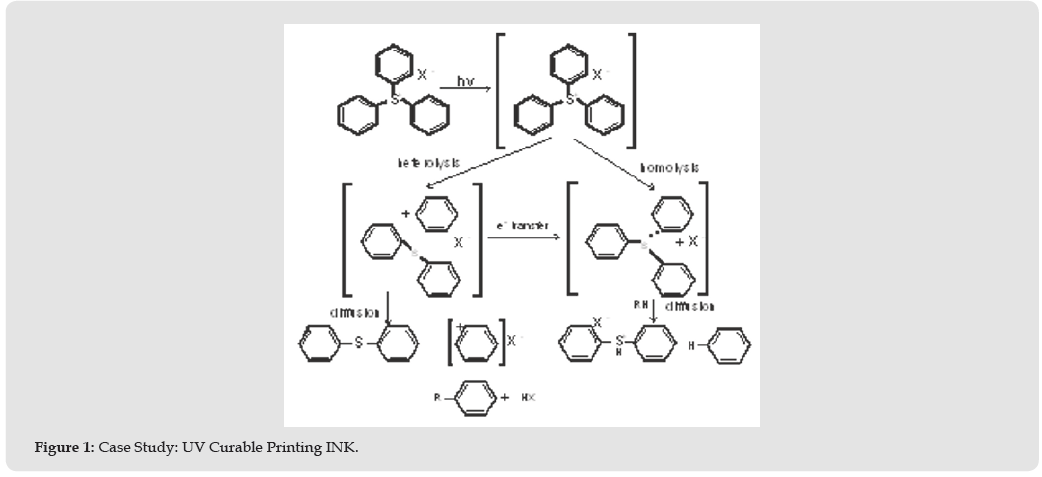
Figure 2

Figure 3

Figure 4

Figure 5
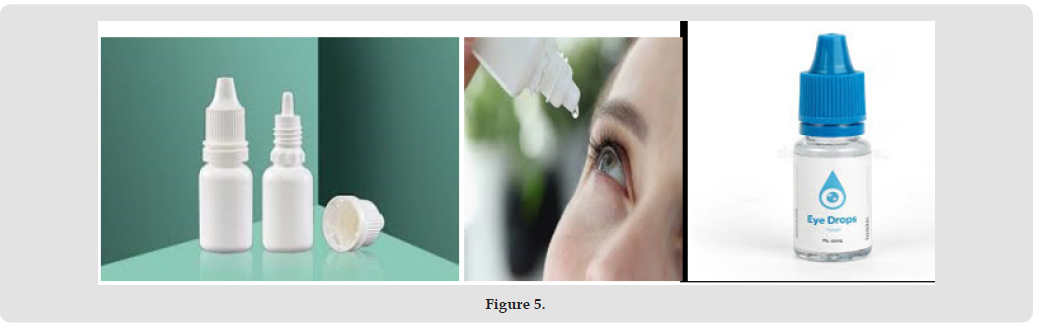
Figure 6
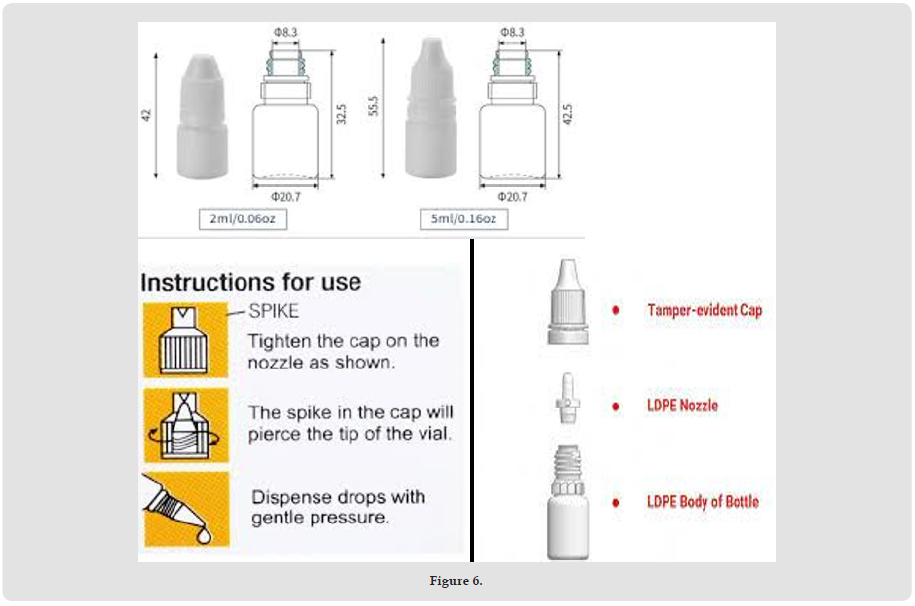
Structure of the CAP
1. Position of the SPIKE should be at the center of the Cap that it exactly places on top of the Nozzle. Else first-time spike will pierce the nozzle but from next time on wards it will place outside the tip of the nozzle and product leakage observe [1,2].
2. Height of the SPIKE is most important to avoid product Leakage.
3. Rigidity of the SPIKE is most important.
Discolouration of Product Observed
1. After analyzing of the bottle polymer this has been observed quantity of the pigments are more compare to the standard.
2. Excess pigments slowly leach with the product.
3. After analyzing the polymer this has also been observed quantity of Additives are more and which was leached and mix with product and discoloration observed.
4. Polymer Leachables are Polybutylene terephthalate (PBT) is a widely used polyester plastic in medical device and MDI valve components.
5. PBT oligomers and other residuals or degradants can be similarly leached from the valve components fabricated from this material.
Impact of Leachables in Drugs
1. Increased Toxicity
2. Interfere Assay
3. “Ph‘‘change.
Bottle Label
Multiple inks, coating and adhesive are using during label printing.
1. Printed Label Leachables are Phtoinitiators 1-benzoylcyclohexanol and 2- hydroxyl-2-methylprophenone from ink used on labels of HDPE and glass bottles were found to migrate into a solid product.
2. Adhesive Leachabels are Particulates Protein and Peptide Aggregation
For an extractables from a device component the AET (μg/g) can be determined using Equation 1: Equation 1
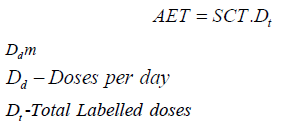
m - mass of component
The AET (μg/device) for a drug delivery device (e.g. an MDI) can be determined from Equation 2:


International Association of Landscape Archaeology, Czech Glass Society, Czech Republic

Department of Chemistry, Semenov Institute of Chemical Physics, USSR Academy of Sciences, Moscow, Russia

Neurology, LA BioMed Research Institute, USA

Associate Professor at Department of Breast and Thyorid Surgey, Chongqing General Hospital, China

Professor of Nuclear Medicine, Faculty of Medicine and Surgery, University of Milan, Milan, Italy





 Abstract
 PDF
PDF



























