info@biomedres.us
+1 (502) 904-2126
One Westbrook Corporate Center, Suite 300, Westchester, IL 60154, USA
Site Map
 ISSN: 2574 -1241
ISSN: 2574 -1241
ISSN: 2574 -1241
Received: May 26, 2025; Published: June 05, 2025
*Corresponding author: Valery M Dembitsky, N.D. Zelinsky Institute of Organic Chemistry, Leninsky Prospect, 47, Moscow
DOI: 10.26717/BJSTR.2025.62.009708
The essential oil of Copaifera officinalis (copaiba oil) was analyzed for its terpenoid content and, after methylation, for its typical organic acids. Samples were collected at El Remate, a lakeside location in Guatemala. The analysis revealed high levels of cyclobutane-containing terpenes such as -caryophyllene, trans-α-bergamotene, α-copaene, -caryophyllene oxide, and -ylangene. The levels of cyclobutane-containing terpenes were compared with samples from Brazil, Peru, Colombia, the United States, and Australia, confirming the high levels of these terpenes, and the composition of the diterpenic acids was also analyzed. Data on the biological activity of the main identified compounds are presented. The content of bioactive compounds confirms the legitimacy of the use of this oleoresin in medical practice and folk medicine in South and Central America.
Keywords: Copaiba Oil; GC-MS; Cyclobutane-Containing Terpenes; Diterpenic Acids; Activity
Copaiba (commonly known as copaiba balsam) is found in the forests of South America and is produced by numerous species of the genus Copaifera. Copaiba essential oil is obtained from the copaiba tree (Copaifera officinalis). The diamond treasure of this tree is the gum resin that is found inside its trunk. This resin is the raw material that is copaiba essential oil. These plants are commonly known as copaiba, copaibeira or pau de oleo and have traditionally been used in folk medicine in South America and especially by the inhabitants of the Amazon to treat a variety of ailments such as respiratory ailments, cystitis, urinary incontinence, skin wounds and mucous membranes [1-3]. The medicinal use of copaiba essential oils has been known for over a thousand years and was first described by Bates in 1866. More than 30 years later, John Uri Lloyd of Chicago published a book in 1898 dedicated to Copaifera officinalis [4,5]. At present, the chemical composition of oleoresin has been studied and analyzed for a number of species, including Copaifera guianensis, Copaifera duckei, Copaifera langsdorfii, Copaifera trapezifolia, Copaifera cearensis, Copaifera reticulata and Copaifera multijuga, but the most interesting species is Copaifera officinalis, since it contains a large variety of bioactive terpenoids, but their amount varies greatly depending on the place of growth, and the pharmacological properties of oleoresin depend on this [1,2,6-8]. In this paper we investigated the chemical composition of the oleoresin of Copaifera officinalis, which grows in Guatemala. It is interesting to compare the data obtained for this species growing in the forests of Brazil, Colombia, Peru, as well as Australia and northern America.
Copaifera Officinalis Oleoresin
Crude copaiba oleoresin was obtained as an exudate of Copaifera officinalis collected directly from a tree trunk perforation in a rural village, El Remate, which is located at the eastern end of Lake Petén Itzá in Petén, Guatemala, Central America, in March 2014. For GC studies, 250 mg of sample was diluted in 100 mL hexane and methylated with an ethereal solution of diazomethane to convert diterpene acids to methyl esters, which reduced their interaction with the stationary phase and consequently improved chromatographic resolution.
GC/MS Analysis
Qualitative analysis was performed in Agilent 7890B GC, Agilent 5977B MSD, PAL 3 (RSI 85) and Agilent 5973 Network Mass Selective Detector (Avondale, PA, USA) with electron impact at 70 eV, equipped with Agilent Technologies, Inc., HP-5MS UI, 30 m x 0.25 mm, film 0.25 μm. The scan rate was 2.89 s-1, the transfer line and ionizing source were both maintained at 280 °C. The column was held at 35 °C for 5 min and after that time the temperature was programmed from 35- 150°C at 5 °C/min, then 15 ⁰C/min to 250 ⁰C, hold time 25 min.(inlet – 250 °C; detector – 280 °C; split injection 1:5; initial temperature – 100 °C; initial time - 4.0 min), gas – helium (flow rate: 1 mL/min). Linear temperature programming retention indices were calculated using successive n-alkanes (from ntridecane to n-hexadodecane) in the same abovementioned analytical conditions. The content compounds were identified by comparison with standards, retention times, Kovats indices, and the libraries NIST/EPA/NIH Mass Spectral Library 2017, Wiley Registry of Mass Spectral Data 11th Edition, FFNSC3, © 2015, and Adams EO library, Mass Spectral Library, 2205 cpds.
Analysis of literature data over the last quarter century devoted to the pharmacological properties of Copaifera officinalis showed that resin extracts demonstrate bacteriostatic effect, anticancer activity against cancer cells, antibacterial and antifungal properties [9-12]. Since ancient times, the oleoresin of the Copaifera tree has been widely used in traditional medicine and is currently a popular remedy for many ailments [13]. Most of the chemical composition of copaiba resins often consists of sesquiterpene hydrocarbons such as copaene, caryophyllene, elemene, and humulene. The chemical composition of the main components of Copaifera officinalis oil growing in different countries and on different continents is presented in Table 1. As can be seen, the main components of oleoresin are cyclobutane-containing sesquiterpene hydrocarbons. In many cases, β-caryophyllene is dominant and its content can be more than 87 percent [14-24]. The second companions of β-caryophyllene are α-copaene or α-bergamotene, where their content can vary from 3 to 12 percent. Both α-humulene and β-caryophyllene are apparently related compounds and either β-caryophyllene or α-humulene is formed during biosynthesis. Humulene content can vary from 7 to 15 percent. More detailed biosynthesis of these related metabolites can be found in review articles [20-22]. Cyclobutanes, as important structural elements, are present in many natural products and bioactive molecules. Due to the highly strained ring system of the cyclobutane ring, especially in enantiomerically pure form, it remains a challenging and intriguing topic in organic and bioorganic chemistry. The cyclobutane moiety is found as a major structural element in a wide range of natural compounds in bacteria, fungi, plants and marine invertebrates. It is also transiently formed in primary and secondary metabolism [25-29]. Many biological activities have been shown that may serve as potential drugs or provide new insights into the mechanisms of enzymes and/or organic synthesis. Some cyclobutane compounds exhibit protective properties against ultraviolet (UV) radiation, and the molecules can absorb UV radiation upon exposure. In particular, cellular DNA strongly absorbs short-wave solar UV radiation, leading to various types of DNA damage. Among the DNA photoproducts produced by cyclobutane, pyrimidine dimers predominate. Although cyclobutanes have been known for over a century, their use as synthetic intermediaries has blossomed only in the last 50 years. The structural novelty and potential biological activity of cyclobutane-containing natural products have attracted widespread interest from synthetic chemists, and pharmacologists [30-32].
Table 1: Identified compounds in crude resin from the tree.

An alepterolic acid, kaurenic acid, copalic acid, and polyalthiic acid are just some of the physiologically useful diterpene compounds present in oleoresin [1,2]. Due to its numerous pharmacological properties and wide application, oleoresin is one of the most significant restorative natural and folk remedies. In addition to the above properties, the resin is used as a contraceptive, the oil or decoction of the bark of the plant is also used to treat inflammation, bronchitis, syphilis, and cough. In addition, wound healing is improved when the oil is applied topically to the skin [6]. During massage, it is injected into the head to treat cramps, pain, and paralysis. Oil or oil-soaked cotton wool is applied to tumors, ulcers, or hives. Animal bites and other infected wounds are treated with a decoction of the bark, which is also used to treat rheumatism. In industry, the oil is used to create a plaster that is mechanically applied to wounds and some ulcers to heal them. Caryophyllene, which contains a cyclobutane moiety, has shown activity in several pharmacological models, including cannabinoid receptors, making it one of the most significant phytocomponents in copaiba oils today [33]. Using GC/MS analysis technique, the composition of terpenoids of crude resin was studied (see Table 2). According to the obtained data, terpenoids containing a cyclobutane ring were dominant, and their total amount was 47.38 percent. The main sesquiterpenes found in Copaifera officinalis are: β-caryophyllene, α-copaene, and trans-α-bergamotene (structures see in Figure 1, and the complete GC-MS chromatogram is shown in Figure 2). A brief description of cyclobutane-containing terpenoids is given below.
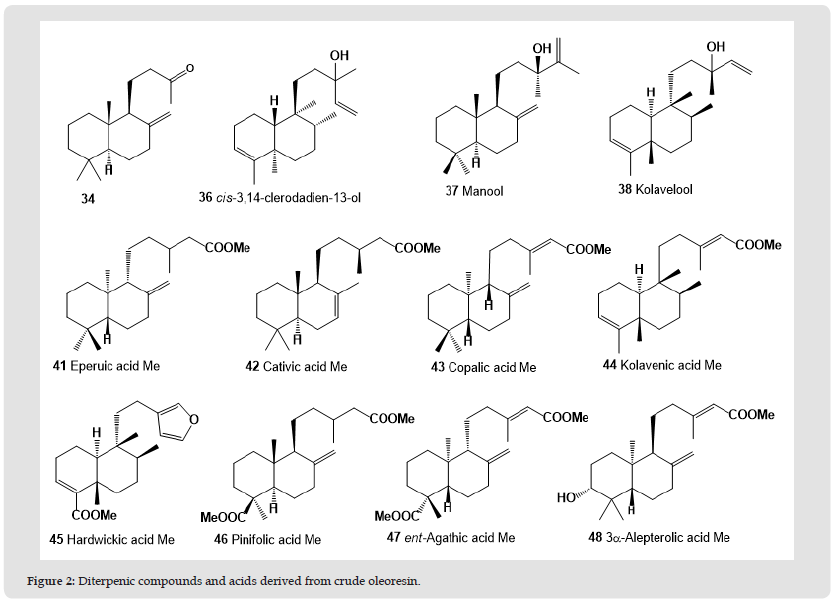
Table 2: Identified diterpenic compounds in crude resin from the tree after sample methylation.
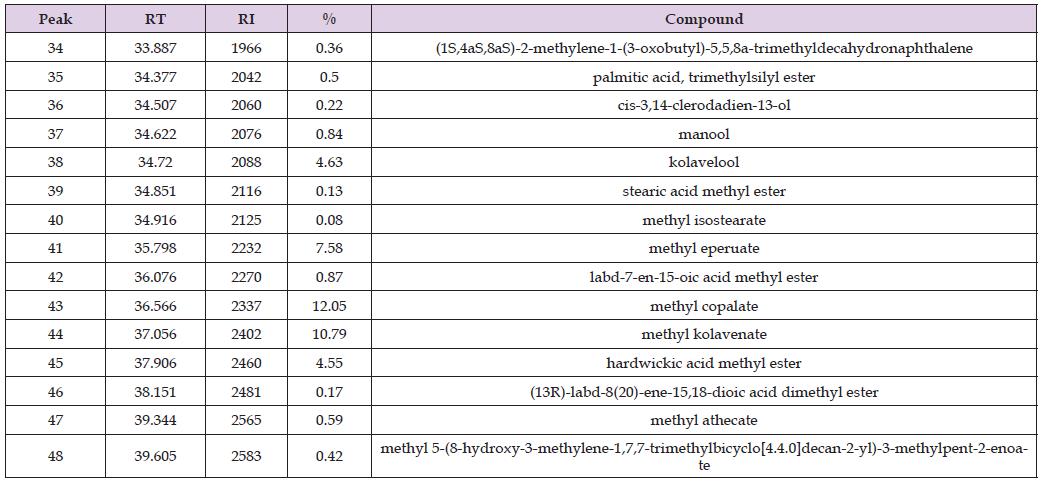
Figure 1
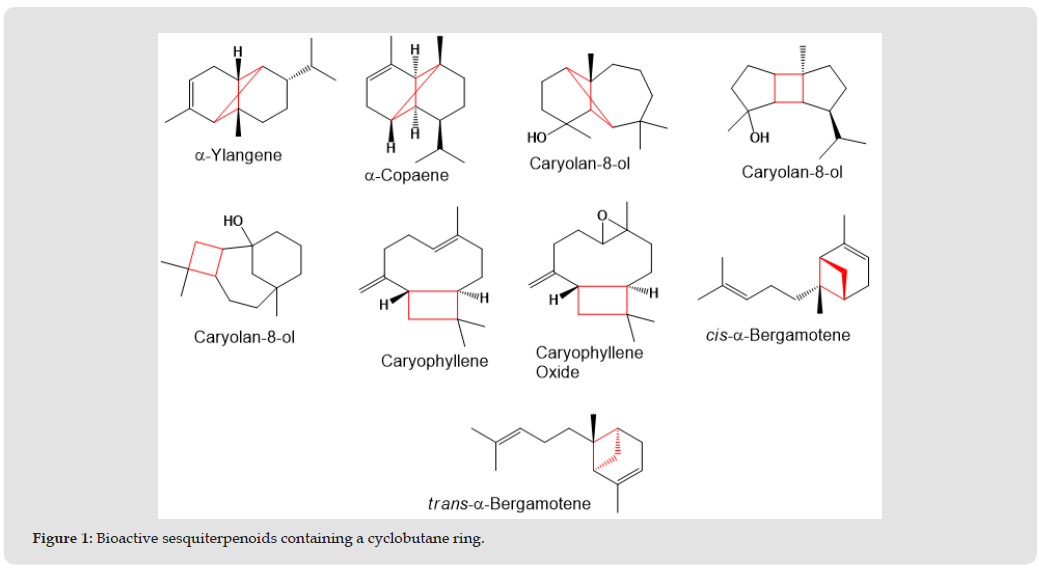
Figure 2
The ylangenes are sesquiterpenoids which are found in plant sources, and their derivatives are also found in marine organisms. Schisandra chinensis fruit is one of the 50 main fruits in traditional Chinese medicine, particularly used for indications related to blood sugar control, acid-base balance and uterine myotonic activity. Schisandra fruit essential oils contain more than 23%, and have antioxidant, antibacterial, and anti-carcinogenic activities, making them a potential ingredient for the development of nutraceuticals, cosmetics, pharmaceuticals and functional foods [34]. The essential oil of Schisandra henryi subsp. hoatii from the Central Highlands of Vietnam contains more than 50.1% ylangenes and exhibits antibacterial activity against both Gram-positive (Staphylococcus epidermidis, Staphylococcus aureus, Bacillus subtilis) and Gram-negative (Escherichia coli, Pseudomonas aeruginosa, Proteus vulgaris) bacteria [35]. It is known that caryolan-8-ol can exist in three forms, but we do not know in which form it was in crude resin. It is present in small amounts in most resin oils. Copaenes, like ylangenes, are sesquiterpenoids and are found in plant materials. α-Copaene is a tricyclic sesquiterpene, with excellent biological activity, but the antibacterial activity and mechanism of action of α-copaene are still unclear. As shown in the study, α-copaene demonstrated antibacterial activity against four common food pathogens: Staphylococcus aureus, Escherichia coli, Bacillus cereus, and Shigella bogdii. α-Copaene inhibited bacterial growth with a minimum inhibitory concentration of 0.5-1 μl/mL and a minimum bactericidal concentration of 2-4 μl/mL [36].
Both cis- and trans-α-bergamotenes belong to the class of sesquiterpenoids and are present in the essential oils of some plants. Bergamot essential oil (Citrus medica var. sarcodactylis), which is extracted from the peel of the bergamot fruit, has many health benefits, such as improving blood circulation and anti-cancer activity. Bergamot has been used as a medicinal plant because of its anti-fungal, stomachic, and bacteriostatic properties of its fruit. In addition, Bergamot essential oil is an important widely used product in many flavors and perfumes [37,38]. β-Caryophyllene and its oxide are widely distributed in the essential oils of many plants. Both have significant anticancer activity, affecting the growth and proliferation of numerous cancer cells. In addition, both compounds enhance the classical efficacy of drugs by increasing their concentration inside cells. The mechanisms underlying the anticancer activity of these sesquiterpenes are poorly described [39-41]. In addition, it exhibits antioxidant, antimicrobial [42,43], anti-inflammatory, analgesic [44], anti-nociceptive and antipyretic activities [45] (Table 1).
Extraction with hexane oleoresin solution does not allow to extracted diterpene acids from plant raw materials. For these purposes we used the methylation method with subsequent extraction with a hexane-chloroform mixture (1:1, by volume). The analysis of diterpene acids and essential oils after methylation of the starting material by GC/MS is shown in Figure 2, and the composition is given in Table 2. Diterpenic acids constitute a relatively small proportion (11.14%) of the compounds identified in oleoresin. According to published data, C. officinalis extracts show antimicrobial, antischemic, anti-inflammatory, and anti-inflammatory activities. In addition, the extracts have inhibition of human leukocyte elastase and have anti-antitumor activity against Walker 256 carcinoma [1,2]. There are published data in the literature regarding the biological activities of some diterpenic compounds and acids, which were identified in this work, and their brief description is given below. Methyl ketone (34) was found as an intermediate in the synthesis of the labdane diterpene derivative, syn-copalol [46]. cis-3,14-Clerodadien-13-ol (36) is a rare compound found in the aerial parts of Nannoglottis carpesioides [47], in the leaves of Cosmostigma cordatum [48], in Madhuca longifolia bark extracts [49], and in the Japanese liverwort Jungermannia infusca [50].
Manool (37), a well-known diterpene isolated from various plant extracts, shows cytotoxicity and selectivity against various cancer cell lines such as B16F10 (murine melanoma), MCF-7 (human breast adenocarcinoma), HeLa (human cervical adenocarcinoma), HepG2 (human hepatocellular carcinoma) and MO59J, U343 and U251 (human glioblastoma), it can be used for cancer treatment without affecting normal cells [51]. In addition, manool has shown activity against human (A375) and murine (B16F10) melanoma cell lines, and it exhibits selective anti-proliferative activity and potential anti-melanoma effect through cell cycle modulation [52]. Kolavelool (38) was found to be the dominantly major ingredient in the essential oil of Stachys buttleri, and the essential oil itself showed strong anticancer activity against A549, U87MG, Ishikawa and MCF-7 cell lines [53]. It has also been isolated from the rhizomes of Kaempferia elegans and Kaempferia pulchra and has demonstrated antimicrobial activity against the Gram-positive bacterium, Bacillus cereus [54]. Eperua oleifera oil-resin extract showed cytotoxicity against tumoral and nontumoral cell lines, with IC50 values ranging from 13 to 50 μg/mL, and a hemolytic activity with an IC50 value of 38.29 μg/mL. It also inhibited collagenase activity, with an IC50 value of 46.64 μg/mL, and matrix metalloproteinase- 2 (MMP)-2 and MMP-9 in HaCaT cells or MMP-1 expression in MRC-5 cells. Labd-8(17)-en-15-oic acid (41, eperuic acid) was found in this extract, and it is known that the oil-resin of Eperua oleifera has been used in popular medicine similarly to the copaiba oil (Copaifera spp.) [55].
Prioria copaifera is a tree of the legume family. It is native to tropical Central and South America, where it is found in tidal estuaries beyond the edge of mangroves, and ranges from Nicaragua to Colombia, and is also found in Jamaica. Cativic acid (42) was discovered from an extract of this tree and its structure was determined as early as 1954 [Grant 1954]. Sixteen semisynthetic esters of 17-hydroxycatenate acid with tertiary amino group-containing alcohols showed in vitro cytotoxicity against two human cancer cell lines, THP-1 and U937, and their effects on cell cycle and cell death. Although 17-hydroxycatenate acid itself is not cytotoxic, all esters exhibited cytotoxic activity with 50% growth inhibition (GI50) values ranging from 3.2 to 23.1 μM [56]. And cativic acid methyl ester showed antimicrobial, cytotoxic and antitumor activities [56]. Copaiba oil, an oleoresin extracted from the genus Copaifera, is widely used in folk medicine to treat a number of diseases and has been shown to have antifungal activity. Copaiba oil and its isolated compounds caryophyllene oxide, copalic acid, and acetoxycopalic acid showed activity against strains of Trichophyton rubrum, Trichophyton mentagrophytes, and Microsporum gypseum. For copalic acid (43), the minimal inhibitory concentration (MIC) was 50 μg/mL, 100 μg/mL and 50 μg/ mL, respectively [57]. The oleoresin of Brazilian Copaifera reticulata is a traditional remedy used for the treatment of skin and urinary tract infections, respiratory diseases, rheumatism, ulcer and tumors; thus, playing an important role in the primary health care of the indigenous population. The crude oleoresin and its acidic fraction showed antibacterial activity against Gram-positive bacteria Enterococcus faecium (IC50 values 4.2 and 4.8 µg/mL, respectively) and methicillin-resistant Staphylococcus aureus (IC50 values 5.3 and 7.2 µg/mL, respectively) [58]. Also, copalic acid showed anti-proliferative activity against MO59J (human glioblastoma cells, inhibitory concentration, IC50 = 68.3 µg/mL) and HeLa (human cervical adenocarcinoma cells, IC50 = 44.0 µg/mL) [59]. Kolavenic acid (44) isolated from plant extracts of Polyalthia longifolia var pendula showed significant growth inhibition of Acanthamoeba castellanii. This acid and extracts may be an interesting strategy in developing alternative therapeutics against Acanthamoeba infections [60]. In addition, kolavenic acid from Macaranga monandra demonstrated antifungal activity against plant pathogens and/or endophytes Colletotrichum acutatum, C. fragariae and C. gloeosporioides, Fusarium oxysporum, Botrytis cinerea, Phomopsis obscurans, and P. viticola [61].
Hardwickic acid (45) isolated from the stem bark of Croton sylvaticus demonstrated potent anti-leishmanial activity against Leishmania donovani and L. major promastigotes, with an IC50 of 31.57 μM compared to amphotericin B with an IC50 of 3.35 μM, respectively [62]. This acid found in Crown aromaticus extract showed insecticidal activity against black bean aphid Aphis craccivora [63]. Pinifolic acid (46) was isolated from Copaifera spp. and showed the greatest activity against promastigotes and also gave a significant increase in plasma membrane permeability and mitochondrial membrane depolarization [64]. Oleoresin from the Brazilian Copaifera reticulata, a traditional remedy used to treat skin and urinary tract infections, respiratory diseases, rheumatism, ulcers and tumors, thus playing an important role in the primary health care of the indigenous population, contained ent-agathic acid (47). This acid was significantly active against dermatophytic fungi, Trichophyton rubrum and T. mentagrophytes [58,65]. 3a-Alepterolic acid (48) is found in the fern Aleuritopteris argentea, with potential biological activities that require further structural modification. Among them, N-[m-(trifluoromethoxy)phenyl] alepterolamide showed comparable activity (IC50 = 4.2 μM) in MCF-7 cells. After N-[m-(trifluoromethoxy)phenyl] alepterolamide treatment, significant increases in cleaved caspase-9, cleaved caspase-3, cleaved poly (ADP-ribose) polymerase (PARP) and Bax/Bcl2 ratio were observed in MCF-7 cells, leading to caspase-dependent apoptotic pathways [66]. Piliostigma thonningii, a medicinal plant grown in Nigeria, is used for various medicinal purposes in African countries and contains 3a-alepterolic acid (48). This acid has shown potential selectivity towards Trypanosoma brucei and Leishmania donovani with IC50 of 7.89 and 3.42 μM, respectively [67].
Copaifera officinalis samples were collected in El Remate on the shores of Lake Peten Itza in Peten, Guatemala. Copaiba essential oil was analyzed for terpenoid content and, after methylation, for diterpene organic acids. The analysis revealed high levels of cyclobutane- containing terpenes such as β-caryophyllene, trans-α-bergamotein, α-copaene, β-caryophyllene oxide and α-ylangen. The levels of cyclobutane-containing terpenes were compared with samples from South and North American countries Brazil, Peru, Colombia, USA and Australia, confirming the high levels of these terpenes, and the diterpene acid composition was analyzed. Data on the biological activities of the main identified sesquiterpene hydrocarbons and diterpene acids are presented. The content of biologically active compounds confirms the validity of using this oleoresin in medical practice and folk medicine in South and Central America. The chemical structures of the identified substances are presented, as well as the chromatograms of the separation of these compounds.
The authors declare that they have no conflict of interest.

International Association of Landscape Archaeology, Czech Glass Society, Czech Republic

Department of Chemistry, Semenov Institute of Chemical Physics, USSR Academy of Sciences, Moscow, Russia

Neurology, LA BioMed Research Institute, USA

Associate Professor at Department of Breast and Thyorid Surgey, Chongqing General Hospital, China

Professor of Nuclear Medicine, Faculty of Medicine and Surgery, University of Milan, Milan, Italy





 Abstract
 PDF
PDF



























