info@biomedres.us
+1 (502) 904-2126
One Westbrook Corporate Center, Suite 300, Westchester, IL 60154, USA
Site Map
 ISSN: 2574 -1241
ISSN: 2574 -1241
ISSN: 2574 -1241
Received: May 19, 2025; Published: May 28, 2025
*Corresponding author: Enes Osmanović, Medical Institute Bayer, Tuzla, Bosnia and Herzegovina
#These authors contributed equally to this work.
DOI: 10.26717/BJSTR.2025.62.009697
Background: Length of hospitalization and major adverse cardiovascular events (MACE) are key indicators of
safety and success following percutaneous coronary intervention (PCI). Procedural complications such as acute
stent thrombosis, contrast associated acute kidney injury (CA-AKI), and hemodynamic instability significantly
affect patient outcomes.
Objective: To investigate factors associated with prolonged hospitalization and increased incidence of MACE in
patients undergoing invasive cardiac procedures.
Methods: This retrospective single-center observational study analyzed data from 1411 patients from the Data
Collection-2024 registry who underwent diagnostic coronary angiography and/or PCI.
Results: Patients undergoing PCI showed a higher risk of early MACE (Peto-Peto-Prentice test: p = 0.022). Cox
regression analysis identified acute stent thrombosis (HR = 2.77, p = 0.001) and CA-AKI (HR = 2.17, p = 0.049) as
significant predictors of MACE. Conclusion: Early identification of key risk factors may improve optimization of
hospital resources and enhance postprocedural care.
Keywords: NOX4; Mitochondrial Oxidative Stress; Acute Ischemic Stroke; Hemorrhagic Transformation; Mechanical Thrombectomy; Blood-Brain Barrier
Abbreviations: ACS: Acute Coronary Syndrome; CCS: Chronic Coronary Syndrome; CKD: Chronic Kidney Disease; DM: Diabetes Mellitus; HFrEF: Heart Failure with Reduced Ejection Fraction; HLP: Hyperlipidemia; HTN: Hypertension; MI: Myocardial Infarction; NSTEMI: Non-ST Elevation Myocardial Infarction; STEMI: ST Elevation Myocardial Infarction; PAD: Peripheral Arterial Disease; CABG: Coronary Artery Bypass Grafting; DAPT: Dual Antiplatelet Therapy; PCI: Percutaneous Coronary Intervention; PTCA: Percutaneous Transluminal Coronary Angioplasty; CA-AKI: Contrast-Associated Acute Kidney Injury; LOS: Length of Stay; LVEF: Left Ventricular Ejection Fraction; MACE: Major Adverse Cardiac Events
Diagnostic coronary angiography is a key method for assessing the condition of coronary arteries and reaching therapeutic decisions. The 2024 guidelines by the European Society of Cardiology (ESC) recommend its use in patients with a high clinical suspicion of significant coronary artery disease, particularly in cases of acute coronary syndrome (ACS) or persistent symptoms despite optimal therapy [1]. While coronary angiography provides a detailed assessment of coronary flow, the procedure carries inherent risks, including vascular complications, contrast-associated acute kidney injury (CA-AKI), and thromboembolic events. To mitigate the risk of complications, the use of noninvasive methods, such as stress echocardiography, multi-slice computed tomography (MSCT), and myocardial scintigraphy, is recommended, particularly for patients at intermediate to high risk [2]. For those with hemodynamically significant stenoses, percutaneous coronary intervention (PCI) remains the standard therapeutic approach, especially in patients with acute coronary syndrome (ACS). Despite procedural innovations that have enhanced safety, factors such as emergency admissions, acute stent thrombosis, and CA-AKI continue to significantly contribute to adverse post-procedural outcomes [3,4].
Most available data are derived from multicenter studies, which may not fully reflect the specifics of individual healthcare systems and hospital protocols. Although less common, single-center retrospective studies allow for a more precise analysis of clinical practice and individual risk factors [5]. This study retrospectively analyzes the Data Collection-2024 database to evaluate clinical and procedural factors influencing hospitalization duration and the incidence of major adverse cardiovascular events (MACE) in patients undergoing invasive cardiology procedures, including coronary angiography and PCI. Previous research has identified acute stent thrombosis, contrast-induced acute kidney injury, and emergency admissions as potential predictors of unfavorable outcomes [3,4]; however, their cumulative role in real-world clinical settings remains incompletely understood.
Study Design
This single-center retrospective observational study is based on the analysis of data from the Data Collection2024 database, which includes clinical, procedural, and temporal variables associated with invasive cardiology procedures. The data were collected and validated through the hospital information system (BIS) and clinical findings, as assessed by interventional cardiologists.
Population Characteristics
The cohort analyzed consisted of 1411 patients admitted to the Medical Institute Bayer (MIB) Tuzla between January and December 2024 for invasive cardiology evaluation, including diagnostic coronary angiography and/or PCI, either as elective or emergency admissions. Additionally, patients who were unexpectedly readmitted within 30 days following discharge were included in the analysis.
Sample Size Estimation
To assess the adequacy of sample size, the minimum sample required to detect significant differences in key outcomes (MACE and hospitalization duration) with a statistical power of 0.80 was calculated: For hospitalization duration analysis, the required sample size was 176 patients. For MACE analysis, the required sample size was 175 patients. Given that the cohort includes 1411 patients, this study achieves sufficient statistical power to detect clinically significant differences in outcomes.
Statistical Methods
All statistical analyses were conducted using STATA 18.0 [6]. Continuous variables were expressed as mean ± standard deviation (SD) for normally distributed data or as median with interquartile range (IQR) for non-normally distributed data. Comparative analyses between groups employed t-tests or Mann-Whitney U tests for continuous variables and χ2 tests or Fisher’s exact tests for categorical data. Time-to-event analyses for MACE were performed using Kaplan-Meier survival curves, with statistical significance assessed through the Peto-Peto-Prentice test. To identify independent predictors of MACE, Cox proportional hazards models were applied, adjusting for clinically and procedurally relevant variables. Validation of the proportional hazards assumption was conducted using Schoenfeld residuals. All results were contextualized clinically, focusing on the personalization of therapeutic strategies and the efficient allocation of hospital resources.
The study included 1411 patients, of whom 62.7% were male, with a median age of 64 years (IQR: 58–70). The majority of patients (87.9%) were admitted from their home environment, while 11.8% were transferred from other medical institutions. Elective admissions predominated in the sample (88.4%), followed by emergency admissions (9.5%) and unplanned readmissions (1.8%). The patient cohort exhibited a high prevalence of cardiovascular risk factors (Table 1). Hypertension was the most common (83.35%), followed by diabetes mellitus (24.45%) and dyslipidemia (51.74%). Chronic kidney disease was documented in 6.02% of the patients. Patients who experienced MACE did not exhibit a significantly higher prevalence of risk factors compared to those without MACE events (p > 0.05) (Table 2). This suggests that acute procedural and clinical factors may play a pivotal role in the development of MACE events. The most common indication for coronary angiography was chronic coronary syndrome, accounting for 61.08% of cases. Acute coronary syndrome (ACS) was the indication in 12.18% of patients. Other indications included reevaluation following MSCT (5.48%), preoperative assessment (7.03%), and cardiac rhythm disorders (7.11%).
Table 1: Baseline characteristics of the study population.
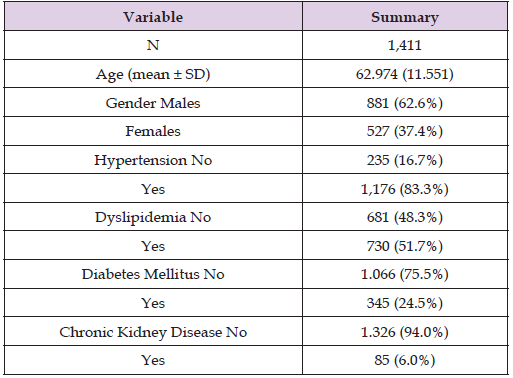
Note: Percentages refer to the total sample (N).
Table 2: Association of risk factors with MACE.
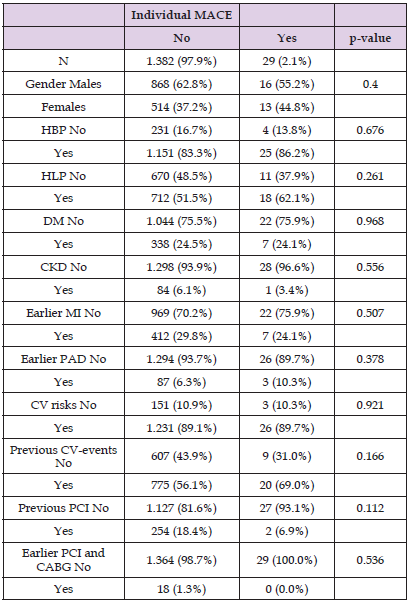
Note: HBP – High Blood Pressure; HLP – Hyperlipidemia; DM– Diabetes Mellitus; MI – Myocardial Infarction; PAD – Peripheral Artery Disease; CV – Cerebrovascular Events; PCI – Percutaneous Coronary Intervention; CABG – Coronary Artery Bypass Grafting, Chi-square test.
Patients with reduced ejection fraction (HFrEF) represented 6.70% of the indications. Complications during coronary angiography were rare, occurring in 1.99% of patients, indicating that procedural factors specific to PCI play a critical role in the pathogenesis of complications. These findings align with previous studies that identified procedural PCI complications as a leading cause of early MACE events [4,7]. Cardiac arrhythmias during the procedure were observed in 0.8% of patients, while contrast-related reactions were exceptionally rare (0.1%). Hemodynamic instability was documented in 0.4% of patients. Vascular complications occurred in 3.2% of cases, including:
• Hematomas (0.9%)
• Arterial spasm (1.6%)
• Arterial occlusion (0.3%)
• Arterial aneurysms or ectasias (0.1%)
PCI was performed in 38.13% of patients, while diagnostic coronary angiography alone was the final procedure for the remaining patients. Most PCI procedures were conducted immediately following diagnostic coronary angiography (Ad-Hoc PCI), accounting for 59.21% of all PCI interventions. Other PCI types included:
• Elective PCI during hospitalization (16.92%)
• Elective PCI from an outpatient setting (15.41%)
• Primary PCI (3.57%)
• PCI after fibrinolysis (1.5%)
• Rescue PCI (0.75%)
• Urgent PCI following previous CABG or PCI (<1%)
The most common intervention type was standard PCI (93.5%), with percutaneous transluminal coronary angioplasty (PTCA) and combined procedures being less frequently performed. Complications related to PCI were recorded in 6.5% of patients. The most common complications included coronary dissection (1.6%) and hemodynamic instability (1.6%), such as significant hypotension and arrhythmias. PCI-induced stent thrombosis was noted in 0.5% of patients, and it was associated with prolonged hospitalization and a higher incidence of MACE. Procedural myocardial infarction (MI) occurred in 0.4% of patients, indicating peri-procedural ischemia and arterial occlusions. Dual antiplatelet therapy (DAPT) was administered to 74% of patients prior to the procedure, while the remaining 26% received it during PCI. A mortality rate of 0.1% was observed during the PCI procedure. Patients who experienced MACE were more frequently admitted as emergencies from other medical facilities and had significantly higher rates of acute procedural complications, including stent thrombosis, ischemic events, and hemodynamic instability. The duration of invasive procedures was documented based on the timestamps recorded during the intervention. The start of the procedure was defined as the moment vascular access was achieved, and the end was marked by the operator’s exit from the angiography suite. Total procedure time was expressed in minutes. The average duration of diagnostic coronary angiography was 9.02 minutes, with a median of 7 minutes (IQR: 5–10 minutes).
The shortest recorded procedure lasted only 3 minutes, likely
associated with emergency admissions for acute coronary syndrome
(ACS), where diagnostic coronary angiography was quickly followed
by PCI of the culprit artery. Conversely, the longest procedure lasted
72 minutes, reflecting the variability in case complexity and the need
for a more detailed assessment of coronary lesions. The average PCI
procedure duration was 35.6 minutes, with a median of 30 minutes
(IQR: 20–43 minutes). The shortest recorded PCI intervention lasted
8 minutes, while the longest extended to 195 minutes, illustrating a
range from simple to technically demanding interventions. This methodology
for tracking procedure duration aligns with the standards of
leading cardiology registries, such as the CathPCI Registry [8]. The
median duration of hospitalization in the analyzed cohort was 25.58
hours (IQR: 23.84), with significant variations depending on clinical
and procedural factors. Admission Method was identified as a key determinant
of hospitalization duration (p < 0.0001):
• Elective admissions had the shortest stay, with a median of
25.58 hours (IQR: 22.05).
• Patients with unexpected readmissions (within one month
of discharge) had significantly longer stays, with a median of
52.75 hours (IQR: 41.50).
Indication for Coronary Angiography also influenced hospitalization
length (p < 0.0001):
• Patients referred for MSCT coronary angiography had the
shortest stays (7.42 hours; IQR:
• 19.17), as did those with arrhythmias (8.0 hours; IQR:
18.75).
• The longest hospitalization was observed in patients undergoing
preoperative evaluation (86.83 hours; IQR: 232.15).
Risk Factors exhibited varied effects on hospitalization duration:
• Diabetes mellitus was associated with a statistically significant
increase in hospitalization (26.04hours vs. 25.17 hours; p =
0.0091).
• Chronic kidney disease (CKD) had an even stronger impact
(26.59 hours vs. 25.25 hours; p = 0.0056).
• Hypertension showed no significant effect on hospitalization
duration (p = 0.9647).
PCI and Hospitalization Duration Hospitalization Duration Based
on PCI
• Patients who did not undergo PCI had shorter stays, with a
median duration of 8.0 hours (IQR: 19.59).
• Those who underwent PCI had slightly longer hospitalizations,
with a median duration of 27.25 hours (IQR: 24.08).
Complications After PCI as Predictors of Extended Hospitalization
PCI-related complications were the strongest predictor of prolonged
hospital stays (p < 0.0001). Patients with complications had significantly
longer stays (49.75 hours; IQR: 66.33), compared to those
without complications (25.0 hours; IQR: 21.50).
• Contrast-associated acute kidney injury (CAAKI) was associated
with the longest hospitalization (195.13 hours; IQR:
148.50; p = 0.0061).
• Acute stent thrombosis significantly extended hospitalization
(74.58 hours; IQR: 97.25; p = 0.0115).
• Coronary dissection also led to prolonged hospital stays
(50.79 hours; IQR: 69.60; p < 0.0001).
• PCI itself is not an independent predictor of MACE; rather,
complications arising during or after the procedure particularly
CA-AKI, acute stent thrombosis, and coronary dissection have the
most significant impact on hospitalization duration.
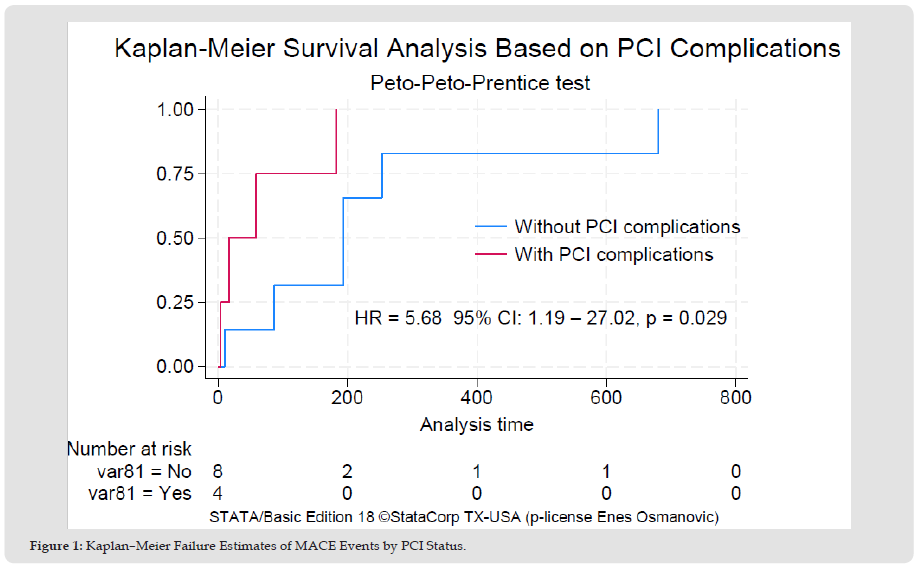
Our findings emphasize the importance of analyzing clinical and procedural factors in predicting hospitalization duration and the occurrence of MACE inpatients undergoing percutaneous coronary interventions (PCI). Hospitalization duration is a key indicator of hospital care efficiency, closely linked to health-care resource utilization, complications, and postprocedural risks [9]. Similarly, MACE serves as a standardized outcome measure for assessing the safety of PCI procedures [10]. The Kaplan-Meier analysis revealed that patients undergoing PCI exhibited a significantly higher incidence of MACE in the early post-procedural period (Peto-Peto-Prentice test: p = 0.0228). However, the Cox regression model did not identify the PCI procedure itself as an independent predictor of MACE. Instead, key factors included acute stent thrombosis (HR = 2.77, p = 0.001) and contrast associated acute kidney injury (CA-AKI) (HR = 2.17, p = 0.049). These results corroborate previous studies, which highlight procedural complications as critical determinants of long-term outcomes following PCI [5,7,11]. Hospitalization duration varied significantly depending on clinical and procedural factors. Patients with chronic kidney disease (CKD) and diabetes had longer hospital stays (p < 0.01). This aligns with previous studies showing that these patients are at a higher risk for complications, such as CA-AKI, hemodynamic instability, and thrombotic events, necessitating more intensive post-procedural monitoring [4,12].
In patients with CKD, the increased risk can be attributed to endothelial dysfunction and disrupted calcium metabolism, which slow recovery following PCI [5]. Among procedural complications, the most significant contributors to prolonged hospital stays were acute stent thrombosis (HR = 2.77, p < 0.001) and CA-AKI (HR = 2.17, p = 0.049). These findings are consistent with large registry analyses indicating that periprocedural complications are key factors driving extended hospitalizations and increased healthcare costs [13]. Furthermore, CA-AKI not only extends hospital stays but also raises the risk of chronic kidney insufficiency and mortality following PCI [4]. Our results underscore the importance of early identification of highrisk patients and the implementation of targeted strategies to reduce procedural complications. Establishing protocols to prevent CA-AKI and optimizing antiplatelet therapy in patients with stent thrombosis could significantly improve outcomes and reduce the need for prolonged hospitalization. Our analysis revealed that hypertension (83.35%), dyslipidemia (51.74%), and diabetes mellitus (24.45%) were the most common risk factors among patients undergoing invasive cardiology procedures. These factors are well-recognized as dominant contributors to coronary artery disease and significantly impact long-term outcomes after PCI [14,15]. A history of myocardial infarction (MI) emerged as a strong predictor of prolonged hospitalization (p < 0.0001) (Figure 1).
Figure 1
Patients with prior MI had notably longer hospital stays, likely due to an increased risk of recurrent ischemic events, procedural infarctions, and the need for repeat revascularization [7]. These findings align with recent studies showing a higher risk of acute post-procedural events in patients with previous MI, including elevated rates of repeat revascularization and a greater incidence of MACE during the post-PCI period [3]. The analysis also demonstrated significant differences in hospitalization duration based on the indication for PCI. Patients with acute coronary syndrome (ACS) had the longest hospital stays (p < 0.0001), whereas those with chronic coronary syndrome (CCS) experienced shorter hospitalizations. These results are expected and consistent with studies confirming that ACS patients particularly those with STEMI require rapid reperfusion strategies, more intensive monitoring, and extended hospital stays due to greater hemodynamic instability and a higher frequency of post-interventional complications [9]. Interestingly, previous PCI or CABG procedures were not significantly associated with hospitalization duration in our cohort. These findings suggest that prior revascularization procedures do not independently determine the length of current hospitalizations. Instead, the clinical context and the presence of complications remain the dominant factors influencing the duration of stay. This is consistent with registry-based analyses indicating that the current clinical scenario, rather than past intervention history, is the key predictor of hospitalization length in patients undergoing PCI [9].
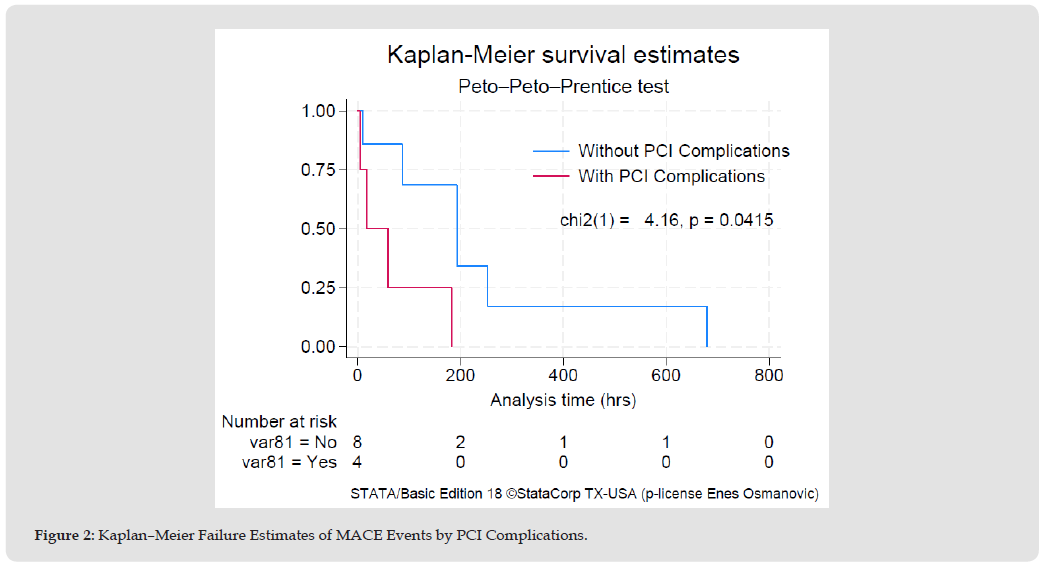
In the analyzed cohort, individual MACE events were documented in 2.06% of patients, while composite MACE was identified in 0.71%. Although the PCI procedure itself was not a significant predictor of MACE (HR = 1.57, p = 0.410), key risk factors for MACE development included acute stent thrombosis (HR = 2.77, p = 0.001) and contrast- induced acute kidney injury (CA-AKI) (HR = 2.17, p = 0.049) (Figure 2). The Kaplan-Meier analysis highlighted a significantly increased incidence of MACE among patients undergoing PCI (Peto-Peto- Prentice test: p = 0.0263). The cumulative risk function revealed an early divergence between curves, depending on whether PCI was performed. Patients with procedural complications demonstrated an even greater risk increase compared to those without complications. These findings emphasize the need for heightened monitoring of high-risk patients, particularly those with a history of myocardial infarction (MI), chronic kidney disease (CKD), and diabetes. These comorbidities are well recognized risk factors for CA-AKI and thrombotic complications. Prolonged dual antiplatelet therapy (DAPT) and early identification of patients with renal dysfunction could significantly reduce MACE risk. Our results are consistent with prior multicenter analyses, which identified acute stent thrombosis and CAAKI as critical risk factors for MACE [3,4]. Targeted preventive strategies and optimized management of these complications can improve outcomes and mitigate risks in PCI patients. Kaplan-Meier curves, illustrated in the figures, depict the incidence of MACE based on PCI status and the presence of procedural complications.
Figure 2
• Our findings confirm that procedural complications, particularly acute stent thrombosis and Contrast-associated acute kidney injury (CAAKI), are key predictors of prolonged hospitalization and increased risk of MACE in PCI patients.
• These findings underscore the importance of early identification of high-risk patients and the implementation of targeted strategies to minimize complications, including the optimization of antiplatelet therapy, nephroprotective measures, and rationalization of angiographic projections.
• The adoption of an individualized approach and the application of evidence-based protocols have the potential to improve treatment outcomes and optimize hospital resources.
Clinical Implications
A comprehensive approach to high-risk patients is grounded in multidisciplinary collaboration and tailored therapeutic strategies, which include:
• A more selective approach to PCI in patients with CKD and diabetes, with careful assessment of the risk-benefit ratio of the intervention.
• Nephroprotective measures, including adequate hydration before and after the procedure, the use of low-osmolality or iso-osmolality contrast agents or diluted contrast when feasible, and rationalization of angiographic projections to reduce total contrast dose and the risk of contrast associated acute kidney injury (CA-AKI)
• Optimized administration of dual antiplatelet therapy (DAPT), balancing thrombotic and hemorrhagic risks, with extended therapy for patients at high risk of thrombosis.
• The tailored implementation of these measures can contribute to the reduction of procedural complications, shortening of hospitalization duration, and improvement of long-term outcomes following the intervention.
Limitations
• Our study is based on data from a single center, which may limit its external validity and restrict the generalizability of the findings.
• Future multicenter studies with extended follow up periods would allow for better validation of the results and enhance their broader applicability in clinical practice.
The authors declare that they have no relationships or activities that could be perceived as a conflict of interest.
Enes Osmanović.


 Abstract
 PDF
PDF






























