info@biomedres.us
+1 (502) 904-2126
One Westbrook Corporate Center, Suite 300, Westchester, IL 60154, USA
Site Map
 ISSN: 2574 -1241
ISSN: 2574 -1241
ISSN: 2574 -1241
Received: May 02, 2025; Published: May 15, 2025
*Corresponding author: Lahimer Marwa, Reproductive Medicine, Reproductive Biology & Genetics and PeRiTox University Hospital and School of Medicine, Picardie University Jules Verne. 80000 Amiens, France
DOI: 10.26717/BJSTR.2025.61.009667
Background: Recurrent pregnancy loss (RPL) is a significant reproductive health issue affecting 1-5% of women of reproductive age. The etiology of RPL is multifactorial, involving genetic, thrombophilia, and metabolic factors. Among these, polymorphisms in the MTHFR gene, which encodes 5,10-methylenetetrahydrofolate reductase, a key enzyme in folate metabolism, have been implicated in RPL. Elevated homocysteine (Hcy) levels due to impaired folate metabolism are associated with adverse pregnancy outcomes. Additionally, mutations in MTRR, Factor V Leiden, and PAI-1 genes have been linked to thrombophilia and RPL. This study aims to evaluate the prevalence of these genetic polymorphisms and their association with Hcy levels in women with RPL.
Methods: A retrospective study was conducted on 459 women with RPL aged 19-47 years. Blood samples were collected for genetic analysis, and Hcy levels were measured. Polymorphisms in MTHFR (C677T and A1298C), MTRR, Factor V Leiden (G1691A, H1299R, Y1702C), Factor II (G20210A), and PAI-1 (4G/5G) were analyzed using RT-PCR.
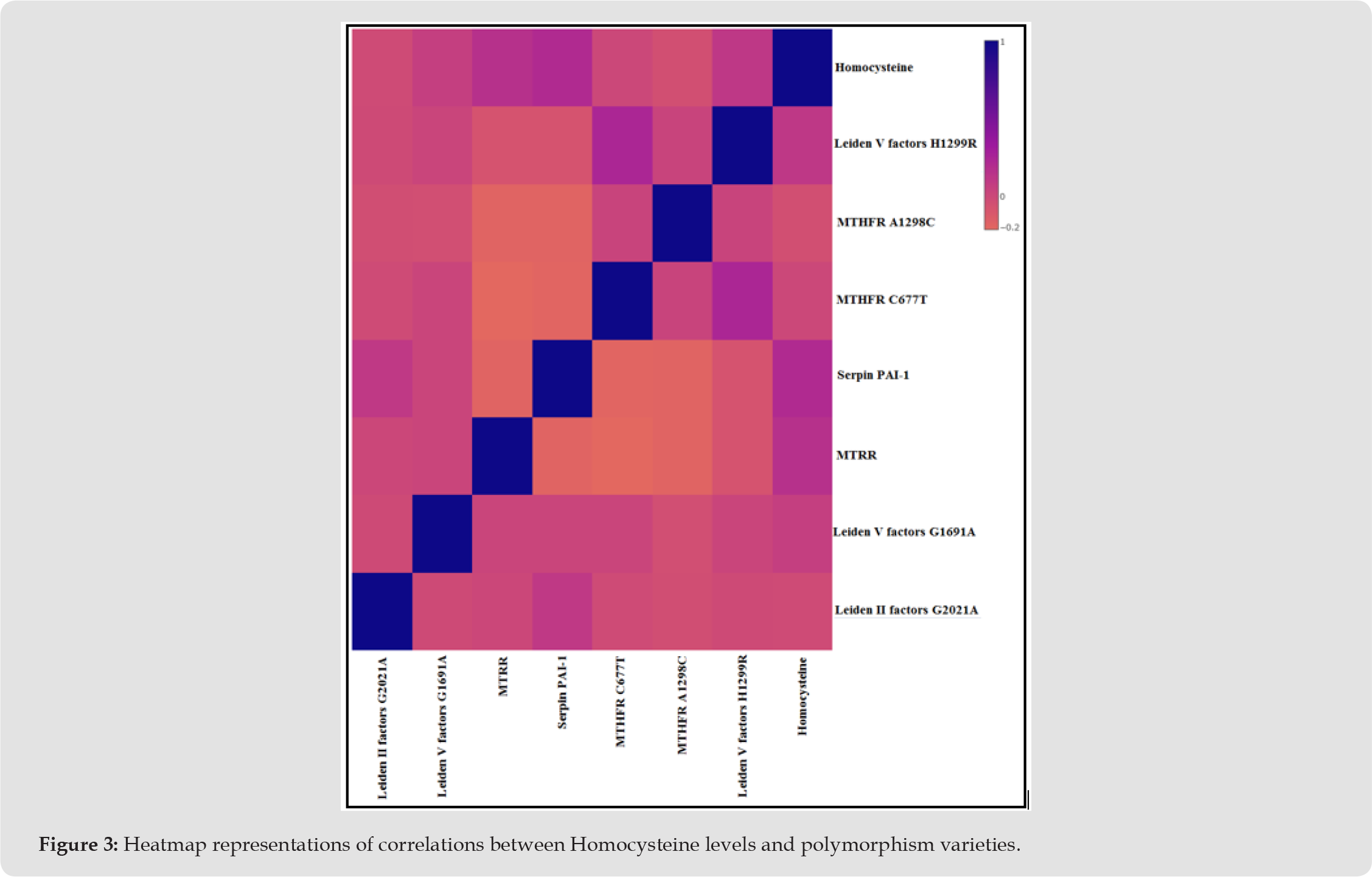
Results: The study revealed that 41% of patients had a heterozygous MTHFR C677T mutation, while 17% were homozygous. The MTHFR A1298C polymorphism was present in 38% of patients in a heterozygous form and 6% in homozygous form. Factor V Leiden mutations were less prevalent, with G1691A present in 2% in a heterozygous state and 1% in homozygous state, and H1299R in 9% in a heterozygous form and 1% in homozygous form. MTRR mutations were found in 47% of patients in a heterozygous state and 16% in homozygous state. PAI-1 mutations were present in 47% of patients in the heterozygous form and 18% in the homozygous form. Hcy levels averaged 10.17 μmol/L, with 32% of patients having normal levels, 8% hyperhomocysteinemia, and 60% hypohomocysteinemia. Significant correlations were observed between MTHFR C677T and Hcy levels, as well as between MTHFR C677T and Factor V Leiden polymorphisms.
Conclusion: This study highlights the significant association between MTHFR C677T polymorphisms and RPL in women with RPL. The findings underscore the value of genetic screening and personalized interventions, including folate supplementation, to mitigate the risk of RPL in this population.
Keywords: MTHFR; Homocysteine; MTRR; Leiden Factor’s Recurrent Pregnancy Loss
According to The European Society of Human Reproduction and Embryology (ESHRE), the Recurrent pregnancy loss (RPL), is defined as the occurrence of three or more consecutive miscarriages at 20-24 weeks of gestation, affect approximately 1% of fertile couples (1-5% of women of reproductive age) (Jauniaux, et al. [1-3]). The American Society for Reproductive Medicine (ASRM) the spontaneous loss of two or more pregnancies (Practice Committee of the American Society for Reproductive Medicine [4]). The etiology of RPL is multifactorial, including structural, infectious, genetic factors, as well as endocrinological dysfunction, thrombophilia, and immunological imbalance (Cao, et al. [5]). Among these, genetic polymorphisms affecting folate metabolism and thrombophilia have garnered significant attention due to their potential impact on pregnancy outcomes. Folate metabolism plays a critical role in DNA synthesis, repair, and methylation, all of which are essential processes for embryonic development (Gurugubelli, et al. [6]). The enzyme 5,10-methylenetetrahydrofolate reductase (MTHFR) is a key regulator in this pathway, catalyzing the conversion of 5,10-methylenetetrahydrofolate to 5-methyltetrahydrofolate, which is necessary for the remethylation of homocysteine (Hcy) to methionine (Ménézo, et al. [7,8]). Accumulating evidence suggests that the MTHFR gene contains numerous polymorphisms (Single Nucleotide Polymorphisms, SNPs), with the most widely studied and clinically significant being c.677 C>T and c.1298 A>C.
These polymorphisms are known to reduce MTHFR enzyme activity, leading to elevated Hcy levels, a condition known as hyperhomocysteinemia. High Hcy is cytotoxic and has been associated with endothelial dysfunction, inflammation, and adverse pregnancy outcomes, including RPL (Dudman, et al. [9]). In addition to MTHFR, other genetic factors such as MTRR (methionine synthase reductase), Factor V Leiden, and PAI-1 (plasminogen activator inhibitor-1) have been implicated in thrombophilia and RPL. MTRR is involved in the regeneration of methionine synthase, an enzyme critical for folate metabolism. Polymorphisms in MTRR can disrupt this process, leading to impaired folate metabolism and elevated Hcy levels (Yadav, et al. [10]). Factor V Leiden and Factor II (prothrombin) mutations are well-known risk factors for thrombophilia, which can lead to placental insufficiency and pregnancy loss (Eslami, et al. [11]). Similarly, PAI- 1 polymorphisms, particularly the 4G/5G variant, have been associated with increased thrombotic risk and RPL (Li, et al. [12]). This study aims to evaluate the prevalence of these genetic polymorphisms and their association with Hcy levels in a cohort of women with RPL. By understanding the genetic and metabolic factors contributing to RPL, we can develop targeted interventions to improve pregnancy outcomes in this population.
Study Population
A retrospective study was conducted on 459 women aged 19-47 years (mean age: 34.2 ± 5.16 years) with a history of RPL. The study period spanned from July 2022 to July 2023. Blood samples were collected in sterile EDTA tubes for genetic analysis and in non-anticoagulant tubes for Hcy measurement. Serum was extracted by centrifugation at 3000 rpm for 15 minutes.
Biochemical and Molecular Analysis
Hcy levels were measured using the Cobas 400 Integra analyzer. Genetic polymorphisms in MTHFR (C677T and A1298C), MTRR, Factor V Leiden (G1691A, H1299R, Y1702C), Factor II (G20210A), and PAI-1 (4G/5G) were analyzed using RT-PCR. DNA extraction was performed using RBC Bioscience or CROBEE machines, followed by amplification on Dtprime or Light Cycler systems.
Statistical Analysis
Statistical analyses were performed using SPSS 22.0 and Graph- Pad Prism 9.0. The normality of quantitative variables was assessed using the Kolmogorov-Smirnov test. Associations between categorical variables were evaluated using chi-square or Fisher’s exact tests. Spearman’s rank correlation coefficient was used to assess correlations between parameters. A p-value <0.05 was considered statistically significant.
The study population exhibited a high prevalence of MTHFR polymorphisms, with 41% of patients carrying a heterozygous C677T mutation and 17% homozygous for the same mutation. The MTHFR A1298C polymorphism was present in 38% of patients in a heterozygous form and 6% in homozygous form. Factor V Leiden mutations were less common, with G1691A present in 2% in a heterozygous state and 1% in homozygous state, and H1299R in 9% in a heterozygous form and 1% in homozygous form. MTRR mutations were found in 47% of patients in the heterozygous form and 16% in the homozygous form. PAI-1 mutations were present in 47% of patients in the heterozygous form and 18% in the homozygous form (Figure 1). Hcy levels averaged 10.17 μmol/L, with a median of 9.14 μmol/L (range: 3.81-82.00 μmol/L). Of the patients, 32% had normal Hcy levels, 8% exhibited hyperhomocysteinemia (>15 μmol/L), and 60% had hypohomocysteinemia (<10 μmol/L) (Figure 2). Significant positive correlations were observed between MTHFR C677T and Hcy levels (r=0.175, p=0.048), as well as between MTHFR C677T and Factor V Leiden G1691A (r=0.184, p=0.028) and H1299R (r=0.171, p=0.043). Negative correlations were noted between MTHFR C677T and A1298C (r=-0.374, p<0.001), and between Factor V Leiden H1299R and MTHFR A1298C (r=-0.157, p=0.043). PAI-1 mutations correlated negatively with MTRR (r=-0.101, p=0.05) and positively with Factor II Leiden (r=0.132, p=0.022) (Figure 3).
Figure 1
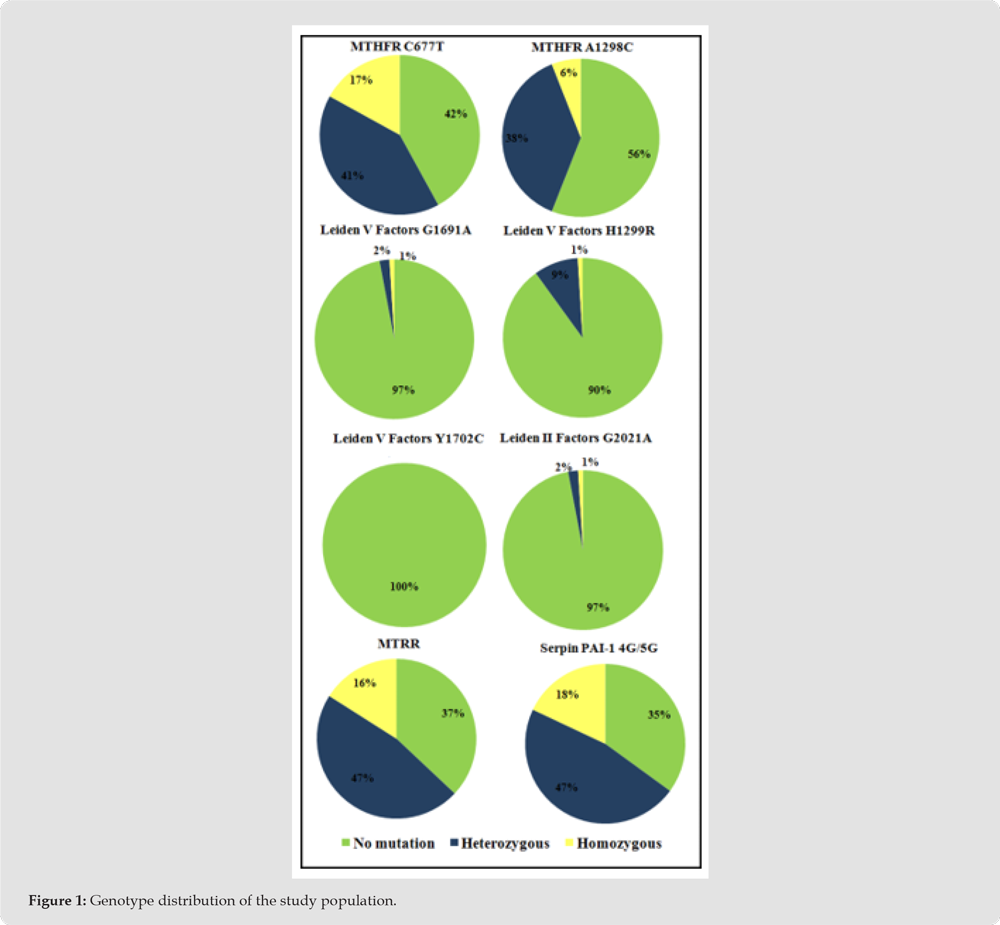
Figure 2
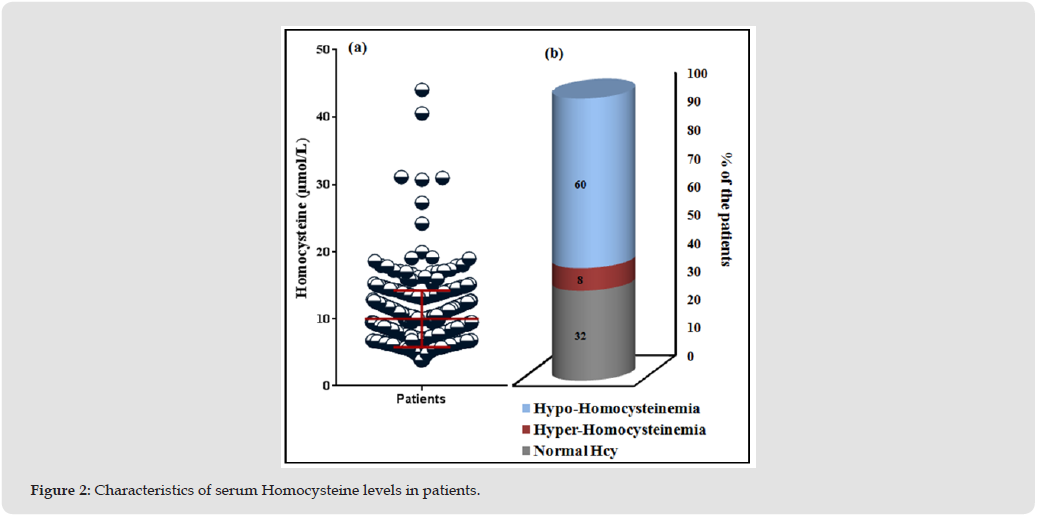
Figure 3
The findings of this study highlight the significant role of MTHFR C677T polymorphisms in RPL among women with RPL. The high prevalence of this polymorphism, coupled with its positive correlation with Hcy levels, underscores the importance of folate metabolism in pregnancy outcomes. Elevated Hcy levels, resulting from impaired folate metabolism, can lead to endothelial dysfunction, inflammation, and placental insufficiency, all of which are implicated in RPL (Dudman, et al. [7,9]). In contrast to previous studies, Factor V Leiden and PAI-1 polymorphisms were not significantly associated with RPL in this cohort. This discrepancy may be attributed to ethnic differences in the prevalence of these polymorphisms. For instance, Factor V Leiden is more common in Caucasian populations, with a reported incidence of 8-32% in RPL patients (Jusić, et al. [13,14]). However, in our study, Factor V Leiden mutations were present in only 10% of patients, suggesting that other genetic or environmental factors may play a more significant role in RPL among women. The low prevalence of Factor II G20210A polymorphisms in our study is consistent with previous findings in non-Caucasian populations (Mierla, et al. [15]). This polymorphism is associated with a twofold increased risk of thrombosis, but its contribution to RPL appears to be less significant in women.
The negative correlation between MTHFR C677T and A1298C polymorphisms suggests that these variants may have opposing effects on folate metabolism. This finding aligns with previous studies indicating that the A1298C polymorphism has a milder impact on MTHFR enzyme activity compared to C677T (Ménézo, et al. [7]). MTHFR mutations can cause elevated homocysteine levels in the blood (hyperhomocysteinemia), potentially hindering proper embryo implantation in the uterus. High homocysteine levels are also associated with pregnancy complications, including preeclampsia, gestational hypertension, and placental abruption, all of which can negatively impact fertility and pregnancy outcomes (Al Hageh, et al. [16]). Furthermore, MTHFR mutations may affect the success rates of fertility treatments (Soligo, et al. [17]). A study by Gong et al. enrolled on a total of 26 studies, comprising 5,575 cases and 5,447 controls. The study outcome revealed that MTHFR 677C>T polymorphism was significantly associated with an increased risk of male infertility (Allam, et al. [18-20]).
This study provides valuable insights into the genetic and metabolic factors contributing to RPL in women. The significant association between MTHFR C677T polymorphisms and RPL highlights the importance of genetic screening and personalized interventions, including folate supplementation, in this population. Further research is needed to explore the role of other genetic and environmental factors in RPL and to develop targeted therapies to improve pregnancy outcomes.
The association between MTHFR C677T polymorphisms and RPL cannot determine if the genetic variations cause RPL. To establish causality, a longitudinal (long-term) study would be needed, where participants are followed over time to see if the presence of a particular gene variant leads to RPL.
All authors have read and agreed to the published version of the manuscript.
This research received no external funding.
The authors declare no conflicts of interest.

International Association of Landscape Archaeology, Czech Glass Society, Czech Republic

Department of Chemistry, Semenov Institute of Chemical Physics, USSR Academy of Sciences, Moscow, Russia

Neurology, LA BioMed Research Institute, USA

Associate Professor at Department of Breast and Thyorid Surgey, Chongqing General Hospital, China

Professor of Nuclear Medicine, Faculty of Medicine and Surgery, University of Milan, Milan, Italy





 Abstract
 PDF
PDF



























