info@biomedres.us
+1 (502) 904-2126
One Westbrook Corporate Center, Suite 300, Westchester, IL 60154, USA
Site Map
 ISSN: 2574 -1241
ISSN: 2574 -1241
ISSN: 2574 -1241
Received: May 02, 2025; Published: May 08, 2025
*Corresponding author: Abdol Ghaffar Ebadi, Department of Agriculture, Jo.C, Islamic Azad University, Jouybar, Iran
DOI: 10.26717/BJSTR.2025.61.009652
Marine algae, being highly versatile photosynthetic microorganisms, constitute an untapped reservoir of structurally diverse and pharmacologically active natural products. Having developed in conditions of extreme salinity, ultraviolet light, and oxidative stress, the organisms have evolved novel metabolic pathways that yield compounds of exceptional therapeutic promise. This theoretical paper addresses the biotechnological promise of key bioactive metabolites—e.g., sulfated polysaccharides (fucoidan, alginate), phlorotannins, sterols (e.g., fucosterol), and terpenes (e.g., squalene)—of marine macroalgae, specifically brown algae (Phaeophyceae). These metabolites possess broad spectrum bioactivities, including antioxidant, anti-inflammatory, anticancer, and neuroprotective activities, primarily through regulation of key signaling pathways such as NF-κB, MAPK, COX-2, and PI3K/Akt. We highlight the ingenuity of novel extraction and upgrade processes, for example, enzyme-assisted bioprocessing, nanoencapsulation, and synthetic biology approaches, to increase yield, stability, and bioavailability of these intricate molecules. A connecting thread for this review is the integration of marine biotechnology with systems pharmacology and omics technologies to accelerate the translation of algal metabolites into clinical pipelines. Despite showing promising in vitro and in vivo results, limitations such as seasonal variation, unsatisfactory oral bioavailability, and scarce clinical evidence remain of concern. Eliminating these disadvantages through the embrace of innovative biotechnological methods may open up sustainable marine-based drug discovery. This article argues for concerted global action on marine biodiscovery, bioprospecting, and eco-ethical utilization of algae resources to meet the growing global demand for novel therapeutic agents in the battle against inflammation, cancer, and neurodegenerative diseases.
Keywords: Marine Biotechnology; Algal Metabolites; Drug Discovery; Bioactive Compounds; Therapeutic Development; Natural Products; Seaweed
Marine algae, comprising the microalgae and macroalgae (seaweeds), are increasingly being viewed as profuse producers of pharmacologically active metabolites with a wide array of therapeutic applications. These species inhabit dynamic and highly stressful marine habitats of elevated salinity, fluctuating temperature, ultraviolet irradiation, oxidative stress, and limited nutrient availability. In order to survive on such stressors, marine algae have evolved highly specialized metabolic pathways, leading to the biosynthesis of structurally different and bioactive secondary metabolites such as sulfated polysaccharides, phlorotannins, carotenoids, sterols, and terpenes. Not only are these metabolites exhibiting ecological roles in the defense and communication of the algae, but also they show strong biological activities in relation to human health, including antioxidant, anti-inflammatory, antimicrobial, anticancer, and neuroprotective activities [1]. The biotechnological appeal of sea algae is their sustainability, tremendous growth rates, low land requirements, and ability to be cultivated in engineered aquaculture systems. Unlike plants on land, marine algae can be harvested year-round and do not compete with food crops for agricultural land or freshwater. Advances in algal growth, high-throughput screening, metabolomic profiling, and bioengineering now allow scientists to tap new chemical scaffolds from these microbes more accurately. With over 10,000 species of marine algae reported, however, most of which are not pharmacologically explored, the marine biome remains a rich source for drug discovery [2].
The brown algae (Phaeophyceae) and red algae (Rhodophyta), in particular, have exhibited excellent bioactive promise due to their high content of sulfated polysaccharides and phenols [3]. The imperative to search for marine algae as a source of new drug leads is increased by the increasing global burden of antibiotic resistance, cancer, and neurodegenerative disorders. The conventional drug discovery pipelines have stalled significantly, while resistance of pathogens to current antibiotics continues to grow. At the same time, an aging population is increasingly susceptible to chronic illnesses like Alzheimer’s, Parkinson’s, and different cancers. With conventional therapeutic modalities in shortage, there is a global push to find alternative and natural sources for novel compounds with multi-targeted bioactivity and fewer side effects. Marine algal metabolites, particularly those with potential to modulate oxidative stress, inflammatory signaling, and neuronal apoptosis, are encouraging in preclinical trials [4]. Furthermore, marine-derived compounds such as fucoidan, fucosterol, phloroglucinol, and squalene have been identified to control important cascades such as NF-κB, PI3K/Akt, and MAPKs, which are implicated in chronic inflammation, tumorigenesis, and neurodegeneration. Marine pharmacology has emerged as an emerging field in recent years through interdisciplinarity backed by biotechnology, chemistry, and systems biology. Marine bioactive discovery and functionalization are also well-aligned with global strategies for accelerating blue biotechnology towards sustainable health innovation. Marine algae, as such, bring not only chemical diversity but also ecological sustainability that is aligned with existing requirements both for environmental preservation and for drug innovation [5].
Marine algae synthesize varied secondary metabolites of multifunctional biochemical properties and therapeutic applications. These metabolites are structurally different, species-, season-, and habitat-variable, and possess potential as drugs against chronic diseases, oxidative stress, inflammation, infection, and cancer.
Polysaccharides (Fucoidan, Alginate)
Polysaccharides, particularly fucoidan, alginate, laminarin, and carrageenan, are most frequently found among brown algae (Phaeophyceae). The polysaccharides possess different bioactivities such as immunomodulatory, anti-inflammatory, antiviral, anticoagulant, and antitumor activities. Fucoidan is a sulfated fucose polymer that has anticoagulant, anti-inflammatory, antiviral, and anticancer activity. It inhibits pro-inflammatory cytokines like TNF-α and IL-1β, enhances macrophage function, and suppresses angiogenesis by modulating VEGF expression. Alginate, another brown algae polysaccharide, forms hydrogels and is exploited in wound therapy, drug release, and tissue engineering due to its biocompatibility and mucadhesive nature. The bioactivity of these polysaccharides is regulated by molecular weight, degree of sulfation, and branching structures [6].
Polyphenols and Phlorotannins
Polyphenols, particularly phlorotannins, are phloroglucinol polymers found predominantly in brown algae like Ecklonia cava and Fucus vesiculosus. These compounds are imbued with intensive antioxidant, antidiabetic, anticancer, and neuroprotective properties. They cause these activities by scavenging ROS, blocking lipid peroxidation, and managing intracellular signaling pathways like NF-κB, Nrf2, and MAPKs. Their biological activity is regulated by polymerization grade and substituent functional groups. In inflammatory models, phlorotannins have been shown to suppress iNOS and COX-2 expression in activated macrophages [7].
Sterols and Terpenes (e.g., Fucosterol, Squalene)
Marine sterols like fucosterol and terpenoids like squalene have potent impacts on inflammation, oxidative stress, and apoptosis. Fucosterol, from Sargassum fusiforme and Undaria pinnatifida, suppresses IL-6, IL-1β, and COX-2 via the PI3K/Akt/NF-κB pathway. Squalene, a triterpenoid, scavenges singlet oxygen and triggers endogenous antioxidant enzymes like superoxide dismutase and catalase. These compounds exhibit synergistic activity if taken in combination with other algal constituents and therefore are of great interest to create multi-targeted therapies [8].
Peptides and Alkaloids
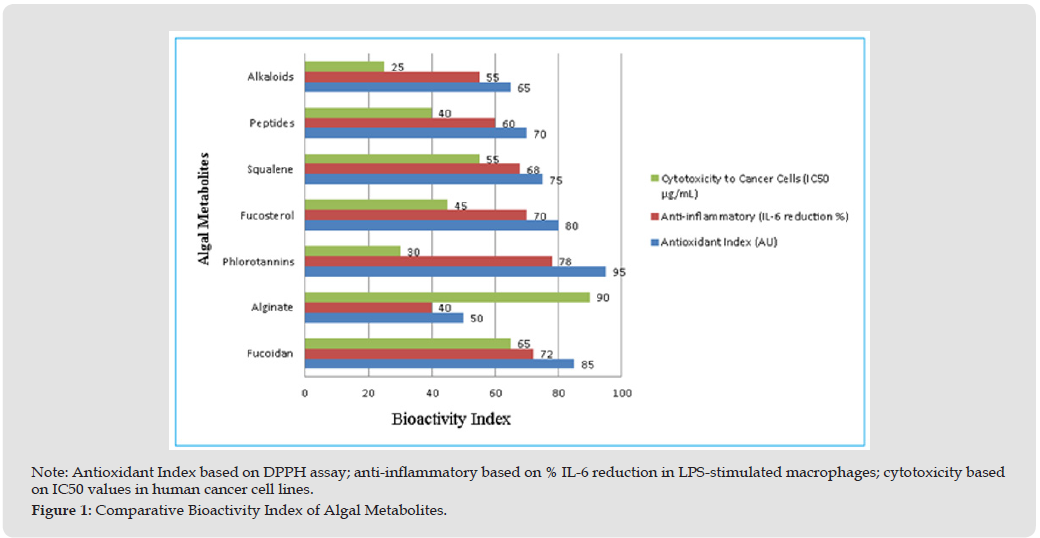
Marine algal bioactive peptides are on the threshold of being antihypertensive, antidiabetic, and anticancer drugs. These peptides generally function as enzyme inhibitors (e.g., ACE inhibitors) or immunomodulators. Algae alkaloids, although less common, exhibit very potent neuroprotective and cytotoxic effects. Red algal (Rhodophyta) indole alkaloids were reported to be acetylcholinesterase inhibitors in recent research, which makes them interesting for Alzheimer’s therapy. The structural variability of marine alkaloids, such as cyclic, heterocyclic, and halogenated types, is responsible for their varied pharmacological activities according to Tables 1 & 2 and Figure 1 [9,10].
Table 1: Marine Algal Bioactives: Classes, Functions, and Mechanisms.
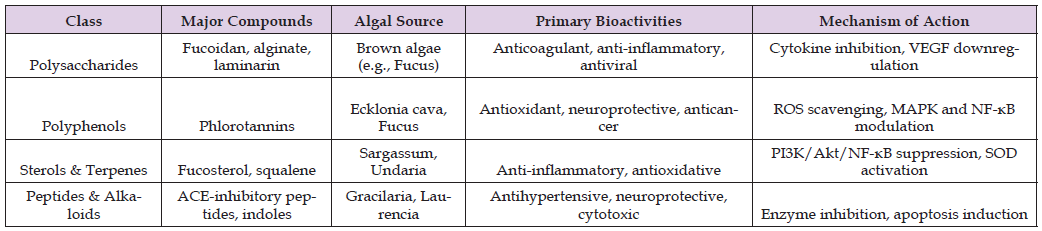
Table 2: Factors Affecting Algal Compound Bioactivity.

Figure 1
Biotechnological advancements have enormously widened the focus of marine algal research by making it possible to enhance bioactive metabolite production, scale up, and functionalization. Enzyme- assisted extraction (EAE) is one of the most promising methods that utilize target enzymes to hydrolyze the cell wall of the algae and increase the purity and yield of target metabolites such as sulfated polysaccharides and polyphenols. When compared to conventional solvent-based methods, EAE is distinguished by increased selectivity, reduced thermal degradation, and improved bioavailability of bioactives. Similarly, microwave-assisted and ultrasound-assisted extraction technologies have increasingly been employed to reduce extraction time and improve compound stability. These green extraction techniques not only preserve algal metabolites’ biological activity but also comply with sustainable drug practices. Furthermore, synthetic biology has emerged as a cutting-edge technology to ramp up and engineer marine algal biosynthetic pathways. Through integration of CRISPR/Cas9 gene editing, omics-based metabolic modeling, and chassis organism assembly (e.g., E. coli and Saccharomyces cerevisiae), researchers are currently capable of expressing multi-subunit algal genes in high-growth hosts, thereby overcoming constraints of seasonal variability and low metabolite titers. Nanoencapsulation of marine metabolites in lipid-based or polymeric nanocarriers improves further their solubility, targeted delivery, and bioavailability within biological systems. Nanoformulations have shown increased efficacy in preclinical disease models due to improved pharmacokinetics and sustained release profiles. All of these technology strategies bridge the gap between marine biodiscovery and industrial drug development [4-6].
Despite the immense therapeutic potential of marine algal metabolites, various barriers still persist to effectively translate them from bench to bedside. Variability in chemical composition due to environmental, seasonal, and geographical factors is one of the primary limitations. Such variability poses difficulties in standardization, quality control, and reproducibility of pharmacological investigations. Furthermore, many marine-derived compounds are hampered by poor oral bioavailability, high metabolic rates, and low permeability across biological membranes. These pharmacokinetic liabilities hinder clinical development and demand advanced formulation strategies. Furthermore, the majority of the available research is confined to in vitro experiments or animal models, and strong clinical trials are a rare occurrence. Low investment, regulatory ambiguity, and a lack of commercial-grade cultivation facilities also contribute to slow-moving progress for marine algal medicines [7-11]. In spite of these impediments, there is significant potential in the future. As biobanks expand in the ocean, global genomics consortia on the ocean, and AI use for screening natural products, the drug discovery pipeline becomes more targeted and streamlined. Wealthy coastal nations like Iran, Japan, and Indonesia are creating marine biotechnology parks and collaborative research centers to speed up drug discovery. Ethical utilization of ocean resources, as per the Nagoya Protocol, guarantees fair bioprospecting and environmentally friendly collecting. Also, the intersection of marine biotechnology and personalized medicine, particularly in neurodegeneration and oncology, presents a new frontier in which algal bioactives could be utilized as combinatorial or adjunct therapies. Future interdisciplinarity and policy support will be needed to fulfill the full pharmacological and ecological potential of marine algae [11-14].
Marine algae are emerging as a potent reservoir of novel bioactive compounds possessing high therapeutic potential. Their diversity, biological activity, and sustainability render them candidates for future drugs. Clinical translation is challenged due to problems associated with variability of compound yield, limited human trials, and bioavailability. Next-generation research should focus on integrative biotechnology tools such as enzyme-assisted extraction, metabolic engineering, nano-delivery systems, and systems pharmacology. By transcending current limitations, therapeutics based on marine algae can become vital components in the battle against inflammation, cancer, infection, and neurodegenerative diseases.

International Association of Landscape Archaeology, Czech Glass Society, Czech Republic

Department of Chemistry, Semenov Institute of Chemical Physics, USSR Academy of Sciences, Moscow, Russia

Neurology, LA BioMed Research Institute, USA

Associate Professor at Department of Breast and Thyorid Surgey, Chongqing General Hospital, China

Professor of Nuclear Medicine, Faculty of Medicine and Surgery, University of Milan, Milan, Italy





 Abstract
 PDF
PDF



























