info@biomedres.us
+1 (502) 904-2126
One Westbrook Corporate Center, Suite 300, Westchester, IL 60154, USA
Site Map
 ISSN: 2574 -1241
ISSN: 2574 -1241
ISSN: 2574 -1241
Received: March 15, 2025; Published: April 30, 2025
*Corresponding author: Jessica Truett, Andrews Research & Education Foundation - Gulf Breeze, Florida, United States
DOI: 10.26717/BJSTR.2025.61.009632
Objectives: This study evaluated the effects of intervention packages, including picture-based task analysis,
TAGteaching and video modeling, targeting the skill acquisition of cadaver repackaging.
Methods: The dependent variable was the participants’ accuracy of task analysis steps completed. Baseline accuracy
of cadaver repackaging was measured, followed by three intervention phases. The first phase combined a
picture-based task analysis with TAGteaching. The second phase used a revised task analysis with TAGteaching.
The third phase introduced a video model and the revised task analysis for participants.
Results: Participants did not achieve mastery with task analysis and TAGteaching. However, all participants
reached 100% mastery after the introduction of a video model and a revised task analysis.
Conclusion: The study indicates that picture-based task analysis and video modeling with high prompt salience
are most effective at improving accuracy of cadaver repackaging, compared to task analysis paired with
TAGteaching. These findings highlight the value of operant learning and organizational behavior management in
healthcare and cadaveric skills laboratory settings.
Utility of Work For Behavior Analytic Researchers
• High salience task analysis and video modeling are effective at increasing the accuracy of cadaveric storage
procedures completed by novel participants.
• Healthcare organizations and cadaveric skills labs can effectively employ operant learning and organizational
behavior management to uphold dignity for individuals donating their bodies to science.
• Behavior analytic intervention packages including task analysis and video modeling, may be more effective
than TAGteaching alone to increase accuracy of cadaver storage in novel practitioners.
Keywords: Healthcare; Organizational Behavior Management; Task Analysis; Video Model
The science of Applied Behavioral Analysis (ABA), in recent history, has predominantly been utilized by practitioners to address socially significant behaviors exhibited by individuals diagnosed with Autism Spectrum Disorder (Axelrod, et al. [1]). While this remains a noble pursuit, the applications of behavioral science extend far beyond these confines. For instance, in the support and improvement of human performance within organizational settings. This research presents an application of ABA principles within the healthcare setting, specifically to facilitate operational outcomes conducted within orthopedic cadaveric skills laboratories and surgical training facilities. The utilization of behavioral strategies within research settings is not without precedence. Research has continued to demonstrate the efficacy of operant learning strategies, such as positive reinforcement, in facilitating skill acquisition by medical residents (Levy, et al, [2,3]). For instance, the use of positive reinforcement has been an efficacious pedagogical strategy for enhancing orthopedic surgical residents’ acquisition of procedural skills (Levy, et al. [2]). Following such success, the medical community has grown interested in reinforcement learning techniques to optimize treatment policies and procedures (Walz, et al. [4]). This runs counter to normative approaches to medical instruction, which historically focused on identifying errors and missteps (Gawande [5]).
Conditional reinforcement, as a differential approach to teaching skill acquisition, has become increasingly popular, particularly surrounding TAGteaching, an acoustic training stimulus (Pfaller-Sadovsky, et al. [6]). This research focuses on a particular issue embedded within a cadaveric skills laboratory setting, which supports translational clinical research initiatives. Clinical research and medical training often rely on the use of cadaveric tissue. It is an ethical and legal imperative that this tissue is transferred, handled, and repackaged with care, in full compliance with organizational, state, and federal regulations (Florida Anatomical Gift Act, [7]). Despite this, for decades, the storage and management of cadavers for gross anatomy and surgical procedures have been a challenging and problematic pursuit (Anyanwu, et al. [8]). More research is needed to understand how operant learning strategies might be applied within the context of clinical research, namely in teaching medical professionals how to competently handle cadaveric tissue. This research study aims to address cadaveric tissue care by evaluating the effects of using a picture- based task analysis and TAGteaching on skill acquisition during the cadaver repackaging process. Results from this study serve to demonstrate how ABA can be applied within the healthcare setting, in pursuance of enhancing performance, task proficiency, and skill acquisition across a multitude of endeavors, from surgical skills to cadaver repackaging.
Participants
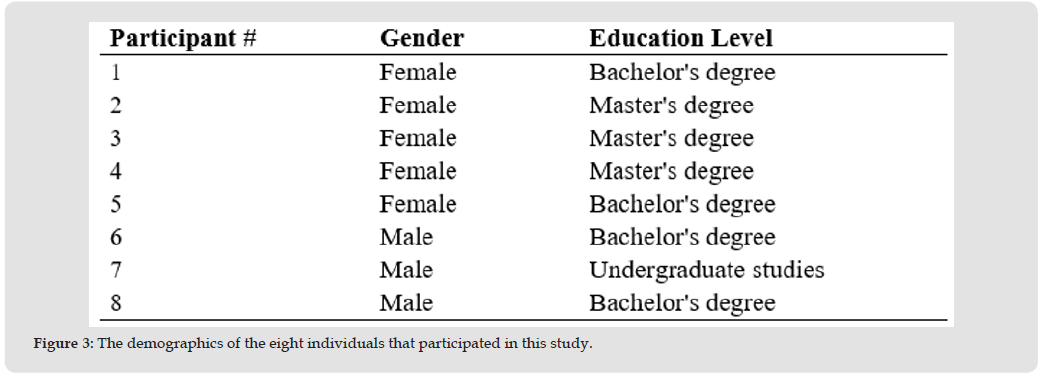
The Institutional Review Board (IRB) approved the study, and eight participants provided consent to participate. The study participants were between the ages of 18 and 35 years and identified as being employed or interning at the clinical research and education facility. Five females and three males were included in the study. Participants had limited exposure to the Cadaveric Skills Lab and no prior experience repackaging specimens. Additionally, all participants had basic understanding of TAGteaching principles as assessed by both the principal and co-investigator.
Setting
This research occurred within a cadaveric skills lab in an orthopedically focused clinical research organization. Within the lab, the investigators created a simulated cadaveric tissue storage testing environment designed to closely replicate the real cadaveric storage requirements.
Materials
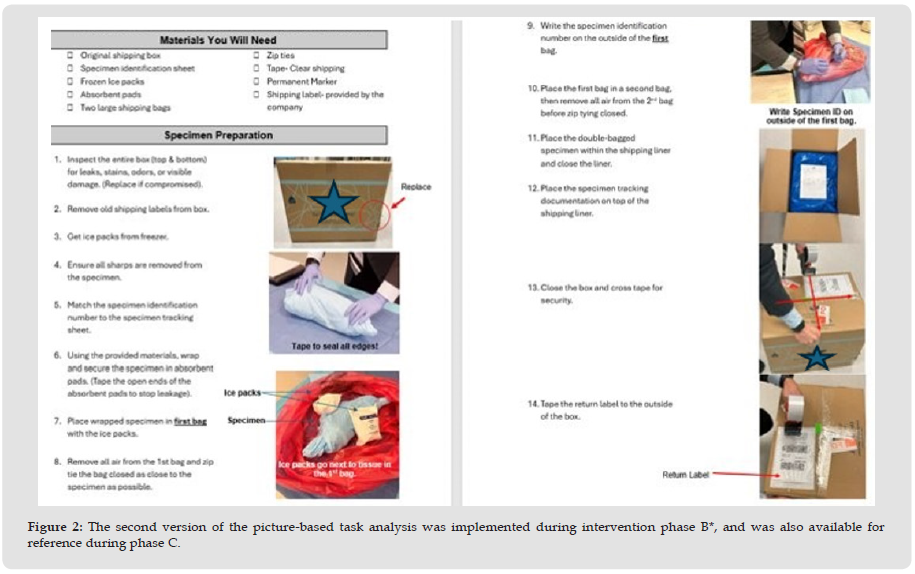
For each phase, participants were provided with a foam cadaveric tissue model and all materials needed to store a cadaver specimen. During the baseline phase of the intervention, participants were provided with the original storage instructions from the cadaveric specimen provider. During intervention phases B and C, the investigators provided the participants with a picture-based, validated task analysis, with modifications made between phases to antecedently combat recurring mistakes made across participants. Specifically, the layout of the document and salience of the required items were manipulated, as depicted in Figures 1 & 2. In the final phase, participants were provided with a video model of the correct cadaveric storage behaviors in addition to the revised task analysis. For the video model, a laboratory supervisor who was fluent in cadaver storage was recorded completing the steps in order and vocally narrating throughout the process. Additional materials provided to the participants included pre-specified packing materials necessary for task completion, including shipping boxes, specimen identification sheets, ice packs from the designated facility freezer, absorbent pads, two large bags, zip ties, tape, and a shipping label. The materials required for the investigators included timers and a paper data sheet which aligned with the task analysis provided to the participants.
Figure 1

Figure 2
Independent Variable
The independent variable was the intervention package used to prompt participants to complete the cadaveric storage procedures provided during each respective intervention phase. During all phases, the original cadaver source company’s instructions were available for use by the participants. Corrective feedback was not provided as part of the intervention. The independent variable for phases B and B* included TAGteaching implementation and the task analysis designed by the researchers. Upon receiving results from Phase B, a second version of the task analysis was created and implemented as part of the intervention package for Phase B*. The changes made to the original task analysis were created to antecedently combat the common mistakes that were made when participants repackaged the cadaver using the first version. A section titled “Materials You Will Need” was included as a preliminary section of the task list, inspection of the shipping box was added to the list of steps, tasks were numerically ordered into steps, and operational definitions were made more concise. Figure 2 presents these changes. Feedback from the participants and data from the first two phases indicated further modifications to the intervention would be necessary for the participants to achieve mastery criteria. The intervention package implemented in phase C included the revised task analysis from phase B* and the addition of a video model.
Dependent Variable
The dependent variable in this study was the participants’ accuracy of completed task analysis steps. Data were collected from the baseline phase and each of the three intervention phases, with each step marked complete or incomplete and measured as a percentage. A task was scored as complete if it was accurately completed. A task was marked as incomplete if it was completed incorrectly or not completed at all. This percentage was evaluated for changes in level and trend for each participant across phases of the intervention.
Data Collection
Data were collected using paper data sheets that provided space for observers to mark whether each step of the repackaging process was completed correctly with a plus sign, or incorrectly with a minus sign. The paper data collection sheets identified the participants by a number that corresponded to the number provided in the sequential order they completed the informed consent process. Data was then consolidated and analyzed using Microsoft Excel on a password protected computer. Each investigator used one sheet per participant.
Figure 3
Interobserver Agreement (IOA)
Interobserver agreement was calculated by adding the total number of trials that both investigators agreed were completed at the same accuracy level for each participant, dividing by the total number of trials for that participant, and multiplying by 100. Using this calculation, the interobserver agreement was calculated to be 100% across all participant trials. Therefore, the data were deemed as valid measures of participants’ behavior.
Experimental Design
The investigators implemented a multiple baseline across participants design to assess three phases of intervention across eight participants. Phases of intervention were structured as A-B, A-B*, A-C. To rule out repeated exposures as a confounding variable, one participant completed phase B* multiple times. No learning effects were observed, strengthening the validity of the data collected across phases and suggesting the TAGteach method presented to participants as part of the intervention package for phases B and B* did not have the effect intended by the researchers. Researchers analyzed the data collected at the termination of each phase to guide revisions made to each intervention package and facilitate participants in obtaining task mastery.
Baseline Phase
Participants were brought to a simulated cadaveric tissue repackaging testing environment within the Cadaveric Skills Lab. They were provided with a foam cadaveric tissue model and a copy of the original instructions provided by the industry partner. Each participant was prompted to repackage the tissue model according to the instructions to the best of their abilities. They were also instructed to narrate their actions vocally, enabling data collection of steps that were not easily observed, such as scanning the tissue for sharps. The principal investigator and co-investigator served as data collectors. The investigators started a timer once the participants initiated repackaging the cadaveric tissue model, for the purpose of measuring duration. The timer was stopped when the participants verbalized that they were finished. No corrective feedback was provided to the participants during the baseline phase to simulate the independent cadaver repackaging task.
Intervention Phases
There were three intervention phases conducted in this study, each providing an intervention package representing a revision from the previous phase following data analysis of the performance of each participant. Participants were provided the standardized instructions from the cadaver sourcing company throughout all phases and told that they could refer to them throughout the repackaging process. The independent variable was manipulated after the investigators completed data analysis to increase performance across phases with the goal of participants achieving mastery criteria. A secondary goal was to gain insight into the efficacy of the TAGteach method for teaching a novel skill without corrective feedback. Researchers included qualitative participant feedback in their analysis and modified the intervention package accordingly.
Phase B: Task Analysis + TAGteaching: The initial intervention package consisted of the validated task analysis developed by the investigators and validated by laboratory staff fluent in the repackaging procedures and TAGteaching. After participants were prompted to complete the cadaver storage procedures, they could complete the steps in any order. An audible click was given each time a step was completed accurately, following the hypothesis that this would serve as positive reinforcement for correctly completing the step. Observers referenced the same task list used in the baseline phase and began the timer once the participants began repackaging the tissue model.
Phase B*: Revised Task Analysis + TAGteaching: During the second phase of the intervention, participants were presented with the same foam cadaveric tissue model and a revised task analysis that included changes made by the researchers in response to recurring errors made across participants from phase B. TAGteaching was used during this intervention phase as well. Observers scored each step as correct or incorrect, and stopped the timer when the participants indicated they were finished.
Phase C: Phase B* Task Analysis + Video Model: The third and final phase of the intervention introduced a video model of the laboratory supervisor completing the repackaging process with 100% accuracy, vocally narrating as she completed the steps. This video model was shown to each participant before beginning the repackaging process. Once the video concluded, participants were provided with the same materials they had in phase B* of the intervention. The timer started when the participants finished watching the video model and vocalized that they were beginning the repackaging process. Observers scored each step as correct or incorrect and stopped the timer when the participants indicated they were finished. TAGteaching was not implemented during this final phase.
Social Validity
The shipment of cadaveric specimens is a highly sensitive matter that requires adherence to regulatory standards for transportation, as well as an ethical responsibility to respect the dignity of the individuals who donate their bodies to science for the advancement of medical research. High accuracy in the skills required to repackage a cadaveric specimen has high social validity as these skills are needed to provide respect to the donors of the cadaveric tissue.
Of the eight participants, two were able to reach mastery prior to introduction of intervention phase three. One participant reached mastery with the first task analysis paired with TAGteaching, while the second reached mastery with the second version of the task analysis paired with TAGteaching. All participants’ data trended upward, not a single participant decreased accuracy at any point during the study. As seen in Figure 4, participant five attempted to reach mastery three times within intervention phase B* but failed to reach accuracy levels higher than 82%. Participant 5’s data trend supports the statement that repeated exposure to the task did not increase accuracy without further intervention. The third intervention package using video modeling and the improved task analysis was significantly more successful with participants reaching mastery independently.
Figure 4
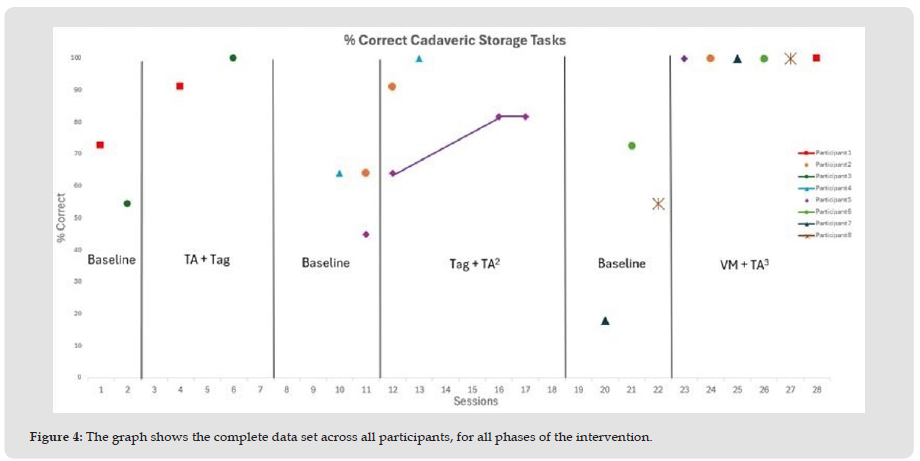
The data supports the use of the intervention package including video modeling and task analysis as the most effective method of supporting participants in reaching mastery level for cadaver repackaging. This intervention method proved to be a better method due to the ability to replicate this training easily for future learners and for varied targeted skills, and the enhancement of accuracy in a short period of time. Limitations were present during this study. Qualitative feedback from participants paired with data collected on accuracy concluded that TAGteaching was not effective at increasing accuracy for this skill acquisition program. Participants stated that they did not have expectations of when the audible click should occur, and they had no reference for when a click was missed. In previous studies conducted using audible clicker training with animals, the acoustic feedback was paired with food to establish it was a conditioned reinforcer. This study and others like it had no explicit pairing with a reinforcer, altering the motivating operation and potentially decreasing the effectiveness of the intervention (Quinn, et al. [9]). Due to the nature of this repackaging process, it was not necessary for each step to be completed correctly before a participant could move on to the next step, making it difficult for individuals to learn this novel skill without corrective feedback. Literature suggests that TAGteaching is better applied in a setting where one step must be correctly completed before moving to the next, such as in surgical knot tying (Levy, et al. [2]).
Although duration data was taken during data collection, the duration of task completion was not analyzed as a socially significant behavior measure for this research as accuracy was the most socially significant behavior measure. Before each trial, participants were reminded that the research procedures were ‘not a race’, and to take the time needed to complete each step correctly. Data collected on duration revealed no statistically significant difference across interventions. The investigators determined that the speed of completion was not of social significance for this process. The priority of this project was to ensure that participants completed the repackaging with accuracy and consistency rather than speed.

International Association of Landscape Archaeology, Czech Glass Society, Czech Republic

Department of Chemistry, Semenov Institute of Chemical Physics, USSR Academy of Sciences, Moscow, Russia

Neurology, LA BioMed Research Institute, USA

Associate Professor at Department of Breast and Thyorid Surgey, Chongqing General Hospital, China

Professor of Nuclear Medicine, Faculty of Medicine and Surgery, University of Milan, Milan, Italy





 Abstract
 PDF
PDF



























