info@biomedres.us
+1 (502) 904-2126
One Westbrook Corporate Center, Suite 300, Westchester, IL 60154, USA
Site Map
 ISSN: 2574 -1241
ISSN: 2574 -1241
ISSN: 2574 -1241
Received: April 10, 2025; Published: April 29, 2025
*Corresponding author: Alber Fares, Assistant Professor of Biochemistry, Xavier University School of Medicine, Aruba
DOI: 10.26717/BJSTR.2025.61.009631
The study investigated the perspectives of high school teachers regarding professional development, aiming to introduce innovative and engaging science teaching methods in high schools throughout the Southeastern United States. Data was gathered to assess their views on how effectively professional development prepared them to implement innovative instructional strategies in their science classrooms, as well as the accessibility and impact of the scientific methods learned from these experiences. In conclusion, the research emphasized the importance of a comprehensive approach to professional development; it indicates that fostering a culture of ongoing learning and adaptability can significantly improve the effectiveness of science education. By investing in targeted and dynamic professional development programs, schools can ensure that educators are wellequipped to inspire and engage the next generation of scientists. Although the schools and educational levels of the participants were deliberately chosen, the faculty members who were interviewed were selected randomly.
Keywords: High School; Teacher; Professional Development; Science
Abbreviations: Professional Development (PD), Professional Learning Networks (PLNs), Students’ Perceptions of Teaching Quality (SPTQs), Professional Learning Community (PLC)
Science Education
[1] Improving science education can greatly benefit society by cultivating well-informed citizens [2]. Additionally, individuals’ understanding of science can be enhanced when it is presented in real- world contexts [3]. Numerous programs provide an excellent framework for teaching science and inquiry, encouraging students to engage in critical thinking and problem-solving in authentic scenarios [4-7]. [8] Science education has garnered unparalleled global attention, serving as a vital component of national strength and a means to tackle social, economic, and environmental challenges [9]. In this context, the urgent necessity for a scientifically literate population is acknowledged as essential, as every country faces the consequences of a rising population, dwindling resources, and environmental degradation [10]. As scientific research progresses at a rapid pace, the average citizen is expected to grasp numerous concepts and navigate scientific matters in their daily lives [11].
Unfortunately, the standard science curriculum often falls short in fostering scientific literacy, primarily focusing on rote memorization of facts about scientific discoveries rather than encouraging comprehension and application [12,11]. This has contributed to the perceptio of science as a challenging subject, often leading to student failure or dropout [13]. However, true scientific literacy goes beyond mere memorization; it involves the practical application of scientific concepts, theories, vocabulary, and techniques [14]. Therefore, educators argue that science education should not merely convey facts but should also cultivate scientific thinking, preparing students to creatively address various socio-scientific issues they may face in adulthood [15,16]. [1] On average, 41% of 12th grade students in the United States were not proficient in science [17]. More specifically, 52% of 11th grade students in Nebraska [18], and 50% of all high school students in Tennessee lacked proficiency in science [19]. As the world continues to evolve, science literacy is crucial when making informed decisions, solving problems, analyzing information, conducting research, and evaluating scientific evidence [20].
Professional Development
[21] Education can foster students’ critical thinking abilities, enhance their capacity for effective collaboration with peers, and stimulate their creativity. However, to realize these goals, educators must exemplify these behaviors and characteristics while cultivating new traits and methods of working. In essence, teachers and school leaders need to evolve into ‘high-level knowledge workers who continually enhance their own professional knowledge as well as that of their field’ [[22], p. 11]. In this context, high quality, continuing professional learning and development is necessary; meaning it is imperative for schools to promote employees’ learning. In other words, for schools to transform themselves into learning organizations. Learning organizations are envisaged as places where people at all levels continually expand and develop their skills and learn as a community [23]. Organizations that learn are expensive and not restrictive; with learning opportunities offered to all employees so that everyone is supported as a learner [24]. Furthermore, employees are likely to participate in communities of practice or Professional Learning Networks (PLNs) both inside and outside the workplace [24,25]. When it comes to schools as learning organizations, there needs to exist ashared vision for the learning of all students, learning opportunities for staff, along with systems for knowledge exchange, a promotion of team learning, a culture of enquiry and innovation and leadership for learning [26].
[27] Teaching quality is a crucial element that enhances student learning [28,29]. Nonetheless, there is variability among teachers regarding the quality and effectiveness of their instructional methods [30,31]. Consequently, it is vital to provide support to teachers in enhancing their teaching quality, enabling them to deliver high-quality learning experiences to as many students as possible. A recent meta- analysis suggests that utilizing data from Students’ Perceptions of Teaching Quality (SPTQs) can assist teachers in this endeavor [32]. SPTQ data presents a distinct viewpoint on teaching quality by gathering insights from students, who are the primary recipients of teachers’ practices [33,34]. [35] Concluded Effective educators play a crucial role in boosting student achievement, bridging the gap between disadvantaged and more privileged students, and enhancing future earnings [36-38]. Consequently, policymakers and educators have devoted significant resources and effort to improving the skills of the teaching workforce. Simultaneously, governments around the globe have allocated billions of dollars towards research aimed at optimizing teacher professional development [39,40].
While the Professional Development (PD) of employees is crucial for an organization’s survival, it is equally important for the employees themselves. Training and development enhance job longevity, as employees can find alternative employment if their current role becomes obsolete [41,42]. Additionally, PD is positively linked to employees’ intentions to stay within their current organizations [43,44]. This is particularly significant in the education sector, where many countries face a notable shortage of teachers [45]. However, providing PD opportunities and fostering a sense of belonging within a professional learning community (PLC) can help teachers enhance their well-being and better manage classroom challenges and stress [46]. [47] Concluded that Teachers are vital in driving educational innovations [48]. Research into teaching innovations has emphasized that both the creation and implementation of these innovations rely not only on individual teachers’ innovative work behavior but also on fostering a collaborative culture of innovation within school communities [49].
Research Methods
Researchers investigated how the teachers’ PDs affected their teaching in science classrooms. The study employed qualitative data to gain a comprehensive understanding of the impact. Surveys and interviews were distributed to gather statistical insights on teachers and administrators’ perceptions and changes in pedagogical practices. [50] Qualitative research necessitates that researchers engage in reflection both during and after the data collection process. The faculty survey data, presented in charts, included multiple-choice questions. The data was disaggregated based on the demographic questions included in the charts. Open-ended survey responses were reviewed and analyzed for recurring words and phrases, revealing emerging themes that aligned with the research questions.
The data for this research was gathered from educational institutions in the Southeastern United States. The study encompassed nine public high schools within a single district, a public virtual high school, and one private school. Participants in the study were high school science teachers. A range of tools was utilized to collect data on their perceptions, with the goal of examining how professional development impacts teachers’ opinions on innovative and engaging teaching practices in high schools throughout the Southeastern U.S. The selected schools exhibit a high level of diversity, as demonstrated by the district’s student enrollment during this study: 46% white, 29% Hispanic, 14% Black or African American, 6% Asian, and 5% Multiracial. Teachers in the district have an average experience of 12.49 years, with 46.35% holding advanced degrees and 98% classified as highly qualified.
This study involved eleven high schools located in the southern United States, each with two to ten science teachers. We randomly selected one to two science teachers from each school to participate in the survey. A total of fifteen teachers took part in the survey, which was administered through either paper forms or Google Forms. To maintain their privacy, participants’ identities were anonymized according to their roles, with codes assigned from T1 to T15. Faculty participants were chosen at random for interviews. They had the option to select how their responses would be collected, whether in person, through Google Forms, via phone call, or through video conferencing. The teachers survey data collected from multiple-choice questions. This data was disaggregated based on demographic questions. Additionally, the open-ended survey responses were reviewed and analyzed for recurring words and phrases, which helped identify emerging themes and address the research questions.
The research questions that shaped the study were open-ended, providing flexibility to accommodate emerging data in line with grounded theory [51]. The questions included:
1. What are high school science teachers’ views on effective strategies to enhance student interest and engagement in science courses?
2. To what degree do high school science teachers feel that their professional development supports the implementation of innovative and engaging instructional methods?
The findings reflect participants’ responses to these research questions, which guided the data analysis. The perceptions of teachers regarding feedback aimed at improving science education were considered. Figure 1 illustrates the diverse age range of teachers involved in this study, 30.8% of the teachers were aged between 50 and 59, another 30.8% fell within the 40 to 49 age group, 15.4% were aged 30 to 39, 15.4% were between 25 and 29, and 7.7% were under 25 years old. Figure 2 illustrates the gender distribution among the participating teachers. Among those who completed the surveys, 61.5% identified as female, while 38.5% identified as male. Notably, no respondents selected the “prefer not to respond” option on the survey. Figure 3 illustrates the racial diversity among the teacher participants. Notably, 84.6% of the teachers identified as White, while 7.7% identified as Hispanic, and an additional 7.7% identified as Asian or Pacific Islander. Figure 4 illustrates the years of experience reported by the teacher participants. Among those surveyed, 46.2% have over 20 years of teaching experience, 38.5% possess 6 to 10 years, 7.7% have 16 to 20 years, and another 7.7% have between 1 to 5 years. Figure 5 illustrates that 38.5% of the participating teachers possess only a bachelor’s degree, while 61.5% have obtained a master’s degree or a higher qualification.
Figure 1

Figure 2
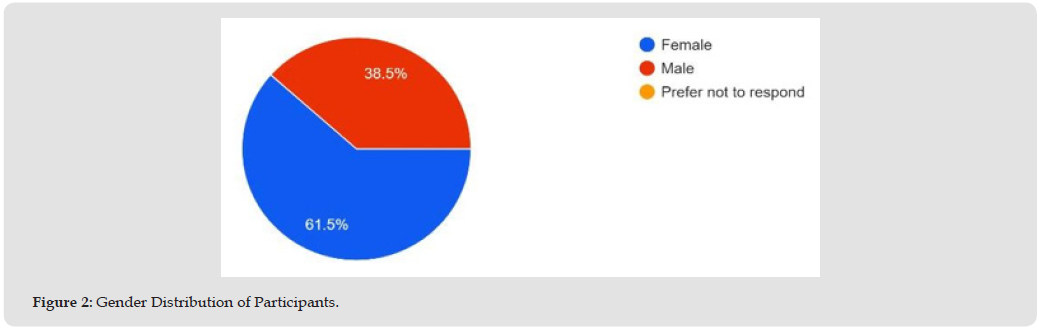
Figure 3
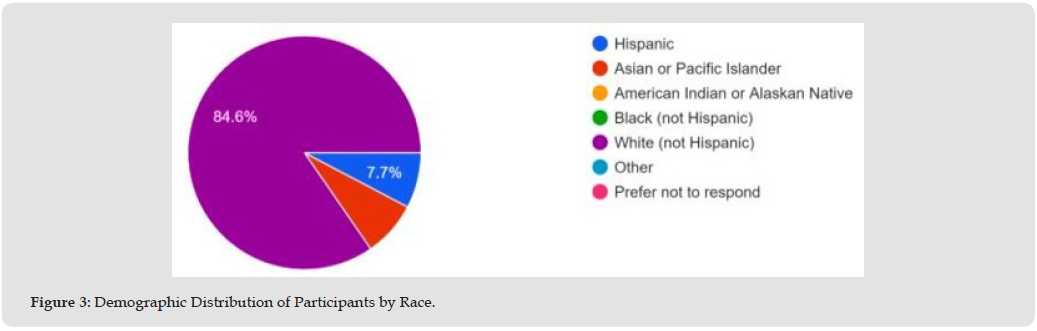
Figure 4
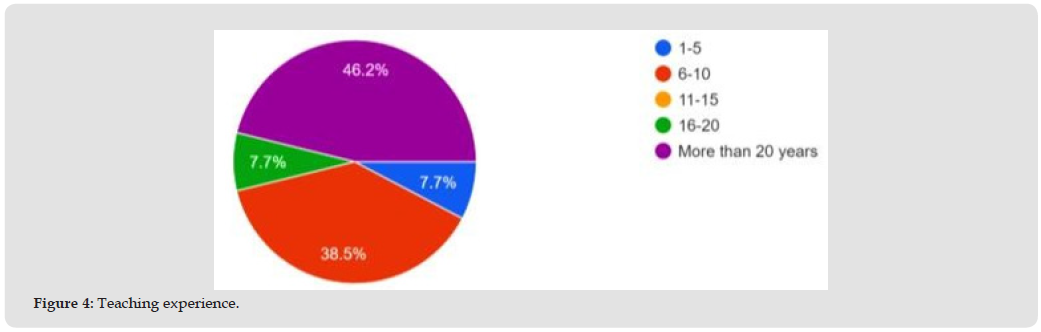
Figure 5
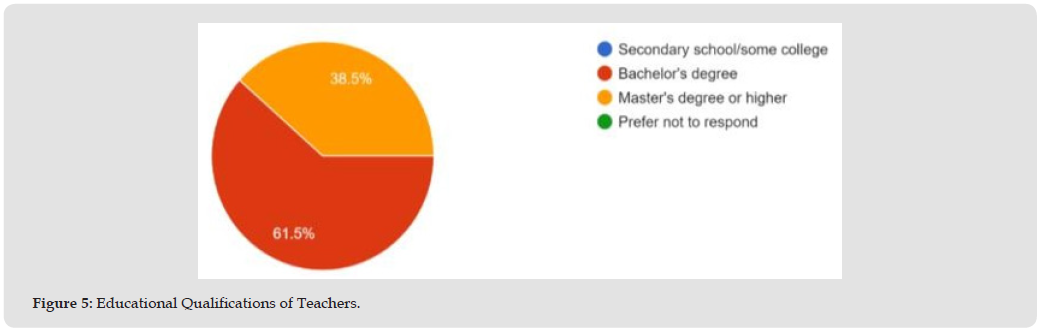
Figure 6 shows that participating teachers indicated they teach a variety of science courses, 23.1% teach biology, 15.4% teach anatomy and physiology, 7.7% teach marine science, 7.6% teach chemistry, and 46.2% teach other science courses. In relation to the research question: What are high school science teachers’ views on effective strategies to enhance student interest and engagement in science courses? This research question explores high-quality, adaptable science education strategies that foster a deep understanding of science concepts, benefiting students throughout their academic and professional journeys. The teachers survey featured three items that focused on participants’ self-reported practices and beliefs about specific instructional strategies, their adaptability in assessment and teaching methods, and their incorporation of student feedback. The survey aimed to address this research question by asking teachers to identify the teaching strategies they frequently employ in their classrooms. The options provided were:
• Traditional Science Instruction (Lecture)
• Authentic Assessment and Peer Review
• Project-Based Learning
• Problem-Based Learning
• Inquiry-Based Instruction
• Active Learning Strategies
• Computation (lecture, cooperative learning, games, etc.)
• Other, Please Specify
Figure 7 illustrates a graph comparing the frequency of different strategies used by the teacher respondents.
Figure 6
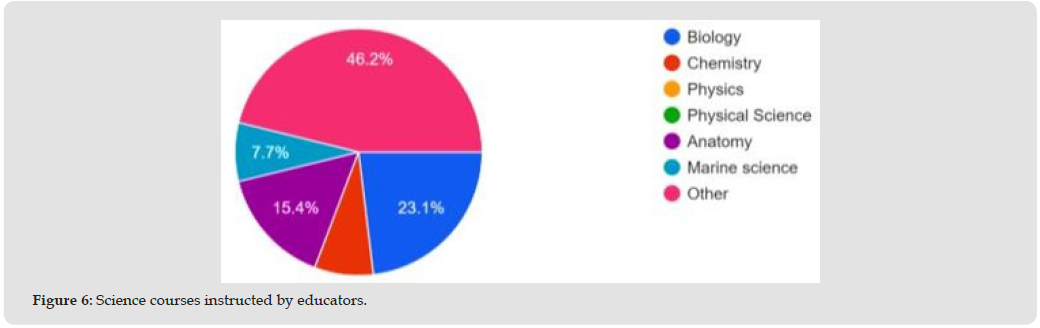
Figure 7
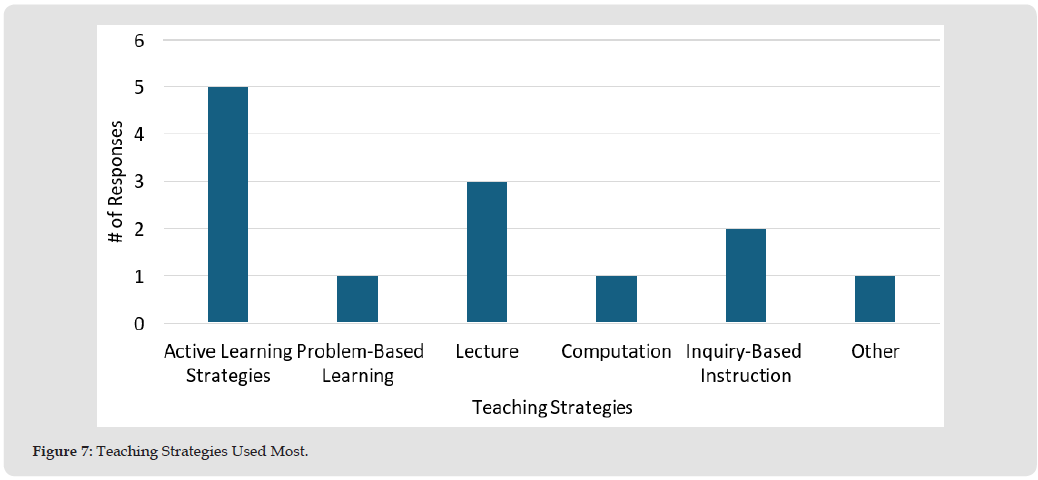
Among the responses, most teachers selected active learning strategies, with five choosing this option. Traditional science instruction (lecture) was the second most common strategy, indicated by three teachers. Two teachers favored inquiry-based instruction as their primary approach. Among the teachers who participated in the survey, problem-based instruction, computation, and the “other” category were the least utilized, with only one teacher selecting each of these strategies. Figure 8 illustrates the teacher survey participants’ perceptions of the importance of each of these skills. To gain a deeper understanding of teachers’ perceptions regarding effective and engaging instructional strategies, the survey question, “How important is it that you cultivate the following skills/knowledge in your students?” The skills listed included:
• Remembering formulas and procedures
• Thinking sequentially and procedurally
• Understanding science concepts, principles, and strategies
• Creative thinking
• Recognizing how science is applied in the real world
• Providing reasons to support their conclusions
Teachers were asked to rate each skill with the following options:
1. Not Important,
2. Somewhat Important,
3. Very Important, or
4. Significant/Essential.
Figure 8
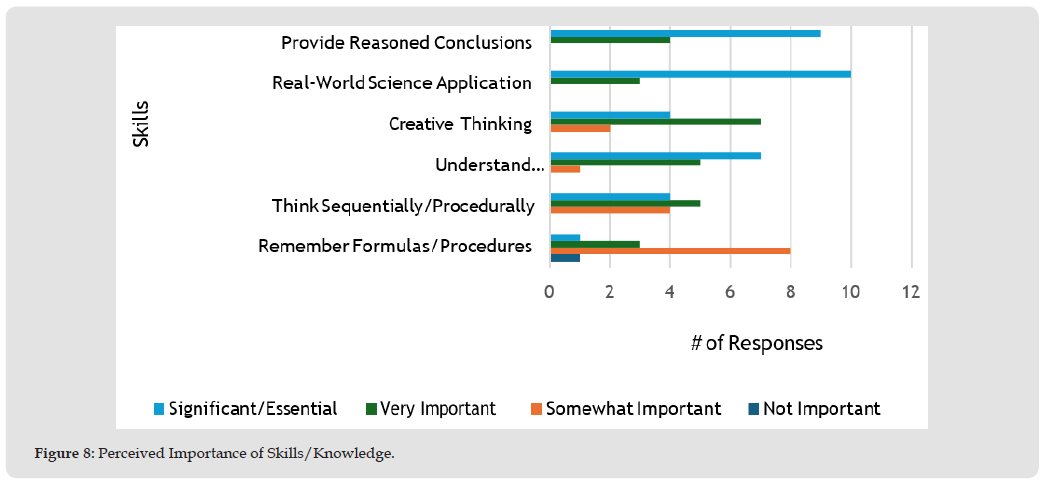
The responses revealed the widest range of opinions regarding the importance of developing the skill of thinking sequentially and procedurally. Both the not Important and significant categories received one response each from teachers. Five educators rated this skill as Somewhat Important, while nine considered it Very Important. This skill garnered the most varied responses across three of the four important categories. Four teachers viewed it as somewhat important, while another four deemed it significant/essential. Seven teachers acknowledged it’s very Important status, with none marking it as not important. Creative thinking and understanding science concepts, principles, and strategies also received responses across three of the four important categories. Notably, none of the teachers indicated that fostering critical thinking in their students is not important. Two survey participants rated it as somewhat important, seven as very important, and six as significant/essential. Understanding science concepts, principles, and strategies yielded similar results: no teachers selected not important, one chose somewhat important, five rated it as very important, and nine deemed it significant/essential. Interestingly, the two skills that the teacher respondents emphasized as most crucial for their science students were the ability to provide reasons to support their conclusions and understanding how science is applied in real- world contexts.
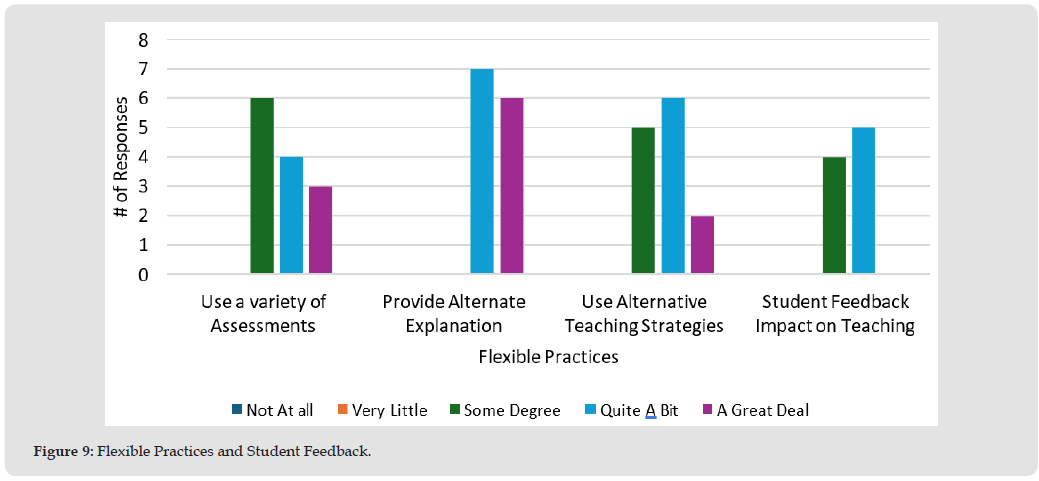
These skills received responses exclusively in the very important and significant/essential categories. Among the surveyed teachers, five rated the ability to support conclusions as very important, while ten classified it as significant/essential. For the skill related to real-world applications of science concepts, five teachers rated it as very important, and ten considered it significant/essential. The teacher survey also explored research question one by asking educators to indicate how frequently they employed the following practices in their science classes:
• Utilize a variety of assessment strategies
• Offer alternative explanations when students express confusion
• Apply alternative teaching strategies in the classroom
The extent to which student feedback influences their teaching, participants could select from the following response options:
1. Not at All
2. Very Little
3. Some Degree
4. Quite A Bit,
5. A Great Deal.
Figure 9 illustrates flexible practices and student feedback. Among the flexible practices discussed, the use of varied assessments and alternative teaching strategies elicited the widest range of responses. For varied assessments, no teachers chose “not at all” or “very little.” Seven teachers indicated they utilized various assessments to “some degree,” five responded with “quite a bit,” and three reported using them “a great deal.” The feedback regarding alternative teaching strategies reflected a similar pattern, with no respondents selecting “not at all” or “very little.” Six participants indicated “some degree,” seven chose “quite a bit,” and two indicated “a great deal” concerning their implementation of these strategies. The practice of providing alternative explanations for students who struggle to understand received the highest ratings. None of the teacher participants chose the not at all, very little, or some degree options for this practice. Eight teachers noted they did this quite a bit, while seven reported providing alternative explanations a great deal. When it comes to the influence of student feedback on teaching methods, none of the teachers indicated that they use feedback not at all or very little. Four teachers reported using it to Some Degree, six stated they utilize it quite a bit, and five mentioned they apply it as a great deal. The second research question was: To what degree do high school science teachers feel that their professional development supports the implementation of innovative and engaging instructional methods? The success of initiatives aimed at achieving high educational standards largely hinges on the effectiveness of teachers and their capacity to develop the necessary content knowledge and instructional techniques required for high academic performance [52].
Figure 9
However, reaching these high standards often compels many educators to adopt teaching methods they have never employed before. There is a significant disparity between the learning experiences of teachers during their training as students or novice educators in traditional classrooms and the innovative practices of today [52]. Similar to students, teachers must actively engage in their learning and have opportunities to discuss, reflect on, experiment with, and refine more effective instructional strategies. Professional development approaches must also consider the critical role of support and the time needed to implement improvements [52]. Meaningful and enduring changes within schools may occur when teacher learning is fostered within a professional community built from both internal and external resources. Collaborating with colleagues in various learning experiences cultivates a sense of community and diminishes feelings of isolation. External learning groups encourage individual initiative; members share common interests and promote innovation [52]. Professional development encompasses much more than isolated workshops; teachers must have the chance to learn how to question, analyze, and adapt their instruction to address challenging content [53]. Effective professional development opportunities that prioritize teacher growth as essential to school transformation can be found both within and outside the school environment.
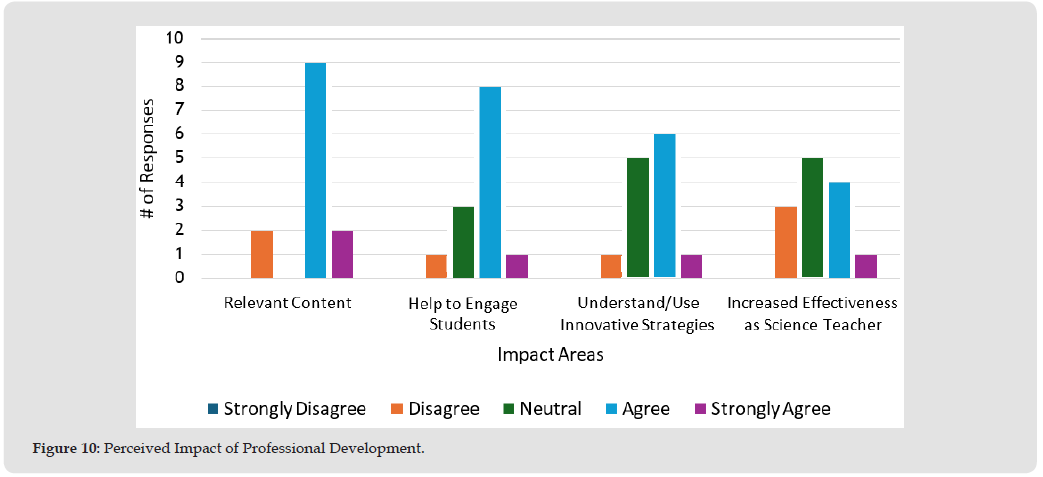
These include teacher-researcher groups, peer review teams, teacher networks, organizational partnerships, and programs that engage teachers in reform activities at national, state, and local levels [52]. All participants in the teacher survey for this study indicated regular involvement in professional development activities. Eight out of the fifteen participants reported attending one to two professional development courses in the current year. Two noted they had participated in three to four courses, while five indicated they had engaged in six to ten or more professional development courses this year. Over the past five years, one participant stated involvement in three to four courses, two mentioned participations in five to six courses, and twelve reported engaging in six to ten or more professional development activities. The following subsections outline the findings from the teacher survey regarding their perceptions of how professional development impacts their teaching, their preferences for professional development formats, and their suggestions for enhancing professional development to support their professional growth. Teacher Perspectives on the Influence of Professional Development on Teaching Effectiveness Figure 10 represented the perceived impact of professional development. In this study, teacher survey participants were asked to assess the relevance of their professional development opportunities and how these experiences connected to their teaching practices. The survey prompted participants to evaluate their agreement with the following four statements regarding their professional development experiences:
• The professional development courses I have completed are
relevant to my current job functions.
• The professional development courses I have attended have
equipped me with instructional strategies that effectively engage
my students.
• The professional development courses I have taken have
enhanced my understanding and use of innovative instructional
strategies.
• I believe my professional development has contributed to
my effectiveness as a science teacher.
Figure 10
Response options for these statements were measured on a Likert scale ranging from
1. Strongly Disagree,
2. Disagree,
3. Neutral,
4. Agree to
5. Strongly Agree.
Notably, none of the participating teachers selected Strongly Disagree for any of the statements, and it is interesting to note that no two teachers provided the same response for all statements. Most respondents felt that their professional development experiences were relevant to their job roles. Specifically, in response to the first statement, two participants chose disagree, none selected neutral, eleven opted for Agree, and two indicated strongly agree. Responses regarding the impact of professional development on teachers’ abilities to engage students and to understand and apply innovative instructional strategies showed some variation, yet a majority responded positively. For the second statement about engaging students, one teacher disagreed, three were neutral, ten agreed, and one strongly agreed. The responses regarding the third statement about understanding and utilizing innovative strategies leaned positive as well, although there were more neutral responses. One teacher disagreed, six were neutral, seven agreed, and one strongly agreed concerning the extent to which their professional development aided their understanding and use of innovative instructional strategies. Overall, responses regarding how professional development contributed to their effectiveness as science teachers tended to cluster in the middle of the scale.
For the fourth statement, three teachers disagreed, six remained neutral, five agreed, and one strongly agreed. Teacher Insights into Preferred Professional Development Opportunities Figure 11 illustrates the responses of teacher survey participants regarding their preferences for professional development formats. In addition to assessing their past professional development experiences, teachers were asked to share which future activities would support their growth. The survey required teachers to express their interest in the following professional development formats:
• In-class observations
• Hands-on participation
• Lecture followed by breakout sessions
• Lecture
• Webinar
• Teleconference
• Series of topic-related workshops
• Independent action research
• Job-embedded (e.g., mentoring)
Figure 11

Teachers displayed a strong preference for a diverse array of professional development formats, with hands-on participation, in-class observations, lecture with breakout sessions, topic-related workshop series, and job- embedded mentoring being the most favored. Handson participation emerged as the top choice, with no teachers selecting no interest or little interest, three indicating moderate interest, and twelve expressing strong interest. Following closely was the topic- related workshop series, which also had no teachers choosing no interest or little interest, ten indicating moderate interest, and five showing strong interest. The formats of in-class observations, lectures with breakout sessions, and job-embedded mentoring received similar responses. None of the respondents selected no interest, two indicated little interest, and eight chose moderate interest for lecture with breakout sessions. In-class observations had slightly lower preferences, with one participant opting for no interest, two indicating little interest, seven choosing moderate interest, and five noting strong interest.
Job-embedded mentoring was also popular, with two teachers expressing no interest, three showing little interest, eight selecting moderate interest, and two indicating strong interest. Three formats demonstrated a balanced split in interest among teachers: lecture, webinar, and independent action research. Webinars leaned more towards non-interest, with two teachers selecting no interest, six choosing little interest, seven indicating moderate interest, and none expressing strong interest. In terms of independent action research, four teachers chose no interest, three opted for little interest, seven indicated moderate interest, and one expressed strong interest. Interestingly, the lecture format also showed a balance of interest, with one teacher selecting no interest, six indicating little interest, eight choosing moderate interest, and none indicating strong interest. Among the options presented, teleconference professional development was the least favored, with four teachers indicating no interest, seven showing little interest, three selecting moderate interest, and one expressing strong interest in participating in a teleconference for professional development.
Teacher Satisfaction with Professional Development Experiences
After conducting a teacher survey, interviews were held with three educators who expressed their willingness to share more about their professional development (PD) experiences. In response to Interview question two, which asked, “Overall, how satisfied are you with the PD programs offered by the school or the district? Why?” Interviewee T3 mentioned that while most professional development sessions were beneficial, “The disabilities training was state-mandated and not as relevant to teaching in a virtual setting.”
New teacher T2 shared their
Perspective: “I am still discovering the nuances of PD at this stage of my teaching career. Since this is new territory for me, I feel satisfied with what I’ve learned this year. Next year, I aim to explore the psychological and behavioral aspects of teaching further. Gaining insights into students’ brain development will enable me to implement more effective teaching strategies.” Follow-up is crucial for the success of any professional development program. When asked about their satisfaction with ongoing support and reinforcement of the material after training for various PD programs and workshops, T3 rated it a “5 out of 5.” Conversely, T2 noted: “It can be challenging to follow up on PD courses or reflect on the strategies implemented amidst the busyness of the school year. My approach is that if something isn’t working or meeting students’ needs, I will devise another plan that does.”
Teacher’s Suggestions for Improved Professional Development
Open-ended Survey invited teachers to suggest ways to enhance the professional development they receive to better their practice as science educators. Some teachers highlighted the importance of making PD relevant to their teaching responsibilities, while others expressed interest in the format and content of the training. As adult learners, the science teacher participants emphasized that their professional development should cater to their growth needs and be pertinent to their roles. One participant remarked, “More targeted professional development would be beneficial. Much of the PD is quite generalized or mandated by the state or county. There are limited opportunities for targeted PD that would enhance teaching strategies.” A chemistry teacher participant echoed this sentiment, stating I believe that many areas of professional development lack either sufficient structure or specificity. Recently, I attended a session with fellow Biology teachers, but all the examples presented were tailored to a biology perspective, leaving me without any Chemistry-related content. The additional professional development time was spent in a mixed group of educators from various grade levels and subjects, which resulted in examples and suggestions that were often irrelevant to my focus or grade level—or both. While activities and lessons were presented in a broad manner to be “all-inclusive,” it ultimately fell on me to adapt them for my specific curriculum. I would truly appreciate leaving a professional development session with practical plans that I can immediately implement in my classroom. One teacher suggested that “follow-up activities and evaluations after classroom implementation, along with regular feedback from a proficient educator,” would enhance learning after the main professional development session. Relevant content should also feature specific examples that can be seamlessly integrated into classroom practice. This point was reinforced by another teacher who remarked, “It is uncommon to receive professional development that includes content-specific examples. That would be fantastic!” Additionally, other educators expressed a desire for clearer guidance on how to engage their students. One participant noted, “It would be beneficial to see more specific examples of applying student engagement strategies within a specific science curriculum.” Another participant echoed this sentiment, saying, “I would love to explore strategies that truly engage my students in interacting with or reviewing content.” Regarding the format of professional development opportunities, one teacher suggested, “Live courses are more effective than online courses, in my opinion. More live courses would be of benefit.” Another participant noted learning would improve “if the courses provided hands-on labs, new technology, and were provided by other science teachers even from the college level down.” It is very difficult to translate professional learning into practice without being provided “time to implement” new strategies, as noted by one of the teacher participants.
Data was collected from nine public high schools, one public virtual high school, and a private school in the Southeastern United States for this study. The participants were high school teachers, and the research focused on their views regarding innovative and engaging teaching practices used in high schools throughout the region.
Additionally, the study examined whether teachers feel that their professional development adequately prepares them to apply innovative and engaging instructional methods in science education. To gather perceptual insights, data was collected through surveys and interviews. A faculty survey was conducted using either a paper form or a Google form, with fifteen teachers participating. The objective of the study was to identify key factors that contribute to the effective implementation of these teaching practices and to pinpoint areas for improvement in professional development programs. Teachers were surveyed and interviewed to gain insights into their experiences and the challenges they encounter when integrating new methodologies into their classrooms. The findings showcased a variety of perspectives, with many educators expressing enthusiasm for innovative techniques while also highlighting obstacles and the need for more targeted training. The study concluded with recommendations for school administrations to enhance support systems, ensuring that teachers are well- prepared to inspire and engage their students through innovative educational approaches.

International Association of Landscape Archaeology, Czech Glass Society, Czech Republic

Department of Chemistry, Semenov Institute of Chemical Physics, USSR Academy of Sciences, Moscow, Russia

Neurology, LA BioMed Research Institute, USA

Associate Professor at Department of Breast and Thyorid Surgey, Chongqing General Hospital, China

Professor of Nuclear Medicine, Faculty of Medicine and Surgery, University of Milan, Milan, Italy





 Abstract
 PDF
PDF



























