info@biomedres.us
+1 (502) 904-2126
One Westbrook Corporate Center, Suite 300, Westchester, IL 60154, USA
Site Map
 ISSN: 2574 -1241
ISSN: 2574 -1241
ISSN: 2574 -1241
Received: April 03, 2025; Published: April 28, 2025
*Corresponding author: Mohammed Ibrahim Saeed, Department of Medical Laboratory, Faculty of Health Science, Gulf Medical University, Jurf1- Ajman, United Arab Emirates
DOI: 10.26717/BJSTR.2025.61.009617
Background: Opportunistic yeast Candida spiceis are causative of candidiasis. Biofilm generation has been a
major contributor to resistance development. Because of the increasing prevalence of resistance, identifying
the antifungal susceptibility is crucial for prescribing effective and customized treatment options and treating
infections with antifungals.
Methods: A total of 83 Candida isolates were acquired from clinical samples and inoculated onto Sabouraud
Dextrose Agar (SDA). The isolated spices were identified using the germ tube test. The disk diffusion method
was used to study antifungal susceptibility disks such as azoles, polyenes, and echinocandins on SDA. Zones of
inhibition were evaluated after 24 hours of incubation at 35 °C.
Results: Antifungal susceptibility varied by species, with flucytosine, Amphotericin B, and Econazole showing
the maximum resistance (100%, 54.2%, 50.6%), whereas Clotrimazole showed the highest susceptibility
(92.7%), followed by Nystatin (90.36%). Candida glabrata, on the other hand, had higher resistance to Ketoconazole
(20%) and Econazole (60%). However, the antifungal drugs had a larger effect on Candida tropicalis.
Clotrimazole had the highest susceptibility rate (82%), whereas Ketoconazole was more resistant in their analysis;
these findings were equivalent to those observed in Nepal. However, in Yemen, Miconazole and Clotrimazole
were the most sensitive, while Econazole was the least sensitive, which is consistent with the results of this
investigation.
Conclusion: It is crucial for treating Candida species to rely on diagnostic laboratory culture and susceptibility
profile data when prescribing successful antifungal medication since these can have a substantial impact on
clinical decision-making and effective candidiasis treatment.
Keywords: Candida Albicans; Glabrata; Tropicalis; Krusei; Antifungal Susceptibility
Abbreviations: VC: Vaginal Candidiasis; UTI: Urinary Tract Infection; NAC: Non-Albican Candida; GTT: Germ Tube Test; SDA: Sabouraud Dextrose Agar
Candida is a genus of yeast that is an opportunistic fungus, and it can live aerobically or facultatively anaerobic, and reproduce asexually by budding spores [1]. The candida species inhabit the human body, specifically the skin, mouth, and gastrointestinal tract [2]. But, in some circumstances, they can become opportunistic and lead to infections, especially among immunocompromised diseases individuals or those whom are undergone immunosuppressive treatments [3]. The recurrent vaginal candidiasis (VC) still stands as a challenge to women in different parts of the world [4]. The occurrence of hospital-acquired urinary tract infection (UTI) caused by Candida species is reported to range between 10% -15% [5]. Candida is a diverse group with over 17 types known to infect humans. But most infections are due to five species which cause about 95% of infections: C. albicans, C. tropicalis, C. glabrata, C. parapsilosis, and C. krusei [6].
Identifying the specific Candida species responsible for an infection is important for selecting the most effective antifungal treatment. A germ tube test is performed to identify Candida isolates from the culture medium [7]. The germ tube is a quick and straightforward way to differentiate C. albicans from other yeast species by observing germ tube growth within 2-4 hours [8]. However, its accuracy is not absolute, as around 5% of C. albicans isolates may not produce germ tubes, potentially leading to misinterpretation, especially with species like C. tropicalis. Antifungal drugs from several pharmacological classes are used to treat candidiasis by targeting certain cellular processes to either inhibit or eliminate the pathogenic yeast [2]. Each antifungal drug has a unique method for inhibiting (fungistatic) or directly killing (fungicidal) fungal infections [2].
However, resistance might evolve as a result of environmental variables that promote the spread or colonization of resistant species [2]. Azoles and polyenes, such as Amphotericin B, Nystatin, Clotrimazole, Econazole, and Ketoconazole, affect the fungal cell membrane, whereas echinocandins, such as Caspofungin and Micafungin, break the fungal cell wall [6]. Furthermore, various studies have shown that Candida biofilms mature and evolve statically in the presence of a minimum matrix, demonstrating a specific level of resistance to medicines such as fluconazole and Amphotericin B [6]. Moreover, data suggests that non-Albicans species, such as C. krusei, which has inherent resistance, and C. glabrata, which is resistant to fluconazole, are less susceptible to routinely used antifungals. C. albicans has also demonstrated resistance to azole-based antifungal drugs such as Amphotericin B [9]. As a result of this resistance, accurate identification of yeast species and antifungal susceptibility tests are required to determine the right treatment [9]. In another study conducted in Sana’a City, Yemen, 141 of 150 Candida spp. were identified from patients. Thus, a total of 141 women were included in the study, and yeasts were recovered in 93 (65.95%) of them, with C. albicans being the most prevalent species among the isolates, followed by C. tropicalis 24 (17.02%), C. glabrata 18 (12.76%), and C. krusei (4.25%) that were isolated from vaginal infected individuals [10].
Antifungal Susceptibility
A research study in Yemen used the disc diffusion method to determine the susceptibility of Candida isolates from female samples. The results showed that Miconazole and Clotrimazole were the most sensitive antifungals for vaginal Candida isolates [10]. However, these isolates were less sensitive to Econazole and fluconazole [10]. In a study conducted in Nepal, it was demonstrated that the different antifungal medicines had different effectiveness against different Candida speciation. The research has found out that Clotrimazole had the highest susceptibility rate of 82% and Miconazole was testified to have moderate susceptibility against 44% of the Candida isolates. Whereas, Ketoconazole had low efficiency, 86% of the isolates in this study were resistant to this antifungal agent. This study showed that C. albicans had a greater frequency of resistance against Ketoconazole as compared to NAC spp, with an 89.3% frequency. There was 20 % sensitivity for C. krusei against a background of other Non-Albican Candida (NAC)species but C. tropicalis & C. glabrata showed no sensitive results. C. krusei had a 20% sensitivity across NAC species, but C. tropicalis and C. glabrata had no sensitive results. C. glabrata exhibited higher fluconazole resistance (42.9%), but C. krusei did not. C. albicans isolates were more sensitive to fluconazole than NAC spp., at 71.5%. C. krusei demonstrated 20% resistance to Miconazole, whereas C. glabrata showed none. Miconazole was more effective against C. albicans isolates (53.6%) than NAC spp. Finally, C. glabrata showed greater resistance to Clotrimazole (14.2%), while neither C. tropicalis nor C. krusei did [11].
Isolation and Identification of Candida
The study ethical approval was obtained from the IRB committee in Gulf medical university with reference number: IRB-COHS-STD-38- FEB-2024.
Sample Collection
Candida species were isolated from vaginal swabs, urine, hair, and sputum samples based on microscopic inspection of budding yeast.
Candida Isolation
The samples were inoculated onto Sabouraud dextrose agar and incubated overnight at 37°C. Candida growth was assessed based on colonial morphology and gram stain which verified the presence of oval-shaped, Gram-positive yeast cells.
Isolate Identification
The spices were initially identified as C.Albican and Non-Albican based on Germ Tube Test (GTT) results as follows: 6-8 candida isolates were inoculated into tubes containing 0.5 mL serum and incubated at 35 °C for 2-3 hours before being examined for germination tubes under a microscope at 40x magnification.
Candida Isolates Preservation
All Candida isolates were grown in pure culture on Sabouraud dextrose agar, then preserved by inoculation into 16% glycerol Glycerol- Sabouraud dextrose broth media and stored at -20 °C until utilized for antifungal susceptibility tests.
Antifungal Susceptibility Testing
The disk diffusion method was used to investigate antifungal susceptibility utilizing antifungal disks of Econazole, Ketoconazole, Miconazole, Amphotericin B, Clotrimazole, Nystatin, and Fluorocytosine in Sabouraud dextrose agar. Suspensions of colonies prepared in sterile normal saline and adjusted to cell turbidity equivalent to 0.5 McFarland standards were inoculated onto the surface of Sabouraud dextrose agar. The antifungal disks were added, and the plates were incubated at 35 °C for 24 hours. The zones of inhibition were measured in mm and compared to the manufacturer’s susceptibility interpretation criteria, (Table 1).
Table 1: Anti-fungal Disks Zone Diameter.

Based on the Germ tube test, 65 (78.3%) of the 83 isolates were Candida albicans, while only 18 (21.6%) were non-Candida albican (Table 2). The susceptibility profile of Candida species to Econazole was found to be susceptible (14.4%), susceptible dosage dependent (34.9%), and resistant (50.6%). Susceptibility to Ketoconazole was (45.7%, 45.7%, 8.4%), Nystatin (90.36%, 7.2%, 2.4%), Miconazole (43.37%, 44.5%, 12%), Clotrimazole (92.7%, 4.8%, 2.4%), and Amphotericin B (3.6%, 42.16%, 54.21%), respectively. and all isolates were (100%) resistant to Flycosytosin (Tables 2 & 3). Clotrimazole has the highest antifungal susceptibility, followed by Nystatin, Ketoconazole, and Miconazole. However, Flucytosine demonstrated the highest resistance levels, followed by Amphotericin B and Econazol (Tables 2 & 3). Candida glabrata was shown to be more resistant to Econazole in 60% of the study isolates compared to other Candida species, with a sensitivity of 30%. Only 13.6% of the samples examined for C. albicans exhibited sensitivity to Econazole, while no sensitive results were reported for C. krusei or C. tropicalis (Tables 2 & 3).
Table 2: Anti-fungal susceptibility testing of various Candida spp.
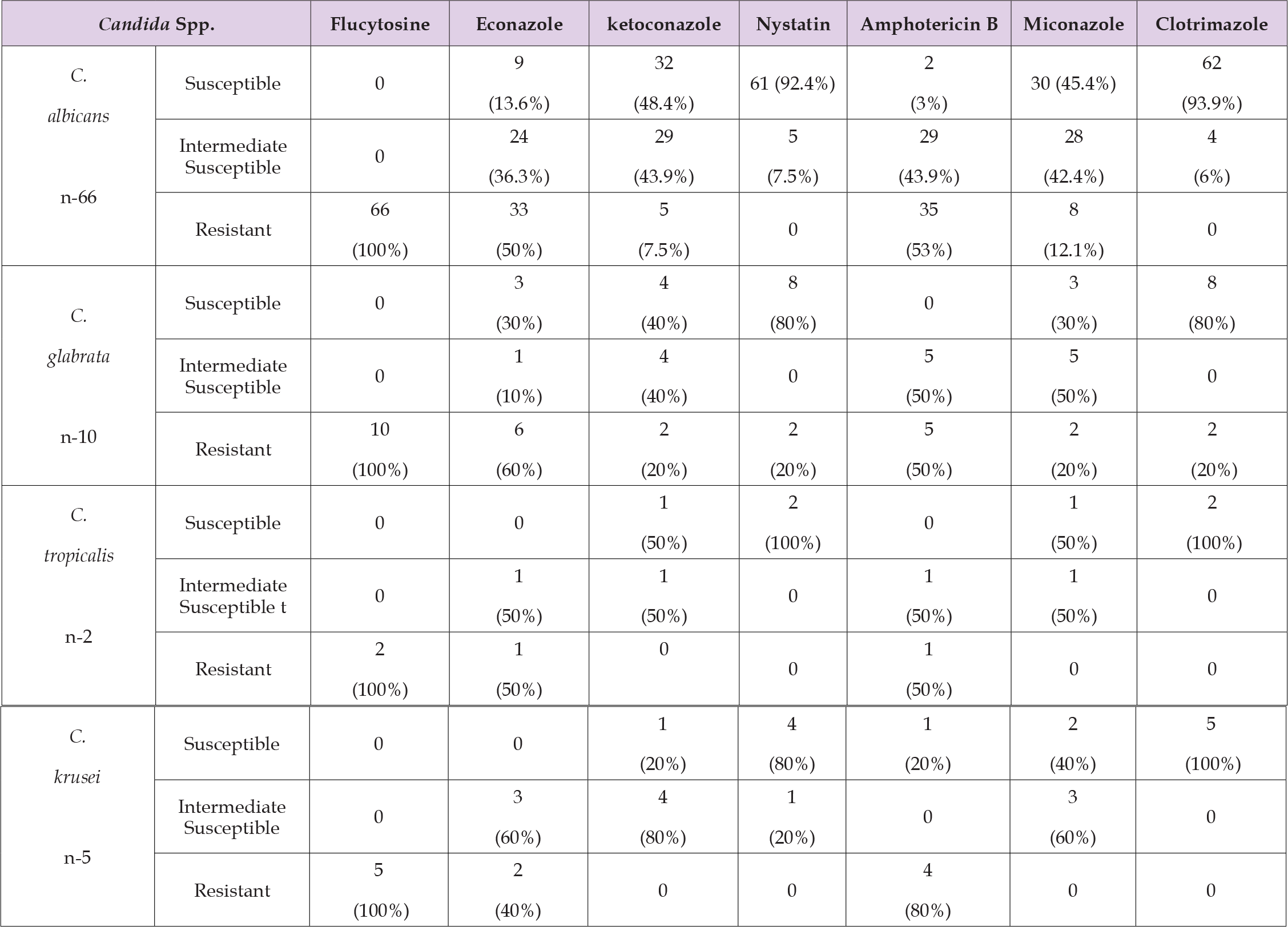
Table 3 Sensitivity vs Resistance of Tested Isolates against the anti-fungal drugs.

Candida glabrata has the highest resistance (20%) to Ketoconazole, followed by Candida albicans (7.5%), with no resistance identified for C. tropicalis or C. krusei. Candida tropicalis, on the other hand, demonstrated higer susceptibility to Ketoconazole. Nystatin resistance was found in 20% of C. glabrata isolates, but C. tropicalis and C. albicans had 100% and 92.4% sensitivity, respectively (Tables 2 & 3). Amphotericin B was less effective; C. glabrata and C.tropicalis isolates were all resistant to this antifungal, and C. krusei showed resistance to this antifungal at (80%) (Tables 2 & 3). Miconazole was highly effective (100%) towards C. krusei, C. tropicalis and C. albicans were more responsive (50% and 45.4%, respectively) and C. glabrata showed 20% resistance to Miconazole (Tables 2 & 3). Clotrimazole was found to be the most effective antifungal against Candida tropicalis (100%) and C. krusei (100%), followed by C. albicans (93.9%) and C. glabrata (80%) (Tables 2 & 3). It was substantially noticed that all isolates were found to be susceptible to Clotrimazole as the best medicine of choice for Candida isolated spices, whereas Flucytosine appears to have the minimum effect against all isolates were found resistant among all studies isolated candida spices (Tables 2 & 3) (Figure 1).
Figure 1

The study aimed to determine the prevalence and distribution of several Candida species. Candida albicans was the predominant isolated species (79.5%), with non-Candida albicans (NCA) accounting for 20.48%. After that, germ tube testing revealed that 65 (78.3%) samples were positive and 18 (21.6%) were negative. Germination identification test revealed four species of Candida, with C. albicans accounting for 79.5%. C. glabrata was the most prevalent NCA species isolated, accounting for 12%, followed by C. krusei (6%), and C. tropicalis (2.4%). The findings differed from those of other studies, including one conducted in Yemen, which found differing species distributions. Candida albicans accounted for 65.95% of the cases, followed by C. tropicalis (17%), C. glabrata (12.76%), and C. krusei (4.25%). In our investigation, C. glabrata was the most prevalent NAC (7.2%), followed by C.krusei and C.tropicalis (6% and 2.4%, respectively). The study found that all Candida isolates were resistant to flucytosine. Furthermore, this study revealed that C. glabrata is extremely resistant to Econazole, with 60% resistance and 30% susceptibility when compared to C. albicans. There was 20% of C. glabrata had Ketoconazole resistance, although resistance was lower in Candida albicans. In comparison, C. tropicalis showed a higher average sensitivity to Ketoconazole. Candida tropicalis and C.albicans showed high levels of susceptibility, whereas 20% of C. Glabrata tested resistant. Similarly, in a study conducted in Nepal, the Sensitivity rate was highest when Clotrimazole was used (82%) and Miconazole exhibited moderate efficacy at 44% of Candida isolates. Whereas, Ketoconazole showed low efficiency, with 86% of isolates demonstrating resistance to this antifungal agent.
Antifungal susceptibility profiles varied between species, with Clotrimazole demonstrating the most efficacy and Flucytosine exhibiting the greatest resistance. C. glabrata had excellent resistance to Econazole, whereas C. tropicalis was more responsive to particular antifungal medications. These findings underline the important of formulating treatment strategies based on the identified Candida species and their susceptibility profiles, which may have a significant impact on clinical decision-making in candidiasis management.
our appreciation to the Gulf medical University, faculty of health sciences and for ethical approval of the study and to department of medical laboratory science for supports and facilities provided.
all author contributed equally in the research design, experimental, interpretation of results, manuscript preparation and review and declared no conflict of interest.

International Association of Landscape Archaeology, Czech Glass Society, Czech Republic

Department of Chemistry, Semenov Institute of Chemical Physics, USSR Academy of Sciences, Moscow, Russia

Neurology, LA BioMed Research Institute, USA

Associate Professor at Department of Breast and Thyorid Surgey, Chongqing General Hospital, China

Professor of Nuclear Medicine, Faculty of Medicine and Surgery, University of Milan, Milan, Italy





 Abstract
 PDF
PDF



























