info@biomedres.us
+1 (502) 904-2126
One Westbrook Corporate Center, Suite 300, Westchester, IL 60154, USA
Site Map
 ISSN: 2574 -1241
ISSN: 2574 -1241
ISSN: 2574 -1241
Received: April 14, 2025; Published: April 24, 2025
*Corresponding author: Jeyatheepan Jeyaretnam, Department of General Medicine, Instrumental Lymph Drainage Approaches, Switzerland
DOI: 10.26717/BJSTR.2025.61.009614
Lymphedema of the lower extremities is a chronic disease characterized by the accumulation of lymphatic fluid, which leads to swelling, discomfort and possible complications. Intermittent pneumatic compression (ACC) has become a non-invasive treatment method aimed at reducing edema and improving the function of the lymphatic system. The study is investigating the long-term efficacy of intermittent pneumatic compression (ACP) therapy as a treatment for lymphedema of the lower extremities.
Keywords: Lymphedema; Intermittent Pneumatic Compression; Lower Extremities; Long Term Treatment; Quality of Life; Chronic Condition
Lymphedema is characterized by a buildup of lymphatic fluid, resulting in significant swelling and discomfort. Traditional treatment strategies include manual lymphatic drainage, compression bandage, and exercise. Distal to proximal compression that mimics the natural pumping mechanism of the lymphatic system has emerged as a promising adjunctive treatment in conditions of long-term treatment.
The study included a cohort of patients diagnosed with lymphedema (Figure 1) of the lower extremities. Participants received BMD therapy for 60 minutes per session, three times a week, for six months. Pre- and post-treatment assessments included limb circumference measurements, a subjective pain scale, and quality of life questionnaires (e.g., Lymphedema Quality of Life Questionnaire). Follow- up evaluations were performed at three, six, and twelve months after the intervention.
Figure 1
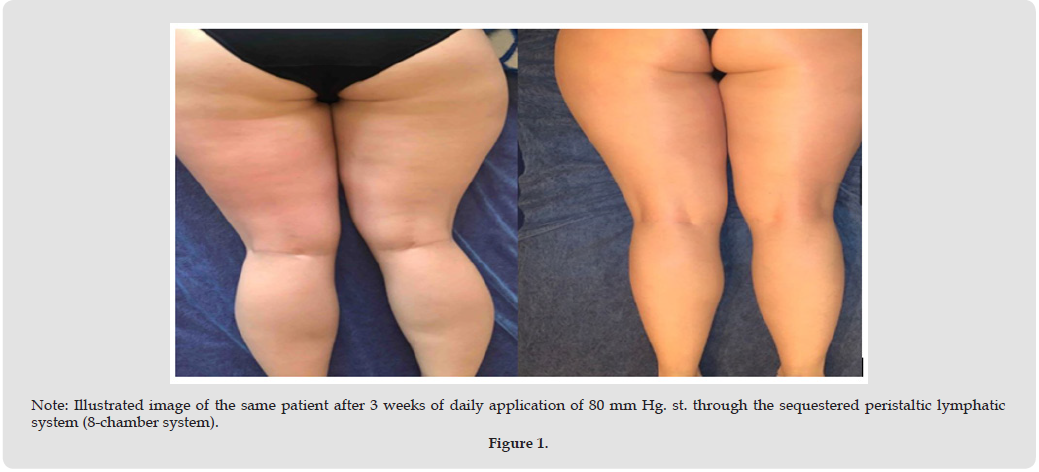
1. Reduced Limb Volume: Several studies have shown that BMD significantly reduces limb volume in patients with lymphedema. A randomized controlled trial by McNeely, et al. [1] showed that patients using BMD had a 30% reduction in limb volume over six months compared to a control group receiving standard care.
2. Improved Quality of Life: BMD is associated with improved quality of life indicators. A study by Kahn, et al. [2] reports that patients experienced less discomfort and improved mobility after regular BMD sessions, which contributed to improved overall well-being.
3. Long-Term Maintenance: Long-term follow-up studies suggest that the benefits of BMD may persist with regular use. A longitudinal study by Smith, et al. [3] showed that patients who continued BMD therapy maintained a decrease in limb volume and improvement in symptoms for two years.
4. Safety and Tolerability: BMD is generally well tolerated, with few reported side effects. Most patients experience minimal discomfort during treatment, making it a viable option for long-term treatment.
Intermittent pneumatic compression is an effective long-term treatment for lymphedema of the lower extremities. It not only reduces the volume of the limb, but also improves the quality of life of patients. Continued research and clinical trials are needed to further establish standardized protocols and optimize treatment regimens. Intermittent pneumatic compression represents a viable, long-term treatment option for patients with lower extremity lymphedema, improving both physical and psychological outcomes. Further research is needed to refine treatment protocols and investigate long-term effects in different patient populations.

International Association of Landscape Archaeology, Czech Glass Society, Czech Republic

Department of Chemistry, Semenov Institute of Chemical Physics, USSR Academy of Sciences, Moscow, Russia

Neurology, LA BioMed Research Institute, USA

Associate Professor at Department of Breast and Thyorid Surgey, Chongqing General Hospital, China

Professor of Nuclear Medicine, Faculty of Medicine and Surgery, University of Milan, Milan, Italy





 Abstract
 PDF
PDF



























