info@biomedres.us
+1 (502) 904-2126
One Westbrook Corporate Center, Suite 300, Westchester, IL 60154, USA
Site Map
 ISSN: 2574 -1241
ISSN: 2574 -1241
ISSN: 2574 -1241
Received: April 11, 2025; Published: April 24, 2025
*Corresponding author: Behablom Meharenet, Animal Health Institute, Sebeta, Ethiopia
DOI: 10.26717/BJSTR.2025.61.009609
Background: Schistosomiasis, a disease caused by parasitic flatworms, is commonly attributed to two common
species, S. haematobium and S. mansoni in Ethiopia. Profoundly, it is a significant medical and veterinary concern.
Objective: The primary objective of the study was to determine the burden of the disease and associated risk
factors of intestinal schistosomiasis in and around Delo-Mena district from March to June 2022.
Methodology: The study included students aged 5-14 years with a mean age of 9.25 years. A school-based
quantitative cross-sectional study was conducted in two selected primary schools after completing interviews
using a prepared questionnaire. Stool samples were collected from each individual and processed in the field and
facility using single Kato-Katz and Ritchie’s concentration techniques to detect the presence of S. mansoni eggs
and assess infection burden or intensity.
Result: A total of 250 school children were included in the study, with 37.6% female and 62.4% male participants.
The overall prevalence of S. mansoni infection was 39.2% (moderate). Among the compared determinant
risk factors and sociodemographic characteristics, sex (male to female), residence (urban to rural), sources of
water (tap to river water), and swimming habits (swimmer to non-swimmer) showed a strong statistical association,
with odds of 3.11 (1.75, 5.51), 0.26 (0.15, 0.45), 0.37 (0.21, 0.63), and 16.92 (8.11, 35.29), respectively, p <
0.000. The intensity of S. mansoni infection was higher in male students (11.2%) compared to females, p < 0.000.
Similarly, students who engaged in swimming were more exposed to heavier infections than non-swimmers,
with 13.6% and 1.2% respectively, and an OR of 16.92 (8.11, 35.29), p < 0.000. Furthermore, frequent swimming
was strongly associated with heavier S. mansoni infection, with 11.2% and 1.2% for students who swam always
and sometimes, respectively.
Conclusion: The study concluded with a recommendation for integrated control strategies due to the moderate
level of infection burden observed according to WHO cut-off values for preventive chemotherapy in human
helminthiasis.
Keywords: Intestinal Schistosomiasis Prevalence; Infection Intensity; Delo-Mena District
Schistosomiasis, caused by parasitic flatworms, is a disease of significant medical and veterinary importance, affecting over 240 million people, with over 90% of these in sub-Saharan Africa (SSA) countries (Gower, et al. [1]). It is endemic in Ethiopia, where more than 37.3 million people are living in endemic areas and about 5 million people are infected (Gebreyesus, et al. [2,3]), consequently considered as one of the major causes of outpatient morbidity in the country (Jember, et al. [4,5]). The disease schistosomiasis is commonly caused by two major species, namely, Shaematobium and Smansoni in Ethiopia, the latter being the most prevalent and widely distributed species. The burden and prevalence of intestinal schistosomiasis are significantly varied from area to area depending on the suitability of snail intermediate hosts and the level of environmental sanitation. Some conducted parasitological studies in the country showed that the prevalence of Smansoni is ranged from 10% to 92% (Aemero, et al. [6-10]). Recently in Ethiopia, S mansoni infection is reported in almost all administrative regions and is rapidly spreading in connection with water resource development and intensive population movements (Hussen, et al. [11]).
People become infected with S mansoni when the larval forms or stages of the parasite released from the intermediate host freshwater snails penetrate the skin through contact with infested water (Nelwan, [12]). Transmission or life cycle of the disease occurs when people suffering from schistosomiasis contaminate freshwater sources with their excreta containing parasite eggs, then hatch in the water to infect intermediate host fresh water snails (Organization, [13,14]). In the human body, the larvae or infective cercaria develop into adult schistosomes. Adult worms live in the blood vessels where the females release eggs, and some amounts of eggs are passed out of the body in the faeces or urine to continue the parasite’s life cycle. Others become trapped in body tissues, causing immune reactions and progressive damage to organs (Toor, et al. [14]). Individuals who have been exposed to fresh or salt water may develop a pruritic rash due to cercarial dermatitis (also called swimmer’s itch) (Barsoum, et al. [15,16]). Patients with acute schistosomiasis (Katayama fever) present usually 4-8 weeks after contact with infested water. It occurs 2-8 weeks after exposure to S japonicum or S mansoni. Symptoms of schistosomiasis are caused not by the worms themselves but by the body’s reaction to the eggs. Eggs shed by adult worms that do not pass out of the body can become lodged in the intestine or bladder, causing inflammation or scarring. Children who are repeatedly infected can develop anemia, malnutrition, and learning difficulties. After years of infection, the parasite can also damage the liver, intestine, spleen, lungs, and bladder. Without treatment, schistosomiasis can persist for years. Signs and symptoms of chronic schistosomiasis include: abdominal pain, enlarged liver, blood in the stool or blood in the urine, and problems passing urine. Chronic infection can also lead to an increased risk of liver fibrosis or bladder cancer (King [17]). The main objective of the study was to determine the burden of the disease and its associated risk factors. Specifically, the study aimed to determine the prevalence, measure the infection intensity (burden) based on EPG count, and assess other common related risk factors.
Study Area and Period
Delo-Mena district is located in the Bale Zone of South Eastern Ethiopia, approximately 600 kilometers far from the capital city, Addis Ababa. The altitude of the area is less than 1,500 meters above sea level. The region is renowned for its cultivation of cereals, chickpeas, and haricot beans as key crops, with coffee being the primary cash crop grown in the area (Birrie, et al. [18]). Yadot (urban) and Birbire (rural) primary schools are found in the center and periphery of Delo-Mena town where almost all students are urban and rural residents, respectively (Tulu, et al. [19]). The study was conducted from March to June, 2022 (Figure 1).
Figure 1

Study Design
A school-based quantitative cross-sectional study was conducted in two selected primary schools in Delo-Mena district, Bale Zone. The schools were chosen based on their proximity to the main river stream called Yadot. Stool samples were collected, labeled, and processed from all students using both the Kato-Katz and Ritchie’s concentration techniques. Additionally, a socio-demographic questionnaire administered by trained experts was used to assess potential risk factors associated with the study.
Population:
Source of Population: All school students who were attending in both Yadot (urban) and Birbire (rural) schools were used as a source population.
Study Population: Both Yadot (urban) and Birbire (rural) primary/ elementary school students who were attending classes were used as the study population.
Inclusion and Exclusion Criteria
Inclusion Criteria: Both Yadot (urban) and Birbire (rural) primary/ elementary school students who were attending classes from grades 1-8th and age between 5 to 14 years were included during the study.
Exclusion Criteria: All students who were older than 15 years of age and who were not willing to participate in the study are intentionally excluded from the study to control the sampling distribution and bias.
Sample Size and Sampling Technique Determination: Two schools, one from Yadot (urban) and one from Birbire (rural) sub-areas were purposively selected to ensure a representative sample. Stratification was employed due to the homogeneity of the district sub-areas in terms of urban and rural area, allowing for representation of other similar subareas. The sample size was determined using a single population proportion formula with a 5% margin of error, 95% confidence level, and based on a previous study showing a schistosomiasis prevalence of 12.6% (Tulu, et al. [19]). Therefore, the minimum sample size required for the study was
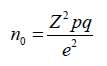
The sample size (n) required for the study will be determined using a single population proportion formula =1.962*0.126*0.814/0.0025=170, since the population size was less than 10,000 and expected to be 1,500, therefore, the corrected sample size will be determined by =169.14/ (1+(169.14-1)/1500) =242=168. Finally, the calculated sample size was 170. However, the target population (N) is less than 10,000 (1500), so a correction formula was used. Therefore, the final required sample size is determined as 250.
Data Collection Procedure:
Questionnaire Method: After obtaining informed consent from the research participants, data were collected using a pretested and structured questionnaire administered by trained health workers. The questions were close-ended and read aloud to each participant or child, and their responses were recorded as it presented. The questionnaire included questions on sociodemographic factors, environmental and behavioral factors, and other associated risk factors.
Stool Sample Collection and Laboratory Procedure: After completing the interview and questionnaire, all participant children were asked to provide approximately 2 grams of their stool samples in labeled sterile plastic containers. The collected stool samples were processed using the single Kato-Katz and Ritchie’s concentration techniques. The Kato-Katz stool smear method involved taking 41.7 mg of stool samples (Organization, [20]). All eggs of Smansoni are counted from the template and converted to eggs per gram of feces (EPG) by multiplying with 24. The infection intensities are potentially classified as light, moderate, and heavy based on EPG of 1-99, 100– 399, and >400, respectively, according to WHO cut-off values (Lim, et al. [21]). The remaining stool sample was processed using Ritchie’s concentration technique. About 0.5 grams of stool sample was placed in a concentration tube that contained 2.5 ml of formalin. The mixture was shaken very well to make it a uniform suspension followed by the addition of 1mL ether. Then, the test tubes were properly mixed and centrifuged at 1500 rpm for three minutes. After discarding the supernatant, the sediments were examined microscopically for the presence of ova and larvae (Anécimo, et al. [22]).
Data Analysis Procedure: The collected data including the questioner are entered into a Microsoft Excel work book. Data analysis was done by using IBM SPSS version 26 to assess the prevalence of S. mansoni infection and infection intensity. S mansoni infection intensity can be calculated as the geometric mean of eggs per gram of stool and arithmetic mean. A one-way analysis of variance (ANOVA) will be used to compare geometric mean parasite counts where two or more than two groups are compared, respectively. A binary logistic regression analysis, risk estimates of odds ratio, and Pearson Chi-Square was conducted to estimate an overall statistical association among associated or determinant risk factors. The magnitude of the association was expressed as an odds ratio with a 95% confidence interval and a p-value less than 0.05 was considered as statistically significant.
Operational Terms:
Infection Intensity: The infection intensity is potentially classified as light, moderate, and heavy based on EPG of 1-99, 100–399, and >400, respectively, according to WHO cut-off values (Lim, et al. [21]).
Stage of Childhood: Based on some specific published articles, childhood can be categorized into three stages. In childhood, there is the highest general physical activity from 1to 13years of age. We can conventionally split it into three stages: nursery (1-3years), kindergarten( 3-7years), and elementary school (7-13years) (Dyussenbayev [23]).
Ethical and Consent of the Participant: Informed consent was obtained from both study participants including the questionnaire and sample contributors. Finally, A code number was used to ensure the confidentiality of the participants’ information and the result was given to the researchers.
Sociodemography
A total of 250 school children from Yadot and Birbire elementary schools participated in the study, with 94 (37.6%) females and 156 (62.4%) males aged between 5-14 years, with a mean age of 9.25 years. The participants included 120 (48%) students from grades 1-4 and 130 (52%) from grades 5-8, with the majority (65.6%) aged between 8-14 years. Among the participants, 79 (31.6%) students used a river water for drinking and cooking (Table 1).
Table 1: Study population or socio-demographic characteristics of the study.

Prevalence of Intestinal Schistosomiasis
The overall prevalence of S. mansoni infection in the study area was 39.2% (n=98). Among the risk factors considered, a higher prevalence of S. mansoni infection was observed in males (48.7%), rural residents (28%), non-latrine users (31.2%), and school children who swim (35.2%). A binary logistic regression analysis and risk estimate of odds ratio were conducted to assess the statistical association among the risk factors. Strong statistically significant associations (p<0.001) were found for sex (male to female) (OR=3.11, 95% CI: 1.75-5.50), residence (urban to rural) (OR=0.26, 95% CI: 0.15-0.45), source of water (tap to river) (OR=0.36, 95% CI: 0.21-0.63), latrine usage (latrine to non-latrine) (OR=0.37, 95% CI: 0.21-0.67), defecation site (far from river site to around) (OR=2.42, 95% CI: 1.43-4.07), swimming habit (swimmers to non-swimmers) (OR=16.92, 95% CI: 8.11-35.29), and swimming frequency. Despite the strong association between swimming habit and S. mansoni infection (OR=16.92, 95% CI: 8.11-35.29), a higher prevalence rate was observed among school children who swim frequently (35.2%) (Table 2).
Table 2: Prevalence of S. mansoni among socio-demographic characteristics and determinant associated risk factors.
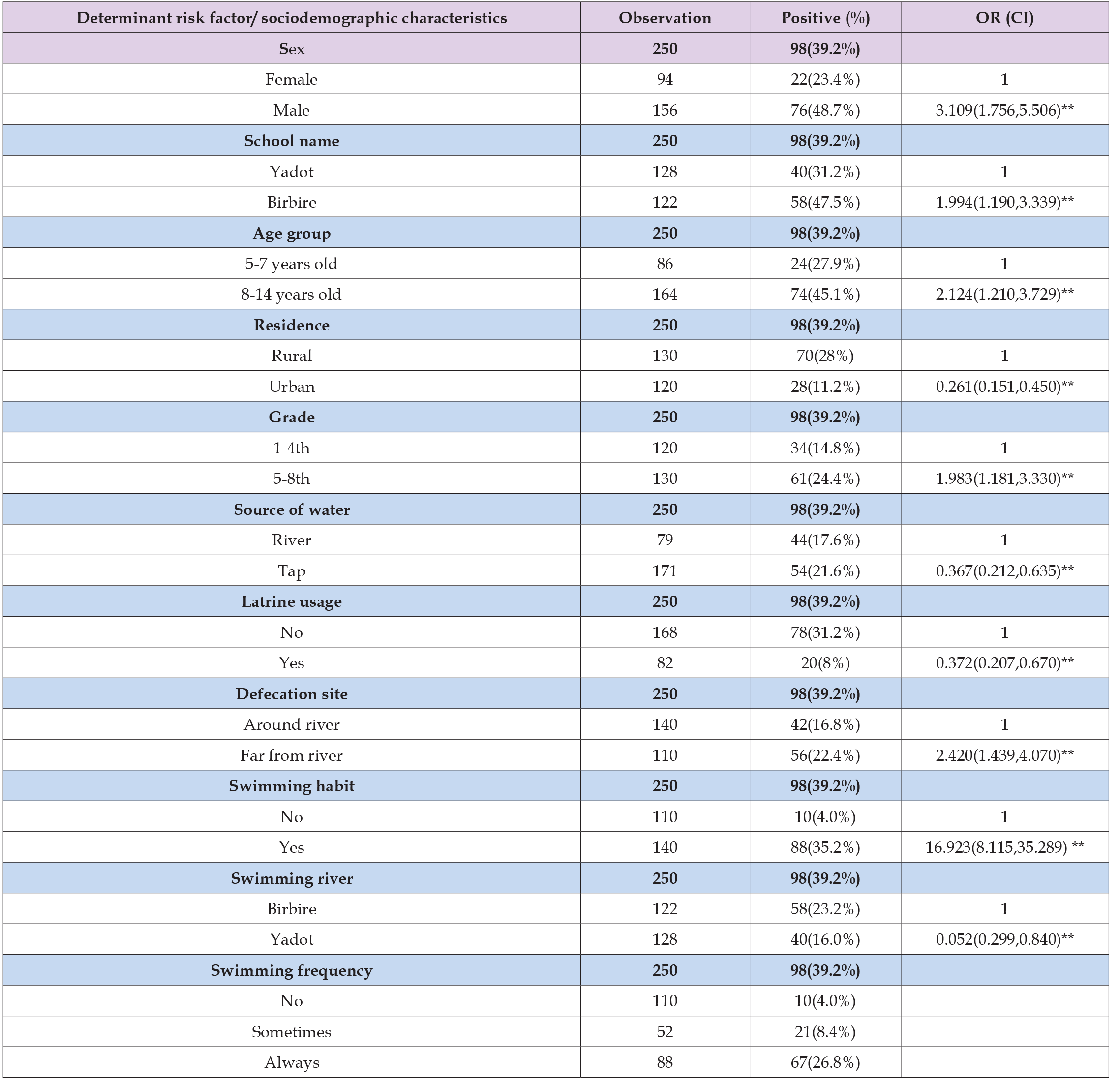
Note: **Strong statistical significance.
Infection Intensity of S. mansoni
From a total of n=250 students, n=41 (41.56 ± 3.56), n=23 (234.78 ± 16.04), and n=34 (955.35 ± 518.39) had light, moderate and heavy (Mean ± SE) infections, respectively. The intensity of Smansoni infection was found to be heavier in male students n=28 (11.2%) when compared with female n=6 (2.4%), p<0.000. Similarly, students engaged in swimming are more exposed to heavier Smansoni infection than non-swimmers, n=31 (13.6%) and n=3 (1.2%), respectively, with OR= 16.92(8.11, 35.29), p<0.000, see Table 2. Despite the student swimming habits, frequent swimming is also strongly related with heavier infection with n= 28(11.2%) and n=3(1.2%), respectively, when students swim always and sometimes p<0.000. The residence of students also had a significant statistical association with intensity of infection, Smansoni was observed among rural n= 31(12.4%) community students than urban n= 3(1.2%), with OR= 0.261(0.151,0.450) see Table 2, p<0.000. Moreover, the infection intensity of Smansoni was analyzed for all considered determinant risk factors and sociodemographic characteristics of the studied students and their statistical association was found to be significant. Definitely, the intensity of the resulting infection was associated with sex, age group, residence grade, source of drinking water, swimming habit, river, and swimming frequency (Tables 3 & 4) (Figures 2 & 3).
Table 3: Infection intensity of S mansoni.

Table 4: Infection intensity of S mansoni and its determinant factors in and around Delo-Mena district

Figure 2

Figure 3

The prevalence and burden of intestinal schistosomiasis in the study area are comparable to or higher than those reported in similar studies (Bajiro, et al. [24-27]). Some studies have shown even higher prevalence and infection burden than the current findings (Jejaw, et al. [28,29]). The overall prevalence can be classified as moderate (between 10% to 50% by parasitological methods) according to WHO guidelines for preventive chemotherapy in human helminthiasis (Organization, [30]). The Ethiopian government launched a mass drug administration (MDA) for school-aged children during 2015, after a year letter of persistent intervention, somewhat comparatively 9.6% of the prevalence rate was reported at the study area before six years ago (Tulu, et al. [31]). This increase in prevalence may be attributed to the interruption of the MDA program in the study area, leading to a gradual rise in infection rates. Despite the resulted comparatively higher prevalence rate and infection burden in the study area, other countries like Togo have successfully reduced the prevalence and intensity of schistosomiasis infection through persistent implementation of MDA following WHO guidelines (Bronzan, et al. [32]). Similarly, in Western Kenya, annual school-based MDA with high coverage led to significant reductions in overall prevalence and intensity of infection, particularly in school-attending children (Abudho, et al. [33]). The lack of sustainability and irregularities in the deworming program in the study area may contribute to future infections due to poor environmental sanitation and high-water contact behavior among schoolchildren. Therefore, it is essential to implement integrated strategies such as snail control, health education, access to sanitation facilities, and environmental sanitation alongside the ongoing MDA program to effectively combat schistosomiasis (Hailegebriel, et al. [9]).
The prevalence and intensity of S. mansoni infection varied significantly among different age groups in this study, consistent with findings from Tanzania, Northwest Ethiopia, and Mekelle city (Assefa, et al. [34-36]). However, studies from Bahir-Dar city and Jimma town reported similar prevalence and intensity of S. mansoni infection across age groups. This difference may be attributed to age variations and the frequent bathing habits of older children (8-14 years) compared to younger children (5-7 years) (Wiegand, et al. [37]). According to an article review and meta-analysisof 128 relevant studies (Ayabina, et al. [38]) involving over 200,000 participants from 23 countries, differences in the prevalence of infection between males and females were only statistically significant in 41% of cases for S. mansoni. The analysis showed a higher prevalence of infection in males, with pooled prevalence ratios of 1.15 (95% CI 1.08–1.22) for S. mansoni. The result of this finding is consistent with the idea that males are more exposed to outdoor environments, while females typically work in and around their homes or kitchens with less exposure. The study findings reveal that the lack of safe water for bathing, washing, and swimming, along with poor sanitation and hygiene practices, increases the risk of schistosomiasis infection. For example, a significantly higher prevalence of schistosomiasis was found in students who used river (surface) water compared to tap water, which is consistent with another research. Additionally, using surface water for drinking, poor handwashing habits, and inadequate latrine use were significantly associated with Schistosoma mansoni infection (Hailu, et al. [39]). Moreover, among the considered determinant risk factors including swimming habits, frequency, and use of untreated river water were strongly associated with both higher prevalence and infection burden/intensity of Smansoni, similar or consistent with the other studies also (Hailegebriel, et al. [9,26,36,40]).
A quantitative cross-sectional study was conducted in two selected primary schools in Delo-Mena district, Bale Zone, based on their proximity to the main river streams Yadot and Birbire. The study found a moderate prevalence of S. mansoni in the area, indicating a lack of effective control and eradication measures for the parasite and its intermediate host. The study recommends implementing integrated strategies such as snail control, health education, improved access to toilets and hygiene services, and better environmental sanitation to address the issue with an integrated MDA at lower and higher schools targeting different age group students.
The data that support the findings of this study are available on request from the corresponding author. The data are not publicly available due to privacy or ethical restrictions.
The corresponding author declared that there is no conflict of interest.
BM- Correspondence author, Formal analysis, Software, Principal
investigator, Manuscript preparation, Writing original draft
• BM- Data collection and Data Edition
• TR- Manuscript edition, Conceptualization
MH- Methodology, Data curation.

International Association of Landscape Archaeology, Czech Glass Society, Czech Republic

Department of Chemistry, Semenov Institute of Chemical Physics, USSR Academy of Sciences, Moscow, Russia

Neurology, LA BioMed Research Institute, USA

Associate Professor at Department of Breast and Thyorid Surgey, Chongqing General Hospital, China

Professor of Nuclear Medicine, Faculty of Medicine and Surgery, University of Milan, Milan, Italy





 Abstract
 PDF
PDF



























