info@biomedres.us
+1 (502) 904-2126
One Westbrook Corporate Center, Suite 300, Westchester, IL 60154, USA
Site Map
 ISSN: 2574 -1241
ISSN: 2574 -1241
ISSN: 2574 -1241
Received: February 22, 2025; Published: April 16, 2025
*Corresponding author: Sarmishtha Chanda, Gene Regulation Laboratory, Indian Institute of Chemical Biology, 4, Raja S.C. Mullick Road, Jadavpur, Kolkata 700032 India, Department of Physiology, Sister Nibedita Govt. General Degree College, 20 B Judges Court Road, Alipore. Kolkata 700027, India
DOI: 10.26717/BJSTR.2025.61.009597
The persons chronically exposed to environmental arsenic through water and food through years at their home
or workplace experience variety if clinical manifestations. Switching to safe surface water may not be able to
reduce skin manifestations promptly as arsenic contaminated irrigation water passes inorganic arsenic to food
chain. Polymorphism in GST and CYP genes and their ratio of occurrence in the study population may modify
arsenic induced skin manifestations. A sum total of 148 study subjects were recruited from one of major arsenic
affected district, Nadia of West Bengal, India, having high arsenic content in their food currently and had previous
exposure to environmental arsenic through drinking water. Arsenic exposed subjects were categorized
into two groups, with arsenical skin lesions and without arsenical skin Lesions according to presence of their
skin manifestations as a result of arsenic exposure. Concentration of arsenic in their urine, drinking water, food,
extent of clinical manifestations, GST and CYP gene polymorphism status are worked out. Persons with high urinary
arsenic and significant clinical symptoms but low drinking water arsenic are examined for their 24 hours
food arsenic content. Polymorphism of GSTM1 and T1, and CYP IAI A/G, CYP c2c2
were significantly associated (p<0.05) with arsenic induced clinical symptoms. Hypermethylated fragment
from homeobox gene from chronically exposed persons are associated with GSTM1 null genotype positive and
CYPA+G- or mutant genotype. Homeobox
Keywords: Arsenic Exposure; Gene Polymorphism; Homeobox Gene; Hypermethylation; Food Chain Contamination; Skin Lesions
Humans are exposed to environmental arsenic mostly through drinking water from dip tubewell. The subsoil water of many countries of the world including India has been contaminated with arsenic. In India, the basin of river Ganga in West Bengal is highly contaminated with arsenic due to geogenic cause. The allowable limit for arsenic in drinking water set by the US protection Agency is 10 μg/l. A large number of rural Indian people from south eastern part of West Bengal drink subsoil water contaminated with arsenic at a much higher level and they experience various arsenic induced clinical manifestations including cancer of internal organs and skin. In very recent years general health awareness of the Indian people has been increased and people are switched over to surface water or alternative source for water to avoid arsenic exposure through water in exposed areas. But in most of the cases it has been notified that still they have clinical manifestations. Urine and hair examination has revealed a current exposure of arsenic in those people. It indicates that they are still receiving environmental arsenic through any alternative source, may be from food. This indicates that there must be food chain contamination through subsoil water Research data coming from Bangladesh, India, Cambodia, Vietnam and other countries reflected that food grains accumulate inorganic arsenic when farmed in arsenic contaminated soil and water [1-3].
Research data and literature indicate that rice is the more potent accumulator of arsenic [3-6]. Paddy field flooded with arsenic contaminated ground water produces paddy containing significant amount of inorganic arsenic in it [7]. Live stock is also exposed to environmental arsenic which causes subsequent exposure to human [8,9]. Food chain contamination therefore is a probable route of arsenic entry in human. Guha Mazumder and his group reported that participants coming from arsenic endemic area of West Bengal have exposure of arsenic through food and the main component of dietary arsenic exposure is rice [10]. In our field study conducted during 2008-2010, we have reported that people having similar level of exposure (where the degree and duration of exposure is same) from same arsenic exposed area showed variation in the degree of skin manifestation and even developed cancer from arsenic exposure. May be this marked deference between the people of ‘with skin lesions’ and ‘with-out skin lesions’ despite having similar level of exposure due to the individuals difference in arsenic metabolism in their body. May be this differential degree of metabolism is coming from the occurrence of genetic polymorphism in arsenic metabolizing gene. The hypothesis have not been accounted and evaluated earlier. In the present report we are going to explore the association between polymorphic variation of xenobiotic metabolizing genes i.e.,
Cytochrome P 450 genes (CYP) and Glutathione -S- Transferase genes (GST) with participants of ‘with’ and ‘with out skin lesions’ where they were chronically exposed to environmental arsenic through food. The present manuscript also explore the occurrence of different polymorphic variations in GST and CYP genes in our study population from ‘with’ and ‘with out skin lesions’ groups. Subjects are selected from same arsenic exposed area of West Bengal for ‘with skin lesions’ and ‘with out skin lesions’ group and collection of samples and subject recruitment has been done during 2008-2009 and 2009- 2010. Categorization of participants has been made on the basis of skin lesions present or not where the degree of arsenic exposure is constant.
Polycyclic aromatic hydrocarbons and environmental carcinogens and co-carcinogens are often metabolized to reactive DNA binding thiol epoxides by phase I enzymes of Cytochrome P450 (CYP) family and detoxified by phase II enzymes, including Glutathione-S-Transferase (GST) [11,12]. This usually occurs before they reach their target organ and many of these enzymes have polymorphically distributed in human population. However, this is the first report of association of CYP450 and GST gene polymorphism and their frequency distribution with development of skin lesions in persons chronically exposed to arsenic through their food chain in West Bengal, India. In this work we are going to represent one hypermethylated fragment from Homeobox gene which is isolated from moderate to highly arsenic exposed persons having GST M1 null genotype and CYP mutant allele.
A total 148 study subjects are included in this study. The subjects were selected from Nadia district, a highly arsenic affected district of West Bengal. A total number of 115 arsenic exposed subjects have been chosen from this area. The total numbers of arsenic exposed subjects (115 subjects) are divided in two groups on the basis to their skin manifestations called arsenicosis. 53 subjects are arsenicosis positive (with skin lesions) and 62 subjects are arsenicosis negative (without skin lesions), although both the groups have received similar level of arsenic exposure throughout the years via their home or work place drinking water and food. Arsenic unexposed control subjects are selected from arsenic unexposed district of West Bengal, North 24 pargana, and designated as group III. A total of 33 control subjects have been selected for this group. All of the exposed subjects were subjected to MS-AP PCR for evaluation of hypermethylated or hypomethylated fragment from genomic DNA. One hypermethylated gene fragment from exposed persons having arsenical skin lesions. This hypermethylated fragment is from homeobox gene which is responsible for morphological developments in foetal body. Drinking and cooking water samples, morning void urine samples, hair and 24 hrs food samples had been collected to detect the concentration of arsenic.
Selection criteria for the study were i). Presence of current exposure, i.e, presence of arsenic in urine and hair for group I & II ii). exposure to environmental arsenic through food chain for group I & II iii). presence of characteristic skin manifestations, arsenicosis positive for group I and arsenicosis negative in group II [13,14]. Skin manifestations in every participant have been checked by a group of specialised clinicians who checked the exposed portion of the body for pigmentation or keratosis on the planter aspect of palm and feet. All of the subjects had previous exposure to environmental arsenic through their drinking water, but recently they have switched over to safe surface water. They have current exposure to environmental arsenic as reflected by presence of arsenic in their urine and hair. At present they are exposed to environmental arsenic through food chain. Mean concentration of arsenic in raw rice in arsenic exposed population (taking together group I and II) is 315μg/kg and the range of exposure of arsenic through food is 118-672 μg/kg as measured in a NABL accredited laboratory. The method of collection of food samples are described in detail in our previous paper [15]. Blood is also collected from every participant in EDTA vial. Group III (n= 33) did not have any history of arsenic exposure from water or from food source. They are selected from arsenic unexposed area of West Bengal. The subjects take safe surface water (<50 μg/l) and have not any past exposure to arsenic. They are totally devoid of any kind of arsenical skin manifestations.
All male participants were working as small scale business man or were involved in office jobs in small concerns. Women were mostly housewives. Mostly the men were smokers and women were all non-smokers. Informed consent was obtained from all participants before drawing their blood. Ethical principles followed by the institute are guided by rules as formulated by Indian Council of Medical Research and these are in agreement with Helsinki rules. The name of the institute where human studies were carried out is Indian Institute of Chemical Biology (IICB) which is run by Govt. of India, a CSIR research Unit. The collection of Blood samples were carried out through field survey in the Nadia district West Bengal by DNGM Research Foundation (DNGMRF) Kolkata, West Bengal during the year 2008 and 2009.
Field Study
A village level sampling frame was created with in two blocks, Chakdah and Haringhata of Nadia district, having at least one tube well contaminated with >50 μg/l of arsenic. Out of 174 villages in thearea selected, 6 were chosen for random sampling, with proportional allocation across the two blocks, giving 4 villages in block 1 (Chakdah) and 2 villages in block 2 (Haringhata). Selection of villages from within each block was carried out using a probability proportional size sampling. To adjust for differences in the levels of contamination between villages, the size measure took into account the proportion of arsenic contaminated tube wells in the village as well as the total population count. Demographic data were collected for each participant. They were categorized as sedentary and moderate workers. Water samples for drinking and cooking, morning void urine sample, hair and 24 hours food samples were collected maintaining proper protocol in sterilized polypropylene container from each participants and estimated for arsenic content which is published earlier elsewhere [15,16].
Collection of Blood Samples
EDTA anticoagulated blood samples were collected from chosen arsenic affected blocks of Nadia and kept at –20 °C at DNGM research foundation, (DNGMRF), Kolkata. Blood samples were also collected from age, sex and socio-economic status matched arsenic unexposed persons from arsenic unexposed areas. All the blood samples were carried in icebox from DNGMRF to the Department of Physiology, Gene Regulation laboratory, IICB, Kolkata for further storage at -70 °C and subsequent genotype analysis after DNA extraction.
Clinical Symptom Score
Each study subject has been coined a clinical symptom score according to their degree of arsenicosis (in case of Group I participants). Both pigmentation and keratosis were graded 1,2 or 3, depending on the level of symptoms. Sum of the two was clinical symptom score, so that a person can have maximum score of 6. The control subjects have no pigmentation and keratosis and therefore clinical symptom score of 0 [17].
Determination of Arsenic in Drinking Water, Hair and Urine
The concentration of arsenic in drinking water, hair and urine was determined by atomic absorption spectrophotometry hydride generation (FI-AAS-HG) system according to manufacturer’s instruction. Hair and urine arsenic concentration was measured according to Das et al. [18] using FI-HG-AAS (PerkinElmer A Analyst 200). The limit of detection determined at the 90% confidence level was 3μg/L.
Genotyping of Glutathione- S-Transferase (GST) M1 and T1
Till date five classes of GST genes exist: α (GSTA), μ (GSTM), π (GSTP), θ (GSTT), and ζ (GSTZ) with one or more genes in each class have been identified in human. The enzymes have different, but sometimes overlapping, substrate affinity [19], working as a family of polymorphic gene The polymorphic deletion of M1 and T1 gene was genotyped using the multiplex PCR Approach [20].
Genotyping of CYP 1A1 Exon 7 and CYP 2E Polymorphism
Two functionally important nonsynonymous polymorphisms have been identified for CYP1A1 gene, one is a base substitution at codon 462 in exon 7, which is a transition from A to G at position 2455 in the heme binding region of exon 7 causing a substitution of isoleucine with valine (Ile462Val (exon 7), (National Center for Biotechnology Information single nucleotide polymorphism(SNP) identifier rs1048943; adenine (A) to guanine (G) substitution at nucleotide 2455(2455A.G)) and 2nd is a point mutation [thymine (T) to cytosine (C)] at the MspI site in the 3’-untranslated region (rs4646903;3801T.C) [21]. The MspI restriction site polymorphism resulted in three genotypes: a homozygous m1 allele which haven’t any MspI site (genotype A), the heterozygote (genotype B), and a homozygous m2 allele with the MspI site which is quite rare in the population (genotype C). The 3rd one is exon 7 restriction site polymorphism resulted in three genotypes: a predominant homozygous (Ile/Ile) or A+G-, the heterozygote (Ile/Val) or A+G+, and the rare homozygous (Val/Val) or A-G+. CYP2E1 contains six restriction fragment length polymorphisms, of which the RsaI polymorphism (CYP2E1* 5B; C-1054T substitution) is one. ThisC-T substitution at Rsa I polymorphic site produce c1/c1 (wild type homozygous), c1/c2 (heterozygous with one T) and c2c2 (homozygous for T).
CYP 1A1 A/G Polymorphism: A to G transition in exon 7 of the CYP1A1 gene results in the substitution of valine from isoleucine at amioacid residue 462. We assessed this polymorphism by the allele- specific PCR method [22]. PCR products of 322 bp were then subjected to electrophoresis in 1.8% agarose gel. We have found 3 varieties like A+G- (Ile/Ile), A-G+( val/val) and A+G+ (Ile/ val) in our population.
CYP 1A1 T/C Polymorphism: CYPIAI gene (located at the 264th base downstream of the polyadenylation signal) 3’-end polymorphism specific genotyping was carried out by PCR (band length 340bp) [23,24]. The products were then digested with MspI and electrophoresed on a 1.8% agarose gel. In CYP1AI polymorphism, ‘A’ is the predominant wild-type homozygote (340 bp PCR product, CYP T+C-, which remains undigested by Msp I). CYP 1AI ‘C’ obtained from Msp I digestion and gives 200 and 40 bp products, (CYP T-C+). Genotype B is heterozygous for both alleles in which the Msp I digestion gives three bands 340bp, 200 bp and 140 bp, namely CYP T+C+ genotypic variation.
CYP 2E Polymorphism: CYP2EI shows several polymorphisms in the 5’flanking region of the gene. Two distinct base substitutions that are in genetic disequilibrium with each other and produces sites for Rsal and PstI restriction enzymes [23,25]. The PCR product of 413 bp was then subjected to Rsa I digestion to get 360 and 53 bp fragments called mutant allele, either homozygous mutant or a heterozygous mutant when the fragments are 413 bp. 360 bp and 53 bp. The sample having no base substitution in either allele doesn’t shows any other fragments except the primary one (undigested 413 bp) after RsaI digestion. 413 bp undigested with Rsa I represents c1c1 wild type homozygous, 380 bp, 53bp are digested heterozygous respectively (c1c2, c2c2).
Restriction Enzyme Digestion for Arbitrarily Primed PCR
Concentration and purity of isolated genomic DNA was determined by UV–vis spectrophotometer at OD 260/280 >1.8. 200 ng of total genomic DNA, was then digested with 3 units of RsaI and 3 units of HpaII restriction enzyme at 37 °C overnight [12]. HpaII is a methylation sensitive isoshizomer of MspI whose recognition sequence is CCGG. A hypermethylated sequence at this site cannot be digested, whereas the unmethylated DNA can be. The persons taken for MS-APPCR were from arsenicosis positive and negative group as well.
Methyl Sensitive Arbitrarily Primed PCR (MS-AP- PCR)
After digestion with Hpa II and Msp I and amplication with arbitrarily primed primers series of amplified products were obtained. Of these, a band present in PCR products of arsenic exposed DNA but absent in PCR products of similarly digested unexposed DNA represents the region of hypermethylation (12). We used 3 different primers. Amongst these primers, primer MGE2 1(5’-AAC CCT CAC CCT AAC CGG CC-3’) gave one common hypermethylated fragment in arsenic induced cancer patients and in highly arsenic exposed persons when subjected to PCR amplification in a higher frequency but at a very low frequency in low arsenic exposed group (group B). The concentration of MGE 2 in the PCR reaction mixture was 0.5μM. The PCR protocol was denaturation at 94 °C for 5 minutes, then 35 cycles of amplification with 94 °C for 1 min, 40 °C for 1 min, 72° C for 2min, followed by final extension 10 min at 72 °C.
Isolation of Candidate Bands
The PCR products from DNA of arsenic exposed persons were compared with PCR products from control DNA. The band, which appears only in the exposed DNA but not in unexposed DNA was presented as region of hypermethylation. Similarly, band which appears only in the unexposed control but not in the exposed DNA indicated the site of hypomethylation in exposed persons. Such a region of hypermethylation from chronically high arsenic exposed people with and without arsenic induced cancer was identified and isolated by. ‘crush and soak’ method [13]. The candidate band isolated was then send for sequencing to Thermofisher Scientific.
The non-normality in distribution in various groups of genetic polymorphisms and arsenic exposure with and without skin lesions we have don nonparametric statistics to find out the association between genetic polymorphism and arsenic induced skin manifestations [26]. Nonparametric Median test was performed to find out the correlation between GSTMITI, CYPIAI A-G, CYP T-C, CYP2E polymorphism with the elimination of arsenic from the body as total urinary arsenic, hair arsenic accumulation, occurrence of arsenic induced skin manifestations.
Demographic distribution and history of arsenic exposure through water intake and food intake has been presented in Tables 1 & 2. Frequency distribution of different polymorphic varations of GST and CYP genes is presented in Table 3. Concentration of total urinary arsenic and degree of skin lesions are presented in Table 4. In group I, group II and group III the occurrence of GSTMI null (M-T+) is 36% and GSTTI null (M+T-) are differentially distributed which shows significant difference between control and Arsenicosis positive group (Table 3). The frequency distribution in our subjects including control, arsenicosis positive and negative in CYP A+G- genotype (Ile/Ile, also known as 2A wild type) is 26.65 %, A+G+ (Ile/Val, mutant) is 59.50%, and A-G+ (Val/Val,mutant) is 13.5% in group I (Table 2). In group II the frequency of polymorphic distribution in CYP A+G- is 18% and A+G+ is 66.5%, A-G+ is 15 %. In group III also the occurrence of A+G+ is 66.5%, A+G- is 18.5% A-G+ is 15 % (Table 2). In group I the median values of skin manifestations is significantly higher (p<0.01) in A+Gpopulation (Ile/Ile) in comparison to A+G+(Ile/ Val) population. In A-G+ (Val/Val) population also there is a significantly lower (p<0.05) degree of skin manifestations in comparison to wild type A+G- population ingroup I (Table 3). In group II there is no significant difference in respect to skin score between A+G-, A+G+ and A-G+ subpopulation. Total urinary arsenic is significantly lower in wild type A+G- subpopulation in comparison to mutant A+G+ in group I (p<0.01) and group II (p< 0.001) (Table 3).
Table 1: Demographic distribution of study population in three Groups.
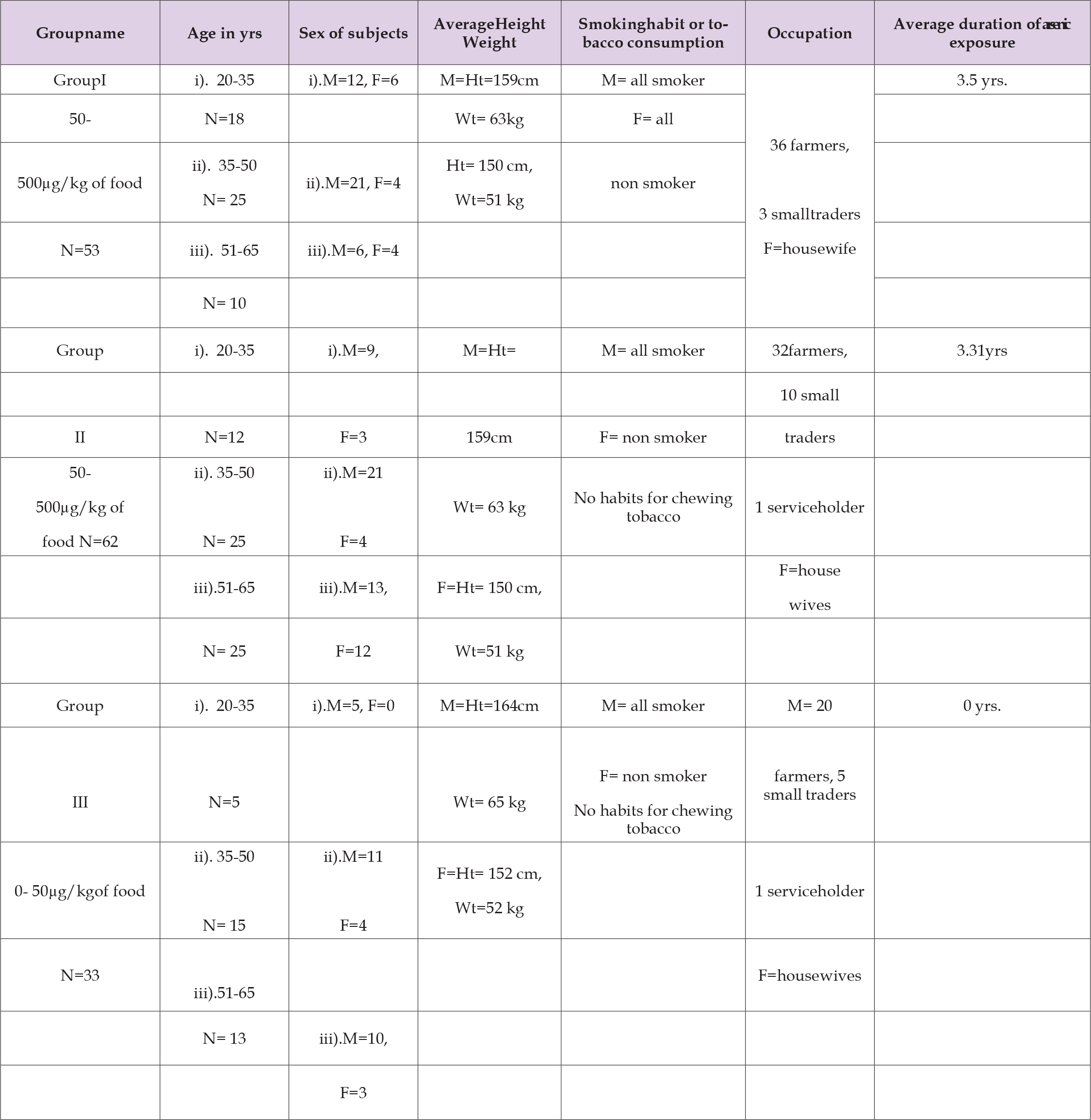
Table 2: History of water arsenic concentration and dietary arsenic concentration received by study participants of different groups. (data derived from 24 hours food sampling).

Table 3: Frequency of occurrence of different polymorphic variations of GST and CYP genes in all three Groups. (Numerical value of the table indicate here the percentage of different gene polymorphism in our study groups).

Table 4: Represents the Median value of Total urinary arsenic and Skin score in different polymorphic sub-groups in three different groups.

When comparison was made between group I and group II A+G+ participant then a significant rise (p<0.05) of total urinary arsenic has been noted in group II subjects. This may be due to the higher number of A+G+ participants in this group. When comparison was made between same two groups, considering the A-G+ participants only, a significant rise (p<0.05) also seen in total urinary arsenic in group II participants. The total urinary arsenic is significantly higher in A-G+ genotypic variety in group I and II in comparison to A+G- polymorphic variety(p<0.05, p<0.01 respectively) (Table 3). The distribution pattern of different polymorphic form of CYP1A1 A-G transition was maintaining a similarity in group II and group III though there is a difference in group I. In case of CYP T- C polymorphism the frequency distribution of A genotype is 71.62% in group I, 70% in group II and 79.33% in group III. Distribution of C genotype is 13.44% in group I, 15% in group II and 10% in group III. The distribution pattern of B genotype is 14.94% in group I, 15 % in group II and 10.67 in group III (Table 2).
There are no significant differences in total urinary arsenic between A and B genotype and between A and C genotype in group I and II. No significant difference has been noted in respect to skin score in these three genotypes of group I. The CYP450 2E1 gene (CYP2E1) is located on chromosome 10q26.3. It is 18,754 bp long,
Consists of nine exons and eight introns and encodes a 493-amino acid long protein. This gene shows six restriction fragment length polymorphisms, of which the RsaI polymorphism (CYP2E1*5B; C-1054T substitution) is of special interest. PCR produces a 413 bp fragment which is wild type. RsaI digestion of this amplified product gives rise to two distinct band due to presence of Rsa I/ Pst I recognition site. RsaI digestion of the amplified region produces bands of 360 and 53 bp. These three different variety are known as c1c1 (wild type undigested by RsaI), c1c2 and c2c2 (digested by RsaI). I n our study population the frequency of c1c1 allele is 49% in group I, 67% in group II and 63% in group III (Table 2). Significantly lower (p<0.01) total urinary arsenic concentration has been noted in group I c2c2 polymorphic group than the c1c1 or c1c2 polymorphic group. In group II also the difference of total urinary arsenic between c1c1 and c2c2 group is significant. The total urinary arsenic is significantly higher in c1c1 participants of group II compared to c1c1 participants of group I. This may be due to higher proportion of c1c1 in group II than group I. The occurrence of arsenic induced skin manifestation is greater in c2c2 genotypic variation of CYP2E polymorphism though not at a significant level in group I.
Arsenic probably induces carcinogenic activity through epigenetic alterations. However, this epigenetic alteration depends on the degree of arsenic metabolism within the body and furtheron phase I and phase II enzymes responsible for xenobiotics metabolism. Biotransformation or metabolism of arsenic involves methylation of inorganic arsenate to dimethyl arsinic acid via alternating reduction of pentavalent arsenic to trivalent arsenic and addition of methyl group [16,17]. Arsenic methyl transferase (AsMT) uses the same methyl donor SAM as DNA methyltransferase (DNMT) and other methyltransferases. Interaction between arsenic methylation/detoxification pathway with DNA methylation pathway and consequent imbalance in DNA methylation is the key factor causing epigenetic alteration. Increase of cytosine methyltransferase transcript after arsenic exposure has been reported [18], and this can explain the initial hypermethylation. CYP450 are phase I enzymes responsible for activating most environmental pre-carcinogens, whereas glutathione S-transferases (GSTs) are phase II enzymes capable of detoxifying the electrophilic carcinogens that result from the action of CYP enzymes. CYP and GST enzymes are highly polymorphic and some of these polymorphisms affects enzyme expression and activity. Degree of functional alteration due to genetic polymorphisms of these enzymes are therefore linked with metabolism and genotoxic effects as well as overall clinical manifestations of xenobiotics [22,25,27].
A positive association has been identified between the genetic polymorphism of CYP 450 and the susceptibility to lung cancer in persons having cigarette smoke. Positive association has also been identified between the distribution of GSTMITI and lung cancer in persons taking tobacco25. Homozygosity for the CYP IAI MspI mutant genotype (CYPIAI T-C) is positively associated with colorectal cancer in east Asians (P =0.008) (P < 0.001). A similar association was identified in the same gene for exon 7 mutational homozygosity in Japanese [2,3]. Close relation has been identified between CYPlAl gene polymorphism and occurrence of emphysmatic damage to the lung parenchyma [28].
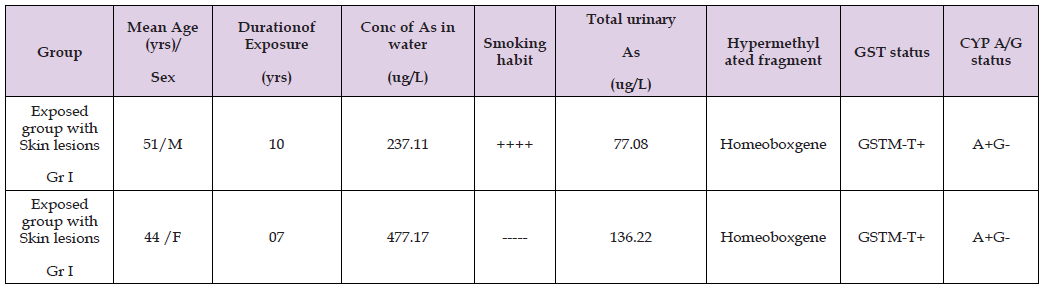
Present study is a cross sectional study in the population of West Bengal suffering from arsenicosis and arsenic induced health hazards. We observed that there is differential degree of clinical manifestations in people receiving same concentration of arsenic through their food and water. We have analyzed the frequency distribution of different polymorphism of GST M1T1 and polymorphism obtained from CYP 1A1 A-G transition, CYP 1A1 T-C transition and CYP2E gene. We have found one hypermethylated fragment (565 bp) of gene which is identified and isolated from arsenical skin lesion positive cases. Particularly these subjects having this common hypermethylated gene fragment are all GSTM-T+ genotype or M1 null genotype and CYPA+Ggenotype or 2A wildtype persons. All persons are smoker. This can point out to the extent of arsenic retention in the body which may induces epigenetic event like target gene methylation in those subjects. Using MS-AP PCR, this common hypermethylated DNA fragment of 565 bp was identified from 7 different people with chronic arsenic exposed people with arsenical skin lesions. All the data are tabulated in Table 5. All are from group I, with arsenicosis positive. The sequence identified is given as Figure 1. It is from human homeobox gene. Persons having homeobox gene hypermethylation identified were then analyzed for their mean age, sex and duration of exposure, urinary arsenic and smoking habit. It has 99% homology with human homeobox protein gene family. The mRNA (human novel mRNA) of this gene encodes a DNA binding protein.
Table 5: Mean value of arsenic exposure, total urinary arsenic and skin lesions of subjects from each groups having HUMAN HOMEOBOX gene hypermethylation.
GUsing NCBI Conserved Domain Search, we further come to know about the affinity of the protein. The protein binds at the DNA binding site on conserved homeo domain. DNA binding domains involved in the transcriptional regulation of key eukaryotic developmental processes; it may bind to DNA helix as monomers or as homo- and/or heterodimers, in a sequence-specific manner. Structure of the conserved protein have been worked out by bioinformatics tool. All the candidate for homeobox gene hypermethylation is GSTM-T+ and CYP A+G- with variations in CYP2E and CYPTC genotypes. From the result obtained we can project that GSTM1 null genotype retain more inorganic arsenic in the body with a less amount of total urinary arsenic and CYP A+G- or 2A also shows an significantly decreased total urinary arsenic from other genotypic variations in the said group I participants. Surprisingly, all of our homeobox hypermethylation positive cases were found from group I participants who are arsenical skin lesions positive with GSTM-T+ and CYPA+G- (2A wild type) genotype. This can indicate that incomplete or poor metabolism of arsenic ensures increased body retention of arsenic which is the key for genotoxic events and epigenetic alterations like DNA hypermethylation. Liu and coworkers showed that arsenic increases the expression of GSTM1, GST T1 and glutathione reductase in tumorous and non tumorous liver tissue when administered orally in adult mice [29].
A reduction of hepatic GSH level has been found to greatly decrease the urinary level of MMA and DMA in experimental animals. Low level of GST activity might decrease the level of reduced glutathione therefore, persons having null genotype of GSTM1 or GSTT1 may have altered arsenic methylation capacity and therefore may have a chance to increase the retention of arsenic in the body in comparison to persons having non-null genotype. This hypothesis has been tested on arsenic exposed residents of Taiwan [30]. In exposed population, null genotype of GSTM1 was associated with increased percentage of inorganic urinary arsenic with increased body retention which is may be responsible for epigenetic alteration like local or global DNA methylation. Similar positive association has been identified between the polymorphic variation of GSTMITI and lung cancer in persons taking tobacco [25]. Homozygosity for the CYP IAI MspI mutant genotype (CYPIAI T-C) is positively associated with in situ colorectal cancer in Japanese (P =0.008) and Hawaiians (P < 0.001). A similar association was identified in the same gene for exon 7 mutational homozygosity in Japanese [23]. Association between CYPlAl gene polymorphism and occurrence of emphysmatic damage to the lung parenchyma has been detected [28]. Our study is a cross sectional study in the population of West Bengal suffering from chronic arsenic exposure through their food. We observed that there is differential degree of clinical manifestations in people receiving same concentration of arsenic through their food and water.
We have analyzed the frequency distribution of different polymorphism of GST M1T1 and polymorphism obtained from CYP 1A1 A-G transition, CYP 1A1 T-C transition and CYP2E gene. We have found one hypermethylated fragment (565 bp) of gene which is identified and isolated from arsenical skin lesion positive cases. Particularly these subjects having this common hypermethylated gene fragment are all GSTM-T+ genotype or M1 null genotype and CYPA+G- genotype or 2A wildtype persons. All persons are smoker. This can point out to the extent of arsenic retention in the body which may induces epigenetic event like target gene methylation in those subjects. Using MS-AP PCR, this common hypermethylated DNA fragment of 565 bp was identified from 7 different people with chronic arsenic exposed people with arsenical skin lesions. All the data are tabulated in Table 5. The sequence identified is given as Figure 1. It is from human homeobox gene. Persons having homeobox gene hypermethylation identified were then analyzed for their mean age, sex and duration of exposure, urinary arsenic and smoking habit. This gene produces a DNA binding protein. Using NCBI Conserved Domain Search, we further come to know about the affinity of the protein. The protein binds at the DNA binding site on conserved homeo domain. DNA binding domains works as a transcriptional regulator in some key eukaryotic developmental processes. It can also bind to DNA helix as monomers or as homo- and/or heterodimers.
Structure of the conserved protein have been worked out by bioinformatics tool. All the persons having homeobox gene hypermethylation is GSTM-T+ and CYP A+G- with variations in CYP2E and CYPTC genotypes. From the result obtained we can project that GSTM1 null genotype retain more inorganic arsenic in the body with a less amount of total urinary arsenic and CYP A+G- or 2A also shows an significantly decreased total urinary arsenic from other genotypic variations in the said group I participants. Surprisingly, all of our homeobox hypermethylation positive cases were found from group I participants who are arsenicosis positive with GSTM-T+ and CYPA+G- (2A wild type) genotype. This indicates that incomplete or poor metabolism of arsenic ensures increased body retention which is the key for genotoxic events and epigenetic alterations like DNA hypermethylation. Liu and coworkers showed that arsenic increases the expression of GSTM1, GST T1 and glutathione reductase in tumorous and non tumorous liver tissue in adult mice. A reduction of hepatic GSH level has been noted to decrease the level of MMA and DMA in urine of experimental animals. Reduced GST activity might decrease the level of reduced glutathione, so that, persons having null genotype of GSTM1 or GSTT1 may have altered arsenic methylation capacity and therefore may have a chance to uphold the retention of arsenic in the body compared to persons having non-null genotype [30].
In exposed population, null genotype of GSTM1 was associated with increased percentage of inorganic arsenic in urine and the null genotype of GSTT1 was associated with increased percentage of DMA in urine [30]. Therefore, we can conclude that GSTM1 can facilitate the methylation of inorganic arsenic and therefore may determine the concentration of non metabolized or under metabolised inorganic arsenic to retain it in the body. We have not done the speciation of urinary arsenic in this study. In our population people having GST M1 and GSTT1 null genotype (M-T+ or M+T-) and polymorphism in CYP1A1 A-G and CYP 2E are associated with an increase in arsenic induced skin manifestations measured as clinical symptom score. In gastric and esophageal cancer positive association has also been found with CYP and GST polymorphism [31,32]. It has been shown in a Chinese population, that, GSTM1 null genotype, independently or in combination with at least one Val allele of CYP1A1(i.e, A+G+ or A-G+) affect the genetic susceptibility to lung cancer. Individuals with GSTM1 null, and the combined GSTM1 null/CYP1A1 ( Ile/Val) or GSTM1 null/CYP1A1 Val/Val showed an increased risk of lung carcinoma [27,33]. Further, Adonis and coworkers showed that GST and CYP gene polymorphism have positive correlation with lung cancer from chronic arsenic exposure [34].
In Indian populations we have studied the risk of arsenic induced skin manifestations in persons having GSTMI or GSTTI null genotype. The frequency of occurrence of GSTMITI null (GSTM-T-) genotypic variety in our study population was very low. Therefore it is impossible for us to determine the risk factor of in GSTMITI null (GSTM-T-) genotype in reliable quantitative terms. The persons having A+G- genotype may be represented as a high risk group for developing arsenicosis as the body retention of arsenic is apparently much higher in this group than the A+G+ and A-G+ group. Presence of Ile/Val or Val/Val affecting the detoxification of inorganic arsenic and thereby decrease body retention of arsenic. In group I, person with GST MI null with combination to A+G- genotypic variation has been associated with an increased risk of arsenicosis which is probably due to increased body retention of arsenic. However, there was no association between the CYP IAI (T-C) polymorphic variation, arsenicosis and total urinary arsenic in our population. Arsenic inhibit the induction of CYP IAI gene by 2, 3, 7, 8 TCDD [35]. Acute exposure to inorganic arsenic decreases the induction of CYP1A1/2 proteins and activities in cultured human hepatocytes, and alters induction of CYP3A23 in cultured rat hepatocytes [36]. Group II is arsenicosis negative group. We assume that, this may be due to the frequency distribution of GSTMI and GSTTI null allele CYP IAI, CYP T-C and CYP 2E polymorphism, and their combination in group II participants which is somewhat similar to the distribution ratio with the control group in our study population. The frequency of occurrence of GSTMI or TI null allele and CYP IAI A-G wild type is much lower in group II in comparison to group I (p<0.05). This low frequency of occurrence may play a protective role in the development of arsenic induced skin manifestations in this group despite having high concentration of arsenic in their drinking water. Moreover, in this group the frequency distribution of GSTMI null and CYPA+G- in combination is very low. Comparison between group II and III in respect to the occurrence of GSTMI null allele and CYP A+G- allele alone and in combination have failed to show any significant differences. These three constitutes a fairly high-risk group for arsenic induced skin manifestations measured as clinical symptom score. Occurrence of c2c2 polymorphic variety is high in group I than in group II which constitute a high-risk group for arsenic induced symptoms or skin manifestations. As there is no reference for frequency distribution for GSTM1T1 and CYP 1A1 & CYP 2E polymorphism on Indian Population, we have no reference frame to use and judge our data. However, the data does not show any correlation of polymorphism with the age, sex and occupational status of the exposed population.
In conclusion, our present findings shows an association of the wild type homozygous polymorphism of the CYPIAI gene exon 7 and GSTMI & TI null allele with arsenicosis in chronic arsenic exposed population. Higher frequency distribution of GST M1 and T1 null allele and CYP 1A1 A+G-in group I are associated with high skin score and low total urinary arsenic and constitute arsenicosis positive group. Surprisingly, all the candidate for homeobox gene fragment hypermethylation are CYP A+G- which can indicate that the wild type CYP gene is a good retainer of the inorganic arsenic in body which may contribute to the epigenetic events like homeobox gene fragment hypermethylation. c2c2 polymorphic variety of CYP2E gene also contribute to arsenicosis positive and lower total urinary arsenic in group I. Similarly, all the homeobox gene fragment hypermethylation identified are from arsenicosis positive cases from group I participants and all are GSTM-T+ genotype carrying subjects. This is an indicative of incomplete metabolism or biotransformation of arsenic and increased arsenic retention in the body which may further contribute to the clastogenic activity of the arsenic and contribute to aberrant methylation.
In gastric carcinoma and in esophageal carcinoma cases association has also been found with CYP and GST polymorphism [31,32]. It has been shown in a Chinese population, that, GSTM1 null genotype, independently or in combined with at least one Val allele of CYP1A1 (i.e, A+G+ or A-G+) can modify the genetic susceptibility to lung carcinoma. Persons with GSTM1 null, and combined GSTM1 null/CYP1A1 (Ile/Val) or GSTM1 null/CYP1A1 Val/Val had an greater risk and incidence of lung carcinoma [27,33]. Adonis and coworkers pointed that GST and CYP gene polymorphism is associated with lung cancer from chronic arsenic exposure34. In Indian populations we have studied the risk of arsenic induced skin manifestations which is found to be significantly higher in persons having GSTMI or GSTTI null genotype. Whereas, the frequency of occurrence of GSTMITI null (GSTM-T-) genotypic variety in the study population was very low. Therefore it is impossible for us to determine the risk factor of arsenic induced skin manifestations associated with GSTMITI null (GSTM-T-) genotype in reliable quantitative terms. The persons having A+G- genotype may be represented as a high risk group for developing arsenicosis as the body retention of arsenic is much higher in this group than the A+G+ and A-G+ group. Presence of Ile/Val or Val/Val might be affecting the detoxification of inorganic arsenic and thereby decrease body retention of arsenic. In group I, person with GSTMI null with combination to A+G- genotypic variation is associated with an elevated risk of arsenicosis. This is probably due to increase body retention of arsenic.
However, there was no association between the CYP IAI (T-C) polymorphic variation and occurrence of arsenicosis and total urinary arsenic in our population. Arsenic inhibit the induction of CYP IAI gene by 2, 3, 7,8 TCDD [35]. Acute exposure to inorganic arsenic decreases the induction of CYP1A1/2 proteins and activities in cultured human hepatocytes, and alters induction of CYP3A23 in cultured rat hepatocytes36. There is no arsenicosis in group II. We propose that, this may be due to the specific frequency polymorphic variety CYP and GST polymorphism and their combination in group II participants which is somewhat similar to the distribution ratio occurrence of GSTMI and GSTTI null allele CYP IAI, CYP T-C and CYP 2E polymorphism of the said polymorphism in control population or group III participants in our study population. The frequency of occurrence of GSTMI or TI null allele and CYP IAI A-G wild type is much lower in group II in comparison to group I (p<0.05). This low frequency of occurrence may contribute a protective role in the development of arsenic induced skin manifestations in this group despite high concentration of arsenic in their drinking water. Moreover, in this group the frequency of occurrence of GSTMI null and CYPA+G- in combination is very low. Comparison between group II and III in respect to the occurrence of GSTMI null allele and CYP A+G- allele alone and in combination have failed to show any significant differences and correlation. In conclusion, our present findings have shown an association of the wild type homozygous allele polymorphism of the CYPIAI gene exon 7 and GSTMI & TI null allele, with arsenicosis in chronic arsenic exposed population.
Higher frequency distribution of GST M1 and T1 null allele and CYP 1A1 A+G-in group I are associated with high skin score and low total urinary arsenic and constitute a symptomatic group. c2c2 polymorphic variety of CYP2E gene also contribute to higher skin score and lower total urinary arsenic in group I. These three constitutes a fairly high risk group for arsenicosis. Occurrence of c2c2 polymorphic variety is high in group I than in group II which constitute a high risk group for arsenic induced symptoms or skin manifestations. There is no published data on the frequency distribution of GSTM1T1 and CYP 1A1 & CYP 2E polymorphism in Indian Population, therefore, we have no reference to compare our data. However, the data does not show any correlation of polymorphism with the age, sex and occupational status of the exposed population.
The manuscript reveals that chronic arsenic exposure is associated with aberrant DNA methylation. Homeobox gene is such a gene which is epigenetic hotspot and associated with DNA hypermethylation in persons chronically exposed to arsenic. This DNA hypermethylation is further associated with polymorphism of GSTM1T1 and CYP1A1, CYP2E gene which are xenobiotic metabolizing genes. It is postulated that improper metabolism and biotransformation of arsenic due to polymorphism of such genes increases the body retention of arsenic and increases the probability of DNA methylation in arsenic exposure.
Funding was obtained from Department of Biotechnology, Govt. Of India. We should acknowledge the technical support of the library of Indian Institute of Chemical Biology and Central Instrumental facilities of this Institute. Technical assistance of School of Tropical Medicine and Dr. J.N Barbhuiya are highly solicited. The assistance and help at every stage of field study and sampling of Anath Sarkar and Gopal Deyis highly solicited. The clinical assistance of Dr. Aloke De and Dr. Nilima De of DNGF Research Foundation for study subject recruitment are highly acknowledged. Principal, Rammohan College is also acknowledged for the moral support.
Principal funding source is DBT PDF award of Sarmishtha Chanda at the year 2008. Funding assistance of DNGM Research Foundation is also sincerely acknowledged.
The authors declare that there is no conflict of interest exist.
SC have done the full wet lab work with the draft of the manuscript. The checking and polishing of manuscript had been done by TC. The Subject selection had been done by DNG.
All the data used in this manuscript will be available from the personal repository of SC and DNG.
The ethical approval had been taken from CSIR-Indian Institute of Chemical Biology Human Ethical cell.

International Association of Landscape Archaeology, Czech Glass Society, Czech Republic

Department of Chemistry, Semenov Institute of Chemical Physics, USSR Academy of Sciences, Moscow, Russia

Neurology, LA BioMed Research Institute, USA

Associate Professor at Department of Breast and Thyorid Surgey, Chongqing General Hospital, China

Professor of Nuclear Medicine, Faculty of Medicine and Surgery, University of Milan, Milan, Italy





 Abstract
 PDF
PDF



























