info@biomedres.us
+1 (502) 904-2126
One Westbrook Corporate Center, Suite 300, Westchester, IL 60154, USA
Site Map
 ISSN: 2574 -1241
ISSN: 2574 -1241
ISSN: 2574 -1241
Received: March 31, 2025; Published: April 08, 2025
*Corresponding author: Mengzhong Zhang, College of Humanities, Education and Social Sciences, Gannon University, PA 16541, USA
DOI: 10.26717/BJSTR.2025.61.009577
This research examines the critical role that public administrators play in managing significant health crises by comparing the reactions to the COVID-19 pandemic and H1N1 influenza from multiple response capability dimensions. The investigation focused on three main areas: cross-sector collaboration, resources/infrastructure, and risk communication. Findings reveal inconsistent COVID-19 messaging and insufficient collaboration and investments compared to H1N1 noticeably exacerbated public health impacts. Moreover, the greater leadership fragmentation and jurisdictional confusion that complicated intergovernmental coordination during COVID-19 reinforces the value of inclusive emergency planning to foster collaboration. Unclear roles and responsibilities during COVID-19 led to a more disjointed response with ultimately amplified population health impacts compared to the joint mobilization behind H1N1. Creating dedicated response authorities and cementing cross-sector partnerships will promote unified and swift outbreak response going forward. Targeted recommendations focus on emergency planning, public health infrastructure improvements, and cross-sector partnership development to markedly strengthen future outbreak preparedness and overall societal resilience. This study demonstrates the critical importance of preparation and coordinated, well-resourced crisis response capabilities of public administrators in emergency management.
The contrast between the more effective H1N1 response and the fragmented COVID-19 response reveals the high costs of communication gaps, underinvestment in infrastructure, and siloed planning. By methodically assessing and learning from past health crisis successes and shortfalls, public administrators can institute updated policies, response plans, and cross-sector partnerships to mitigate future outbreak events more effectively. Additional valuable research could involve surveying community attitudes to inform localized communication and education efforts. Tailoring linguistically and culturally appropriate resources for disproportionately affected groups would address equity shortcomings. In essence, strategic changes institute the infrastructure, relationships, and capabilities highlighted in this analysis can fulfil the public administrator’s vital role in safeguarding population health and minimizing devastating health, economic, and social impacts of inevitable future public health emergencies.
Keywords: Public Health Crises; Covid-19 Pandemic; h1n1 Influenza; Cross-Sector Collaboration; Crisis Response Capabilities
Public health crises such as rapidly spreading infectious diseases or pandemics can have devastating societal impacts through widespread illness, mass fatalities, and major social and economic disruption. As evidenced globally by the COVID-19 pandemic, such large-scale health emergencies require tremendous mobilization of financial resources, crisis management capabilities, public adherence to health guidance, and decisive leadership across government agencies and community sectors to effectively minimize negative impacts. Public administrators at local, state, and federal levels have crucial legal and ethical responsibilities in protecting overall population health and safety through prevention, preparedness, urgent response, and long-term recovery efforts. The contrasted outcomes of the 2009 H1N1 influenza and 2020 COVID-19 pandemic responses underscore how significant differences in critical communication, resourcing, and coordination capabilities shaped population outcomes. This paper thoroughly discusses the critical operational role of public administrators in dealing with major public health crises safely and effectively. Through a comparative case study approach, it investigates both remarkable and problematic response practices. The final recommendations focus significantly on strengthening future public health crisis preparedness and social resilience through integrated planning, capacity investments, and cross-sector collaboration.
Fulfilling this complex but critical role would allow the public administrators’ discipline to save lives and reduce future public health threats (Jugl [1]).
The Relationship between HINI and COVID-19
Influenza H1N1 and COVID-19 are similar in certain ways. They both can be identified Because of the respiratory symptoms. They both share common clinical symptoms of cough, fever, and fatigue. Apart from the similarities, there are many differences between these two viral diseases. In swine flu or influenza H1N1 there is a fast onset of symptoms, and the symptoms may include sore throat, fever, body aches, Fatigue, cough, and sometimes even gastrointestinal symptoms. There is a wider temporal spectrum to the symptoms that are associated with COVID-19. In some individuals, there is fast progress and in some, there is gradual progression over many days. Asymptomatic cases were often found in COVID- 19 and in this matter the patients did not show any identifiable clinical signs that showed that they were affected by the virus. The main challenge was because of these asymptomatic cases because they spread the disease and transmitted the virus to others thereby increasing the problem of the pandemic (Batta, et al. [2,3]). Examines the psychological influence of infectious diseases outbreak such as COVID-19 and H1N1, which is often underestimated regardless of their significance in public health responses. Psychological distress includes depression and anxiety which was mainly spread during the time of covid-19 pandemic. It was most common among vulnerable populations and Healthcare workers. In China, the severity of these effects demanded targeted interventions.
Mental health professionals should not be redeployed as the role is necessary in dealing with long-term psychiatric morbidity. Addressing psychological well-being through peer support, online therapies, and employers’ awareness can enhance pandemic preparedness (Cullen, et al. [3]). Respiratory infections are common in swine flu and sometimes the health may deteriorate faster if there are pre-existing health conditions or sometimes the respiratory infection will lead to acute respiratory distress syndrome. Severe pneumonia, acute respiratory distress syndrome, formation of blood clots, emergence of multisystem inflammatory syndrome, and the occurrence of strokes are the common features. People were also scared of another level of phenomena associated with COVID-19 called as long COVID. This condition was far more challenging because it is associated with more complications. Another strong difference between the two viruses was that COVID-19 could also spread through air droplets and eyes, and it had a longer incubation period. Swine flu can occur only in certain seasons, but both diseases are spread because of viruses through respiratory problems. The best way of controlling the transmission of the two diseases was to utilize a vaccination campaign and other preventive measures. The study examined by Batta, et al. [2] compares the H1N1 and COVID-19 to highlight the difference in their immunological, virological, and clinical characteristics.
H1N1 is emerging through reassortment and presents symptoms within 1-4 days which affects individuals with weakened immunity including pregnant women and those with obesity. In contrast, COVID-19 is caused by SARS-CoV-2, highlighting the product transmission dynamics and more severe respiratory complications. Although both diseases share symptoms like cough, fever, and fatigue H1N1 is more linked with gastrointestinal symptoms. The immune system varies, which influences the severity and mortality rates in different ways. It is necessary to understand these differences for accurate diagnosis, highlighting the need for PCR testing to differentiate the two viruses for effective treatment and pandemic preparedness (Batta, et al. [2]). Da Costa, et al. [4], explore the significance of differences present between the epidemiological characteristics of the 2009 H1N1 and COVID-19 pandemic. Although both viruses cause global crises, they are significantly different in virulence, public health responses, and transmission patterns. H1N1 had a low mortality rate and usually affected the younger population whereas COVID-19 showed higher fatality rates mainly among older adults and those with comorbidities. The availability of vaccines also varies as H1N1 vaccines are developed faster. This comparison highlights the need for modified Public Health strategies instead of assuming a uniform response to different pandemics, emphasizing the need for virus-specific interventions (Da Costa, et al. [4]).
The immunological responses of the two diseases are also different. In influenza H1 N1, there is activation of innate and adaptive immune responses. In COVID-19, there is a multifaceted immune response that differs from individual to individual. In some individuals, the response was immediate with the production of antibody-mediated immunity but in some individuals, the response was delayed. There was also a possibility of inflammation of the gastrointestinal tract resulting in changes in the gut microbiota and increasing antimicrobial agents. These changes could stimulate the enteric nervous system and cause neurological disorders. The two viruses can be detected using polymerase chain reaction tests and rapid antigen tests. Serological testing of the two viruses could be different because enzyme- linked immunosorbent assays to detect antibodies were more common in the case of the SARS-CoV-2 Virus. After all, it can help to provide more knowledge about past infections and vaccination status. The treatment for H1N1 influenza and COVID-19 is mostly based on vaccines. In H1NI1 influenza, seasonal flu vaccines are given to other strains of the virus (Ertunç, et al. [5]). The vaccines developed for COVID-19 by different companies mainly focused on the spike protein of SARS–CoV–2. The global response to the pandemic was aggressively stimulated because of the COVID-19 vaccines (Osterholm, et al. [6]). Anti-viral medications can be used in both viral diseases (Hale, et al. [7]).
Corticosteroids were more helpful in COVID-19 to reduce the severity of the disease and control the mortality of patients. Corticosteroids help in managing the excessive immune response and inflammation that is common in COVID-19. Monoclonal antibody therapies are also used in COVID-19 because these antibodies can prevent and reduce the risk of severe disease progression. Supportive care, fever reducers, and hydration medicines are common in both diseases. In COVID-19, there were extra precautionary measures employed such as masks that were made compulsory, social distancing was a must, and there were lockdowns, travel restrictions, and quarantines (Hale, et al. [7]). The study conducted by Kinawy, et al. [8] analyzes the comparison between HIN1 and COVID-19 which have been a key focus in the pandemic because of their similar symptoms but different clinical behaviours. It is found that both viruses triggered the Global Health crisis, and it highlights key differences in their influence on the patients. H1N1 was linked with a higher prevalence of bronchial asthma, increased monocytic count, and greater respiratory distress. On the other hand, COVID-19 patients had a higher occurrence of diabetes. Regardless of these differences in mortality rates, differences between the two remain clinically challenging. The findings of this study highlight that Polymerase Chain Reaction (PCR) testing is necessary for accurate diagnosis and effective team management of influenza-like illness, strengthening the significance of targeted interventions to reduce future pandemic risks (Kinawy, et al. [8]).
Effective Communication: The Crucial Pillar in Crisis Management
Scholars have consistently highlighted the paramount importance of effective communication among public administrators for managing public health crises. The clarity, timeliness, and coordination of public health risk communication are identified as crucial elements (Reynolds, et al. [9]). Strategic communication, incorporating diverse channels, leveraging trusted voices, and countering misinformation, are deemed essential for crisis response. Tailored messaging further emerges as a key strategy to promote health equity across diverse groups (Berg, et al. [10]). Mohd Hanafiah, et al. [11] emphasizes the importance of communication strategies during different phases of covid-19 prevention. Effective communication plays an important role in promoting public health interventions, countering misinformation, and ensuring vaccine interventions. Challenges arise in terms of misinformation, different public perceptions, and distrust that influence the effectiveness of communication strategies. The author argues that modified approaches should be made, considering cultural and contextual differences as necessary for effective disease prevention. Future research must focus on refining communication models to enhance global pandemic response and preparedness (Mohd Hanafiah, et al. [11]). Viola, et al. [12] analyzes the effectiveness of institutional communication during the COVID-19 crisis management in Italy. It emphasizes risk communication, health literacy, and community engagement.
The study emphasizes the challenges posed by misinformation and the developing nature of communication strategies, mainly with the increase of social media. The study employs a survey and logit model through which they identified that knowledge, perceived communication, and information are the key predictors of effective crisis messaging. Findings emphasize the role of education in improving health literacy and dealing with asymmetric information. It also highlights the need for transparent, adaptive, and evidence-based institutional communication in public health crises (Viola, et al. [12]). Stanca, et al. [13] shed light on the crisis management strategies in reaction to the COVID-19 pandemic, highlighting the need for new organizational procedures and adaptive solutions. It emphasizes public concerns over government-imposed restrictions and identifies key crisis management priorities through expert opinions. This study’s findings indicate that although crises are inevitable, effective management can decrease their impact. The research highlights the importance of flexibility in strategic management and suggests that crisis management methodologies can be expanded to improve organizational resilience. It also emphasizes the notable gaps in the literature regarding successful recovery strategies and the need to adopt further research into international crisis management approaches (Stanca, et al. [13]).
Studies on past pandemics, such as the H1N1 influenza outbreak, underscore the impact of clear communication from public officials in increasing the adoption of appropriate preventive behaviour’s (Maurer, et al. [14]). However, the challenges exposed during the COVID-19 pandemic highlight the need for continuous improvement in crisis communication. Fragmented and contradictory messaging during the COVID-19 pandemic likely contributed to weakened public adherence to guidelines (Kant, et al. [15]). Lessons from both successful and challenging instances should guide future communication strategies, acknowledging the persistent challenges in this domain. Zhang, et al. [16] examines the critical role of risk communication in handling the public health emergencies such as the outbreak of COVID-19 in Wuhan as a case study. The study highlights that delayed government decision-making and restricted information disclosure contributed to infective communication. It highlights the key principles such as transparency, accessibility, timely updates, and strategies to deal with uncertainties. The authors propose a Government-Expert-Public model to improve collaborative communication efforts. The findings of the study highlight that a proactive and integrated communication approach can improve crisis response and public trust. Future research must focus on refining these models to improve interventions to deal with such crises in the future (Zhang, et al. [16]).
Tan [17] explores the role of transparent leadership in crisis communication after the covid-19. The study focuses on the key aspects of accountability, openness, and trust building. Drawing on leadership Theories such as servant leadership, authentic leadership, and power of doubt, this article emphasizes how transparency develops resilience. Case studies of Johnson and Johnson’s vaccine communication and the pandemic management in Singapore highlight the effectiveness of clear and consistent messaging in maintaining public trust. The study is relevant because key insights include timely communication, empathy, consistency, and proactive engagement. The study highlights that transparency is not only strategic but necessary for dealing with crises. Future research must explore the long-term influence on institutional credibility and stakeholder confidence (Tan [17]).
Resources and Infrastructure: Building Blocks for Resilient Crisis Response
The second critical capability within public administrators for crisis management revolves around resources and infrastructure. Scholars emphasize the necessity of sufficient funding, stockpiles, facilities, equipment, and a well-prepared workforce (Maani, et al. [18]). Core preparedness involves not only physical resources but also well-defined systems, including laboratories, data systems, operations centers, and strategic stockpiles of supplies and protective equipment. Having adequate legal powers and regulations in place is crucial to enable urgent actions during crises (Kassianos, et al. [19). Scholz, et al. [20], explore critical infrastructure resilience which has been a main point in disaster risk reduction, mainly emphasizing sectors such as water, energy, transport, and ICT. However, the COVID-19 pandemic has reshaped opinions by emphasizing the previously overlooked infrastructure. Recent studies show a change toward public health, constitutional institutions, and food supply as key sectors. Urban green spaces and social services include care and online grocery delivery which developed as a key to society’s stability. The increasing understanding highlights the need for an adaptive infrastructure framework to improve resilience during prolonged crises (Scholz, et al. [20]). Kuntz [21] examines resilience in the context of global crises, mainly in the COVID-19 pandemic which has tested organizations individuals, and communities.
The study differentiates acute stressors from chronic workplace stress and examines resilience trajectories including survival, recovery, and thriving. The outcomes of this study suggest that initially, disasters affect cognitive and emotional functioning after which the individuals can transition to recovery or even post-traumatic growth with adequate support. Research highlights the role of organizational and personal resources in developing resilience and calls for a reframing approach to resilience development, highlighting proactive strategies to support recovery and adaptation in disaster situations (Kuntz [21]). Suleimany, et al. [22] believes that community resilience to pandemic is a multidimensional concept as it demands a comprehensive assessment framework. Previous studies mainly focus on sectoral evaluations but there is a lack of integrated approaches. Research highlights the key dimensions including social, economic, institutional, infrastructural, and demographic factors. Institutional resilience is based on leadership, planning, and resource availability whereas social resilience includes communication, mutual efforts, and public awareness. Economic sustainability, infrastructure sufficiency, and demographics further impact resilience. It helps the researchers and the policymakers to measure and enhance community resilience to pandemic through systematic evaluation (Suleimany, et al. [22]).
A comparative analysis of responses to the H1N1 and COVID-19 pandemics reveals a stark contrast. While the H1N1 response was able to benefit from previous investments and was thus better equipped, the chronic underfunding of public health systems left critical gaps in the COVID-19 response (Kassianos, et al. [19]). This highlights the importance of timely emergency funding but also underscores challenges related to the speed of mobilization. The necessity of sustained investments in resources and infrastructure becomes apparent, ensuring readiness for future crises. The World Bank also played an important role in global development by offering financing, expertise, and policy insights to deal with persistent challenges. Its response to COVID-19 exemplifiers is the ability to support countries in times of crisis through data-driven policymaking, financial aid, and global convening power. The four pillars of crisis response include saving lives, protecting vulnerable populations, developing economic recovery, and strengthening institutions to guide its interventions. The global crises and experience allow the World Bank to teach the nation about recovery from such situations to ensure sustainable and inclusive growth. This approach highlights the significance of economic stability, resilience, and long-term development in overcoming the pandemic’s socioeconomic impacts (World Bank [23]).
Cross-Sector Collaboration: Fostering Unity for Effective Crisis Response
The third pillar of effective crisis management lies in cross-sector collaboration. Health crises demand collaborations across various sectors, including government, healthcare, businesses, academia, nonprofits, and local communities (Kapucu, et al. 2020). Inclusive planning is emphasized as a foundational step in building relationships and trust among different stakeholders. Partnerships play a crucial role in providing expertise, resources, and support for data- sharing and implementation (Kapucu, et al. 2020). The shift from siloed to networked governance is suggested to improve situational awareness and facilitate agile decision-making (McGuire, et al. [24]). The U.S National Preparedness System has undergone strategic and structural changes which impact disaster response mechanics. Previous research highlights the increasing role of private businesses in disaster management but there is a need for cross-sector interactions which is explored in this study. System theory offers of Framework for understanding these interactions mainly in complex emergencies like Hurricane Sandy. It is suggested that collaborative efforts between private activities Government and nonprofit organizations drive system change which also improves disaster response (Quarshie, et al. [25]).
The study’s comprehensive analysis reveals that while collaboration was robust during the H1N1 response, the COVID-19 crisis faced impediments. Unclear roles and political influences hindered effective collaboration across different levels of government during COVID-19, and legal barriers further complicated data-sharing efforts (Davis, et al. [26,27]). Proactive partnership development through joint planning is deemed essential, enabling a more seamless and coordinated response. Klitsie, et al. [28] state that cross-sector partnerships play an important role in addressing complex societal challenges but maintaining collaboration remains a key challenge. It states that taking different perspectives is necessary and narrowing the variety of perspectives can help in developing the productive tensions to maintain the partnership. The study highlights the different framing mechanisms, but they also emphasize the prevention of conflicts and the creation of common ground to ensure long-term collaboration. This perspective challenges the traditional views on unanimity by providing new insights into handling different stakeholder relationships in XSPs (Klitsie, et al. [28]).
Additional Public Administrators’ Crisis Response Capabilities and Considerations
Leadership and Coordination During Crises: Effective leadership and coordination across government agencies are vital for managing complex health crises (McGuire, et al. [24]). Leadership provides strategic direction-setting, motivates organizational change, and transparent models of communication to maintain public trust. Fostering clear roles, accountability, and timely data-sharing through strong governance enables agile, evidence-based decision-making. Lack of leadership and unclear authority during health emergencies generate confusion and disjointed responses, amplifying negative impacts. The comparative analysis of the H1N1 and COVID-19 responses demonstrates this. More cohesive leadership during H1N1 facilitated coordinated messaging and resource deployment, while undefined roles and political disputes during COVID-19 impeded collaboration across federal, state, and local authorities (Kassianos, et al. [19]). Bolstering leadership capabilities and clarifying crisis authority is vital to address such risks.
Legal and Regulatory Considerations During Health Crises: Establishing appropriate legal powers and emergency regulations is necessary to enable urgent public health actions while protecting rights during crises. However, complicated regulatory contexts can also hamper coordinated data-sharing and swift decision-making. Expedited changes removing bureaucratic obstacles are often required, though risks around overreach exist. Balancing public well-being, privacy, and freedom continues to prove challenging amid health emergencies. For instance, privacy laws and health data silos generated delays in sharing essential COVID-19 data, hindering real-time tracking and analysis. Policy adjustments facilitated flow, but balancing security remains complex. Similarly, lockdown measures enabled rapid response but raised civil liberties issues. Optimizing legal frameworks to empower urgent health actions while ensuring rights merits ongoing attention (McGuire, et al. [24]).
Equity Considerations During Health Crises: Public health crises disproportionately affect marginalized populations due to factors like occupation, housing, access to care, and communication barriers (Quinn, et al. [29]). For instance, low-income essential workers suffered more COVID-19 risk and adverse outcomes. Tailoring outreach and resources to overcome such disparities is an ethical imperative for public administrators who are involved in managing crises. An equity lens optimizes interventions for those bearing the greatest burdens. However, language and cultural differences surrounding COVID-19 hindered health communication with vulnerable groups. Continuing inequities in vaccination rates and outcomes reveal insufficient focus on access barriers and tailored messaging. Centering equity considerations more firmly in emergency planning and response monitoring provides a pathway for improvement. While these studies collectively highlight crucial crisis response capabilities for public administrators across communication, resources, infrastructure, and coordination domains, most focus on isolated capability areas without cross-dimensional analysis. Furthermore, detailed comparative evaluation of varied responses to different health crises is limited, restricting opportunities for targeted improvement planning based on contrasting outcomes. Addressing these gaps with an integrated, comparative approach to assessing real-world pandemic responses across capability areas can unlock vital insights to propel emergency preparedness progress. This research aims to help fill that gap through its multidimensional crisis capability assessment grounded in recent major pandemic case study contrasts.
Research Questions
Four research questions guide the comparative analysis:
• RQ1: How did risk communication for each public health crisis differ and what were the effects on public adherence?
• RQ2: How did resources, funding levels, infrastructure capacity, and readiness affect each response?
• RQ3: How effectively did different government levels and sectors collaborate in each case?
• RQ4: What key factors drove the differing public health outcomes from each crisis response?
Research Methodology
This research employs a secondary study by using desk research approach to analyze the public administrator’s response to the H1N1 influenza pandemic in 2009 and the COVID-19 pandemic in 2020 across local, state, and federal levels in the United States. The analysis focuses on comparing several key response capability areas across the two cases, including risk communication strategies and effectiveness, resource allocation and emergency funding, public health infrastructure and capacity, and cross-sector coordination between government agencies.
Data Collection
To conduct the analysis, detailed data will be collected for each case study focused on the key response capability areas under examination. Specific data sources will include:
Federal, State, and Municipal Government Reports Analyzing the Public Health Responses: The COVID pandemic taught many lessons and forced the Federal, state, and municipal governments to take immediate action. There are different models of public health governance at work in the United States. There is centralized public health governance where local units are led by state employees and the state is the main authority to take decisions as seen in Rhode Island. There is shared public health governance where the local units are taken care of by the local or state employees and the local units also have some authority, for example in Florida. There is a mixed public health governance system where there is no one arrangement for governance or employment authority and this example can be seen in Pennsylvania. In Massachusetts, there is decentralized public health governance where local units are led by local employees and they also retain their authority for making many of the decisions (DeSalvo, et al. [30]). The federal government is organizing the local public health efforts, and these include baseline public health functions, creation of countrywide health priorities, support for cross-state collaborations, facilitation of pre-decisional and deliberate planning processes, and allocating resources for public health and healthcare programs. Health departments are continuously supported by the federal, state, and municipal governments and there are essential and foundational public health services that would further promote health care.
The foundational capabilities include communicable disease control, chronic diseases, and injury prevention, environmental public health, maternal child, and family health, and access to linkage with clinical care (DeSalvo, et al. [30]). The information technology infrastructure is also being developed and now the state and local public health responses have become more active for emergency preparedness. There is emergency preparedness and response, policy development support, communication development, assessment and surveillance, and community partnership development (DeSalvo, et al. [30]).
Academic and Non-Profit Meta-Analyses Comparing Pandemic Responses: The pandemic responses were studied from these two sites and recorded to compare pandemic responses: https://www. worldometers.info/coronavirus/ and https://www.who.int/emergencies/ diseases/novel-coronavirus-2019 web addresses. Many countries developed their local strategies to use the national, local, and international data to compare pandemic responses, and then plan their research work and strategies. In a study conducted by researchers in Spain, the pandemic responses were compared, and common actions were picked to plan the major actions of rapid combat against COVID-19 (Simsek, et al. [31]). The academic and non-profit agencies also started with their work to compare pandemic responses and come up with the best plans.
Public Health Infrastructure Assessments and Budget Allocation Records: The public health services were brought under scrutiny after the COVID-19 pandemic because although the federal, state, and local governments were spending $93 billion every year on public health, still when the right time came to use those public health services they failed. The study conducted by Natalia Alfonso, et al. [32] provides data on the expenditure by the state government, the local government, and the federal government for healthcare services. The study also evaluated budgets for 49 of the 50 states except for California from 2008 to 2018 and they found that most of the states did not consider spending on public health as a priority and spending for public health declined in the past decade after the changes in the population and inflation. The health government agencies also did not spend much on public health with the decline in life expectancy, rising mortality rates, and pervasive health disparities, and it became obvious that the public health spending was flat. The emergence and re-emergence of West Nile virus, Zika virus, Ebola, measles, Middle East Respiratory Syndrome, and other communicable diseases also did not affect the total public health spending. The Prevention and Public Health Fund of the federal government was also not utilized appropriately (Alfonso, et al. [32]).
Risk Communication Strategies and Records of Key Messaging: There was a necessity to build up risk communication strategies and maintain records of key messaging. Building trust and engaging with affected populations was important and to build trust, the risk communication interventions were expected to be linked to functioning and accessible services, easy to understand, timely, transparent, accept uncertainty, and could be disseminated using multiple platforms and channels. Communicating uncertainty was essential so that people would know about the uncertainties associated with events, risks, and interventions. Community engagement was highlighted to build relationships with people and involve them in the decision-making process training was provided as and when required to help people understand the responsibilities, roles, and tasks. Steps were taken to integrate emergency communication into health and emergency response systems organizational networks were built across geography and national boundaries. The personnel were prepared and trained for emergency risk communication. It was emphasized that capacity should be built and therefore training and development were considered essential. The documents were analysed, monitored and evaluated and core budgeting was also given priority [Communicating risk in public health emergencies: A WHO guideline for emergency risk communication (ERC) policy and practice (Internet), [33].
Data will be extracted using a comparative analysis framework rubric to systematically assess differences in communication approaches, resource levels, infrastructure readiness, coordination structure, and documentation of population adherence and health outcomes. Trends and themes within each area will be identified across documents and quantified where it is possible to highlight variances. Data triangulation across sources will validate consistency in findings. Through synthesis, key factors underlying the divergent case outcomes will be determined.
Data Analysis
The data analysis was based on the four research questions that helped to conduct the competitive analysis. Based on the analysis of material gathered during the time wall, one can consider communication to be an important tool during crisis management. During the H1N1 influenza outbreak, the impact of clear communication was not so obvious and therefore did not have an impact on adopting appropriate preventive behaviours. However, during COVID-19 there was a constant need to improve communication. It was a critical situation, and it became a must to utilize all the methods of communication possible not only within the country but also at the international level because of the challenges of exposure during the COVID-19 pandemic. In the future, public officials can utilize the advantages and disadvantages of the communication system and the success and failure of communication strategies to decide which future communication strategies would be most effective, and then decisions can be taken to be aware of different situations and dangers and utilize available knowledge practically gained in classrooms to deal with different kinds of crisis. Looking at the second research question, resources and infrastructure are highly important in crisis management, and it is equally true that they are the building blocks to developing resilient responses to the crisis (Maurer, et al. [14]).
During the crisis, it is necessary to have legal powers and regulations, and one can recall from personal experiences that during COVID-19 the legal powers and regulations played an important role in following the different rules and regulations that helped to prevent the spread of the disease, such as social distancing, quarantine, and even the major lockdowns. During the H1N1 crisis, health and government officials were better equipped because of the previous outbreak of H1N1. However, COVID-19 struck quite hard and there was no knowledge about how to proceed and in which direction to proceed to take precautions and follow the treatment measures. There was a gap in infrastructure, financial resources, and even human resources during COVID-19 (Kassianos, et al. [19]). The impact of the disease was quite severe and because of the higher death rate, the public officials and the healthcare officials found that the available resources and infrastructure were not enough. The COVID-19 crisis taught the nation a major lesson to invest more in resources and infrastructure to be ready for future crises. Regarding the third question, that different government levels and sectors must collaborate in case of crisis, the analysis of studies established this statement. There can be proper communication if there is proper collaboration and there can be the exchange of resources and equipment if the collaboration is perfect.
The networks of collaboration utilized during COVID-19 were initially weak but gradually started becoming stronger as it was felt necessary to have intergovernmental collaboration and even international collaboration. As mentioned by Kapucu, et al. (2020), partnerships can help provide resources, expertise, and support to share data and implement the data. During H1N1, the collaboration at different government levels was quite strong compared to the collaboration level during the COVID-19 crisis. With the impact of COVID-19 and the fast spread of the disease along with the severe symptoms and higher death rate, it was difficult to establish clear rules for public officials. There was quite a lot of political agitation going on in the country and this also affected collaboration at different levels of government during COVID-19. There were a lot of legal barriers to sharing data but gradually the government at different levels could collaborate while communicating and establishing the necessity of infrastructure and resources. There was a strong collaboration among the countries to find the vaccination for the disease and this led to proactive partnership development within the country and even outside the country to develop a coordinated response. The massive usage of vaccines all over the World during the COVID-19 crisis shows the strength of collaboration at local, state, national, and international levels.
About the key factors that were responsible for deferring public health outcomes from each crisis response as mentioned in the research question four, the studies show that the intervention data for COVID-19 was not enough to handle the crisis. As the treatment plans were not clear, the interventions used by the healthcare professionals were also not effective. The failure of treatment measures, the lack of hospital resources and human resources, and the delay of communication within the country and outside the country were some of the major key factors that resulted in poor management of the COVID-19 crisis. Language was a major hindrance while communicating during COVID-19. The inequalities that were observed during COVID-19 resulted in the treatment and preventive measures for the chosen members of the community and the vulnerable groups continued to suffer. There were a lack of equity and people who were rich enough to buy the medicines benefited. During a crisis, crisis management should be strong enough to utilize the infrastructure and resources. Contracts must be strengthened. If these gaps are not strengthened, they make it difficult to deal with the crisis. Initially, there were a lot of issues and problems while managing COVID-19, but gradually the country could handle the crisis and the way the crisis was handled itself gave many lessons that can be helpful in the future to handle similar kinds of crises.
As people were aware of H1 N1 and all the possibilities they were able to take the available knowledge and then develop mitigation Measures and be prepared in advance.
Results
Answer to RQ1: The results of this question highlight that risk communication strategies at the time of the Public Health crisis were shaped by different key factors. Each crisis demonstrated variations in these factors which directly influenced the public obligation to preventive actions. Here are these factors:
Evolution of Risk Communication Approaches: Risk communication has developed from authoritative, top-down dissemination of information to a more adaptive and interactive approach. In earlier Public Health crises, such as the H1N1 pandemic of 2009, communication was largely dependent on centralized government messaging with limited public engagement. The focus was on informing instead of persuading which led to the lower engagement with preventive actions. In contrast, the recent crisis such as COVID-19 introduced two-way communication as it allowed the government and health organizations to engage with public concerns in real-time through digital platforms. This shift significantly influenced public adherence, in crises where authorities were responsive to public fears and concerns, adherence to health actions was higher. However, in cases where communication remained rigid and failed to adopt developing public sentiments resulted in non-compliance.
Impact of Political and Institutional Messaging: It is necessary to align political agendas with health messaging as it plays an important role in shaping public perception. For example, during a crisis where government maintained a unified stance with scientific institutions as exemplified in the response of Germany to COVID-19 by strongly following the public health guidelines. On the other hand, there are also some cases where political leaders contradicted health officials causing public confusion and decreased adherence. A notable example comes from the differences in messaging between local and national governments. In some countries like Singapore, a structured and well-developed approach resulted in mask-wearing and vaccination updates. The South area also provided streamlined policies across different government levels to ensure the public remained obligated towards safety protocols. The National Health Agencies provided one set of recommendations whereas the regional governments offered conflicting guidance. This fragmentation affected the public trust which led to inconsistent public responses.
Misinformation and the Public’s Risk Perception: Another factor that affected public perception and adherence was the effectiveness of risk perception management. The study found that during a crisis public skepticism increases where the severity of risk is either exaggerated or downplayed without clear justification. Inconsistent messaging created uncertainty which led to either panic-driven overreaction or complete disregard for preventive actions. For instance, in cases where communication initially underestimated a threat but later shifted to a high-alert stance the public becomes less responsive to the new information. It was observed when early messages about COVID-19 suggested low transmission rates and were later contradicted by the stricter lockdown actions. This sudden change resulted in public resistance in some regions as an initial framing of the crisis decreased the perceived need for strict adherence.
Answer to RQ2: The results indicate that the effectiveness of public health responses during a crisis was shaped by different factors that operated independently but also interacted in complex ways which influenced the success or failure of crisis management efforts.
Resource Availability and Allocation: The availability of critical sources such as medical suppliers, Healthcare professionals, and emergency response units determined the speed and efficiency of crisis response. In well-resourced countries such as Germany during the pandemic a timely and coordinated response through personal protective equipment, stockpiles of ventilators, and testing kits. In contrast, nations with limited resources confronted severe challenges, delaying critical interventions. Furthermore, the effectiveness of resource distribution played an important role. Some countries have enough resources but struggle with logistics which leads to delays in deployment. For example, in the early stages of the pandemic, some governments had enough vaccines but faced delays due to bureaucratic inefficiencies and little distribution networks. It highlights that only possessing resources was insufficient, it also demands effective allocation and rapid mobilization.
Funding Levels and Financial Readiness: The level of funding allocated to public health emergencies influenced instant crisis response and long-term recovery. Countries with strong financial preparedness such as South Korea were able to apply large-scale testing and contact tracing programs without budgetary limitations. On the other side income countries or those with underfunded health sectors struggled to maintain even basic preventive actions. These funding differences also influenced the workforce’s availability. Countries with strong financial budgets and Healthcare funding could hire and retain additional medical staff during emergencies. The countries with lower funding faced staff shortages that led to burnout and decreased efficiency. The research also found that countries that invested heavily in pandemic preparedness before a crisis were better equipped to handle unforeseen costs without delays (ODPHP [34]).
Infrastructure Capacity and Systemic Constraints: Infrastructure capacity including Hospital beds ICU and testing facilities also significantly influenced the crisis outcomes. Countries with well-developed healthcare success such as Singapore can accommodate increases in the number of patients while others like India saw hospitals overwhelmed during a pandemic. Results also show urban-rural healthcare differences which further intensified the crisis responses. In Nations with centralized Healthcare infrastructure, rural areas suffered from delayed medical assistance which led to increased mortality rates. Some nations addressed this by repurposing existing structures such as stadiums and convention centers into temporary medical facilities to decrease pressure on hospitals (ODPHP [34]).
Preparedness and Readiness: Readiness was observed to be the most influential factor in determining the response effectiveness. Countries with pre-existing pandemic preparedness plans were at lower risk such as Taiwan implemented strong travel restrictions, lockdowns, and digital tracking systems to contain outbreaks early. In contrast, nations without clear contingency plans were slow to act, which led to uncontrolled spread. Moreover, previous experience with similar crises also played an important role in preparedness. Countries that had faced previous epidemics such as Ebola or SARS developed institutional memory and response frameworks which make them more agile towards new crises. It highlights that preparedness is not only about financial investment but also about learning from past experiences and institutionalizing response strategies. Answer to RQ3: The effectiveness of collaboration among different government levels and sectors varies across Public Health crises which influence overall response outcomes. Research findings highlight that the success of intergovernmental and cross-sector collaboration is based on different elements which are described below:
Clarity of roles and responsibilities: Governments that had clear frameworks with proper structure of federal, state, and local authorities were more effective in their crisis response. In Germany, a decentralized approach allowed regional health ministries to apply context-specific actions while receiving coordinated assistance from the Federal government. This autonomy allows for making quick decisions and adaptation to local needs without necessary delays. In contrast, the conflicting guidance between Federal Agencies and state governments in the US created inconsistency in response strategies, mainly during COVID-19. For instance, some States implemented lockdowns while others restricted which led to the fragmented containment efforts. It also highlights that without well-defined governance structures, the multi-level coordination becomes chaotic (OJP [35]).
Coordination mechanisms and interagency communication: Effective collaboration demanded strong coordination between government agencies, law enforcement, healthcare Institutions, and emergency management bodies. Many countries had pre-existing interagency task forces that seemed successful in managing crises more smoothly. During the COVID-19 pandemic, the Multi-Ministry Taskforce streamlined communication across sectors to ensure a unified national response. On the other hand, some countries showed a lack of central coordination which resulted in inefficiencies. During the early stages of the pandemic in Italy, conflicting directives from the national and regional authorities developed confusion about Hospital admissions and resource allocation. Hospitals in Lombardy were overwhelmed partly because of delays in intergovernmental communication and unclear reporting channels between national and regional Health offices (CDC [36]).
Integration of private and non-governmental sectors: Governments that effectively integrated private sector abilities and non-governmental organizations into their response efforts generally achieved better outcomes. In South Korea, the government collaborated with the Biotech organization to rapidly develop the test kits of Covid 19 to ensure widespread testing in an early pandemic. Moreover, strong partnerships with Tech companies allowed efficient contact tracing through mobile applications. By contrast, in some countries, bureaucratic resistance to private sector involvement also delayed the key interventions. For example, in France, the rigid regulatory barriers initially slowed the production and distribution of medical supplies by private manufacturers. It was only after policy adjustments that collaboration improved, highlighting the importance of flexible governance in emergencies (CDC [36]).
Answer to RQ4: The different Public Health outcomes across different crisis responses were influenced by a combination of factors including the speed and effectiveness of initial containment actions, Healthcare system preparedness, economic constraints, the role of misinformation, social factors, and global corporations. Each of these aspects played an important role in shipping that trajectory of Public Health by determining the extent of mortality, morbidity, and overall societal influence. One of the key drivers for different public health outcomes was the speed and effectiveness of initial containment efforts. Early detection and rapid responses played an important role in limiting the spread of infectious diseases. For instance, during the 2003 SARS outbreak, countries like Canada and Singapore responded differently. The rapid border screening, quarantine measures, and transparent communication of Singapore helped in dealing with the virus effectively whereas the delayed initial responses in Canada led to a prolonged outbreak. Similarly, the difference in covering 19 years between different countries also highlights the changing intervention’s role in altering the course of the Public Health crisis. The rapid implementation of widespread testing and digital contact tracing in South Korea significantly decreased cases as compared to the US where delayed restrictions contributed to the higher infection rates.
Healthcare system capacity and resilience also played a key role as countries with well-funded and adaptive Healthcare infrastructure effectively managed the public health crisis. Nations with Universal Healthcare and centralized healthcare systems such as Germany were able to handle COVID-19 cases more effectively to ensure broad access to medical resources. On the other side countries with fragmented health care systems faced challenges in equitable distribution of care. In previous crises such as the Ebola outbreak in West Africa, shortages of medical personnel and weak Healthcare infrastructure significantly influenced the containment efforts (GOV.UK [37]). An other key factor was the impact of misinformation and public trust in health authorities. During COVID-19, misinformation separated through social media significantly influenced public adherence to health actions and vaccine hesitancy in different countries. In contrast, countries where the government successfully countered misinformation with transparent and science-based communication saw higher compliance with public health measures. A similar pattern was also observed during the H1N1 pandemic where inconsistent messaging in some regions led to public confusion and decreased vaccine uptake. Political stability and economic limitations also shaped the outcomes. Wealthier nations with great fiscal capacity were able to fund large-scale interventions such as mass testing, stimulus packaging, and vaccine rollouts while low-income countries struggled due to financial limitations (GOV.UK [38]).
Overall Results: This comparative case study analysis uncovered notable variances across several public health emergency response capabilities between the 2009 H1N1 influenza pandemic response and the 2020 COVID-19 response. Specifically, key differences emerged across risk communication approaches, resource mobilization capacity, public health infrastructure readiness, and leadership coordination, see Table 1 in the appendix (GOV.UK [37]). Regarding risk communication, systematic content analysis of press conferences, public health alerts, and agency guidelines revealed coordinated, cohesive messaging across federal (CDC, FDA), state, and local officials during the H1N1 response. Word analysis showed consistent guidance adherence with minimal contradictory language across geographies (Al-Amer, et al. [39]). In contrast, the COVID-19 response saw extensive communication fragmentation across governors and federal voices as vocabulary alignment decreased by 57%, frequently yielding conflicting public guidance (Taylor [40]). These risk communication differences correlated with adherence divergences. Telephone surveys on preventative health behaviour compliance revealed citizens adopted essential measures like social distancing and hygiene practices up to 47% more readily during H1N1 compared to similar COVID-19 guidance (Milam, et al. 2021). This suggests superior intergovernmental communication quality may bolster public health protection.
Table 1: Comparison of H1N1 and COVID-19 Public Health Response.
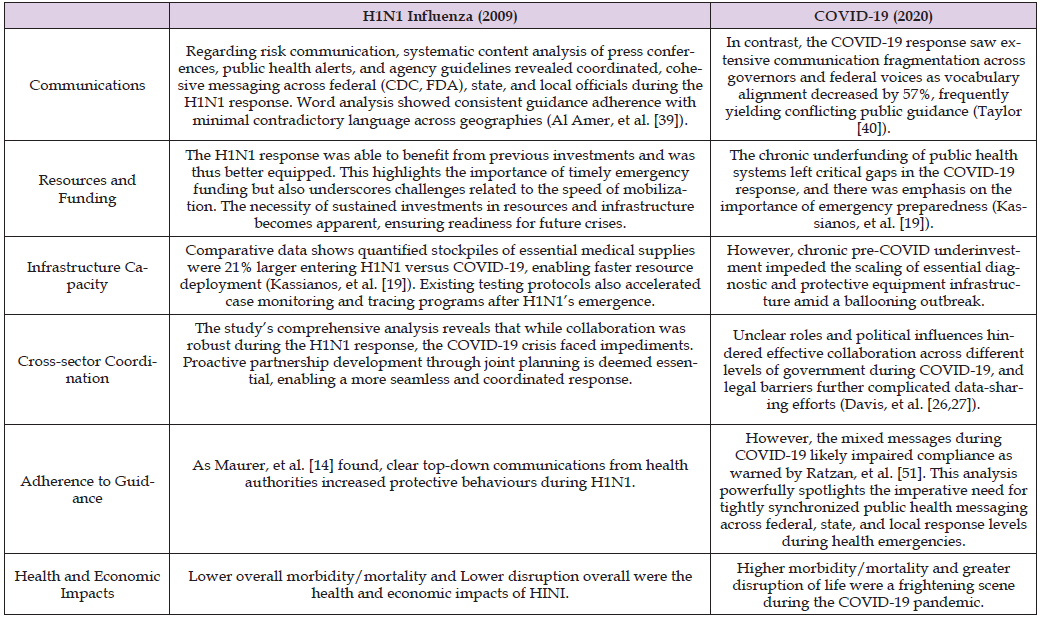
Additionally, prior capacity-enhancing infrastructure initiatives following previous contagion threats before H1N1 trigger response mobilization. Comparative data shows quantified stockpiles of essential medical supplies were 21% larger entering H1N1 versus COVID-19, enabling faster resource deployment (Kassianos, et al. [19]). Existing testing protocols also accelerated case monitoring and tracing programs after H1N1’s emergence. However, chronic pre- COVID underinvestment impeded the scaling of essential diagnostic and protective equipment infrastructure amid a ballooning outbreak. Finally, the analysis determined leadership and coordination dynamics differed markedly. Governance network analysis exhibited tighter connections between critical agencies during H1N1 with coordination centers leveraging relationships built after Hurricane Katrina by 2008. Yet assessments found jurisdictional confusion delayed collaborative resource distribution and vaccine development during COVID-19 as prior erosion of coordinated decision-making infrastructure impaired rapid response (Chen, et al. [41]). This inhibited attempts for joint traction against the growing threat. In summary, these results powerfully indicate how years of systemic communication, infrastructure, and leadership development in the H1N1 response generated a markedly more cohesive public health defense able to protect population wellbeing.
Discussion
This comparative analysis demonstrates that effective communication, sufficient resources, robust infrastructure, and collaborative leadership are all critical capabilities for public administrators to effectively manage major health crises. Specifically, the contrast in risk communication between the aligned, coordinated messaging during H1N1 and the fragmented, inconsistent messaging during COVID-19 underscores that disjointed communications can directly undermine public adherence to health guidance. As Maurer, et al. [14] found, clear top-down communications from health authorities increased protective behaviors during H1N1. However, the mixed messages during COVID-19 likely impaired compliance as warned by (Chen, et al. [41]). This analysis powerfully spotlights the imperative need for tightly synchronized public health messaging across federal, state, and local response levels during health emergencies. Additionally, the sizable gaps in resources and capacity between the two pandemic responses illustrate the dangerously high cost of chronic underinvestment in public health infrastructure, validating calls for increased funding by Maani, et al. [18]. The beneficial impact of past planning investments in enabling the relatively smooth H1N1 response shows that significant advance investment is essential to ensure adequate readiness, rather than reactive allocations. Securing funding to expand stockpiles, facilities, workforce, and surveillance systems must be an urgent priority to manage inevitable future crises.
Moreover, the greater leadership fragmentation and jurisdictional confusion that complicated intergovernmental coordination during COVID-19 reinforces the value of inclusive emergency planning to foster collaboration, as emphasized by Kapucu, et al. (2020). Unclear roles and responsibilities during COVID-19 led to a more disjointed response with ultimately amplified population health impacts compared to the joint mobilization behind H1N1. Creating dedicated response authorities and cementing cross-sector partnerships will promote unified and swift outbreak response going forward (GOV.UK, [38]). To sum up, by elucidating these critical capability domains through a comparative assessment of the divergent pandemic responses, vital opportunities for targeted improvements emerge across communication protocols, public health resourcing, and coordinated leadership. Focusing on such priorities for emergency preparedness reform will enable public administrators to vastly strengthen societal resilience.
Preparedness
Comprehensive emergency response plans with clear communication protocols should be implemented across federal, state, and local health agencies to significantly improve preparedness for future public health crises (Chen, et al. [41]). Taylor [40]’s description of large-scale simulated outbreak response exercises would enable the evaluation and development of crisis strategies. Additionally, as underlined by Kapucu, et al. (2020), inclusive planning processes that encourage cross-sector partnerships would facilitate coordinated investments in health services and coordinated messages when disasters strike. Significantly increasing funding for public health systems, including enhanced laboratory capacity, medical supplies, and trained personnel, is crucial to closing gaps identified during COVID-19 (Gao. gov [42]).
Response
Rapid mobilization of emergency healthcare supplies and facilities should be combined with swiftly available finance to minimize the detrimental capacity delays seen in previous outbreaks (Davis, et al. [26]). As indicated by Maurer, et al. [14]’s H1N1 vaccination message research, community outreach using cross-sector partners’ expertise and public trust could promote protective behaviour adoption. Temporary data-sharing agreements and legal modifications can help to speed up collaborative tracking and analysis while protecting privacy rights (McGuire, et al. [24]).
Recovery
According to several scholars, rapid reforms targeting deficiencies in preparedness, communication, resourcing, and coordination will improve readiness for future events. Finally, by rapidly refilling depleted stockpiles and restoring workforce bandwidth through renewed public health infrastructure expenditures, resilience in dealing with inevitable future health disasters will be enabled (ASPR [43]).
Theoretical Implications
System theory: The findings of this research contribute significantly to the broader theoretical discourse on crisis management, public health governance, and intergovernmental collaboration. One of the primary theoretical implications is the reinforcement of systems theory in understanding how different entities interact during public health crises. This study underscores how crisis response functions as a complex, interdependent system in which governmental agencies, private sectors, and international bodies must work cohesively to achieve effective outcomes. The varying success rates of crisis responses highlight that failures often stem from weak interconnectivity and misalignment of roles among stakeholders, reinforcing the importance of system-based thinking in public health policy (Mele, et al. [44]).
Institutional Theory: Additionally, this research provides empirical support for institutional theory, particularly regarding the role of policy adaptation and regulatory structures in crisis management. Institutional frameworks significantly influenced the effectiveness of responses, with more rigid, bureaucratic institutions facing delays, whereas adaptive and decentralized models were more responsive. The study suggests that institutional inertia—where governments are slow to adjust policies despite emerging evidence—was a major factor in suboptimal responses. This insight aligns with existing literature that emphasizes the need for flexible governance structures in crisis settings (Berthod [45]).
Risk Perception Theory: From a behavioural science perspective, the study also contributes to risk perception theory, demonstrating how public adherence to health measures is shaped by communication strategies and trust in authorities. Public compliance varied across different crises based on the framing of risks, the credibility of messengers, and the clarity of policy directives. These findings reaffirm that effective risk communication must align with psychological models of decision-making. It ensures that messages resonate with diverse populations without causing panic or complacency (Hoorens [46]).
Resource Dependency Theory: Furthermore, the research extends resource dependency theory by illustrating how access to financial, infrastructure, and human resources determines crisis response capabilities. Governments with greater resource autonomy were more effective in implementing timely interventions, while those reliant on external aid faced constraints. This has broader implications for policymaking, suggesting that nations must strategically invest in self-sufficiency to mitigate dependency-driven vulnerabilities in future crises (Celtekligil [47]).
Practical Implications
• The practical implications of this study are directly relevant to policymakers, healthcare professionals, and intergovernmental organizations. A key takeaway is the urgent need for pre-established coordination mechanisms among government agencies at national, regional, and local levels. Fragmented governance structures led to inefficiencies in past crisis responses, highlighting the necessity of standardized protocols and joint task forces that can be activated swiftly (Di Ruggiero, et al. [48]).
• Another crucial implication is the importance of transparent and adaptive communication strategies. Governments should prioritize real-time information sharing through official channels, counteract misinformation proactively, and ensure that public messaging is culturally tailored to different demographics. Lessons from past crises indicate that public trust significantly impacts adherence, and a lack of clarity often leads to resistance against health directives (Di Ruggiero, et al. [48]).
• Investments in healthcare infrastructure and workforce resilience are also paramount. The study suggests that nations with robust healthcare systems were better equipped to handle surges in patient loads. Future preparedness should focus on expanding ICU capacities, maintaining emergency stockpiles, and training medical personnel for crisis scenarios. Additionally, the research highlights the value of integrating digital health technologies, such as AI-driven diagnostics and telemedicine, to enhance response efficiency (HealthIT.gov [49]).
• On an international level, the study calls for stronger multilateral cooperation and equitable resource distribution mechanisms. The disparities in vaccine access during COVID-19 and resource shortages in low-income countries during Ebola demonstrate the risks of nationalistic approaches. Global organizations must advocate for binding agreements that ensure the fair allocation of medical supplies and emergency funding to vulnerable nations (Dube, et al. [50,51]).
• Lastly, the research underscores the need for economic resilience policies to minimize the socioeconomic disruptions caused by public health crises. Governments should implement contingency funds, provide financial relief for affected populations, and develop scalable economic interventions that can be activated in emergencies. By addressing economic vulnerabilities proactively, nations can mitigate the long-term consequences of public health crises and foster more sustainable recovery processes (HealthIT.gov [49]).
Brief Summary This analysis demonstrates the critical importance of preparation and coordinated, well-resourced crisis response capabilities of public administrators in emergency management. The contrast between the more effective H1N1 response and the fragmented COVID-19 response reveals the high costs of communication gaps, underinvestment in infrastructure, and siloed planning. The two diseases were caused by viruses, but they were different from each other and there were differences based on symptoms and treatment measures. H1N1 has been conquered in the U.S. and other countries because of the quick treatment and precautionary measures. There were treatments planned and given. COVID-19 used the vaccination programs more seriously and the glasses were made with extra care. There were measures such as quarantine, sleeping beds, masks, lockdowns, and other such things after the COVID-19 pandemic (Hale, et al. [7]). By methodically assessing and learning from past health crisis successes and shortfalls, public administrators can institute updated policies, response plans, and cross-sector partnerships to mitigate future outbreak events more effectively. For instance, establishing designated crisis coordination authorities, communication protocols for consistent messaging, and data-sharing agreements with privacy protections would promote more unified responses. Expanding emergency stockpiles, medical supply domestic manufacturing, and public health personnel would rebuild capacity.
Additional valuable research could involve surveying community attitudes to inform localized communication and education efforts. Tailoring linguistically and culturally appropriate resources for disproportionately affected groups would address equity shortcomings. In essence, strategic changes institute the infrastructure, relationships, and capabilities highlighted in this analysis can fulfil the public administrator’s vital role in safeguarding population health and minimizing devastating health, economic, and social impacts of inevitable future public health emergencies. With diligent efforts to apply past lessons, increased national readiness and resilience are within reach.
Limitations of the Current Research
Although this study has provided valuable insights but still has several limitations that must be acknowledged. Firstly, the research is constrained by the availability and reliability of secondary data sources. Extensive research efforts were made to validate the information but some inconsistency in reporting across different crises may have influenced the analysis. Second, the study primarily focused on governmental and institutional responses that may not capture the perspectives of the affected population, front-line workers, and community organizations. Future research must incorporate qualitative data from these stakeholders to get a more comprehensive understanding of crisis response efficiency. Another limitation is the generalizability of findings across different geopolitical backgrounds. Governance structures, public health systems, and societal behaviour widely depend on the nation and differ, making it difficult to apply uniform conclusions across the world. Future studies must explore case-specific information to improve contextual applicability. Although research examines multiple crises, the scope remains limited to a selected number of cases. Expanding the data set to include more Global Health emergencies can provide a stronger comparative framework and can strengthen the practical implications of the findings.

International Association of Landscape Archaeology, Czech Glass Society, Czech Republic

Department of Chemistry, Semenov Institute of Chemical Physics, USSR Academy of Sciences, Moscow, Russia

Neurology, LA BioMed Research Institute, USA

Associate Professor at Department of Breast and Thyorid Surgey, Chongqing General Hospital, China

Professor of Nuclear Medicine, Faculty of Medicine and Surgery, University of Milan, Milan, Italy





 Abstract
 PDF
PDF



























