info@biomedres.us
+1 (502) 904-2126
One Westbrook Corporate Center, Suite 300, Westchester, IL 60154, USA
Site Map
 ISSN: 2574 -1241
ISSN: 2574 -1241
ISSN: 2574 -1241
Received: March 26, 2025; Published: April 04, 2025
*Corresponding author: Andrey M Yarkov, Underwater Research Center of the Russian Geographical Society, St. Petersburg, Russian Federation
DOI: 10.26717/BJSTR.2025.61.009570
The aim of the work was to study the functional state of the body of divers when using diving breathing apparatus with a closed breathing circuit. Research methods: the expedition examined the cardiovascular, respiratory, nervous systems, psychophysiological status, cognitive mental functions of divers using diving breathing apparatus with closed and open breathing patterns and persons not participating in diving descents. The contingent of subjects: 20 people participated in medical and physiological studies, which were divided into three groups. The first group consists of divers using diving breathing apparatus with a closed breathing circuit. The second group includes people who do not participate in diving trips. The third is divers using diving breathing apparatus with an open breathing pattern. The main results showed that there were no pronounced negative changes in the functional state of the body of divers using diving breathing apparatus with closed breathing patterns.
Keywords: Functional State of the Body; Diver; Diving Breathing Apparatus; Single Dose of Lung Intoxication
Since the invention of scuba diving equipment, diving equipment has improved technically and at the same time has become more accessible, which has made it possible to use it at the amateur level. Recently, diving breathing apparatus (VDA) with a closed breathing circuit (ZSD) and electronic control (EC) (eCCR - electronic Closed Circuit Rebreather) have been actively used in world practice [1]. The principle of operation of VDA with WHSD and power plants:
• Analysis of the partial pressure of oxygen in the breathing gas mixture (BGM) in the circuit by the electronic system of the device and maintaining it at the specified value by adding the required amount of oxygen from the cylinder to the breathing circuit
• Removal of carbon dioxide (CO2) from the DGS by absorption in a regenerative cartridge
• Adding the required amount of gas mixture (GM) to the breathing circuit from a cylinder when the ambient pressure changes.
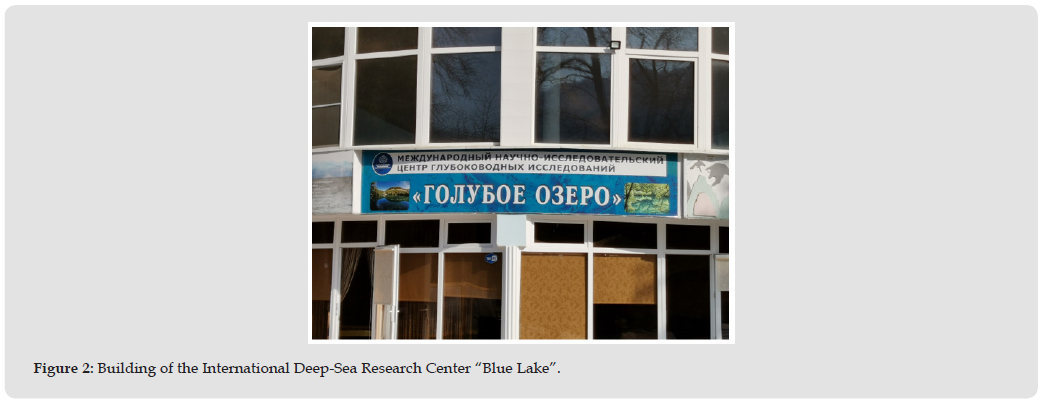
Figure 1 Preparation for diving descent. Maintaining the optimal partial pressure of gases in the mixture allows the diver to remain on the ground for a longer period of time (under the maximum pressure of the water and/or gas environment), with a shorter decompression period compared to decompression during diving using air for breathing (Figure 2). During the expedition of the Underwater Research Center of the Russian Geographical Society (URC RGS) to Lake Tserik-Köl (Blue Lake), Kabardino-Balkaria Republic in the North Caucasian Federal District of the Russian Federation (30 km from Nalchik), a number of diving descents were carried out using a VDA with a ZSD and a VDA with an open breathing scheme (OSD), the functional state of the diver’s body was analyzed in dynamics. The main indicators were assessed: the efficiency of diving operations and the safety of diving descents. The optimality criterion was the preservation of the initial level of the functional state of the diver’s body during the descent/immersion and after it. The purpose of the work is study of the functional state of the body of divers using the ZSD VDA with the use of breathing gas mixtures with differentiated oxygen values.
Figure 1
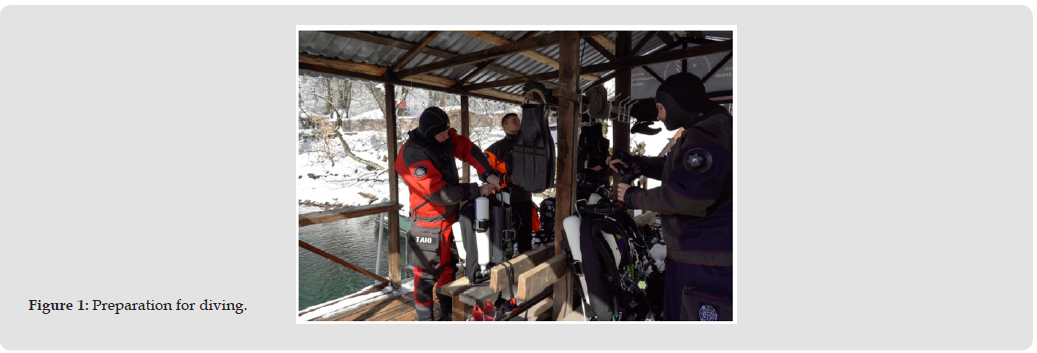
Figure 2
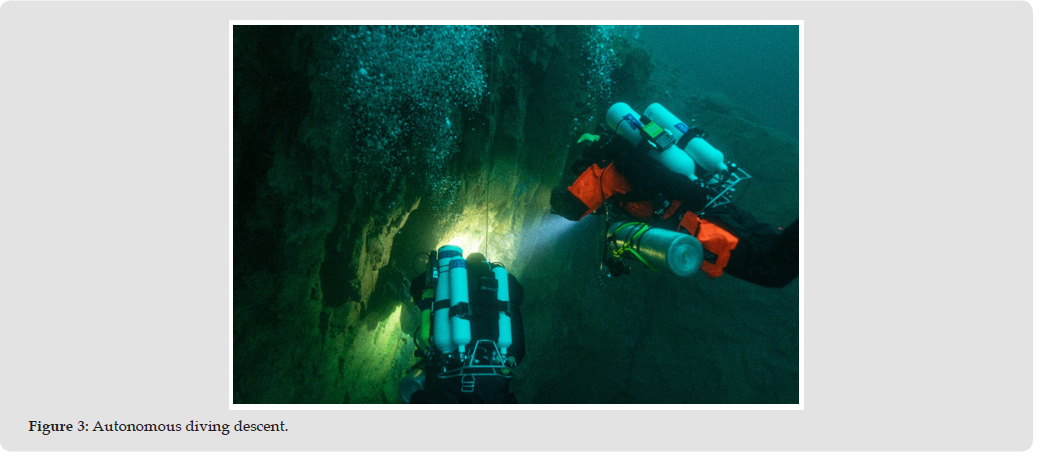
Medical and physiological studies were conducted during experimental diving descents as part of an expedition of the Underwater Research Center of the Russian Geographical Society. The study involved 20 people. The subjects were aged between 30 and 50 years. The participants were divided into three groups. The main group, group I (6 people, average age 36 years) included divers using a VDA with a ZSD and an EI (JJ-CCR Rebreather) for diving operations. The comparison groups were group II - people not participating in diving descents (6 people, average age 34 years) and group III - divers who used a breathing apparatus with an open breathing circuit for diving operations (8 people, average age 35 years). The gas mixtures for each descent were selected by a diving medicine doctor, taking into account the characteristics of the descent (depth, exposure on the ground) and the nature of underwater technical work. A mandatory condition was: the content of the partial pressure of oxygen in the DGS should not exceed 130 kPa (1.3 bar), and the equivalent narcotic depth (END – Equivalent Narcosis Depth) should not exceed 395 kPa (40 meters). The divers worked in pairs. During descents, each descending diver acted as a backup for his partner and had sufficient DGS reserves for both divers to reach the surface while maintaining the decompression regime [2]. The “partnership” system assumed that the divers in a pair had the same order of descent, were in close proximity to each other, ready to help their partner at any time. Each diver monitored the observance of the order of descent and promptly switched to the appropriate depth of the DGS (Figure 3). During autonomous dives, communication between the divers and the support personnel (commander, dive leader and diving medicine doctor) was carried out using wireless hydroacoustic communication. The divers-maintained communication with each other using visual signals and wireless hydroacoustic communication. In total, during the expedition, Group I carried out 152 man-descents to depths from6 to 100 meters, group III - 60 person descents to depths from 12 to 20 meters. To assess the functional state of divers, methods were used aimed at assessing the cardiovascular, respiratory and nervous systems [3]. Surveys were conducted at the beginning, middle and end of the expedition.
Figure 3
Methods Aimed at Studying the Cardiovascular System
Among the leading systems of the body, the cardiovascular system (CVS) deserves special attention. It reacts most dynamically to all changes, acting as an indicator of the functional state of the body [4]. Functional state of the cardiovascular system determines the physical performance of divers, which from the standpoint of adaptation theory can be considered as one of the integral characteristics of the organism and is defined as its ability to adapt to changing conditions through physical activity [5].
To assess the cardiovascular system, the following were performed:
1. Determination of heart rate (HR),
2. Measurement of blood pressure (BP) – this indicator was used to evaluate:
- Pulse arterial pressure.
- Stroke volume according to Starr’s formula - the amount of blood ejected by the ventricle during one contraction of the heart into the aorta or pulmonary artery [6].
- Minute volume of blood circulation [7].
- HELLaverage7 [8].
3. The Ruffier test is an assessment of cardiac endurance during physical exertion based on changes in heart rate.
Methods Aimed at Studying the Indicators of External Respiration Functions
Respiration is the process by which the body’s cells are supplied with oxygen. As a result of cellular metabolism, carbon dioxide, which returns to the blood and is excreted from the body through the lungs with exhalation. This gas exchange is the main, vital function of the respiratory system [9,10].
The following studies were conducted on the respiratory system: 1. Spirometry: vital capacity of the lungs (VC), forced expiratory volume in the first second (FEV1) – characterizes the potential capabilities of ventilation.
2. Stange test, Gench test – tests with voluntary breath holding to assess the body’s resistance to hypoxia;
3. The Giulian-Dergunov test is a combined test with voluntary breath holding to assess the functional state of the respiratory and cardiovascular systems.
When conducting the test of G. Giulian et al. (1978) as modified by A.V. Dergunov [11] with co-authors, the duration of breath holding at rest (BH) was determined, then the breath holding after 10 slow breaths (BH) was determined. As a dosed physical load, 30 squats were performed in 45 seconds, a minute after the squat, the duration of breath holding (BH) was determined again. Based on the results obtained, the following test parameters were calculated:
1. Ventilation efficiency index (VEI) IEV=ZDV+ZDP
2. Total breath holding (TBP) OZD=ZDP+ZDV+ZDN
3. Index of Nervous Vital Reserve (INVR) INJR=ZDN+ZDP
4. Oxygen consumption index (OCI) IPC=ZDV+ZDN
5. Life Reserve Index (LRI) IZHR=OZD: 100
The calculation of the Single Dose of Lung Intoxication (SDILI)
was also carried out [12].
The toxic dose of oxygen EDIL (Unified Dose of Intoxication of the
Lungs) for each pO2 was calculated using the Wright formula

Were
t- time, min,
pO2– partial pressure of oxygen, ata
By summing the EDIL for each pO2 level, we obtain the total dose of oxygen exposure over the period of one or more descents. In studies conducted by COMEX on a large group of subjects (76 people), it was proven that the absolutely safe limit of hyperoxia is 600 units, and when this indicator increases to 1300 units, some manifestations of lung damage appeared in 50% of divers. In the US Navy Diving Manual [13] A safe dose is 625 units. A dose of 1425 UIL is considered the upper limit of permissible exposure, leading to an approximately 10% decrease in VC. Such a decrease is restored fairly quickly and without visible consequences for the body. This limit is advisory in nature and can be increased if necessary. In this case, the individual sensitivity of the diver to oxygen, the need and expediency of a stronger effect should be taken into account.
Methods Aimed at Studying the Nervous System
A study of the general neurological status and functional state of the central nervous system was conducted.
The functional state of the central nervous system is an important criterion in assessing a person’s health and performance [14]. Indicators of mental processes, such as attention and its characteristics (retention, switching and distribution), speed of information processing and activity of thinking processes, were assessed using the following methods:
- Proofreading Test with Landolt Rings– was used to study the intensity, stability, switching of attention and the speed of processing visual information. With the help of this method, the working-in and time of onset of fatigue, resistance to monotonous activity, in which it is necessary to maintain a high level of attention, were also assessed. The survey is conducted using a form on which a table with signs in the form of rings with gaps directed in different directions is depicted. The participant must mark the rings with a given direction of the gap in a certain period of time.The speed of information processing (A) was calculated using the formula:
Were
N – total number of rings in the table (1024).
n – number of errors.
T – task execution time, sec.
The results of the tests are assessed by the number of missed (not
crossed out) characters, the number of characters viewed over a period
of time.
- Addition and Subtraction in the Mind– were used to study
the ability to perform counting operations, the activity of thinking
processes, and attention retention. The speed of information processing
(M) was calculated using the formula:

Were N – total number of actions performed.
n – number of errors.
T – task execution time, sec.
The number arrangement method was used to study the function of distribution and switching of attention. This method is carried out using a form on which two squares are depicted, each having 25 cells. In the cells of the upper square, randomly selected numbers from 1 to 99 are placed. In the lower square, there are 25 free cells. The subject must rewrite the numbers from the upper square to the lower one in strictly increasing order from left to right within two minutes [15].
• Dynamics of the Functional State of the Central Nervous System (balance the processes of excitation and inhibition in the cerebral cortex and their mobility, accuracy and speed of response to stimuli were examined using the hardware and software complex “NS-Psychotest” using the following methods:
• Simple Visual Motor Reaction Test (SVMR) is designed for express assessment of the level of activation of the central nervous system by analyzing the level and stability of human sensorimotor reactions to light stimuli. The device uses a light pulse (lighting up of the green indicator) as a stimulus. After presenting the light stimulus, you must quickly press the button. The average reaction time, reaction stability, number of anticipations and omissions are assessed.
• Complex Visual Motor Response Test (CVMR) is designed to assess the level of operator performance based on the analysis of reaction time, stability of reactions and the number of errors to stimuli related to visual modality. A light indicator with the ability to supply red and green stimuli is used as a stimulator. The response time and the number of erroneous actions are recorded: incorrect answer, missed signal, premature pressing.
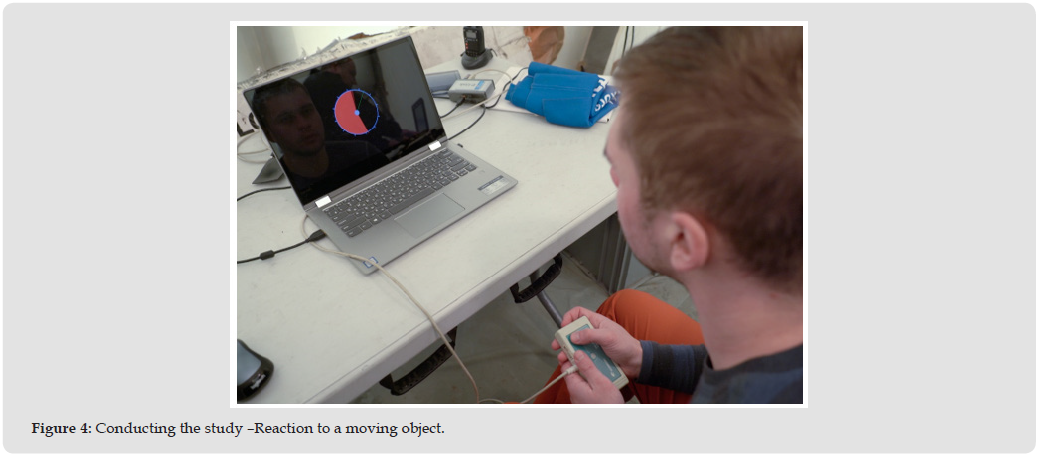
• Moving Object Response (MORR) is a type of complex visual- motor reaction. The reaction is a complex spatio-temporal conditioned reflex, which is formed on the basis of assessing the speed of movement and determining the magnitude of the corresponding lead. The accuracy of the response to the stimulus is determined. Figure 4 Conducting a study – Reaction to a moving object.
• Critical Flicker Fusion Frequency (CFMF)– determination of the threshold frequency of light pulses at which they are no longer perceived as intermittent, but seem continuous light flow. Characterizes the mobility and state of the nervous processes in the visual analyzer, as well as the functional state of the entire organism. Based on the results obtained hardware and software complex automatically forms a conclusion:
- About the level of activation of the central nervous system and the level of performance;
- Reaction stability.
- Predominance of inhibition or excitation processes.
- Level of infallibility.
- Level of functional capabilities of the central nervous system.
Figure 4
In the dynamics of task performance, the following indicators were used for comparison: the number of accurate reactions, the arithmetic mean of the reaction time (indicating the mobility of nervous processes), the standard (root mean square) deviation (an indicator of balance) and the level of functional capabilities (LFC).
Subjective Assessment of Mental and Physical Well-Being, Reactive and Personal Anxiety was Carried out using the Following Methods
- The SAM (well-being, activity, mood) and ACC (self-assessment questionnaire) questionnaires are used to quantitatively assess the subjective state.
- Strelau questionnaire – determines the strength, mobility and balance of nervous processes.
- The questionnaire “Asthenia Scale” is aimed at identifying the degree of asthenia of the body.
- Spielberger-Khanin questionnaire – for assessing situational and personal anxiety.
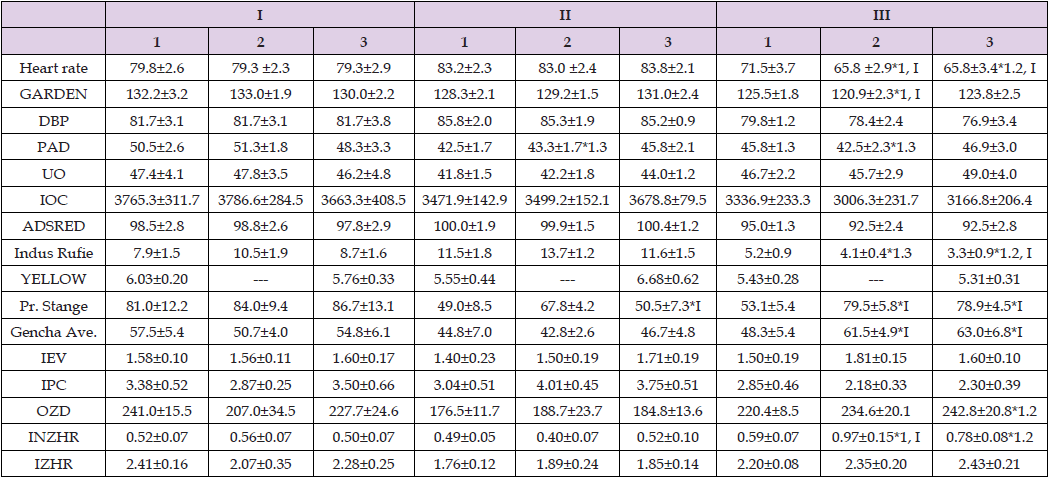
The results obtained from the examinations using the above methods are included in Tables 1-4, analyzed and offered for discussion and drawing Functional state of the cardiovascular system. The heart rate indicators changed insignificantly during the entire observation period in Group I and Group II: a decrease of 0.6% was recorded in Group I, and an increase of 0.8% was recorded in Group II. In Group III, a decrease in heart rate by the 2nd examination by 8% was noted, after which the indicator did not change. In the 2nd and 3rd examinations, reliable differences were noted between Group I and Group III. This indicator in all groups remained in the “normal” range and did not change significantly. During the analysis of the indices obtained during the examinations by measuring BP, it was possible to note a decrease in the indices of SBP by 1.6%, PBP by 4.3%, SV by 2.5%, IOC by 2.7%, APM by 0.7% in Group I; the DBP index did not change. In Group II, there was an increase in the indices of SBP by 2.1%, PBP by 7.8%, SV by 5.3%, IOC by 6%, APM by 0.4%; a decrease in the DBP index by 0.8%. In Group III, there was a decrease in the indices of SBP by 1.4%, DBP by 3.6%, IOC by 5.1%, APM by 2.6%; and an increase in PBP by 2.5%, SV by 4.9%. In the 2nd examination, reliable differences in the indices of SBP were noted between Groups I and III. In group II, there were significant differences in the PBP index between the 1st and 2nd examinations and the 2nd and 3rd examinations. In group III, there were significant differences in the PBP index between the 1st and 2nd examinations and the 2nd and 3rd examinations. The indices obtained during the blood pressure measurement and calculations remained in the “normal” range in all groups and did not change significantly. To obtain information on the reactive properties of the cardiovascular system and, first of all, the properties of the heart to increase the contraction rate, the Ruffier test was used. In group I, an increase in the Ruffier index by 10.1% was noted. In group II, an increase in the Ruffier index by 1.2% was noted. In group III, a decrease of 36.5% was noted, against the background of regular exercise (running). Groups I and II did not exercise regularly, which can be associated with an increase in the Ruffier index in these groups. In group III, reliable differences were noted between the examinations; and in the 3rd examination between group I and group III. The study of the state of the cardiovascular system did not reveal any significant and reliable changes, however, the direction of changes in the cardiovascular system indicators in different groups was different. If we consider the totality of changes in each group, then some signs of development of certain stages of adaptation are revealed [16].
Table 1: Cardiovascular and respiratory system parameters.
Notes:
1. Roman numerals indicate groups (I, II, III).
2. Arabic numerals indicate survey periods (1 - at the beginning, 2 - in the middle and 3 - at the end of the expedition).
3. * - reliable differences at p ≤ 0.05; Roman numerals indicate groups with which differences are reliable (I, II, III). Arabic numerals indicate survey
periods (1st, 2nd, 3rd) with which there are reliable differences.
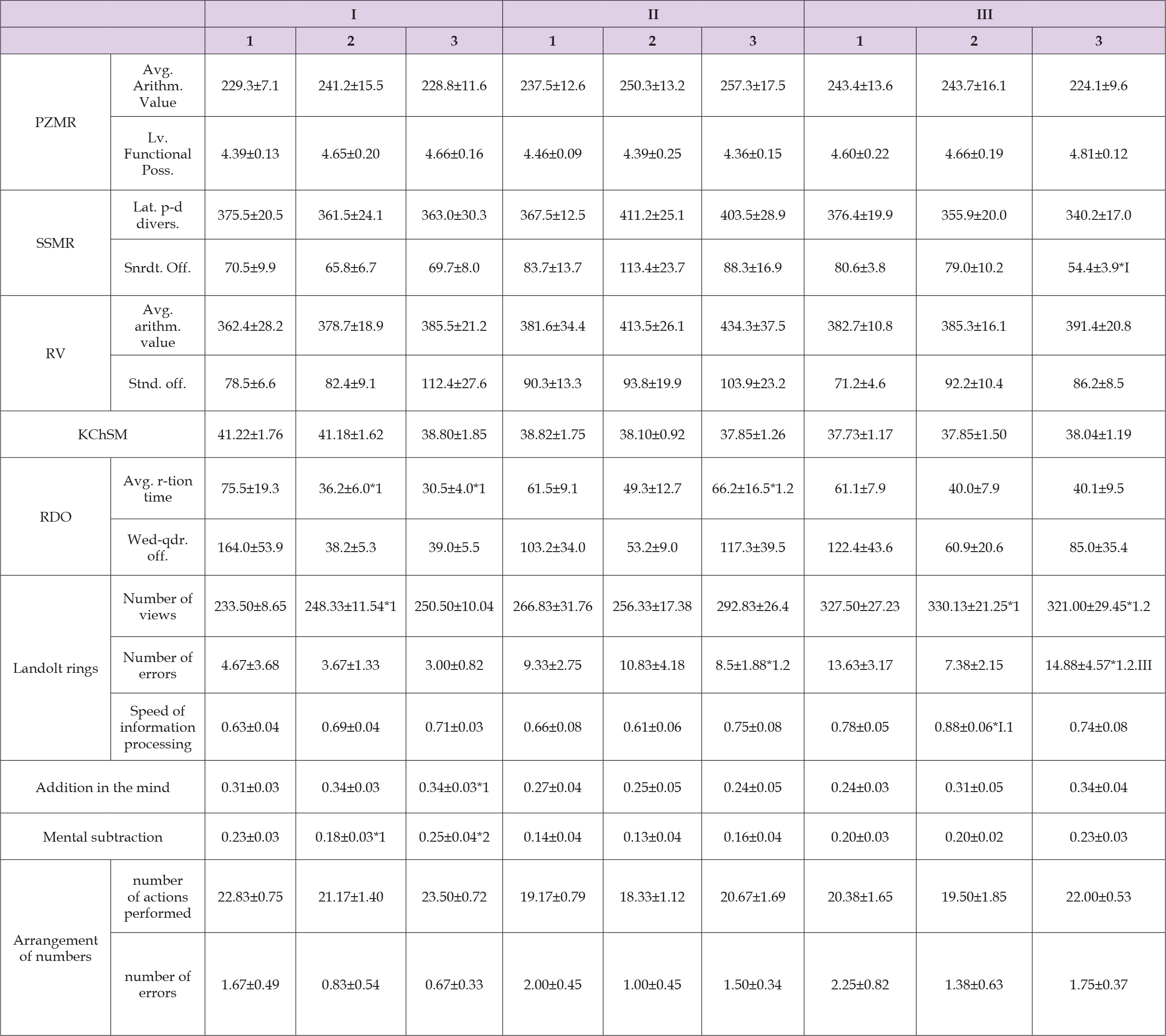
Table 2: Nervous system parameters.
Notes:
• Roman numerals indicate groups (I, II, III).
• Arabic numerals indicate survey periods (1 - at the beginning, 2 - in the middle and 3 - at the end of the expedition).
• * - reliable differences at p ≤ 0.05; Roman numerals indicate groups with which differences are reliable (I, II, III). Arabic numerals indicate survey periods (1st, 2nd, 3rd) with which there are reliable differences.
Table 3: Indicators of psychophysiological status.
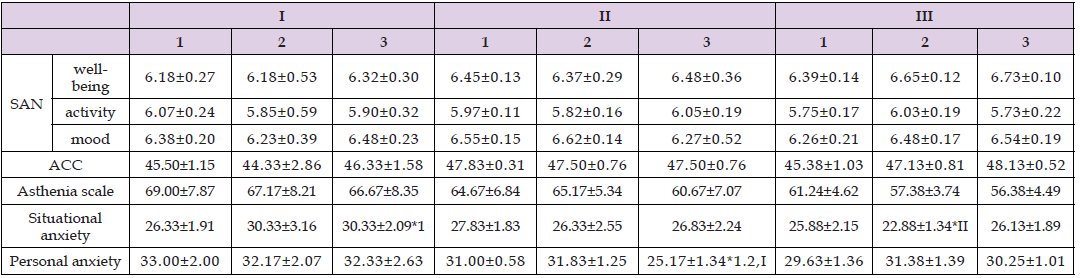
Notes:
• Roman numerals indicate groups (I, II, III).
• Arabic numerals indicate survey periods (1 - at the beginning, 2 - in the middle and - at the end of the expedition).
• * - reliable differences at p ≤ 0.05; Roman numerals indicate groups with which differences are reliable (I, II, III). Arabic numerals indicate survey periods (1st, 2nd, 3rd) with which there are reliable differences.
Table 4: EDIL indicators for the expedition period.
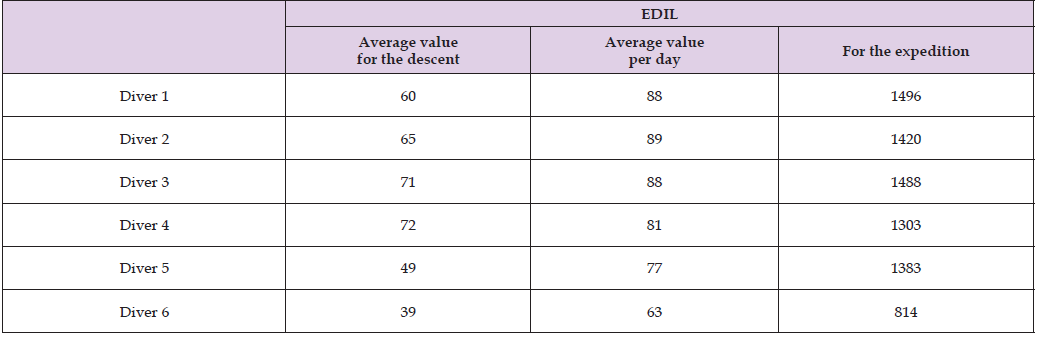
Functional State of the Respiratory System
The vital capacity indices in Group I and Group III did not show any significant changes. In Group I, a 4.5% decrease was noted, while in Group III, a 2.1% decrease was recorded. In Group II, an increase in vital capacity by 20.4% was noted. In the 3rd examination, reliable differences were noted between Group II and Group I. The Stange test value in group I increased by 7%, and in group III an increase of 48.5% was noted (against the background of regular breath-holding training). In group II an increase of 38.4% was observed by the 2nd examination, and a decrease of 25.6% by the 3rd examination. In the 2nd examination, reliable differences were noted between group III and group I. In the 3rd examination, reliable differences were noted between group II and group I and between group III and group I.
The Gench test index in group I showed a decrease of 11.9%, in group II an increase of 4.1%, and in group III an increase of 30.6%. In the 2nd examination, reliable differences were noted between group III and group I. In the 3rd examination, reliable differences were noted between group III and group I. The combined Julian-Dergunov test was used to assess the functional state of the respiratory and cardiovascular systems. No reliable differences were found in the results obtained using the calculations of IEV, IPC, and IZH. Reliable differences in OZD, IZHR were found only in group III. Analyzing the parameters of the external respiration function, it can be noted that all indicators are within the normal range. The use of respiratory gas mixtures with differentiated values of oxygen and helium allows to significantly reduce the toxic effect of oxygen on the lung tissue. Significant and reliable changes in the respiratory system were not detected.
Functional State of the Central Nervous System
Analysis of the obtained indicators allows us to draw the following conclusions: indicators of mental work remained at a high level in all groups. Divers of the group I were more attentive and focused. The obtained results of the CNS examination indicate that the mobility of nervous processes is within the normal range in all study participants. Significant and reliable changes in the central nervous system were not detected. Examination of the general neurological status did not reveal any abnormalities in all groups.
Conclusion on Psychophysiological Status
The purpose of our study of psychophysiological status was to identify psychophysiological deviations that may indicate the presence of medical contraindications to continuing work associated with exposure to harmful and (or) hazardous production factors; timely detection of diseases, including socially significant, initial forms of occupational diseases; timely implementation of preventive and rehabilitation measures aimed at maintaining health and restoring working capacity. To assess the psychophysiological status, we used the following methods: the questionnaire “Well-being, activity, mood”; the questionnaire of self-assessment of the state; the Strelau questionnaire, which assesses the strength of excitation processes, inhibition and the level of mobility of nervous processes in the cerebral cortex; the questionnaire “Asthenia Scale”, which serves for express diagnostics of the asthenic state; the Spielberger-Khanin questionnaire, which shows the level of situational and personal anxiety. Analyzing the indicators of the SAN and ACC methods (quantitative assessment of the subjective state), it can be said that all indicators were at the same level, no reliable differences were found either between groups or between examinations. Indicators of the questionnaire I. Strelau: strength of nervous processes, mobility of the nervous system - a slight increase is noted; balance of nervous processes, balance in strength (A) - slight changes are noted. The indicators of the questionnaire “Asthenia Scale” in all groups indicated mild asthenia with a tendency to a slight decrease to 3rd examination. In the indicators of the Spielberger questionnaire-Khanina: The scale of self-assessment of situational anxiety - a slight increase is noted, the scale of self-assessment of personal anxiety - minor changes.
One of the factors determining the possibility and success of performing work by a diver is the functional state of the body. The functional state of the body is understood as a set of characteristics of physiological functions and psychophysiological qualities that ensure the performance of professional activity by a person. Monitoring the functional state of the divers’ body allows us to assess the process of adaptation to conditions of increased pressure of the gas and/or water environment, determine the physiological “cost” of activity, physical capabilities, monitor the growth and development of professional skills of divers, and predict professional activity in the future. The study established that the main indicators of the functional state of the body of divers using VDA with ZSD did not have significant differences in comparison with divers using VDA with OSD and participants not participating in diving descents. The changes observed in all participants are characteristic of the initial stages of fatigue development. Efficiency is characterized as slightly reduced. The most probable causes of this condition are climate change and psycho-emotional stress caused by the need to form a new team and high work intensity. It is necessary to continue further field studies of the functional state of the divers’ organism, which will allow us to evaluate the process of adaptation to conditions of increased pressure of the gas and (or) water environment, determine the physiological “cost” of activity, physical capabilities, monitor the growth and development of divers, and predict professional activity in the future.
All authors confirm their authorship according to the international ICMJE criteria (all authors made a significant contribution to the development of the concept, conduct of the study and preparation of the article, read and approved the final version before publication). The largest contribution is distributed as follows: concept and design of the study – A. M. Yarkov, M. V. Kramorenko, S. G. Fokin; data collection and analysis – A. M. Yarkov, S. G. Fokin, I. V. Komarova, M. V. Kramorenko; manuscript preparation – A. M. Yarkov, I. V. Komarova, M. V. Kramorenko.
All authors confirm the conformity of their authorship, according to the international criteria of the ICMJE (all authors made a significant contribution to the development of the concept, conduct of the study and preparation of the article, read and approved the final version before publication). The largest contribution is distributed as follows: concept and research plan – AMY, MVK, SGF; data collection and analysis – AMY, SGF, IVK, MVK; preparation of the manuscript – AMY, IVK, MVK.
The authors declare no conflict of interest.
The authors declare that they have no competing interests.
The study was conducted without additional funding.
The study was carried out without additional funding.
Bibliography 16 titles.
International Association of Landscape Archaeology, Czech Glass Society, Czech Republic

Department of Chemistry, Semenov Institute of Chemical Physics, USSR Academy of Sciences, Moscow, Russia

Neurology, LA BioMed Research Institute, USA

Associate Professor at Department of Breast and Thyorid Surgey, Chongqing General Hospital, China
Professor of Nuclear Medicine, Faculty of Medicine and Surgery, University of Milan, Milan, Italy





 Abstract
 PDF
PDF