info@biomedres.us
+1 (502) 904-2126
One Westbrook Corporate Center, Suite 300, Westchester, IL 60154, USA
Site Map
 ISSN: 2574 -1241
ISSN: 2574 -1241
ISSN: 2574 -1241
Received: March 20, 2025; Published: March 28, 2025
*Corresponding author: Shahin Asadi, Medical Genetics Director of the Division of Medical Genetics and Molecular Pathology Research. Division of Medical Genetics and Molecular Pathology Research, Center of Complex Disease, USA
DOI: 10.26717/BJSTR.2025.61.009553
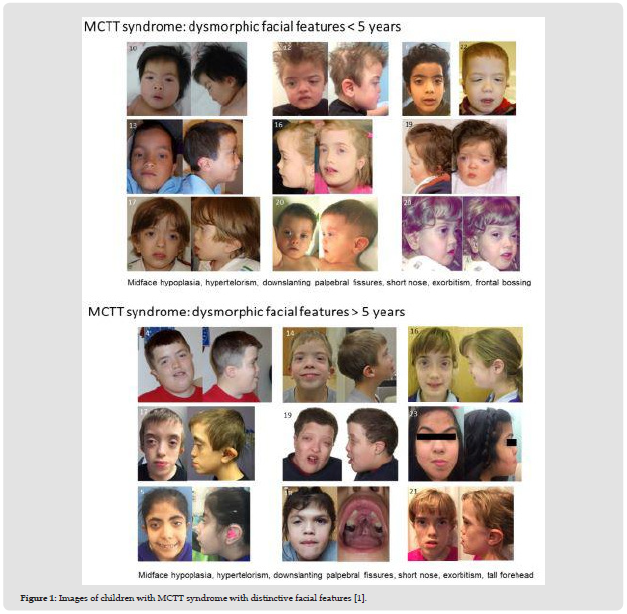
MN1 C-Terminal Shortening Syndrome (MCTT) is a rare autosomal dominant genetic disorder caused by a genetic mutation at one end (the C-terminal) of the MN1 gene. This genetic disorder is characterized by intellectual disability with delayed or absent speech, delayed gross motor development, distinctive structural changes in the brain (rhombencephalosynapsis), unique facial features, and hearing loss. This new syndrome was first reported in 2020. People with MCTT syndrome often have distinctive facial features, including a sunken appearance in the middle of the face (midfacial hypoplasia); a high arch in the roof of the mouth (high-arched palate); the outer corners of the eyes that turn downward (downward palpebral fissures); widely spaced eyes (hypertelorism); shallow, bulging eyes (exophthalmos); a short, upturned nose; and small, low-set ears. MCTT syndrome is caused by mutations in the MN1 gene, which is located on the long arm of chromosome 22 at 22q12.1. This gene provides instructions for the synthesis of a protein whose function is unknown.
Keywords: MN1 Gene; Genetic Mutation; MN1 C-Terminal Shortening Syndrome (MCTT)
Abbreviations: MCTT: MN1 C-Terminal Shortening Syndrome; MRI: Magnetic Resonance Imaging; GLHS: Gomez Lopez Hernandez syndrome
MN1 C-Terminal Shortening Syndrome (MCTT) is a rare autosomal dominant genetic disorder caused by a genetic mutation at one end (the C-terminal) of the MN1 gene. This genetic disorder is characterized by intellectual disability with delayed or absent speech, delayed gross motor development, distinctive structural changes in the brain (rhombencephalosynapsis), unique facial features, and hearing loss. This new syndrome was first reported in 2020. Research is ongoing to better understand the spectrum of symptoms, long-term prognosis, and to gather knowledge to provide the most appropriate genetic counseling [1].
MN1 C-Terminal Shortening Syndrome (MCTT) is a condition characterized by intellectual disability, developmental delay, distinctive facial features, and brain abnormalities. Most people with MCTT syndrome have mild to moderate intellectual disability. Many people with MCTT are nonverbal, but some are limited to one or two words or communicate using sign language. Most children with the condition have delayed motor skills, such as crawling or walking, but are able to walk by age 2 or 3. However, they often need help with fine motor skills, such as getting dressed or using a fork to eat [1]. People with MCTT syndrome often have distinctive facial features, including a sunken appearance in the middle of the face (midfacial hypoplasia); a high arch in the roof of the mouth (high-arched palate); the outer corners of the eyes that turn downward (downward palpebral fissures); widely spaced eyes (hypertelorism); shallow, bulging eyes (exophthalmos); a short, upturned nose; and small, low-set ears. Some affected individuals have dental abnormalities, such as conical (conical), jagged, or crowded teeth. Rarely, individuals with MCTT syndrome have premature fusion of some of the skull bones (craniosynostosis) [1]. People with MCTT syndrome often have certain brain abnormalities. The surface of the brain typically has many ridges or folds called gyri. A common brain abnormality in people with MCTT syndrome is called perisylvian polymicrogyri, in which an area of the brain called the perisylvian area develops many folds, and the folds are irregular and unusually small (Figure 1).
Figure 1
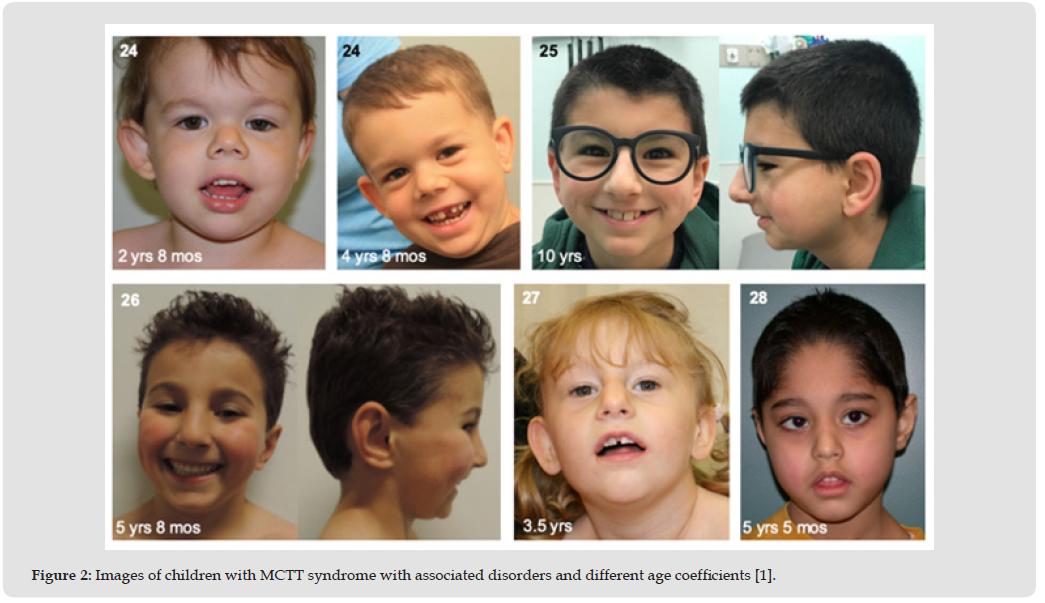
People with MCTT syndrome may also have abnormalities in the part of the brain that coordinates movement (the cerebellum). This abnormality, called atypical rhombencephalosynapsis, is characterized by loss of tissue in the central part of the cerebellum (known as the vermis) and fusion of the two sides of the cerebellum. These brain abnormalities likely contribute to the movement problems and intellectual disability that are common in MCTT syndrome [1,2] (Figure 2). Less common features of MCTT syndrome include hearing loss, seizures, abnormal curvature of the spine, and heart defects. The physical signs and findings associated with MCTT syndrome may vary from person to person (variable presentation). Affected individuals or parents of affected children should talk to their doctor and consult with a medical genetics team about their specific case and associated symptoms [1,2]. To date, a total of 25 patients have been reported in the medical literature, but others have been known anecdotally. Most individuals with MCTT syndrome have mild to moderate intellectual disability and severe expressive language delay or no speech. Most have gross motor delays but can walk independently at an older age. Some individuals have mild to moderate hearing impairment of a conductive or sensorineural nature. Low muscle strength, also known as a floppy baby (hypotonia), and difficulty feeding due to poor sucking ability are also often seen in infancy. Height and weight (growth parameters) of affected children are typically normal [1,2]. Individuals with MCTT syndrome may have characteristic brain imaging findings.
Figure 2
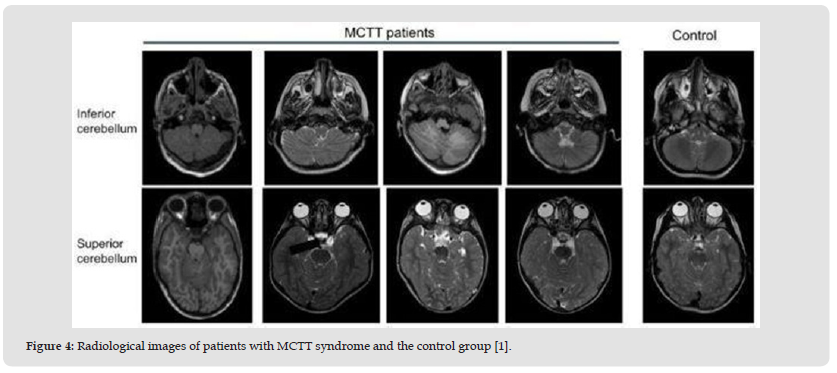
Magnetic resonance imaging (MRI) shows abnormal development of the cerebral cortex (presyllable polymicrogyria or cortical dysplasia), fusion of cerebellar structures (rhombencephalosynapsis), and the presence of embryonic vessel construction (persistent trigeminal artery), which may be important when considering surgical approaches [1,2] (Figure 3). Characteristic features of the head and facial region (craniofacial region) include a high forehead, a flat midface, prominent eyes, widely spaced eyes (hypertelorism), down-slanting eyes, abnormally shaped low-set ears, and a short, upturned nose, especially in infancy. Skull deformity is also frequently seen. Some will have premature fusion of the skull bones (craniosynostosis), which may require surgical intervention. Neurosurgical care should be tailored. Abnormal curvature of the spine (scoliosis/lordosis/kyphosis), congenital structural heart defects, seizures, and behavioral problems have been observed in some individuals with MCTT syndrome. Given the limited case reports of MCTT syndrome, it is not known whether the lifespan of individuals with MCTT syndrome is affected. The oldest individual known to the authors is a healthy man in his late 30s who lived a full life under the care of his family, suggesting that survival into adulthood is likely. It is likely that MCTT syndrome is both under-recognized and under-reported in adults [1,2] (Figure 4).
Figure 3
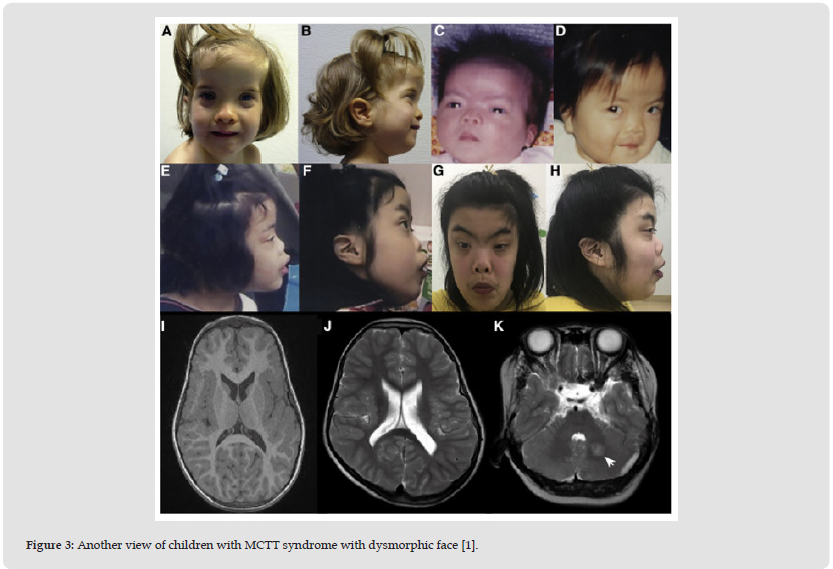
Figure 4
MCTT syndrome is caused by mutations in the MN1 gene, which is located on the long arm of chromosome 22 at 22q12.1. This gene provides instructions for the synthesis of a protein whose function is unknown. Based on its interactions with other proteins, the MN1 protein is thought to play a role in regulating the activity of other genes, particularly those required for skull and brain development [1,3]. All mutations in the MN1 gene that cause MCTT syndrome occur near the end (terminal) of the gene. As a result, an abnormally short (incomplete) protein is produced. Research suggests that the truncated MN1 protein cannot interact with other proteins, leading to the accumulation of the abnormal MN1 protein in the cell nucleus. It is possible that without the normal function of the MN1 protein, the activity of certain genes involved in skull and brain development is unregulated, leading to the signs and symptoms of MCTT syndrome [1,3] (Figure 5). MCTT syndrome is caused by a disease-causing mutation in the “C-terminal” of the MN1 gene that prematurely stops protein production. When such a pathogenic change occurs, the protein product may be absent, insufficient, or defective. Depending on the function and site of action of the affected protein, various organ systems may be affected. In MCTT syndrome, the genetic change produces an abnormal protein that is shorter than normal, which affects its normal dynamics and interactions in the body, especially brain development. Therefore, the symptoms of the syndrome are largely related to neurological and developmental issues [1,3].
Figure 5

Several disease-causing genetic changes have been reported in the medical literature. These changes usually occur de novo, meaning that the change is new and not inherited from either parent. The likelihood that these parents will have another child with the same syndrome is low [1,3] (Figure 6). MCTT syndrome follows an autosomal dominant inheritance pattern, so a single disease-causing genetic change is sufficient to cause the disease. An affected individual carrying a disease-causing change in the MN1 gene has a 50% chance of passing the change to their children with each pregnancy. The risk is the same for both male and female children. In very rare cases, parents who carry a pathogenic variant of the MN1 gene in some of the body’s and reproductive cells (somatic and germline mosaicism) may be mildly or minimally affected. Only one such case has been reported in which the father had a mosaic mutation, had two affected siblings, and presented with mild features of dysplastic ears and a long, narrow palate. In such circumstances, individuals are advised to seek genetic evaluation and counseling from a clinical geneticist to discuss reproductive options and any concerns about potential risks to future children [1,4] (Figure 7).
Figure 6

Figure 7

MCTT syndrome was first identified by two groups of researchers in 2020, reporting 22 and 3 cases, respectively. With the increasing availability of genetic testing and diagnosis of the syndrome, more patients have been identified. However, many individuals may still be undiagnosed. Patients have been identified from different parts of the world and among different ethnic backgrounds. Men and women are equally affected. The prevalence of MCTT syndrome is unknown, although it is thought to be a rare disorder. At least 25 affected individuals have been described in the scientific literature [1,4].
Gomez Lopez Hernandez syndrome (GLHS) is a rare syndrome that has similar symptoms to MCTT syndrome. Individuals with GLHS have skull shape abnormalities, craniosynostosis, and rhombencephalosynapse. Unlike MCTT syndrome, they have additional scalp (alopecia) and nerve (trigeminal neuralgia) symptoms. The genetic cause of GLHS is unknown, and people who have had this diagnosis for many years should have a new genetic evaluation. A person with this diagnosis may have amutation in the MN1gene [1,4].
MCTT syndrome is usually diagnosed in early childhood or later in life by identifying characteristic symptoms, a detailed patient and family history, and a thorough clinical evaluation and examination. The diagnosis of MCTT syndrome is confirmed by identifying a disease-causing genetic change in the C-terminal of the MN1 gene. This can be achieved by performing targeted genetic testing (MN1 sequencing) or comprehensive genomic testing(exomesequencing/ genomesequencing) [1,4] (Figure 8).
Figure 8

Currently, there are no evidence-based protocols or guidelines for the treatment of MCTT syndrome. However, providers can provide treatment for individuals with MCTT based on the specific symptoms that are evident in each individual. For developmental delay, early developmental intervention and educational training may be helpful. Physical therapy, occupational therapy, and speech therapy are helpful for most individuals. Educational focus can emphasize alternative nonverbal communication methods (e.g., sign language) [1,4]. Individuals with craniosynostosis should have a formal neurosurgical evaluation and may require surgery. Surgery is performed to improve the appearance of the child’s head. Rarely, it is performed to reduce increased intracranial pressure. Surgery may not be necessary for some individuals. Hearing aids may be helpful for individuals with hearing impairment. Individuals with seizures may benefit from antiepileptic medications, as assessed by a neurologist. Genetic counseling is recommended for affected individuals and their families [1,4].
MN1 C-Terminal Shortening Syndrome (MCTT) is a condition characterized by intellectual disability, developmental delay, distinctive facial features, and brain abnormalities. Most people with MCTT syndrome have mild to moderate intellectual disability. Many people with MCTT are nonverbal, but some are limited to one or two words or communicate using sign language. People with MCTT syndrome often have certain brain abnormalities. The surface of the brain typically has many ridges or folds called gyri. A common brain abnormality in people with MCTT syndrome is called perisylvian polymicrogyri, in which an area of the brain called the perisylvian area develops many folds, and the folds are irregular and unusually small. People with MCTT syndrome may also have abnormalities in the part of the brain that coordinates movement (the cerebellum). MCTT syndrome is caused by mutations in the MN1 gene, which is located on the long arm of chromosome 22 at 22q12.1. This gene provides instructions for the synthesis of a protein whose function is unknown. Currently, there are no evidence-based protocols or guidelines for the treatment of MCTT syndrome. However, providers can provide treatment for individuals with MCTT based on the specific symptoms that are evident in each individual. For developmental delay, early developmental intervention and educational training may be helpful [1-4].

International Association of Landscape Archaeology, Czech Glass Society, Czech Republic

Department of Chemistry, Semenov Institute of Chemical Physics, USSR Academy of Sciences, Moscow, Russia

Neurology, LA BioMed Research Institute, USA

Associate Professor at Department of Breast and Thyorid Surgey, Chongqing General Hospital, China

Professor of Nuclear Medicine, Faculty of Medicine and Surgery, University of Milan, Milan, Italy





 Abstract
 PDF
PDF



























