info@biomedres.us
+1 (502) 904-2126
One Westbrook Corporate Center, Suite 300, Westchester, IL 60154, USA
Site Map
 ISSN: 2574 -1241
ISSN: 2574 -1241
ISSN: 2574 -1241
Received: March 01, 2025; Published: March 11, 2025
*Corresponding author: Lvl Liiu, Beijing University of Chinese Medicine Affiliated Dongzhimen Hospital Beijing, Beijing, China
DOI: 10.26717/BJSTR.2025.60.009522
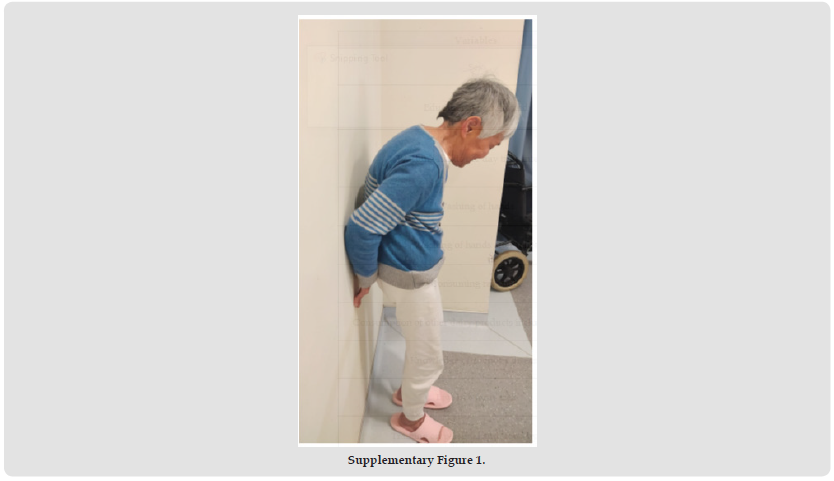
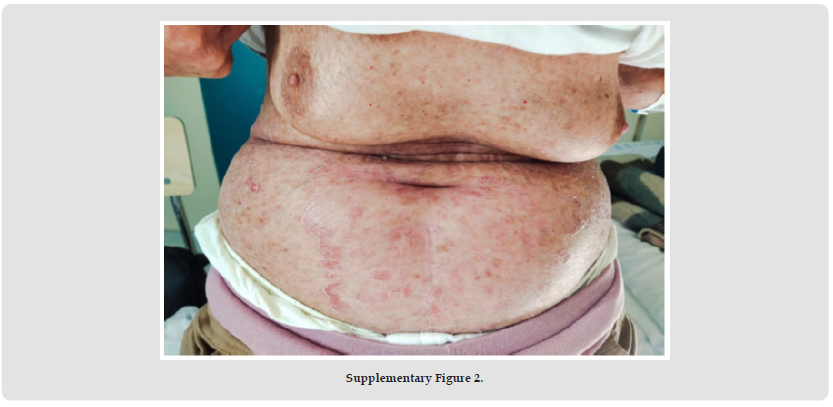
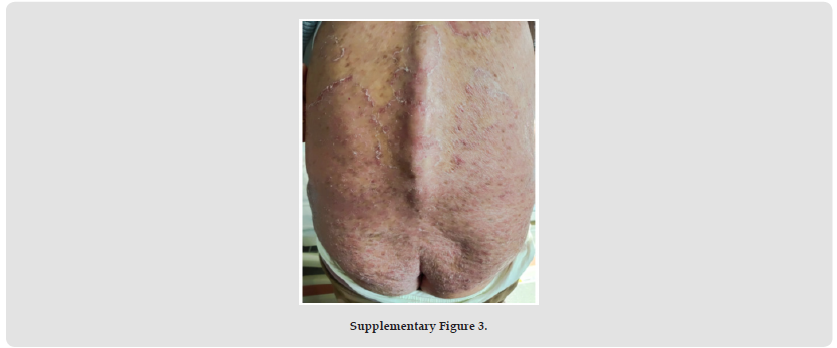
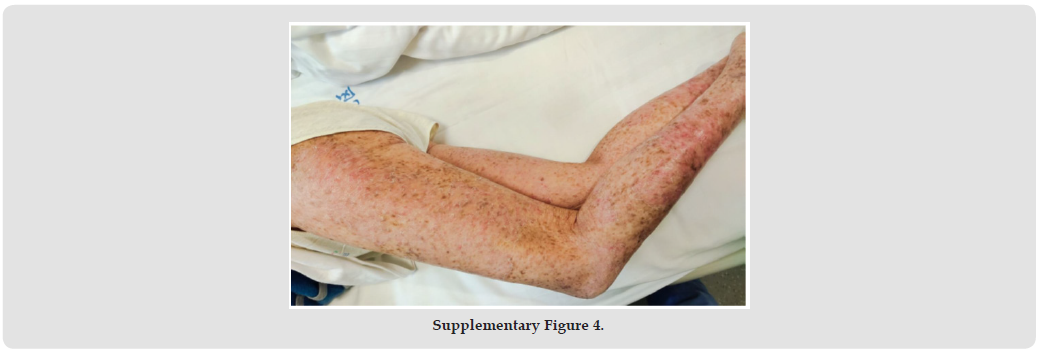
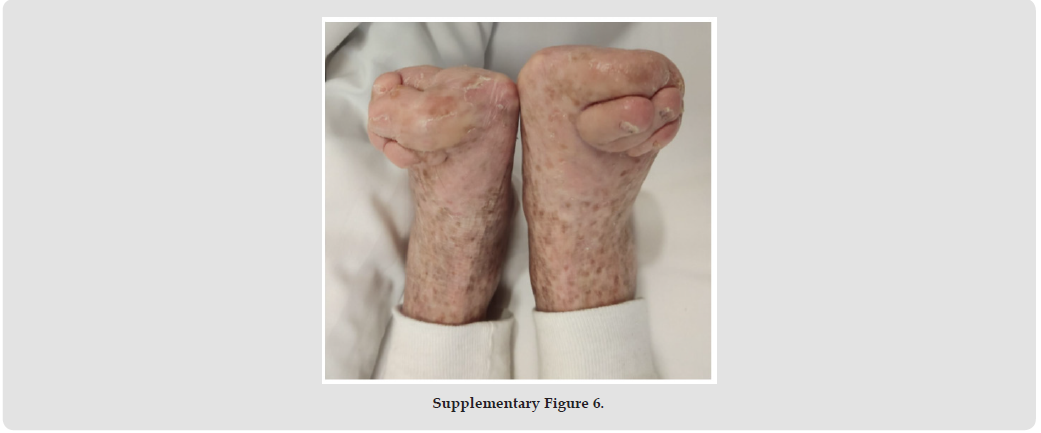
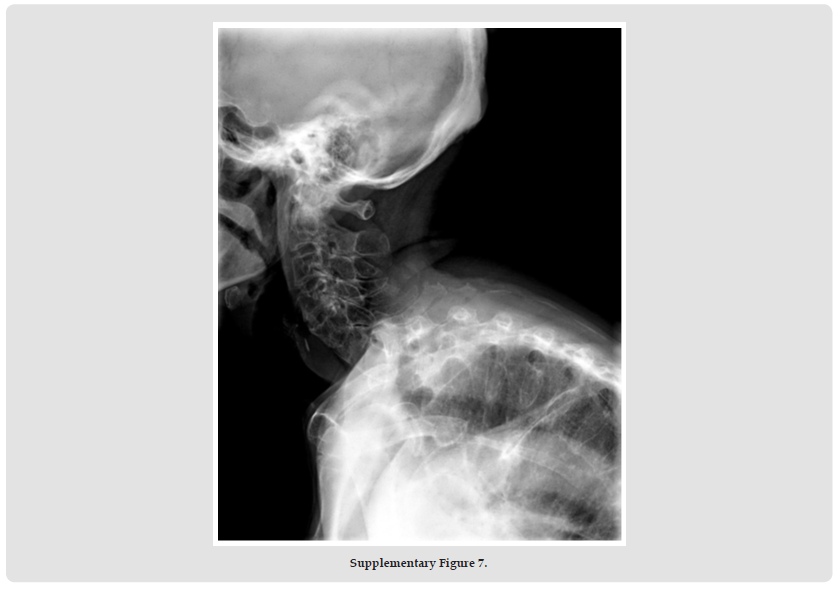
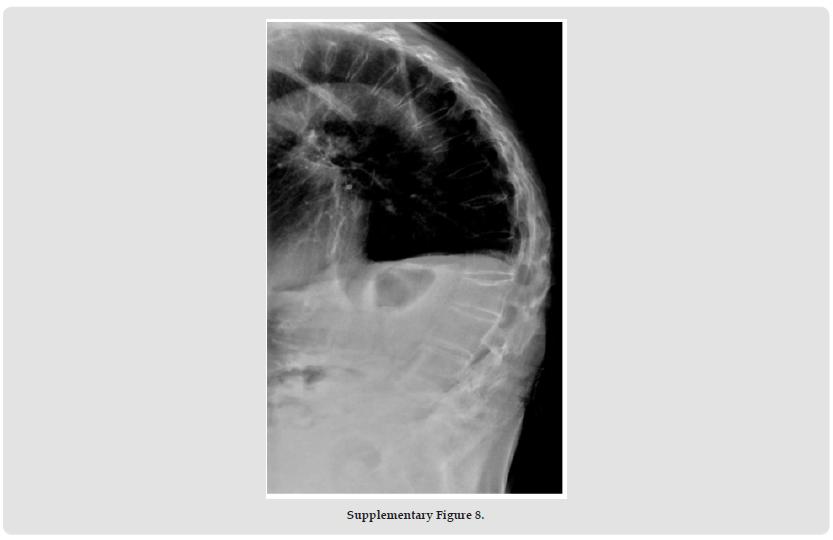
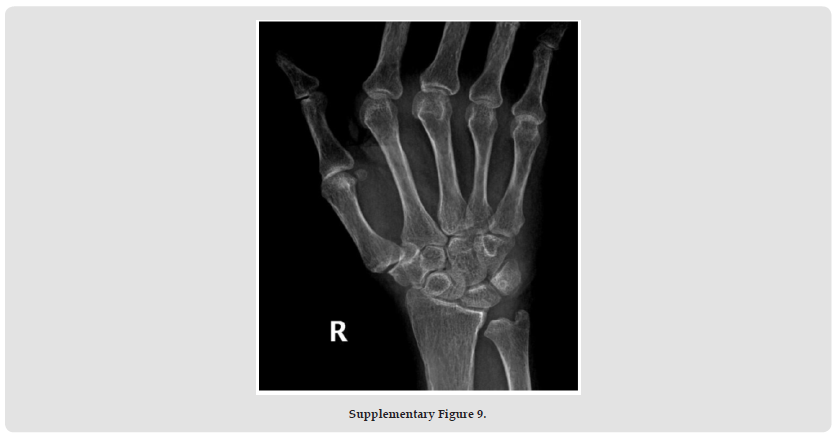
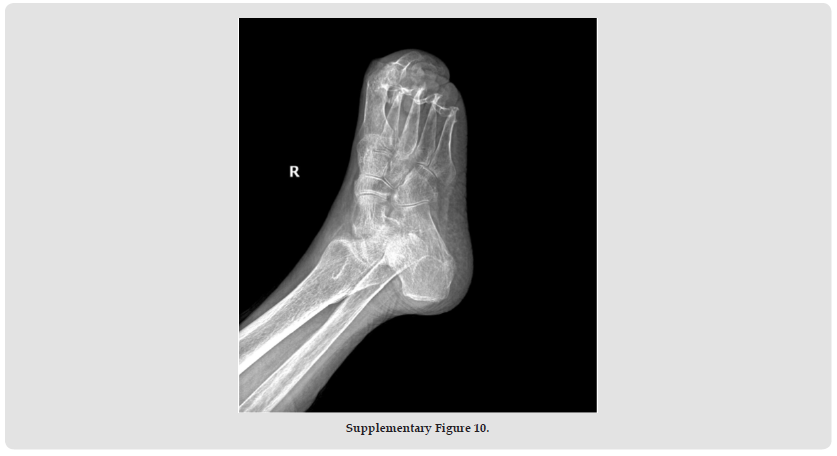
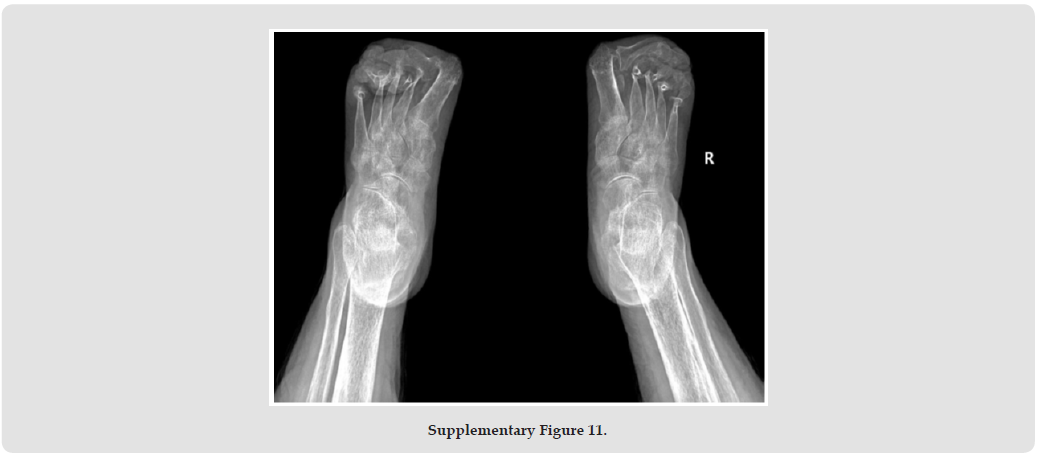
Psoriatic arthritis (PsA), a systemic autoimmune disease, manifests with remarkable clinical heterogeneity [1]. While axial involvement and peripheral joint destruction are well documented, the coexistence of severe spinal kyphosis and Mutilans-type arthropathy remains exceptionally rare. We present a diagnostically challenging case with concurrent progressive spinal deformity and osteolytic features of Mutilans [2]. This case report describes the complex clinical presentation of a rare psoriatic arthritis (PsA) patient with severe kyphosis and mutilating arthritis. A 69-year-old woman with a 50- year history of psoriasis developed worsening skin symptoms and joint pain in 2019. She was treated with cyclosporine, ezicizumab and secukinumab, which resulted in partial relief of skin symptoms but progressive joint destruction. Over the past two years, he had developed a complex sagittal and coronal spinal deformity (thoracolumbar kyphosis with scoliosis), accompanied by characteristic “telescopic” phalangolysis and ulnar deviation of the right hand. His serum markers (RF, anti-CCP, etc.) were normal. Imaging showed the coexistence of heterotopic ossification and osteolysis, consistent with the diagnosis of residual PsA combined with spinal PsA. The clinical significance of this case is that it highlights three key issues. Firstly, rapidly progressive spinal lesions can occur in the absence of a typical serological marker (negative HLA-B27); secondly, biological agents can cause separation of skin and joint effects.
Third, mechanical stress may accelerate the progression of spinal deformity in susceptible individuals. This suggests that dynamic monitoring of the spine in PsA patients should be intensified, especially in patients with long-term good skin control but new axial symptoms, and the evaluation strategy should be adjusted. Future research needs to further explore the mechanical-inflammatory interaction mechanism and establish precise treatment pathways for different clinical phenotypes. This case provides an important clinical demonstration to recognise the heterogeneity of PsA and the complexity of treatment (Supplementary Figures 1-11).
Supplementary Figure 1
Supplementary Figure 2
Supplementary Figure 3
Supplementary Figure 4
Supplementary Figure 5

Supplementary Figure 6
Supplementary Figure 7
Supplementary Figure 8
Supplementary Figure 9
Supplementary Figure 10
Supplementary Figure 11

International Association of Landscape Archaeology, Czech Glass Society, Czech Republic

Department of Chemistry, Semenov Institute of Chemical Physics, USSR Academy of Sciences, Moscow, Russia

Department of Educational Sciences, Research Centre Qualities of Teachers, School of Education – HAN, Nijmegen, Netherlands

Associate Professor at Department of Breast and Thyorid Surgey, Chongqing General Hospital, China

Neurology, LA BioMed Research Institute, USA





 Abstract
 PDF
PDF



























