info@biomedres.us
+1 (502) 904-2126
One Westbrook Corporate Center, Suite 300, Westchester, IL 60154, USA
Site Map
 ISSN: 2574 -1241
ISSN: 2574 -1241
ISSN: 2574 -1241
Received: February 20, 2025; Published: March 05, 2025
*Corresponding author: Maryam Abdul-Hadi, Department of Physiotherapy, Aminu Kano Teaching Hospital, Kano, Nigeria
DOI: 10.26717/BJSTR.2025.60.009518
Background and Objective: Most of the treatment interventipons with established efficacy for lumbar radiculopathy
(LR) are associated with increased healthcare utilization, associated cost and not empowered LR patients
to take control of their health. Self-management technique (SMT) is a structured multicomponent intervention
that supports autonomy and involves education and training with the aim of promoting adherence to
self-management behaviours, to achieve improved physical, psychological and economic outcomes. SMT has
been found to be an effective management protocol in chronic conditions such as shoulder pain and neck pain.
The effect of SMT was found to reduce burden both on patients and clinicians, cost effective and resulted in early
returned to work. Therefore, this study was undertaken to investigate the feasibility of implementing SMT in
form of patient education (PE) and progressive core stability exercise with neuro dynamic mobilisation for the
management of lumbar radiculopathy (LR) in Kano, Nigeria
Methods: A total of 13 participants with LR were recruited and assigned to the intervention. A baseline data of
the outcome measures of the participants were recorded. The program was provided with initial individualised
patient assessment, twice Patient Education program in form of PowerPoint presentation within the first two
weeks of the intervention, and twice a week group exercise in form of SMT for 8 weeks. The posttest outcome
measures were then recorded. Feasibility was assessed through recruitment rate, treatment compliance, retention/
dropout rate, report of adverse events and clinical outcome of pain (numeric pain rating scale) and
functional disability (Oswestry Disability Index), fear avoidance belief (FAB), and Quality of life (QOL). The data
collected was analysed using a paired sample t-test to evaluate the effect of the SMT in the management of lumbar
radiculopathy.
Results: The recruitment rate was 90%. Ttreatment compliance among the participants was >85% for supervised
group treatment sessions and retention rate of the participants was high. The results from the paired sample
t test revealed that, compared with the baseline, all participants improved significantly in both pain intensity,
functional disability, fear avoidance belief (P<0.05) after 8 weeks of the intervention. However, there was no
significant difference in quality of life (QOL) of the participant (P≥0.05).
Conclusion: Based on the observed efficacy of the intervention, participant compliance, it was concluded that
the effectiveness of newly designed SMT intervention in the management of LR is promising and possible for
conducting a randomized clinical trial in the future to confirm the effectiveness of the intervention for the management
of LR in Kano, Nigeria.
Keywords: Lumbar Radiculopathy; Disability; Community Dwelling Adults with Lumbar Radiculopathy; Self-Management Technique
Low back pain (LBP) is a highly prevalent and most disabling health condition worldwide (Simula, et al. (2019)). LBP is divided into different classification and subgrouping. Among the subgroup of LBP is Lumbar radiculopathy (LR). Lumbar radiculopathy is a condition that is associated with either pain, motor, sensory and reflex symptoms in one or both lower limbs (Falla, et al. 2022). It is associated with significant pain, disability, psychological issues, associated high cost of management and therefore requires different approaches to treatment (Ong, et al. 2011). Studies has shown that the longer period it takes for the management of LR is largely associated with longer disability and more absenteeism from work and consequently more health care cost (Dickson, et al. 2018). Work related poor ergonomics in workplace is one of the main cause of LR which may eventually lead to compression and subsequent injury to exiting nerve roots. The prevalence of LR varies with age, gender, heredity, geographical locations and races (Ajiboye, et al. 2018). LR affects individuals mostly between the ages 40 to 50 years, it is indeed the commonest cause of musculoskeletal conditions globally in aged 40 years and above and a leading cause of disability and morbidity (Ogunbode, et al. 2013). Although there is no concise epidemiological data of LR in the recent literatures, it is believed to have the lifetime prevalence of 13% to 40 % (Clar, et al. [1]).
The annual incidence of LR in community based study in USA was found to be 3 to 5% (Berry, et al. 2019), and over 1 million people a year in the United Kingdom. It is generally believed that, the estimated incidence of LR occurs in approximately 3-5% of the population (Alexander, et al. 2019). In a similar prevalence study, the incidence of LR in Africa is higher compared to that in the western world. The literature stating the incidence of LR in West Africa and Nigeria is scarce, however, Park, et al. (2016), described LR as the most prevalent neurosurgical condition on the African continent. LR is a debilitating condition with 30% of affected population experiencing pain and disability for over 12 months (Coster, et al. [2]). The consequent persistent pain of LR resulted in long term and repeated treatment which resulted in high cost of management. Loss of productivity due to absenteeism from work mainly accounts for the indirect costs, while hospital visits, purchase of medications and Surgeries are responsible for most of the direct costs.Studies has shown that the longer period it takes for the management of LR is largely associated with longer disability and more absenteeism from work and consequently more health care cost (Dickson, et al. 2018).
Conservative management is considered first line in the management of LR (Vincent, et al. 2014). Physiotherapy as a form of non-invasive management is recommended as first line management strategy for LR, but due to the complex nature of the condition, the variety of causative factors and symptom presentation, the condition is found to be very difficult to treat and associated recurrence of patients’ symptoms (Smythe, 2020). Several studies has been done to search for better evidence based management of LR (Machado, et al 2010; Barthel, 2018; Thoomes, et al. 2022). But these studies were mostly based on passive Physiotherapy where the patient is usually a passive recipient of the intervention without any element of modifying beliefs and expectations of the patients through patient education, and this might be the cause of recurrent pain. However, the need for identifying easy and effective treatment strategy for LR has been emphasized in different studies, due to the fact that LR is associated with delayed recovery, persistent disability and increased healthcare utilization and costs (Bello [3]).
Self-management technique (SMT) has been found to be an effective management protocol that may reduce burden both on patients and clinicians, cost effective and resulted in early returned to work. (Jonckheer, et al. 2017). SMT is a structured multicomponent intervention that supports autonomy and involves education and training with the aim of promoting adherence to self-management behaviours, to achieve improved physical, psychological and economic outcomes (Toomey, et al. 2015). SMT is mainly done under the supervision and instruction of Physiotherapist, with adequate support, information and guidance to achieve the optimum goal of rehabilitation. (Stephen, et al. 2010).Numerous studies have confirmed the positive effects of self-management model for non-communicable chronic diseases (Lee, et al. [4]) and cancers (ONeille, et al. [5]). Systematic review and meta-analysis were also performed to investigate its effect on chronic low back pain with or without radiculopathy, with a conclusion that self-management programs had a moderate effect in relieving pain, and small to moderate effect in improving disability (Lee, et al. 2020). However, many factors, including mode, time and cost, have caused numerous barriers to reach skills and resources of self-management for the benefit of the patients (Lee, et al. 2020). Among such SMT programs that contain specific delivery mode, duration and shows evidence of long-term effect of SMT is GLAD Back. It is an evidenced based SMT protocol used in the management of persistent nonspecific low back pain. The aim of GLAD Back program is to translate guideline recommendations into a clinician-delivered program for the promotion of self-management in people with persistent/recurrent back pain (Kongsted, et al. [6]). SMT as conservative first line intervention for individuals with LR using modified Glad back SMT protocol is therefore an area of research that needs to be further explored in order to better inform stakeholders about its benefits and, possibly, promote its use in the management of the disease. Against this background, this study was conducted to determine the effectiveness of eight weeks SMT in the management of LR in Kano, Nigeria.
A pretest, posttest one arm feasibility study was used in this study. Participants were male and female LR patients between the ages of 18-65 years, attending either orthopaedic or Physiotherapy clinics of Aminu Kano Teaching Hospital in Kano, northwestern Nigeria. Only those with chronic LR of 12 weeks and above duration were allowed to participate. Those with red flags and other associated complications such as those that had evidence of serious spine pathology such as infection, tumor, fracture, and spinal stenosis, a previous history of lumbosacral surgery, pregnancy, or cauda equina syndrome.
Sample and Sampling Technique
Thirteen (13) individuals with LR who have clinical and/ or radiological evidence of LR were recruited. The diagnosis of LR was based on physical assessment and radiological investigation. The diagnostic procedures includes clinical evaluation of X rays, EMG or MRI. While physical examination was used to assess motor, sensory and reflex functions. (Coster, et al. 2010). All participants were screened by the primary researcher to ensure study eligibility. Convenience sampling technique was employed as the entire population was subjected to one group with male (n = 5) and female (n = 8). The participants were then assigned to the intervention and research procedure was explained to them.
Data Collection Procedure
Ethics approval was obtained from the ethics committees of Aminu Kano Teaching Hospital and Kano State Hospitals Management Board for recruitment of the participants and data collection. The protocol had also been registered with ClinicalTrials.gov, with registration number PACTR202209825345097. All participants signed written informed consent form prior to participation in the study. The study protocols were fully explained to them and they were asked to report any discomfort during the course of the workout that might warrant the termination of the exercise. After completion of all outcome tools. The participants were subjected to the intervention for complete 8 weeks. The outcome of the intervention was then measured after 8 weeks using the outcome assessment forms. The following measurements were taken before and after the period of intervention. Pain Intensity: The numeric pain rating scale (NPRS; 0–10 cm), with 0 representing no pain and 10 worst imaginable pain was used to assessed levels of pain intensity (Ferreira-Valente, et al. 2011). Functional Disability: The Oswestry Disability Index (ODI; 0%– 100%), with a higher score indicating higher disability (Waddell, et al. [7]), was used to assessed disability related to LR.
Fear Avoidance Belief Questionnaire (FABQ)
The fear-avoidance belief questionnaire (FABQ) is a questionnaire based on the fear-avoidance model of exaggerated pain perception. FABQ is an outcome measure that serves as a clinically useful screening tool in identifying patients with high fear-avoidance belief who are at risk for prolonged disability. The higher score is indicating high fear avoidance belief who are at risk for prolonged disability (Panhale, et al. [8]).
Quality of Life Questionnaire (SF 12)
SF-12 is one of the most widely used instruments for assessing self-reported health reported quality of life. Originally developed from the Medical Outcomes Study (MOS) 36-item Short-Form Health Survey SF-36 (Ware, et al. [9]). The reliability of the SF-36 has been documented among various populations (Huo, et al. [10]). However, SF 12 was a modification drawn from SF 36 and have similar performance with SF 36 while taking less time to complete. It has a mental and physical component, with higher score indicating better physical and mental health functioning. A score of 50 or less on the PCS-12 has been recommended as a cut-off to determine a physical condition; while a score of 42 or less on the MCS-12 may be indicative of clinical depression. (Ware, et al. [11]). Other materials needed include An exercise diary: A form in which the exercise will be recorded. Fit notes: A booklet where all the information concerning exercise performance is recorded by the participants. Prior to data collection, the NPRS, ODI, SF 12 and FABQ that was translated into Hausa were sorted out using guidelines for translation and cross-cultural adaptation of self-reported measures (Beaton, et al. 2000). These outcomes were assessed at baseline and after 8-week treatment.
Data Analysis
The data obtained from this study were categorised and analysed using descriptive demographic data presented as means, standard deviation (SD), frequency and percentage. Participants’ pain intensity, functional disability, fear avoidance, and quality of life values before and after 8 weeks were also reported as mean and standard deviation. A paired sample t-test was used to evaluate the effect of the SMT in the management of LR on participants SF score, fear avoidance belief score, NPS score, and Oswestry Disability Index score. Differences within the group at p< 0.05 were considered significant. The analysis was carried out using power analysis software PASS (Power analysis and sample size) software version 15 (PASS15; NCSS15 LLC. 2017).
Of the 13 participants recruited, 12 had complete data at the end of the study which were used in the analyses. Table 1 displays participants’ group and gender distributions. Participants in both groups were not found to differ significantly in age, height and weight. Table 2 shows the mean and standard deviation NPS, FABQ, SF-12, and ODI values for participants with lumbar radiculopathy. A paired sample t-test was conducted to evaluate the effect of the SMT in the management of lumbar radiculopathy on individuals SF score, fear avoidance belief score, NPS score, and Oswestry Disability Index score. There was a statistically significant decrease in NPS from baseline (Mean = 7.04, SD = 1.03) to post-test (Mean = 2.33, SD = 0.36), t (11) = 15.97, p<0.001. There was a statistically significant decrease in ODI from baseline (Mean = 2.95, SD = 0.43) to post-test (Mean = 1.43, SD = 0.18), t (11) = 13.54, p<0.001.There was a statistically significant decrease in FAB from baseline (Mean = 3.78, SD = 1.03) to post-test (Mean = 2.95, SD = 0.60), t (11) = 2.99, p<0.012.However, there was no statistically significant difference for SF score, the difference was greater than 0.05.
Table 1: Demographic and Anthropometric Characteristics of the Study Population.
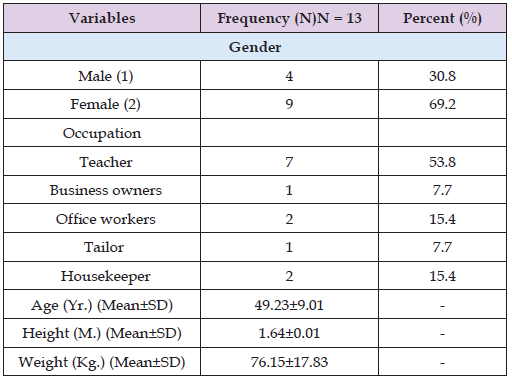
Table 2: Mean and Standard deviation values for NPS, FABQ, SF 12, and ODI.
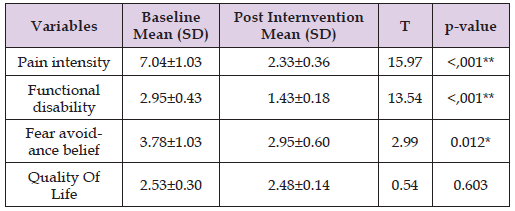
According to the main hypothesis there will be no significant difference between the baseline and 8 weeks post intervention scores of SMT on individuals with Lumbar radiculopathy. However, according to the above, it shows significant difference between the baseline and 8 weeks scores, therefore, the null hypothesis is rejected. The sub hypothesis on NPS stated that, there will be no significant difference in pain intensity of individuals with lumbar radiculopathy between baseline and 8 weeks scores following SMT. However, the NPS scores showed significant difference between baseline and 8 weeks of SMT intervention, therefore, the null hypothesis is rejected. Then the sub hypothesis on ODI was there will be no significant difference in functional disability of individuals with lumbar radiculopathy between baseline and 8 weeks scores following SMT. The results was against the statement and therefore, the null hypothesis has failed to be accepted. There will be no significant difference in quality of life of individuals with lumbar radiculopathy between baseline and 8 weeks scores following SMT. the scores of SF shows no significant difference between baseline and 8 weeks of SMT intervention and therefore the null hypothesis is accepted. Moreover, there will be no significant difference in fear avoidance belief of individuals with lumbar radiculopathy between baseline and 8 weeks scores following SMT. On contrary, the results shows significant difference between baseline and 8 weeks of SMT Intervention and the null hypothesis was also rejected.
This feasibility study was done to assess the effectiveness and benefits of SMT in the management of LR in Kano, Nigeria and to the best of our knowledge, the first of its kind. The study demonstrated the feasibility for recruitment, treatment compliance with both supervised and unsupervised sessions, safety, acceptability and potential effects of treatment on clinical outcomes. The results of this study suggest the feasibility of conducting a full-scale randomized clinical trial in this context. We found that participants with LR who met the inclusion criteria at the Outpatient Clinic of Aminu Kano Teaching Hospital and Murtala Muhammad Specialist Hospital are numerous and many among them are ready to be enrolled. Therefore, this was found to be an effective method to recruit potential participants in a Hospital setting. Since this is a pilot study, a one-centre recruitment was done so as to recruit a small number of participants. However, even in one centre, many individuals were willing to participate in the study. Participants recruited were both males and females with female to male ratio of 2:1. This is due to the high positive responses received from females than males. This may affect the male representation in a sample. Our recruitment rate (77%) was high and comparable to the rate (80%) obtained by a previous feasibility study (Igwesi-Chidobe, et al. [12]) conducted on Self-Management of chronic low back pain in another community in Nigeria. The results of this study shows the homogeneity of the study participants as the socio-demographic and clinical variables measured has not shown much variation at baseline. The participants were predominantly females, mostly teachers, middle class with moderate to high levels of education. The fact that the participants were mainly working class and business owners may partly explain the evidence of growing of LR among workers and reasons for direct and indirect economic burden of this condition due to work absenteeism and loss productivity.
The Feasibility of our study was also demonstrated by the excellent treatment compliance (>65%) with the supervised treatment sessions among participants. However, treatment compliance with the unsupervised home program was a little bit low in the beginning and later rise to appreciable level of around 90% due to educational sessions, follow up, reviews and discussions among participants. The proportion of participants with 100% attendance was 85% while the retention rate for the SMT found in this study were also very encouraging (90%). This is similar to the findings of Igwesi-Chidobe, et al. (2019) who found a high retention rate (92%) with a 6-week self-management program for CLBP in Nigeria. Dropout rate (loss to follow up) was 6% as only one participant was lost to follow-up. However base on our findings, the results suggest that the interventions were relevant and acceptable. Although there were no qualitative feedback interview in this study, but the participants discussed among themselves and the research team after completion of the study about how satisfied they are with the protocol. Many participants at the end of the intervention was so excited and admitted that the program was useful for managing their LR. Participants became active in the management of their symptoms using the self-management strategies learned. Additionally, two participants were able to notice pain they had due to ovarian cyst (as was later diagnosed by their physician) which was masked before by pain due to LR. However, one participant expressed concern over low effect of the protocol in managing her LR. This could be attributed to the fact that the participant was found not sticking to done and don’t that was given as a guideline prior to commencement of the program. Regarding treatment outcomes, participants demonstrated significant improvements in pain intensity and functional disability, implying that the interventions are capable of inducing favourable effects. Even though, no statistically significant difference was reached in quality of life. These results were similar to the results obtained by previous studies that combined exercise with education for patients with LR.
For example, there was a statistically significant improvement in the pain perception, and functional disability at baseline and following eight weeks SMT intervention. These findings are consistent with previous studies by Eilayyan, et al. [13], who stated that SMT effectively reduces pain and functional disability. Improvement in pain associated with numbness might be attributed to the effect of neurodynamic exercise in reducing the intra neural oedema and restoring neural tissue homeostasis (Basson, et al. [14]).The effect of co stabilisation in achieving pain control and reducing dsisability is in accordance with the studies done by Kennedy, et al. [15] which states the role of core stabilization exercise not only in pain control but in correcting the biomechanical factors that expose the individual to spinal instability, recurrent pain and functional disabilities. In terms of fear avoidance belief, there was statistically significant improvement in FABQ of the participant at baseline and following 8 weeks of SMT, this resulted to exercise adherence and overall improvement of the participants condition. This is consistent with the findings of Taulaniemi, et al. [16], which states that FABQ reduced well with good adherence to exercise level and motivational strategies such as patient education should be employed for persons with LR associated FABQ and low physical activity in order to achieve better exercise adherence. However, there was no statistically significant difference in SF-12, that is quality of life between baseline and 8 weeks intervention as a difference 0.06 cannot be considered as clinically significant. These small changes in the outcome can be attributed to the effect of the general outcome of the participant condition which might improve over time.
The strengths of this pilot study aside from the feasibility assessments include evaluation of these important clinical outcomes as pain intensity, functional disability, fear avoidance belief and quality of life related to LR. One major limitation of this study was the small sample size hence statistical inferences are not definitive. Moreover, it was a pretest posttest one arm study, therefore, it has not analysed random assignment, blinding of outcome assessors that will be done in the larger randomised control trial. Additionally, the lack of prior studies on the topic in other part of Nigeria has limited the direct comparisons of these results with other studies done locally. Nevertheless, this pilot study demonstrates important preliminary findings for conducting a full-scale trial of SMT compared with usual care (PGMP) in this part of the world. In response to this study, only a few modifications will be made to the full-scale randomized control trial protocol. We will involve more Hospitals within the metropolis under Hospital management board that has Physiotherapy departments via outpatient Clinics of the Physiotherapy Clinics. We will facilitate compliance with home program and follow-ups as much as possible by a frequent reminder through phone calls and whatsApp group that will be formed that will include all the participants and the research team. Other lessons learned which will inform the full trial include the need for reporting the participant satisfaction with the program to gather more information about patients experience with the interventions [17-109].
This pilot study aims to assess the feasibility of using a newly designed SMT protocol with educational and behavioural components on clinical variables of adult community dwellers with LR in Kano metropolis. The findings of this pilot study suggest that the intervention is promising and conducting a full-scale randomized clinical trial in the future is feasible to confirm the effectiveness of the interventions on larger population for the management of LR in Kano, Nigeria. The possible areas of improvements were noted.

International Association of Landscape Archaeology, Czech Glass Society, Czech Republic

Department of Chemistry, Semenov Institute of Chemical Physics, USSR Academy of Sciences, Moscow, Russia

Department of Educational Sciences, Research Centre Qualities of Teachers, School of Education – HAN, Nijmegen, Netherlands

Associate Professor at Department of Breast and Thyorid Surgey, Chongqing General Hospital, China

Neurology, LA BioMed Research Institute, USA





 Abstract
 PDF
PDF



























