info@biomedres.us
+1 (502) 904-2126
One Westbrook Corporate Center, Suite 300, Westchester, IL 60154, USA
Site Map
 ISSN: 2574 -1241
ISSN: 2574 -1241
ISSN: 2574 -1241
Received: January 08, 2025; Published: March 05, 2025
*Corresponding author: Boffo Aborasomalah, Ghana Health Service, Ghana
DOI: 10.26717/BJSTR.2025.60.009516
Introduction: The study looked at the support system that is available for tuberculosis patients in urban communities
focusing on Adentan Municipality, a suburb of Accra, Ghana where there is no significant government
health facility. The study examined the interventions in place and highlighted the strengths and the areas that
need improvement in the healthcare system.
Methodology: A quantitative research method was used where 116 participants’ views were sampled. The
study targeted adult TB patients currently undergoing or have completed treatment in selected healthcare facilities
from 2020 to 2024, their relatives, and healthcare providers.
Findings: It was revealed that the majority of the respondents sought help from healthcare facilities far away
upon noticing symptoms, demonstrating the importance of the availability and proximity of healthcare services.
However, delays in receiving TB test results, with many respondents waiting over a month pointed to inefficiencies
in the case detection process. This necessitates improvements for faster diagnosis. The supporting systems
for TB patients were found to be robust, with a higher level of family and self-support and additional support
provided by healthcare facilities.
Conclusion: Tuberculosis patients need a comprehensive support system involving financial, nutritional, psychological,
and emotional assistance in the effective management of their disease. The study concludes by calling
for enhanced health education, faster case detection processes, and strengthened support systems to improve
TB management in the Adentan municipality.
Abbreviations: TB: Tuberculosis; UN: United Nations; DOTS: Directly Observed Therapy Short-Course; SDGS: Sustainable Development Goals; DR-TB: Drug-Resistant Tuberculosis; NGOS: Non-Governmental Organizations
Tuberculosis (TB) is defined by Tadele, et al. [1] as a communicable disease caused by a group of bacillus called Mycobacterium tuberculosis. This can be transmitted in several ways including droplets while coughing, sneezing, shouting, or singing. The World Health Organisation suggest that Tuberculosis (TB) is a leading cause of morbidity and mortality worldwide, particularly in low- and middle- income countries. Despite significant advances in TB diagnosis, treatment, and prevention, the disease remains a major public health challenge, with an estimated 10.6 million new cases and 1.6 million deaths globally in 2021 alone (World Health Organization [WHO], [2]). Tuberculosis has a long treatment procedure as there is now drug resistance and social and economic challenges go through every day (Kyu, et al. [3]). One of the major interventions that has been developed is the Directly Observed Therapy Short-course (DOTS) proposed by the World Health Organisation (WHO) and has been accepted worldwide as an effective strategy (Tetteh, et al. [4]). Tesema et al posit that between 2000 and 2017, about 54 million lives were saved by TB diagnosis and treatment worldwide, contributing to the effort to achieve the United Nations (UN) Sustainable Development Goals (SDGs) which is aimed at ending the TB epidemic by 2030 (Tesema, et al. [5]). McLaren et al observed that the DOT component accounted for about 75 % of the provider costs of TB treatment. This is significant. McLaren et al, therefore, suggest that patients complete the course of treatment under DOT treatment (McLaren, et al. [6]).
Problem Statement
Tuberculosis has an impact on both those who are currently fighting the disease and the quality of life for those who have survived treatment. Drug-resistant tuberculosis (DR-TB) is also another shock that inflicts physical, psychological, and socioeconomic burdens on individuals and households. Drug-resistant TB is a major threat to the progress of TB control and care. The duration of the TB medication and the number of tablets taken each day also put clients on certain challenges (Gyimah, et al. [7]). Often one of the critical challenges with TB management is the prolonged and complex nature of the treatment regimen which lasts for six months or more and involves multiple antibiotics. This extended treatment period can lead to patient fatigue, reduced medication adherence, and consequently treatment failure or relapse (Chang, et al. [8]). Moreover, the side effects associated with TB medications, such as hepatotoxicity and gastrointestinal disturbances further exacerbate the challenge of maintaining consistent adherence (Lee, et al. [9]).
However, despite the recognition of these challenges, there is still a lack of comprehensive strategies that integrate medical treatment with psychosocial support to enhance TB management outcomes. This gap underscores the need for further research into the specific health management challenges faced by TB patients. This research is therefore important to inform the development of holistic care models that can improve treatment adherence, reduce the burden of drug-resistant TB, and enhance the overall quality of life for TB patients. Again, there has not been any study in the Adentan Municipality to directly look at the supporting system for tuberculosis patients.
Objectives
To examine the support systems available to TB patients in Adentan municipality.
Research Question
What support systems are available to TB patients in Adentan municipality?
Significance of the Study
This study is significant because it aims to understand the support system available for tuberculosis patients in the Adentan Municipality. The literature about the patients living in Adentan Municipality has a population gap. No research exists to understand tuberculosis patients’ predicament or support system in Adentan Municipality. The research is, therefore, a contribution to the literature for healthcare providers in the Adentan municipality, policymakers, and public health practitioners in appraising their support system for tuberculosis patients.
Scope of the Study
This study concentrated on assessing the support system available for tuberculosis (TB) patients. The study focussed on adult TB patients who are currently undergoing or have completed treatment in selected healthcare facilities from 2020 to 2024, their relatives, and healthcare providers. The sampled population included patients living around Adentan Municipality. The study was conducted within Adentan municipality in the Greater Accra region of Ghana country, focusing on all healthcare facilities that carry out TB activities. The study employed a standardized questionnaire to collect data from TB patients. This instrument was designed to measure the supporting system for tuberculosis patients. A quantitative method was used to analyse the data, including descriptive statistics to summarize the characteristics of the study population and inferential statistics to identify relationships between the diagnosis and the support system.
Limitations
While the study attempted to cover a broad range of supporting systems, it was not possible in its entirety. The complexity of individual coping strategies, particularly those influenced by cultural, religious, or personal factors that are difficult to quantify.
This study focused on key issues that influence TB treatment success, including how TB patients manage their health, challenges faced by patients of TB, and the availability of support for TB patients. The literature review, therefore, was a comprehensive survey and analysis of the existing body of research on this topic, which served several critical purposes in this research work. This review provided a foundation of evidence that supported the research arguments, helped use existing studies to validate the significance and relevance of the research questions, and helped inform, justify, and this research by thoroughly examining existing literature on the topic. According to the World Health Organisation [10], there are about 10 million people who contracted TB in 2021 alone. Out of this number, about 1.6 million died. This is a cause for concern because the disease affects adults in their productive years, which has a strong effect on the economy of the country. The WHO indicates again that, tuberculosis is among the 10 major causes of death worldwide. This usually comes from a single infected person. Low and Middle-income countries are affected most according to the Centers for Disease Control and Prevention [CDC], [11]).
Tuberculosis in Ghana
The World Health Organisation [2] indicates that tuberculosis remains a public health concern in Ghana. The WHO asserts that Ghana is classified as one of the countries with a high burden of tuberculosis in Africa. The prevalence of TB in densely populated areas such as municipalities poses additional challenges due to socio-economic factors as it affects the human resources who hitherto, will be doing productive work. It is even worse as there is limited healthcare infrastructure. (Nyaaba, et al. [12]). Ghana is among the 30 countries with a high TB burden. The incidence rate is estimated to be 156 per 100,000 people in 2021 (National Tuberculosis Control Program [NTP], [13]). Tuberculosis management in Ghana is bedevilled by several challenges, including inadequate healthcare infrastructure, limited access to diagnostic services, delay in seeking care, and stigma associated with the disease.
Lifestyle Contributing to TB Infection
This objective aimed to explore patients’ lifestyles before the onset of symptoms, their initial symptom management strategies, and how they coped with tuberculosis (TB) before and after diagnosis. The reviewed literature highlights the association between certain behaviours and the development of TB, as well as patients’ reactions to the disease symptoms. Key findings include the following: 1. Consistent smokers and new smokers face a higher risk of developing TB compared to persistent non-smokers,
2. Consistent heavy drinkers and those who quit heavy drinking are at greater risk than persistent non-drinkers,
3. Persistent non-exercisers and those who quit exercising have a higher TB risk compared to consistent exercisers, and
4. A significant interaction between lifestyle changes and age was observed in subgroup analyses (Park, et al. [14]). These behaviours weaken the immune system, enabling dormant TB bacteria to progress into an active disease over time, supporting the credibility of the findings.
Further studies underscore the multifaceted nature of TB-related lifestyle risks. Factors such as smoking, high body mass index, irregular sleep patterns, stress levels, frequent consumption of junk food, eating out, stress-induced eating, and physical inactivity were linked to increased TB susceptibility (Alsharani, et al, 2021). The role of lifestyle in determining health outcomes, including TB, is evident, as it can either strengthen or compromise immunity. However, a longitudinal study could provide stronger evidence regarding the impact of factors like irregular sleep, stress, and dietary habits on TB development. Other research identifies additional lifestyle factors that heighten vulnerability to TB, including alcohol consumption, drug use, inadequate nutrition, overcrowded living conditions, poor ventilation, lack of exercise and sleep, urban lifestyles, poor glycemic control, and high sugar consumption (Amaral, et al. [15]). The study would have been enriched by elaborating on the relationship between sugar consumption and TB. Furthermore, none of the reviewed literature addressed the potential risk to secondary smokers, despite established links between passive smoking and lung diseases. The studies also failed to investigate whether non-smoking TB patients had significant contact with smokers, a factor that could contribute to lung conditions and possibly trigger TB. Once diagnosed with tuberculosis (TB), patients face numerous challenges that complicate their ability to manage the disease effectively. These challenges often include financial constraints, inadequate healthcare infrastructure, social stigma, and psychological stress (Furtado, et al. [7]). Each of these factors plays a critical role in influencing a patient’s treatment journey and their overall health outcomes. Financial difficulties are a significant barrier for many TB patients, especially in low- and middle- income countries where the disease burden is highest. The cost of medication, diagnostic tests, transportation to healthcare facilities, and lost income due to illness can create an overwhelming financial strain. These economic pressures often result in delayed treatment initiation, poor adherence to prescribed regimens, or even complete discontinuation of therapy, all of which increase the risk of disease progression and transmission.
Inadequate healthcare infrastructure further exacerbates these challenges. In many regions, healthcare facilities are not easily accessible, particularly in rural and underserved areas. Patients often have to travel long distances to receive care, which can be costly and time-consuming. Additionally, healthcare centres may lack essential resources such as trained personnel, diagnostic equipment, and a consistent supply of medications. These gaps in infrastructure make it difficult for patients to receive timely and effective treatment. The social stigma associated with TB presents another formidable challenge. Many patients face discrimination, isolation, and fear of being ostracized by their families and communities due to the contagious nature of the disease. This stigma can lead to feelings of shame and low self-esteem, deterring patients from seeking help or disclosing their condition. The resulting delays in diagnosis and treatment not only harm the patient but also contribute to the continued spread of the disease.
Psychological stress is yet another obstacle. Coping with a TB diagnosis and the associated stigma, financial strain, and physical symptoms can take a significant emotional toll on patients. Depression, anxiety, and a sense of hopelessness are common among individuals with TB, further complicating their ability to adhere to treatment and maintain a positive outlook on recovery. Addressing these challenges requires innovative solutions. One effective strategy is identifying and empowering community agents to assist in TB management, particularly in areas with inadequate healthcare infrastructure. These agents can deliver TB medications directly to patients, reducing the financial and logistical burden of travelling to healthcare facilities. By ensuring that treatment is accessible at patients’ doorsteps, this approach can improve adherence rates and health outcomes. Moreover, involving community members in care delivery fosters a supportive environment, helping to reduce stigma and encourage patients to complete their treatment regimens successfully.
This research aims to assess the possible barriers to accessing DOTS among TB patients in Adentan municipality how the barriers affect TB control in the municipality and to suggest ways to address these barriers. Looking at this qualitative research from India, China and Ghana gives a broader view of the barriers people living with TB face in accessing DOTS. The literature reviewed confirmed the availability of barriers to accessing DOTS and because they are qualitative research, the participants were able to give details of the barriers. None of the research was done in Adentan municipality even though one was done in Ghana in the Western region. This may lead to some level of difference in the barriers this work is likely to find out though the research gave me a clue of what would be found out. The literature above was all qualitative research that was conducted across the globe by researchers to assess the health challenges patients of TB face though similar research has not been done in the study area or I have not seen similar work yet in Adentan municipality. Even though there are variations in the challenges TB clients face based on their cultural or environmental settings, there is a confirmation of health challenges faced by individuals battling with TB. This was in line to try to assess the health challenges faced by TB patients in Adentan municipality. The global nature of the literature review also gave me a broader view of the possible health challenges that TB patients in Adentan municipality may have. Using a quantitative descriptive cross-sectional design helped me quantify the health challenges that TB patients face in Adentan municipality and analyse them systematically.
Support Systems are Available to TB Patients
Support for patients with TB is very relevant in the treatment and management of cases as it gives patients confidence and hope for speedy recovery. In all cases, the family is the main source of support during TB patients’ recovery (Yellappa, et al. [16]). The family is the immediate contact of everyone in a society and the support one receives from the family is more helpful than the one we receive from external contacts. A loving and caring family heals a stressful soul faster than anything. In a study conducted by Hutchison and colleagues, patients stated that they were able to manage the costs of their MDR-TB or TB infection alone. Almost all said they relied in some capacity on their family, either for informal cash transfers in the form of gifts or loans or for caregiving as well as replacement labour. The MDR-TB-infected Yi woman quoted earlier, stated: I borrowed money from my sisters and my husband’s sisters, but we still have not paid them all back yet. I only have 4000 Yuan (628 USD), and I still have to pay back one sister. We feel very uncomfortable. Our daughter has given us 1000 Yuan. Providers and patients reported cases where providers made special efforts to support treatment. Some healthcare providers also felt compelled to give directly via personal donations of clothes, money, odd jobs, or surplus drugs, amounting to about 157 US dollars (Hutchison, et al. [17]).
Moreover, another study which was conducted by Tornu and Quarcoopome revealed that all four quality of life domains (physical, psychological, social relationship, and environmental) of persons living with tuberculosis were positively correlated. Furthermore, receiving social support from family or friends correlated positively with respondents’ quality of life. Social support from family and friends corresponded with a better quality of life among persons living with tuberculosis (Tornu, et al. [18]). Physical, psychological, social relationship, and environmental factors in a man’s life in good measure make life enjoyable and well-balanced and reduce the burden of sicknesses. Also, participants had different needs and priorities for social support according to personal challenges. Food and direct cash were the main preferred types of support. Some participants considered cash and food equally important, as they thought good nutrition and transportation were fundamental to treatment success (Nhassengo, et al. [19]). The needs of two people always vary depending on priorities, but food and cash cannot vary since everyone needs food to eat to make the body healthy and cash to run other things. Support systems play a critical role in the management of TB. These systems can include healthcare providers, community-based organizations, family, and peer support groups (Awofeso [20]). Effective support systems can alleviate some of the burdens faced by TB patients, improving their adherence to treatment and overall well-being. Especially when the support is from the healthcare provider who is a trusted person and knows how to manage the condition, family, and peers.
The community-based organizations will help to educate the community, and this will reduce stigma towards TB clients. Support systems play a crucial role in the management of TB. These include healthcare services, community health workers, and social support networks that provide financial, emotional, and medical assistance to patients (NTP, [13]). They provide motivation, encouragement and also ease the burden of TB patients and help them work through the journey of TB treatment. This work aimed to assess the support systems available to TB patients and how beneficial these support systems were to the patients. This literature has confirmed the availability of support systems and how these systems impact the overall health of patients with TB. With the fact that the literature is all qualitative research, the participants were able to give details of the support systems available to them and how beneficial the systems have been to them. This gave a clue as to what to look out for in this quantitative research even though this research was not able to argue more since the research used a different approach to this work.
Study Design
The study adopted a quantitative descriptive cross-sectional design since survey data is collected from many individuals at a single point in time and allows the use of questionnaires with closed-ended questions.
Study Location
The study location was the Adentan Municipality in the Greater Accra Region, and it involved all treatment centres in the municipality.
Study Population
A research population is defined as “the entire group of people that a particular study is interested in”, the sample is the part or portion of the population (Divakar [21]). The study population refers to the entire group of individuals or entities the research intends to generalize about. Studying an entire population is often impractical, especially when the population is large or dispersed. A well-selected sample can generalise the broader population while minimizing bias and error (Creswell, et al. [22]). This research population therefore consisted of TB patients, their relatives or treatment supporters and healthcare professionals who take care of TB patients in the Adentan municipality.
Sample Size
The determination of sample size depends on several factors, including the desired confidence level, margin of error, population variability, and the effect size expected in the study. A common approach to determining sample size is to use statistical formulas, such as Cochran’s formula, which helps in estimating an adequate sample size for large populations where the variability and proportion are unknown (Fowler [23]). In all, 116 participants agreed to take part in the study. The sample size was determined using the Cochran formula of 𝑛 = 𝑧2𝑝𝑞/𝑑2, where 𝑛 = minimum sample size, 𝑧 = 1.96 which is the corresponding z-score to 95% confidence interval, 𝑝 = estimate of proportion for TB patients, their relatives and health professionals taking care of TB clients = 0.083, 𝑞 = estimate of proportion of non-TB patients (1 – 𝑝) = 0.917, 𝑑 = margin of error = 5%.

Tools For Data Collection
A structured questionnaire was administered for the study.
Method of Data Analysis
SPSS Version 22.0 software was used for the analysis.
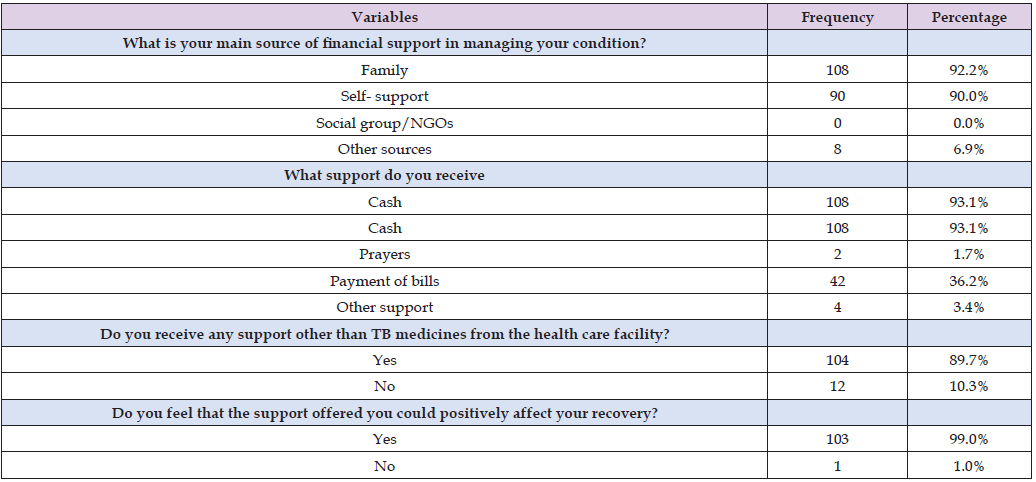
The table below provides an insightful overview of the support systems available to tuberculosis (TB) patients in the Adentan municipality of the Greater Accra Region, Ghana. The data highlights various sources and types of support that patients rely on while managing their condition, offering a glimpse into the social and healthcare structures influencing TB care.
Financial Support
When asked about their main source of financial support, most respondents (108, 92.2%) indicated that they relied on family members. This finding underscores the critical role of the family as a primary safety net for TB patients, reflecting the cultural emphasis on familial responsibility in Ghanaian society. Self-support was the second most common source of financial assistance, with 90 respondents (76.3%) stating they financed their care independently. This suggests that a significant number of TB patients bear the financial burden of their condition personally, which may place additional strain on their already limited resources. Interestingly, only 8 respondents (6.9%) mentioned receiving financial support from “other sources,” and none reported assistance from social groups or non-governmental organizations (NGOs). This lack of external institutional support points to a gap in community-based or organizational interventions aimed at easing the financial challenges faced by TB patients. The absence of NGO involvement is particularly noteworthy given the potential for such organizations to provide targeted support, such as subsidies for treatment costs or assistance with transportation to healthcare facilities.
Types of Support Received
In terms of the kinds of support patients received, the responses further illustrate the pivotal role of family and community. The provision of cash and food emerged as the most frequently cited forms of support, with 108 respondents (93.1%) acknowledging receiving these aids. The high response rate for both types of assistance reflects the importance of addressing not just medical needs but also the broader socioeconomic challenges associated with TB. Access to food, for instance, is crucial for maintaining nutritional health, which in turn supports recovery from TB by boosting the immune system. Additionally, 42 respondents (36.2%) indicated that other individuals paid their bills on their behalf, further reinforcing the role of informal networks in supporting patients. This finding suggests that beyond immediate family members, extended family or community members may also step in to alleviate financial pressures. Meanwhile, a small proportion of participants (4, 3.4%) mentioned receiving other unspecified forms of support, and 2 respondents (1.7%) reported prayer as a form of assistance. While not material, prayer support highlights the cultural and spiritual dimensions of coping with illness in Ghana, where religious faith often plays a significant role in the healing process.
Healthcare Facility Support
A critical aspect of TB management is the role of healthcare facilities in providing comprehensive care beyond medication. When participants were asked whether they received additional support from healthcare facilities, 104 respondents (89.7%) affirmed that they did, while 12 (10.3%) said they did not. This finding indicates that many healthcare facilities in the Adentan municipality are making efforts to extend their services to meet the broader needs of TB patients. However, the fact that over 10% of respondents reported receiving no additional support suggests that gaps remain in the system, particularly in ensuring equitable access to auxiliary care services.
Perceived Impact of Support on Recovery
Finally, the study explored participants’ perceptions of the effectiveness of the support they received in facilitating recovery. An overwhelming majority (103, 99.0%) of respondents believed that the support positively impacted their recovery, with only 1 participant (1.0%) disagreeing. This near-unanimous agreement underscores the critical importance of support systems—both financial and non-financial— in TB management. Effective support systems can alleviate stress, enhance treatment adherence, and ultimately improve health outcomes.
Interpretation and Implications
The findings from Table reveal both strengths and gaps in the support systems available to TB patients in the Adentan municipality. The overwhelming reliance on family members for financial and material support highlights the resilience of familial networks but also raises concerns about the sustainability of this model, particularly for families already facing economic hardship. The near absence of NGO involvement suggests a missed opportunity for broader community- based support programs to complement the efforts of families and healthcare facilities. The data also underscores the multifaceted nature of support needs among TB patients. Cash and food support, as well as assistance with bill payments, were critical for alleviating financial and nutritional challenges, while the acknowledgement of prayer as a form of support points to the importance of addressing patients’ emotional and spiritual well-being.
Healthcare facilities play a crucial role in extending support beyond the provision of medication. However, the reported gaps in this area suggest the need for targeted interventions to ensure that all TB patients have access to holistic care services, including counselling, nutritional guidance, and financial aid. Expanding the range of services offered by healthcare facilities could enhance recovery rates and reduce the social and economic burdens associated with TB. Moreover, the overwhelmingly positive perception of the impact of support on recovery underscores the value of strengthening and diversifying support systems. Policymakers, healthcare providers, and NGOs should consider these findings when designing interventions aimed at improving TB care. By addressing gaps in financial support, enhancing community-based initiatives, and integrating auxiliary services into healthcare delivery, stakeholders can create a more comprehensive and effective support framework for TB patients (Table 1).
Table 1: Support systems for people living with TB.
Support Systems for People Living with TB
In this study, participants were asked about their main source of financial support in managing their condition; and most of them 92.2% chose family. This is in line with a study by Yellappa and friends. Support for patients with TB is very relevant in the treatment and management of cases as it gives patients confidence and hope for speedy recovery. In all cases, the family is the main source of support during TB patients’ recovery (Yellappa, et al. [16]). It was also found that 90.0% indicated self-support as another alternative. In a study conducted by Hutchison and colleagues, patients stated that they were able to manage the costs of their MDR-TB or TB infection alone. The relationship between these two findings shows that most tuberculosis patients can manage their condition all alone (Hutchison, et al. [17]). However, the work by Hutchison and colleagues did not quantify the number of clients who said they manage their condition alone.
With regards to the kind of support received, most of the participants (93.1%) each indicated cash and food respectively these results again relate to what was found out by Hutchison and colleagues in their work. Almost all said they relied in some capacity on their family, either for informal cash transfers in the form of gifts or loans or for caregiving as well as replacement labour (Hutchison, et al. [17]). “We feel very uncomfortable; our daughter has given us 1000 Yuan”. Providers and patients reported cases where providers made special efforts to support treatment. Some healthcare providers also felt compelled to give directly via personal donations of clothes, money, odd jobs, or surplus drugs, (157 USD) (Hutchison et al.2017). Also, participants had different needs and priorities for social support according to personal challenges. Food and direct cash were the main preferred types of support. Some participants considered cash and food equally important, as they thought good nutrition and transportation were fundamental to treatment success (Nhassengo, et al. [19]). These findings did not quantify the people who preferred food and cash in their respective works since they used qualitative approaches. However, they have similar findings of TB patients receiving food and cash as support from family and friends. When the study participants were asked whether they received any support from the healthcare facility other than their medication, 89.7% answered ‘yes’ while 10.3% said ‘no’. In trying to find out whether the participants felt that the support offered could positively affect their recovery, 99.0% responded ‘yes’ while 1.0% said ‘no’ showing that most of the participants felt that health staff support contributed to their recovery.
This means that when tuberculosis patients receive physical, psychological, social relationship, and environmental support from healthcare professionals, it has a positive effect on the recovery process of the patient. This objective aimed to assess the support systems available to TB patients and how beneficial these support systems were to the patients. This supporting literature has adequately supported findings or results of the availability of support systems and how these systems impacted the overall health of TB patients even though they are all qualitative research. They supported the fact that there are support systems available to TB patients. The results of this objective in summary are supported by research conducted by Tornu and Quarcoopome which revealed that all four quality of life domains (physical, psychological, social relationship, and environmental) of tuberculosis patients are positively correlated. Furthermore, receiving social support from family or friends correlated positively with respondents’ quality of life. Social support from family and friends corresponded with a better quality of life among tuberculosis patients (Tornu, Quarcoopome [18]). This means that the availability of support systems helps TB patients respond to treatment and recover quickly [24,25].
Support Systems for People Living with TB
The assessment of the support systems available to TB patients revealed a higher percentage record of family support. This clearly shows how important family support is needed in managing any situation one faces. This shows the need to include family members in the education of TB patients. In addition, another support system that recorded a high response rate was self-support. This implies the need for personal commitment by TB patients in the management of their condition. Regarding the kind of support received, most of the participants indicated cash and food respectively. This finding indicates that we cannot successfully manage TB without money and food. Money is needed to aid in the transportation of TB clients to and from treatment centres and to provide food. Food on the other hand is needed to boost the immunity of the client for better working of the TB drugs. There was a higher revelation that the tuberculosis patients received support from the healthcare facility other than their medication. This highlighted a good relationship between the health staff and the TB patients. Lastly, there was a resounding yes to the question of whether the participants felt that the additional support offered by the health staff could positively affect their recovery. A clear indication that staff giving good education alongside other supports like psychological, emotional, or encouragement to TB patients has a positive impact on their recovery process.
Conclusions of the Study
The assessment of the support systems available to TB patients revealed a higher percentage record of family support. This clearly shows how important family support is needed in managing any situation one faces. There was a higher revelation that the tuberculosis patients received support from the healthcare facility other than their medication. This highlighted a good relationship between the health staff and the TB patients. Lastly, there was a resounding yes to the question of whether the participants felt that the additional support offered by the health staff could positively affect their recovery.
Recommendations for Healthcare Managers
Health managers should make counselling part of TB control activities to ensure that positive cases are properly counselled anytime they visit the medication facilities.

International Association of Landscape Archaeology, Czech Glass Society, Czech Republic

Department of Chemistry, Semenov Institute of Chemical Physics, USSR Academy of Sciences, Moscow, Russia

Department of Educational Sciences, Research Centre Qualities of Teachers, School of Education – HAN, Nijmegen, Netherlands

Associate Professor at Department of Breast and Thyorid Surgey, Chongqing General Hospital, China

Neurology, LA BioMed Research Institute, USA





 Abstract
 PDF
PDF



























