info@biomedres.us
+1 (502) 904-2126
One Westbrook Corporate Center, Suite 300, Westchester, IL 60154, USA
Site Map
 ISSN: 2574 -1241
ISSN: 2574 -1241
ISSN: 2574 -1241
Received: February 11, 2025; Published: February 25, 2025
*Corresponding author: Aparecido Domingues Vieira, Madrid School of Osteopathy (EOM), Brazil
DOI: 10.26717/BJSTR.2025.60.009496
Temporomandibular joint dysfunction can have negative consequences on the individual’s daily life activities. Temporomandibular disorders can cause pain in the joint region, decreased range of mouth opening, difficulty sleeping or unrefreshing sleep, resulting in loss of quality of life. Osteopathy uses non-evasive techniques with satisfactory results in pain and gains in range of motion. This research seeks to substantiate the importance of Osteopathy in the context of Temporomandibular Disorders.
Abbreviations: ATM: Temporomandibular Joint; TMD: Temporomandibular Disorder; ADL: Activities of daily living; DC/TMD: Research Diagnostic Criteria for Temporomandibular Disorders
Temporomandibular dysfunction (TMD) is a term that applies to changes in functions related to the temporomandibular joint (TMJ) and associated masticatory structures. The masticatory muscles in this dysfunction are the most affected [1]. TMDs can cause postural changes in the body, although this subject is still discussed in the scientific community [1]. The TMJ is interconnected with the postural system, depending on several factors for its positioning. When poorly adapted to the postural tonic system, it can result in pain and disability. Control of posture and normal balance depends on the integration of the body’s proprioceptive input pathways [1]. The stomatognathic system, however, fits into other systems such as: swallowing, breathing, craniosacral system and craniocervical posture. When interference occurs in any of these systems, we may observe static or dynamic abnormalities in posture, generating instabilities in the body, including in the TMJ [2]. TMDs affect more young women, aged approximately 12 to 40 years [3]. The etiology of TMD is multifactorial, including changes in the growth of the bones of the skull, direct trauma, malocclusion of the teeth, bruxism, headaches and neck pain. Continuous parafunctional habits can also cause changes in the tone of the masticatory muscles, or even microtraumas caused to this joint by TMJ surgeries, rheumatic conditions, emotional stress, anxiety and poor posture may be related to the development of TMD [1]. Considering that this is a condition characterized by a set of signs and symptoms, these signs and symptoms can lead us to the diagnosis of TMD. The clinical presentation of TMD can cause patients to experience neck pain, headaches, increased muscle tone in the mouth, clenching of the teeth, fractures, or even sinusitis, rhinitis, migraines, night pain, eye pain, irritability, constant fatigue, etc. [2]. The incessant pain associated with sleep deprivation due to TMD can lead to feelings of incapacity, frustration and depression [4].
Frequent pain can lead to incapacity over time, which can make it impossible for TMD sufferers to work or sleep, resulting in absence from work, loss of quality of life, in addition to the possible need for high spending on medication, depressive episodes, etc. [5]. Constant TMJ pain can also be defined as chronic pain. More than 50 million individuals, an estimated 20.4% of the adult population, suffer from chronic TMJ pain. Pain generated by the TMJ muscles can be accurately assessed by a pressure algometer. This instrument is widely used to quantify pain when pressure is exerted on the muscle, and is the most appropriate and accurate means of checking palpation nociceptors. It is used perpendicular to the muscle to be examined and can be applied to various body tissues, as well as a variety of musculoskeletal conditions. To be examined using the algometer, the patient must report musculoskeletal conditions during the consultation [6]. The muscles most affected by orofacial pain are the masseter, internal pterygoid and anterior temporal bundle [2]. However, these same symptoms can occur in isolation, without any association with TMD. One of the biggest complaints of patients with TMD is related to physical and mental incapacity due to unalterable orofacial pain [7]. Unrelenting pain leads to various forms of psychological distress, such as anxiety and social isolation, which are related to the emotional and social aspects of quality of life. Through the variables for the DTM’s the DC/TMD stands for, Diagnostic Criteria for Temporomandibular Disorders and axis I and IIcomposed of a double system of diagnostic and classification axes intended for clinical research of TMDs, it is an instrument that follows the biopsychosocial model of evaluation and classification of TMD, Axis I takes us to (physical diagnoses) and Axis II takes us to (psychosocial aspects and will complete the DC/TMD) [8,9].
Validated questionnaires, such as the SF-36, can be used to assess the patient’s quality of life, improve prognosis and outline treatment plans. In these cases, the use of multidisciplinary treatment with a biopsychosocial focus is extremely important for assessment. The SF- 36 is used to assess 8 domains: functional capacity, physical aspects, pain, general health, mental health, emotional aspects, social aspects and vitality [10]. Some Brazilian studies have used the index (SF36) and (DC/TMD) to classify patients [11,12]. These questionnaires are also used in osteopathy to assess the evolution of patients’ quality of life. Osteopathy is a form of manual therapy with its own method of diagnosis and treatment. Based on some principles such as the law of the artery, hypomobility and hypermobility, the structure governs the function, somatic dysfunction and/or osteopathic dysfunction. These principles, altered in one way or another in their physiology, can produce chronic inflammatory processes, which increases the number of chemical mediators contained in the blood [13]. Osteopathy is a therapeutic method used to treat biomechanical problems, through manual procedures, and is an alternative for the treatment of TMJ dysfunctions. In osteopathy, several manual therapy techniques are used with the aim of repositioning the joint that is in disorder, where passive movements are performed on the TMJ for this purpose [14].
Following osteopathic principles, it is important to consider the functional interrelationship between the head, cervical, TMJ and the body as a whole for proper TMJ functioning. This poor positioning of the TMJ can generate local pain, due to the great importance of the TMJ in functions such as speech, breathing, swallowing and chewing [15]. Osteopathy can help these individuals with TMD dysfunction, providing more mobility in the joint and improving the range of mouth opening, reducing the tone in the mouth muscles with the aim of improving their mechanical function, contributing to the quality of life and pain in all its aspects [16]. Studies show that poor quality sleep can worsen or aggravate chronic pain, and the opposite is also true [17]. Understanding sleep quality is an important part of a comprehensive assessment of chronic TMD pain disorders. Several factors should be taken into consideration based on the patient’s report, such as sleep onset, sleep maintenance, and adaptation to daytime sleepiness [6,18,19]. The purpose of this research is to evaluate and treat, using osteopathic techniques, patients with sleep disorders, according to the SF-36 questionnaires, Axis 1 and 2 questionnaires with the DC/TMD, due to pain that is related to TMD disorders, thus seeking to restore their homeostasis with the objective of supporting the relevance and importance of osteopathic manual techniques in the treatment of TMD and its consequences, with a main focus on the loss of sleep quality.(Cid- 10 (k07.6) - Decs- A 14,907) [20].
Osteopathic treatment can lead to an improvement in pain in the TMJ region, an improvement in the range of movement of the mouth and an improvement in the quality of life of individuals with temporomandibular dysfunction.
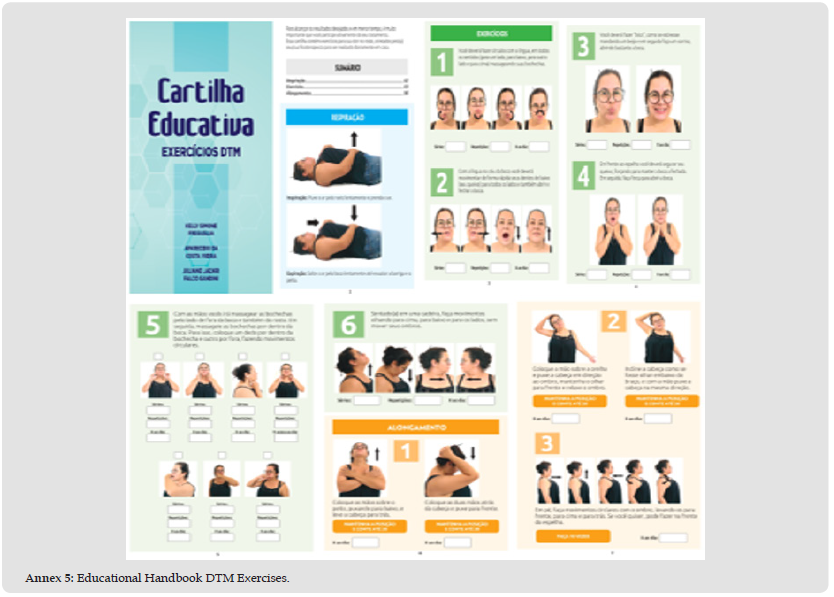
Osteopathic treatment improves the quality of life of people with TMJ disorders. We used an educational booklet on how to do exercises for the TMJ region, created by us researchers, and therefore not yet validated.
This study is a clinical trial. Sixty patients were voluntarily recruited through a public call and randomly divided into two groups using a numerical sequence (www.randon.org). Group 1, with 30 patients, received osteopathic treatment, while group 2 (control) received 30 patients, who received guidance through an educational booklet. Both groups received a total of five sessions. After signing the informed consent form, the clinical evaluation began using an osteopathic evaluation form, pain measurement using a pressure algometer and mouth opening amplitude using a caliper. In addition to these data, the patient completed the SF36 and DC/TMD questionnaires, an instrument for classifying their TMD, with the help of the therapist. After the evaluation, group 1 received osteopathic treatment. For osteopathic treatment, we did not use a protocol, since each patient had their own individuality, so we treated the regions such as cranial sutures, C0-C1 and C2 hinges, C7-T1 hinges, diaphragm, mandible and maxilla, and masticatory muscles. Osteopathic treatment occurred weekly for 4 weeks. In the last meeting, that is, in the 5th session, after the treatment, the patient was reassessed with the same assessment instruments. The reassessment began with the measurement of pain, using a pressure algometer, followed by the measurement of the mouth opening amplitude, using a caliper, as well as the completion of the SF36 and the SF36 questionnaires with the help of the therapist. DC/TMD stands for, Diagnostic Criteria for Temporomandibular Disorders and axis I and II and these two questionnaires complement each other. Group 2, which was the control group, underwent an assessment at the first meeting and received guidance through an educational booklet. After signing the informed consent form, the clinical assessment began using an osteopathic assessment form, pain measurement using a pressure algometer, and mouth opening amplitude using a caliper.
In addition to these data, the patient completed the SF36 and DC/ TMD questionnaires, an instrument for classifying their TMD, with the help of the therapist. After the assessment, group 2 received guidance through an educational booklet, which occurred weekly for another 4 weeks via telephone call or WhatsApp, as agreed with the volunteer. For the fifth guidance, a face-to-face meeting was scheduled that reinforced the guidance through an educational booklet, followed by a reassessment. The clinical evaluation began with an osteopathic evaluation form, pain measurement using a pressure algometer and mouth opening amplitude using a caliper. In addition to these data, the patient completed the SF36 and DC/TMD questionnaires, an instrument for classifying TMD, with the help of the therapist. Once the data collection was completed, the patients in this group, called the control group, received three osteopathic appointments as a token of appreciation, which were scheduled for the following three weeks, with the aim of treating their complaint at no cost to the patient.
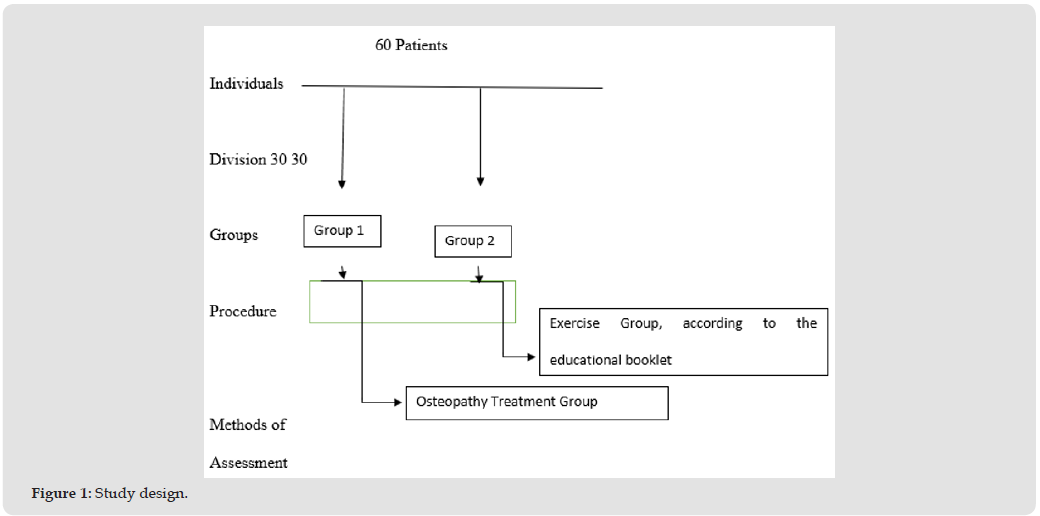
Study Design
(Figure 1).
Figure 1
Study Protocol
After signing the informed consent form, the clinical evaluation began using an osteopathic evaluation form, pain measurement using a pressure algometer, and mouth opening amplitude using a caliper. In addition to these data, the patient completed the SF36 and DC/ TMD questionnaires, an instrument for classifying their TMD, with the help of the therapist. After the evaluation, group 1 received osteopathic treatment. Group 2, which was the control group, underwent an evaluation at the first meeting and received guidance through an educational booklet. After signing the informed consent form, the clinical evaluation began using an osteopathic evaluation form, pain measurement using a pressure algometer, and mouth opening amplitude using a caliper. In addition to these data, the patients completed the SF36 and DC/TMD questionnaires, an instrument for classifying their TMD with the help of the therapist. After evaluation, group 2 received guidance through an educational booklet, which took place weekly for another 4 weeks via telephone call or WhatsApp, as agreed with the volunteer.
Study Population
Sixty patients were voluntarily recruited through a public call, but two patients withdrew in the middle of our research.
Study Groups
This study consists of a clinical trial carried out; 60 patients were recruited.
Sampling and Sample Size
60 patients and were randomly organized into two groups using a numerical sequence (randon.org).
Randomization and Allocation
They were organized into two groups, Group 1 Treatment and Group 2 Exercises as described in the booklet, randomly using a numerical sequence (www.randon.org).
Selection Criteria
A sample of 60 patients of both sexes with a minimum age of 18 years and a maximum age of 45 years, who after evaluation following the diagnostic criteria for TMD.
Study Variables
The variables were: age, sex, mouth opening amplitude and perception of the force exerted on the algometer. We did not use an osteopathic treatment protocol, as each patient presented a variable, such as (standard deviation, median deviation, has TMD, does not have TMD, has functional habit, with moderate pain, with moderate pain, etc.).
Assessment Procedures
Data collection began on August 2, 2022 and ended on November 27, 2022, and consisted of two stages. The sample was divided into 2 groups: Group 1, Treatment with osteopathy, and Group 2, Exercises according to the educational booklet. The guidance, assessments, and treatments were carried out by only 1 researcher. To collect pain measurements, we used a pressure algometer and a caliper to measure the mouth opening amplitude. In addition to these data, the patient completed the SF36 and DC/TMD questionnaires, an instrument for classifying their TMD with the help of the researcher.
Statistical Analysis
The analyses were performed using GraphPad Prism software (Version 8.0, San Diego, CA). Descriptive analysis was used to characterize the individuals. The Kolmogorov-Smirnov test was used to assess normality. The results were expressed as mean and standard deviation, median (minimum; maximum) and n (%). Student’s t-test and Fisher’s exact tests were used to analyze demographic data. Oneway ANOVA with Tukey’s post-test was used to analyze TMJ opening. Fisher’s exact test was used to analyze variables related to habits and presence of pain. The Kruskal-Wallis test with Dunn’s post-test was used to analyze algometric variables. The Kruskal-Wallis test with Dunn’s post-test was used to analyze the SF-36 questionnaire variable. The Spearman’s test was used to analyze correlations between domains. To analyze the Axis 1/Axis 2 variable, the Kruskal-Wallis test with Dunn’s post-test was used. The Chi-square test was used to analyze the DC-TMD variable.
Variable-01
Group 1 (This is the Osteopathy Treatment Group), and Group 2 (This is the Exercise Control Group 2). No participant in either group had rheumatic disease, autoimmune disease, fibromyalgia, used dental prosthesis or used analgesics. In the variable: age and sex, there was no difference (P) between Group 1 and Group 2. Table 1 - Patient Registration, where the patient’s personal information is collected, such as name, age, address and contacts, inclusion and exclusion criteria, etc. (Figure 1). Descriptive analysis was performed to characterize the patients. Kolmogorov-Smirnov was used to assess normality. The results were described as mean and standard deviation, median (minimum; maximum) and n (%). To collect the analysis of demographic data, the student’s t-test was used for variables such as (2 groups) and Fisher’s test to compare (male with female, with/without pain, yes/no, tech...).
Table 1: Demographic and anthropometric data of the patient sample.

Note: Student’s test and Fisher’s test.
Variable-02
(Table 2) In parafunctional habits, there was a difference of (P) in group 2 Exercises, in relation to Group 1, after treatment. In patients with facial trauma, there was no improvement of (P) in group 1, in relation to Group 2 Exercises after treatment. In headache, there was a difference of improvement of (P) in both groups 2, in after treatment. In migraine, there was a difference of improvement of (P) in group 2 in relation to Group 1 Osteopathic treatment, in after treatment. In particular sound in the TMJ, there was no difference of improvement of (P) in both groups, in after treatment. In orofacial pain, there was a difference of (P) in both groups 2, but in group 1 the improvement was more important after treatment. In deviation in mouth opening, there was a difference of (P) in group 2 in relation to Group 1 Treatment, in after treatment. To analyze the ATM opening, the one-way ANOVA test with Tukey’s post-test was used.
Table 2: Demographic and anthropometric data of the patient sample.
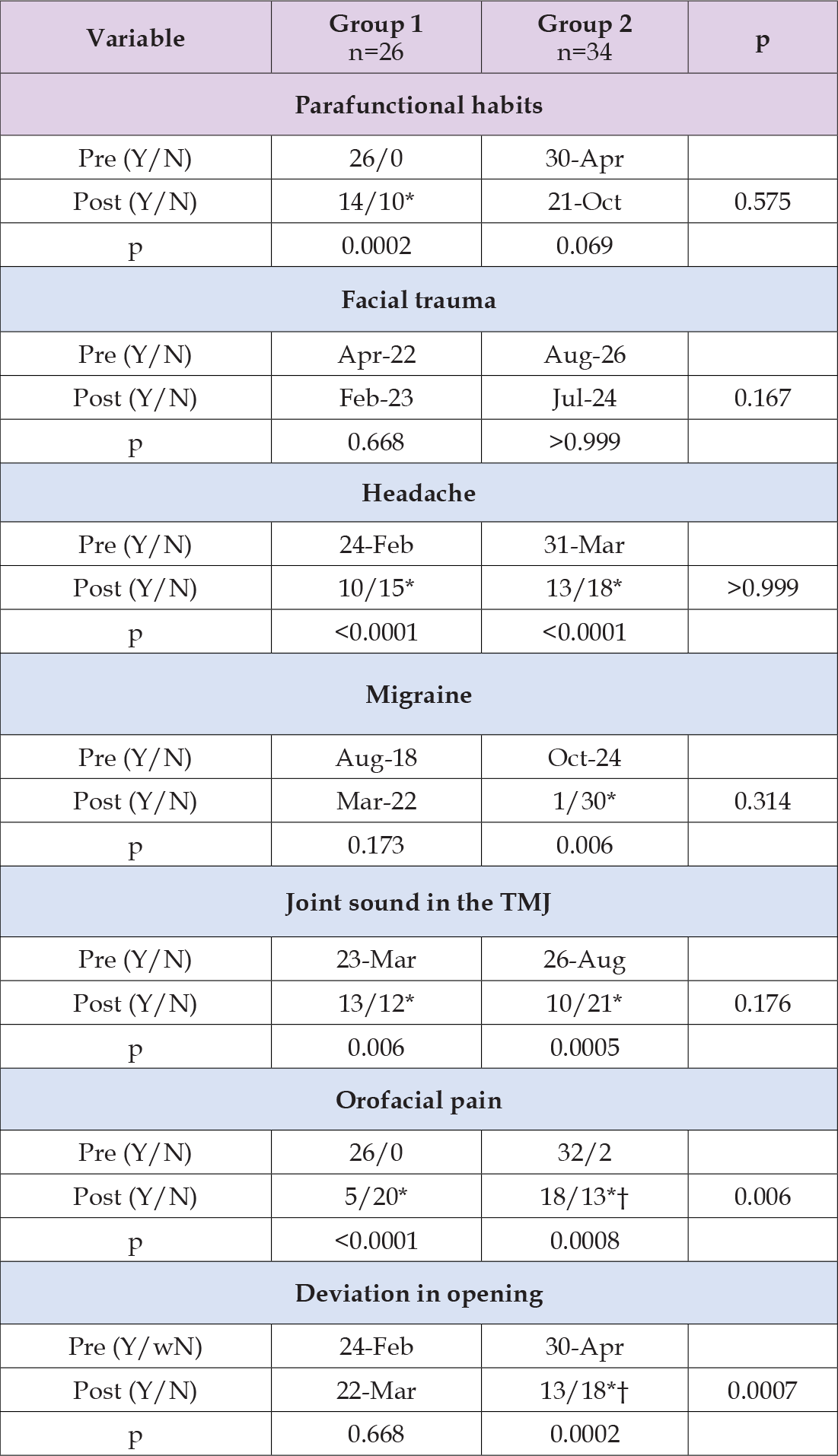
Note: *, compared with pre-time; †, compared with Group 1. Fisher’s test.
Variable-3
(Table 3) Without assistance/without pain, there was a difference in (P) pain when opening the mouth, at the time of opening without the therapist’s assistance, in both groups 2, in the post-treatment. Without assistance/with pain, there was a difference in (P) pain when opening the mouth, at the time of opening without the therapist’s assistance, in both groups 2, in the post-treatment. Fisher’s exact test was used to analyze variables related to habits and the presence of pain.
Table 3: Data relating to the opening of the ATM of the sample of patients.

Note: *, compared with the pre-moment. One-way ANOVA test.
Algometry
(Table 4) In the Posterior Temporal (D) and Posterior Temporal (E), there was an improvement in pain sensitivity in both groups, group 1 treatment and group 2 exercises, however, the improvement in pain was observed in (P), in the post-treatment period only in group 2 exercises. Middle Temporal (D), and Middle Temporal (E) there was an improvement in pain sensitivity in both groups, group 1 treatment and group 2 exercises, however the improvement in pain observed in (P), in the two groups there was no difference between them. Anterior Temporal (D), and Anterior Temporal (E) there was an improvement in pain sensitivity in both groups, group 1 treatment and group 2 exercises, however the improvement in pain observed in (P), in the post-treatment only in group 2 exercises. Masseter (D), and Masseter (E) there was an improvement in pain sensitivity in both groups, group 1 treatment and group 2 exercises, however the improvement in pain observed in (P), in the post-treatment in both groups 2 there was no difference between them [21].
Table 4: Data relating to algometry in the patient sample.
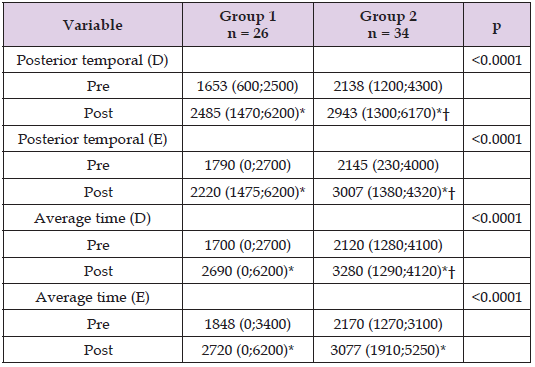
Note: R, right; L, left. *, compared with pre-moment; †, compared with pre-moment of Group 1. Kruskall-Wallis test. Difference in (P) means that pain sensitivity decreases.
Algometry
Pain can be quantified using an instrument called an algometer. One of the parameters that this instrument provides is to measure the pain threshold, which is when a stimulus is applied and when it starts to be painful, the degree of pain can be measured. If the stimulus is mechanical, it is called the Pressure Pain Threshold. The algometer is widely used in research to quantify patients’ pain before and after treatment. To analyze the algometry variables, the Kruskal-Wallis test with Dunn’s post-test was used.
SF-36
(Table 5) The SF-36 questionnaire is widely used in health-related research to assess people’s quality of life before and after treatment. The SF-36 (Short-Form Health Survey). The SF-36 was developed in 1992 by Ware and Sherbourne and is validated in Brazil [22-25]. The Kruskal-Wallis test with Dunn’s post-test was used to analyze the SF- 36 questionnaire variable. The Spearman test was used to analyze the correlations between the domains. The Functional Capacity of the groups improved only in group 2 Exercises, after treatment, and there was no difference between the two groups. In Limitation due to Physical Aspects, there was no statistical difference in the two groups, since both groups already had the same starting statistics. In the Pain scale, there was improvement only in group 1 Treatment, in relation to group 2 Exercises, and after treatment. In General Health, there was improvement only in group 2 Exercises and after treatment. In Vitality, there was improvement only in group 1 Treatment and after treatment. In Social Aspects, there was improvement only in group 1 and after treatment. In Limitation due to Emotional Aspects, there was improvement in both groups, and there was no difference between the groups, since they already had the same starting statistics. In Mental Health, there was improvement only in group 2 Treatment and after treatment. An association of improvement was observed only in group 1 in the post-treatment period. This justifies that there was an improvement in social aspects, in relation to the improvement in vitality.
Table 5: Data relating to the SF-36 questionnaire in the patient sample.

Note: *, compared with pre of Group 2; †, compared with pre of Group 1. Kruskall-Wallis test.
A moderate association was observed with a positive R=0.48 between the two associations. There is also an association of improvement only in group 1 in the post-treatment period, justifying that there was an improvement in vitality with the improvement in pain. A moderate association was observed with a positive R=0.72 between the two associations. If pain is very prolonged or persistent, it can cause disability, limitations in the body and cause insomnia as it disrupts sleep [15,16,26,27]. To quantify pain in our research, we used the pressure algometer, as it is also widely used in research related to human health [28,29]. An association of improvement was observed only in group 2 in the post-treatment period. This is justified by the fact that there was an improvement in emotional aspects, with an improvement in functional capacity. A moderate association was observed with a positive R=0.58 between the two associations. An association of improvement was also observed only in group 2 exercises in the post-treatment period. This is also justified by the fact that there was an improvement in mental health with the improvement in emotional aspects of patients in group 2 exercises. A moderate association was observed with a positive R=0.45 between the two associations (Figures 2-4).
Figure 2

Figure 3

Figure 4

Axis 1/Axis 2 and DC-TMD
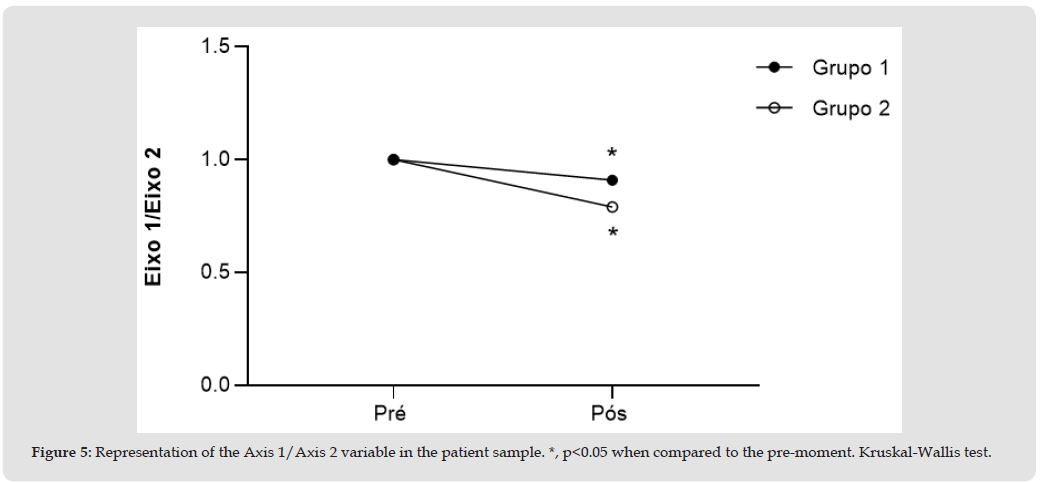
(Table 6) An improvement in muscle disorders was observed in axis 1 and 2 in both groups 1 and 2, after treatment with osteopathy in group 1 and after exercise in group 2, with no difference between the groups. The graph shows a marked decrease in muscle disorders between group 1 treatment and group 2 exercise. The Kruskal-Wallis test with Dunn’s post-test was used to analyze the variable Axis 1/ Axis 2. In DC/TMD, there was no difference between the groups, but both groups had almost the same percentage starting from the beginning of the pre-TMJ pain collection. Both groups had a moderate level of pain, where there was not such a significant improvement in pain in the 2 groups. The Chi-square test was used to analyze the DC-TMD variable (Figure 5).
Table 5: Data regarding Axis 1/Axis 2 and DC-TMD data in the patient sample.
Figure 5
Our research included a sample of 60 patients, of both sexes, with a minimum age of 18 and a maximum of 45 years, who, after evaluation, following the diagnostic criteria for TMD (DC/TMD and Axis I and Axis II), an instrument used to classify TMD disorders, we used the SF-36. It was included in our research work because we wanted to prove the effectiveness of osteopathic treatment in patients with TMD, as shown in Figure 1 (in the study design). However, osteopathy has proven to be a great tool for treating TMJ, improving local pain and joint mobility., states authors such as Cuccia, et al. [30,31]. According to Pereira et al. [32], due to multiple variables, such as a limited number of studies, associated with different methodologies and outcomes, it is not clear to him whether osteopathic interventions are in fact effective in treating TMD and suggests new studies to better understand the issue in relation to TMJ. The study shown by Herzhaft, et al. [33], already says the opposite. He was one of the first to bring together lactation consultants and osteopaths to approach babies with biomechanical sucking difficulties. This study concludes that osteopathy can be used as a therapeutic means for TMJ and pain. orofacial. In our study, it is clear that osteopathy adds to this topic. In studies by Easterbrook et al. 2019, enthe findings of the study Mineirinho, et al. [34,35], which this was a pilot study, which concluded that the use of manipulative osteopathic treatment on the skull was an effective treatment modality in patients with temporomandibular dysfunction.
The study concluded with positive results in the treated groups, and encourages further research on osteopathic treatment performed on the skull. In our study, when we worked on the upper cervical and occipital areas, there was a significant improvement in local pain, which we verified with the use of the algometer. Cuccia et al. 2011, highlights the importance of osteopathy for patients with temporomandibular dysfunction [36] showed that two therapeutic modalities presented similar clinical results in patients with TMD, even though those who used medication were better in the control group. He ends his conclusion and suggests osteopathy as a valid option for the treatment of TMD. Not anymore, the pilot study carried out by Heres, et al. [37], is in line with that of Cuccia et al 2011, where it was demonstrated that when using osteopathy, there was a reduction in local pain and improvement in temporomandibular dysfunction, having a positive impact on the quality of life after osteopathic treatment in the skull. But for Bernadino 2012 and 2015 [15,28], the pressure algometer is a reliable instrument for checking the muscle pain threshold and is widely cited in research, however, in research use it did not have good accuracy in assessing the migraine pain threshold in patients with 7 to 10 years of this pathology. Therefore, the authors Palacios et al 2017 and Piovesan 2001 [38-40], they even published articles in newspapers citing the accuracy of the algometer [40] stated in their article that the algometer is a reliable instrument to be used even in elderly people with low cognition, according to Lara 2015 and Jadb 2007 [38,39].
In the SF-36 table, the data collected showed improvements in pre- and post-treatment, in group 1 and group 2 in relation to pain and emotional aspects. Some authors such as Evanildo et al. [10], Luedtke [26] and Yasmin S, et al. [16], reinforce that it is not reliable for assessing mental health. We also do not think it is safe to state something so important with the data collected on this topic. This was especially observed in Fiorillo’s 2020 research [2], that when the problem is related to malocclusion of the teeth, or the problem is in the TMJ itself, there is a recommendation to refer to the dentist. Our study is in line with Fiorillo 2020, who says that osteopathy does not treat malocclusion of the teeth. In the table of the graph related to axis I and II, there was an improvement in group 1 and in group 2. The axis I and II table are widely used for the diagnosis of TMJ-related disorders. Some authors such as Calixtre L, et al. [2,10], report that the DC/TMD stands for Diagnostic Criteria for Temporomandibular Disorders and axis I and II is a good tool for the evaluation of TMJ disorders, where it is possible to predict a significant TMJ disorder. On the other hand, regarding the DC/TMD table, an improvement in pain was observed in our study, however, the improvement was not as significant as we expected. There are some criteria for the evaluation and use of the DC/TMD, say these authors Calixtre L, et al. [9,41,42] that great caution is needed when confirming depression using this tool. In our study, we agree with the authors in stating something important through the data collected in the DC/TMD.
Study Limitation
Send messages to patients to remind them to do the exercises correctly and advise patients in both groups not to miss scheduled appointments.
Study Prospects
The aim of this study was to provide pain relief in the TMJ region and improve overall quality of life with our osteopathic treatment. Future studies may include a larger sample, using a different methodology to our method of assessing and treating patients with TMD disorders, to help osteopaths improve their clinical treatment or provide guidance on exercises to do at home.
Implications for Clinical Practice
We concluded that with well-executed TMJ exercises, the result was the same as Group 1, which received osteopathic treatment.
Osteopathy has proven to be an excellent alternative for improving the mobility of the TMJ joint and for relieving pain in the masticatory muscles of the mouth. Furthermore, osteopathy should be recommended by professionals who treat this joint. Today, there are already valid tools for diagnosing possible TMJ disorders, which were reported in our study as DC/TMD, axis I and axis II, which is a sum that suggests pathologies in the same.
This work complied with all ethical standards as per the opinion of the Research Ethics Committee (CEP), registered on the Plataforma Brasil under number 4,897,847 (Appendix 1) (Annexes 1-5).
Appendix 1
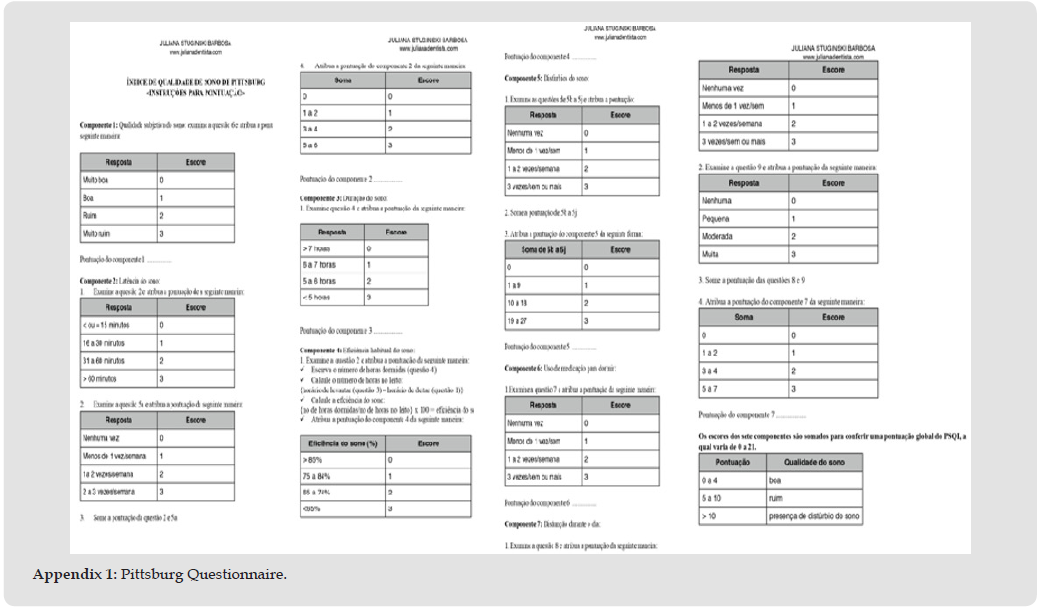
Annex 1
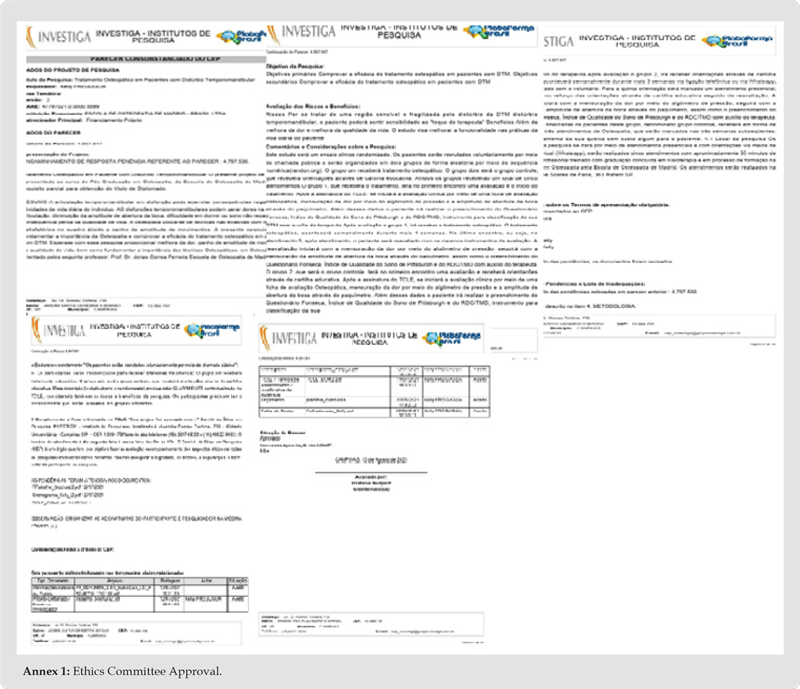
Annex 2

Annex 3

Annex 4

Annex 5
The authors belong to the Madrid School of Osteopathy and evaluated people collected by common electronic call.

International Association of Landscape Archaeology, Czech Glass Society, Czech Republic

Department of Chemistry, Semenov Institute of Chemical Physics, USSR Academy of Sciences, Moscow, Russia

Department of Educational Sciences, Research Centre Qualities of Teachers, School of Education – HAN, Nijmegen, Netherlands

Associate Professor at Department of Breast and Thyorid Surgey, Chongqing General Hospital, China

Neurology, LA BioMed Research Institute, USA





 Abstract
 PDF
PDF



























