info@biomedres.us
+1 (502) 904-2126
One Westbrook Corporate Center, Suite 300, Westchester, IL 60154, USA
Site Map
 ISSN: 2574 -1241
ISSN: 2574 -1241
ISSN: 2574 -1241
Received: January 21, 2024; Published: February 03, 2025
*Corresponding author: Nidha Shapoo, Department of Medicine, New York Medical College/Metropolitan Hospital, New York, United States of America
DOI: 10.26717/BJSTR.2025.60.009453
Tuberculosis (TB) crisis in New York (NY) 2023-2024 emerged as a significant public health concern, reflecting the complex interplay of factors leading to an increase in cases across the city. This review article examines the TB crisis in New York from 2023- 2024, analyzing the factors contributing to the resurgence of the disease, reviewing the recent epidemiological data, the trends in TB incidence, and the most affected demographics. Most cases of TB in the United States (US) occur due to the reactivation of latent TB infection (LTBI), which is an asymptomatic clinical state. This review article discusses the diagnosis and treatment of different types of TB infections ranging from asymptomatic to multidrug-resistant stage. New York City addresses TB through various control and prevention strategies, including case management, contact investigation, and education of the NY Health Department staff, patients, community, and healthcare professionals. Collaborative efforts were set in place to control the outbreak and to ensure a healthier future free from the burden of tuberculosis.
Keywords: Tuberculosis; United States; New York; Immigration; Control; Prevention
Tuberculosis (TB), an infectious disease caused by the bacteria Mycobacterium tuberculosis, is a significant global health challenge. According to the World Health Organization (WHO), approximately 8.2 million people were newly diagnosed with TB in 2023, the highest number recorded since WHO began global TB monitoring in 1995. This represents a notable increase from the 7.5 million reported in 2022, placing TB again as the leading infectious disease killer in 2023, surpassing COVID-19. A total of 1.25 million people died from TB in 2023, a decrease from 1.32 million in 2022; however, the total number of people falling ill with TB rose slightly to an estimated 10.8 million in 2023. The highest burden countries include India (26%), Indonesia (10%), China (6.8%), the Philippines (6.8%) and Pakistan (6.3%) together accounted for 56% of the global TB burden. A significant number of new TB cases are driven by five major risk factors: undernutrition, HIV infection, alcohol use disorders, smoking, and diabetes. The United States (US) annual funding target of $ 22 billion is needed for TB prevention, diagnosis, treatment, and care to be achieved by 2027, as agreed at the 2023 WHO meeting. Only US$ 5.7 billion was available in 2023, representing insufficient funding to cover TB needs. Ending the TB epidemic by 2030 is among the health targets of the United Nations Sustainable Development Goals (SDGs) [1].
Tuberculosis in the United States
The US has one of the lowest TB rates in the world [2] and aims to eliminate TB by 2035 [3]. The reported TB cases dropped substantially in 2020, coinciding with the COVID-19 pandemic, followed by an increase every year since [4]. The yearly increase was attributed to refugee and immigrant children, adolescents, and young adults. In 2023, the U.S. provisionally reported 9,615 TB cases, an increase of 16% compared with the 8,320 cases reported in 2022 and the highest number of cases reported since 2013 (9,556). The U.S. TB rate increased by 15%, from 2.5 per 100,000 persons in 2022 to 2.9 in 2023. As of 2022, California reported the highest number of cases in 2023, and Alaska reported the highest rate of 10.6%. TB incidence increased in every age group in 2023 compared with 2022, with the most significant relative increase among children aged 5–14 years (a 42% increase in case count and a 45% increase in rate). In 2023, there was an 18% increase in TB cases among non-U.S.–born persons compared to 9% in U.S.-born persons as compared to 2022. Among non- U.S.–born persons with TB, 40% identified as Hispanic, 39% as Asian, 13% as Black, and 4% as White.
Among 83% of patients with TB in 2023 for whom HIV status was known, 5% were coinfected with TB and HIV [5]. Approximately 80% of TB cases in the US are attributed to the reactivation of latent TB infection (LTBI) rather than recent transmission [6]. As per the Centers for Disease Control and Prevention (CDC), ‘An estimated 13 million people in the US are living with latent tuberculosis’ LTBI is an asymptomatic clinical state that is not transmissible compared to active TB disease, which is characterized by the presence of clinical symptoms that can occur in multiple organs. The latency duration is variable; healthy individuals can harbor LTBI for a lifetime. In a small fraction (~5%–15%), reactivation occurs, often within the first 2 to 5 years following infection. Individuals with LTBI represent a significant reservoir for new active TB cases [7].
Tuberculosis in New York
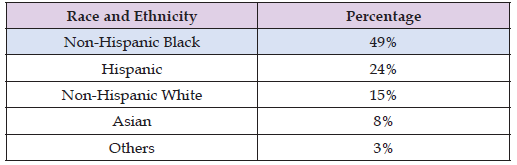
New York City (NYC), once considered a model for TB control, is now facing a troubling resurgence of this age-old disease. New York State ranks third for having the highest number of reported cases. In 2023, the City Health Department of New York confirmed 684 cases of active TB disease in NYC, representing a 28% increase compared with 2022. The maximum number of TB cases were seen in the age group 18-44 years, constituting 45% of all cases (Table 1). Males represented 68% of all cases. More than 80% of TB cases were seen among people born outside the US. China was the most common country of birth, accounting for 19% of all cases (Table 2). Among the cases born in the US, non-Hispanic blacks represented 49%, followed by Hispanics at 24% (Table 3). TB cases were low during the COVID-19 pandemic due to extra preventive measures taken by the public health sector, such as masking and isolation at home. ‘2023 was the worst year for TB infections in New York in a decade.’‘New York is an epicenter. Housing shortages and a decline in public health infrastructure are partly responsible for TB’s resurgence.’
Table 1: Age distribution of patients with TB in New York, 2023.
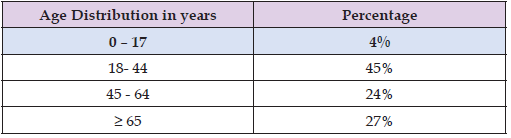
Table 2: Country of birth among people with TB.

Table 3: Race and ethnicity among people born in the US.
Contributing Factors
Most areas affected by TB are home to low-income communities with limited access to healthcare. These socioeconomic disparities lead to delayed diagnosis and treatment, allowing the disease to spread more easily.
The COVID-19 pandemic disrupted routine healthcare services, including TB screenings and treatments, which contributed to the resurgence of the disease. New York City is a melting pot of cultures and ethnicities, with a significant portion of its population coming from countries with high TB prevalence. This demographic shift can increase transmission rates if proper healthcare measures are not in place. Despite being a treatable disease, TB still carries a stigma that can prevent individuals from seeking help. Increased awareness and education are essential to combat the misconceptions surrounding TB.
Latent Tuberculosis Infection (LTBI)
LTBI is an asymptomatic clinical state diagnosed by a positive test result for Mycobacterium tuberculosis-complex infection and an absence of radiographic findings of active TB disease. The US Food and Drug Administration (FDA) has approved two methods of immuno logic testing for M. tuberculosis infection: interferon-gamma release assays (IGRAs) and the tuberculin skin test (TST). IGRAs are generally preferred, but the TST is acceptable. While both IGRA and TST testing provide evidence for infection with M. tuberculosis, they cannot distinguish active from latent TB. QuantiFERON-TB Gold Plus (QFT-Plus) is an indirect test for M. tuberculosis infection (including disease) intended for risk assessment, radiography, and other medical and diagnostic evaluations. QFT-Plus can be run in any laboratory with capacity for an enzyme-linked immunosorbent assay (ELISA). A positive result is evidence of infection with M. tuberculosis and should be followed by further examination for active TB disease [8]. Treatment of LTBI is effective in preventing progression to active TB [9]. The updated 2020 LTBI treatment guidelines by the National Tuberculosis Controllers Association (NTCA) and CDC apply to patients with LTBI living in the US and infected with M. tuberculosis susceptible to isoniazid or rifampin.
The recommended treatment regimens include three preferred and two alternative treatment regimens. Rifamycin-based regimens, including 3 months of once-weekly isoniazid plus rifapentine, 4 months of daily rifampin, and 3 months of daily isoniazid plus rifampin are the preferred recommended regimens because of their effectiveness, safety, and high treatment completion rates. Regimens of 6 or 9 months of daily isoniazid are alternative recommended regimens; although efficacious, they have higher toxicity risk and lower treatment completion rates, which decrease effectiveness [10]. A regimen of 4 months of daily rifampin is a preferred treatment for HIV-negative adults and children of all ages. The only problem with rifamycin- based regimens is their drug interactions, including warfarin, oral contraceptives, azole antifungals, and HIV antiretroviral therapy [11]. Rifabutin has fewer drug interactions and may replace rifampin when rifampin is contraindicated due to drug-drug interactions, and isoniazid cannot be used. For HIV-positive patients, a regimen of 3 months of once-weekly isoniazid plus rifapentine or 3 months of daily isoniazid plus rifampin are preferred regimens [10]. Isoniazid regimens are alternative recommended regimens; 6 months of daily isoniazid is strongly recommended for HIV-negative adults and children of all ages and as an alternative for those patients unable to take a shorter preferred regimen (e.g., due to drug intolerability or drug-drug interactions), particularly in HIV-negative persons. Nine months of daily isoniazid is] conditionally recommended for adults and children of all ages, both HIV-negative and HIV-positive [10].
Active Tuberculosis
For all patients who are suspected of having active pulmonary TB, acid-fast bacilli (AFB) smear microscopy should be performed. Testing three specimens is considered the standard practice in the US and is strongly recommended by the CDC. A diagnostic nucleic acid amplification test (NAAT) should be performed on the initial respiratory specimen from patients suspected of having pulmonary TB. In AFB smear-positive patients, negative NAAT makes TB disease unlikely. In AFB smear-negative patients with an intermediate to a high level of suspicion for disease, a positive NAAT can be used as presumptive evidence of TB disease. Still, a negative NAAT cannot be used to exclude pulmonary TB. For patients with suspected pleural TB, TB meningitis, peritoneal TB, or pericardial TB, adenosine deaminase levels should be measured on the fluid collected, and histological examination should be performed for all extrapulmonary TB [8]. Active TB treatment focuses on curing the individual patient and minimizing the transmission of M. tuberculosis to others. The standard of care for active TB in New York is Directly Observed Therapy (DOT) consisting of an intensive phase of 2 months of isoniazid (INH), rifampin (RIF), pyrazinamide (PZA), and ethambutol (EMB) followed by a continuation phase of 4 months of INH and RIF. For the patients who have cavitation on the initial chest radiograph and positive cultures after 2 months of therapy, the continuation phase is extended with INH and RIF for an additional 3 months (i.e., a continuation phase of 7 months in duration, corresponding to a total of 9 months of therapy) [12].
Multidrug Resistant Tuberculosis (MDR-TB)
MDR-TB, a form of TB caused by bacteria that do not respond to isoniazid and rifampicin, remains a public health crisis and a health security threat. Only about 2 in 5 people with MDR-TB accessed treatment in 2023, as per WHO [2]. Unlike treatment for drug-susceptible TB, there is no standardized treatment regimen for MDR-TB. Instead, treatment regimens are individualized based on the patient’s TB isolate drug-susceptibility test results and prior TB treatment history. First-line drugs to which the isolate is susceptible are started or continued. Second-line and third-line drugs are added until there are at least five drugs to which the isolate is susceptible. The length of treatment is usually at least 15 months (range: 15 to 21 months) after culture conversion [13,14].
The mission of the NYC Health Department is to prevent the transmission of TB and eliminate it as a public health problem in NYC by the following strategies:
1. Identify all people with suspected or confirmed TB disease and ensure their appropriate treatment, ideally on directly observed therapy.
2. Ensure that people at high risk for progression from LTBI to TB disease complete treatment and do not develop disease.
Case Management
In NYC, case management consists of a series of coordinated activities across a multi-disciplinary team of the NYC Health Department Bureau of TB Control (BTBC) personnel to optimize patient care and treatment outcomes. Case management is how public health staff monitor and support the care and treatment of TB patients. The overall goal of case management is that all individuals with suspected or confirmed TB receive an appropriate evaluation and course of therapy when indicated. All people at high risk of developing TB also receive evaluation and therapy if needed [15,16].
The case management activities include:
1. Educating patients about TB.
2. Conducting initial interviews and re-interviews.
3. Determining the need for a contact investigation, identifying and testing contacts.
4. Conducting chart reviews.
5. Communicating with patients’ healthcare provider(s).
6. Conducting home visits.
7. Monitoring TB care.
8. Identifying barriers to treatment adherence.
9. Ensuring continuity of care.
10. Documenting patient information and case management activities in the electronic surveillance and case management system [15,16].
Contact Investigation
Contact investigation is a key strategy employed by the NYC -BTBC to identify individuals recently exposed to patients with infectious TB disease (contacts). Contacts are more likely to develop active TB disease than any other risk group. Future cases of TB can be prevented by promptly identifying and evaluating contacts and ensuring that those diagnosed with TB or LTBI complete treatment [17,18]. The contact investigation activities include:
1. Determining the need for a contact investigation.
2. Defining the infectious period.
3. Defining window period.
4. Interviewing patients with infectious TB disease and eliciting contacts.
5. Conducting a home assessment.
6. Prioritizing contacts for evaluation.
7. Interviewing and educating contacts.
8. Evaluating contacts and determining the need for treatment.
9. Screening and testing for human immunodeficiency virus (HIV).
10. Assessing transmission.
11. Conducting an expanded contact investigation.
12. Conducting case management for contacts being treated for LTBI. 13. Supervisory review [17,18].
Infection Control
Good infection control practices limit the opportunity for the spread of tuberculosis. Patients with TB at high risk of infectiousness include those having cough, positive acid-fast bacilli (AFB) sputum smear, positive TB sputum culture, and presence of a cavity on chest radiograph. BTBC infection control policies are consistent with CDC’s 2005 guidelines for preventing TB transmission in healthcare settings. The New York State (NYS) Department of Health provides regulatory oversight of infection control measures in healthcare facilities within the state. Infection control programs use a hierarchy of measures to reduce the risk of TB transmission. At the highest level, administrative controls reduce risk across an entire clinical setting by decreasing the risk of exposure to patients with active, infectious TB disease. At the next level, environmental controls reduce risk in specific areas by decreasing the concentration of infectious droplet nuclei (aerosols) in airspace. Finally, personal respiratory protection reduces risk at the individual level by providing additional protection to staff working in high-risk settings [19-21].
Education and Increased Awareness
A cornerstone of the NYC-BTBC work is conducting education, training, and outreach activities among diverse stakeholders. This is achieved by BTBC staff training and education on how to interact with diverse populations and communicate with patients, providers, and the community about TB, followed by patient and community education and outreach. BTBC staff also educates healthcare providers across multiple disciplines on guidelines for testing for TB infection, recommended treatment regimens, and BTBC protocols for managing patients [4].
Overseas Medical Screening Process
Medical screening for TB among people overseas applying for US immigration status and nonimmigrants required to have an overseas medical examination is an essential component of the medical evaluation designed to detect and treat infectious forms of TB among applicants and reduce the risk of TB spreading after immigration. To reduce the spread of TB, people coming to the US as immigrants, refugees, or other legal permanent residents are required to be screened for TB before their arrival [21].
Program Evaluation and Research
NYC-BTBC uses data from TB clinics and the TB surveillance registry to develop program indicators, analyze and improve data collection processes, and inform general knowledge regarding treating and caring for patients with active TB and LTBI. BTBC’s cross-cutting evaluation initiatives are designed to assess the effectiveness of current practices, new interventions, and program performance against local and national targets [22].
Laws Governing Tuberculosis in New York City
TB reporting and several aspects of TB control practices are governed by various New York State (NYS) and NYC laws, namely, the NYS Sanitary Code, the NYS Public Health Law, and the NYC Health Code. These laws balance individuals’ privacy and civil liberty interests with public health concerns directed at controlling the spread of TB.
In conclusion, the TB crisis in NY from 2023- 2024 serves as a reminder of the challenges persisting in controlling this infectious disease and calls for immediate and sustained actions. Despite advances in medical treatment and prevention, the rise in cases underscores the complexities of addressing the recent immigration surge, the social determinants of health, access to care, and the stigma associated with the disease. Collaborative efforts among the NY Health Department, healthcare providers, policymakers, and community organizations were made to enhance awareness, improve screening and treatment services, and reduce transmission rates of tuberculosis.
None.
None.
None.

International Association of Landscape Archaeology, Czech Glass Society, Czech Republic

Department of Chemistry, Semenov Institute of Chemical Physics, USSR Academy of Sciences, Moscow, Russia

Associate Professor at Department of Breast and Thyorid Surgey, Chongqing General Hospital, China

Professor of Nuclear Medicine, Faculty of Medicine and Surgery, University of Milan, Milan, Italy

Department of Pharmaceutical Sciences, South University School of Pharmacy, USA





 Abstract
 PDF
PDF



























