info@biomedres.us
+1 (502) 904-2126
One Westbrook Corporate Center, Suite 300, Westchester, IL 60154, USA
Site Map
 ISSN: 2574 -1241
ISSN: 2574 -1241
ISSN: 2574 -1241
Received: January 10, 2024; Published: January 31, 2025
*Corresponding author: Shehla Honey, Centre for Nanosciences, University of Okara, Okara 56130 Pakistan and Misbah Ullah Khan, Centre for Nanosciences, University of Okara, Okara 56130 Pakistan
DOI: 10.26717/BJSTR.2025.60.009451
Over the years, electrochemical biosensors mainly for glucose, have recorded significant improvement within the short years. These are due to the increasing need for miniaturized portable devices that can perform multiple functions at lower cost, mostly for medical diagnostics as well as environmental monitoring. Among these advancements, the biosensing part of glucose sensors contributes to the great improvement, in which nanostructure merged into the sugar detection platform, covering the enzymatic and non-enzymatic aspects. A lot of enhancement has been made in the development of commercial glucose sensors mainly through enhancement of electron transfer kinetics by surface sciences. There are many sensing platforms and most of them employ nanomaterials to enhance sensitivity and selectivity. Previous chapters highlighted that nanostructures have significant tactical limitations in signal transduction and improved sensor performance showing the efficiency of nanotechnology in biosensing. The development of glucose biosensors has been through several generations of enzymatic electrodes followed by the present generation of nano-enhanced sensors because of cost and knowledge availability. These sensors correspond not only to the imperative demand in diagnostic medicine but also affect foundation research, providing overviews of various biological processes and sensor design. The particular glucose enzyme electrode is still basic in biosensor technology, therefore stressing its significance in the management of diabetes as well as the progress in the development of future biosensors. Cooperating with further findings in glucose sensing and nano-structured interfaces, the biosensors in this research subject present the potential of an unending discovery in the healthcare sector and other disciplines.
Keywords: Biosensors; Electrochemistry; Glucose Sensor; Nanotechnology; Enzymatic Sensors; Nanostructures; Signal Transduction; Diabetes; Surface and Interface Science; Sensor Technology
An international public health issue is diabetes. It is among the world’s major causes of mortality and disability. Controlling glycemic levels in a manner that is both accurate and reliable is of the utmost importance when it comes to the diagnosis and treatment of diabetes mellitus. Extensive research has been devoted to the development of methods for accurate blood glucose monitoring. These methods include continuous glucose monitoring systems, minimally invasive techniques, and closed-loop insulin delivery systems. The goal of this research is to improve patient outcomes and quality of life while simultaneously minimizing the risks associated with fluctuating glucose levels. Glucose electrochemical biosensors have attracted a lot of attention, particularly those that make use of aerometric enzyme electrodes that are connected to electrode transducers that contain glucose oxidase (GOx) [1]. At the same time that this focus highlights current attempts to improve the efficacy and usability of such biosensors, it also shows the crucial role that enzymatic bio sensing plays in the detection of glucose. The traditional methods of glucose sensing have depended mainly on electrochemical techniques, with aerometric approaches being the most common. The diversity and versatility that exists within the field of glucose sensing technologies shown in the fact that both enzymatic Biosensing of glucose, which makes use of enzymes such as glucose oxidase, and non-enzymatic sensing approaches have been subjected to extensive research and have gained broad adoption [2].
Aerometric non-enzymatic glucose sensors, which make use of the direct electrochemical oxidation of glucose, have garnered a significant amount of interest and have achieved widespread use. These sensors provide a number of benefits, including ease of use, a quick response time, and a decreased reliance on enzyme stability. As a result, they provide intriguing options for monitoring glucose levels in a variety of applications, such as medical diagnostics and environmental sensing. The problem of inadequate long-term stability that is inherent in enzyme sensors mitigated amperometric nonenzymatic glucose sensing, which offers a considerable benefit over enzymatic biosensing. The fundamental characteristics of enzymes are the source of this difficulty. Metal compounds such as noble metals (for example, gold and platinum) have attracted a lot of attention due to their remarkable electrocatalytic activity, high sensitivity, and great selectivity in electrooxidizing glucose. This has resulted in an improvement in the performance of nonenzymatic glucose sensors [3]. Metal materials found extensive application materials in nonenzymatic glucose sensing as an electrode. These materials offer advantages such as tunable properties, improved conductivity, and enhanced catalytic performance, contributing to the development of highly sensitive and reliable glucose sensors for various applications.
The 1980s were a decade that witnessed a substantial increase in interest in biotechnology, which ultimately led to the development of biosensors. There were significant efforts made during this period to build glucose biosensors of the “second-generation” that based on mediators. The purpose of these mediator-based techniques was to enhance sensor performance, sensitivity, and stability, thereby setting the framework for further improvements in biosensor technology. After the introduction of commercial strips for self-monitoring of blood glucose levels, diabetes care underwent a revolutionary change. These strips make it possible to monitor blood glucose levels at home in a way that is both simple and easily accessible. In addition, redesigned electrodes have utilized in order to increase sensor performance [4]. These electrodes offer enhanced accuracy, sensitivity, and reliability in glucose detection, which ultimately results in improved patient outcomes with positive consequences. In addition, customized electrodes utilized in order to improve sensor performance, which in turn optimizes the accuracy, sensitivity, and reliability of glucose detection. During the 1990s, there was a substantial amount of activity in the direction of reducing the distance between the GOx redox center and the electrode surface. This is doing with the intention of improving sensor performance and sensitivity concerning glucose detection [5].
The use of sensors is not limited to these practical uses; they are also an essential component of many areas of contemporary life that we might not even be aware of. For instance, they play a significant part in the operation of mobile devices such as smartphones, fitness trackers, and medical devices, making it possible for these devices to perform functions such as GPS navigation, monitoring of heart rate, and environmental sensing. In addition, sensors are vital components in industrial processes, since they contribute to the monitoring and optimization of a wide range of activities, ranging from transportation systems to manufacturing operations [6]. Because of their widespread availability and adaptability, sensors have become a vital component in our increasingly data-driven and networked world. Sensors play an essential part in the development of modern technology, which allows them to integrate into our everyday lives in a way that is both convenient and effective. In addition to their use in automobiles, sensors are present in many other aspects of our lives as well. For example, from smartphones that adjust the brightness of their screens based on the amount of ambient light to smart home devices that regulate temperature and lighting, sensors are everywhere. Their capacity to recognize and react to environmental cues enables automation, which in turn transforms jobs into more streamlined and user-friendly processes.
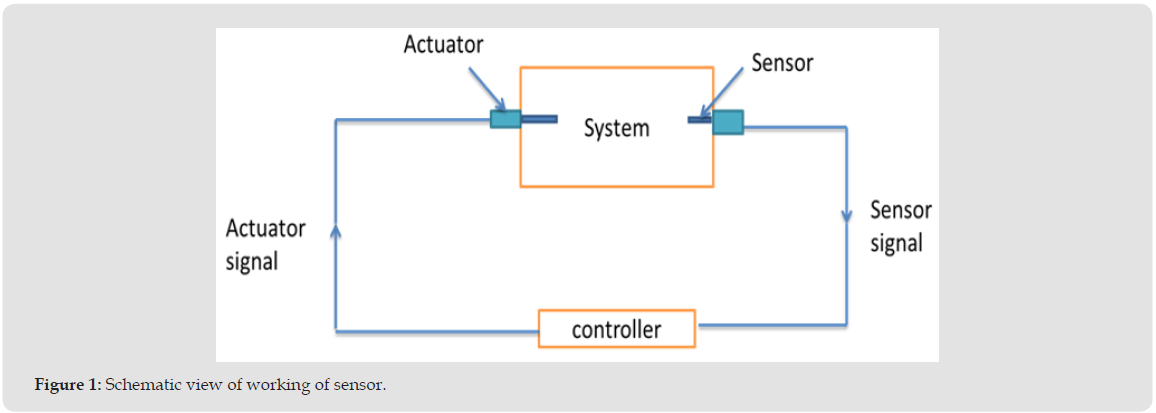
With the continued development of technology, the proliferation of sensors holds the promise of a future in which our surroundings will not only be responsive but also anticipatory, thereby enhancing our lives in ways that we have not yet been able to consider [7]. Sensors are generally referred to as the apparatuses that produce an electrical signal or an optical output signal in response to changes in the level of inputs. Doors as soon as our automobile is in close proximity to the door, among other things [8]. The use of sensors makes it possible to automate a variety of operations, which in turn streamlines processes and increases productivity. Take, for instance, a straightforward illustration: a lighting system that controlled by motion sensors and that automatically turns the lights on when someone enters a room and turning them off when they depart. This is an example of how sensors make automation possible, which in turn saves time and energy while simultaneously improving the user experience. Following that, we will investigate the fundamental ideas of sensors; including their various varieties and the wide range of uses they have [9,10]. Within the realm of aviation, where accurate navigation and control are of the utmost importance, the autopilot system is a prime example of the sophisticated integration of sensors. For continuously monitoring the position, altitude, speed, and orientation of the aircraft, these systems rely on a wide variety of sensors, such as gyroscopes, accelerometers, GPS receivers, and airspeed indicators.
Ailerons, elevators, and rudders are some of the control surfaces that can adjusted by the autopilot in order to maintain the intended course, altitude, and heading. This accomplished by processing the data that received from these sensors. Not only does this seamless synchronization of sensor data and automated control improve flight safety and efficiency, but it also reduces the workload of pilots, which enables them to concentrate on making strategic decisions and performing vital jobs [11,12]. In the field of nanotechnology, Nano sensors are extremely important because they are able to measure, detect, or sense the chemical and physical properties of materials at the nanoscale, which is typically less than 100 nanometers from the surface. It is possible to manipulate and improve the qualities of materials and applications thanks to their capabilities. These extremely small devices perform an analysis of the physical characteristics and then convert those parameters into signals that can read and examined. This opens up the possibility of exact control and comprehension of the processes that occur on the nanoscale [13,14] (Figure 1).
Figure 1
Different Types of Sensors In fact, the employment of sensors has become widespread across a variety of industries, which has contributed to improvements in both efficiency and safety. The monitoring of vital signs using sensors in the healthcare industry helps to improve patient care and facilitates the early detection of potential health problems. Sensors utilized by environmental monitoring systems in order to monitor the quality of the air and water, which contributes to the efforts of pollution control and conservation. The use of sensors in agricultural applications allows for the optimization of irrigation and crop management, which in turn increases yields while simultaneously conserving resources. In addition, sensors make it possible to monitor vehicles and regulate traffic in the transportation sector, which improves road safety and reduces congestion. Rather than merely automating processes, sensors have the potential profoundly transform the way in which we engage with and perceive the world around us, so contributing to the development of a future that is more sustainable and interconnected [11,12,15] (Figure 2).
Figure 2

Temperature Sensor: The monitoring of temperature is essential for a variety of reasons, which is why several kinds of sensors utilized. There are varieties of temperatures monitoring devices that are commonly used. Some examples include thermocouples, thermistors, semiconductor temperature sensors, and resistance temperature detectors (RTDs). Every variety provides its own set of benefits that tailored to particular purposes. Some examples include thermocouples, which perform exceptionally well in high-temperature conditions, and RTDs, which offer great accuracy and stability. Temperature sensors made of semiconductors known for their compact size and compatibility with integrated circuits. These sensors provide accurate temperature measurement in confined areas. A number of considerations, including temperature range, precision, reaction time, and environmental circumstances, should be taken into account while selecting a sensor [16-18].
IR Sensor: IR sensors, comprising small photo chips with a photocell, play a pivotal role in emitting and detecting infrared light. Primarily utilized in remote control technologies, they enable communication between devices over short distances. In the field of robotics, infrared (IR) sensors are an essential component in the creation of improved navigation and obstacle avoidance capabilities. These sensors enable robotic vehicles to identify impediments and modify their trajectory accordingly, ensuring safe and efficient travel in dynamic situations. They do this by sensing infrared radiation that released by objects that are in their path. There a few different types of sensors that uses to detect infrared photons. These include photodiodes, phototransistors, and infrared cameras. Each of these sensor types offers a distinct set of benefits that tailored to particular applications and environmental situations. By contributing to the enhancement of the functionality and dependability of robotic systems across a wide variety of contexts, infrared (IR) sensors utilized in a variety of applications, including industrial automation, autonomous vehicles, and consumer electronics [19,20].
Ultrasonic Sensor: Ultrasonic sensors, which often refer as transceivers provide a role that comparable to that of sonar or radar systems. They generate and interpret ultrasonic waves in order to estimate the characteristics of the target. There are two major techniques in the field of sensing technology active sensors and passive sensors. Each of these methodologies offers a different set of capabilities and applications. Active ultrasonic sensors are useful in applications such as robotics and parking assistance systems because they generate ultrasonic waves and analyze their reflections to determine the distance between two points or to identify obstructions. Passive ultrasonic sensors, on the other hand, are able to detect ultrasonic waves that produced by external sources, such as the vibrations of equipment or the sound emissions of cars. When it comes to monitoring and surveillance chores, this passive detection method is particularly useful since it allows the sensor to identify irregularities or activities that not authorized based on audio signatures [21,22]. Both active and passive ultrasonic sensors contribute to the enhancement of situational awareness and operational efficiency across a wide range of disciplines, including industrial automation and security systems. Ultrasonic sensors can either actively produce signals or silently listen for environmental indications [23].
Touch Sensor: Wide varieties of technologies that specifically designed to detect various kinds of touches are included in touch-activated switches, which are also widely referred to as touch sensors. In order to detect contact, capacitive touch sensors make use of variations in capacitance. These sensors provide a high level of sensitivity and reliability, making them an excellent choice for applications such as touchscreens and smartphones. The ability of resistance touch sensors to detect touch is dependent on fluctuations in resistance. These sensors find their application in harsh situations where durability is of the utmost importance, such as industrial control panels. Piezo touch switches are able to create electricity upon touch because they utilize the piezoelectric effect. This makes them excellent for low-power applications and places where hygiene is of the utmost importance, such as medical equipment. Each type of touch sensor offer distinct set of benefit and built to meet certain touch requirements. This makes it possible to develop individualized solutions that can apply across a wide range of industries and applications [24,25].
Sensors in Robotics: Sensors are an essential component in the robotics industry since they equip robots with the ability to detect and interact with their surroundings in an efficient manner. Robots are able to detect and interact with their surroundings in real time thanks to sensors, which operate as the eyes and ears of the robots. Robots would be unable to adjust to changing situations or unexpected impediments if they did not have sensors. They would be restricted to pre-programmed routines. Incorporating sensors into robots gives them the ability to navigate complicated surroundings, move things with accuracy, and protect their own safety by detecting and reacting to potential dangers. With its versatility and adaptability, this technology has the potential to open a wide range of applications across a variety of industries, including healthcare, exploration, and manufacturing. Therefore, sensors are essential components that are required in order to unleash the full potential of robots, which will significantly improve their effectiveness, adaptability, and usability in a variety of environments [26-28].
Sound Sensor: Sensors that detect sound, which are often microphones, are an essential component in the process of enabling robots to interact in a dynamic manner with their surroundings. These sensors enable robots to adapt their behavior or output in response to changes in sound levels and variations. This demonstrates a sort of rudimentary responsiveness that is comparable to the auditory feedback that humans experience. As an illustration, a small robot that is fitted with a sound sensor could navigate towards or away from sources of noise, so exhibiting a fundamental type of sound-based navigation or avoidance. By demonstrating how sound sensors can support autonomous interaction, this capability highlights how sound sensors can broaden the range of tasks that robots are capable of performing and enhance their capacity to adapt to a variety of settings on their own [29,30].
Light Sensor: Light sensors, which also perform the function of transducers, are an essential component in the process of turning light energy into electrical impulses. This enables a wide variety of application across a variety of industries. They enable devices to dynamically modify brightness levels, activate activities based on lighting circumstances, and maximize energy efficiency by regulating lighting systems in real-time. This accomplished by generating voltage changes that are proportionate to the intensity of the light [31]. In the realm of consumer electronics, light sensors play a role in the detection of ambient light and the adaptive display brightness, both of which contribute to the best possible viewing experiences. When it comes to automated machinery, they make precise control and monitoring easier, which guarantees accurate functioning in a variety of lighting conditions. In addition, light sensors utilized in photography to assist with exposure metering and autofocus, which ultimately results in improved image quality and the ability to capture moments with clarity and precision [32].
Writers and professionals can have different approaches to the classification of sensors, which can range from straightforward to intricate systems. A frequent and clear categorization, on the other hand, classifies sensors according to the principle of operation that they operate according to, making a distinction between active and passive sensors. The broad array of sensor technologies can better understood with the help of this fundamental classification, which allows for greater clarity and organizations [33-35] (Figure 3).
Figure 3

First Classification Based on Application
The sensors classified into the following categories in the first classification:
1. Active Sensor
2. Passive Sensor
Active Sensors: The operation of active sensors is dependent on either an external power source or an excitation signal in order to function properly. The ability actively generates signals or reactions, which enables them to identify and quantify a variety of events that occur in their surroundings, made possible by this power. Active sensors play an essential part in the provision of real-time data for the purposes of monitoring and control. These sensors can measure other characteristics as well, such as temperature, pressure, motion, and others. They are indispensable in a wide variety of applications across a wide range of industries, including healthcare, environmental monitoring, and automotive and aerospace industries, due to their capacity actively interact with the environment, which guarantees precise and responsive sensing capabilities [36,37].
Passive Sensors: There is a significant benefit associated with passive sensors since they are able to generate output responses without relying on power signals from the outside. They are able to detect and quantify environmental changes or stimuli by immediately reacting to physical or electromagnetic phenomena such as light, heat, or sound. They operate in a manner that is considered be passive. Because of this inherent responsiveness, passive sensors are able to function independently, making them an excellent choice for applications in which simplicity or energy, efficiency is of the first importance. In a wide variety of applications, passive sensors offer dependable and effective sensing solutions. These sensors can found in motion detectors in security systems as well as in infrared sensors included in home appliances [38,39].
Classification on the Base on Detection
The other categorization method based on the sensor’s method of detection. Some of the detecting techniques include [40].
1. Electric Sensor
2. Biological Sensor
3. Chemical Sensor
Electric Sensor: An electrical sensor, sometimes referred to as an electronic sensor, serves as a crucial component in various systems by detecting specific physical properties like heat, light, or sound. Upon detecting these stimuli, the sensor converts them into electrical signals, which then processed, measured, and utilized by electrical or electronic systems. This transformation enables the system to respond and adapt to changes in its environment, enhancing functionality and efficiency across a wide range of applications [41,42].
Biological Sensor: A device that designed to detect biological or chemical processes by generating signals that are proportional to the concentration of an analysis that is involved in the reaction referred to as a biosensor. Because of this feature, biosensors are able to accurately detect and monitor a wide range of biological and chemical parameters in real time [43].
Chemical Sensor: In a wide variety of industries and applications, chemical sensors are indispensable and indispensable measuring equipment. The process by which they perform their function is to convert particular chemical or physical features of analysts into signals that can quantified. The information that these signals, which are often electrical or optical in nature, convey about the presence or concentration of the analytics in the environment is extremely significant. Because they enable accurate detection and measurement of analytic, chemical sensors are an extremely important component in a wide variety of sectors [44]. These sensors improve safety, efficiency, and quality standards in a variety of contexts, including the monitoring of environmental pollutants, the control of industrial operations, and the guarantee ability of food safety. When it comes to medical diagnostics, chemical sensors make early disease identification and monitoring possible, which ultimately leads to better outcomes for patient care. Because of their adaptability and precision, they are vital instruments for ensuring the protection of public health and improving the efficiency of production procedures. These sensors facilitate decision-making and enable proactive interventions to limit risks and assure compliance with regulatory standards. They do this by monitoring chemical compositions in real time and delivering data on those compositions [45,46].
Radioactive Sensor: A Geiger-Mueller (GM) detector is a typical portable tool that used in laboratory settings for conducting large surveys of radioactive materials. In addition to gamma and beta radiation, it is also able to detect alpha radiation. Additionally, radiation detectors, such as GM detectors, utilized to identify high-energy particles that are the consequence of nuclear decay, cosmic radiation, or particle accelerator operations. This assists in the research, safety, and regulatory compliance efforts that undertaken in a variety of disciplines [47,48].
Classification on the Based Analog and Digital Sensor
The final classification of the sensor is
1. Analog Sensor
2. Digital Sensors
Analog Sensor: Because they deliver a continuous output signal that is proportional to the quantity that measured, analog sensors are essential components in a wide variety of measuring systems. In most cases, this output signal is in the form of voltage; but, under certain circumstances, it may be resistance or another measurable value. In a wide variety of applications, including temperature and pressure sensing, environmental monitoring, and industrial automation, this analog output makes it possible to perform exact and real-time monitoring of the target parameter. This, in turn, makes it easier to acquire and analyze accurate data [49,50].
Digital Sensor: Different from analog sensors, digital sensors process and send data in a discrete or digital format. This represents a significant difference in their operation. Digital sensors, in contrast to analog sensors, which produce continuous output signals, convert physical measurements into digital data, which is often in the form of binary code. By making the processing, storage, and transmission of information more straightforward, this digital representation makes it possible to collect and analyze data in a variety of applications in a manner that is both more effective and more trustworthy [51,52].
Integrating a transducer with a biological component such as an enzyme, antibody, or nucleic acid meant by the term “biosensor,” this is a contraction of the term “biological sensor?” The transducer is able to convert the biological reaction that occurs because of the contact between the bio element and the target analyte into an electrical signal because of this amalgamation. Biosensors known by a wide variety of names, including immunological sensors, outdoes, resonant mirrors, chemical canaries, biochips, glucometers, and bio computers. Because of their versatility, biosensor used a wide variety of application. These classifications change based on the particular application, which exemplifies the wide range of applications for biosensors in a variety of industries, including healthcare, environmental monitoring, food safety, and a number of other areas [53,54]. The term “biosensor” refers to a chemical sensing device that combines a transducer with a recognition element that generated from biological sources. Because of this linkage, it is possible to do quantitative measurements of intricate metabolic factors. Biosensors provide useful insights into a variety of biological processes by detecting and converting biological interactions into measurable signals. This enables biosensors to facilitate applications in a variety of fields, including medical diagnostics, environmental monitoring, food safety, and biotechnology, amongst others [55,56].
Historical Back Ground
In 1950, an American scientist named L.L. Clark developed the first biosensor, which referred to as the Clark electrode or oxygen electrode. This particular biosensor primarily utilized for determining the levels of oxygen in the blood. The placement of a gel that contained glucose oxidase enzyme on the oxygen electrode in order to detect blood sugar levels was one of the later developments that resulted from this accomplishment. In addition, enzymes such as urease utilized in order to assess the amount of urea present in physiological fluids by utilizing electrodes that specifically developed for NH4+ ions [57]. There have been three generations of biosensors developed over the course of time. In the first generation, the reaction of the product spreads to the sensor, which then causes an electrical response to triggered. Mediators utilized in the second generation of sensors in order to improve the quality of the response that occurs between the sensor and the analyte. In the third generation, there is no participation of a mediator, and the reaction directly produced by the response. This particular generation exemplifies the ongoing innovation and refinement that occurs in the field of biosensor technology [55,58].
Working Principle of Biosensor
In conventional methods, particular enzymes or carefully chosen biological materials frequently rendered inactive, therefore bringing them into close proximity with the transducer. A biological material that has been deactivated interacts with analyze, which ultimately results in a response that may be observed. There are certain circumstances in which analyze can be transformed into a component that can be coupled to sources such as heat, gas discharge, electron ions, or hydrogen ions. These interactions subsequently converted into electrical impulses by the transducer, which then affects the device that previously attached. These signals are able to be modified and quantified, which enables exact measurement and analysis of the analyte. As a result, they facilitate a wide range of applications, including those in the fields of healthcare, environmental monitoring, and industrial processes [56,59,60].
Working of Biosensors: Typically, the electrical signal that generated by the transducer is not very strong, and it is possible that it will be obscured by a high baseline. In order to improve the clarity of the signal, signal processing frequently entails removing a baseline signal that taken from a transducer that did not have any biocatalyst coating on. Signal refinement facilitated by the comparatively slow response of biosensor reactions, which makes the filtering of electrical noise easier to do. In spite of the fact that the direct output is still in its analog form at this stage, it converted into digital form before sent to the microprocessor phase [61]. In this stage, it subjected to additional processing, which include amplification, conversion to units, and storing in a specific data repository? The process of digitization and processing ensures that the data are correct and can be interpreted, which makes it easier to analyze, interpret, and use biosensor results in a variety of applications [62,63].
A biological component serves as below,
1. The sensor in every biosensor
2. While electrical component, detect and send the signal (Figure 4).
Figure 4
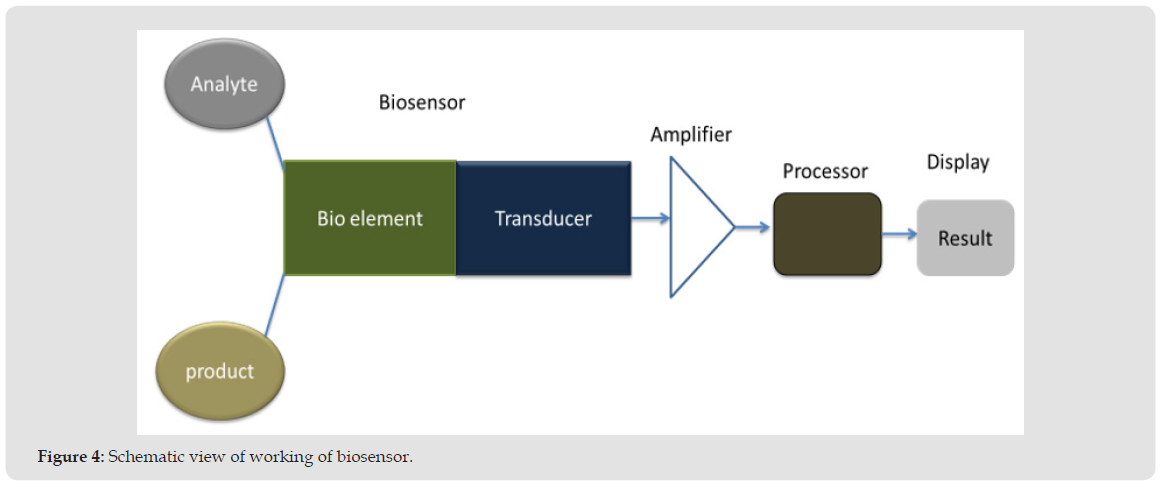
Biosensor Elements: A biosensor’s bioelement can be made of a wide range of materials. These, for instance, include:
1. Nucleic acids
2. Proteins include enzymes and antibodies. Antibody-based biosensors also called immunosensors.
3. Plant proteins or lections
4. Complex materials like tissue slices, microorganisms and organelles [64].
It is vital to have a fundamental example, such as the glucometer, which is particularly common in medical contexts, before digging into the vast array of biosensors and the applications that they might use. The prevalence of diabetes, a disorder that has an effect on blood glucose levels, highlights the significance of monitoring blood glucose levels. When it comes to this particular aspect, glucose meters are extremely useful biosensors since they make it easier for diabetics to perform regular monitoring. A test strip is typically included in a glucometer. This strip, when used in conjunction with a blood sample, is responsible for determining the amount of glucose present in the blood. When this strip comes into touch with the blood sample, it causes a chemical reaction to take place, which ultimately results in an electrical current that is proportionate to the amount of glucose present [65,66]. This strip made up of a reference-type electrode and a trigger. A Cortex-M3 or Cortex-M4 CPU typically utilized in the glucometer in order to govern the flow of current through a number of different components. These components include a filter, amplifier, voltage converter, and display unit. Together, these components perform the task of processing the electrical impulses that produced by the chemical reaction that takes place on the test strip, which finally results in the glucose level displayed on the screen of the device. With this simplified example, the vital role that biosensors, such as glucometers, play in the management and monitoring of medical problems brought to light, demonstrating the significance of these devices in the field of healthcare and the well-being of patients [67,68].
Types of Biosensors
A classification approach utilized for the goal of classifying biosensors. This classification method takes into consideration both the sensing device and the biological material that the biosensors make use. There a number of different kinds of biosensors, that can classify into these categories [69]. Biosensors that based on enzymes, biosensors that based on antibodies, biosensors that based on nucleic acids and biosensors that based on complete cells are some examples of these. All of these biosensors serve different purposes and have different applications, which set them apart from one another [70] (Figure 5).
Figure 5

Electrochemical Biosensor: Enzymatic catalytic activities, which typically involve redox enzymes, are necessary for the operation of the electrochemical biosensor. Both of these activities are essential. Either these enzymes produce electrons or they consumed by them. On a substrate, these biosensors typically consist of three electrodes: a working electrode, a reference electrode, and a counter electrode. The working electrode is the electrode that being used to measure the current. During the process of electrochemical biosensors, the target analysis subjected to a reaction at the surface of the active electrode. This reaction facilitates the movement of electrons across a potential double layer, which is a significant advantage. The creation of a detectable current at a specific potential is the end consequence of this process. This current offers quantitative information regarding the concentration of analyzes [71]. The great level of sensitivity and selectivity that this electrochemical approach possesses makes it incredibly valuable in a wide range of sectors, including medical diagnostics, environmental monitoring, and food safety, amongst others. In order to assist in the early diagnosis of diseases, the management of pollution, and the evaluation of the quality and safety of food products, electrochemical biosensors are able to provide rapid and accurate detection of analytic. This enables them to be of assistance in these areas. Because of this, they make a significant contribution to the maintenance of public health and the fulfillment of regulatory requirements [72] (Figure 6).
Figure 6

Physical Biosensor: The complex mechanisms that underlie human perception serve as a source of inspiration for the development of physical biosensors, which are indeed key tools in the classification of sensors. These sensors, which are analogous to our senses of hearing, sight, and touch, react to the physical stimuli that come from the outside world. In the same way that our ears notice sound waves, our eyes notice light, and our skin picks up on pressure, physical biosensors pick up on changes in the environment around them by utilizing qualities such as the intensity of the light, the pressure, the temperature, and other similar characteristics. These biosensors, which are able to imitate the sensory processes that are occurring around us, offer vital insights into the world that surrounds us. This enables them to facilitate a wide variety of applications in disciplines ranging from healthcare to environmental monitoring and beyond [73,74]. The physical biosensors classified into two types namely (Figure 7).
Figure 7

Optical Biosensor: Fiber optics and optoelectronic transducers utilized in the construction of optical biosensors, which are able to utilize the principles of optical measurement. One of the most significant developments in this field is the combination of optical and electrode components, which resulted in the creation of the name “optrode.” In order to function properly, these sensors are dependent on biological components like enzymes and antibodies as their fundamental sensing elements. The capacity of optical biosensors to provide safe, non-electrical sensing in areas that may be inaccessible or harmful for traditional electrical sensors is what sets them apart from other types of biosensors [75]. The generation of comparison signals can accomplished with a light source that is comparable to the one that utilized for sample sensing, which means that they frequently eliminate the requirement for reference sensors. Their design and deployment simplified because of this feature, which additionally ensures that they are accurate and reliable. In the realm of modern sensing technologies, optical biosensors play a crucial role, giving versatile solutions for a wide range of sensing requirements. Their applications include medical diagnostics, environmental monitoring, food safety, and other areas [76].
Enzyme Biosensor: When referring to this particular piece of analytical equipment, the term “enzymatic biosensor” is frequently used. The combination of an enzyme and a transducer enables it to provide a signal that is directly proportional to the concentration of the analyses that measured. This information can then use to make accurate measurements. This signal, which is typically in the form of an electrical or optical output, can then be subjected to additional analysis, stored, and amplified as necessary for subsequent research or application in a variety of fields, including healthcare, environmental monitoring, and food safety, amongst others. Examples of these fields include [61,77].
DNA Biosensor: Nucleic acid identification techniques can serve as the foundation for the development of DNA biosensors, which can then use for the investigation of viral and genetic disorders in a way that is simplified, expedited, and inexpensive. Furthermore, the accurate identification of DNA sequences is essential in a variety of sectors, including environmental, clinical, and food studies, among others. The technologies of SAM and SELEX applied in order to provide enhanced identification methods for DNA Biosensors. This is doing in order to improve detection methods. In contrast to enzymes or antibodies, nucleic acid layer recognition can manufacture and updated on a voluntary basis for a wide range of applications [78,79].
When it comes to the management of diabetes, the efficacy of treatment is dependent on the precise monitoring of glucose levels, which made possible by glucose biosensor monitoring. The delivery of insulin in a manner that is in accordance with the glucose levels in the body facilitated by these sensors, which play a crucial function. It is of the utmost importance that these biosensors have the capacity precisely and promptly communicate glucose levels, especially considering the fast changes that are part of diabetes. Not only can such exact readings help in the rapid delivery of insulin, but they also hold promise for the advancement of medical breakthroughs connected to the control of hypoglycemia and hyperglycemia. Because of their dependability and sensitivity, amperometric enzyme electrodes are a popular option for continually monitoring glucose levels. This is because of their capacity to measure it. Biofouling, calibration needs, selectivity issues, inflammatory responses, stability concerns, and the need for downsizing are some of the challenges that continue to exist [2,80]. In order to address these issues, it is necessary to come up with novel solutions, particularly when considering closed-loop glycemic control systems. It is essential to conduct thorough research into the complexities of glucose monitoring protocols order successfully manage diabetes, despite the challenges that may encountered. The influence on treatment efficacy and disease management can considerably improve through the refinement of approaches to glycemic control, which has the potential to contribute to an improvement in the quality of life for those who are currently living with diabetes. Because of the unique interactions that they have with glucose, hexokinase, glucose oxidase (GOx), and glucose-1-dehydrogenase (GDH) frequently utilized in glucose assays [81].
Through the process of phosphorylating glucose, hexokinase sets in motion a chain of events that ultimately results in the generation of a quantifiable signal. GOx is responsible for the oxidation of glucose, whereas GDH is responsible for the facilitation of its dehydrogenation. Both of these processes result in quantifiable outputs that can use for glucose detection. Due to the excellent precision and accuracy it possesses, the hexokinase method is frequently the technique of choice for spectrophotometric glucose assays in clinical laboratories. Hexokinase is responsible for the conversion of glucose to glucose- 6-phosphate in this enzymatic test, which results in the production of a signal that is directly proportional to the concentration of glucose. In glucose biosensors for self-monitoring of blood glucose (SMBG), the two enzyme families known as glucose oxidase (GOx) and glucose dehydrogenase (GDH) serve as the fundamental building blocks [1,82]. It is important to note that their redox potentials, cofactor requirements, turnover rates, and glucose selectivity are all distinct from one another, which in turn affects the performance and specificity of the biosensors that the power. Because of its great selectivity for glucose, glucose oxidase (GOx), which is the enzyme that most commonly used in biosensors, has a number of advantageous characteristics? In comparison to a great number of other enzymes, GOx is easily accessible, economical, and demonstrates resistance to a wide range of pH, ionic strength, and temperature fluctuations among its properties.
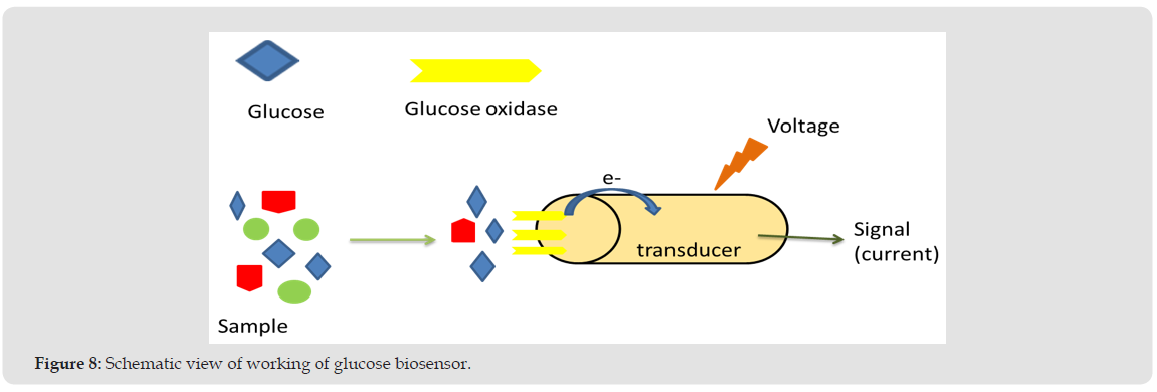
GOx-based biosensors are particularly accessible and user-friendly for lay people who are looking for comfortable self-monitoring of glucose levels because of these characteristics, which simplify production requirements and storage conditions. Utilizing molecular oxygen, immobilized glucose oxidase (GOx) is responsible for catalyzing the oxidation of D-glucose, which results in the production of gluconic acid and hydrogen peroxide as subsequent byproducts [81]. Because the hydrogen peroxide that produces because of this enzymatic process acts as a quantitative signal of glucose concentration, the cornerstone of the main hypothesis that underpins glucose biosensors. Flavin adenine dinucleotide (FAD) is a redox cofactor that GOx needs in order to function as a catalyst. As the first electron acceptor, FAD functions and is converted to FADH2 [83].
Hydrogen peroxides produced because of the cofactor’s reaction with oxygen.
Platinum (Pt) anodes frequently used in catalytic hydrogen peroxide oxidation because of their effectiveness in counting electron transfers. This is because platinum is a metallic element. The platinum electrode makes it easier to quantify the flow of electrons during the enzymatic reaction that catalyzed by glucose oxidase. This reaction results in the production of hydrogen peroxide. Because of the fact that the flow of electrons is inversely proportional to the concentration of glucose molecules in the blood, it is possible to establish glucose levels in a straightforward manner [84,85].
Measurement of oxygen consumption, quantification of hydrogen peroxide produced by the enzyme reaction, and the utilization of a diffusible or immobilized mediator to transfer electrons from glucose oxidase (GOx) to the electrode are the three primary approaches that utilized in electrochemical sensing of glucose. Within the past several years, there has a significant increase in the production of amperometric biosensors that base on glucose dehydrogenase (GDH).
The diversity of GDH-based sensor platforms expanded because of this trend, which includes versions that make use of GDH-nicotinamide- adenine dinucleotide (NAD) and GDH-pyrroquinolinequinone (PQQ). Dissolved oxygen does not interfere with the enzymatic activity of glucose dehydrogenase (GDH), in contrast to some sensors that based on glucose oxidase (GOx). In sensors that based on GDH, pyrroquinolinequinone (PQQ) serves as a cofactor that is necessary for the operation of the quinoprotein GDH recognition element. This ensures that glucose detected accurately [86,87] (Figure 8).
Figure 8
Types of Glucose Based Biosensors
Glucose biosensors classified into two types:
1. Enzymatic glucose biosensor
2. Non-enzymatic glucose biosensor
Enzymatic glucose biosensor: The utilization of immobilized glucose oxidase (GOx) enzyme provides glucose biosensors with outstanding specificity and sensitivity, which makes them a popular choice in a variety of applications. Biosensors are able selectively detect glucose with great accuracy thanks to the immobilization of GOx. This feature enables biosensors to provide reliable measurements even in complicated biological matrices. This improved performance has resulted in the widespread application of enzymatic glucose biosensors in a variety of industries, including environmental monitoring, the food industry, and healthcare [88,89]. Non-enzymatic glucose biosensors: This provides an alternative to the methods described above. Both enzymatic and non-enzymatic glucose sensors put through their paces in a comparative research that utilized nanostructured Au-Ni alloy as the substrate electrode throughout the investigation. The results showed that the enzymatic sensor had superior analytical performance, with a detection limit that was 20.1 times lower and a sensitivity that was 1.4 times higher than its non-enzymatic equivalent. Not only that, but the enzymatic sensor exhibited remarkable selectivity, stability, and a wide linear range, all of which can be attributable to the stable immobilization of the enzyme [88,90] (Figure 9).
Figure 9

This is doing in order to determine how glucose could detect. Because of their superior conductivity and durability, noble metals like as platinum (Pt) frequently used as electrode materials in the past. A prospective route for glucose sensing in a variety of applications, ranging from biomedical diagnostics to food quality control, made possible by the utilization of platinum electrodes, which allowed for the acquisition of glucose readings in a quick and effective manner without the requirement of enzymatic processes and Au [91]. When it comes to improving sensing performance, researchers also investigated composite materials. In a review that just recently published, Park, et al. and Toghill, et al. highlighted the importance of electrochemical nonenzymatic glucose sensing. It is likely that their complete review discusses advancements, obstacles, and new trends in this field. As a result, it offers academics and practitioners who are working to build revolutionary glucose sensing devices useful information [92,93]:
1. A UV-visible spectrophotometer, often known as a UV-vis spectrophotometer, is a piece of analytical equipment that determines the amount of ultraviolet and visible light that meets a sample. To perform its function, the equipment involves directing a beam of light through a sample and determining the amount of light that is absorbed at each wavelength. There a direct correlation between the concentration of the absorbing component in the cornea and the amount of light that absorbed [94].
2. There a common occurrence in which the activity of electrodes constructed of noble metals hindered by oxidation intermediates of glucose and chloride ions that have irreversibly adsorbed via the electrodes. It is feasible that the development of a perm selective barrier against anionic chloride might successfully decrease this issue in order to improve the performance of noble metal electrodes in glucose sensing applications. This would be a step in the right direction [2,95].
3. Nonenzymatic glucose sensors often have a low selectivity when it comes to the detection of glucose at the level of glucose. This is because, in addition to sensing glucose, they are also able to detect a variety of different sugars and chloride ions. This is the reason why this results in the observed phenomenon. Because of this lack of specificity, glucose-sensing devices are liable to giving inaccurate data, which in turn compromises the reliability of these sensors. It is possible for glucose sensing devices to generate data that is not necessarily correct. In order to be successful in overcoming this obstacle, it is essential to come up with novel approaches that can enhance the selectivity of glucose sensors that do not rely on enzymes. The acquisition of measurements that are accurate and dependable will made possible because of this [96]. In alkaline conditions, the presence of the hydroxide ion (OH-) on the electrode surface reduces the influence of chloride ions, which in turn essentially eliminates the interference that chloride ions cause in the process of nonenzymatic glucose sensing. This is because chloride ions are less likely to found in naturally occurring environments [97]. The reason for this is that the concentration of chloride ions on the surface of the electrode is considerably lower than it would be otherwise. Because of an occurrence that has seen, the selectivity of the sensor for glucose detection has improved. This consequence of the fact that sensor strengthened. In the context of Burke’s “incipient hydrous oxide adatom mediator” (IHOAM) model, it is stated that the formation of a hydroxide premonolayer is an essential stage in the process of electrocatalytic conversion of glucose. This is because the formation of a hydroxide premonolayer precedes the formation of a hydroxide phase. The process that is responsible for this conversion shed light on by this model, which sheds light on the mechanics involved in the process. Because of the fact that glucose is one of the many organic substances that are capable of undergoing electro-oxidation it is one of the aspects that contribute to the complexity of electrochemical sensing systems. Electro-oxidation is a process that can occur in a wide variety of organic molecules, and glucose is one of them [98].
The glucose oxidase component still a typical component found vast that are currently available for use in commercial settings. This is because of the fact that it is economical, possesses an exceptional selectivity, and possesses a tremendous level of sensitivity. There have been tremendous breakthroughs achieved in the development [99]. These biosensors enable accurate monitoring of blood glucose levels. It has been possible to accomplish these breakthroughs. Clark and Lyons invented the glucose enzyme electrode by entrapping a thin layer of glucose oxidase (GOx) over an oxygen electrode through a semipermeable dialysis membrane. They created the first glucose enzyme electrode. They extracted the electrode from the glucose enzyme because of this. The structure makes it easier to catalyze glucose oxidation in oxygen, allowing oxygen use. After that, a platinum (Pt) cathode monitored oxygen consumption, which was used to measure hyperglycemia. Technological advancements have accelerated biosensor manufacture [100].
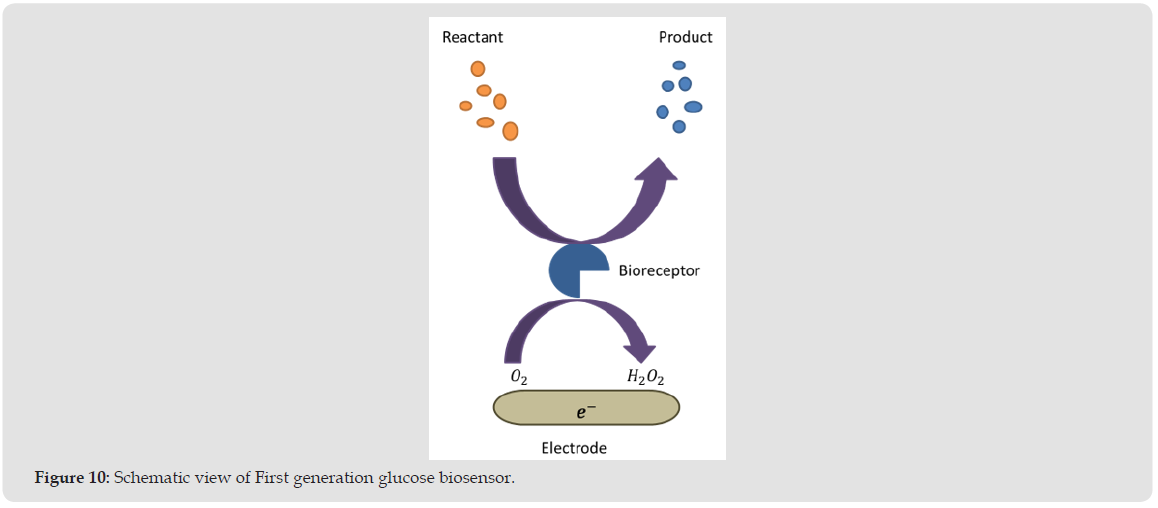
Amperometric glucose biosensors can divide into three generations, each of which determined by the characteristics of the mediator (Medox) that utilized during the process. O2 is the physiological mediator that utilized in the first generation in order to perform the process of regenerating glucose oxidase (GOx) (FAD). In order to achieve this level of performance, sensors of the second generation make use of a synthetic electron acceptor, also known as an artificial electron acceptor. The existence of an electrode that potentiostatated that a defining characteristic of biosensors that belong to the third generation. In order to regenerate GOx (FAD), this electrode performs the function of the Medox, which ultimately results in increased sensitivity and stability [92,101].
First-Generation Glucose Biosensors
This accomplished by oxygen or the formation of hydrogen peroxide during the enzymatic reaction for glucose. In light of the fact that oxygen acts as GOx’s natural electron acceptor, there is an absolute necessity for quick electron transfer. Keeping track of the H2O2 that produced by enzymes can accomplished by the use of both anodic oxidation and catholic reduction of H2O2. Anodic oxidation of H2O2 is particularly useful for allowing O2 regeneration and resupply, which in turn helps to improve enzymatic cycle [102]. In order to monitor the consumption of oxygen for the purpose of glucose quantification, electrochemical reduction of oxygen is frequently applied. This, in turn, enables reliable glucose reading. Because the reactions of glucose sensors of the first generation tightly connected to the concentration of oxygen in the solution, the oxygen tension has a considerable impact on these responses. The phrase “oxygen deficit” originates from the fact that the average concentration of oxygen in the air is approximately one order of magnitude lower than the quantities of glucose that found in the body. Through the development of a two-dimensional cylindrical electrode that featured a mass transport-limiting membrane, the group led by Gough was able satisfactorily address this issue [103]. The objective of this innovation was to improve sensor performance while simultaneously reducing the “oxygen deficit” and increasing the ratio of glucose to oxygen permeability for glucose. Researchers have explored techniques to increase the availability of oxygen in order to alleviate the oxygen limitation that is present in glucose sensors of the first generation. This comprises the production of oxygen-rich carbon enzyme electrode as well as the fabrication of diffusion bio cathodes, which make direct use of oxygen from the surrounding air.
The goal of these approaches is to increase the availability of oxygen, which will ultimately lead to an improvement in the efficiency and precision of glucose monitoring devices. In order to minimize interferences, primarily two techniques are effective [104,105]. It is a promising approach to limit interference from other electroactive species by immobilizing the enzyme with a perm selective layer. This technique also ensures that H2O2 or O2 maintains a suitably high electro activity at the electrode, which in turn enhances the sensor’s selectivity and sensitivity [106]. Incorporating catalysts that immobilized on the enzyme electrode has the potential to reduce the enzyme’s sensitivity to the detection of H2O2. In the process of catalyzing the reduction of hydrogen peroxide, Prussian blue (PB), which frequently referred to as “artificial peroxidase,” is favored due to its excellent selectivity and enzymatic activity. PB is widely used in highly selective glucose biosensing because it performs successfully at low potentials. This allows for precise detection of glucose while simultaneously minimizing interference from other electroactive species, which ultimately results in an improvement in the sensor’s dependability and accuracy [92].
Using a gold (Au) electrode that had modified with Prussian blue (PB) and immobilized glucose oxidase (GOx), we were able to perform sensitive glucose measurements in both the H2O2 oxidation and H2O2 reduction modes. In order efficiently monitor glucose levels, this dual-mode detection system makes use of the catalytic capabilities of PB. It provides versatility and resilience for precise glucose sensing in a variety of applications. In the search for effective redox mediators for low-potential glucose detection, electro-polymerized poly (toluidine blue O) film has emerged as a viable candidate. This is especially true when paired with carbon nanotube-modified glassy carbon electrodes on the other hand. Furthermore, a number of nanomaterials, platinum nanoparticles exhibit remarkable catalytic properties. These nanomaterials have effectively improved the selectivity of glucose oxidase (GOx)-based amperometric biosensors by reducing the determination potential of hydrogen peroxide [107] (Figure 10).
Figure 10
Second-Generation Glucose Biosensor
When it comes to aerometric biosensors of the first generation, the “oxygen deficit” offers a considerable challenge. This is because the amounts of glucose in the blood are approximately ten times higher than the levels of oxygen in the blood. Therefore, in order to ensure that glucose measurements are precise and dependable, it is vital to come up with strategies to fix this disparity. In the event that it is necessary to increase the rate at which electrons transferred from biosensors, one strategy that has demonstrated to be very effective is to eliminate oxygen from the equation and replace it with an artificial mediator that is distinct from oxygen. This particular approach is one of the approaches that have demonstrated to be successful. By utilizing this technology, which enables the circumvention of restrictions that linked with the availability of oxygen, the sensor’s performance and accuracy are both improved. This technology also allows for the circumvention of limitations [108]. One can produce an isolated mediate using a variety of different approaches, such as directly attaching it to the enzyme, encapsulating it inside its own films, or employing a redox-conducting polymer for electron transfer. All of these approaches are viable options. You may also consider the possibility that the artificial mediator is a solution-state mediator that is capable of diffusing into and out of the active site of the enzyme.
In addition to enhancing the effective use of biosensors, this could provide innovation in structure, which would result in results that remain more precise and accurate. Synthetic electron acceptors utilized in the second generation of biosensors in order to facilitate the movement of electrons from the redox center of the enzyme to the electrode surface. This is doing in order to improve the efficiency of the biosensors [109]. This is action take in order to make the passage of electrons easier to accomplish. Through the utilization of these synthetic mediators, these biosensors are able to circumvent the requirement of relying on physiological mediators such as oxygen, which would otherwise be required. Because of this, they provide enhanced control over the sensing process, in addition to enhanced sensitivity and selectivity features. This is a consequence of the fact that they give enhanced control. Many different kinds of molecules are included in the group of molecules that classified as effective mediators for glucose oxidase (GOx). These molecules include a wide variety of compounds. Derivatives of ferrocene, conducting organic salts, ferricyanide, quinone compounds, transition-metal complexes, and compounds containing phenothiazine and phenoxazine are some examples of the molecules that are included in this group. Since its discovery, tetrathiafulvalene-tetracyanoquinodimethane, which more generally referred to as TTF-TCNQ, has demonstrated that it is an unusually efficient mediator for GOx-based biosensors [110].
The current situation is one in which this is a big development that has taken place. It the presence of these mediators that plays a significant part in the process of promoting electron transport between the enzyme and the electrode. This, in turn, ultimately results in an enhancement in the sensitivity and performance of glucose biosensing devices. Despite its chemical characteristics, ferricyanide not thought to be a very effective electron mediator for glucose oxidase- based biosensors. This is an interesting distinction. Other substances that have shown to be more successful in promoting electron transport in these biosensing devices are quinone and ferrocene derivatives. Due to research showing, that ferricyanide is ineffective as a glucose oxidase (GOx) mediator, scientists are now looking for other substances to improve the functionality of biosensors. Third-generation amperometric glucose biosensors have three unique stages in their catalytic mechanism [111].
1. In the course of the enzymatic activity that GOx is responsible for catalyzing, the two Flavin adenine dinucleotide (FAD) reaction centers of GOx are the recipients of the protons and electrons that provided by glucose. Following this, FAD is later converted into FADH2 during the process.
2. Electrons transferred from the centers of Flavin Adenine Dinucleotide (FADH2) to artificial mediators following the reduction of Flavin Adenine Dinucleotide (FAD) to Flavin Adenine Dinucleotide (FADH2). These mediators go through this metamorphosis, which involves them transitioning from their oxidized (Medox) state to their reduced one. Within the framework of the second-generation biosensing approach, electrons transmitted from the electrode to the artificial mediators [112]. Measuring that produced by the mediator’s oxidation of reduced form is the method that utilized in the process of determining glucose levels. The amount of glucose that is present in the sample is directly proportional to the amount of current that produced because of this oxidation reaction, which takes place at the surface of the electrode. The accurate quantification of glucose is now feasible because of this. The efficiency of the second-generation biosensing method is dependent on the seamless [113]. This interaction efficient transfer of electrons between the redox-active centers of glucose oxidase (GOx) and the electrode. Facilitators of diffusion are able to meet these criteria effectively. Implanted probes, on the other hand, are unable to take advantage of soluble mediating species because they are unable to access the environment around them. As a result, other mechanisms for mediator-enzyme interaction are required in situations like these. There are varieties of different approaches that have suggested in order achieve the objective of tailoring mediators within enzyme films that are supported by electrodes.
The technique of chemically linking artificial mediators to the polymer backbone that utilized in the production of the biosensor is one of the most common approaches that utilized. A one of the most common approached that utilizes. This action is taking in order to maintain the mediators’ equilibrium [114]. The mediators that housed within the film made more stable and durable because of this chemical bonding, which is essential for applications that need precise biosensing. This action taken in order to facilitate a flow of electrons between the enzyme and the electrode surface that is both more comprehensive and more effective. Scientists have attempted covalently link ferrocene derivatives to enzyme molecules; however, they have discovered that this process is difficult to perform and produces outcomes that are less desirable than they would have liked. On the other hand, Sekretaryova and colleagues got to the conclusion that in order for enzymes to be successful, they needed to expose to water-organic solutions that contained a considerable amount of organic solvent. In order to complete the immobilization of the enzyme and the mediator, this method utilized, which resulted in the elimination of the necessity for the creation of covalent bonds. Contrary to the attempts that made to achieve covalent attachment, Sekretaryova and her colleagues were able successfully immobilize enzymes and mediators [115].
In order to achieve this goal, the enzymes and mediators subjected to water-organic solutions that contained a significant amount of organic solvent. The mediator prevented from building covalent bonds through the utilization of this strategy, which also made it simpler for them to become immobilize. In the context of biosensing applications, such a technology presents a promising alternative because it is an option that has the ability successfully integrates enzymes and mediators [116] (Figure 11).
Figure 11

Third-Generation Glucose Biosensors
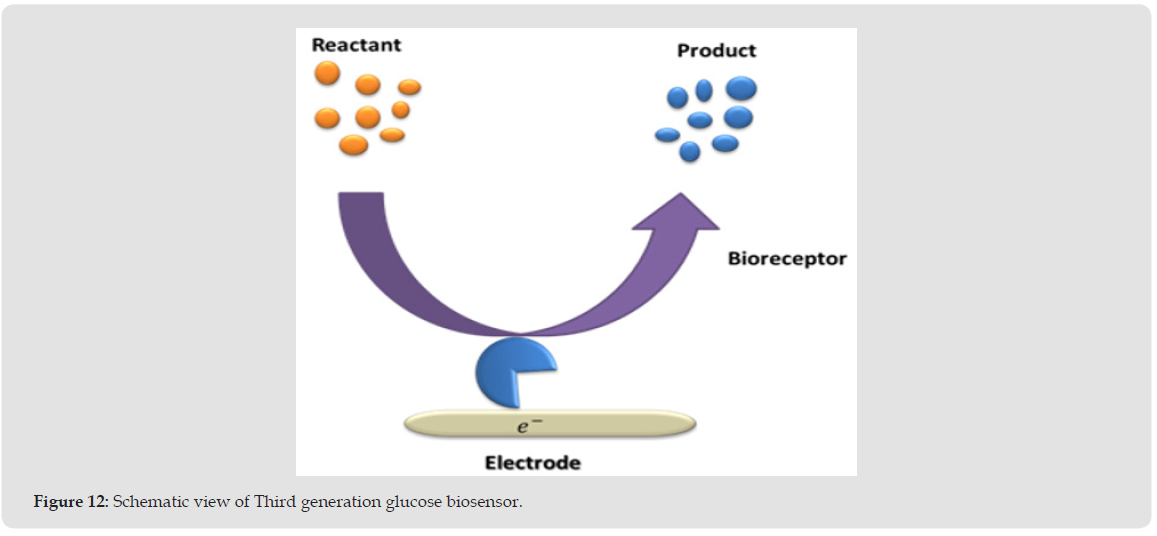
They operate in the perfect biosensing paradigm, which does away with the requirement for intermediates, the amperometric glucose biosensors of the third generation have the potential to be revolutionary. There have been varieties of various ways that have examined in attempt to achieve the goal of direct electrochemistry of enzymes. Methods such as reconstituting apo-proteins on cofactor- modified electrodes or apo-enzymes on cofactor-functionalized gold nanoparticles are examples of these types of techniques [102]. For aligning redox enzymes on electrodes, these strategies utilized. It is possible to overcome the large electron-tunneling distance through the usage of these technologies, which, in turn, leads to an improvement in the efficiency and sensitivity of glucose detection in biosensors systems furthermore, it has been suggested that some nanomaterial’s have the potential to directly synthesize glucose oxidase (GOx) through the process of electrochemistry. Through the utilization of this novel technique, the possibility for the development of innovative biosensing platforms that have improved performance and efficiency in glucose detection is expanding.
The researchers Alwarappan et al. conducted a number of studies that utilized graphene-GOx for the goal of detecting glucose. Graphene has shown to have the ability to facilitate the direct electrochemistry of glucose oxidase (GOx) and to increase the biosensing of glucose, as evidenced by these experiments [117]. The findings of this research demonstrate the significance of graphene in the development of glucose biosensing technologies that are higher in terms of both sensitivity and overall efficiency. Despite knowing that clear a type of peaks have produced in a number of different investigations, the detection of glucose by the direct electron transfer of glucose oxidase (GOx) has only realized on an intermittent basis. This cased despite the fact that a number of distinct research conducted. Utilizing this direct electrochemistry technique on a consistent basis for glucose monitoring continues to confront a number of difficult challenges. It is possible that it will be possible to identify strategies to improve the reliability and frequency of successful glucose sensing using GOx that based on direct electron transfer if certain features addressed. These aspects include enzyme immobilization, electron transfer kinetics, and surface modification [101]. The oxidation of glucose, on the other hand, is often a process that requires the utilization of mediators in order to catalyze the process. Furthermore, this observation made in spite of the fact that a significant proportion of glucose oxidases (GOx) display strong direct electrochemical peaks. Mediators utilized on a regular basis in order to boost the efficiency and kinetics of glucose oxidation. This is the case despite the fact that there is the possibility of direct electron transfer. Specifically, this is because mediators act as a bridge between the opposing processes. Because of this, biosensing devices are able to detect glucose in a manner that is both predictable and sensitive. This is an improvement above their previous capabilities. In order successfully build aerometric bio sensing of the third generation; it is necessary successfully couple the redox-active core of enzymes to electrodes by utilizing conducting nanowires or sub nanowires [118]. This is a prerequisite for the development of the technology. The purpose of this technique is to reduce the amount of disruption that occurs to the structure of the enzyme while at the same time enhancing the efficiency with which electrons transported. There is a possibility that the effective implementation of this method might lead to the widespread use of biosensors that are very sensitive and dependable, and that are also equipped with the capability to accurately detect a wide variety of analysts and applications [119] (Figure 12).
Figure 12
A huge amount of research efforts have recently carried out in order to examine the creation of a variety of electrochemical cells for applications that involve glucose sensing. Specifically designed for the detection of glucose, Rohde and his colleagues demonstrated a flowthrough electrochemical detector that they had created. In addition to adding redox and conducting polymer components, their equipment is fitted with a microelectrode that has modified with glucose oxidase (GOx). This cutting-edge design provides an improvement in both the sensitivity and specificity of glucose detection, which has the potential to lead to advances in continuous glucose monitoring as well as other biological applications [120]. Utilizing a micro-sized direct methanol fuel cell, researchers Ito et al. developed a microfluidic system that specifically built for the detection of glucose. This technology was constructed these researchers. In light of the fact that electrochemical detector cells can utilized in a broad variety of contexts, there is an immediate and pressing requirement for their advancement in a number of different professional domains. In order for these cells to manufacture successfully, it is necessary to immobilize enzymes in an effective manner, to keep enzyme bioactivity intact, and to integrate and utilize enzymes in an effective manner. Therefore, in order fully exploit the promise of electrochemical detection technologies in a wide variety of applications, it is essential necessary to comprehend and triumph over these challenges [88].
The Immobilization of Enzymes on Sensing Electrodes
While it has involves the manufacturing of devices that are based on enzymes, the immobilization of enzymes on solid surfaces is a necessary step. This objective has accomplished by the utilization of a number of different techniques, such as physical adsorption, covalent attachment, physical entrapment, and immersion. When it comes to stability, activity retention, and the ease with which it may achieved, each approach has a variety of advantages and drawbacks that linked with it. When selecting the immobilization technique that is the most appropriate or appropriate, a number of characteristics taken into consideration. These factors include the specific application requirements, the enzyme stability that is required, and the compatibility with the operating conditions of the device [121]. The process of encapsulating enzyme can accomplished using a straightforward method known as physical adsorption. Through use of this technology, enzymes are able to continue functioning normally even when subjected to experimental conditions that are not dangerous. It is important to note, on the other hand, that the stability of adsorption enzymes is a key concern that influenced by a wide range of parameters, such as pH, ionic strength, temperature, surface tension, charges, and matrix composition. Researchers have made significant headway in the field of researching and improving the stability of adsorption enzymes [122].
This achievement has achieved in a large amount of time. For instance, He et al. discovered that the activity and thermal stability of glucose oxidase (GOx) enhanced when it adsorbed on biocompatible core-shell poly (methyl methacrylate)-bovine serum albumin (PMMA-BSA) nanoparticles. This made possible by the nanoparticles’ core-shell structure. The importance of continuing research in this area highlights fact that advancements of this kind lead to the increased utilization of adsorbed enzymes in a wide range of applications. Covalent attachment is a technique that is widely utilized by researchers in the process of constructing biosensors. This is due the fact that it is useful in immobilizing enzymes in a stable manner [123]. The method that utilized in this situation is the creation of powerful chemical connections between the molecules of the enzyme and the solid surface. In addition to preventing enzyme leaking or detachment, this method guarantees a secure connection from the beginning. Therefore, covalent attachment is the method of choice for the construction of trustworthy biosensing platforms that are able to sustain their performance over extended periods. This is because it offers advantages such as greater stability and durability of the enzyme- functionalized surface. An aerometric glucose biosensor successfully manufactured by Wan et al. by means of a procedure that involved the covalent immobilization of glucose oxidase (GOx) onto chitosan. Additionally, the utilization of one, 4-carbonyldiimidazole as a functional linker utilized in order to form a connection with the pendant hydroxyl groups of chitosan [124].
The application of this method resulted in the production of a microenvironment that was spatially biocompatible. This, in turn, led to an increase in the quantity of the immobilized enzyme as well as the biocatalytic activity of the enzyme. Enhanced sensor performance achieved by Wan and his colleagues through the process of enhancing the immobilization settings. As a result, this included improved sensitivity and stability, which is evidence of the effectiveness of covalent attachment in the process of constructing high-performance biosensing platforms for glucose detection. We proposed an easy and largely universal approach that involves the aqueous electro-deposition of enzyme-tethered chitosan for the purpose of precision aerometric biosensing. The purpose of developing this approach was to achieve very effective enzyme immobilization, and it was eventually successful [125]. Some of the advantages that this approach offers are its ease of use, versatility, and compatibility with a wide range of enzymes and electrode substrates. These are just some of the benefits that this method offers. Because of this technology, it is possible to create biosensors that are extremely sensitive and robust, capable of detecting a wide range of analysts and that have improved performance and reliability. This made possible through the optimization of the electro-deposition settings and the composition of enzyme-tethered chitosan. On the other hand, the presence of enzymes within the growing films was the primary reason of the subsequent entrapment of enzymes, which resulted in relatively low enzyme loads in the films that created using electrosynthetic processes.
In spite of this limitation, the approach demonstrates that it has the potential to be useful in the immobility of enzymes in situations that involve biosensing [126]. It is feasible for this restriction may circumvent & the impact of immobilizing the enzymes may have enhanced by an additional improvement of imposition settings and strategies for increasing enzyme absorption. According to the findings of many studies, polymers that include dopamine and noradrenaline perform very well when it comes to entrapping bio macromolecules that have high loading and activity levels. Biosensing applications have seen a substantial improvement in their efficacy as direct results of the capacity of these polymers effectively support the immobilization of enzymes. In addition, the glucose test revealed a high degree of selectivity, which emphasizes the potential of dopamine and noradrenaline polymers as flexible materials that may use to construct sensitive and selective biosensors for a number of analyzers, including glucose [127]. A significant enhancement in biosensing efficacy achieved through the utilization of this cutting-edge technique, which combines the benefits inherent in chemical oxidizing polymer with electro polymerase. Because of this, it lays the way for the development of increasingly sophisticated biosensors in novel and fascinating directions [128].
The Determination of Enzymatic Activity
Wang et al.’s heat treatment study on glucose oxidase (GOx) illuminates enzyme function and stability. They discovered heat stress’s effect on enzyme function using electrochemistry, infrared (IR) spectroscopy, and theoretical calculations. Their research on how heat affects enzyme conformational shape and catalytic activity helps increase enzyme stability and performance. These insights are crucial to developing methods to limit extrinsic impacts on enzyme activity, which can increase enzymes’ practical use in various applications. The findings are especially relevant for enzyme-based devices, where enzymatic activity is crucial. This study also emphasizes the need to study enzyme immobilization methods and materials and develop high-performance enzyme-based biosensors. Extensive studies of enzymatic activity can help researchers adapt enzyme protection techniques [129]. This advances biocatalyst research and promotes enzyme-driven technology development. Jensen and colleagues developed a novel approach for measuring bound protein amount and activity. This integrated technique provides a complete understanding of protein binding kinetics and enzymatic activity and helps build and optimize enzyme-based systems for various applications [130]. The Ur group conducted biosensing research to improve biological molecules immobilized technologies and methods.
Their technique was to assess the immobilized enzymatic activity in particular. This gave crucial data to increase biosensor effectiveness by refining techniques and supplies. Enzymes that have immobilized have utilized in a significant number of studies that have conducted to study the factors that prevent the impacts of heavy metal ions. Researchers have the ability to develop biosensing platforms that are both stable and reusable through the process of immobilizing enzymes. The detection and measurement of heavy metal ions in a wide variety of samples is a capacity that these platforms provide [131]. Through the utilization of this technology, it becomes less difficult to develop detection techniques that are not only sensitive but also effective for use in biological applications, industrial quality control, and environmental monitoring. Because of this, it contributes to the management of these challenges as well as to a better understanding of heavy metal contamination and the impacts it has. Guascito et al. took advantage of the advantageous properties of glucose oxidase (GOx) in order to carry out tests that designed to block the activity of a wide range of heavy metal ions. Heavy metal contamination can identify with the help of GOx, which is a potent enzyme that accomplishes this job. The low cost, stability, and high specific activity of this substance are well-known characteristics. The results of this research shed light on the adaptability of GOx in biosensing applications as well as its effectiveness in identifying the inhibitory effects of heavy metal ions.
These discoveries provide a contribution to much advancement in the fields of analytical chemistry and environmental monitoring [132]. Amine and his fellow researchers conducted research on the utilization of an aerometric glucose oxidase (GOx) biosensor for the aim of assessing the quantity of heavy metal ions that inhibited the concentration of the biosensor. Biosensors that based on enzyme inhibition were the subject of the intensive investigation that they carried out with the purpose of enhancing capacities for environmental monitoring and ensuring the safety of food. Their study made a significant contribution to the development of biosensing platforms that are sensitive and selective in their measurement capabilities. After conducting, an analysis of the intricate dynamics of enzyme reactions that took place in the presence of heavy metal ions, this objective successfully attained. Ultimately, the implementation of these sorts of changes is what protects public health and the quality of the environment. These kinds of improvements are necessary for resolving environmental concerns and achieving regulatory standards [133].
The Integration of Electrochemical Cells for Biosensors
Individuals who diagnosed with diabetes will continue to reap the benefits of continuous glucose monitoring as technological advancements continue to make. By providing data on glucose levels in real time, these sensors contribute to an improvement in the management of diseases as well as an overall increase in the quality of life. Furthermore, the development of glucose monitoring technologies that are either non-invasive or minimally invasive holds promise for reducing the discomfort and penalties that are involved with maintaining a regular blood sampling schedule. As research continues, it hoped that the convergence of innovative sensor designs, improved accuracy, and user-friendly interfaces would promote widespread acceptance of glucose monitoring devices, which will ultimately result in a transformation in the management of diabetes. This incorporation of electrochemical cells is necessary for the widespread application of aerometric glucose biosensors across a wide range of domains, particularly in applications that utilized at the point of care [134]. In normal laboratory settings, enzymatic reactions take place on surfaces that have altered by enzymes within electrochemical cells. These changes bring about the modifications. The majority of the time, these cells made up of three electrodes that separated from one another and submerged in an electrolyte solution. Because of the invention of three-electrode screen-printed devices, these integrated electrochemical cells have been significantly simplified and decreased in size. This has made possible by the reduction in size. This advancement not only makes the process of fabrication easier, but it also enhances mobility and usability, which prepares the way for the widespread use of glucose biosensors in a number of settings, such as the healthcare sector, the food industry, and environmental monitoring [135].
When it comes to the commercial production of enzyme electrode strips for personal blood glucose meters, the most frequent processes that are applied are screen-printing either micro fabrication techniques or vapor deposition techniques. These methods make it possible to produce disposable screens that include enzyme electrodes in huge quantities. These screens can use for a variety of applications. These electrodes are extremely important components that are included in glucose test strips. While microfabrication by screen-printing makes it possible to manufacture products in a cost-effective and scalable manner, technologies that use vapor deposition make it possible to exercise precise control over the electrode thickness and composition. It is possible to exert exact control over the thickness and content of the electrode [136]. The production processes that have optimized play a vital part in meeting the demand for glucose monitoring technologies that are not only economical but also easily accessible.
This, in turn, contributes to the management of diabetes on a global scale. This alteration of the working electrode with a range of chemicals is one of the most significant stages that must take in order properly create enzyme electrode strips. In addition to surfactants, connecting agents, and binding agents, these compounds also contain enzymes, mediators, and stabilizers. For achieving this objective, inkjet printing processes are widely applied. Using these methods, the chemicals deposited onto the electrode surface in a dry state after distributed in the correct manner [137].
The employment of this approach offers accurate control over the composition and distribution of active components, which finally leads in glucose test strips that display steady and dependable performance. The incorporation of aerometric glucose biosensors that based on glucose oxidase (GOx) demonstrated by the production of biofuel cells, which is an additional example. The oxidation of glucose, which leads to the production of electrical energy, accomplished these devices by the utilization of the enzymatic process of GOx. Because of this, these devices perform the role of self-powered biosensors, which have the potential to utilize in a range of fields, such as environmental monitoring and biomedical implants. It the responsibility of an enzyme electrode that situated in the cathode compartment of biofuel cells to facilitate the reduction of the oxidizer. The electrons transferred from the electrode to the oxidizer molecule in order to accomplish this desired result. On the other hand, an oxidase-modified electrode that situated in the anodic compartment is the one that is accountable for oxidizing the fuel substrate, which ultimately leads to electrons transferred to the electrode [138]. This well-organized process of electron transfer results in the production of electrical energy to use in many applications. It is possible to employ these sorts of biofuel cells for a wide range of applications that include the utilization of biological molecules. They have a significant amount of potential as in vivo power sources for bioelectronics, and they can use for a variety of applications. They are a novel approach to the conversion of energy that is capable of functioning in the presence of conditions are mild.
The construction of biofuel cells often involves the incorporation of enzyme electrodes that belong to the second and third generations. The enzyme electrodes in question are integrated, thin film-modified enzyme electrodes that electrically contacted. Because of these improved electrodes, which enhance efficiency and durability, biofuel cells positioned as promising solutions for the creation of sustainable energy in a range of fields, including medical implants, environmental sensors, and portable electronics [139]. This is because biofuel cells have the potential to generate energy in environmentally friendly ways. Our team has utilized an electrochemical noise generator in order to carry out a variety of examinations into biofuel cells. These investigations have carried out several times. By utilizing this method, it is able to examine even the minutest oscillations in electrochemical signals, which in turn provides insights into the performance and stability of biofuel cell systems in a wide range of various environments. A biocatalyst known as glucose oxidase (GOx) utilized at the anode of the implantable biofuel cell, which is currently the most promising form of this particular sort of biofuel cell. This design makes it feasible directly oxidize glucose from physiological fluids, which provides a powerful and environmentally friendly source of power for implantable medical devices.
This design also makes it possible directly create glucose from physiological fluids. Biofuel cells currently being incorporate into a wide range of applications, such as implantable cardiac pacemakers and self-powered biosensor devices, both of which are topics of significant research. In light of the fact that these devices have the potential to reap the benefits of renewable energy sources that given by biofuel cells, it is imperative that greater inquiry and research efforts be directed in this particular direction [140].
Glucose oxidase (GOx) can adsorbed onto reduced graphene oxide (RGO) electrochemically without cross-linking agents or stabilizers. A solution phase technique is used to prepare exfoliated graphene oxide (GO), followed by electrochemical reduction of RGO-GOx biopolymer. This approach allows direct GOx electrochemistry on the modified glassy carbon electrode. Cyclic voltammetry (CV) and aerometric used to investigate the film’s electrocatalytic and electroanalytical properties. This shows the film’s biosensing and bioelectronics potential. This method is simple and effective, making it suitable for scaled enzyme immobilization in bio electrochemical systems. Measurement of glucose without mediators is a significant achievement that shows the RGO-GOx film’s efficacy and durability [141]. This material is reliable for practical applications due to its stability, repeatability, and selectivity. The biosensor offers 1.85mAm-1cm2 sensitivity and robust enzymatic activity from 0.1-27mm linear range. This suggests it can detect glucose precisely. RGO-GOx made using a simple electrochemical technique, suggesting biosensor and biofuel cell production could be cheaper. This makes biotechnology solutions more accessible and economically viable in many industries [142].
Because of its semiconducting, piezoelectric, and piezoelectric properties, ZnO nanostructures have the potential to be beneficial in a wide range of applications, such as optics, optoelectronics, sensors, and actuators. ZnO nanostructures characterized their specific qualities, which results from their attributes. Researchers have shown a large level of interest in the process of developing chemical and biological sensors by utilizing these nanostructures. The researchers have displayed this interest. For instance, there are fluorescent biosensors that utilize nanoscale ZnO platforms, sensors for hydrogen sulfide (H2S) gas that contain single ZnO nanowires, intracellular pH sensors that utilize ZnO nanorods, and ethanol sensors that in corporate flower-like ZnO nanostructures. All of these sensors are examples of nanoscale ZnO platforms. These ZnO nanosensors perform more effectively than bulk ZnO devices, exhibiting higher sensitivity and lower limits of detection (LOD) because of the distinctive features that they possess [143]. Using a two-step electrochemical and chemical technique on glass that covered with indium-doped tin oxide (ITO), researchers were able successfully generate highly orientated single-crystal zinc oxide nanotube (ZNT) arrays. This accomplished by utilizing the ZNT arrays. Utilizing a Nafion coating, these ZNT arrays exploited as a substrate for the immobilization of glucose oxidase. This accomplished through the application of the coating. After that, the modified ZNT arrays use as a working electrode in the process of building an enzyme-based glucose biosensor. This was the next phase in the process. Through the utilization of this innovative approach, the potential for ZNT arrays to be utilizing in biosensing application introduced. Through the provision of a platform, it is able to detect glucose levels in a manner that is not only very sensitive but also selective.
Regarding the detection of glucose, the biosensor that is now in use, which utilizes zinc oxide nanotube (ZNT) arrays, has exhibited exceptional performance [144]. This is evident from the fact that it has a low limit of detection (LOD) of 10μM. Additionally, in comparison to a saturated calomel electrode (SCE), it exhibits an outstanding sensitivity of 30.85Acm-2mM-1when it subjected to an applied potential of +0.8V. This occurs when the electrode treated to the potential. Because of its vast linear calibration range, which ranges from 10μM to 4.2mM, this biosensor is well suited for precise and consistent glucose detection across a wide range of concentrations. Following the completion of the required computations, it has been determined that the apparent Michaelis-Menten constant (K−M app−) for the biosensor is at a value of 2.59millimoles. Taking into consideration this statistic, one can draw the conclusion that the biosensor contains a bioactivity level that is much higher than average. A lower K-M app suggests that the enzyme (glucose oxidase) has a greater affinity for its substrate (glucose), which indicated by the fact that the K-M app is lower. During the process, this indicates that the enzyme is more active and efficient in catalyzing the conversion of glucose to gluconic acid and hydrogen peroxide. Further, this indicates that the enzyme is more effective [145]. Because of this, the biosensor exhibits better performance characteristics, which underlines its potential for sensitive and precise glucose detection among a variety of applications [146].
Electrochemical glucose biosensors have advanced significantly in the past 40 years. These technical advances have marked by study and rapid progress. All of these efforts have improved glucose monitoring device capabilities and dependability. Despite these advances, many challenges remain. First, biosensor performance and functionality must improve by researching and using better materials. Further research on enzyme-based devices’ complex issues needed. Enzyme stability, specificity, and immobilization are issues. The invention of tiny implanted amperometric biosensors is a biosensor technological breakthrough. These biosensors might measure glucose levels in real time. However, engineering and biocompatibility challenges must overcome for this approach to succeed. Another area for study is the intricate relationship between enzyme structure and catalytic function. By understanding how enzyme structure influences activity, biosensors can made more effective and stable. To revolutionize enzyme biosensor technology, these issues must address through dedicated research. If we can overcome these limitations and open up new possibilities for precise, dependable, and non-invasive glucose monitoring, we can enhance diabetes and other glucose-related healthcare. Developing ideal sensors that can monitor all blood glucose levels in real time is difficult, so ongoing research needed.
Miniaturized implanted biosensors and biofuel cells could use in many applications, especially in customized healthcare and biomedical implants. Modern research focuses on non-enzymatic electro-catalytic materials and artificial enzymes. These approaches could manufacture high-performance glucose sensing catalysts and advance organic electro-synthesis, providing new glucose monitoring and other uses. These efforts are important to address the ever-changing biotechnology and healthcare industry needs. Besides the pathways already explored, there are additional undiscovered approaches that could develop sensing technology. For the early detection of biomarkers linked to cancer and disorders like Alzheimer’s and multiple sclerosis, robust, accurate, sensitive, selective, and cost-effective sensing devices needed. The search for sensors that reliably, continuously and quickly measure glucose levels remains a major challenge in diabetes management. Interdisciplinary collaboration and creativity needed to meet these objectives. This shows how sensor research is changing healthcare and illness management.
N/A.

International Association of Landscape Archaeology, Czech Glass Society, Czech Republic

Department of Chemistry, Semenov Institute of Chemical Physics, USSR Academy of Sciences, Moscow, Russia

Associate Professor at Department of Breast and Thyorid Surgey, Chongqing General Hospital, China

Professor of Nuclear Medicine, Faculty of Medicine and Surgery, University of Milan, Milan, Italy

Department of Pharmaceutical Sciences, South University School of Pharmacy, USA





 Abstract
 PDF
PDF



























