info@biomedres.us
+1 (502) 904-2126
One Westbrook Corporate Center, Suite 300, Westchester, IL 60154, USA
Site Map
 ISSN: 2574 -1241
ISSN: 2574 -1241
ISSN: 2574 -1241
Received: January 17, 2025; Published: January 27, 2025
*Corresponding author: Yibala Ibor Oboma, Department of Medical Laboratory Sciences, School of Allied Health Science Kampala International University Western Campus, Uganda and Department of Medical Laboratory Sciences, Niger Delta University Wilberforce Island, Bayelsa State, Nigeria
DOI: 10.26717/BJSTR.2025.60.009441
Herbal highs, also known as legal highs or new psychoactive substances (NPS) have become a growing public health concern among youths in Nigeria. Datura metel L. (D. metel), a recognized new NPS among Nigeria youths, is a poisonous plant in the Solanaceae family. Several important biological activities of this plant have been identified including antioxidant, anti-inflammatory, anti-microbial, insecticidal, anti-cancer, anti-diabetic, analgesic, antipyretic, neurological, contraceptive, and wound healing capacities. This study investigated the effect of the seeds, roots, and leaves on the kidney and liver functions of adult rats and also reviewed the public health concerns of NPS. The experimental rats were divided into 8 groups of 5 rats each. Group 1 served as normal control. Groups 2 3 4 serves received 150 mg/kg body weight (Low dose for seed, roots, and leaves respectively), and Groups 5, 6, and 7 received 300 mg/kg body weight (Medium dose of seed, roots, and leaves), and Group 8, 9, 10 received 600 mg/kg body weight of the ethanol extract of the plant. All the animals received 0.5ml of the plant extracts once a day for 14 days orally. We found no clear evidence of nephrotoxic and hepatotoxic effects at cellular and tissue level following 14 days of administration of the different plant extracts to the adult rats. No pathological lesion was seen in the liver and kidney in all the groups administered with different concentrations of the extracts. Despite conflicting reports on the hepatic -renal effect, more studies are needed to investigate the impact of higher doses as well as chronic administration of these plant parts on the functions of these organs. Public awareness of the negative effects of these plants should not override their importance in the management of acclaimed diseases.
Keywords: Datura Metel; Histology Biochemistry; Public Health
Datura metel L. (D. metel) is a recognized poisonous plant in the Solanaceae family (Pirintsos et al., 2022). The plant usually grows to a height of 1.5 m with a dark violet stem, ovate leaf, and round with spiny bark fruit. About 9 species of the Datura genus have been distinctively identified (Prasathkumar, et al. [1]). The plant has been reported to be a good source of biofuels with rich phenolics, and aromantic, nitrogenated, and oxygenated compounds with high promising calorific value (Aysu, et al. [2]). Research findings suggest that the plant has many traditional uses, such as a cure for madness, epilepsy, psoriasis, heart diseases, diarrhea, mad dog bites and indigestion (Islam, et al. [3]). It possesses various important phytochemicals, including daturaolone, datumetine, daturglycosides, ophiobolin A, baimantuoluoline A, and many others (Islam, et al. [3]). Several important biological activities of D. metel have been identified including antioxidant, anti-inflammatory, anti-microbial, insecticidal, anti-cancer, anti-diabetic, analgesic, antipyretic, neurological, contraceptive, and wound healing capacities (Alam, et al. [4]). Thus, this toxic plant, D. metel, can be considered a potential source of phytotherapeutic compounds (Monira, et al. [5-7]). The recreational use of D. metel has been linked to its hallucinogenic properties (God’sman, et al. 2024, Soni, et al. [8]). The plant has been reported to contain tropane alkaloid which acts by blocking acetylcholine through muscarinic receptors (Yusuf, et al. [9-11]).
Given its anticholinergic properties, the plant is very toxic, and high doses can result in death (Rahmatullah, et al. [7]). Reports have indicated that abusers of the plant do not remember any event(s) during the intoxication phase, and as such characterized as mind-altering and date rape drug (Arefi, et al. [12,13]). A report has shown that thieves used this plant to dispossess their victims of their belongings as they did not remember anything during the intoxication (Kanchan, et al. [14]). Young Nigerians have identified D. metel as a hallucinogenic agent (Ishola, et al. [15] ). Due to strict legislation on the usage of cannabis, heroin, and amphetamines, new psychoactive substances (NPS), especially from plants, are increasingly being used as alternatives by drug abusers. These new substances consumed are called ‘herbal high’ among its users (UNODC, [16]). The use of these plants among this population has become worrisome because there is currently no legislation on their usage. Africa alone saw the emergence of three (3) NPS, out of which 2 are plants that grow widely within the continent, one of the plants is D metel (UNODC [16]). Despite its potential usefulness, the plant has gained psychoactive use among adolescents especially secondary school students in Nigeria. In Nigeria, D. metel accounts for 0.08% of drug abuse (Ishola, et al.[15]). As a result, most research work have focused on the phytochemicals of the plant elucidating its hallucinogenic properties and anticholinergic properties and further attributing to atropine, scopolamine, and hyoscine.
There is a dearth of information on the effect of this plant on the liver and kidney function. Therefore, this study evaluated the effect of hydroethanolic extracts of D. metel leaves , seeds and roots on the biochemical and histomorphology of the liver and kidneys of treated rats. This study addresses this knowledge gap as well as the public health implications of D. metel use among Nigerian youths.
Collection and Processing of the Plant
The plant was collected in its entirety in the Amassoma forest in Bayelsa State, Nigeria in August 2023. The plant was correctly identified and verified by Professor. Godwin Alade of the Department of Pharmacognosy, Faculty of Pharmacy, Niger Delta University Wilberforce Island Nigeria, and was assigned the voucher number NDUP/24/02. Fresh Datura metel roots, leaves and seeds were cleaned with water, allowed air dry, The collected leaves, roots, and seeds of D. metel were cut into smaller pieces and dried in the oven at 40oC in the laboratory for 10 days, and then pulverized to fine particles before being subjected to Soxhlet extraction. The powders were weighed and each of the weights was recorded. The blended samples were transferred into extraction flasks and 2 liters of 50 percent ethanol, and 50% distilled water was added into each flask for maceration. These were left for 72 hours with occasional shaking after which they were decanted and filtered using a filter paper and concentrated in a vacuum using a rotatory evaporator in the water bath. At 30 0C the concentrating flask was opened while rotating , to allow the circulation of heat; the solvent containing water and extract evaporates into the condenser in the form of vapor; the condenser which is connected to the chiller condenses the vapor back to liquid into the receiving flask while the dried extract was scrapped into a glass vial using a spatula and kept in the desiccator until use.
Preparation of Stock Solution
The stock was prepared into three 3 separate concentrations
1) 600mg/kg body weight (high concentration),
2) 300mg/kg body weight (medium concentration), and 150mg/kg body weight (low concentration). For 600mg/kg body weight, 15g of extract was weighed into an empty clean beaker, dissolved with water, and made up to 50ml volumes. For 300mg/kg body weight stock solution, exactly 23mls of the 600mg/kg stock was transferred into another beaker and diluted with an equal volume of distilled water to obtain 46ml of 300mg/kg new stock solution. For 150mg/kg body weight stock solution exactly 15ml from the 300mg/ kg stock was transferred into another empty beaker and diluted with an equal volume of water to obtain 30ml of the stock. All stock solutions were stored in the refrigerator until use.
Ethical Approval: This work was approved with approval number FBMS/REC/23/A/0053 by the Ethical Committee on Animal Use of the faculty of Basic Medical Sciences, College of Health Sciences Niger Delta University Wilberforce Island Bayelsa State Nigeria. The study was strictly in compliance with the Principle of the Helsinki Declaration of 1975 as revised in 2008.
Experimental Design
A total of 50 healthy adult Sprague Dawley rats (eight weeks old) weighing 190-230g were used. The animals were allowed to acclimate for two weeks under the institutional standard laboratory conditions peculiar for experimental animals with free access to water and feed. The experimental rats were divided into 10 groups of 5 rats each. • Group 1 served as normal control.
• Group 2,3,4 received 150 mg/kg body weight (Low dose)
• Group 5,6,7 received 300 mg/kg body weight (Medium dose)
• Group 8,9,10 received 600 mg/kg body weight (High dose)
All the animals received 0.5ml of the extracts once a day for 14 days. The administration of the plant extracts was through oral route. Throughout the study, the Sprague Dawley rats were given access to water and feed ad libitum.
Extract Administration
The administered dose was calculated from the stock and given as milligrams per kilogram body weight using

Where R= required concentration
V= required volume
O= original concentration
0.5ml of the extract was administered to animals in groups 2, 3 and group 4.
Animal Sacrifice
The animal sacrifice was carried out on the the 15th day, The 2013 guidelines for the euthanasia of animals established by the American Veterinary Medical Association and Oboma, et al. 2024 were adopted. Eight milliliters (8ml) of sodium pentobarbital (PB) was administered intraperitoneally (IP). The rats were allowed to undergo sedation and loss of consciousness before the liver and kidney was harvested. The organs were washed with saline to remove excess blood and fixed in a 10% formal saline solution for 24 hours for histological and immunohistochemical analysis. Brain tissues for oxidative stress study were immediately homogenized and stored for biochemical examination.
Histological Analysis
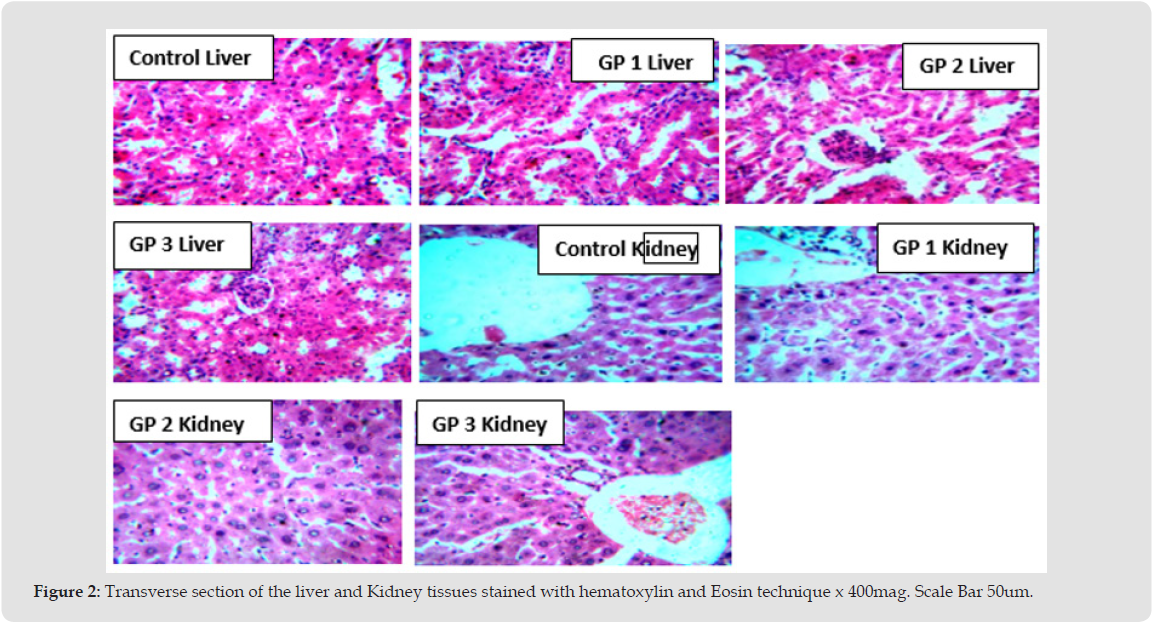
After the animal sacrifice, the organ was harvested, and tissues were processed using an automatic tissue processor. The tissue was subject to secondary fixation, dehydration, clearing, and impregnation for 1 hour respectively. The tissue was then embedded and sectioned into 4um using a rotary microtome. The sections were subjected to Hematoxylin and Eosin (H and E) staining procedures and the histological examination was done with the aid of the Olympus binocular light research microscope (XSZ-107BN, No. 071771) using the method Oboma, et al. [17]. The photomicrographs (x400 magnification) of each slide was recorded with a Kodak digital camera (Kodak Easy-share C183).
Biochemical Analysis
The collected blood samples were placed in plane test tubes and allowed to stand for 1 hour for clotting. Serum samples were obtained by centrifuging the blood samples for 10 min with an electrical centrifuge at 4000 rpm. The serum was then separated and placed in a vial for biochemical analysis. Analysis was carried out for the following parameters to investigate renal and hepatic functions: urea, creatinine, potassium, sodium, bicarbonate, chloride, total protein, albumin, Alanine aminotransferase (ALT) and Aspartate aminotransferase (AST). All biochemical parameters were estimated using spectrophotometric methods. Urea was measured using the Urease-Berthelot colorimetric method (Weatherburn, et al. [18,19]). The absorbance of the sample, control, and standard were read at 546nm against the content of the blank tube. Creatinine was determined using Jaffe reaction as described by Toora [20]. The absorbance of the sample, control, and standard were read at 520nm. Potassium (William, et al. [21,22]), sodium (Stone, et al. [23,24]) and chloride (Iwasaki, et al. [25]) were estimated using reagent test kits provided by Atlas Medical (ATLAS Medical GmbH Ludwig-Erhard Ring 3 15827 Blankenfelde-Mahlow Germany) while serum bicarbonate measurement was done enzymatically as proposed by Hall, et al. [26] using a test kit (BIOLABO SAS Les Hautes, Rives. 02160, Maizy, France). Total protein and albumin in the samples were measured by Biuret and Bromocresol green (BCG) colorimetric methods, respectively, while AST and ALT were estimated using the method proposed by Reitman, et al. [27,28] using reagent kits provided by Atlas Medical. Determination of all the biochemical parameters in the serum samples was carried out following the manufacturer’s instructions.
Statistical Analysis
After the biochemical analysis, the data was analyzed statistically using ANOVA and further with Duncan Multiple Comparisons with the use of Statistical Package for Social Sciences (SPSS) version 21.
Effects of Hydroethanolic Extracts of Datura Metel Plant Extracts (Leaves, Roots, and Seeds) on Kidney and Liver Function Parameters of Treated Rats
The kidney and liver function parameters of experimental rats are shown in Table 1. The results show that there were no significant differences in serum creatinine, urea, electrolytes, as well as total protein, albumin, AST, and ALT concentrations between the control group and the groups treated with different doses of hydroethanolic extracts of D. metel seeds (Table 2). Similarly, there was no significant variation in the concentrations of the above liver and kidney function parameters between the control group and the groups treated with different doses of Hydroethanolic extracts of D. metel roots (Table 1) and leaves (Table 3). No pathological lesion was observed in the liver and kidney of all the groups administered with different concentrations and extracts. The organ’s histological sections were consistent with the histology of a normal liver and Kidney as presented in the photomicrographs below in Figure 1 The plant extracts show no hepatorenal toxicity at the given concentration and duration (Figure 2).
Table 1: Biochemical profile of rats treated with Hydroethanolic extracts of Datura metel roots.
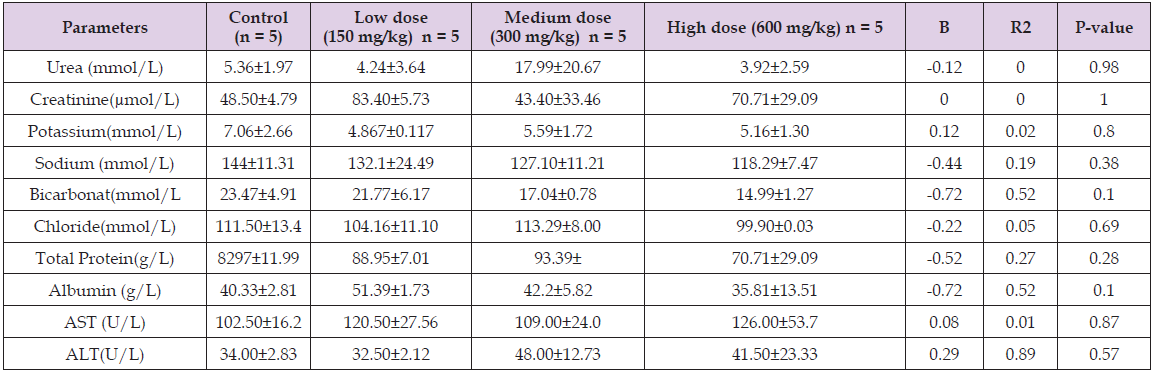
Note: Results are expressed as mean ± standard deviation; NS = Not significant
Table 2: Biochemical profile of rats treated with Hydroethanolic extracts of Datura metel Seed.
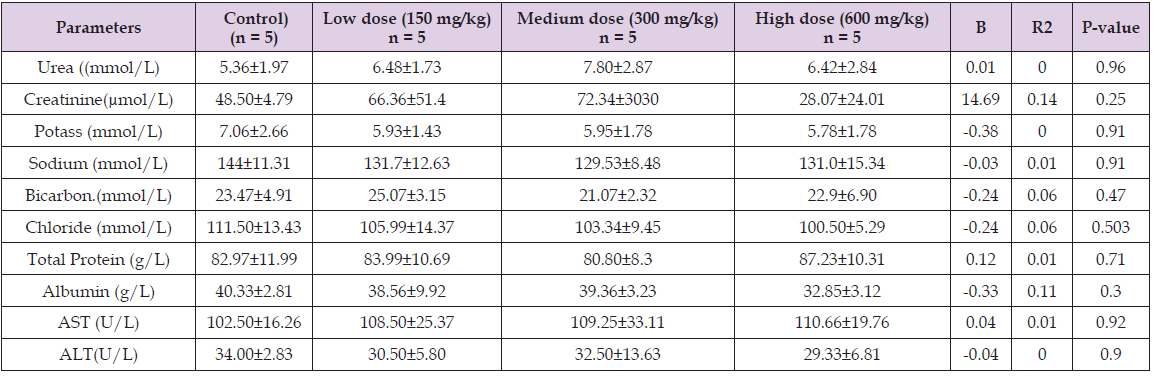
Note: Results-expressed as mean ± standard deviation; NS = Not significant.
Table 3: Biochemical profile of rats treated with Hydroethanolic extracts of Datura metel leaves.
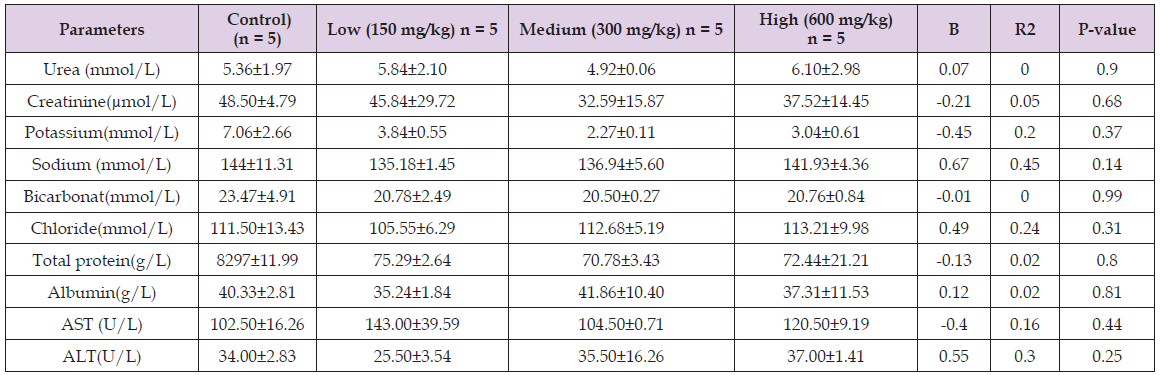
Note: Results are expressed as mean ± standard deviation; NS = Not significant.
Figure 1
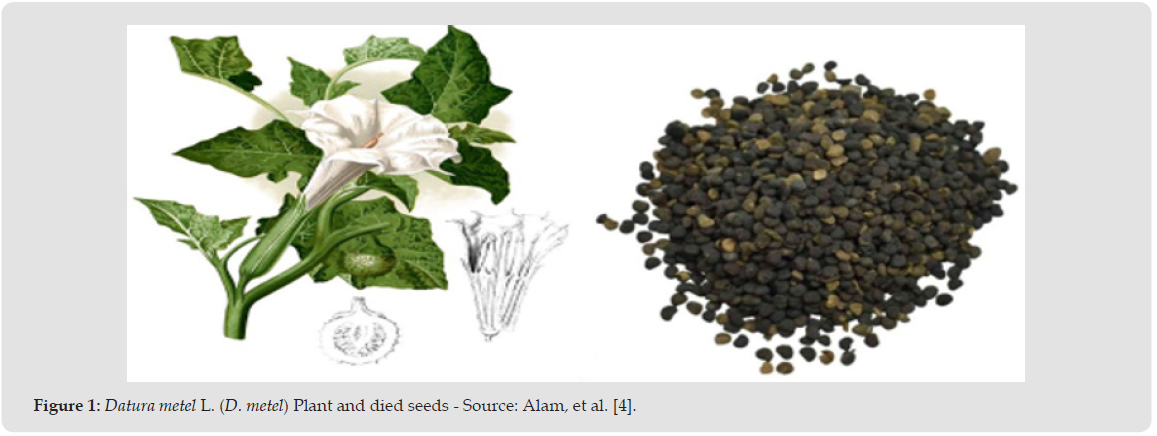
Figure 2
This study investigated the toxic effect of D. Metel seeds, roots, and leaves on the kidney and liver function in rats following a short-term (15-day) treatment. There was clear evidence of no nephrotoxic or hepatotoxic effects following 15 days of administration of these parts of the plant to the rats. Due to their indispensable role in metabolism, detoxification, and homeostasis, the liver and kidneys are the target organs for toxicity of drugs including herbal products (Garza, et al. [29]). Liver function parameters are used to assess liver impairment, determine the level of liver injury, monitor disease progression, and determine prognosis (Saiman, 2023). Specifically, albumin concentrations are used to assess the synthetic function of the liver (Lala, et al. [30]). High concentrations of AST and ALT are present in liver cells where they catalyze the transfer of Alanine and Aspartate a-amino groups, respectively to the a-keto groups of ketoglutaric acid in the synthesis of pyruvic and oxaloacetic acids (McGill [31]). Injury to liver cell membranes causes the release of these amino transferase into the systemic circulation (Sookoian, et al. [32]). Therefore, measurement of serum levels of these enzymes is often utilized in the assessment of liver cellular damage or necrosis (Amacher, et al. [32,33]). On the other hand, kidneys play an important role in homeostasis and the removal of waste metabolites and toxins from the body through glomerular filtration (Lucky, et al. (2018). When the function is impaired, its glomerular or tubular function is altered resulting to the accumulation of these metabolites in the systemic circulation (Basile, et al. [34]). Kidney function tests including measurement of serum urea, creatinine as well as glomerular filtration rate are therefore used to ascertain the normal functioning of the kidneys (Gowda, et al. [35]).
Our results show that administration of hydroethanolic extracts of D. metel seeds, roots, and leaves at the doses of 150 mg/kg, 300 mg/ kg, and 600 mg/kg, did not alter the measured liver function parameters of treated rats, compared with controls. Alam, et al. [36] evaluated the hepatoprotective effects of crude methanolic extract of Datura metel L. in mice. In their report, an acute toxicity test indicated that methanolic crude extract D. metel leave was safe at different doses up to 2000 mg/kg. The study also reported that 8 days of treatment with the methanolic crude extract D. metel, in a dose-dependent manner, significantly reversed levels of serum AST and alkaline phosphatase (ALP) which were originally elevated with gentamicin treatment (Alam, et al. [4]). A 2020 study published in the Journal of Ethnopharmacology found that Datura metel extracts caused significant liver damage and hepatotoxicity in rats, with increased levels of liver enzymes and oxidative stress markers (Kumar, et al. [37]). A 2019 study published in the Journal of Environmental Biology found that Datura metel extracts induced liver damage and inflammation in rats, with increased expression of pro-inflammatory cytokines (Singh, et al. [38]). A 2018 case study published in the Journal of Medical Toxicology reported acute liver failure in a patient who ingested Datura metel, with elevated liver enzymes and bilirubin levels (Lam, et al. [39]). A study published in the Journal of Ethnopharmacology found that Datura metel extracts caused significant liver damage and hepatotoxicity in rats (Kumar, et al. [40]). Another study published in the Journal of Environmental Biology found that Datura metel extracts induced oxidative stress and liver damage in rats (Singh, et al. [38]). A case study published in the Journal of Medical Toxicology reported acute liver failure in a patient who ingested Datura metel (Lam, et al. [39]).
Contradictory evidence published in the Journal of Ayurveda and Integrative Medicine found that Datura metel extracts had hepatoprotective effects against carbon tetrachloride-induced liver damage in rats, with reduced liver enzyme levels and oxidative stress markers (Rao, et al. [41]). A 2019 study published in the Journal of Pharmacy and Pharmacology found that Datura metel extracts had antioxidant effects and reduced liver toxicity in mice, with increased levels of antioxidant enzymes (Bhattacharya, et al. [42]). A study published in the Journal of Ayurveda and Integrative Medicine found that Datura metel extracts had hepatoprotective effects against carbon tetrachloride-induced liver damage in rats (Rao, et al. [41]). Another study published in the Journal of Pharmacy and Pharmacology found that Datura metel extracts had antioxidant effects and reduced liver toxicity in mice (Bhattacharya, et al. [42]). There was no significant difference in the serum levels of urea, creatinine, and electrolytes between treated rats and the control group. Similar to the findings of this study, Imo, et al. [43] reported non-significant changes in serum urea and electrolyte concentrations in groups of rats administered with low (300 mg/kg bw) and high (600 mg/kg bw) doses of leaf extract compared with controls. In contrast, significantly raised serum creatinine levels have been reported in the rats administered with the 200 mg/kg body weight of ethanol extract of D. stramonium, which is another plant in the family, Solanaceae (Gidado, et al. [44]). In an earlier study, Alebiowu, et al. [45] compared the effects of D. metel and Datura stramonium leaves on the morphology of liver, kidney, and intestinal tissues. In their report, D. metel-treated mice showed fewer anatomical abnormalities than D. stramonium-treated mice. The study concluded that D. metel could serve as a substitute for D. stramonium in drug development (Alebiowu, et al. [45]). Together, these results indicate that short-term administration of D. Metel may pose no adverse effects on kidney and renal functions. However, more studies are needed to evaluate the effect of higher doses of this plant.
Supporting evidence study published in the Journal of Pharmacology and Pharmacotherapeutics found that Datura metel extracts caused nephrotoxicity and kidney damage in rats, with increased levels of kidney injury biomarkers (Patel, et al. [46]). A 2019 study published in the Journal of Environmental Biology found that Datura metel extracts induced kidney damage and oxidative stress in rats, with increased expression of pro-inflammatory cytokines (Khan, et al. [47]). A 2018 case study published in the Journal of Clinical Rheumatology reported Datura metel-induced kidney injury in a patient with a history of substance abuse, with elevated creatinine and urea levels (Lee, et al. [48]). A study published in the Journal of Pharmacology and Pharmacotherapeutics found that Datura metel extracts caused nephrotoxicity and kidney damage in rats (Patel, et al. [49]). Another study published in the Journal of Environmental Biology found that Datura metel extracts induced oxidative stress and kidney damage in rats (Khan, et al. [47]). Another case study published in the Journal of Clinical Rheumatology reported Datura metal-induced kidney injury in a patient with a history of substance abuse (Lee, et al. [48]).
Contradictory evidence published in the Journal of Ayurveda and Integrative Medicine found that Datura metel extracts had nephroprotective effects against gentamicin-induced nephrotoxicity in rats, with reduced kidney injury biomarkers (Sahoo, et al. [50]). A 2019 study published in the Journal of Pharmacy and Pharmacology found that Datura metel extracts had antioxidant effects and reduced kidney toxicity in mice, with increased levels of antioxidant enzymes (Bhattacharya, et al. [42]). A study published in the Journal of Ayurveda and Integrative Medicine found that Datura metel extracts had nephroprotective effects against gentamicin-induced nephrotoxicity in rats (Sahoo, et al. [50]). Another study published in the Journal of Pharmacy and Pharmacology found that Datura metel extracts had antioxidant effects and reduced kidney toxicity in mice (Bhattacharya, et al. [42]). In conclusion, while there is evidence supporting the liver and kidney toxicity of Datura metel, there are also contradictory studies suggesting potential protective effects. Further research is necessary to fully understand the toxic effects of Datura metel on the liver and kidney. Herbal highs, also known as legal highs or new psychoactive substances (NPS), have become a growing public health concern among youths. These substances are often marketed as “natural” or “safe” alternatives to illegal drugs, but they can have serious and unpredictable effects on the brain and body. Prevalence and Patterns of Use: Herbal highs are widely available online and in local shops, making them easily accessible to youth (Winstock, et al. [51]). According to the European Monitoring Centre for Drugs and Drug Addiction (EMCDDA), the use of NPS among young people is increasing, with 8% of 15-24-year-olds reporting use in 2019 (EMCDDA, [52]).
Addiction and substance use disorders: Herbal highs can lead to an increased risk of addiction and substance use disorders, particularly among vulnerable populations (Winstock, et al. [51]). Psychotic episodes, anxiety, and depression: Synthetic cannabinoids, a common type of herbal high, have been linked to psychotic episodes, anxiety, and depression (Papanti, et al. [53]). Cardiovascular problems: Herbal highs can cause increased heart rate and blood pressure, leading to cardiovascular problems (Cohen, et al. [54]). Cognitive impairment and memory problems: Chronic use of herbal highs have been linked to cognitive impairment and memory problems (Giorgetti, et al. [55]). Lack of regulation and quality control: The herbal high market is largely unregulated, making it difficult to determine the safety and potency of products (EMCDDA, [52]). Many youth believe herbal highs are safe because they are marketed as “natural” or “legal” alternatives to illegal drugs (Winstock, et al. [51]). To address the public health concerns surrounding herbal highs, prevention, and intervention strategies are necessary. These may include Education and awareness campaigns to inform youth about the risks associated with herbal highs. Regulation and control of the sale and distribution of herbal highs. Increased access to substance use treatment and support services and research into the effects and risks of herbal highs to inform public health policy.
Results from this study suggest that acute administration of the hydroethanolic extracts of leaves, seeds as well as roots of D. Metel in rats at doses of 150, 300, and 600 mg/kg body weight may be safe for the liver and kidneys. More studies are needed to investigate the impact of higher doses as well as chronic administration of these plant parts on the functions of these organs. Herbal highs pose significant public health concerns among youth due to their ease of accessibility, perceived safety, and unpredictable effects on the brain and body. It is essential to raise awareness about the risks associated with herbal highs and to implement effective prevention and intervention strategies to mitigate their harmful effects [56,57].
The authors received no funding for this study.
OYI conceived, designed the study, and drafted the manuscript. YIO, BS, SOM, NGM, JJC and MIC conducted the dataset searches. All authors read, reviewed, and approved the manuscript.
The authors declare that there are no conflicting interests.

International Association of Landscape Archaeology, Czech Glass Society, Czech Republic

Department of Chemistry, Semenov Institute of Chemical Physics, USSR Academy of Sciences, Moscow, Russia

Associate Professor at Department of Breast and Thyorid Surgey, Chongqing General Hospital, China

Professor of Nuclear Medicine, Faculty of Medicine and Surgery, University of Milan, Milan, Italy

Department of Pharmaceutical Sciences, South University School of Pharmacy, USA





 Abstract
 PDF
PDF



























