info@biomedres.us
+1 (502) 904-2126
One Westbrook Corporate Center, Suite 300, Westchester, IL 60154, USA
Site Map
 ISSN: 2574 -1241
ISSN: 2574 -1241
ISSN: 2574 -1241
Received: November 21, 2024; Published: November 29, 2024
*Corresponding author: Abdoulaye Diouf, Cheikh Anta Diop University of Dakar, Faculty of Medicine, Pharmacy and Dentistry, Senegal
DOI: 10.26717/BJSTR.2024.59.009338
Introduction: Our study focused on violence in the emergency departments and was interested in the external
violence encountered by the staff working in the HPD UAS, it sought to characterize these acts of violence, to
understand their origins, the consequences that result from them and it proposed means of prevention.
Material and Method: Data were collected from an anonymous, self-administered questionnaire. The questionnaires
were directly given to the agents working at the level of the HPD UAS. The data were entered on a mask on
the Aska box software. The results and statistical analysis were obtained on the Aska box and Excell software. It
took place from September to December 2019 and from February to December 2021.
Results: The study involved 64 hospital workers, including 22 doctors, 21 nurses, 7 nursing assistants, 2ASH,
5 cashiers, 5 stretcher-bearers and 2 medical students. It showed that 84% of the study population had already
been assaulted in the emergency room, that it was mainly verbal aggression (94.4% of aggression), that physical
aggression was at 27.77%, that most of the aggressors were companions at 68.5% and patients at 42.5%, and
that the aggressor could be a man as well as a woman. The main causes of aggression were at 78.12% the organization
of work with in particular insufficient or unsuitable staff (56.25%), insufficient or unsuitable material
resources (54.68%), work overload (62.5%), work in a hurry or stress at 42.18%, waiting time considered long
at 64.06%, dissatisfaction of the patient/family/companions at 46.87%, lack of dialogue, communication, and
information at 39.06%. And the consequences on the staff were stress (50%), the feeling of insecurity (59.25%),
anxiety (14.81%), exhaustion at 37%, a decrease in efficiency at 16.66%, demotivation at 29.6%. The respondents
to the questionnaires proposed several possible solutions to violence: in all cases, the response to violence,
as informed by the ILO, must be multifaceted: preventive, targeted, multiple, immediate, participatory and based
on the long term.
Conclusion: Violence in emergency departments is very real. Our results are broadly similar to other studies on
violence in the emergency room, the causes are most related to the organization of work and the consequences
on staff are very significant.
Keywords: Violence; Emergency; Hospital Worker
Abbreviations: HAVE: Nursing Assistant; ANSD: National Agency for Statistics and Demography; ASH: Hospital Care Assistant; BIT: International Labour Office; Teaching hospital: University Hospital Center; ECOWAS: Economic Community of West African States; HPD: Dakar Main Hospital; IDE: State Nurse; IOA: Reception and Orientation Nurse; ISO: International organization standardization; MAO: Reception and Referral Doctor; WHO: World Health Organization; ILO: International Labour Organization; SAMU: Emergency Medical Assistance Service; SAVE: Reception Room for Vital Emergencies; SMUR: Mobile Emergency and Resuscitation Structures; SAU: Emergency Department; HOMELESS: Homeless; KNEW: Emergency Department; TS: Suicide Attempt; URGC: Emergency Lying; URGA: Ambulatory Emergency; URGO: Emergency Observation; UAPC: Lying Patient Waiting Unit
The mission of the public hospital can be defined as the reception of the sick at any time of the day or night, a mission of which the emergency department is certainly the most emblematic element. The responses they are constantly striving to provide to requests that have never been programmed challenge the hospital, reminding it of its primary vocation of providing care to the populations around it. The door of the emergency room, always lit and open, may thus appear to some as the bad conscience of the hospital institution. However, it remains the primary source of its activity [1]. Thus, the emergency services are most of the time the first place of transit for the patient, the work is continuous, in fact these services operate 24 hours a day, 7 days a week, they are open services. They welcome all kinds of patients, from serious accidents to simpler patients for whom there is really no emergency. The staff of these services is large and works on a rotating basis and the number of patients is just as substantial. It is a place of permanent influx. Consultations in the emergency room are in most cases unscheduled. Indeed, we often come to the emergency room by accident, hence the distress of patients and their companions. Violence in the emergency room is a real problem and a sad reality [2]. The causes of this violence are multiple, as well as the consequences are notable. Our study aims to assess the extent of the phenomenon of violence in the emergency services and in particular at the level of the SAU of the main hospital of Dakar on the agents of the service.
It seeks to identify and describe the predictive intra-hospital factors, to assess the consequences on the nursing staff, and also to provide elements of prevention. In the first part, we will address the generalities with in particular the definition of violence and violence at work, we will recall the missions of the emergency reception service. We will also identify the agents who work in the SAU, rely on the literature to help us determine the factors that promote violence in hospitals, address the consequences of violence on workers who have been assaulted and then set out the solutions recommended by the ILO. In the 2nd part we will study the facts of violence against the population of the study that is the SAU staff, present and discuss the results of the investigation and finally conclude and propose recommendations.
Definition of Violence
According to the WHO, violence is the intentional use of physical force, threats against others or oneself, against a group or community, which results in or has a high risk of causing trauma, psychological damage, developmental problems or death [3]. And violence at work is defined according to the International Labour Organization (ILO), as any action, incident or behaviour that deviates from a reasonable attitude by which a person is attacked, threatened, harmed or injured, in the course of or as a direct result of his or her work [3].
This violence can take many forms; it can be
• Physical: use of force against a person, assaults, equipment
breakage
• Verbal: name-calling, shouting, threats
• Psychological: vexing and humiliating words, rumors
• Symbolic: aggressive or threatening gestures expressing the
intention to hurt or harm, inappropriate or degrading attitudes
• Sexual: touching, rape [4].
Some occupations, such as health care workers, tend to be at higher
risk of violence than others. To illustrate, here are some behaviors
that are considered violence:
• Being threatened with death or injury;
• Being hit or pushed;
• Having an object thrown at them;
• Being sexually touched or assaulted;
• Being scratched or pinched
• Being spat on;
• Being yelled at each other;
• Receive threatening messages or emails;
• Being ridiculed or humiliated;
• Being physically intimidated (e.g., being punched)
• Physical damage [5].
What is an Emergency Department and What is its Role
It is not the emergency assistance service, no, but the emergency reception service [1]. A shift is thus taking place from a care activity considered exclusive to an activity extended to reception: the emergency department continues to receive vital, functional, relative, etc. But they must also welcome situations of distress that have not been answered elsewhere. We are slowly sliding from the care of the injured or sick person to that of the unsuitable or excluded person. The “city”, de facto, recognizes its limits: it cannot, does not know, manage the crises that individuals on the margins of our society generate or encounter. The word “welcome” then takes on an extremely strong symbolic value. Its display on the pediment of the emergency services should not serve as a screen for an institution that is in reality entirely oriented towards the production of care: the hospital would welcome, of course, but after the filtering operated by the emergency services... Hospitality should not become a simple brand image. Emergency services have a threefold mission: towards the patient, society and the hospital.
Towards the Sick: All these very diverse patients who find themselves in the waiting room of the emergency room are united by one thing in common and only one: time for each of them has suspended its course, blocked by a worried question about how things will evolve: “When will I be given back control of my time?” Thus, what makes up the ordinary time of the caregiver, his daily life, is the exceptional of the one he is called upon to care for. We must take this imbalance into account in the way we respond to a crisis situation, take a decision and, above all, make it heard. In the particular context of the emergency department, a decision-making diagnosis is first made, not necessarily supported by an anatomical and clinical diagnosis. If the latter can be worn, so much the better. But the questions of the severity and duration of the treatment are given priority over the diagnosis. In the department where the patient will eventually be admitted, the situation and the approach will be reversed: future decisions will depend on the etiological diagnosis. The purpose of this first decision-making diagnosis is first of all to delimit the extent of the situation of rupture and to allow the patient to re-inscribe himself in a temporality by specifying the upcoming deadlines.
Towards Society: Open day and night, the emergency department focuses the various dysfunctions of society. When medical and social difficulties become entangled, they are the perfect place, easy to access, where the skein can be unraveled. Far from being sanctuarised, emergency rooms are invaded in return by the crisis situations that they are tasked with unravelling – situations linked, for example, to the rise in violence or poor housing. Those who refer the people concerned to it feel that they have assumed their responsibilities by medicalizing the crisis in this way, that they have “bordered” the file well. They also feel the relief of not having to deal with it. Every time the emergency department recognizes a motive or a medical aspect in a humanly difficult situation, society is all the better off collectively because it no longer feels directly responsible.
Towards the Hospital: Most of the entries into the care circuit are made through the emergency room, even more so if we consider more particularly people in precarious situations or those suffering from a long and costly pathology. As the first image given by an establishment, the emergency department therefore plays a role as a showcase: the hospital expects the department to be a sufficiently attractive gateway to ensure an optimal level of activity. The emergency department is the lungs of the hospital. As such, they should be at the center of the managerial strategy of hospital management. For each department, each specialty, the emergency department must provide reasonable indications for hospitalization and prepare for it in good conditions. The quality of the work carried out within them facilitates the continuation of the care of patients admitted secondarily to the care services. Emergency departments therefore have a dual role of regulation and preparation, while another function tends to take up more and more space: the permanence of care. Indeed, the emergency department is also there to respond to the acute accidents encountered by patients followed in the hospital for acute illnesses. This last mission seems to be increasingly called into question by some UAS who, in order to admit a patient, only want to choose his or her place of residence. However, this patient already followed in another department may come from a neighborhood or a city beyond the area of the hospital itself [1].
Emergency Service Workers
The UAAs are composed of:
• Emergency doctors
• Intensive care anesthetist
• General practitioners
• Administrative Major, Care Supervisor
• Nurses
• Stretcher bearers
• Hospital Care Worker
• Medical and nursing students
• Medical secretaries
• Cashiers
• Security guards
The list is not exhaustive. These agents are in contact with patients and sometimes with their family and friends and may, in the course of their work, be confronted with violence from the latter.
Organization of an Emergency Service
The emergency department includes several care areas:
• The echo chamber is an area made up of communicating
treatment rooms reserved for patients requiring immediate
care (cardiac arrest, acute infarction, serious trauma, burns,
respiratory distress, etc.).
• The URGC (lying emergency) or lying waiting is an area made
up of care cubicles and examination rooms reserved for patients
requiring extensive monitoring and investigations.
• The URGA (ambulatory emergency) is an area composed of
care cubicles, an examination room and a room for performing
plasters reserved for less serious cases.
• The URGO (emergency observation) is an area made up of
beds reserved for patients who require observation for a few
hours, before a possible return home or hospitalization.
• The UAPC (Lying Patient Waiting Unit) is a waiting area with
places for patients waiting to be installed in the care areas or
awaiting investigations [6].
Factors Contributing to Violence in Hospitals
Health care workers are among the occupations that tend to be at higher risk of violence than others. Violence in the hospital environment comes from a set of causes that include the individual, the environment and working conditions, the relationships between employees, the relationships between employees and patients and, finally, the relationship between management and employees, the individual cannot be solely responsible for violence in the workplace. “If we start from this principle, we will never succeed in stopping violence or managing it when it occurs.” Mr. Di Martino [2]. A place of reception open 24 hours a day, the emergency department is above all a place of care and as such it will crystallize anxieties, sufferings and fears. But it will also, and increasingly, reflect the deterioration of economic conditions and psychosocial factors. Various factors can be at the origin of manifestations of aggression and violence:
• Waiting: Before going to the reception and orientation nurse
and then before seeing the doctor. The increase in the number
of visits, the more frequent use of emergency services
instead of community medicine, and the deterioration of
working conditions will increase waiting times. The long
waiting time is anxiety-provoking and can lead to incomprehension
among patients or their companions, who confuse a
perceived emergency with a real emergency.
• Insufficient communication: the anxiety or even anguish of
the patient and his or her family in the face of the diagnosis
can be accentuated due to the lack of information provided
by the nursing staff.
• Untreated pain (physical or psychological): this can be
the cause of the carers’ signs of aggression, which are the
custodians of part of the patient’s suffering.
• Pathology: patients requiring psychiatric care.
• Addictions: patients with addictive behaviors, drug addiction,
alcohol.
• Patients under duress: detainees, judicial requisitions, certificates
of non-admission, etc.
• Patients in great social difficulty: homeless.
• Patients accompanied by a large group (community reception).
In addition, the very configuration of the premises and the architectural constraints can also be the cause of manifestations of violence through poor flow management and faulty signage
• Fear with anguish and anxiety, frustration, stress, work overload
or
• Loss of control on both sides.
• The reproach relating to the care of the patient
• Refusal of care
• The settling of scores and family conflicts (5%) [2].
There are also individual factors: individual factors correspond to the characteristics of the aggressor, such as a history of violence, the presence or absence of mental disorders, drug use or excessive drinking [7].
The impact of Violence on Emergency Department Staff
A crisis situation is not experienced in the same way depending on the individual. Indeed, according to his or her representations, culture, and life experience, each individual experiences and interprets events from his or her own perspective. What may be a crisis for one person will not be a crisis for another. Violence against emergency service staff can have serious repercussions on the physical or psychological health of both direct victims and colleagues taken to task or witnesses to the scene. These consequences depend in particular on the nature of the aggression (or aggressions if they are repeated over time) and the medico-psychological care offered. A physical assault can lead to more or less serious lesions or injuries (bruises, scratches, wounds, fractures, etc.), which may require medical care or surgery, or even cause the death of the victim [8].
Psychological Damage in the Event of Physical or Verbal Aggression: The possible psychological repercussions of an external act of violence will depend on:
• The nature and severity of the assault,
• Its circumstances (assault by a person to whom the employee
was trying to help, surprise effect, etc.),
• The victim’s environment at the time of the attack (isolation,
presence of the hierarchy, etc.),
• The victim’s previous condition (history(s) of violence in the
workplace, etc.),
• The speed with which psychological support was put in
place,
• The follow-up that will be given to the event by the company
(trivialization, denial, consideration, etc.).
Stress reactions can be immediate, this is the state of acute stress: they can range from a state of agitation (screaming, crying, moaning, need to flee), from an emotional shock to the victim’s inability to speak, to move (psychic stupefaction). The state of stress can become chronic when the employee is frequently confronted with violent acts such as the repetition of acerbic or derogatory remarks or malicious acts. Working or feeling insecure can also be a factor of stress, anxiety or unhappiness. In the event of a major psychological shock, the state of stress sometimes persists for several weeks or months after the attack. This is called post-traumatic stress. It results in a permanent reliving of the traumatic event, avoidance behaviors of situations that recall the traumatic situation associated with disturbances. The negative consequences of such frequent violence on the supply side in the health sector include the deterioration in the quality of care and the abandonment of the health professions by staff. This can lead to a decrease in the supply to the public and an increase in costs. In developing countries in particular, widespread access to health care is threatened if the risk of violence leads to the abandonment of the already insufficient number of staff in the health sector [9].
Solutions to Violence
The Response to Violence: The ILO report recommends a multifaceted response to violence that is both:
• Preventive: the causes of violence must be studied, not just
its effects;
• Targeted: It is impossible to address all types of violence at
the same time;
• Multiple: a combination of different responses is required;
• Immediate: In order to curb the effects of violence, it is necessary
to plan in advance the tactics to be adopted immediately,
much like in the case of a terrorist attack, where the
anticipatory response is applied immediately;
• Participatory: all those involved in violence, including family
members, senior management, colleagues and victims,
should be directly or indirectly involved.
• Long-term: Follow-up is necessary, because the consequences
of violence are also long-term and an exclusively immediate
response is not enough [10].
From an Organizational Point of View: In addition to the provisions in the regulations that provide a framework for the prevention of assaults, organizational strategies to reduce psychosocial risks in the workplace seem to be promising for preventing violence in the workplace. Management practices aimed at increasing decision-making latitude, worker involvement, support from the immediate supervisor, mutual aid and cooperation among colleagues, and recognition of efforts and work accomplished, while controlling the workload, are examples of organizational strategies to be promoted to act in the prevention of violence in emergency services.
Good Emergency Department Design: addresses factors such as layout, placement, signage, physical locks or barriers, lighting, and electronic monitoring. Service security is an area where design issues are very important. For example, consider the following:
• Such as installing cameras at entrances, the waiting room,
etc.
• Install physical barriers,
• Have as few entrances as possible to the emergency department
• Use coded cards or keys to control access
• Have sufficient lighting
• Strategically place fencing to control access to workplaces.
Administrative Practices: keeping other valuables safe and secure, such as weapons, tools, opiates and medications.
Administrative Practices: may also include employee information and training, which includes not only information on the workplace incident response policy and process, but also, but also:
• The notions of civic-mindedness and respect
• How to respond to clients or members of the public who are
upset or frustrated; How to de-escalate a conflict
• How to respond to an incident of violence (e.g., emergency
response, when to contact security or police)
• Learn about discrimination, family violence, diversity and
cultures
• How to respond to people who are impaired
Work Practices: are about how you do the work. For example,
make a daily work plan so that people know where you need to be at
a given time.
• Designate an office contact and a backup person.
• Keep your contact person informed of their whereabouts
and respect their itinerary.
• Verify patient IDs.
• Working as a duo, as a team
• Do not enter a situation or place where you feel threatened
or unsafe.
Define Specific Legislation on the Prevention of Violence in the Workplace and finally REPORT THE ACTS OF VIOLENCE TO YOUR EMPLOYER, first of all, to verbalize and externalize your emotions, to understand what happened, to be officially recognized as a victim or witness., benefit from the support system put in place by the employer (such as days off with pay, access to the employee assistance program). In all cases, the response of the service must be immediate, firm and proportionate to the seriousness or consequences of the aggressor’s gesture or behaviour (call to order, leaving the service, etc.). Complaints should be encouraged in the event of damage to the premises, threats, insults or physical aggression against staff. The objective must never allow a feeling of impunity and failure to take charge of a crisis situation to develop. The protocols between the Ministries of the Interior, Justice and Health should make it easier for victims to file complaints (domiciliation of the victim at his or her professional address, making an appointment with the police officer, information on the legal action taken). Support for victims of aggression Listening to the officer, debriefing and analysis of the event are steps that must be ensured [11].
Study Framework
Our study took place at the level of the main hospital of Dakar (HPD). It concerned the emergency department.
The HPD is a level 4 hospital center, located in downtown Dakar. Its emergency department, created in 2005, is ISO2015 certified [12]. The department is composed of an associate professor of anesthesia- resuscitation and emergencies who is the head of the department, 4 emergency doctors, an intensive care doctor, 7th year medical students, trainee emergency doctors and DES in anesthesia-resuscitation who are present as part of their mandatory internship, a care supervisor who is a nursing executive and an administrative major. It is also composed of nurses, stretcher-bearers, ASH whose number varies according to the activity of the service, cashier agents, and gendarmes in charge of security and a secretary. Regarding the organization, the emergency department of the main hospital of Dakar is made up of 4 zones: A reception area which is made up of the waiting room for patients, consultation boxes and this area is under the direction of a MAO assisted by another emergency doctor, these two doctors are in charge of triaging patients and consultations, an IOA who is also responsible for organizing the triage of patients and taking the constants of patients. There are also general practitioners and 7th year students who are in charge of consultations. A lying waiting area made up of 8 beds where there are patients who are waiting to be transferred to the operating room or are being explored while waiting for their urgent check-ups.
A UHCD area made up of 6 beds separated by partitions which is a short-term hospitalization area. And a SAUV area which is made up of 7 beds and which is under the supervision of an emergency doctor or an anesthesiologist-intensive care doctor during the shift, during the day there can be many emergency doctors and intensive care doctors on internship and a state nurse alone or sometimes supported by a nursing assistant and nursing trainees. There is also an administrative major and a care supervisor, also 2 ASH and 2 stretcher-bearers per 12-hour shift. There are gendarmes who are in charge of security as it is a military hospital.
Description of the Study
This is a study based on a descriptive survey addressed to medical and paramedical staff working or having worked in the emergency department of the Principal Hospital of Dakar and it took place over 2 periods: from September to December 2019 and from February to December 2021.
Study Population
Inclusion Criteria: The following were included in our study: Doctors, nurses, ASH, stretcher-bearers, cashiers, students and secretaries working at the level of the SAU or who have already worked in the SAU of principal and who are assigned to the other departments of the hospital.
Non-Inclusion Criteria: The gendarmes in charge of the security of the SAU of the main hospital in Dakar, who did not have prior authorization from the authority to answer our questions.
Methodology
Data Collection: Data were collected from an anonymous, self-administered questionnaire. The questionnaires were directly given to the agents working at the level of the HPD UAS. The data were entered on a mask on the Aska box software. The results and statistical analysis were obtained on the Aska box and Excel software.
Parameters Studied: The parameters studied were:
Characteristics of the Participants: Their gender, age, profession at the level of the HPD UAS, their current practice department, their seniority in the profession and at the level of the emergency department, their working hours,
Characteristics of the Cases of Violence: The type of violence exerted on the service agent, the time of the assault, the characteristics of the aggressor, in particular his sex, his age.
Reactions to Violence: These are immediate reactions and late reactions.
Factors Favouring Aggression According to Study Participants and the Consequences of these Attacks on the Staff: Immediate, late and labour consequences. And finally, a proposal for a solution by the respondents to the questionnaire.
Out of a hundred questionnaires distributed, 64 were answered. This survey concerned 22 doctors, 18 nurses, nurses’ aides, 5 stretcher- bearers, 2 ASH, 3 cashiers, 1 student. The questionnaire consisted of 27 questions, 13 of which were mandatory. This is how we were able to divide our questionnaire into 5 themes
• Theme A concerned the characteristics of the participants:
And concerned questions 1 to 7 (See Annex)
• Theme B concerned the characteristics of cases of violence
against the attacked: It concerned the questions: 8 to 15
• Theme C was about responses to violence: Questions 16 and
17
• Theme C focused on the factors that contribute to violence:
and covered questions 18 to 21
• Theme D was on the consequences of violence: questions 22
to 24
• Theme E addressed solutions to violence according to study
participants: questions 25 and 26.
Characteristics of the Participants
Sex: Thus, among the 64 respondents, there were 50 men for 14 women, i.e. a sex ratio of 3.57
Age: Thus, 5 age groups have been stated: Under 25 years old; from 25 to 35 years old, from 36 to 44 years old, from 45 to 55 years old and finally over 55 years old.
The most represented age groups were 25 to 35 years old and 36 to 44 years old with 32.81% and 42.18% respectively.
The Profession Exercised at the Level of the HPD UAA: Doctors and nurses were the main respondents with 34.37% and 32.81% respectively. Also, among the participants there were 81.23% of caregivers against 18.77% of administrative and support staff.
Current Duty Station: 64.06 per cent was mainly emergencies Seniority in the Profession: The majority (54.68%) had more than 10 years of experience, 12.5% had less than one year of seniority in their field.
Seniority in the Emergency Department: Among the respondents, 67.18% had less than 5 years of experience in the emergency department and 37.5% did not have one year of work in the emergency department.
Working Hours: Thus, 6 agents worked only during the day, 3 only at night and 55 alternated between day and night work, i.e. 85.93%.
Table to be Announced: The following Table 1 relates to the characteristics of the participants
Table 1: Characteristics of participants.

Characteristics of Cases of Violence
This part concerned the assaulted officers.
Victim of Violence at the Level of the HPD UAS: 54 of the 64 survey participants answered in the affirmative That’s 84%. Figure 1 is useless as it is a binary result, the cammenber is not necessary if there are only 2 variables.
Number of Cases of Violence: Thus, 25.92% of the respondents were assaulted once, 12.96% twice and 61.11% three or more times.
Type of Violence: For violence, 94% of the officers assaulted were verbal, 27.77% physically. The following Figure 1 relates to the type of violence exerted on the assaulted officer FIG to be announced and reviewed, in descending order.
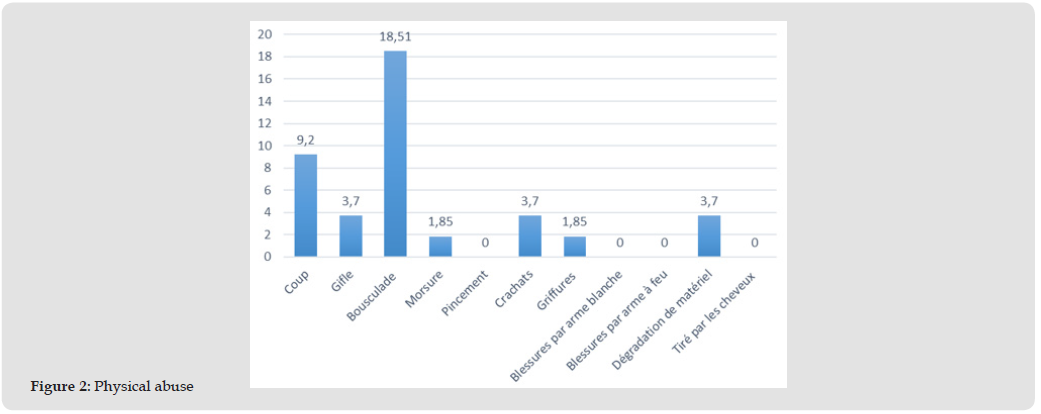
Type of Physical Violence: 18.51% of the assaulted officers were jostled 9.2% were hit the following Figure 3 deals with physical aggressions results and announce figure, figure to be reviewed. Zeros should not be marked on the figure, results in descending order (Figure 2).
Figure 1

Figure 2
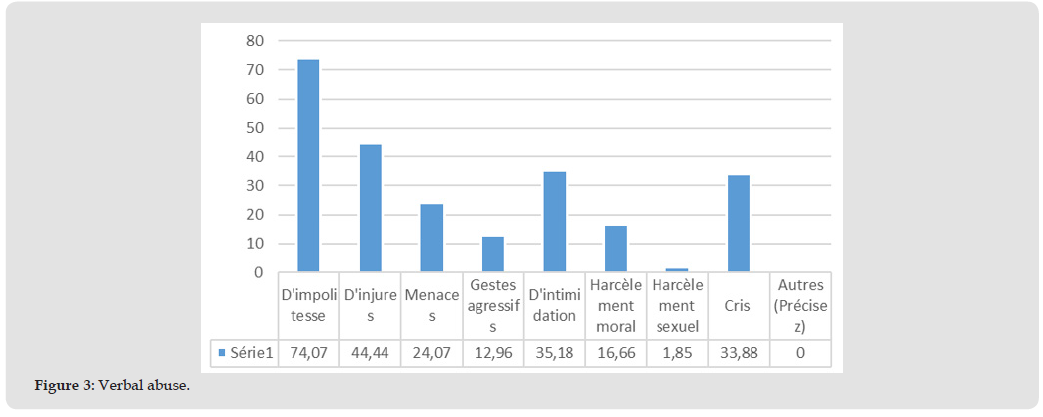
Types of Verbal Abuse: Figure 3 below refers to verbal abuse, the assaulted officers were rudeness (74.07%) and insults (44.44%). Give the main results and announce the fig, figure to be reviewed. No title in the figure, give the results in descending order. If the fig is not clear, make a table instead, especially the annotations should be clear.
Figure 3
Time of the Attack: 56% were attacked both day and night. Figure 4 below refers to the time of the assault. Announce the figure, badly made figure, the title must not appear in the cammenber.
Figure 4

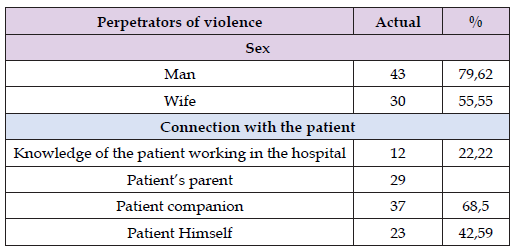
Type of Aggressor: In the majority of cases, 63.63% of the perpetrators were accompanied and in 23.86%, the aggressor was the patient himself. Announce the figure title at the bottom and give the results in descending order on the figure, no abbreviation on the annotation. 79.62% of the agents were approved by a man, 55.55% by a woman, a patient at 42.59%, an accompanying person at 68.51%. The following Figure 5 discusses the perpetrators of violence (Table 2).
Figure 5
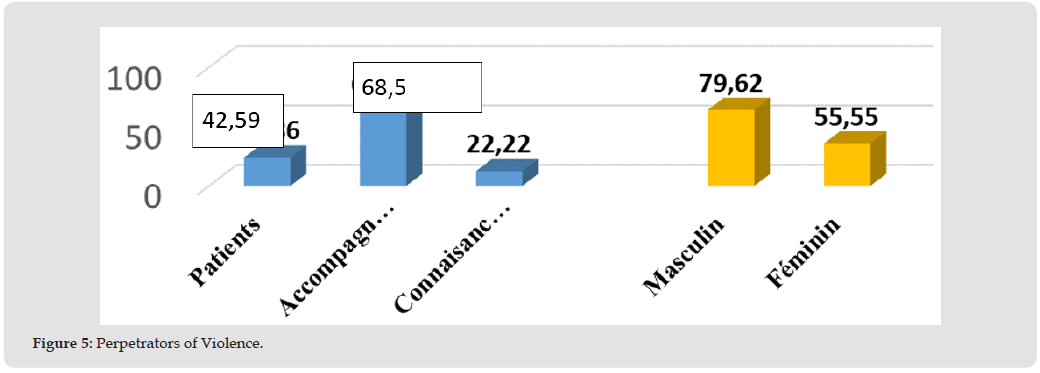
Table 2:
Reactions to Violence
Questions 16 and 17
Immediate reaction to the attack: results?
Immediately faced with their aggressor, the officers were 29.6% angry, they asked the person to stop, they called the police/gendarmerie 22.22% reactions.
Delayed Reaction to the Attack: An assaulted agent filed a complaint; none consulted a psychologist and for 85.18% of agents who were victims of violence there was no delayed reaction as a result? We must be satisfied with giving the main results obtained. Table 3 below refers to the reactions of officers who were assaulted to violence.
Table 3: Responses to violence.

Factors that Promote Violence
It concerned questions 18 to 21. The following figure discusses the factors related to the Delivering Key Results service and is a requirement to be announced and redone.
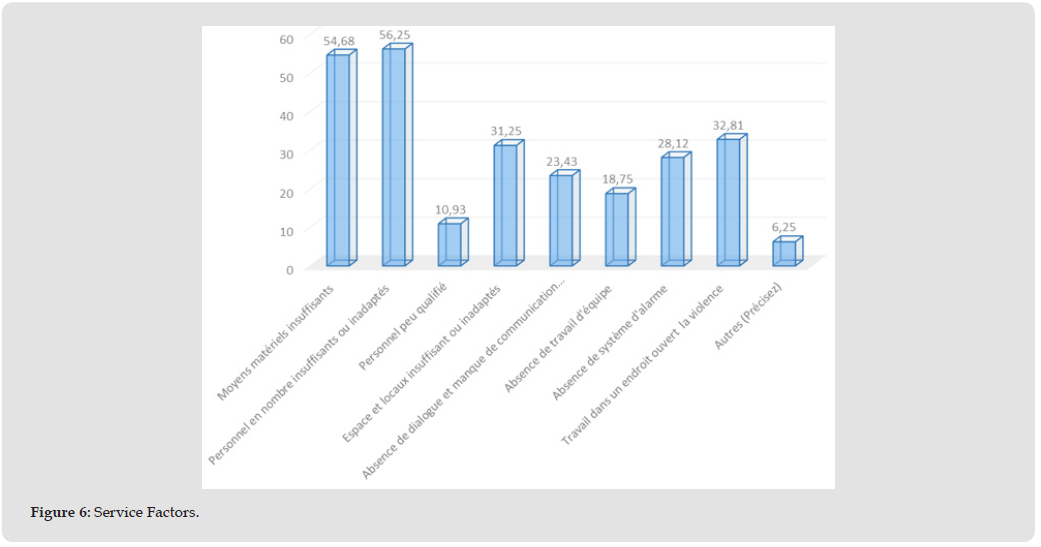
De-intersecting Order of Results: For service-related factors, respondents blamed insufficient or unsuitable staff (56.25%), insufficient or unsuitable material resources (54.68%), work in a place open to violence (32.81%). The following Figure 6 discusses the service factors.
Figure 6
Work-Related Aggression Factors: The officers questioned thought that the violence exerted on the officers was linked to work overload (62.5%), to work in emergencies or stress to 42.18%, to lack of training on the management of violence to 39.06%, Figure 7 below relates to work-related factors main results to be given, then to announce the figure and figure to be redone.
Figure 7

Main Situations of Aggression: Give the main results before announcing the fig and it must be reviewed, it is badly done 78.12% of the participants blamed the organisation of work. And as incriminating factors.
For Service-Related Factors:
• Insufficient or unsuitable staff (56.25%),
• Insufficient or unsuitable material resources (54.68%),
• Work in a place open to violence (32.81%)
• Insufficient or unsuitable space and premises (31.25%)
• Absence of an alarm system at 28.12%
• Lack of dialogue and lack of communication between colleagues
at 23.43%,
• The lack of teamwork (18.75%),
The Study Population Judged that the Main Situations of Aggression are: 64.06% of the waiting time considered long, 46.87% of the patient/family/companions’ dissatisfaction, 39.06% lack of dialogue, communication and information. Figure 8 Following refers to the main situations of aggression.
Figure 8

The Consequences of Violence
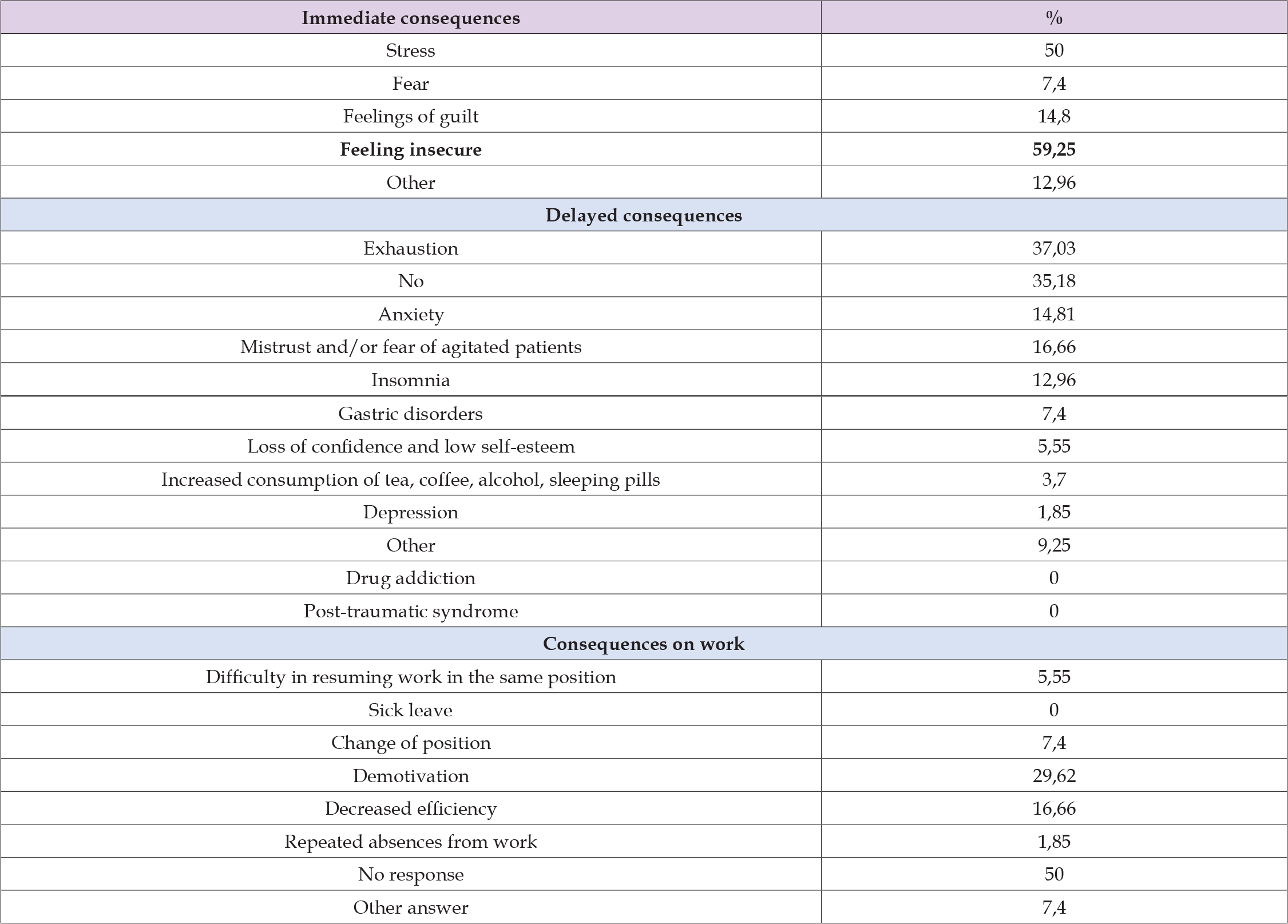
Immediate Consequences: Results?: For the immediate consequences, the officers who were attacked felt stressed (50%) and a feeling of insecurity (59.25%).
Delayed Consequences: Results?: The officers who were attacked subsequently felt exhaustion at 37.03%, but for 37.18% of the study that was attacked, there was no reassured consequence.
Consequences on Work: Results? and announce the painting: On work, the consequences of the aggression were mainly demotivation at 29.62% and a decrease in efficiency at 16.66%. The following Table 4 deals with the immediate, delayed and work-bearing consequences of the assaulted officers.
Table 4: Consequences of violence.
Solutions to Violence According to Study Participants
59.37% thought that medical and psychological care was necessary after such an event.
The Measures and/or Actions Proposed by the Respondents to Prevent the Occurrence of Situations of Violence: Strengthen security at the level of the SAU, increase training especially for staff assigned to receive patients, reduce waiting times, inform accompanying persons, increase staff and capacity, install surveillance cameras as a deterrent, insist on the training of staff newly assigned to the emergency department. Train staff on the management of violence, better structure and organize the SAU, prohibit access to the waiting room to accompanying persons, not to receive psychiatric patients at the SAU but to redirect them to psychiatric emergencies, to integrate a regulation system, to communicate on the functioning of the emergency department, to raise national awareness, to penalise or punish offenders, to promote more solidarity among the hierarchy, to improve the organisation of care. They also proposed to establish a climate of trust between medical staff - parents - accompanying persons, to clearly define tasks, to improve working conditions, to make an annual visit of the staff with psychologists and psychiatrists, to modernize working methods, to space out on-call shifts, to reduce working hours, to punish staff in situations of misconduct, to reduce the involvement of external staff in the care of patients in the emergency department, better coordination and harmony between services, to strengthen equality between patients, not to favour certain patients according to their social status and not to discriminate against certain companions, not to overload the SAU by taking only urgent patients.
Characteristics of the Participants
We noticed with our study that there are more men who participated in the study than women with a sex ratio of 3.57. Where is the comment? There were 22 doctors, this may seem important but it is explained by the fact that there are many doctors at the Main Hospital who come to take care of the emergency room and 21 nurses and 7 nursing assistants in fact there are at least 6 IDE + AI per shift. 64% of participants were assigned to the emergency department of HPD at the time of the survey and were permanent members of the department. For their seniority in the profession, 35 of the 64, more than half, so 54.68%, had more than 10 years of seniority in their profession, they are experienced agents but in the end 67.18% have 5 years or less of practice in the emergency department and more than a third, i.e. 37.5%, have no more than one year of experience in the emergency department. As far as the age group is concerned, only 2/64 were over 55 years old and 9.37% were under 25 years old; The majority of respondents were young adults aged 25 and 44 (74.99%). The working conditions in the emergency department require the agents to have physical and emotional resistance and experience in their professional field and there are no comments, these are only results. 85.93% of the respondents work day and night, this is explained by the fact that in the emergency departments the work is continuous and at a sustained pace, the operation of the service is divided by shift and the agents alternate.
Characteristics of Cases of Violence
84% of the population in our study has already been assaulted in the emergency room. 94.4% of the officers assaulted were verbally assaulted, 27.7% physically. One person in the study had been threatened with a gun. This fact constitutes a major level of seriousness. It can be seen that in our study, the officers were victims of aggression both during the day and at night and 51.66% of the participants in the study had been attacked on at least 3 occasions. The main aggressors were the companions (68.5%) and the patients (42.5%) themselves, 22.2% for people who work in the hospital. In emergency departments, often the hospital staff want to intervene in the care of their patients by trying to speed up care, to find a place for their patient and they may be impatient and/or aggressive either out of annoyance or excess authority or simply out of stress. This is linked to the fact that they have easy access to the emergency department. The aggressors are the pulp art of time, men to notice that some have been attacked by men and women at the same time; Indeed, there were 79% of men involved in acts of violence against emergency room staff, and 55.55% of women. For verbal aggression, it was mainly rudeness (74.4% of those attacked), insults (44.4%), shouting (33.88%) and intimidation (35.18%), only one person out of the 54 was sexually harassed. As far as physical attacks are concerned, the staff were mainly beaten (9.2%). Some were jostled (18.51%).
Our study can be superimposed on another series made in Sousse, Tunisia, which concerned a representative sample of workers at the Farhat Hached University Hospital in Sousse (ref). The study involved 71 hospital staff. Of the respondents: 95.8% were victims or witnesses of violence in hospital. The most affected professional category was nurses (60.6%), followed by doctors (21.1%). Violence was most often committed by patients and their companions (95.58%). The violence was verbal in 98.6% of cases [13]. Another study carried out in two referral hospitals in Yaoundé, Cameroon, in 2015 on 235 people, showed that emergency services were at greater risk of violence, as well as that the prevalence of violence was 77.87%. It was mainly non-physical violence (88.5%) of the type of violence against persons (66.1%), level 1, perpetrated by accompanying persons and patients. The main victims were nurses (76.50%), mostly women (62.30%) [14]. Another study conducted among the staff of the emergency department of a prefectural hospital in Casablanca using a questionnaire had similar results to ours (ref). Of the 30 people who participated in the survey, including 11 doctors (36.6 per cent) and 13 nurses (43.3 per cent) with a predominantly female population (66.6 per cent) and an average age of 35 years, 90 per cent of the respondents felt exposed to violence in the performance of their duties.
Nurses were the most exposed occupational category (34.6%). Visitors and accompanying persons, the perpetrators of violence in 66.6% of cases. It also showed a predominance of women [15]. Where are the similarities with your study? They must be given by comparing them. A study carried out by the Observatory of Physicians’ Safety in 2018 in France found that verbal aggression or threats against doctors accounted for 66% of reported incidents, vandalism for 8%, and physical aggression remained stable at 7% [16].
Reactions to Violence
For immediate reactions: in half of the cases, the agent did not react immediately to the attack and even in 85% there was no follow-up later. None of the assaulted staff members consulted a psychologist and 3 out of 54 staff members (5.55%) used the hospital’s occupational health service. Only one person in the study filed a complaint and 4 (7.4%) made a written report to the hierarchy. So, we can consider that the vast majority did not notify the authority of the attack. Only 11.1% called a colleague for help, 20.37% spoke to their superior and 22.2% to the gendarmerie, the gendarmes are the ones who ensure security at the hospital, since it is a military training hospital. We notice that there are few notifications of aggression by agents at their workstations, little recourse to the occupational health service or to security, the psychologist has not received any agents who have been attacked, even though they are available in the hospital. The assaulted officer does not use the remedies available to him and manages his aggression alone. This can be explained by the fact that when a person is a victim of violence at work, they do not necessarily want to talk about it to those around them for a wide variety of reasons. For example, she may find it difficult to put into words how she feels. She may consider that it was “not that serious” despite the consequences suffered. They may also not want to bother others or be afraid of being judged by talking about what happened. In any case, it is important for the victim of an assault to get help. Social support is key to breaking isolation.
Social support is the fact of reaching out to a third party to get support and a listening ear. This third party can be a member of his or her work, a relative, an acquaintance or a professional. Numerous studies show that receiving support and listening can reduce the risk of depression, anxiety, post-traumatic stress disorder and psychological distress (ref). It is also recommended to report acts of violence to your employer and this allows you to
• Verbalize and externalize your emotions.
• Understand what happened.
• Be officially recognized as a victim or witness.
• Benefit from the support system set up by the employer
(such as days off with pay, access to the employee assistance
program).
If all the other officers who were victims of aggression declared it,
it would make it possible to...
• Develop care tools for the recovery of the victim or witness.
• Create and develop prevention and training programs.
• Raise awareness of the problem beyond work organizations.
• Improve government policies in this area [5].
In France, a study carried out in 2019 by the National Observatory of Violence in the Health Sector had highlighted an under-reporting of complaints filed by health professionals who were victims of violence in healthcare facilities in their activity, the report had noted an under-reporting (11% of complaints at the national level) [17]. And finally for the procedure, if the health worker decides on his own to file a complaint against a patient, he will have to go to a Police Station or a Gendarmerie. It is also possible for the person to write to the Public Prosecutor of the Regional Court of his or her place of residence or the place where the offence was committed. Whether they were addressed directly to the public prosecutor or whether they were filed with the Police or the Gendarmerie, it is then up to the Public Prosecutor to decide on the action to be taken [18]. Article 32 of the Senegalese Code of Medical Ethics stipulates that “Except in cases of emergency and where he or she is failing in his or her duties of humanity, a doctor may be led to refuse his or her care for professional or personal reasons” and in Article 33 “The doctor may withdraw from his or her mission provided that he or she never causes harm as a result, to his patient. He must ensure continuity of care and provide all useful information to this end. » In other words, this means that under certain conditions, the doctor can indeed separate from an aggressive patient [19].
Factors Favoring Aggression According to Study Participants
78.12% of the participants blamed the organisation of work. And as incriminating factors: for the populations in the study, it was mainly a question of:
For Service-Related Factors:
• Insufficient or unsuitable staff (56.25%),
• Insufficient or unsuitable material resources (54.68%),
• Work in a place open to violence (32.81%)
• Insufficient or unsuitable space and premises (31.25%)
• Absence of an alarm system at 28.12%
• Lack of dialogue and lack of communication between colleagues
at 23.43%,
• The lack of teamwork (18.75%),
For Work-Related Factors:
• Work overload (62.5%)
• Work in a hurry or under stress at 42.18%
• The lack of training on the management of violence at
39.06%,
• The poor definition of the tasks performed by the agents at
23.43%
• Working alone at 20.31%
And the Main Situations that Encourage Aggression are:
• The waiting time considered long at 64.06%
• The dissatisfaction of the patient/family/companions at
46.87%,
• Lack of dialogue, communication and information at 39.06%
• Fear for one’s life or that of one’s parent/caregiver at 34.37%,
• Work with populations in distress (psychiatric patients, drug
addicts, alcoholic patients, prisoners) at 29.68%,
• Poor patient reception conditions at 28.12%,
• And uncomfortable waiting room at 18.75%
The study that we had already taken as an example and which took place in Sousse, Tunisia and published in 2020 had shown that the frequency of acts of violence in hospitals would be explained in particular by the deterioration of the care relationship between the patient and the care staff (63.6%) on the one hand; but also by the frequent use of violence by patients who consider it to be an easy way to achieve their objectives (47.8%), the absence of a permanent security service in the hospital (42.5%) and the shortage of human resources and equipment (40%) on the other hand [13]. Another study in 2011 in France highlighted that the main causes of aggression in the emergency room were: physical violence coming mainly from patients with psychiatric pathologies or “alcoholic” or under the influence of drugs, that it was the prerogative of 20% of caregivers (ref).
And among the various causes of the aggressiveness identified, there were the sometimes long waiting times, the anxiety of the families who were increased tenfold by the fact that they waited in a room outside the department while the patient was being cared for in the sector, the staff not always available to inform them of the causes of the wait and the care undertaken with the patient, the lack of knowledge of how emergencies work, the large number of professionals involved in this sector, which complicates the coordination of the information transmitted to the caregivers and within the team, in addition, the caregivers who intervene have different levels of skills and training to prevent tensions or manage conflicts [20]. This study had also shown that the risk of violence was greater around 7 p.m. and at night between 3 and 5 a.m. and it also questioned the risk of working 12 hours and the possibility of remaining vigilant, efficient and available from 7 p.m. to 7 a.m. Our study showed that officers could be assaulted day and night.
The Consequences of these Attacks
The immediate consequences encountered by agents who are victims of aggression are mainly stress (50%) and feelings of insecurity (59.25%). For delayed consequences: anxiety (14.8%), insomnia (12.96%), exhaustion at 37.03%, mistrust and/or fear of agitated patients at 16.66%, One person interviewed suffered from depression as a result of the assault. And on work, this led to demotivation at 29.62% and a drop in efficiency to 16.66%. The study carried out in Sousse observed the following consequences: a feeling of inferiority in 57.7% and lack of confidence in 38% of them, a feeling of hopelessness. Depressed mood and loss of interest were reported by 53.5% and 50.7% of victims, respectively [13]. The emergency room staff, with some exceptions, are very involved and motivated in their work. But the repetition of hurtful words and aggressive attitudes can undermine this motivation, leading to demobilization and mistrust. The more professional awareness is established, the more real the risks of burnout and the decrease in efficiency at work [20]. Workplace violence comes at a high cost to employers. For example, workers’ compensation (psychological and physical injuries) alone represents costs of $8 to $10 million per year for all organizations in Quebec [5]. The literature has also shown that violence causes an immediate and often lasting break in interpersonal relationships, in the organization of work and in the workplace as a whole, it increases the rate of absenteeism, requires work stoppages, deteriorates the work climate (ref). Employers bear the direct cost of lost work and safety improvements, but violence also generates indirect costs, such as reduced efficiency and productivity [10]. Violence at work does have a cost!
Solutions by Questionnaire Respondents
Almost 60% of the agents thought that a follow-up with the psychologist was necessary after an assault and yet none of the people surveyed consulted a psychologist while he was present in the hospital. Psychological support is a great help for employees who are victims of aggression in the workplace and as an example we take a study published in the European Journal of Trauma & Dissociation in April 2018 whose aim was to evaluate the effects of psychological debriefing on victims of an assault in the workplace on sixty employees (ref). The results showed that victims of an assault in the workplace had significantly higher traumatic symptoms (as measured by the Impact Event Scale-Revised) than the control group. Such effects seem to diminish six months later for subjects who have accepted psychological care. Similarly, the subjects treated feel more comfortable in their work and have a less exacerbated feeling of fear six months later, compared to the other employee victims, and in conclusion, such results demonstrate a positive effect of psychological debriefing on employees who are victims of aggression in the workplace [21].
Indeed, quickly after the event and no more than 3 days later, it is recommended to set up a debriefing or an individual listening interview with a professional (doctor, psychologist). This step allows the victim to deal with the emotions, thoughts, and feelings generated by the event (ref). A collective debriefing can also be set up for colleagues who witnessed the assault or colleagues of the victim who express the need to talk about the event. Following the debriefing, on the advice of the occupational physician and/or the occupational health service, additional psychological follow-up may be offered to employees whose condition requires it [22]. Completing certain administrative and legal procedures, such as filing a complaint or responding to police interrogations, can be painful for the victim. The administration can also accompany and support them in such steps.
And Among the Solutions Proposed by the Agents, as Part of this Study: In terms of health and safety, violence at work is a risk and it is possible to prevent it because working in insecurity is not inevitable. By acting on the functioning of the company, its work organization and its environment, it is possible to prevent or at least reduce the violence incurred by employees [22]. The general principles of prevention of the Labour Code apply to the risks of external violence. Respondents to the questionnaire therefore proposed:
• To improve general and continuing training and insisted on training on the management of violence Indeed, training is needed in the initial and continuing curriculum to teach caregivers to channel verbal violence, even physical aggression and to communicate better [18]. If this training becomes compulsory, it is still necessary that the training offered be in line with the experience of the field. Above all, the training must be as helpful as possible. Practical training in the management of violence for hospital staff should be set up, with certification at the end of this training and periodic renewal. Continuing education is instituted for the refresher and renewal of knowledge. It must be preponderant and essential in our regions, because medicine is constantly evolving and medical practice is becoming more and more demanding, and these training courses should be regulated by the hospital authorities and made compulsory in the future.
• Strengthen security at the level of the UAS
Preventive measures to enhance security usually fall into three categories:
Workplace design, administrative practices and work practices. Workplace design addresses factors such as layout, layout, signage, physical locks or barriers, lighting, and electronic monitoring. Administrative practices are the result of decisions made by the service officer to carry out his or her work and reduce risks. Administrative practices may also include employee information and training, which includes not only information on the workplace incident response policy and process, but also, but also:
• The notions of civic-mindedness and respect
• How to respond to patients or members of the public who
are upset or frustrated; How to de-escalate a conflict
• How to respond to an incident of violence (e.g., emergency
response, when to contact security or police)
• Learn about discrimination, family violence, diversity and
cultures
• How to respond to people who are impaired
• Work practices are about how the officer goes about doing
their job, they adopt different work practices, to reduce risk.
• To better structure and reorganize emergency services to
prevent acts of violence against officers
1. For Structures: Access to the care areas must be regulated and therefore the configuration of the premises and the equipment chosen must be adequate: no swinging doors, no coded doors, badge systems with automatic opening on approach must be preferred
• Setting up privileged access for certain categories of patients (prisoners, etc.).
• At the level of reception and waiting areas – encourage the implementation of a real reception and care policy (problem of inadequate reception desks, poor positioning of the IOA), or cramped, dirty waiting rooms, without minimum “comfort”.
2. For the Number of Staff: The data relating to peaks in violence must be analysed in order to adapt the healthcare and reinforcement staff. Equipment is all the more essential as the staff is alone in more than half of the situations to manage the violence manifested. The problem of individual portable alarms arises mainly in emergency rooms and in all night wards where staff is reduced and often alone per floor. This equipment also helps to reduce the risk of violence. Alert and intervention procedures are needed to be implemented, disseminated to staff and tested regularly.
3. Punish Offenders: Indeed, only one case of complaint has been filed among all the assaults, we are not in a position to know the outcome of the complaint. The objective must never allow a feeling of impunity and failure to take charge of a crisis situation to develop. And especially in the event of damage to the premises, threats, insults or physical aggression against staff. There must be protocols that make it easier for victims to file complaints. Support for victims of aggression if requested during local procedures (occupational medicine, psychologist, or external procedures, in particular in the event of a complaint being filed with the police).
4. Reduce Wait Times: The waiting time is a recurring reason for dissatisfaction and complaints (this waiting time in the emergency room has a complex dimension, with several services in succession); importance of the nurse organizer of the reception (IOA); ensure that patients requiring simple consultations are separated from patients requiring more intensive consultations; inform of the reasons for the wait; improve the coordination of the various actors and services; improve the organization of work [2].
5. Not Seeing Psychiatric Patients in the Emergency Room: Psychiatric emergencies are often misleading, and difficult to assess: acute medical problems can take the form of a psychiatric crisis with anxiety, agitation and sometimes even delirium; conversely, psychological suffering can express itself through the body and take the form of intense abdominal pain or a paralytic attack [23]. Caution is the rule and close collaboration between psychiatrists and “somatic an” doctors is always essential. The non-reception of psychiatric patients in the emergency room seems utopian to us insofar as psychiatrists are rare in our regions, they are not available 24 hours a day, and psychiatric services are even rarer. Psychiatric patients can suffer from somatic illnesses, and going to the emergency room can be a real anxiety for the psychiatric patient, hence its violence. The staff working in the emergency department are sometimes helpless in the face of this unusual type of patient. The ideal solution would be the creation of an emergency psychiatric unit.
6. To improve the working conditions of agents, in particular with the spacing of guards and the reduction of working hours: The design of the premises is important, a pleasant environment contributes to feeling good in the hospital, both for the patient and for the nursing staff, and a better organization in place within the department, the staff distributed correctly according to needs. On-call duty in the emergency department is stressful and involves a lot of responsibility for the staff assigned to it, in addition to the workload which is very important, it will be necessary to space out the on-call duty to help the agents rest better, save money, to avoid burn-out and to be more efficient for the sick. The quality of life at work is an essential concept that finds its full meaning here.
7. Support from the Hierarchy for Agents who are Victims of Aggression: While the employer must do everything possible to avoid exposing its employees to the risks of external violence, a support approach for potential victims must nevertheless be provided in order to limit the trauma following an assault as much as possible. It will ensure that alert and rescue procedures are defined in the event of violence. It will provide for victim assistance systems (psychological and medical support, filing complaints, etc.). The measures to be followed in the event of a violent incident must be brought to the attention of employees and updated to adapt to changes in work. Built with the help of the occupational physician and/or the occupational health service, and by seeking the opinion of the employees concerned, this system will take into account the organization of emergency services and the follow-up of the incident [22].
8. Equal Treatment between Patients and Caregivers: This seems difficult to us insofar as patients are not treated in the emergency department in order of arrival but by degrees of urgency, which leads to misunderstandings and results in the frustration felt by some patients, or companions in the waiting room because it is this notion of triage that escapes them, in any case they should not suffer discrimination apart from this above-mentioned reason: patient triage. A complete welcome booklet to better explain, taking elements of the internal regulations on the conditions of stay, so that patients and companions are well informed of the rights and obligations for a peaceful and respectful stay for all, could help in this sense [24]. Article 3 of the Senegalese Code of Medical Ethics emphasizes that: “The doctor must treat all his patients with the same conscience, whatever their opinions, their condition, their nationality, their religion, their reputation and the feelings they inspire in him” [19].
9. To Better Inform Patients and their Companions: Families and carers must be informed about the course of care, the referral decision and the place of hospitalization; It is important to involve user associations: the presence of volunteers in the field ensures the link between patients, their companions and the care teams.
10. To Improve the Reception and Conditions of Stay in the Emergency Room: Staff should have an attitude of empathy and courtesy. The cleanliness and maintenance of the premises, lighting and signage (the deplorable conditions of stay in the emergency department are identified as a source of tension, both for the staff and for the patients and their companions). Flow management and definition of waiting areas; implementation of facilities for the comfort and confidentiality of patients (number of cubicles required, sufficient volumes, choice of colours, lighting). It is also necessary to ensure functional links and immediate proximity to partner services such as radiology, intensive care and intensive care [2].
11. Better Triage and Regulation of Patients: The mission of the emergency services is to ensure the unconditional reception of the sick at any time of the day or night. Formerly called “gate services”, they are now recognized as hospital services in their own right. Equipped with increasingly sophisticated technical and therapeutic means, specialist doctors and experienced nurses, they became an essential component of the health care system and a privileged place of training. Emergency departments are faced with a huge increase in consultants. Waiting times are prolonged by causing user dissatisfaction. This trend is not likely to change according to the statistics (ref). The misuse of emergency departments is a widespread phenomenon worldwide. The emergency department is cluttered with an activity that usually falls under the umbrella of general medicine. Overcrowding of emergency services for inappropriate reasons influences the quality of services and increases the length of stay. To fulfill their mission and ensure a minimum quality of emergency care, it is necessary to act to reduce overcrowding. This prompted some departments to apply triage to determine which patients needed to be treated quickly and which could wait. The term triage (French and English) is synonymous with selection, allocation, choice or classification. Triage is a medical procedure that classifies patients into different categories according to severity and treatment priorities. It is done using a pre-established tool according to the defined severity criteria. It is carried out at the entrance to the emergency room [25]. Internal and external regulation in the emergency department allows you to control the flow of patients and also helps with triage [26,27].
The Conclusion should Not Contain References it is Your Conclusion of Your Work
The violence of the emergency services is very real, and it is the reflection of the violence of society, medical practice has evolved and the patient-caregiver relationship has evolved, patients have become more demanding. Imperceptibly, the obligation of means slipped more and more into the obligation of results. It is necessary to recall the objective of the study and the methodology. Our study focused on violence in the emergency departments and was interested in the external violence encountered by the staff working in the HPD UAS, it sought to characterize these acts of violence, to understand their origins, the consequences that result from them and it proposed means of prevention.
Material and Method
Data were collected from an anonymous, self-administered questionnaire. The questionnaires were directly given to the agents working at the level of the HPD UAS. The data were entered on a mask on the Aska box software. The results and statistical analysis were obtained on the Aska box and Excell software. It took place from September to December 2019 and from February to December 2021. The study showed that 84% of the study population had already been assaulted in the emergency room, that it was mainly verbal aggression (94.4% of aggression), that physical aggression was at 27.77%, that most of the aggressors were companions at 68.5% and patients at 42.5%, and that the aggressor could be a man as well as a woman. The main causes of aggression were at 78.12% the organization of work with in particular insufficient or unsuitable staff (56.25%), insufficient or unsuitable material resources (54.68%), work overload (62.5%), work in a hurry or stress at 42.18%, waiting time considered long at 64.06%, dissatisfaction of the patient/family/companions at 46.87%, lack of dialogue, communication, information at 39.06%. And the consequences on the staff were stress (50%), the feeling of insecurity (59.25%), anxiety (14.81%), exhaustion at 37%, a decrease in efficiency at 16.66%, demotivation at 29.6%. And the agents proposed several possible solutions that will take into account the development of the service, the improvement of the working conditions of the agents, the reception of patients and their accopagnats, the social relations of the agents, training, information, psychological care of approved agents, the action of contractors, and a better triage and better regulation of patients, the ILO and the ILO also made recommendations to address violence in the workplace. The main results of the study at this level should be given before the recommendations. And in cases such as preventing any risk at work, there is a need for the political powers to carry out a prevention policy.
We Recommend
1. To Hospital Staff:
• To participate in the reception of patients and their companions,
to be empathetic towards them
• Provide patients with intelligible, clear and appropriate information
• To report acts of violence to the authorities
• To adhere to psychological care after aggression
• Better support their colleagues who are victims of aggression
• To better collaborate to help relieve overcrowding in the UAS
by hospitalizing patients from their specialty as quickly as
possible
• Improve social relationships within the team
• Participate in continuing medical education and violence
management training
2. To the State Authorities:
• Define a workplace violence prevention policy
• Create a national observatory on violence in the workplace
• To improve the technical platform of our hospitals and to
provide them with a qualified staff and a sufficient number,
• To increase the number of functional UAAs in the territory
• To raise public awareness of how emergency rooms work
• To improve the standard of living of the population
• To follow the recommendations of the ILO and the ILO and to
integrate the general principles of prevention
• Create emergency psychiatric units
3. To the Hospital Administration of the Senegalese UAS:
• To follow and adapt the recommendations of the ILO and the
ILO and to integrate the general principles of risk prevention
• To improve the working conditions of agents, the quality of
life at work
• To strengthen equipment and personnel, to improve the
framework of the UAS
• Strengthen the continuous training of staff, and training on
the management of violence, to strengthen their capacities
• Giving hospital workers a framework to speak
• To better support and accompany agents who are victims of
aggression, to facilitate the filing of complaints in the event of
aggression against agents
• To improve the well-being of patients during their stay in the
SAU,
• To help with the reporting of acts of violence and to allow a
more link between the occupational health service and the
workers
• Facilitating psychological care after aggression
• To better organize the UAS
• To create occupational health services with a sufficient number
of occupational physicians, to help them prevent occupational
risks
• Valuing and rewarding the work of hospital staff
• To better motivate and, if necessary, financially, the agents
who work in difficult services, to limit abandonment and also
reduce the workload
• Make pictograms, signage and booklets for patients and
their companions to explain how the emergency department
works
4. To Patients and their Companions:
• To respect hospital staff and to show courtesy, discipline, tolerance
and patience in the hospital
• To respect the triage decision made at the entrance to the
UAS
• To respect the health pyramid, to limit the number of non-urgent
consultations at the SAU.

International Association of Landscape Archaeology, Czech Glass Society, Czech Republic

Department of Chemistry, Semenov Institute of Chemical Physics, USSR Academy of Sciences, Moscow, Russia

Neurology, LA BioMed Research Institute, USA

Associate Professor at Department of Breast and Thyorid Surgey, Chongqing General Hospital, China

Clinical Radiologist (MD) - Department of RADIOLOGY, Cosenza Hospital, Cosenza, Italy





 Abstract
 PDF
PDF