info@biomedres.us
+1 (502) 904-2126
One Westbrook Corporate Center, Suite 300, Westchester, IL 60154, USA
Site Map
 ISSN: 2574 -1241
ISSN: 2574 -1241
ISSN: 2574 -1241
Received: October 09, 2024; Published: October 15, 2024
*Corresponding author: Shankar Subramanian Iyer, Faculty, Westford University College, Sharjah, UAE
DOI: 10.26717/BJSTR.2024.59.009246
The research explores the key drivers of artificial intelligence (AI) influencing student retention in UAE higher education (HE) With the increasing integration of AI technologies in educational settings, it is essential to understand how AI impacts student retention, a critical measure of academic success. Through a comprehensive literature review and empirical investigation, this study identifies the key factors driving AI adoption in education and examines their effects on student retention. The research delves into how AI-driven interventions influence student retention’s cognitive, emotional, and behavioral aspects. The study employs a mixed methodology and longitudinal sampling to assess AI’s impact on student retention. This research will be invaluable for higher education (HE) management, policymakers, and the UAE Ministry of Education by providing data-driven insights into how artificial intelligence (AI) can be strategically utilized to improve student retention. The findings will inform the development of national frameworks, guidelines, and AI-driven strategies to enhance student engagement, address at-risk behaviors, and optimize support services, ultimately contributing to a more effective and student-centered learning environment in the UAE on how AI can drive educational success, informing national policies that promote AI-driven innovations, improve student outcomes, and strengthen the UAE’s global academic standing.
Keywords: Artificial Intelligence; Student Retention; UAE Higher Education; Cognitive Engagement; Affective Engagement; Behavioral Engagement; Experiential Learning; UAE
Artificial Intelligence (AI) has emerged as a transformative force across various sectors, including education, with the potential to improve student retention in higher education significantly (HE) in the UAE. AI technologies such as machine learning, natural language processing, and data analytics are being integrated into educational platforms to provide personalized, adaptive, and interactive learning experiences. This paper aims to explore the key drivers of AI that influence student retention, offering a comprehensive understanding of how these technologies can be leveraged to improve retention rates in higher education. While AI’s integration into education is not new, its rapid evolution has brought profound changes in how education is delivered and received. Traditional education often fails to meet individual learning needs, but AI technologies address this gap by enabling personalized learning experiences that cater to each student’s pace, style, and interests. These technologies, including intelligent tutoring systems, adaptive learning platforms, and virtual assistants, provide real-time feedback and support, significantly impacting student engagement and retention (Wang, et al. [1]). Student engagement is critical for retention, as engaged learners are more motivated, perform better academically, and are more likely to complete their studies.
AI plays a pivotal role in enhancing engagement through personalized learning content, immersive learning environments, and timely feedback. Identifying the key drivers of AI that influence these aspects is essential for educators, policymakers, and developers aiming to harness AI’s potential to improve retention. By personalizing learning experiences, AI fosters cognitive engagement, aligning content with individual learning styles and pace, while real-time feedback supports emotional engagement and motivation. Interactive tools like virtual tutors and gamified elements enhance behavioral engagement, making education more accessible and enjoyable. Furthermore, AI-driven analytics offer insights that enable educators to proactively address student needs, creating an inclusive and supportive learning environment that fosters retention (Ayeni, et al. [2]). For educational technology developers and researchers, this study provides valuable insights into the factors driving AI adoption to improve student retention. Understanding these drivers can guide the development of AI-driven tools that enhance student engagement and retention. Educators can also benefit by leveraging AI interventions to improve engagement across cognitive, emotional, and behavioral dimensions.
Policymakers need to stay informed about the role of AI in enhancing retention rates to make informed decisions about integrating AI into educational institutions. Students themselves will indirectly benefit from this research by gaining a better understanding of how AI is shaping their learning experience and how it can support their academic success. This research also fosters interdisciplinary collaboration across fields like education, computer science, and psychology, further enhancing the understanding of AI’s role in improving student retention (Bognár, et al. [3]).
Current Challenges to UAE Higher Education (HE) Student Retention and Experience
One of the significant challenges to student retention in UAE higher education is the mismatch between student expectations and the academic environment. Many students enter universities with high expectations of personalized support, engaging learning experiences, and clear career pathways. However, the rigid and traditional approaches still prevalent in some institutions often fail to meet these expectations, leading to disengagement and dropout. Furthermore, many students struggle with the transition from secondary education to the more demanding and independent learning environment of universities, which can result in academic underperformance and attrition. To mitigate this, universities need to adopt more student-centered approaches that focus on personalization and adaptability. Integrating technology such as AI-driven adaptive learning platforms can help institutions tailor education to individual student needs and learning styles, providing real-time feedback and support. Additionally, offering comprehensive orientation programs and mentorship initiatives can better equip students to manage the transition to higher education, fostering stronger connections between students and their academic environments (Quinlan, et al. [4]).
Another challenge is financial pressure, which affects many students’ ability to continue their studies. The rising tuition, housing, and living costs can create financial strain, particularly for international students or those from lower-income backgrounds. Many students face difficulties balancing part-time jobs and academic responsibilities, which can negatively affect their performance and engagement, ultimately leading to higher dropout rates. To address this issue, institutions can implement more flexible financial aid programs and offer scholarships or grants specifically targeted at financially vulnerable students. Additionally, universities can offer part-time job opportunities on campus, providing students with income while allowing them to integrate work and study schedules more effectively. By reducing financial barriers, institutions can support greater retention and enhance the student experience, particularly for those facing economic hardship (Caballero [5]). Mental health and well-being also pose significant challenges to student retention. The pressure of academic success, coupled with personal and social stressors, often leads to high levels of anxiety and burnout among students. This is exacerbated by the competitive and demanding nature of higher education, where students may feel isolated or overwhelmed by expectations, particularly in the UAE, where the pace of educational and professional life can be fast-paced.
To mitigate these challenges, universities need to provide robust mental health support services. This includes counseling, peer support groups, and workshops on stress management and resilience. Proactively integrating mental health services into the student experience ensures that students can access help when needed, contributing to a healthier, more supportive academic environment. Furthermore, universities should foster a culture of well-being by promoting work-life balance and encouraging activities that promote social and emotional well-being, such as extracurricular clubs, sports, and creative outlets (Agyapong, et al. [6]). Lastly, cultural and language barriers are prevalent in the UAE’s diverse higher education landscape, where a large percentage of the student body comprises international students. These barriers can hinder communication, academic performance, and social integration, contributing to feelings of alienation and withdrawal. To overcome these barriers, institutions should prioritize inclusive education practices by offering language support services and fostering multicultural awareness across campus. This could include English language training programs, workshops on cultural competency, and promoting a more inclusive curriculum that reflects the diverse backgrounds of the student body. Encouraging peer-to-peer learning and intercultural exchange programs can also help bridge the gap between students of different cultures, promoting a more integrated and supportive community that enhances student retention and experience (Palermo-Kielb, et al. [7]).
Research Scope
This research focuses on identifying and analyzing the key drivers of AI that enhance student retention in higher education settings in the UAE. It explores how AI technologies impact various dimensions of student engagement-cognitive, emotional, and behavioral-and their role in influencing retention rates. Key areas include personalized learning, where AI-driven customization is examined for its impact on student motivation and retention, adaptive learning systems that adjust to individual needs to improve performance, and interactive learning environments that create immersive and engaging educational experiences. The study also investigates the effect of AI-powered real-time feedback on student satisfaction and retention, highlighting how timely support can enhance the learning process. Additionally, it addresses the challenges and ethical considerations associated with AI in education, providing insights into responsible AI integration.
Research Questions
1. How do AI-driven personalized learning systems influence
student motivation and engagement across cognitive, emotional,
and behavioral dimensions?
2. How do adaptive learning technologies affect student performance
and retention rates?
3. How do AI-enabled real-time feedback and support improve
student satisfaction and retention in UAE higher Education?
4. What are the key challenges and ethical issues of using AI to
enhance student retention in UAE higher education?
Research Objectives
1. To examine how AI-powered personalized learning systems
impact student engagement and retention in terms of cognitive,
emotional, and behavioral aspects.
2. To analyze the effect of adaptive learning technologies on
student performance and retention in UAE higher education
institutions.
3. To evaluate the impact of AI-facilitated real-time feedback
and support on student satisfaction and retention UAE Higher
Education context.
4. To identify the challenges and ethical issues involved in implementing
AI to improve student retention in UAE Higher
education.
This review explores the transformative role of Artificial Intelligence (AI) in the higher education (HE) landscape, particularly in influencing student retention in the UAE. By examining AI’s key drivers—personalized learning, adaptive learning technologies, real- time feedback, and ethical considerations—this review aligns with research objectives focusing on enhancing student engagement and retention. Understanding how AI impacts cognitive, emotional, and behavioral aspects of learning provides valuable insights into improving student outcomes and satisfaction (Hooda, et al. [8]).
Personalized Learning
AI-powered personalized learning systems offer tailored educational experiences based on individual learner profiles, analyzing data such as academic performance, behavioral patterns, and learning preferences. Research by Dandachi, et al. [9,10] demonstrates that these systems enhance student engagement by dynamically adjusting content to suit learners’ cognitive and emotional needs, leading to improved retention rates. Such systems, exemplified by platforms like Knewton and DreamBox Learning, allow students to receive content that aligns with their learning pace and interests, fostering a more immersive and engaging experience. This personalized approach not only aids cognitive engagement but also enhances emotional connection, as students feel more in control of their learning journey.
Adaptive Learning Technologies
Adaptive learning technologies, another key driver of AI in education, continuously assess and modify learning materials to meet students’ needs in real time. Studies by Sajja, et al. [11,12] highlight how adaptive systems like ALEKS and Smart Sparrow significantly boost student performance and retention by providing the right balance of challenge and support. These technologies contribute to higher cognitive engagement by ensuring students are neither overwhelmed nor under-stimulated, promoting sustained attention and motivation. The ability to customize learning paths based on real-time data encourages deeper behavioral engagement, as students are more likely to persist in their studies when content is continuously adjusted to their evolving understanding.
Real-Time Feedback and Support
AI-facilitated real-time feedback systems, such as those implemented by platforms like Grammarly and Coursera, provide immediate insights into student performance, addressing knowledge gaps and misconceptions as they arise. Darvishi, et al. [13,14] emphasize the crucial role of timely feedback in enhancing student satisfaction, engagement, and retention. The immediacy of AI-driven feedback fosters a growth mindset, encouraging students to view challenges as opportunities for improvement. This cognitive and emotional reinforcement significantly contributes to retention, as students are more likely to continue their studies when they receive actionable feedback that supports their learning progress.
Ethical Considerations in AI Implementation
While AI offers promising benefits, it also raises several ethical challenges that can impact student trust and acceptance. Concerns such as data privacy, algorithmic transparency, bias, and accountability are critical in the UAE HE context. As Allahrakha, et al. [15,16] discuss, biased AI algorithms may disadvantage certain student groups, while a lack of transparency can undermine trust in AI-driven systems. Addressing these ethical concerns is essential for maintaining student retention, as students are less likely to engage with or trust systems perceived as unfair or opaque. Institutions must adopt ethical frameworks, such as those proposed by the IEEE Global Initiative on Ethics of Autonomous and Intelligent Systems, to ensure AI is implemented in a manner that protects student privacy and autonomy while promoting fairness and accountability.
Challenges and Mitigation Strategies
One of the primary challenges in implementing AI to improve student retention in UAE HE, institutions is ensuring that the technology is both accessible and user-friendly. Many students may struggle with the transition to AI-powered learning environments due to varying levels of technological literacy. To mitigate this, institutions should invest in comprehensive digital literacy programs and provide ongoing technical support. Additionally, cultural diversity in the UAE necessitates that AI systems be adaptable to different learning styles and language preferences, ensuring inclusivity and equity in AI-driven education (Ahmad, et al. [17]).
The Road Ahead
The future of AI in UAE HE depends on addressing these challenges while leveraging the potential of personalized learning, adaptive technologies, and real-time feedback. By incorporating ethical safeguards and ensuring AI systems are designed to be transparent, fair, and inclusive, institutions can harness AI to enhance learner engagement, performance, and retention. Research by Farhi, et al. [18,19]. Underscores the importance of trust in AI systems for their successful adoption. As these technologies evolve, ongoing research and collaboration between educators, policymakers, and AI developers will be crucial to creating learning environments that support student success.
The Literature Gap
Although existing literature on AI in education highlights the core drivers of personalized learning and real-time feedback, there remains a gap in understanding how learner characteristics (e.g., learning styles, motivation) and technology factors (e.g., system usability, content quality) interact with AI systems to optimize student retention. Moreover, the context of AI implementation-including institutional policies, cultural norms, and leadership support-requires further exploration to identify how these elements influence AI’s effectiveness in UAE HE. Bridging this gap can offer a more comprehensive framework for understanding and improving AI-driven learner experiences, ultimately supporting long-term student retention and success. This review provides a detailed exploration of the impact of AI on learner engagement and retention, offering insights for future research and practice in UAE higher education. By addressing the ethical and practical challenges of AI implementation, institutions can develop strategies that maximize the potential of AI to create positive, engaging, and equitable learning experiences. The integration of theories such as Technology, Education, and Design (TED) and Situated Learning Theory forms the foundation of a conceptual model that explains the impact of Artificial Intelligence (AI) on student retention in higher education in the UAE.
TED focuses on how educational technologies are designed, and implemented, and their effect on learning outcomes. In this context, TED can be applied to analyze AI tools used in higher education, such as AI-driven personalized learning systems, and their influence on student engagement, performance, and retention. Situated Learning Theory emphasizes that learning occurs in a social and contextualized environment, making AI tools like virtual labs, simulations, and intelligent tutoring systems essential for creating engaging and immersive learning experiences. These AI-driven environments offer real-world applications of knowledge, enhancing student motivation and longterm retention by facilitating deep, meaningful learning experiences.
Dependent Variable: Student Retention
Student retention is central to understanding the long-term success of AI implementation in higher education. It refers to the ability of an institution to keep students enrolled through program completion. The sub-variables of retention-persistence, satisfaction, engagement, academic performance, motivation, and enhanced skills-are critical indicators of AI’s effectiveness in fostering an environment conducive to continued student participation. Persistence measures the likelihood of students staying in their programs, while satisfaction captures their overall contentment with AI-enhanced learning experiences. Engagement looks at participation levels, such as attendance and online activity, while academic performance measures tangible outcomes like grades and GPA. Motivation and enhanced skills, including problem-solving and critical thinking, reflect the deeper impact AI can have on student learning, directly contributing to their decision to remain in the program (Tight [20]).
Independent Variable 1: AI Perception
AI perception involves how students view AI in terms of its usefulness, ease of use, enjoyment, and integration into the curriculum. Perceived usefulness refers to the extent to which students believe AI enhances their learning experience and boosts efficiency. If students find AI to be user-friendly and intuitive (perceived ease of use), they are more likely to adopt these technologies and use them effectively. Perceived enjoyment captures the emotional response students have to interacting with AI, which can boost engagement and motivation. The adoption of AI tools and how well they are integrated into the curriculum is critical to ensuring that AI technologies are seen as valuable learning aids rather than as peripheral or disruptive (Chan, et al. [21]).
Independent Variable 2: AI Usage
AI usage focuses on how frequently students engage with AI tools and the various ways they incorporate them into their learning routines. The frequency of AI usage can directly impact engagement and retention, with more frequent interaction leading to a stronger connection to the learning material. The types of AI use, whether for homework, research, or tutoring, help tailor the learning experience to individual needs. Satisfaction with AI usage indicates whether students find the AI-generated content relevant and helpful, which can positively affect their learning outcomes. Furthermore, AI’s ability to provide personalized learning experiences, adaptive instruction, and real-time feedback ensures that students receive customized support, leading to improved retention rates (Crompton, et al. [22]).
Independent Variable 3: Institutional Factors
Institutional factors, including AI investment, policies, faculty training, and technical infrastructure, play a crucial role in shaping the success of AI implementation. A well-funded AI initiative allows for the development and deployment of cutting-edge AI tools, while clear institutional policies provide a framework for their effective use. Faculty training on AI tools and pedagogical approaches ensures that instructors can guide students in leveraging AI for enhanced learning. Additionally, the availability of robust technical infrastructure, including reliable internet access and hardware support, determines how seamlessly students and educators can incorporate AI technologies into daily educational practices. Institutional readiness, which measures the capacity of the institution to adapt to AI advancements, also significantly influences the successful integration of AI, promoting higher levels of student retention (Miotto, et al. [23]).
Independent Variable 4: Student Characteristics
Student characteristics, including demographic information, academic background, learning styles, prior experience with technology, and time to degree completion, are critical in understanding how AI influences student retention. Demographic factors such as age, gender, and academic major can influence how students interact with AI tools, as can their prior academic performance. Students’ learning styles (visual, auditory, kinesthetic) determine how effectively AI can tailor content to meet individual needs. Prior experience with technology is another important factor, as students who are more comfortable using digital tools may be more receptive to AI-enhanced learning systems. Time to degree completion is a key outcome that reflects the overall effectiveness of AI in promoting retention, as shorter completion times are often associated with higher levels of engagement and satisfaction (Goegan, et al. [24]).
The Conceptual Model
By integrating these theories and variables, the conceptual model offers a comprehensive understanding of the factors that influence student retention in the context of AI-enhanced higher education in the UAE. The model posits that AI perception, AI usage, institutional factors, and student characteristics collectively affect student retention. TED and Situated Learning Theory support the hypothesis that AI technologies, when designed and implemented effectively, can significantly enhance student engagement, performance, and overall satisfaction. This model underscores the need for institutions to invest in AI infrastructure, develop clear policies, and provide comprehensive faculty training, while also recognizing the importance of student demographics and learning preferences in maximizing the potential of AI to improve student retention rates.
Hypotheses
• H1: The Student Retention in UAE HE is significantly influenced by the AI Perception Factors • H2: The AI Usage Factors Significantly Influence the Student Retention in UAE HE • H3: The Student Retention in UAE HE is significantly influenced by the Institutional Factors • H4: The Student Characteristics Significantly Influence Student Retention in UAE HE (Figure 1).
Figure 1
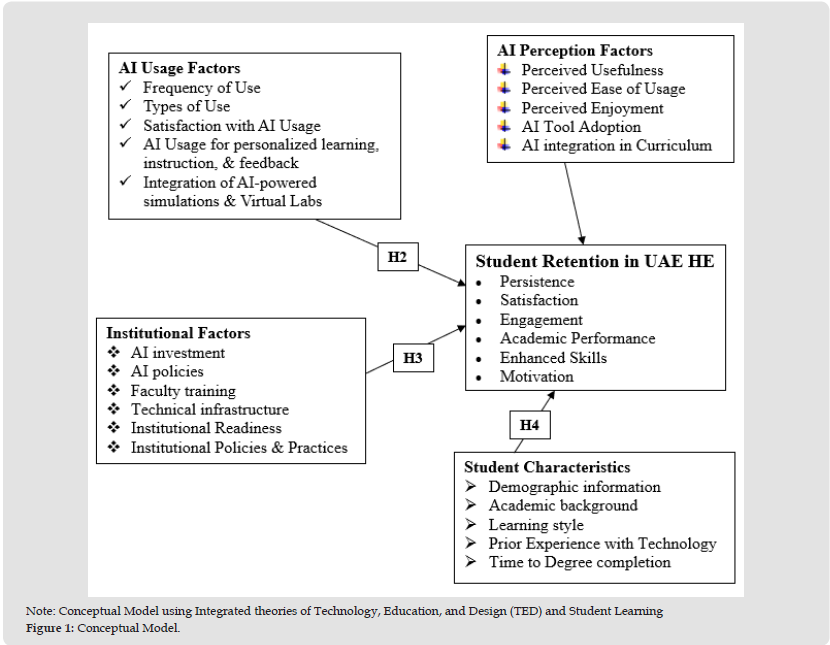
This research study employs a mixed-method approach to explore the impact of artificial intelligence (AI) on student retention in higher education. The methodology involves the integration of both quantitative and qualitative methods to ensure a comprehensive analysis of the factors influencing student retention in AI-enhanced educational environments. The study will be conducted in two phases: a longitudinal survey with students and semi-structured interviews with AI and education experts. This mixed approach allows for the collection of diverse data and ensures that findings are robust, triangulated, and relevant to the research objectives. This study adopts an explanatory sequential design where quantitative data is collected first through surveys with students, followed by qualitative data collection through expert interviews. The quantitative data will provide a broad understanding of the relationships between AI usage and student retention, while the qualitative data will provide in-depth insights and explanations from experts in the field. The Quantitative analysis will use a sample of 378 stakeholders consisting of students, Teachers, Administrators, parents, and Policymakers, and the analysis of Inferential statistics, such as paired sample t-tests and regression analysis, will be used to assess changes over time in student retention and engagement, as well as to explore the relationships between AI usage and student retention.
Structural Equation Modeling (SEM) will be employed to validate the relationships between independent and dependent variables within the conceptual model. This method will allow the study to test hypotheses and model complex interactions between AI-related factors and retention outcomes. The qualitative data analysis is done using the thematic analysis, recording the interviews of 13 Education experts using AI and a transcript of the same to code using the appropriate themes and report the findings in the interview summary (George, et al. [25]).
Experts underscore the critical role of Generative AI in shaping the future of education and driving student retention in UAE higher education. AI technology is a catalyst for innovation, improving educational products and services while streamlining institutional operations. To remain competitive, institutions must stay informed about the latest AI advancements and actively adopt new technologies that enhance learning experiences. Equally important is addressing the ethical implications of AI use, ensuring that it aligns with educational values and principles. While AI offers vast opportunities, its thoughtful and responsible implementation is essential to mitigate risks and maximize positive impacts on student retention and success [26-52] (Tables 1 & 2).
Table 1: Interview Summary.

Table 2:

Quantitative Analysis using ADANCO Output
Analysis of the Measurement Model: The study employed the Dijkstra-Henseler’s rho (ρA) coefficient and Average Variance Extracted (AVE) values to assess construct validity, alongside a discriminant validity analysis to ensure the uniqueness of the constructs. Results from the discriminant validity analysis demonstrated that correlations within each construct were higher than those between different constructs, confirming strong discriminant validity. Additionally, structural equation modeling (SEM) was utilized as a robust statistical technique to test hypotheses and analyze relationships among the constructs. SEM’s ability to manage complex models and evaluate multiple relationships simultaneously made it an ideal choice for this study. Its application enabled a thorough exploration of the connections between the constructs, providing critical insights into the UAE Higher Education (HE) Model. Overall, the study adopted well-established methods to assess construct validity, convergent validity, and discriminant validity, with SEM offering valuable insights into the interrelationships of the constructs (Iyer, et al. [53]). In PLS path modeling, assessing construct validity typically involves examining indicator variables and their outer loading values.
This method is well-recognized and widely accepted within the field. A standardized outer loading value of 0.70 or higher is generally regarded as an acceptable threshold, indicating that the indicator variable adequately represents the associated construct. In this study, Table 3 presents the outer loading values for each indicator variable, providing a clear and concise summary that aids in the easy interpretation of the data. This approach plays a key role in evaluating construct validity. The study’s results demonstrate the effective application of indicator variables, with their outer loading values exceeding the 0.70 threshold, confirming their reliability in measuring the respective constructs (Sarstedt, et al. [54]). All p-values indicating the validity of the relationships are well below the significance level of 0.05, providing strong support for the hypotheses. The results data not only support but also authenticate all the hypotheses, as mentioned by Hair, et al. [55]. Table 4 presents the discriminant validity measures, which evaluate the extent to which one variable differs from others in the structural model. These measures are assessed using the Fornell-Larcker criterion and cross-loadings. The bold diagonal values in the table represent the highest values in both their respective rows and columns, providing strong evidence of discriminant validity. The analysis was performed using ADANCO 2.3, following the guidelines outlined by Sarstedt, et al. [54].
Table 3: Shows the Discriminant Validity heterotrait-monotrait ratio.

Note: Source: ADANCO results, 2023
Table 4: Discriminant Validity.

Table 5 presents the cross-loadings, highlighting the influence of variables on each other. The coefficient of determination (R²) measures the relationship between constructs in the study. A minimum R² value of 0.25 was required for a construct to be deemed relevant and significant. The R² value for Student Retention in UAE Higher Education was 0.761, indicating that the construct is not only relevant and significant but also demonstrates a strong capacity to explain the variables in the research. The research framework developed and tested for validity and reliability using PLS-SEM has made a valuable contribution to this study, supported by the consensus of 378 respondents, representing stakeholders in the UAE higher education sector. The methodology addresses the scarcity of relevant data, providing a foundation for future researchers to refine or develop similar models. While the theories cited are relevant in stable economies with equal educational opportunities and available infrastructure, they fall short in explaining factors during periods of recession, war crises, or sanction regimes. Therefore, this research offers a robust, evidence-based framework to guide future work in such contexts (Iyer, et al. [53]). The third-level relationships are not considered relevant for this study, as their β values fall below the 0.01 threshold. Figure 2 shows the PLSSEM Validation framework given by the ADANCO software. (Sarstedt, et al. [54]) (Tables 3-8) (Figure 2).
Table 5: R- Squared.
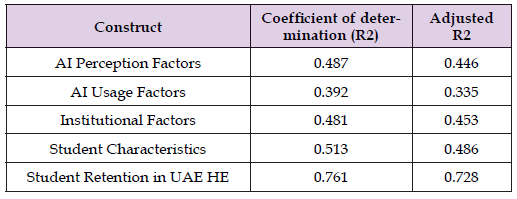
Figure 2

Table 6: Analysis of Measurement Model.

Note: Source: ADANCO result, 2024
Table 7: Analysis of Measurement Model.

Note: Source: ADANCO results, 2023.
Table 8: Loadings of Indicator Loadings.

Hypothetical Decisions
• H1: AI Perception Factors such as perceived usefulness, ease of usage, and enjoyment directly shape how students interact with AI tools in learning environments. When students perceive AI tools as useful and easy to use, they are more likely to engage with these tools positively, leading to improved academic outcomes and satisfaction. The adoption of AI tools that personalize learning, provide real-time feedback, and support adaptive learning fosters an engaging learning environment. When students enjoy using AI tools and find them helpful in their studies, they are more likely to persist in their programs, boosting retention rates. Institutions in UAE HE that effectively integrate AI into the curriculum create positive perceptions of AI tools, which enhances student satisfaction, motivation, and academic success. When students find AI tools useful and easy to use, it reduces frustration, increases engagement, and makes the learning experience more enjoyable. This alignment between positive perceptions of AI and student engagement ultimately leads to higher retention rates (Ahmad, et al. [56]).
• H2: The frequency and type of AI usage, as well as how satisfied students are with AI-based learning tools, play a crucial role in student retention. Personalized learning experiences, driven by AI, can provide students with tailored feedback and instruction, addressing their unique learning needs. AI-powered simulations and virtual labs also allow students to engage in hands-on learning, making abstract concepts easier to understand and retaining interest in their studies. The more frequently students use AI tools and the more satisfied they are with these experiences, the more likely they are to stay engaged and complete their programs. Students in UAE HE who frequently use AI tools for personalized learning, instruction, and feedback tend to experience more effective learning outcomes, leading to higher satisfaction with their academic journey. This high satisfaction, combined with interactive learning methods like simulations and virtual labs, sustains student interest, engagement, and motivation, thereby improving retention rates. When AI tools meet student’s learning needs, they are more likely to remain committed to their studies (Rekha, et al. [57]).
• H3: Institutional factors are critical in shaping how AI is integrated into the educational system. AI investment, both financial and infrastructural, ensures that the latest AI tools and technologies are available for student use. Faculty training ensures that educators can effectively leverage AI to enhance the learning experience, while well-defined AI policies and technical infrastructure ensure that AI is used ethically, efficiently, and reliably. Institutions that are ready and prepared to support AI integration through robust infrastructure and clear policies create a more supportive and stable learning environment, which leads to higher student retention. When UAE HE institutions invest in AI and provide the necessary infrastructure and faculty training, they create a seamless, AI-driven educational experience that enhances student satisfaction and engagement. Institutional readiness to support AI implementation, alongside well-structured policies and practices, ensures that students have continuous access to high-quality AI tools. As a result, students are more likely to remain enrolled and complete their programs, as the institutional environment supports their academic success and satisfaction (Ogunode, et al. [58]).
• H4: Student characteristics like demographics, academic background, learning style, and prior experience with technology significantly influence how students engage with AI tools and their overall retention in the program. Students with strong academic backgrounds or prior experience with technology may adapt more quickly to AI-driven learning environments, leading to higher satisfaction and retention. Conversely, students with limited technology experience may struggle initially but can be retained through proper support. Additionally, students who benefit from personalized learning experiences that align with their learning styles are more likely to stay engaged. The time taken to complete a degree can also affect retention, with flexible learning pathways helping to accommodate students with varying schedules. In UAE HE, the diverse student population means that institutions must cater to various learning styles, academic backgrounds, and technology experiences. Institutions that provide personalized learning support, flexible degree pathways, and digital literacy programs can better meet the needs of their students, leading to higher retention. By understanding and addressing individual student characteristics, universities can improve student satisfaction and engagement, which is crucial for retention (Matz, et al. [59]). Each hypothesis is supported by the understanding that the interplay between AI technologies, institutional commitment, and individual student characteristics collectively determines the success of AI-driven education in influencing student retention in UAE HE. Real-world examples from the UAE and global higher education support the hypothesis that AI significantly influences student retention through various factors. At the American University of Sharjah (AUS), AI-powered learning management systems, personalized feedback tools, and chatbots enhance student perceptions of usefulness and ease of use, boosting retention. UAE University’s use of AI for personalized learning and AI-powered virtual labs improves student engagement and satisfaction, demonstrating the impact of AI usage on retention. The Higher Colleges of Technology (HCT) exemplifies how institutional factors such as AI investment, faculty training, and robust infrastructure lead to improved retention outcomes. Zayed University employs AI-driven adaptive learning platforms that cater to diverse student characteristics, including learning styles and prior technology experience, ensuring that students’ progress at their own pace and remain engaged. Globally, institutions like Georgia State University use AI chatbots to improve student satisfaction, and platforms like Coursera and Udacity leverage AI for personalized learning, demonstrating AI’s role in supporting student retention across various contexts (Kamalov, et al. [60]).
Enhancing Student Retention in UAE HE
Objective 1: Examining the Impact of AI-powered Personalized Learning Systems on Student Engagement and Retention: The research has successfully demonstrated that AI-powered personalized learning systems significantly enhance cognitive, emotional, and behavioral engagement, thereby positively influencing student retention in UAE higher education. Institutions such as UAE University and Zayed University employ AI-driven adaptive learning tools that tailor educational content to individual student needs, resulting in improved cognitive engagement by providing relevant, targeted learning materials. Emotional engagement is bolstered through AI tools that offer personalized support and encouragement, while behavioral engagement is enhanced through adaptive learning pathways that motivate students to participate consistently in academic activities. These systems have shown a direct impact on retention by keeping students engaged at all levels of their learning experience.
Objective 2: Analyzing the Effect of Adaptive Learning Technologies on Student Performance and Retention: The research findings highlight that adaptive learning technologies, such as AI-driven platforms that provide customized learning experiences, significantly improve student performance and retention in UAE higher education institutions. These technologies assess student progress and adapt the curriculum to meet individual needs, helping students achieve better academic outcomes. For instance, UAE University’s use of AI-powered adaptive learning tools allows students to receive tailored support, which improves learning efficiency and performance. This personalized approach not only enhances academic success but also contributes to higher retention rates, as students who perform well are more likely to continue their education.
Objective 3: Evaluating the Impact of AI-facilitated Real-time Feedback and Support on Student Satisfaction and Retention: The research has effectively evaluated how AI-facilitated real-time feedback and support mechanisms improve student satisfaction, which in turn positively influences retention. UAE institutions like the American University of Sharjah use AI-driven feedback systems to provide students with immediate, constructive feedback on their academic work. This timely and personalized feedback helps students stay on track with their studies, improving their satisfaction with the learning process. Additionally, AI chatbots and virtual assistants offer students real-time academic and administrative support, ensuring that any challenges are quickly addressed, further enhancing satisfaction and retention in the UAE HE context.
Objective 4: Identifying Challenges and Ethical Issues in AI Implementation for Student Retention: The research also identifies key challenges and ethical issues associated with the implementation of AI in improving student retention in UAE higher education. These challenges include concerns about algorithmic transparency, data privacy, and bias mitigation, which can affect student trust in AI systems. Institutions in the UAE are grappling with the need to ensure that AI tools are ethically designed, fair, and transparent, particularly in terms of how student data is used for personalized learning. Additionally, faculty training and infrastructure limitations present challenges in fully leveraging AI’s potential. Addressing these ethical considerations and operational hurdles is critical to maximizing AI’s role in enhancing student retention.
Implications of this Research
Practical Implications: The research has significant practical implications for the implementation of AI technologies in UAE higher education. Institutions can leverage AI-powered personalized learning systems to enhance student engagement, improve academic performance, and boost retention rates. The use of adaptive learning technologies, real-time feedback, and AI-driven support systems can provide tailored educational experiences, allowing institutions to address individual student needs more effectively. Additionally, AI tools can streamline administrative processes, such as academic advising and student support, ensuring that students receive timely assistance, thereby reducing dropout rates. Implementing these technologies requires investment in infrastructure and faculty training, but the benefits to student outcomes are substantial (Nimbalagundi, et al. [61]).
Social Implications: The social implications of this research are profound, as AI integration in education can foster greater inclusivity and accessibility. AI-powered systems that offer personalized learning pathways can support students from diverse academic backgrounds, learning styles, and prior experiences with technology, helping bridge gaps in educational attainment. Furthermore, AI tools can enhance engagement for students who may struggle with traditional learning methods, promoting equity in education. However, the ethical considerations identified, such as concerns around data privacy and bias, need to be addressed to ensure that AI use in education promotes fairness and trust among students and faculty. By doing so, AI technologies can contribute to a more equitable and socially responsible educational environment in the UAE (Ramírez, et al. [62]).
Managerial Implications: For higher education administrators and managers, this research highlights the need for strategic planning and policy development regarding AI implementation. Institutions must invest in technical infrastructure and ensure that faculty are adequately trained to use AI tools effectively. Managers need to establish clear guidelines for AI usage that address ethical issues, such as algorithmic transparency, data privacy, and fairness, to build trust in AI-driven systems. Additionally, leadership should focus on creating a supportive environment for AI adoption by aligning AI initiatives with institutional goals of improving student retention and performance. Effective management of AI integration will require collaboration across departments, careful monitoring of AI system outcomes, and continuous updates to policies and practices based on evolving ethical standards and technological advancements (Shneiderman [63]).
Limitations and Future Research
This study has several limitations that open avenues for future research. First, the focus on UAE higher education institutions may limit the generalizability of the findings to other contexts or regions with different educational systems, cultural values, and technological infrastructure. Further research could expand the scope to compare AI’s impact on student retention in other countries or regions. Second, the study relies primarily on current AI technologies, but AI is rapidly evolving. Future studies should explore the long-term effects of emerging AI technologies such as advanced machine learning models, generative AI, and AI-driven immersive learning environments, which could further enhance student engagement and retention. Additionally, this study primarily examined student retention, but there is a need for deeper exploration into how AI affects other dimensions of student success, such as employability, lifelong learning, and student well-being. Finally, the ethical challenges identified particularly around data privacy and algorithmic bias—require further investigation. Future research should focus on developing frameworks for ethical AI integration, ensuring that AI systems are transparent, fair, and inclusive, and examining the broader societal impacts of AI in education beyond retention. These considerations will help build a more comprehensive understanding of AI’s role in shaping the future of higher education.
The Contribution and Originality (Value of the Research) This research makes a significant contribution to the understanding of how AI-powered technologies influence student retention in UAE higher education, offering both theoretical and practical insights. Its originality lies in integrating multiple factors-AI perception, usage, institutional readiness, and student characteristics-to present a holistic framework for analyzing the impact of AI on student retention. By focusing on the UAE, a region where AI adoption in education is rapidly growing, the study provides valuable context-specific findings that highlight the unique challenges and opportunities associated with AI implementation in higher education. The research also addresses a critical gap by examining the ethical dimensions of AI use in education, particularly issues of data privacy, bias, and transparency, which have been underexplored in existing literature. Moreover, this study contributes original knowledge by evaluating the adaptive learning technologies and AI-facilitated real-time feedback systems, showcasing their direct influence on student engagement, satisfaction, and academic performance. The findings offer practical recommendations for educators, administrators, and policymakers to enhance AI integration, ensuring it supports student success and institutional objectives. This research adds significant value by providing a comprehensive, evidence-based framework that can guide future AI-driven educational practices both in the UAE and globally [64,65].
In conclusion, this study has successfully met its objectives by thoroughly examining the impact of AI-powered personalized learning systems, adaptive learning technologies, and real-time feedback mechanisms on student engagement, performance, satisfaction, and retention in UAE higher education. The research has demonstrated that AI technologies significantly enhance cognitive, emotional, and behavioral engagement, thus supporting the hypotheses that AI perception, usage, institutional factors, and student characteristics all play critical roles in influencing student retention. Through the analysis of current AI practices in UAE institutions, the study highlights how AI investment, infrastructure, and faculty readiness contribute to retention outcomes, while also addressing challenges related to ethics, data privacy, and inclusivity. The findings offer a valuable contribution to the growing body of knowledge on AI’s transformative potential in education, providing a comprehensive framework that can guide educational practices and policies. This research not only informs institutions on how to effectively leverage AI for improved student retention but also emphasizes the broader societal impact of AI in fostering more personalized, equitable, and efficient learning environments. Ultimately, it contributes to a future where AI-driven education systems promote greater accessibility, student success, and lifelong learning in a rapidly evolving educational landscape.

International Association of Landscape Archaeology, Czech Glass Society, Czech Republic

Department of Chemistry, Semenov Institute of Chemical Physics, USSR Academy of Sciences, Moscow, Russia

Associate Professor at Department of Breast and Thyorid Surgey, Chongqing General Hospital, China

Professor of Nuclear Medicine, Faculty of Medicine and Surgery, University of Milan, Milan, Italy

Department of Pharmaceutical Sciences, South University School of Pharmacy, USA





 Abstract
 PDF
PDF



























