info@biomedres.us
+1 (502) 904-2126
One Westbrook Corporate Center, Suite 300, Westchester, IL 60154, USA
Site Map
 ISSN: 2574 -1241
ISSN: 2574 -1241
ISSN: 2574 -1241
Received: September 12, 2024; Published: October 15, 2024
*Corresponding author: Cristina de Ancos Aracil, Universitary Hospital Fuenlabrada, Madrid, Spain
DOI: 10.26717/BJSTR.2024.59.009245
Objectives: To describe the clinical characteristics and outcomes of COVID-19 patients treated with LMWH during the early stages of the pandemic.
Methods: Retrospective analysis of all non-critically ill patients admitted because of COVID-19 between March and April 2020 to three public hospitals in Spain. The primary outcome was clinical progression, assessed by the sepsis-induced coagulopathy (SIC) score and the sequential organ failure assessment (SOFA).
Result: We included 415 patients; 359 (79.8%) received anticoagulant therapy, all of them with enoxaparin. Risk factors on admission were significantly higher among enoxaparin-treated patients. No significant differences were found between patients treated and non-treated with enoxaparin regarding in-hospital mortality, admissions to the intensive care unit (ICU), and the SOFA and SIC scores at any time point. No significant changes in the SOFA score throughout the follow-up were observed in patients treated with enoxaparin (p=0.077) and those not treated (p=0.367). The SIC score decreased in enoxaparin-treated patients (p=0.011; mixed-model analysis) but not in non-treated (p=0.856). We found no significant differences between treated and non-treated patients regarding the frequency of thrombotic events and bleeding episodes. Bleeding events were observed in 4 (4.3%) of the 92 patients with thrombocytopenia at baseline and treated with enoxaparin; none of them were major bleedings.
Conclusion: Treatment with enoxaparin in non-critically ill patients hospitalized because of COVID-19 was safe, even early in the pandemic when guidance was still limited. In our cohort, enoxaparin therapy was associated with a significant clinical improvement, despite the relatively high prevalence of risk factors in these patients.
Keywords: COVID-19; Enoxaparin; D-Dimer; Fibrinogen; Thrombosis; Bleeding
Abbreviations: SOFA: Score and the Sequential Organ Failure Assessment; SIC: Sepsis-Induced Coagulopathy; ICU: Intensive Care Unit; SARS-CoV-2: Severe Acute Respiratory Syndrome Coronavirus; LMWH: Low Molecular Weight Heparin; APTT: Activated Partial Thromboplastin Time; PT: Prothrombin Time; SD: Standard Deviation
Infection with severe acute respiratory syndrome coronavirus (SARS-CoV-2) is often associated with coagulation abnormalities, including increased D-dimer and fibrinogen levels, which increase the risk of thrombotic events [1-3]. The thrombotic risk among COVID-19 patients depends on many factors, including the severity of respiratory failure, the need for supplemental oxygen therapy and high body mass index (BMI) [4]. Preliminary evidence on the thrombotic risk encouraged the administration of anticoagulant therapy to COVID-19 patients with severe illness; as the pandemic progressed, heparin therapy was introduced into the regular practice of hospitalized COVID-19 patients, irrespective of their severity on admission [5]. Although treatment with heparin, particularly low molecular weight heparin (LMWH), is considered overall safe, caution needs to be taken to prevent bleeding episodes, which might complicate the clinical course or be even lethal.
On the other hand, in pro-thrombotic scenarios such as SARS-CoV-2 infection, regular doses of anticoagulation might not suffice for preventing thrombotic events [6]. The appropriate trade-off between the risk of thrombosis and bleeding should be established based on the regular monitoring of hemostasis parameters, including platelet count, prothrombin time (PT), activated partial thromboplastin time (APTT), fibrinogen, and D-dimer levels. The rapid-emerging evidence accumulated during the first half of 2020 allowed releasing detailed guidelines for thrombotic risk management and hemostasis monitoring of patients hospitalized because of COVID-19 [4]. However, physicians treating hospitalized COVID-19 patients during the early stages of the COVID-19 pandemic had little guidance for addressing the delicate balance between thrombosis and bleeding, and there was controversy regarding the optimal therapeutic approach for preventing thrombotic events [7,8].
The emergency use of heparin before releasing guidelines provided valuable information regarding the safety margin of LMWH therapy. Furthermore, preliminary data suggested that non-anticoagulant (primarily anti-inflammatory) properties of LMWH, such as its effect on interleukin-6 (IL-6) levels, may improve the overall clinical progression of COVID-19 patients [9]. Therefore, real-world data on COVID-19 patients during the early stages of the pandemic may provide information on the potential effect of LMWH therapy on disease progression. Hepavid study aimed to describe the clinical characteristics and outcomes of COVID-19 patients treated with LMWH during the early stages of the pandemic in Spain.
Study Design and Patients
Hepavid study was a retrospective analysis of adult (≥18 years old) patients admitted to three public hospitals in Spain because of COVID-19 between March and April 2020, during the first wave of the COVID-19 outbreak. COVID-19 diagnosis was based on a PCR test, antigen-detecting rapid diagnostic test, a serological (IgM) test, or radiologic evidence of infection. To be included in the record, the COVID-19 episode had to be resolved (either discharged, recovered, or dead) by the time of data collection, which was performed between July and September 2020. Main exclusion criteria were other severe systemic illnesses (including active neoplasia) or concomitant infections, history of venous thromboembolism, anticoagulation therapy by the time of hospital admission, admission to intensive care unit (ICU) or need of invasive mechanical ventilation within the first 24 hours following hospitalization, pregnant women, and missing data on D-dimer at baseline. Data were handled according to the General Data Protection Regulation 2016/679 on data protection and privacy for all individuals within the European Union and the local regulatory framework regarding data protection. The study protocol was approved by the independent ethics committee of the Hospital Puerta de Hierro (Madrid, Spain), which waived the need for obtaining informed consent based on the retrospective nature of the study and adequate anonymization of the collected data.
Variables and Outcomes
The characteristics of patients by the time of hospital admission (i.e., baseline) included age, sex, height, weight, the presence of comorbidities, and the score of the WHO scale for clinical status [10]. The following laboratory parameters were analyzed at baseline, at day 3 of hospitalization and at the end of the COVID-19 episode, irrespective of the outcome (discharge, recovery or death): D-dimer, fibrinogen, platelet count, activated prothrombin time, and international normalized ratio. The primary objective of the study was to assess the clinical progression of hospitalized patients. Clinical progression was assessed by the sepsis-induced coagulopathy (SIC) score [11], and the sequential organ failure assessment (SOFA) [12]. The SOFA score rates the extent of organ function, including the respiratory, cardiovascular, hepatic, coagulation, renal, and neurological systems; the final score may range from 0 (function in all systems preserved) to 24 (highest failure rate in all systems).
The SIC score rates the likelihood of sepsis-induced coagulopathy on a 0 – 6 scale. The WHO score for clinical improvement rates the progression of the disease based on clinical outcomes on a 0 (no clinical evidence of infection) to 8 (death) scale. Other clinical outcomes included death, ICU admission, length of hospital stay, and need of respiratory support. We also recorded medications administered during hospital stay, including corticosteroids and anticoagulation therapy with enoxaparin (biosimilar enoxaparin-Hepaxane®/Ghemaxan®- was the only anticoagulant therapy used in this study), administered using a prophylactic regimen of 40 mg daily (60 mg daily for patients weighting ≥ 80 Kg), a therapeutic regimen (1.5 mg/Kg/day or 1 mg/Kg/day every 12 hours) or intermediate (1mg/Kg/day or 40 mg every 12 hours). Finally, adverse events (AE), related or not with LMWH therapy, were recorded.
Statistics
Quantitative variables were described as the mean and standard deviation (SD) or the median and the interquartile range (IQR, defined as the 25th and 75th percentiles), and categorical variables were described as the frequency and percentage over available data. Missing values were not imputed. Analyses were performed for the overall study sample and according to treatment with enoxaparin. All patients who were treated with enoxaparin through the first seven days after admission were classified as enoxaparin treated patients, irrespective of regimen and treatment duration; and patients who did not receive enoxaparin (or any other type of anticoagulation therapy) during the first seven days after admission were classified as enoxaparin non-treated patients. The change of laboratory parameters and clinical scores throughout hospital stay were analyzed using a mixed linear model, which models means, variances, and covariances of qualitative and quantitative variables [13]. Between-group differences were assessed using the Fisher exact test for qualitative variables and the T-test, ANOVA, or Wilcoxon-Mann-Whitney, as appropriate. The significance threshold was set at a two-sided alpha value of 0.05. All analyses were performed on SAS® software, version 9.4.
Patient Characteristics on Admission
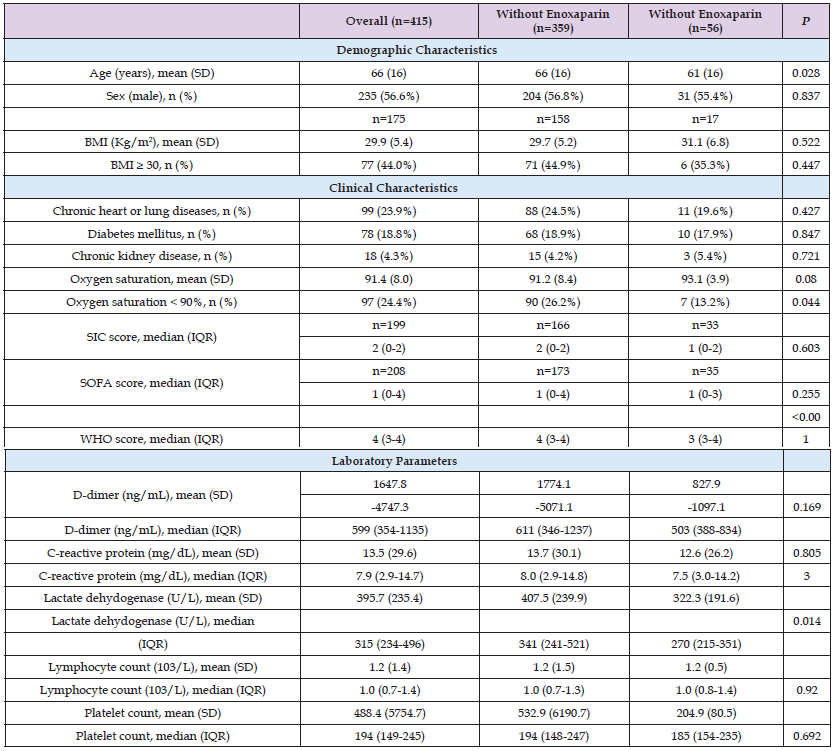
During the investigated period, 418 individuals were admitted to the hospital because of COVID-19; 3 were excluded from the analysis because of missing data on admission, leading to a study sample of 415 patients. The COVID-19 diagnosis was preliminary established based on PCR test (n=254, 61.2%), typical clinical and radiological findings only (n=91, 21.9%), IgM serological test (n=43, 10.4%), and antigen-detecting rapid diagnostic test (n=27; 6.3%); 386 (93.0%) patients had at least one radiological test. During the hospital stay, 359 (79.8%) patients received anticoagulant therapy, all of them with enoxaparin. Of them, 312 (312/359; 86.9%) received a prophylactic dose, 18 (18/359; 5.0%) therapeutic dose, and 29 (29/359; 8.1%) an intermediate dose. Patients who were prescribed enoxaparin were significantly older, more frequently had oxygen saturation < 90%, had higher median WHO score, and had higher LDH serum levels (Table 1). No significant differences were found between treated/non-treated regarding the SOFA and SIC scores. Overall, 105 patients had thrombocytopenia (platelet count <150 x103/µL) at baseline: 92 (25.9%) of the enoxaparin-treated patients and 13 (23.2%) of the non-treated. Thirty-one patients had D-dimer levels above 2,500 ng/mL; of them, 29 were treated with enoxaparin (8.1% of patients in the enoxaparin group).
Table 1: Characteristics of study participants on hospital admission (baseline).
Clinical Outcomes
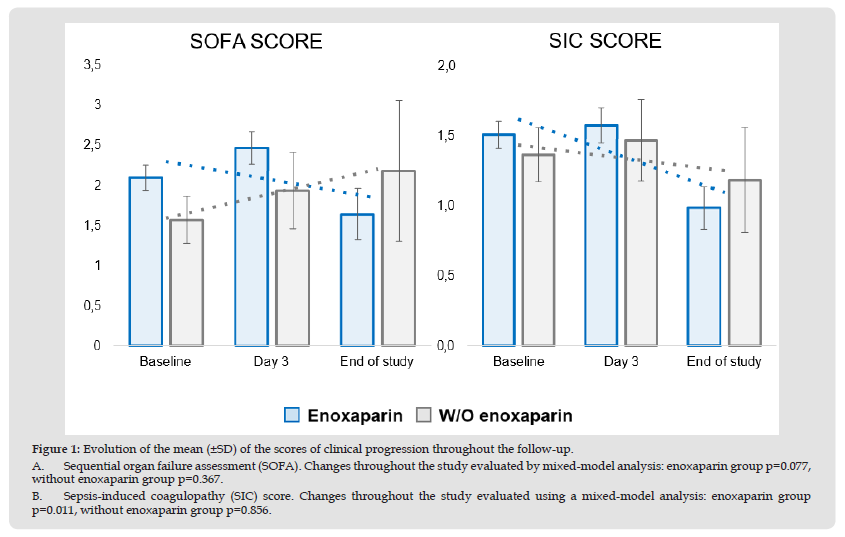
Table 2 summarizes the main hospital outcomes of study participants. Patients treated with enoxaparin showed significantly larger hospital stays and a more frequent need for respiratory support, particularly oxygen therapy. Patients treated with enoxaparin also received corticosteroid therapy more frequently. No significant differences between groups were observed regarding in-hospital mortality and rate of ICU admission. Figure 1 summarizes the changes in the SOFA and SIC scores from baseline to the last measurement. We found no significant differences between patients treated and non-treated with enoxaparin regarding the SOFA and SIC scores at any time point. The mixed model analysis showed no significant changes in the SOFA score throughout the follow-up in patients treated with enoxaparin (p = 0.077) and those not treated (p = 0.367). The SIC score significantly decreased in patients receiving enoxaparin (p = 0.011; mixed- model analysis) but not in those without enoxaparin (p = 0.856).
Table 2: Hospital outcomes.
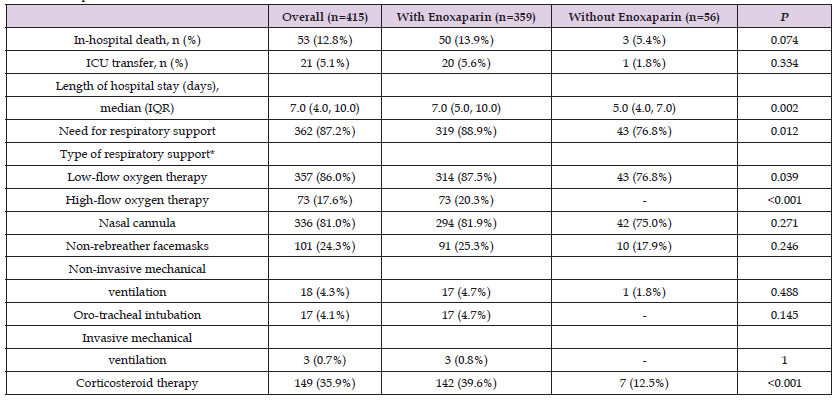
Note: *Each patient may have required more than one type of respiratory support throughout hospital stay.
Figure 1
Hemostasis Progression and Treatment Safety
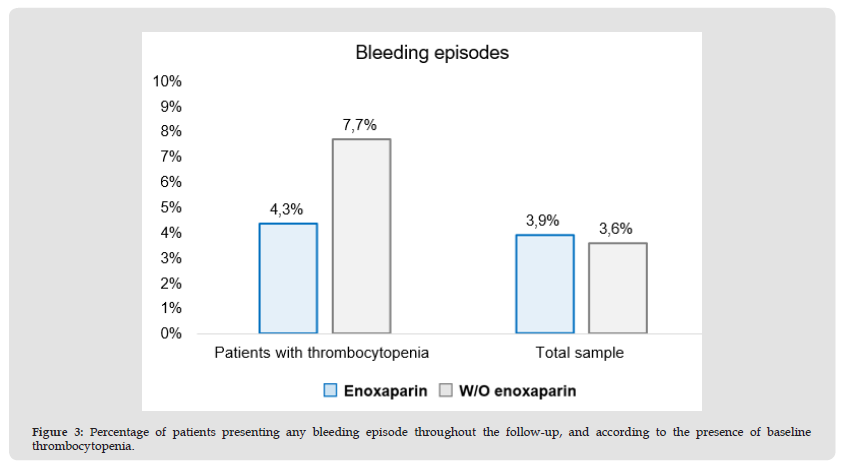
Figure 2 summarizes the change in hemostasis parameters recommended for monitoring COVID-19 patients treated with enoxaparin [4]. We found no significant differences between patients treated and those not treated with enoxaparin regarding D-dimer levels, platelet count, INR, and APTT. Patients treated with enoxaparin had lower fibrinogen levels at all time-points. According to the mixed model, patients treated with enoxaparin significantly decreased the fibrinogen levels throughout the follow-up compared to those non- treated. Table 3 summarizes the number of thrombotic events and bleeding episodes observed for the overall population and according to enoxaparin treatment. Pulmonary thromboembolism and disseminated intravascular coagulopathy were the most frequent thrombotic events. Of the 31 patients with D-dimer >2,500 ng/mL, two experienced a pulmonary thromboembolism; one of them was receiving prophylactic doses of enoxaparin and the other one therapeutic doses. Twelve out of 14 patients in the enoxaparin group who experienced a bleeding event were being treated with LMWH at the time of the event. Of the 47 patients treated with intermediate or therapeutic enoxaparin doses, two experienced non-major bleeding events. Bleeding events were observed in 4 (4.3%) of the 92 patients with thrombocytopenia at baseline and treated with enoxaparin (Figure 3); none of them were major bleedings. Overall, during the hospital stay, 246 (59.3%) patients experienced at least one AE: 214 (59.6%) of the enoxaparin -treated patients and 32 (57.1%) of the non-LMWH (p = 0.727). Of the 359 patients treated with enoxaparin, 15 (4.2%) experienced a treatment-related adverse event; of them, only 6 (1.7%) were serious AEs.
Figure 2
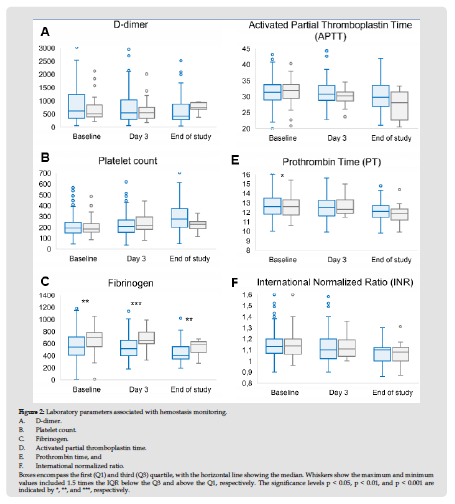
Table 3: Thrombotic and bleeding events.
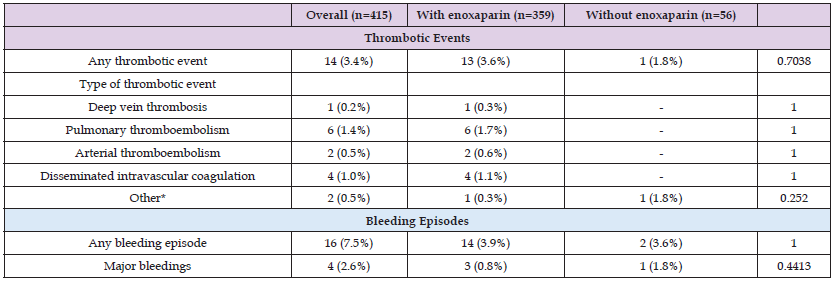
Figure 3
Our retrospective analysis of non-critically ill COVID-19 patients admitted to hospital, within the first wave of the COVID-19 outbreak, showed that the treatment with enoxaparin resulted in a clinical improvement despite the poorer clinical status of these patients at baseline, compared with those who did not receive LMWH. The better improvement of enoxaparin-treated patients compared with non-treated was manifested as a trend towards a reduction of the SOFA score, and a significant decrease of SIC score, not observed in patients who did not receive enoxaparin. More importantly, enoxaparin treatment showed a favorable safety profile, despite the limited guidance at that time and the inclusion of patients with risk factors for bleeding and thrombotic events, such as high d-dimer levels and low platelet counts. Based on the risk of thrombosis associated with high levels of D-dimer, [14,15] it has been suggested that this laboratory parameter should be used to guide antithrombotic therapy in COVID-19 patients. However, uncertainty exists regarding the extent of the influence of this factor on the clinical outcome in this setting [16], resulting in heterogeneous recommendations in clinical guidelines [17].
This heterogeneity was transferred to routine practice, where most clinicians agreed on the need of measuring D-dimer levels when prescribing antithrombotic therapy in the COVID-19 setting, although the cutoffs for elevated levels varied among respondents [18]. In our cohort, 31 patients had D-dimer values above 2,500 ng/mL; of them, two experienced a pulmonary thromboembolism despite anticoagulation therapy. Another relevant, albeit heterogeneous, laboratory parameter for making decisions in anticoagulation therapy is the platelet count, although guidelines on the management of COVID-19 patients often lack a thrombocytopenia threshold for treatment [17]. In our cohort, 92 patients started antithrombotic therapy despite platelet counts below 150 x103/µL. Nevertheless, bleeding events rate remained low (4.3%), similar to the pooled incidence of bleeding reported for COVID-19 patients not receiving anticoagulation therapy (4.4%) [19]. In the management of COVID-19 patients, the best dose of LMWH is not well established.
In fact, in relevant randomized-controlled trials on non-critically ill COVID-19 patients, the dose of LMWH was left to clinician discretion [20]. In our cohort of real-world patients admitted during the first wave of the outbreak, more than 85% of the patients treated with enoxaparin received prophylactic doses. Although the limited number of patients treated with intermediate or therapeutic doses precluded powered comparisons in clinical outcomes according to the type of dose, it was noticeable that only two of the 47 patients treated with intermediate or therapeutic doses experienced a non-major bleeding event, which were non-major. The risk of bleeding in COVID-19 patients treated with LMWH remains a concern for clinicians dealing with COVID-19 in routine practice [21]. However, our findings show that treatments with enoxaparin in non- critically ill COVID-19 patients were overall safe, even during the first wave of the pandemic, when clinicians lacked specific guidance in this regard. Our study must be read in the context of non-critically ill patients, since those with critical COVID-19 on admission were excluded from the analysis. Furthermore, the analysis was limited by the reduced number of patients not treated with enoxaparin. This unbalance, due to early guidance recommending LMWH administration to all hospitalized COVID-19 patients, did not allow powered comparisons between patients receiving and not receiving antithrombotic prophylaxis or therapy.
Furthermore, significant differences were observed between the two groups at baseline, suggesting that enoxaparin was primarily administered to individuals with poorer clinical condition on admission. Differences between the two groups at baseline are likely to explain the differences in length of stay, use of corticosteroids, or need for respiratory support. Finally, it is worth mentioning that some of the questions regarding LMWH dosing strategy in COVID-19 patients have now been addressed in large randomized-controlled trials [22,23]. Still, our report complements these findings by providing data from a less controlled environment, such as the real-world setting.
In our cohort, enoxaparin therapy was associated with a significant clinical improvement, despite the relatively high prevalence of risk factors in these patients. Hepavid study results indicate that treatment with enoxaparin in non-critically ill patients hospitalized due to COVID-19 was safe, even early in the pandemic when evidence for its clinical efficacy was still limited. Furthermore, in our cohort, enoxaparin therapy was associated with a significant clinical improvement and favorable therapeutic outcomes, despite the relatively high prevalence of risk factors in these patients. Our findings add to the cumulative real-world data on thromboprophylaxis and anticoagulation therapy in COVID-19 patients.
The authors would like to thank Hepavid clinical study investigators for their valuable research work and Neus Cerdà (BioClever) for providing statistical support.
CAA and JPS have received grants and research support from ITF Research. MPP and NCR have participated in educational activities sponsored by Bayer, Sanofi, Rovi, and Sankio. JANR has received grants and research support from ITF Research and has participated in educational activities sponsored by Bayer, Sanofi, Rovi, and Sankio. JC and AMF have received honoraria or fees as consultant/advisory board member from ITF Research. FJHB, EGA, JLM-B, and CNM are employees of ITF Research SLU. Rest of authors have no conflicts of interest to declare.
No funding was received.
Study data was handled according to the General Data Protection Regulation 2016/679 on data protection and privacy for all individuals within the European Union and the local regulatory framework regarding data protection. The Study Protocol was approved by the Independent Ethics Committee of the Hospital Puerta de Hierro (Madrid, Spain), which waived the need for obtaining informed consent based on the retrospective nature of the study and adequate anonymization of the collected data.

International Association of Landscape Archaeology, Czech Glass Society, Czech Republic

Department of Chemistry, Semenov Institute of Chemical Physics, USSR Academy of Sciences, Moscow, Russia

Department of Educational Sciences, Research Centre Qualities of Teachers, School of Education – HAN, Nijmegen, Netherlands

Associate Professor at Department of Breast and Thyorid Surgey, Chongqing General Hospital, China

Neurology, LA BioMed Research Institute, USA





 Abstract
 PDF
PDF



























