info@biomedres.us
+1 (502) 904-2126
One Westbrook Corporate Center, Suite 300, Westchester, IL 60154, USA
Site Map
 ISSN: 2574 -1241
ISSN: 2574 -1241
ISSN: 2574 -1241
Received: September 25, 2024; Published: October 15, 2024
*Corresponding author: Abdolmejed Fathy, Assistant Professor, Faculty of medicine, Tobruk university, Libya
DOI: 10.26717/BJSTR.2024.59.009244
A prospective cross-sectional study of diabetic patients registered at Eye department of Tobruk medical center in Tobruk-Libya between (01.06.2023 to 29.02.2024). Data was collected using self-administered questionnaire. Grading of DR was done by slit-lamp examination and Fundoscopy by ophthalmologist. Descriptive analysis included percentage and mean, median, and p-value by using SPSS 25. There were 85 diabetic patients, ages ranged between 30 and 90 years, with a mean of 58, the majority (97.6%) were Libyan nationality living in Tobruk (98.3 %). There were 86 females. that patients with duration of diabetes ranging between 11 and 15 years were at almost five-folded risk of developing DR compared to those with duration <10years. Most of advanced complicated diabetic retinopathy cases had diabetes more than fifteen years, and no advanced disease in the cases with duration less than 10 years. The patients with poor controlled blood sugar and HbA1c >9 throughout the disease were at almost five-folded risk of developing DR compared to those with moderate controlled diabetes cases were HbA1c between (7.5 -9), patient with poor control of diabetes HbA1c>9 was 25-folded risk of developing PRP than cases with good control HbA1c <7.5. The majority of advanced diabetic retinopathy cases were correlated with non-controlled diabetes mellitus HbA1c > 9%, were no advanced complication recorded in good controlled cases. The objective of this study to estimate the prevalence and identify the correlation between risk factors like age of patients, type of DM, duration, no control of diabetes mellitus patients with blindness due to progression of DR attending the Eye Department at Tobruk medical in Tobruk-Libya.
Diabetes mellitus is a chronic metabolic disease characterizes by hyperglycemia/ hypoglycemia, damage to large blood vessels (macrovascular) like cardiovascular and cerebrovascular disease and damage in to the small blood vessels (microvascular) like nephropathy or retinopathy [1]. Diabetic retinopathy is one of the commonest microvascular complications of diabetes mellitus. Diabetic retinopathy (DR) is common cause of blindness among adults in the Western world [2]. Diabetic retinopathy in patients with type 1 (insulin dependent DM) more than with type 2 (insulin depending DM), and was found to be related to both severity of hyperglycemia and presence of other chronic diseases like hypertension [3]. Diabetic retinopathy is usually detected in late stages, because of the lack of awareness in our country about the risk of the disease as well as poor motivation for regular health care, diabetic patients in our community only come for consultation after the disease has become symptomatic. (El-Bab 2012) Early detection of DM, good control blood sugar in blood and effective diabetes management with diet and exercise can significantly decrease progression of diabetic retinopathy [4].
Diabetic retinopathy is one of leading cause of blindness worldwide. Because prolong time and less control of blood sugar in blood damaging the retinal blood vessel. In early stages, diabetic retinopathy usually asymptomatic, this result of late diagnosis of DR and patients not come for consultation unless irreversible progressive stage started progress with time to different stages if not managed early [5]. Several stages start from mild non proliferative DR with small microaneurysms of retinal blood vessels, to sever proliferative stages with growing of new fragile retinal blood vessels which can lead to advanced blindness leading problems like vitreous hemorrhage, macular ischemia and retinal detachment [6]. There are some treatment options which depending on severity of the disease, starting with laser, injection of steroids or anti-VEGF inside the eye, until pars plana vitrectomy in the advanced stages [7]. The objective of this study to estimate the prevalence and identify the correlation between risk factors like age of patients, type of DM, duration, no control of diabetes mellitus patients with progression of DR attending the Eye Department at Tobruk medical in Tobruk-Libya.
A prospective cross-sectional study of diabetic patients registered at Eye department of Tobruk medical center in Tobruk-Libya between (01.06.2023 to 29.02.2024). Data was collected using self-administered questionnaire. Grading of DR was done by slit-lamp examination and Fundoscopy by ophthalmologist. Descriptive analysis included percentage and mean, median, and p-value by using SPSS 25. Hba1c < 7.5% considered as controlled diabetic patients and >7.5% poor controlled diabetes mellitus patients. Diabetic retinopathy grading divided into no ploferative diabetic retinopathy (mild, moderate and sever), ploferative diabetic retinopathy when complications started with new blood vessels in the retina and advanced DRP when complication of PRP occurred as neovascular glaucoma, vitreous hemorrhage and tractional RD. The diagnosis was done with Slit-lamp examination and lens Volk 78 D. Detailed examination was performed by experienced ophthalmologist. Visual impairment classification considered as WHO visual loss classification, were good or normal vision considered >0.8, mild visual impairment between (0.4-0.8), moderate visual impairment between (0.1-0.3), sever visual impairment between (>HM-0.05), subtotal blindness (HM or PL) and completely blindness no PL.
In this study; there were 170 eyes of diabetic patients, ages ranged between 30 and 90 years, with a mean of 58 the majority (97.6%) were Libyan nationality living in Tobruk. There were 86 females and 84 males.
The prevalence of diabetic retinopathy was 76.8% of the study cases; mild non- PR was in 46 case (27%) of all cases, whereas moderate non-proliferative retinopathy type was 13% of the cases and sever non-proliferative diabetic retinopathy 5%. Whereas proliferative type was considered in about (33%) of all studying cases. There were 28 out of 56 (50%) of the proliferative diabetic retinopathy cases, considered as advanced stages of PDR, because these cases complicated with severe complications of PDR as vitreous hemorrhage, neovascular glaucoma and tractional retinal detachment; fifteen cases presented with vitreous hemorrhage, ten cases with retinal detachment and three cases with neovascular glaucoma. The most common diabetic eye complication was diabetic retinopathy (76.8%), followed by other correlated risk factors as cataracts (52.9%), neovascular glaucoma in 3 cases (2%), and uveitis one case. Systemic associated disease like systemic hypertension observed in about (40%) and cardiac disease (13%).
The duration of diabetes mellitus ranged between 5 and 40 years, there were (16%) duration of diabetes less than 10 years, whereas for (44) exceeded 15 years and (40%) ranged between 10 and 15 years. The type II Diabetes Mellitus were (90.6%) which they treated with oral medication and diets, and type I-DM 9.4%. The results considered that cases with duration of diabetes ranging between 11 and 15 years were at almost five-folded risk of developing DR compared to those with duration less than 10years, were cases with duration of diabetes more than 15 years two-folded risk of developing DR than cases with duration less than 15 years (Figure 1). In proliferative diabetic retinopathy (PR) most of the cases duration of diabetes more than 15 Years, five-folded than the cases with duration of diabetes less than 15 Years. Most of advanced complicated diabetic retinopathy cases had diabetes more than fifteen years, only 7 cases with duration of diabetes between 10-15 years, and no advanced disease in the cases with duration less than 10 years.
Figure 1

There were 142 case (83.5%) with poor control of diabetes mellitus, where Hba1c >7.5% throughout the diabetes and only 28 of the cases be with controlled DM and Hba1c <7.5% throughout the disease. Two cases out of eight of type I (IDDM) be had controlled diabetes, where HbA1c not exceeded 7.5%. Our study considered that cases with poor controlled blood sugar and HbA1c >9 throughout the disease were at almost five-folded risk of developing proliferative diabetic retinopathy compared to those with moderate controlled diabetes cases were HbA1c between (7.5 -9), and patient with poor control of diabetes HbA1c >9 were 25-folded risk of developing PR than cases with good control HbA1c <7.5. The majority of not controlled cases were HbA1c >7.5 throughout the disease, had some degree of diabetic retinopathy. The majority of advanced diabetic retinopathy cases were correlated with non-controlled diabetes mellitus HbA1c > 9%, only four cases with moderate control HbA1c between (7.5-9%). Were no advanced complication recorded in good controlled cases.
Deterioration of vision as indicator for function outcome of the eye recorded in majority of the cases. There were 64 tested eye recorded as mild visual impairment, were visual acuity > 0.3 on Snellen chart. Whereas moderate visual impairments considered in 62 eyes (visual acuity between 0.1-03), severe visual impairment in 18 eyes, visual acuity between (0.05 - > HM), legal or subtotal blindness (vision HM or PL) resulted in 20 eyes, and total blindness (no PL) in 6 eyes of the study. Deterioration of vision is statistically significant related to poor stage of sever diabetic retinopathy. (P value 0.01) and significantly related to poor follow-up cases (P value 0.000). Deterioration of vision is related to severity of the disease, look to Figure 2 Majority of advanced cases presented with sever visual impairment. Look to the Figure 2. Patients with uncontrolled diabetes were at a significantly higher risk of developing of advanced DR compared to those whose disease was good controlled and good follow up. (P < 0.001) (Figures 2-4) (Tables 1 & 2).
Table 1: Stages of diabetic retinopathy in compression to degree of diabetes control by patient’s diet history and HBA1c control and blood sugar level.

Table 2: Test Statisticsa.
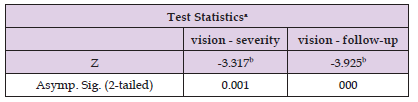
Note: a. Wilcoxon Signed Ranks Test b. Based on negative ranks.
Figure 2
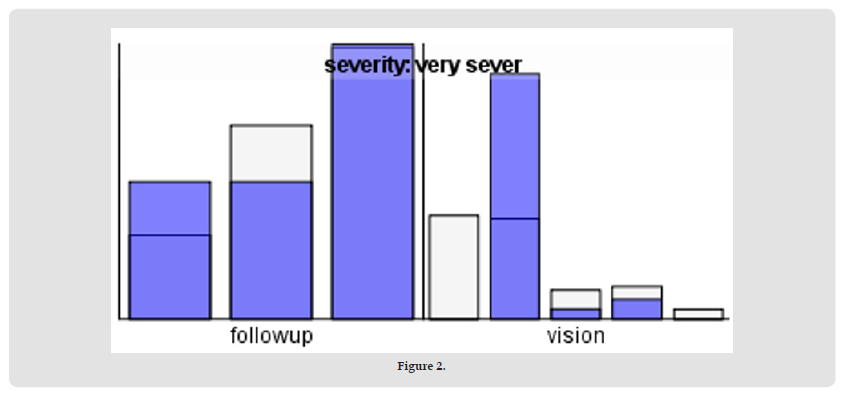
Figure 3

Figure 4

Diabetic retinopathy is one of the diabetes mellitus complications which can lead to loss of vision, if not early discovered and properly controlled. For this, we should know DR problem and identifying its associated risk factors, and routinely fundus examination, to detected the RP in early stage, which essential for the achievement of better management to improve the outcome [8]. Our study's overall DR prevalence was 77.6%, which is almost higher to the projected global prevalence of 34.6% among people with diabetes that has been documented, but because most of cases come to our department symptomatic and come to get consultation, which can explain our higher prevalence [9]. In general DR formation in diabetic patient was significantly associated with male patients, older age patients, long duration of disease, uncontrolled HbA1c, adherence to medications and unhealthy diet, irregular diabetes follow-up, irregular fundus examination, patients with history of HTN, dyslipidemia, chronic kidney disease, patients with diabetic complications (cataract, glaucoma, diabetic foot ulcer, renal insufficiency, myocardial infarction [MI], and heart failure), and patients with higher BMI and lower GFR.
Patients' nationality, marital status, place of residence, and family history of diabetes, were not significantly associated with the development of DR [10]. The most frequent risk factors for the detection of DR are type of the diabetes, disease duration, a poor glycemic control (high HbA1c levels), and the presence of other systemic diseases like hypertension was associated with an increased probability of developing DR [11]. Other risk factors for developing DR include obesity, hyperlipidemia and less exercise. Smoking and obesity did not seem to be important risk factors in this study, was considered with some other studies [12]. however, a report from [13] found that smoking was associated with a higher risk of developing diabetes mellitus. The fact there were fewer people who smoked in the group we studied might be responsible for the above finding [14]. As expected, the uncontrolled patients who did not take regular daily medications and those with as well as those patients they not on regular ophthalmological follow up were at a higher significant risk of developing DR [15].
In the current study, diabetic patients with a long duration of diabetes (10 and 15 years) were at the highest risk for developing DR. The same has been documented in other studies [16]. Concerning the distribution and grading of the retinopathy, the result we obtained from our study are consistent with many of other studies, but in our finding the frequency of proliferative retinopathy is higher in our study than the other studies [17] in current study revealed proliferative diabetic retinopathy prevalence that was higher to the (KSA) study and also higher than that reported from the Ethiopia [18]. One of the complications of diabetes that can lead to blindness is diabetic retinopathy. The first 10 years following a diabetes diagnosis have been designated by a significant decline in visual acuity [19].
Our study's findings support the majority of previous studies in showing that retinopathy worsens with a prolonged period of diabetes. Individuals who have just received a clinical type 2 diabetes diagnosis should be informed that even though age-related vision loss is inevitable, additional diabetes-related vision loss can be largely avoided with careful ophthalmological monitoring and surgical intervention. Diabetes control, which includes routine doctor visits, a nutritious diet, exercise, and early management with retinal laser photocoagulation and anti-VEGF therapy, is one strategy to lessen vision loss from diabetic retinopathy. In addition, patients with type 1 DM were at higher risk of developing DR (87.5%). The same has been documented in Saudi Arabia, [20] and in Ethiopia. The mechanism of the association between DR and insulin use is still unclear.
Despite the improvements of health care services, DR still a leading cause of reduce daily life activity and emotional distress due to visual acuity impairment. DR is a serious problem, 40 years patients and older with diabetes have sight-threatening DR. Early detection and treatment of DR can save the vision. For that we need plan DR services to avoid complications of DR as vision loss and to health strategy to improve management of diabetes to decrease risk of DR.

International Association of Landscape Archaeology, Czech Glass Society, Czech Republic

Department of Chemistry, Semenov Institute of Chemical Physics, USSR Academy of Sciences, Moscow, Russia

Neurology, LA BioMed Research Institute, USA

Associate Professor at Department of Breast and Thyorid Surgey, Chongqing General Hospital, China

Clinical Radiologist (MD) - Department of RADIOLOGY, Cosenza Hospital, Cosenza, Italy





 Abstract
 PDF
PDF



























