info@biomedres.us
+1 (502) 904-2126
One Westbrook Corporate Center, Suite 300, Westchester, IL 60154, USA
Site Map
 ISSN: 2574 -1241
ISSN: 2574 -1241
ISSN: 2574 -1241
Received: September 16, 2024; Published: October 01, 2024
*Corresponding author: Italo Pedro Bello Moreira, Universidad Laica Eloy Alfaro de Manabí, Facultad Ciencias De La Vida Y Tecnologias, Carrera De Ingenieria Agroindustrial, Ecuador
DOI: 10.26717/BJSTR.2024.58.009216
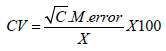
To analyze the process of evolution of the consumption of expanded polystyrene (EPS) and low-density polyethylene (LDPE) by larvae with an average of 5 cm of Zophobas morio, the design of completely randomized blocks with 8 treatments and 3 replications, measurement of weight and consumption time, in different types of substrates, compared with a control of diet alone during the degradation process of (EPS) and (LDPE). According to Tukey’s test at 99% probability of consumption efficiency, more effective were those containing (EPS) and better treatment of oat substrate, being (oats + EPS) the most effective with an average of 534.33mg. In general, in terms of the mean by time, the highest value was observed at 24 days with an average of 333.98mg. However, in the highlighted treatments (EPS) it was higher than 50% according to the consumption efficiency percentage formula.
Keywords: Zophobas Morio; Consumption; Treatments; Substrates; Polystyrene
Currently, according to Josep, et al. [1], ‘’An average of 8 million tons of plastic are dumped into the oceans every year, this is equivalent to emptying a garbage truck full of plastics every minute. If we do not change the trend, by 2025 our oceans will have 1 ton of plastic for every 3 tons of fish, and by 2050 there will be more plastics than fish. Poletto ‘’indicates that the degradation of synthetic plastics is very slow, as an example, the decomposition of plastic can take 500 years’’ (2011, p.78). Moran (2020) states that Ecuador produces 375,000 tons of urban solid waste monthly, of which 43% is inorganic and 25% corresponds to plastic waste, which represents the colossal figure of 93,750 tons of this material per month. Of the total waste generated, only 8% (30,000) tons is recycled for Solis, 2023, the province that consumes the most espumaflex covers and containers is Imbabura: more than 12% of its garbage corresponds to single-use plastics. It is followed by Azuay (8.34%), Cotopaxi, Pichincha, Carchi, Morona Santiago and Zamora Chinchipe.
The aspect of plastic pollution is so widespread precisely because of the reluctance of plastics to corrosion, weathering and degradation by microorganisms. Managing principles such as avoiding pollution, the generation of waste, keeping products and materials in use, for this reason it is very necessary to deepen the issue to look for alternatives that lead to a significant change in environmental care. To determine the consumption efficiency of expanded polystyrene and low-density polyethylene by the action of Zophobas morium larvae, as well as to evaluate the consumption time of expanded polystyrene and low-density polyethylene, according to the type of substrate in which the larvae develop, the processes quantifying the amount of expanded polystyrene and low-density polyethylene assimilated by Zophobas morio larvae., to finally know the statistical differences in consumption time and consumption efficiency, according to the type of substrate in which Zophobas morio larvae develop. Therefore, it is necessary to take concrete measures both in the community and at the educational level, to raise awareness of environmental care.
Sampling Area
It was located during the months of October to November 2023, since the larvae can enter a process of lethargy when they are at low temperatures, this allowed the size of the colony and the size of the larvae to be controlled.
Localization
The geographical area was in the Rocafuerte canton of the province of Manabí.
Procedure and Sampling
For two months, adult larvae of the same strain and age were collected from the larval hatchery, between October – November, the measurements of Zophobas morium were taken for initial and final data, the samples of expanded polystyrene and low-density polyethylene were cut. Later washed with ethyl alcohol to remove organic matter.
Experimental Method and Design
An experimental design of three replicates per treatment and one control was used. The samples obtained were transferred to the laboratory of the Faculty of Life Sciences and Technologies at the Eloy Alfaro Lay University of Manabí.
1. 10 Zophobas larvae died + 100 mg of (EPS) + Oats.
2. 10 Zophobas larvae died + 100 mg of (LDPE) + Oats.
3. 10 Zophobas larvae died + 100 mg of (EPS) + Corn flour.
4. 10 Zophobas dying larvae + 100 mg of (LDPE) + Corn flour.
5. 10 Zophobas dirio larvae + 100 mg of (EPS) + Wheat flour.
6. 10 larvae Zophobas morio + 100 mg (LDPE) + Wheat flour.
7. Control (10 larvae of Zophobas morio+ 100mg (EPS).
8. Control (10 larvae of Zophobas died +100mg (LDPE).
ADEVA (Analysis of Variance) Scheme
EPS or LDPE Consumption

Statistical Analysis
The ANOVA (Tukey) statistical method facilitated the evaluation and analysis of the statistical differences in the consumption efficiency of (LDPE) and (EPS), the infoStat software was used for the tukey test and the level of reliability, at 0.05.
Analysis of Variance
The high coefficient of variation observed in this experiment is due to the inherent variability in the biological behavior of Zophobas morio larvae in relation to their preference for consumption of two types of plastics (EPS) and (LDPE) with very distant averages, aggravated by the use of different substrates. It is essential to consider this variability as a biological characteristic. There are highly significant differences between treatments, on days 16 to 24. It is evidenced according to Tukey’s test at 5% probability, where the most effective treatments with substrates are those containing (EPS) and as the best treatment the oat substrate, being (oats + EPS) the most effective with an average of 53.43mg of consumption. Treatments with substrate containing (LDPE) presented lower consumption averages, the most effective being the substrate of (Oats + LDPE) with a mean of 8.94mg, followed by the substrate of (H. Wheat + LDPE) with a mean of 4.72mg and the substrate of (H. Corn + LDPE) with 3% that do not establish ranges of differentiation to the control. Regarding the mean consumption by time, the highest value was at 24 days with an average of 33.43mg. However, in the outstanding treatments (EPS) at this time it was higher with a percentage of 62% according to the formula. Acclimatization of the larvae and decrease of the respective substrate in the treatments by consumption, greater availability to the (EPS) is evidenced. Regarding the percentage of consumption per day exclusively of the (EPS), it is observed that the highest percentage was at 24 days with an average of 62.24mg, (62%) data obtained using the percentage formula.
After having analyzed several works related to the research carried out, similar indicators have been found such as the work carried out by Peng et al. (2019), the results showed that the larvae of T. obscurus exhibited a degradation efficiency of 40% higher than that of T. molitor. Chávez, et al. [2] with the topic of evaluation of expanded polystyrene (EPS) and low-density polyethylene (LDPE) as food for black weevil larvae (Tenebrio molitor) emphasize that the studies allowed them to demonstrate that Tenebrio molitor larvae are capable of consuming different types of plastics, some more effectively than others (Figures 1-4). Ruiz, et al. [3] state that organisms fed exclusively with EPS exhibited considerable mass loss, poor growth, and a survival rate of only 4% after 98 days; in contrast, organisms cultured on a conventional oat diet and mixed PS + oat diets showed similar growth and survival rate (50%) at the 98 days of treatment [4-12]. One of the important and complementary works of the research is the topic of designed a dynamic energy balance model to evaluate the technical feasibility of an EPS treatment system by EPS larvae (Molitor et al., 2020) cultured with diets based on this polymer by the authors Rybak,) (Tables 1-5). Although the rearing of flour larvae fed exclusively with plastic polymers does not seem to be a feasible long-term strategy, what has been reported in recent years suggests enriching the diet of these organisms with conventional substrates (seeds, cereals, vegetables, etc.).
Figure 1

Figure 2

Figure 3

Figure 4

Table 1: Analysis of variance.

Table 2: Consumption of (EPS) and (LDPE) in the different treatments of the experiment.
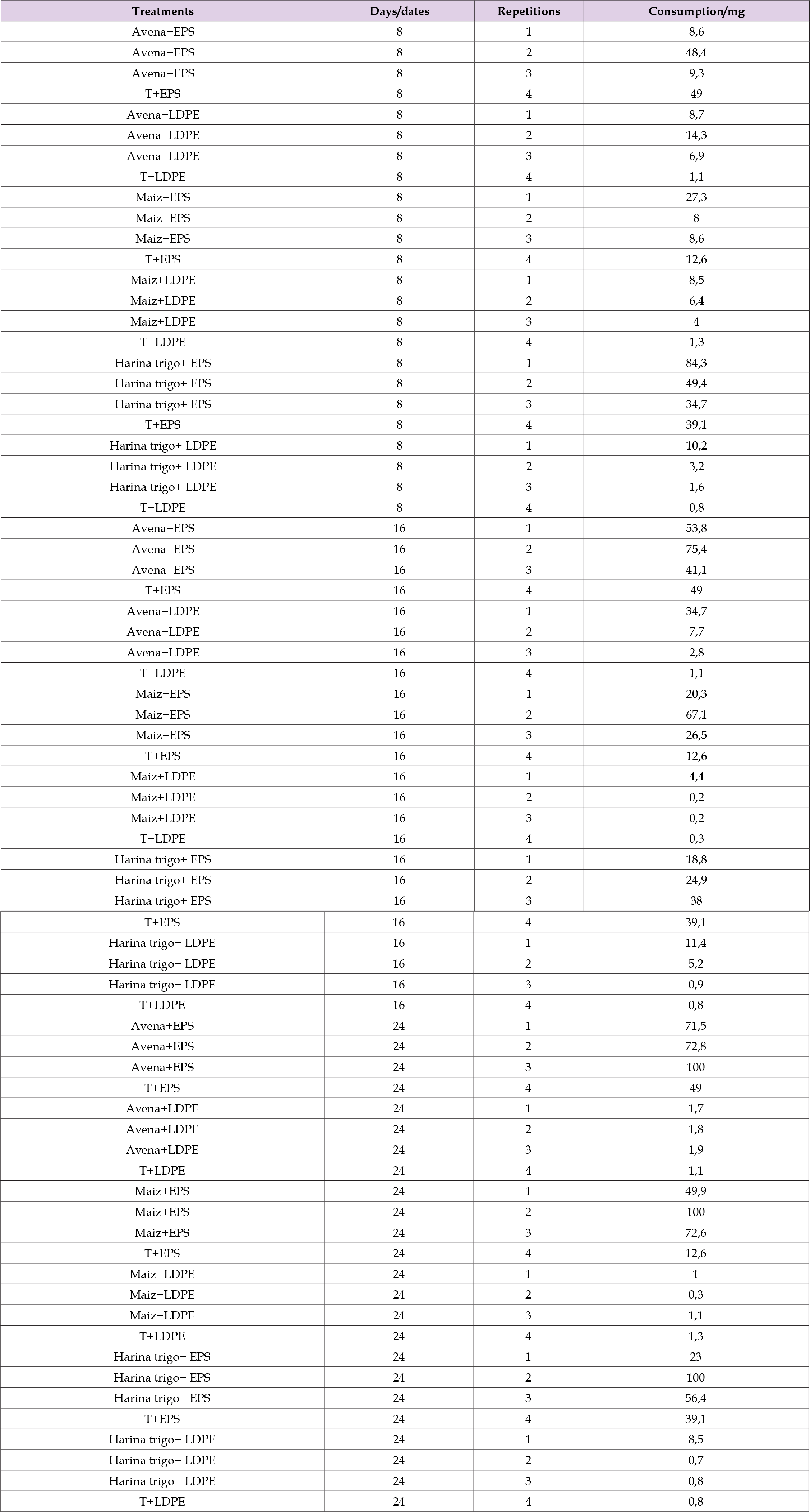
Table 3:

Table 4: Treatments.

Note: Stockings with a common letter are not significantly different (p > 0.05).
Table 5: Days.
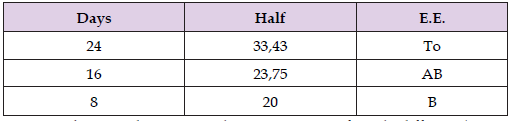
Note: Stockings with a common letter are not significantly different (p > 0.05).
In the experimental design of completely randomized blocks with Zophobas morio larvae, a similar behavior in the percentage of degradation was demonstrated, in which larvae were placed with a single diet of (EPS) and (LDPE) with a relatively lower percentage of consumption compared to mixed feed samples such as oats, corn flour and wheat flour. the adaptation of larvae was verified as the days went by, since Peng in his work of consuming the plastics when combining it with the different substrates in the case of (EPS) in some samples tripled the consumption in the fourth week of the experimental process, from consuming approximately 30mg of (EPS) on day eight, to approximately 50mg on day 16 and reaching between 90mg and 100mg on day 24. In the case of (LDPE) the mean consumption was 4.72mg in the substrate with H. trigo, the treatments with oats presented a higher average consumption reaching 8.49mg with a non-significant efficiency. In the evaluation of consumption with the king worm, no mortality was observed and in the treatments where they had a single diet, mass loss was not verified either, since the worms were weighed at the beginning of the experimental process and on days 8,16,24 the initial mass was preserved (Appendices 1-9). It cannot be inferred whether the single diet affected growth since larvae were used in the adult stage of approximately 14 to 15 weeks.
Appendix 1

Appendix 2

Appendix 3

Appendix 4

Appendix 5

Appendix 6

Appendix 7
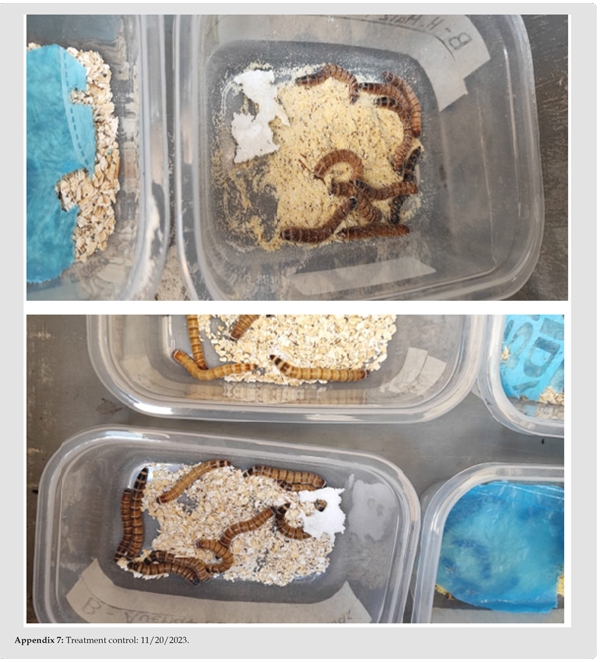
Appendix 8

Appendix 9

Larvae were used in their adult stage since before the experimental process a pilot test was carried out with small larvae of 3 to 4 weeks, with a size of 1.5 to 2.0 cm, medium larvae with an age of 7 to 8 weeks, with a size of 3.3 to 3.8 cm and larvae with advanced instars (adults) with an age of 14 to 15 weeks. with a size of 5 to 5.5 cm. Where it can be determined that the most efficient according to mass and voracity were the larvae with advanced instars (adults), as an additional data it was found that they are capable of consuming their weight in organic matter in approximately 72 hours, a lethargy in their metabolism was also observed when exposed to high temperatures. A similarity is found with what Yang, Wang & Xia expresses, since LDPE treatments were not very effective in consumption, unlike EPS, which was highly effective in consumption since the larvae increased the predisposition and voracity to EPS from week to week. These results were obtained at 24 days, no changes were observed in the number of individuals, only two went to their pupal phase on day 24 where the experiment was terminated. With the results obtained in this research, application work in the environmental field for the elimination of plastics should be promoted. To analyze the excreta of Zophobas morio to quantify its mineral properties and possible uses in the agricultural field. Taking advantage of insects that feed on organic and indigestible waste is promising, since the results obtained in this work show that the research encourages the large-scale production of these species, and they can play an important role with biodegradable plastics.

International Association of Landscape Archaeology, Czech Glass Society, Czech Republic

Department of Chemistry, Semenov Institute of Chemical Physics, USSR Academy of Sciences, Moscow, Russia

Department of Educational Sciences, Research Centre Qualities of Teachers, School of Education – HAN, Nijmegen, Netherlands

Associate Professor at Department of Breast and Thyorid Surgey, Chongqing General Hospital, China

Neurology, LA BioMed Research Institute, USA





 Abstract
 PDF
PDF



























