info@biomedres.us
+1 (502) 904-2126
One Westbrook Corporate Center, Suite 300, Westchester, IL 60154, USA
Site Map
 ISSN: 2574 -1241
ISSN: 2574 -1241
ISSN: 2574 -1241
Received: September 09, 2024; Published: September 24, 2024
*Corresponding author: Anthony Kwame Apedzi, St John Ambulance, Ghana
DOI: 10.26717/BJSTR.2024.58.009210
Abbreviations: SDGs: Sustainable Development Goals; MDGs: Millennium Development Goals; QHCHE: Quality of Health Care Healing Environment; EFA: Exploratory Factor Analysis; CFA: Confirmatory Factor Analysis; SEM: Structural Equation Model; PCD: Privacy, Company, and Dignity; VNO: Views, Nature and Outdoor; LoP: Legibility of Place; IA: Interior Appearance
A personality trait is a characteristic or quality that forms an individual’s distinctive character. These traits are consistent patterns of thoughts, feelings, and behaviours that a person exhibits across various situations and over time. The trait influences how individuals interact with the world around them. The performance of health workers is critical in achieving universal health coverage, globally. It means that health workers are expected to demonstrate competence and responsiveness to patients’ needs to ensure patients’ participation in any country’s healthcare system, particularly in developing countries including Ghana. Despite, the immeasurable studies on the relationship between health workers’ performance and patient satisfaction in advanced countries, there seems to be little evidence of using personality traits to measure health worker performance, especially doctors and nurses thus, creating a gap issue. Therefore, the current study examined the impact of doctors’ and nurses’ performance, proxied by the big five personality traits, on patient satisfaction in three (3) selected faith-based hospitals in Ghana, namely, St. Elizabeth Hospital, Holy Family Hospital, and St. Patrick Hospital.
Based on the descriptive research design and the positivism research philosophy, a quantitative approach to data collection and analysis and a purposive sampling technique were employed since it is assumed that the selected health workers have the requisite knowledge of their performance and patient satisfaction. The sample size was 686 comprising 200 from St. Elizabeth Hospital, 280 from Holy Family Hospital, and 206 from St. Patrick Hospital. Data was collected using a structured questionnaire developed on a five-point Likert scale. Data collected was analysed using the mean score, relative importance index (RII), exploratory factor analysis, KMO, Bartlett’s test, confirmatory factor analysis, and structural equation model.
It was observed that personality traits and performance in the hospital’s understudy are strongly linked. Carefulness, commitment, positive emotion, work ethic altruism, and friendliness are the basic traits every health worker should have, to achieve job satisfaction, good performance, and good patient satisfaction. These characteristics are embedded in conscientiousness, agreeableness and extraversion traits.
The performance of health workers is critical in achieving universal health coverage, globally (Rowe, et al. [1]). Rowe, et al. [1] argued that the achievement of universal health coverage requires adequate health workers to comply with results-oriented and evidence-based healthcare standards that ensure equity in accessing quality healthcare delivery. It means that health workers are expected to demonstrate competence and responsiveness to patient’s needs to ensure patient participation in the healthcare system of any country, particularly, in developing countries including Ghana (Dieleman, et al. [2]). Dieleman, et al. [2] argued that the integration of the health workers’ competence and responsiveness towards healthcare delivery are integral to achieving health outcomes, which includes health recovery and patient safety. This helped achieve critical dual performance, which is employee satisfaction and patient satisfaction (Mohanan, et al [3-6]). It means that employee satisfaction and patient satisfaction are critical to achieving universal health coverage under the Sustainable Development Goals (SDGs) (Rowe, et al. [1,7]).
Employee satisfaction is a critical quality issue in health care delivery which is driven by relationship between management and supervisors, job content and relationship with coworkers (Alpern, et al. [7]). Alpern, et al. [7] argued that one of the key challenges that negatively affected the achievement of the health outcomes related to the Millennium Development Goals (MDGs) in low-income countries, including Ghana, is the poor human resource policies and practices such as burdensome work schedule (job content) due to staff shortage, poor intrapersonal relationships among health professionals and lack of supportive supervision for health workers by management/ supervisors; hence, many health workers work with low satisfaction. Another human resource policy and practice that influence employee satisfaction in the health sector is remuneration (Chatterjee, et al. [8]). However, empirical evidence suggests that achieving a high level of satisfaction among employees in the healthcare delivery setting is focused on the working environment, employee autonomy, training and development, effective communication among employees at all levels, and the leadership style of hospital managers (Mosadeghrad, et al. [8-10]). This means that measuring employee satisfaction in the healthcare setting has little to do with financial reward or employee remuneration (Chang, et al. [11,12]). All other factors held constant, an increase in employee satisfaction drives employee job performance (i.e., high level of productivity) and organizational performance (Chatterjee, et al. [8,10]).
Patient satisfaction is considered as an essential component of total quality in a health care delivery setting. Patient satisfaction refers to the ability of healthcare delivery to meet the health needs of the patients (Sodani, et al. [13]). Therefore, measuring patient satisfaction indicates the extent to which the performance of health workers (especially doctors and nurses) at the health facilities meets the patient needs and expectations. Measures of patient satisfaction at the hospital include patient waiting time, interaction with clinicians and other health workers, treatment success (outcome quality), quality physical environment, nursing care and patient feedback (Mohanan, et al. [3,5,13,14]). The ability of an organization to continually address patient safety will subsequently result in achieving patient loyalty, which consequently drive competitive advantage in the healthcare industry (Chahal, et al. [14]).
The common factor that measures both employee satisfaction and patient satisfaction at the hospital environment is known as the Quality of Health Care Healing Environment (QHCHE) (Amankwah, et al. [15]) This refers to the physical and psychological culture of the hospital or health facility that supports the total well-being of the patients (Amankwah, et al. [15]). This includes in-air and out-air quality, clean toilet facilities, spacious wards, availability of safe drinking water, technological equipment, well-equipped medical stores and effective feedback mechanism (Chahal, et al. [14,15]. Amankwah, et al. [13-15]. have argued that the physical and psychological ambience or culture of health facilities are significant measures of service quality. Sodani, et al. [13] argued that a quality physical and psychological ambience of a health facility drives employee performance and patient satisfaction. This means that QHCHE is considered as a mediating role between health worker performance and patient satisfaction (Amankwah, et al. [15]). Theoretically, SERVQUAL has become a dominant model on which patient satisfaction is assessed; however, this is deficient to measure health worker performance since it does not focus on employee workplace attitude and motivation, which are considered as the key drivers of health worker performance (Chahal, et al. [14]). SERVQUAL measures service quality by examining the difference between customer expectation and customer perception (Chahal, et al. [14]). Nonetheless, attitude is the inherent personality trait that drive employees to perform effectively and efficiently their functional responsibilities and duties at the work place (Alami, et al. [16]).
A personality trait is a characteristic or quality that forms an individual’s distinctive character. These traits are consistent patterns of thoughts, feelings, and behaviors that a person exhibits across various situations and over time. The trait influences how individuals interact with the world around them. Examples of personality traits include friendliness, carefulness, and openness to experience. The personality trait of employees is noted to influence individual employees’ behaviour, which subsequently determines organizational behaviour (Bayram, et al. [17]). Meanwhile, health facilities or hospitals can design stimuli to drive a desired behaviour from its workers or employees in order to achieve organizational goals and objectives. The stimulus of a desired behaviour in health workers is known as motivation (Wei, et al. [18,19]). Personality traits and motivation, which are stimuli for driving performance among health workers are modelled after the big five (5) personality traits and the reinforcement motivation theories, respectively. These theories provide a comprehensive framework to measure health worker performance; providing a shift in examining service quality.
The relationship between health workers’ performance and patient satisfaction has been studied from divergent perspectives without any conclusive evidence. For example, Ferrara, et al. [20] examined the patient satisfaction and occupational health of workers in Italy and revealed that the well-being of health workers has a positive influence on patient satisfaction by ensuring workplace efficiency, humane care provided to patients and accessibility of health workers to meet the health needs of the patients. Although Ferrara, et al. [20] did consider occupational health driving health workers’ performance, it did not address the issue of personality traits and motivation as drivers of health workers’ performance that could influence patient safety, thus, creating an issue gap. Meanwhile, Ferrara, et al. [20] recommended that future studies should consider an experiment to demonstrate causality between occupational health of health workers and patient satisfaction since the relationship established was based on correlational analysis, which does not indicate causal relationships. This, further, creates a method gap. Similarly, Janicijevic, et al. [4] used correlation analysis to examine the relationship between health workers satisfaction and patient satisfaction in Serbia and revealed that time available to complete a task among health workers drive employee satisfaction, which subsequently influences patient satisfaction. In this case, health workers’ performance was measured using time availability rather than personality traits, thus, creating an issue gap.
Meanwhile, Janicijevic, et al. [4] recommended that future studies should identify other quality management issues that drive health worker satisfaction and subsequently, influence patient satisfaction, thus, further, creating an issue gap. Interestingly, Setyorini, et al. [6] demonstrated the directional or causal relationship between physical facilities and health worker performance and patient loyalty through the mediating effects of patient satisfaction in Indonesia. Setyorini, et al. [6] showed a positive direct relationship between facilities and health worker performance and patient satisfaction, on the one hand, and a positive indirect and partial relationship between facilities and performance with patient loyalty. In this case, patient satisfaction was introduced to establish a mediating effects and not the main dependent variable. This creates a method gap. Despite, these immeasurable studies on the relationship between health worker performance and patient satisfaction in advanced countries, there seem to be little evidence on the subject in Africa, thus, creating a context gap. Amankwah, et al. [15] demonstrated willingness to bridge the context gap by examining the relationship between core health care delivery and patient satisfaction by considering the mediating effect of the hospital environment. Their study revealed that hospital environment plays a significant mediating effect in the relationship between core health care delivery and patient satisfaction.
The core health care delivery dimensions, in their study, indicates that, when it comes to health workers’ performance, little attention was given to personality traits, thus, creating an issue gap. The current study seeks to respond to the increasing issue gaps to examine personality traits as dimensions of health workers’ performance and their relationship with patient satisfaction in Ghana. The mediating effect of the hospital environment termed a healthcare healing environment used by Amankwah, et al. [15] will be replicated in this study.
This research seeks to answer the following questions:
1. What are the dimensions of personality traits that influence
health workers’ performance in the three (3) selected hospitals?
2. What are the dimensions of motivation that influence workers’
performance in the three (3) selected hospitals?
3. What are the constituents of patient satisfaction at the three
(3) selected hospitals?
4. What are the constituents of the healthcare healing environment
among the three (3) selected hospitals?
5. What is the mediating effect of health care healing environment
on the relationship between health workers’ performance
and patient satisfaction among the three (3) selected
hospitals?
The study aims to establish the relationship between health
workers’ performance and patient satisfaction by considering the
mediating effect of personality traits and the healthcare healing environment
among three (3) selected faith-based hospitals in Ghana. The
specific objectives of the study are as follows:
1. To identify the dimensions of personality traits that influence
health workers’ performance in the three (3) selected
hospitals.
2. To investigate the dimensions of motivation that influence
health workers’ performance in the three (3) selected hospitals.
3. To identify the constituents of patient satisfaction at the
three (3) selected hospitals.
4. To determine the constituents of the health care environment
among the three (3) selected hospitals.
5. To establish the mediating effects of the health care environment
among the three (3) selected hospitals.
The literature review of the study is categorized into three (3) sections, namely, conceptual, empirical, and theoretical reviews. These are discussed as follows:
Conceptual Review
The concepts discussed are as follows:
Health Worker Performance: Health worker performance refers to the attitude of persons working with a health facility that provides protection and comfort to all service users, particularly, patients undergoing health recovery (Setyorini, et al. [6]). This comprises health worker availability, competence, the level of responsiveness to patients, and the speed of responsiveness (efficiency) that ensures effective achievement of health outcomes among patients (Rowe, et al. [1]). These attributes of the health worker create an emotional attachment that reinforces either positive or negative behaviour toward work and even patients, in a hospital setting (Setyorini, et al. [6]). Therefore, it is the positive attitude and behaviour of the health workers that drive the achievement of quality health outcomes in the patient, thus, resulting to patient satisfaction (Ferrara, et al. [20]). There are various measures of health worker performance from literature and this includes occupational health, employee satisfaction and employee motivation as well as organisational commitment (Ferrara, et al. [6,20]). Their performance is based on the inherent traits which contributes to the behaviour which impact on their work.
Patient Satisfaction: Patient satisfaction simply means the difference between the expected health care and actual health care provided to a patient at the hospital (Negarandeh, et al. [5]). Therefore, it can be defined as the expression of delight by a patient based on the health care delivered. It is an important measure of service quality in a healthcare delivery setting due to its ability to determine accessibility to healthcare delivery (Amankwah, et al. [13,15]). It means that people can access healthcare delivery based on the level of satisfaction derived from the services provided by health workers such as front desk officers, doctors, nurses, paramedical, and administrators (Chahal, et al. [1,14]). There are varying measures of patient satisfaction and this include reduced waiting-time, patient safety, communication, clinical care (nursing and medical care), patient health outcome or treatment success, and interpersonal behaviours of health workers (Chahal, et al. [3,5,13,14])
Empirical Review
This section of the literature discusses previous empirical studies related to the health workers’ performance, patient satisfaction and health care environment. It is divided into three (3) strands of literature as follows:
Determinants of Patient Satisfaction: This section identified the measures of patient satisfaction in the hospital setting. For example, Sodani, et al. [13] assessed the level of patient satisfaction of Multi Super Specialty Hospitals in India. The study was conducted using a descriptive survey among 100 in-patients. The measures of patient satisfaction were categorized as general satisfaction, technical quality, interpersonal manner, time spent with doctors, financial aspects, communication, accessibility and convenience, and hospital services. Using the mean score, interpersonal manner was ranked first. This was followed by communication, general satisfaction, technical quality, time spent with doctors, accessibility and convenience, hospital services, and financial aspects. The results have implications for managing quality at the hospital to continuously improve patient satisfaction. From this study, interpersonal manners ranked first, meaning the interpersonal relationship is important in the hospital, everyone’s relationship is influenced by their personality traits. Negarandeh, et al. [5] examined the nursing rounds on patient satisfaction in Iran using experimental studies. The study was experimented among 100 in-patients at a medical surgical department of a hospital in Iran. The experiement was conducted among two (2) groups. The experiment had continuous nursing care every 1 - 2 hours whiles the controlled group had nursing care every now and then. The results of the study revealed continuous nursing showed positive relationship with patient satisfaction in the experiment than the controlled group. This has implications for improved quality nursing rounds to in-patients at the ward. This mean when workers/ nurses are motivated, they give their best at work.
Health Care Delivery and Patient Satisfaction: This section discusses previous empirical studies on the relationship between health care delivery at the hospital and patient satisfaction. For example, Amankwah, et al. [15] examined the mediating effect of the health care healing environment on the relationship between core healthcare delivery and patient satisfaction in three (2) selected hospitals in Ghana. The study was conducted among 622 adult patients. The study revealed that there is a direct relationship between core health care delivery and patient satisfaction whiles the healthcare healing environment also has a mediating effect on the relationship, thus, indicating an indirect relationship between core healthcare delivery and patient satisfaction.
Health Workers’ Performance and Patient Satisfaction: This section discusses previous empirical studies on the relationship between health workers’ performance and patient satisfaction. For example, Janicijevic, et al. [4] using descriptive study conducted a survey among 18,642 health workers and 9,283 patients to examine the impact of health workers’ satisfaction on patient satisfaction among 50 selected secondary hospitals in Serbia. The result revealed that healthcare workers satisfaction significantly increases patient satisfaction, but the relationship is not strong. Health workers satisfaction is dependent on the their perfomance, when they fill satisfy that they have delivered their service. Service rendered is dependent their motivation and their personality. This study seeks to find out how their performance is affected by re-enforcement motivation and their personality traits.
Theoretical Review
The theoretical Review focused on two (2) theories outlined as follows:
Big Five Personality Trait Theory or Model: The Big Five Personality Traits model was developed by Costa and McCrae (1992) to provide comprehensive and concise personality traits that could stimulate industrial research and ensure the findings are apt and manageable (Awadh, et al. [21]). Erstwhile to Costa and McCrae (1992), the study of personality trait theories erupted several personality traits that make research findings incomprehensible, on the one hand. On the other hand, most of the traits such as temper and temperament, are explained similarly but with different trait names. Hence there is a need to provide a concise model that could aid industrial research and development of industrial policy and practices (Awadh, et al. [21]). Hence, Costa and McCrae (1992) reviewed the personality traits and grouped them into five (5) key dimensions known as Neuroticism, Agreeableness, Extraversion, Conscientiousness, and Openness to experience (Rothmann, et al. [22]). Neuroticism refers to the negative emotional state of individuals who always perceive the occurrence of negative situations (Sev, et al. [23,24]). Persons with such emotional states are considered critical and always considering alternative means of achieving results (Sev [23]). Agreeableness refers to traits such as modest, helpful, flexible, naïve, meekness, and open-mindedness (Sev [23]). These traits are noted for leadership and team-building spirit (Judge, et al. 2008). Extraversion refers to persons with extroverts and with positive emotional state (Sev [23]). Conscientiousness refers to people who are duty and results-oriented as well as risk aversion attitude (Allameh, et al. 2012). Openness to experience refers to curiosity attitudes that lead to creativity and innovativeness among employees (Allameh, et al. 2012). Whatever traits that is dominant in each health worker impact on her work.
Reinforcement Theory of Motivation: The reinforcement theory of motivation, propounded by behaviourist B. F. Skinner, in 1969, explains individual behaviour and its consequences (Gordan, et al. [25]). The theory explains that the state of an individual’s mind is determined by its feelings and emotions and this influences human behaviour. It means that changes in an individual’s behaviour are as a result of the changes in feelings and emotions (Gordan, et al. [25]). The theory explains that the feelings and emotions of the individual are controlled by the external environment (Gordan, et al. [25]). In relating the theory to employee behaviour in an organization, the theory proposes that the external environment of an organization (including a hospital) should be designed to propel workers to work effectively and efficiently to achieve organizational goals and objectives (Maritim, et al. [18,19]). In this case, the external environment is considered as a stimulus to employee behaviour (Wei, et al. [18]). Although the theory explains various stimuli, such as rewards and incentives, that could influence health workers to perform functional tasks and responsibilities, the theory reiterates that the physical ambiance, which includes physical infrastructure, internal and external decoration, availability of basic technology, plants and vegetation reinforces motivation to the health worker to perform functional task and responsibilities dutifully and effectively to drive patient satisfaction (Wei, et al. [15,18]). However, the theory reiterates that rewards in the form of compliments (praises and acknowledgement) bonuses, and increased salary cannot be ruled out entirely as motivators of desired behaviours among employees of an organization since these contribute to the emotions and feelings of an individual’s total wellbeing (Maritim, et al. [19,20]).
The conceptual model of the study is presented in Figure 1 below: Figure 1 above indicates that health worker performance, proxied by the big 5 personality traits, directly correlates with patient satisfaction. This also directly correlates with motivation reinforcement, proxied by a healthcare healing environment. Health care healing environment has a mediating effect on the relationship between health worker performance and patient satisfaction, thus, indicating an indirect relationship.
Figure 1
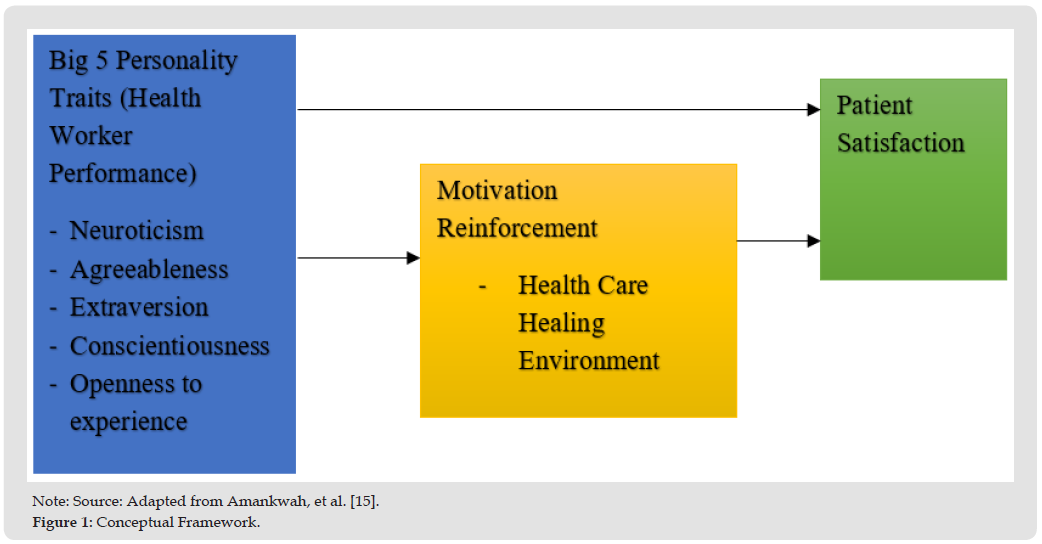
The study is focused on examining health workers’ performance by identifying the personality traits that influence the performance of functional tasks and responsibilities of employees in a hospital setting. The health workers in this stead comprises of doctors, nurses, health administrators, laboratory technicians and other employees whose work have a direct bearing on patients and contribute to achieving patient satisfaction. Health workers’ performance was also measured by considering motivation factors that influence their work. In addition, the study established the indirect relationship between health workers’ performance and patient satisfaction by considering the mediating effect of the hospital environment, which, in this study, is termed a healthcare healing environment. More so, the setting of the study is faith-based private hospitals, therefore, health workers in the public hospitals were recruited to participate in the study.
The research methodology is outlined as follows:
Research Philosophy
This refers to the set of beliefs or assumptions that influence the search and acquisition of knowledge (Rahi, et al. [26,27]). According to Saunders, et al. [27]), the set of beliefs and assumptions reflect the reality of the world of the researcher (known as ontology), human knowledge (epistemology), and values and norms of the researcher that influence the process of research (known as axiology). There are five (5) research philosophies, and these are positivism, interpretivism, critical realism, pragmatism, and postmodernism. Positivism refers to the set of beliefs that assume that knowledge acquisition should depict the reality of the situation, and this can be achieved through empirical studies that describe relationships and allow generalisation (Saunders, et al. [27]). In this situation, the personal bias of the researcher does not influence the results of the study, thus, indicating objectivity (Rahi [26]). Interpretism refers to the set of beliefs that assumes that knowledge by creating and understanding meanings of people’s experiences based on the feelings and emotions of the researcher, thus, indicating the subjectivity of the results (Rahi [26]). Critical realism also refers to set of beliefs that depict reality of a situation; however, critical realism is focused on examining the underlying structures, including human senses that influence the occurrence of events. Pragmatism allows combination of positivism and Interpretism beliefs to guide the acquisition of knowledge (Saunders, et al. [26,27]) Post modernism refers to the set of beliefs that assumes that language and power relation influences the acquisition of knowledge (Saunders, et al. [27]). The current study described relationships using empirical analysis, thus, depicting the relationship between health workers’ performance and patient safety. This means the study was based on the positivist research paradigm.
Research Design
Research design refers to the blueprint of the study that determines how evidence is obtained to answer the research questions convincingly (Creswell [28]). Research design can either be descriptive or explanatory. Descriptive research design seeks to establish relationships and presents facts using tables and figures (Salaria [29]). Explanatory research design seeks to provide in-depth understanding related to issues and events, thus, providing reasons behind human actions and events (Creswell [28]). This study employed a descriptive study since it was looking at establishing the relationship between health workers’ performance and patient satisfaction. This helped to identify facts related to health workers’ performance based on the personality traits that drive health workers to perform functional tasks and responsibilities in the hospital setting.
Research Method
Based on the descriptive research design and the positivist research philosophy, a quantitative approach to data collection and analysis was employed. The quantitative research approach is preferred to the qualitative research approach since the collection and analysis of data is less time-consuming and economical (Creswell [28]). In addition, it does not allow the active involvement of the researcher in the data collection and analysis; and ensures the findings are objective and reliable (Creswell [28]).
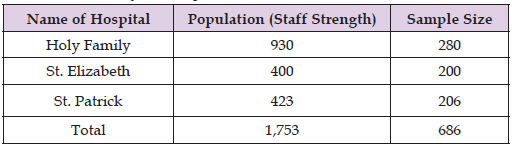
Population refers to the total number of observable units with similar characteristics that are of interest to the research (Pandey, et al. [30]). In this case, the observable units are the staff of the three (3) selected hospitals, namely, St. Elizabeth Hospital, Holy Family Hospital, and St. Patrick Hospital. Due to time constraints, it is practically impossible to reach out to the entire population. The population of the study is 1,753 comprising of 930 staff from Holy Family Hospital, 400 staff from St. Elizabeth Hospital, and 423 staff from St. Patrick Hospital. As a result, the use of the sample, which is the subset of the population, is highly recommendable so that the results of the sample were inferred onto the population (Creswell, et al. [28,30]). This indicates the generalization trait of the positivism research paradigm (Saunders, et al. [27]). The sample for the study was selected using a purposive sampling technique since the sample was drawn from each selected hospital. This technique was employed because it is assumed that the selected health workers have the requisite knowledge of health worker performance and patient satisfaction (Pandey, et al. [30]). The sample size is 686 comprising of 200 from St. Elizabeth Hospital, 280 from Holy Family Hospital, and 206 from St. Patrick Hospital. The sample was determined using Miller and Brewer (2003) formula presented in the equation below:
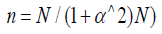
Where n is the sample size, N is the population size, and α is the margin of error, which is targeted at 5%. The sample size is summarized in Table 1 below:
Table 1: Summary of Sample Size.
Data collection was done using a structured questionnaire developed on a five (5) point Likert scale. The questionnaire collated the views and opinions of health workers related to performance and patient satisfaction (Bird [31]). Bird [31] argued that questionnaires are essential in collating knowledge and perceptions of people on a particular subject since it helps in collecting consistent data. This helped in examining the similarities and differences of responses that facilitate effective analysis and interpretation of data (Pandey, et al. [30]). The measure of health workers’ performance was assessed with the dimension of the big 5 personality traits. The measures of patient satisfaction and health care healing environment (i.e., motivation reinforcement) were adapted from Amankwah, et al. [15].
Data analysis techniques employed for the current study are mean score, relative importance index, exploratory and confirmatory factor analysis, and step-wise multiple regression analysis. The mean score and relative importance index were used to answer research questions 1-4. Exploratory and confirmatory factor analysis and step-wise multiple regression analysis were used to answer research question 5 These are explained as follows:
Mean Score
The mean is the measure of central tendency that indicates the relevance of each response when the total sum is divided among the total set, indicating the average score of responses (Waiter, et al. [32]). The formula for calculating the mean is:
Relative Importance Index (RII)
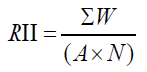
Relative Importance Index (RII) measures the relevance of constituents of health workers’ performance, patient satisfaction, and healthcare healing environment (Gunduz, et al. [33]). This helped contextually relevance the constituents to the selected hospitals (Shah, et al. [34]). RII is measured using indices with values ranging between 0 and 1, which is greater than zero and less than 1. The formula for RII is presented in the equation below:

Where RII = relative importance index; W = weight given to each factor by respondents (ranging from 1 to 5); A = highest weight (i.e., 5 in this case); and N = total number of respondents.
Exploratory Factor Analysis
Exploratory Factor Analysis (EFA) involves identifying the structure of multiple variables without priori theory that accounts for the relationship between the variables (Reio Jr, et al. [35]). It is conducted based on the understanding that constructs can be reduced based on relevance due to the same unobservable variance (Yong, et al. [36]). It means that those constructs that do not share the same variance are eliminated since there is no trace of correlation with other constructs (Yong, et al. [36]). Those constructs that are eliminated are not included in the regression analysis. (Reio Jr, et al. [35]).
KMO and Bartlett’s Test
KMO is used to test the suitability of the tested responses for the personality traits performance behaviours, motivation dimensions, patient safety, and healthcare healing environments; thus, indicating their internal reliability (Rasheed, et al. [37]). The rule of thumb is constructs or variables are adequate when the KMO value is greater than 0.70 and inadequate when the KMO is less than 0.5 (Rasheed, et al. [37]). Bartlett’s test examined the significance of the appropriateness of the measures, with a significance value of 0.05 (Rasheed, et al. [37]).
Confirmatory Factor Analysis (CFA)
Confirmatory Factor Analysis is a multivariate statistical technique used to measure how well the variables are represented by the number of constructs. It ensures that the correlation between items of the same construct has a high correlation coefficient, thus, indicating a high level of construct validity (Hamid, et al. [38]). CFA is a robust technique used to determine the reliability of the constructs that have the same acceptable model of fit, thus, indicating the un-dimensionality of the constructs (Hair, et al. [39]). The construct validity should be greater than 0.50, thus, indicating that all the constructs adapt to the construct validity test (Hamid, et al. [38]).
Structural Equation Model (SEM)
Structural equation modelling is a multivariate statistical analysis procedure that is used to evaluate structural relationships. Goldberg L, et al. [40] This procedure is a blend of factor analysis and multiple regression analysis, which exhibit the structural relationship between observed variables and unobserved variables known as latent constructs. This method is preferred by the researcher because it estimates the multiple and interrelated dependence in a single analysis (www.statisticssolutions.com, 2019). Hannachi A, et al. [41] The use of SEM analysis is inspired by Amankwah, et al. [15] which examined the mediating effects of the healthcare healing environment on the relationship between core healthcare delivery and patient satisfaction in three (3) selected hospitals in Ghana. The regression model is presented as follows: Let: Patient Satisfaction =Y₁, Personality Trait Behaviours = X₁, Motivation Determinants (Health Care Healing Environment) = X₂, Error term = e
Ethical Considerations: The ethical considerations for the study were guided by the principle of a person’s right, which allows people’s consent to be sought before they are rolled into research, thus, ensuring voluntary participation (Creswell [28]). Based on the same principle, the anonymity and privacy of the persons who participated in the study, the research ensured their safety and security. This also ensures that all information the persons provide is treated with the utmost confidentiality.
The study seeks to contribute to the literature on the relationship between health workers’ performance and patient satisfaction. However, it extends the literature by measuring health workers’ performance within the context of personality trait behaviours and motivation behaviours instead of the employee satisfaction and occupational health behaviours used in previous studies by Ferrara, et al. [20] and Janicijevic, et al. [4]. In addition, it examines the relationship between health workers’ performance and patient satisfaction by considering the mediating effects of the healthcare healing environment measured by the ASPECT tool inspired by Amankwah, et al. [15]. ASPECT dimensions comprise Privacy, Company, and Dignity (PCD), Views, Nature and Outdoor (VNO), Comfort and Control, Legibility of Place (LoP), and Interior Appearance (IA).
Dimension of Personality Traits Influencing Performance
It was observed that the staff of these hospitals who participated in the study demonstrated a high level of carefulness, commitment, reliability, friendliness, and altruism at the expense of their lives. Wang K, et al. [42] They exhibited skills in the performance of their duties and most patients were satisfied with their services. Clients/ patients are always happy with friendly and committed caregivers. Woltman H, et al. [43] These are traits that are very difficult to exhibit when stress levels is high in health workers. But those who will consistently demonstrate these characteristics because they are parts of their traits will always perform better and that will result in good, better performance.
Dimensions of Motivation Influencing Performance
Several forms of motivation spur health workers on and impliedly affect good outcomes. Respondents say that motivation that is intrinsic or inherent in the job helps them to put up their best. The health workers from the three hospitals indicated that recognition for the role they play in helping the sick get well alone is enough signal that they appreciate. Those who worked with the child health departments for these hospitals said that the feeling they get when children treated several years ago come back and are seen as strong and healthy is enough motivation for them. They look after these kids and see them grow to become admirable adults spurs them on in their line of duties. Nevertheless, Extrinsic motivational factors, such as a sense of purpose and recognition, were also reported strongly to influence health workers’ performance. The research also showed that audible communication in any common language for patients to understand gives comfort and satisfaction to the clients. The area where the three hospitals are located are predominantly an Akan-speaking area of Ghana. Some of the health workers do not speak the Akan language very well and may not explain issues well to the clients.
The effort of getting those who speak the language well to explain to the clients is also something the clients say it is satisfying. This is a report from one of the participants. Again, a neat physical environment is appealing and therapeutic to the client. This serves as motivation for the health workers too. These three hospitals understudy are Christian Health Association of Ghana institutions and have peer review in services provided. This is graded in a score card which signifies levels. The hospitals are all Level 3 hospitals and are preparing for review to be graded Level 4 when this study was conducted. It is therefore significant that the environment of these hospitals is neat according to the level 3 standard. Combining the physical environment and the attitude towards work under CHAG’s peer review mechanism makes the working environment a positive and therapeutic one. The healthcare healing environment significantly mediates the relationship between healthcare workers’ performance and patient satisfaction. A positive work environment enhances the impact of personality traits on performance and, consequently, patient satisfaction.
The study observed that Personality Traits and Performance in the hospital understudy have a strong link. Carefulness, commitment, altruism, positive emotions, trustworthiness, work ethics, and friendliness were seen as the basic traits that every health worker should have to achieve job satisfaction, good performance as well good patients’ satisfaction. These attributes are found in extraversion, agreeableness and conscientiousness, where they all work to complement one another. Some people may be born with such traits and others may learn it over time. However, the case may be, the result is that the patients/clients need to have satisfaction anytime they visit the hospital. The onus is on the manager of the health facilities to ensure that the workers are given training and refresher courses from time to time on some attributes of the important traits that they must always exhibit to contribute to patients’ satisfaction. On motivation and performance, there have been several studies that have approved hypotheses that they are directly related.
Few health workers are attending to many patients/clients, so they are mostly under stress. Extrinsic motivation and intrinsic motivation will enable them to deliver good health services to the patient/ client to achieve the desired satisfaction, hence achieving the organizational goals. The motivation helps to achieve more sustainable improvement in performance resulting in good client/patient satisfaction. Patient satisfaction is multi-faceted, with healthcare-worker interactions and the physical environment playing significant roles. Improving the healthcare healing environment can enhance the overall patient experience and satisfaction. A supportive and well-maintained healthcare environment boosts the impact of healthcare workers’ morale, affect their performance and patient satisfaction. Investment in the healthcare environment also leads to improved outcomes for both staff and patients.
In recruitment and training, there is the need to incorporate personality assessments in the process to identify applicants with traits that align with high performance. This can usually be done when assessing an applicant’s soft skills. Again, already recruited staff who may be going for training or continuous professional development (CPD) programmes must have courses that enhance their interpersonal skills and good communication. Managers of these institutions should strive hard to develop and implement programmes that foster intrinsic motivation, such as recognizing and rewarding excellent performance and providing opportunities for career development. Although managers are not in charge of paying salaries, monetary allowances, and other extrinsic motivations always help. Continuously improvement of the physical environment ensures cleanliness and safety to both staff and patients. This is necessary as the hospitals’ understudy are within semi-urban areas. In addition, there should be a culture that promotes self-improvement, development, and professional growth. A supportive work culture that promotes collaboration, professional growth, and well-being among healthcare workers should be created. Finally, there should be mechanisms for continuous feedback from both healthcare workers and patients to identify areas for improvement.

International Association of Landscape Archaeology, Czech Glass Society, Czech Republic

Department of Chemistry, Semenov Institute of Chemical Physics, USSR Academy of Sciences, Moscow, Russia

Neurology, LA BioMed Research Institute, USA

Associate Professor at Department of Breast and Thyorid Surgey, Chongqing General Hospital, China

Clinical Radiologist (MD) - Department of RADIOLOGY, Cosenza Hospital, Cosenza, Italy





 Abstract
 PDF
PDF



























