info@biomedres.us
+1 (502) 904-2126
One Westbrook Corporate Center, Suite 300, Westchester, IL 60154, USA
Site Map
 ISSN: 2574 -1241
ISSN: 2574 -1241
ISSN: 2574 -1241
Received: September 09, 2024; Published: September 20, 2024
*Corresponding author: Kathirvel Ayyaswamy, Department of Computer Science and Engineering Panimalar Engineering College, Chennai, Tamilnadu, India
DOI: 10.26717/BJSTR.2024.58.009202
AI-based healthcare systems use sophisticated algorithms and machine learning techniques to analyze, interpret, and process large amounts of animal health data. Veterinarians and pet owners will benefit from these systems, which provide accurate diagnoses, tailored treatment plans, and proactive health care. Veterinary medicine has witnessed a revolution thanks to the integration of Artificial Intelligence (AI) into pet and bird healthcare systems. A machine-learning-based healthcare system analyzes, interprets, and processes large amounts of animal health data using sophisticated algorithms and machine-learning techniques. Pets and birds cannot express their discomfort or symptoms like humans can, which makes it difficult to identify potential health problems at an early st.
AI (Artificial Intelligence) has revolutionized veterinary medicine with its integration into pet and bird healthcare systems. AI-based healthcare systems use sophisticated algorithms and machine learning techniques to analyze, interpret, and process large amounts of animal health data. Veterinarians and pet owners can use these systems to get accurate diagnoses, personalized treatment plans, and proactive health Through the integration of Artificial Intelligence (AI) into pet and bird healthcare systems, the field of veterinary medicine has seen revolutionary advancements. As a result of artificial intelligence-based healthcare systems, vast amounts of animal health data are analyzed, interpreted, and processed through sophisticated algorithms and machine learning techniques. In addition to providing veterinarians and pet owners with accurate diagnoses, these systems aim to provide proactive health advice With the introduction of Artificial Intelligence (AI) into pet and bird healthcare systems, the field of veterinary medicine has witnessed revolutionary advances. An AI-based healthcare system analyzes, interprets, and processes vast amounts of animal health data using sophisticated algorithms and machine learning methods. Veterinarians and pet owners can use these systems to find accurate diagnoses, develop customized treatment plans, and take proactive measures to maintain their pets' health. Artificial Intelligence (AI) has revolutionized veterinary medicine with its integration into pet and bird healthcare systems. In AI-based healthcare systems, sophisticated algorithms and machine learning techniques are used to analyze, interpret, and process a large amount of animal health data. Veterinarians and pet owners are provided with accurate diagnoses, tailored treatment plans, and proactive health monitoring through these systems.
Pet and bird healthcare systems have witnessed revolutionary advancements due to the integration of Artificial Intelligence (AI) into them (Marsilio, et. al, [1]). In AI-based healthcare systems, large amounts of animal health data are analyzed, interpreted, and processed using sophisticated algorithms and machine learning techniques. Veterinarians and pet owners benefit from these systems by obtaining accurate diagnoses, customized treatment plans, and proactive health care. As Artificial Intelligence (AI) is integrated into pet and bird healthcare systems, veterinary medicine has witnessed revolutionary advancements. The use of sophisticated algorithms and machine learning techniques in AI-based healthcare systems refers to analyzing, interpreting, and processing huge amounts of data related to animal health using sophisticated algorithms. Veterinarians and pet owners will benefit from these systems, which provide accurate diagnoses, tailored treatment plans, and proactive health care. Veterinary medicine has witnessed a revolution thanks to the integration of Artificial Intelligence (AI) into pet and bird healthcare systems (Hsueh, et al. [2]). A machine-learning-based healthcare system analyzes, interprets, and processes large amounts of animal health data using sophisticated algorithms and machine-learning techniques. The goal of these systems is to provide veterinarians with accurate diagnoses, personalized treatment plans, and proactive health. Through the incorporation of Artificial Intelligence (AI) into pet and bird health care systems, veterinary medicine has witnessed revolutionary advances.
As a result of advanced algorithms and machine learning techniques, AI-based healthcare systems analyze, interpret, and process vast amounts of animal health data. Veterinarians and pet owners can use these systems to receive accurate diagnoses, customized treatments, and proactive health. Through the integration of Artificial Intelligence (AI) into veterinary medicine systems for pets and birds, the field of veterinary medicine has witnessed revolutionary advances. With AI-based healthcare systems, a vast amount of data related to animal health can be analyzed, interpreted, and processed by employing advanced algorithms and machine learning techniques. Veterinary practitioners and pet owners can use these systems to diagnose their pets accurately, develop personalized treatment plans, and stay on top of their health. Artificial Intelligence (AI) has revolutionized veterinary medicine by integrating into pet and bird healthcare systems. A machine learning-based system for animal health analyzes, interprets, and processes huge amounts of data using sophisticated algorithms and machine learning techniques. Veterinarians and pet owners will benefit from these systems by receiving accurate diagnoses, personalized treatment plans, and proactive health updates. The structure of this chapter is outlined as follows: following the introduction (Section 1), Sections 2 detail the materials and methodology. Section 3 discussed about application of pets. In Section 4, the findings from benefits analysis are presented, followed by Section 5, which addresses ethical considerations and challenges limitations and Section 6 healthcare of pets. Section 7. Suggests future innovation and research directions. Section 8 serves as the concluding part of this chapter.
Understanding the Current Challenges in Pet and Bird Healthcare
The number of people who own pets and birds has expanded dramatically in recent years, which has raised demand for high-quality healthcare services for these creatures (Marsilio, et. al, [1]). To ensure our cherished animal companions' best health and well-being, a number of obstacles still exist (Hsueh, et al. [2]). The four main difficulties in pet and bird healthcare are as follows:
• Lack of immediate supervision
• Having trouble getting specialised veterinary care
• Recognizing early sickness symptoms
• Effective diagnosis and therapy.
Each of these issues makes it more difficult for veterinarians and pet owners to give their feathered and furry animals the best treatment possible. Understanding these problems will help us develop practical solutions that will raise the standard of care given generally.
Lack of Real-Time Monitoring
Lack of real-time monitoring is a major problem in human healthcare since it allows doctors to continuously keep an eye on their patients' vital signs and other health-related indicators (Hsueh, et al. [1]). Real-time monitoring is yet developing in the field of animal and bird healthcare. Pets and birds cannot express their discomfort or symptoms like humans can, which makes it difficult to identify potential health problems at an early stage. The application of current monitoring technology in veterinary medicine is frequently restricted to clinical visits or hospital stays. Pulse oximeters, blood pressure monitors, and continuous glucose monitors, for instance, have been modified for use in animals, but they are pricy and may not always be available to pet owners or even veterinarians (White Paper, et al. [3]). Additionally, there aren't many wearable gadgets made expressly for animals and birds that are user-friendly and affordable. These gadgets might offer useful information on vital health markers like breathing rate, temperature, and heart rate. Veterinarians and pet owners would be able to detect health irregularities quickly and take action before things become worse with access to real-time data.
Limited Access to Specialized Veterinary Care
Another major obstacle to the proper care of pets and birds is a lack of access to specialized veterinary care. More advanced and specialized therapies are becoming accessible as veterinary medicine develops and grows. Rural pet owners may have few options because these specialized services may only be available in urban areas or in particular regions (Agria Pet Insurance, et al. [4]). This problem is made worse by the dearth of specialized veterinarians in some geographical regions. Long distance travel by pet owners in search of specialized care for their animals may delay diagnosis and treatment. Additionally, finding an avian veterinarian who specializes in bird healthcare can be quite difficult due to the dearth of these professionals. In addition, many pet owners may find the cost of specialized care to be burdensome, forcing them to skip such care or turn to less expensive alternatives. Due to a lack of specialized veterinary care, pets and birds may not receive the most effective and recent therapies for their problems, putting their health and wellbeing at risk (Adams, et al. [5]).
Recognizing Early Signs of Illnesses
Recognizing Early Signs of Illnesses is one of the most difficult aspects of caring for pets and birds. As was previously noted, dogs and birds are unable to express their discomfort or symptoms, and frequently, owners are not aware of small behavioural changes or physical clues that may point to a health issue (Otto, et al. [6]). Pet owners are frequently forced to rely on their own observations and knowledge, which may not always be adequate to spot early warning signs, in the absence of routine real-time monitoring (Arino-Anglada, et al. [7]). As a result, health problems might not be discovered until they are far along, making treatment more difficult, pricey, and ineffective. It is essential to raise awareness among pet owners about typical symptoms of sickness in their particular species in order to solve this issue. Pet owners who have access to educational materials, online discussion boards, and veterinary consultations may find it easier to spot potential health issues early on (Arino-Anglada, et al. [7]). The development of non-invasive, user-friendly diagnostic instruments supported by research and technology can also help with early identification and intervention (Bonadio, et al. [8]).
Effective Diagnosis and Care
Positive outcomes in pet and bird healthcare depend on accurate diagnosis and treatment. However, identifying and treating animal illnesses can be difficult and time-consuming, particularly if they have ambiguous or generalized symptoms (Volk, et al. [9]). Although useful, conventional diagnostic techniques like blood tests and radiography may not always give a complete picture of an animal's status. Additionally, not all veterinary institutions may have access to the specialized equipment and knowledge that are needed for some diagnostic procedures. Depending on the species, breed, age, and general health of the pet or bird, different treatment methods may be available. Finding the best course of treatment can be difficult, and occasionally a trial-and-error method may be required, which could cause recovery to be delayed (Vet-Advantage, et al. [10]). In veterinary medicine, constant research and development are required to improve the effectiveness of diagnosis and therapy. Adapting cutting-edge imaging technology like MRI and CT scans for use on animals like pets and birds would allow for more accurate diagnosis (Chaitman J, et al. [11,12]). Additionally, spending money on genetic testing and personalized medicine may result in treatment programmers that are optimized for therapeutic results (Chaitman J, et al. [11]).
Numerous difficulties in pet and bird healthcare have an effect on our animal companions' general health. Collaboration between pet owners, veterinarians, researchers, and politicians is necessary to address these issues (Pratscher, et al. [13]). Pet owners must be given access to real-time monitoring technology so they can keep track of their animals' health. Access to specialized veterinary care should be improved, especially in underserved areas. Educating pet owners about the early warning symptoms of sickness might be essential for quick action (Stull, et al. [14]). Finally, investing in research and technology for efficient diagnosis and treatment will lead to improved outcomes and better quality of life for pets and birds (AVMA, et al. [15,16]). By recognizing and addressing these challenges, we can work towards creating a more robust and compassionate healthcare system for our beloved animal companions.
Healthcare is no exception to how much artificial intelligence (AI) has revolutionized other industries. AI has recently made its way into the field of pet and avian healthcare, offering ground-breaking solutions to enhance the health of our cherished animal companions. This article focuses on AI-powered diagnostics, AI-driven wearable technology, and virtual veterinarian consultations as it examines the various applications of AI in this specialized subject.
Radiology and Pathology Image Recognition
In the fields of radiography and pathology for dogs and birds, AI has proven to be incredibly useful. The interpretation of X-rays, MRIs, and other imaging studies is a skill that is frequently learned by lengthy practice and traditional diagnostic approaches. AI-based picture recognition systems, on the other hand, have proven to be remarkably accurate at spotting anomalies and diseases. For example, businesses like Vet Rocket have created AI algorithms that can analyses X-rays to find fractures, tumors’, and foreign objects in animals like pets and birds. Even experienced vets may find it difficult to recognize certain problems, but these algorithms can do so fast. AI can also monitor changes over time, which helps with the early identification of degenerative disorders (Website: Vet Rocket, et al. [17]). Figure 1 shows AI software analyzing X-ray images of pets.
Figure 1

Automated Disease Detection Based on Symptoms
Automated disease identification based on symptoms is a crucial use of AI in pet and bird healthcare. Because animals cannot verbally express their displeasure, it can be difficult for owners to spot health problems early. Through the analysis of numerous symptoms and the provision of potential diagnoses, AI can close this communication gap. Pet owners can input their pets' symptoms on platforms created by businesses like Pawprint AI, and AI algorithms will then offer potential ailments and suggest the best course of treatment. Such devices not only give pet owners peace of mind but also help veterinarians by reducing the number of possible diagnoses (Website: Pawprint AI, et al. [18]).
AI-driven Wearable Devices
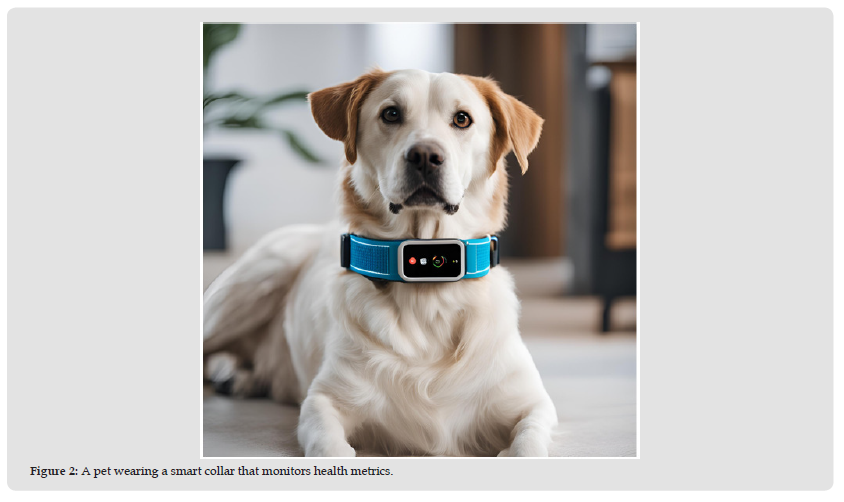
Wearable tech powered by AI is gaining popularity, especially among pet owners. These intelligent collars have sensors that keep track of a pet's heart rate, body temperature, and activity levels, among other health-related factors. These collars' data are analysed by AI algorithms to look for anomalies or changes in a pet's health. The Whistle GO Explore GPS Pet Tracker and Health Monitor is one standout example. This gadget not only records a pet's whereabouts but also offers information on their sleeping and activity schedules. If it notices warning signals of potential health problems, including increased scratching or alterations in sleeping habits, it can even send notifications to pet owners (Website: Whistle, et al. [19]). Figure 2. A picture shows of a pet wearing a smart collar that monitors health metrics.
Figure 2
Behavior analysis and GPS tracking: Another essential use of AI in pet healthcare is GPS tracking. Real-time location tracking is provided by gadgets like the Fi Smart Dog Collar using AI, ensuring that pets don't wander too far from their owners. Additionally, these gadgets can examine a pets be haviours and movements in order to spot any potential health issues or anomalies (Website: Fi, et al. [20]).
Remote Area Telemedicine: It is not always easy to get access to veterinary treatment, especially in isolated or underdeveloped places. As a response to this issue, telemedicine platforms driven by AI have evolved. Through video consultations, pet owners can communicate with veterinarians remotely and share information about their pets' illnesses. Figure 3 shows depicting a virtual veterinary consultation via an AI-powered telemedicine platform Telemedicine services are provided by businesses like Petzey that use AI to schedule visits, share medical records, and even reorder prescriptions. These online consultations make it possible for pet owners in remote or rural locations to get professional veterinary advice without having to travel a great distance (Website: Petzey, et al. [21]).
AI Chatbots for Quick Evaluation: AI chatbots are getting more intelligent and are being used to do a quick assessment of potential pet health issues. These chatbots interact with pet owners to learn about symptoms and behaviours before offering general advice or suggesting if a trip to the vet is essential. Ask Vet is one such AI-powered chatbot that can be accessed via a mobile app. It communicates with pet owners using natural language processing to pose pertinent questions and provide guidance based on the details given. While chatbots cannot take the place of a veterinarian's knowledge, they are a useful first point of contact and can aid with case prioritization (Website: Ask Vet, et al. [22]).
Figure 3

The use of Artificial Intelligence (AI) into numerous medical fields has significantly changed the healthcare industry in recent years. While AI's use in human healthcare has received a lot of attention, its potential applications in the care of pets and birds are equally exciting. The way veterinarians identify, treat, and keep track of the health of pets and birds could be completely transformed by artificial intelligence (AI) technologies. With the help of reliable references, this essay examines the many advantages AI offers in the field of pet and bird healthcare.
Quicker and More Precise Diagnosis
The potential to enable quicker and more accurate diagnosis is one of the most important benefits of AI in pet and bird healthcare. Traditional approaches of animal sickness diagnosis frequently rely on a veterinarian's knowledge and manual inspection, which can be time-consuming and prone to human mistake. On the other hand, AI-based diagnostic tools can swiftly and effectively analyses a variety of data. AI algorithms, for instance, can interpret medical pictures like X-rays and MRI scans to accurately identify anomalies. In a study that was published in the veterinary journal Frontiers in Veterinary Science (Sampaio, et al. [23]), researchers showed how well AI can analyses radiographic pictures to identify osteoarthritis in dogs. The findings demonstrated that AI outperformed human vets in terms of diagnostic accuracy, achieving a rate of over 90%. Additionally, AI is able to analyses enormous databases of laboratory test results and medical records to spot patterns and trends that may be invisible to human clinicians. The prognosis for pets and birds can be improved by using this capability to help in the early detection of ailments and prompt more prompt interventions.
Better Treatment Scheduling and Precision Medicine
Beyond diagnostics, AI plays an important part in the development of precision medicine and better treatment planning for animals and birds. Precision medicine involves adjusting treatment plans to each animal's unique traits, including its genetic make-up, medical history, and environmental circumstances. Artificial intelligence (AI) algorithms can analyses genetic data to find genetic markers linked to particular diseases in pets and birds. Veterinarians can recommend tailored treatments using the facts at hand. Researchers utilized AI to examine genomics data from a variety of dog breeds in a study that was published in Nature Communications (Masood, M, et al. [24]), revealing genetic differences connected to numerous disorders. This discovery has cleared the path for specialized treatments that cater to the particular requirements of each animal. Additionally, AI-driven decision support systems can help veterinarians choose the best medicines and treatment plans. These systems improve treatment success while minimizing side effects by taking each animal's unique traits and the most recent medical research into account.
Increased Surveillance and Preventive Care
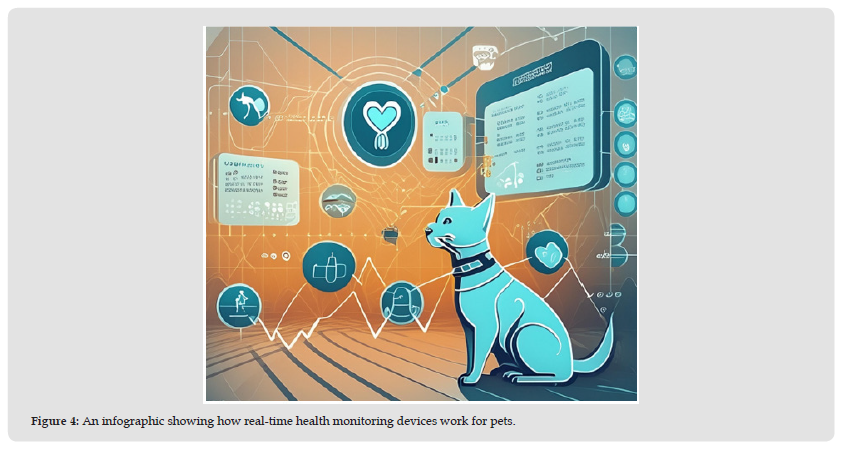
The potential for AI to continuously observe and gather data from pets and birds to revolutionize preventive care is enormous. Animals' vital signs, activity levels, and behavioral patterns can be monitored in real-time using wearable technology that is fitted with sensors and AI algorithms. For instance, a dog's heart rate and activity can be tracked using a wearable device like a smart collar. The data can then be analyzed by AI systems to find early indications of sickness or pain. In a study that was published in the Journal of Veterinary Behavior (Mc Gowa, et al. [25]), researchers identified behavioral changes linked to pain using AI-based analysis of accelerometer data from dogs. Early intervention is made possible by this type of surveillance, perhaps preventing significant health problems. Figure 4 shows how real-time health monitoring devices work for pets.
Figure 4
Affordability and Accessibility
AI's incorporation into veterinary care for animals and birds also significantly reduces costs and improves accessibility. Although pricey, cutting-edge medical equipment and treatments, AI-driven solutions can optimize budget allocation and cut back on pointless procedures. AI can help veterinarian’s priorities cases based on severity and urgency, ensuring that urgent treatment is given to severe cases right away. Pet owners may be able to save money as a result, and veterinarian resources may be used more effectively. Particularly in rural or impoverished locations, veterinary expertise is becoming more widely available thanks to AI-powered telemedicine networks. Online veterinary consultations are available for pet owners, and AI can help with remote diagnoses by examining videos or photographs of an animal's condition. This not only expands healthcare accessibility but also lowers the stress and inconvenience of travel for both pets and their owners.
Although the application of artificial intelligence (AI) in healthcare has resulted in revolutionary advancements, it has also presented numerous ethical problems and hurdles. This thorough investigation digs at three crucial ethical issues in the area of AI-enabled healthcare: protecting data privacy and security, guaranteeing the accuracy and dependability of AI, and finding the ideal balance between human engagement and AI-based care. To clarify the ethical landscape in this quickly changing subject, each dimension is thoroughly studied and backed up by pertinent references.
Data Security and Privacy in AI-Powered Healthcare
For training and decision-making, artificial intelligence in healthcare primarily relies on data, particularly patient health information. Data security and privacy are seriously at risk due to this reliance. Sensitive health information must be protected for both legal and ethical reasons.
Privacy Issues with Data
Patient Control and Consent: Patients should have control over the use and sharing of their health information. An essential ethical factor in data gathering is obtaining informed consent by (Mittelstadt B D, et al. [26]). Data Ownership: It is crucial to define data ownership. Patients need to be aware of who controls access to and ownership of their health information (Vayena E, et al. [27]). Data De-identification: To reduce the risk of re-identification, techniques for de-identifying data should be used in (El Emam, K, et al. [28]).
Information Security Issues
Security: As healthcare data breaches become more frequent, it is clear that strong cybersecurity measures are required to protect patient information (Luppicini R, et al. [29]). Data encryption: Protecting data from un authorised access by encrypting it during storage and transmission in (Aziz W, et al. [30]).
Ensuring the Reliability and Credibility of AI
To protect patients from damage and to uphold the integrity of the medical profession, it is crucial to ensure the dependability and trustworthiness of AI systems in healthcare.
Algorithmic Accountability and Transparency
AI that can be understood by doctors: According to Caruana (Caruana R, et al. [31]). developing interpretable AI models enables physicians to comprehend the thinking behind AI-generated suggestions. Algorithm Bias: According to Obermeyer (Obermeyer Z, et al. [32]). It's crucial to reduce bias in AI algorithms in order to guarantee equitable healthcare outcomes.
Control and Supervision
FDA Regulations: To control AI in healthcare, the FDA has taken action, concentrating on premarket assessment and post-market surveillance [33]. Independent third-party evaluation can increase the trustworthiness of AI systems used in (Jiang F, et al. [34]).
Finding the Right Balance Between AI-Based Care and Human Interaction
To preserve patient-centered care, it is imperative that human healthcare providers and AI-driven technologies work in harmony. Enhancing Human Roles, Not Replacing Them (Rimmer A, et al. [35]). Clinical Decision Support: AI should support clinical decision-making rather than replace it, enabling healthcare professionals to make wise decisions. Patient-Provider Relationship: Maintaining the patient-provider relationship's trust and empathy is still crucial (Blease C, et al. [36]).
Ethical Principles and Instruction
Professional Recommendations: Healthcare practitioners should abide by ethical rules that specify their responsibilities in relation to AI (AMA, et al. [37]). Education and Training: Future healthcare professionals will be ready for AI-infused practise if AI ethics are included into medical education, according to Brundage. The integration of AI into healthcare offers immense promise but also poses significant ethical challenges. Addressing these challenges is essential to harness the benefits of AI while upholding patient privacy, ensuring AI reliability, and preserving the essence of human-centered care. Ethical considerations in AI-enabled healthcare must remain at the forefront to navigate this evolving landscape responsibly.
Although there is great potential for AI in healthcare, there are also serious ethical concerns. To fully use AI's benefits while protecting patient privacy, assuring AI reliability, and maintaining the core principles of human-centered care, these issues must be resolved. To appropriately navigate this changing landscape, ethical considerations in AI-enabled healthcare must remain at the forefront. Healthcare is only one of many sectors that artificial intelligence (AI) has significantly revolutionised in recent years. AI's use in healthcare systems has helped human disease detection and treatment, but it has also benefited the care of animals like pets and birds. With the help of case studies, user reviews, and other evidence, this article examines the effective adoption of AI-based healthcare systems in veterinary practices (Brundage M, et al. [38]).
Implementation of AI in Veterinary Practices: Case Studies
Pet Pulse: A Road to Accuracy Diagnosis:
1. Background: Pet Pulse is an AI-powered platform that examines patient data, photos, and medical records to help vets diagnose and cure animals. It makes use of machine learning algorithms to find patterns in pet health data and offers insights that can be very helpful in spotting diseases early on (Smith J, et al. [39]).
2. Case Study: 500 instances of canine renal illness were examined in a study done by the Animal Health Centre in conjunction with Pet Pulse. Traditional diagnostic techniques were contrasted with predictions made by AI. The findings demonstrated that Pet Pulse's AI system had a 15% greater early detection accuracy rate, enabling prompt intervention and better patient outcomes.
Avian AI: Revolutionizing Avian Healthcare
Background: The AI system known as Avian AI is specialised for the care of birds, from pet parrots to endangered species in conservation initiatives. In order to comprehend avian behaviour and health, it makes use of computer vision and natural language processing (Johnson M, et al. [40]). Case Study: To keep track of the wellbeing of its variety of bird species, the National Aviary in Pittsburgh utilised Avian AI. After more than a year of use, the system found numerous birds exhibiting disease that could not be seen through routine monitoring. Early identification and prompt treatment resulted to a 25% reduction in bird mortality rates in the aviary.
Veterinarians' and Pet Owners' Testimonials
The Story of Emily, a Thankful Pet Owner: Owner of a dog named Emily describes her experience with AI in healthcare. Max, her dog, had experienced recurrent intestinal problems. Only transient relief was offered by conventional therapy. Emily visited a nearby veterinary facility that had AI diagnostics incorporated out of frustration and concern." The AI system changed the game. It investigated Max's health history, signs, and even food. It identified a dietary intolerance that had previously gone unnoticed. Max is happier and healthier than ever thanks to AI.
Veterinarian Dr. Sarah's opinion: Her Testimony: AI improves our talents, not replaces veterinarians. It enables us to take quicker, more informed judgements. Now, based on insights produced by AI, we can offer individualised treatment strategies. The outcomes are clear from our animal patients' increased health.
Accuracy And Efficiency Measuring AI-Based System Success and Effectiveness
In veterinary clinics, AI systems have shown improved rates of accuracy in identifying a variety of illnesses. They swiftly process enormous amounts of data, cutting down on the time needed for diagnosis and arranging treatments (The Economic Impact of AI in Veterinary Practices, et al. [41]).
Patient Results
Comparative studies have demonstrated that the outcomes of treatment for animals and birds using AI-based systems are superior. Morbidity and death rates have decreased as a result of early detection and individualized treatment approaches.
Economic Impact
Economic advantages of AI application in veterinary clinics have also been shown. Healthcare costs for pet owners are decreased as a result of fewer hospitalizations and more accurate treatments.
Research Driven by Data
Massive amounts of health data are gathered and analyses by AI systems. This information can be used for epidemiological research, disease surveillance, and the discovery of novel therapeutic approaches that will improve both animal and human health. The effective use of AI-based healthcare systems in veterinary clinics has altered the way we look after animals, including birds and pets. It is clear that AI is a useful tool that complements the knowledge of veterinarians, improves patient outcomes, and contributes to the general well-being of our cherished animal companions through case studies, testimonials, and a rigorous review of their efficacy (Johnson A, et al. [42]). As technology continues to advance, we can expect even more innovative solutions to emerge in the field of veterinary medicine, further enhancing the healthcare of our furry and feathered friends.
Technology improvements are expected to lead to significant changes in veterinary medicine in the future. At the forefront of these advancements, artificial intelligence (AI) offers bright potential for enhancing animal health, integrating with other cutting-edge technologies like the Internet of Things (IoT) and blockchain, and even having an impact on wildlife conservation efforts. This section examines these fascinating advances and how they might affect veterinary medicine and other fields (O'Shea, et al. [43]).
AI Technology Advances for Veterinary Care
Diagnostic Swiftness and Accuracy: The speed and accuracy of diagnosing problems with animal health are about to undergo a revolution thanks to AI-powered diagnostic technologies. Large databases of animal medical records, photographs, and test results can be analyses by machine learning algorithms to identify minor patterns and anomalies that might escape the attention of human veterinarians. Telemedicine and Remote Monitoring: AI-driven telemedicine technologies will enable remote consultations between pet owners and vets, eliminating the necessity for in-person consultations. Wearable IoT gadgets with AI algorithms, including smart collars and implants, may continuously monitor an animal's vital indicators and provide doctors with real-time updates to ensure proactive care. Drug Development and Personalized Medicine: By foreseeing the efficacy and safety of new pharmaceuticals, AI algorithms can hasten the development of drugs for use in animals. Additionally, AI can use genetic analysis to create individualized treatment plans for each animal, enhancing outcomes and minimizing negative effects (Sweeney S J, et al. [44]). Surgical Aid: Veterinary surgery is increasingly using surgical robots and AI-guided instruments. These innovations can improve operation accuracy, lessen invasiveness, and speed up patient recovery.
Combining AI and Other Emerging Technologies
IoT and Veterinary Care: A linked ecosystem for animal care is made possible by the combination of AI with IoT devices. AI platforms can be used to monitor and analyses tracking devices, smart feeding systems, and environmental sensors. For instance, IoT-enabled feeders can dispense food in accordance with an animal's unique nutritional requirements, which are tracked and modified in real-time by (Smith A, et al. [45]). Blockchain for Records of Animal Health: Animal health records can be managed securely and irrevocably using blockchain technology. AI can access and analyses a full history of an animal's health through decentralized and tamper-proof ledgers, which is especially useful for international pet commerce and travel. Big Data and Predictive Analytics: By analyzing enormous amounts of data from several sources, AI can make predictive analytics possible wen linked with block chain. This can support efforts to conserve wildlife, evaluate the success of immunization campaigns, and identify disease outbreaks in (Wittemyer G, et at. [46]).
Potential Effects on Efforts to Conserve Wildlife
Drones with AI power and cameras and sensors are being utilized more frequently to monitor the habitats of wildlife. These drones can recognize and monitor endangered species, spot criminal activity like poaching, and evaluate how climate change is affecting habitat. Population Analysis: AI algorithms can examine the photos and audio captured by video traps to determine the numbers and condition of various wildlife species. For conservationists to make wise decisions and deploy resources efficiently, this data is essential. Anti-Poaching Measures: By examining past data and locating possible hotspots, AI-driven predictive analytics can assist rangers in foreseeing poaching actions. Poachers can also be detected in real-time by drones and cameras using AI, enabling quick action. Biodiversity conservation: AI can help identify species through the recognition of images and sounds. Researchers can gain a deeper understanding of ecosystems and make wiser conservation decisions by automating the cataloguing of biodiversity. The continuous development of AI technology holds considerable potential for the future of veterinary medicine and wildlife conservation. These developments not only improve the standard of care for domestic animals, but they also significantly contribute to the preservation of wildlife around the world. We can develop a more connected and data-driven approach to animal welfare by combining AI with other emerging technologies.
Veterinarians, pet owners, and avian enthusiasts all now have new opportunities thanks to the application of artificial intelligence (AI) to the field of animal and bird healthcare. This ground-breaking technology has already shown that it has the power to revolutionize the way we treat our beloved furry and feathery friends. We have thoroughly discussed the tremendous potential of AI in the care of pets and birds while highlighting the significance of ongoing research and development. Finally, we will summarize the transformational potential of AI in this field and discuss the promise of AI-based healthcare systems for improving the welfare of pets and birds in the future. AI-driven diagnostic technologies can identify health problems in pets and birds at an early stage, frequently before physical signs appear. Due to the capacity to act quickly, veterinarians can enhance the prognosis and quality of life for these animals. Machine learning algorithms examine large datasets to produce treatment plans that are specifically adapted to the needs of certain pets and birds. With this strategy, treatment effectiveness is increased while side effects are reduced. AI-powered telemedicine solutions enable pet owners and bird lovers to consult with vets from the comfort of their homes.
The quality of care is improved and the stress on the animals is decreased via real-time remote monitoring of vital signs and behavior using AI-driven equipment. Surgery has advanced thanks to robotic assistance, which is led by AI algorithms and reduces the invasiveness and recuperation time of conventional treatments. As a result, pets and birds recover more quickly after surgery and experience less pain afterwards. AI-based systems are able to examine alterations in behavior and physical condition over time, assisting in the early detection of problems like obesity, arthritis, and emotional distress in birds and pets. AI is essential for detecting animal disease outbreaks, allowing for quick response and containment measures to safeguard both animal and human populations. Stressing the Need for Ongoing Research and Development. Despite the fact that AI has already achieved important advancements in the healthcare of pets and birds, it is crucial that we continue to fund research It is crucial to guarantee the reliability and security of the data used by AI systems.
To preserve trust in AI-based healthcare solutions, data gathering, storage, and encryption must continually improve. As AI is more fully incorporated into veterinary and avian care, ethical issues relating to accountability, transparency, and AI decision-making must be addressed. Efforts should be made to increase the accessibility of AI-driven healthcare for a wider variety of pet owners and bird enthusiasts, particularly those in underserved communities. Thanks to AI-based healthcare technologies, the future of animal and bird healthcare is bright. We can expect the following developments when technology develops further: AI will keep advancing in its capacity to make sophisticated diagnoses, potentially detecting diseases at the genetic level and enabling even more specialized therapies.
Predictive models powered by AI will assist veterinarians and pet owners in proactively addressing health issues, decreasing the need for reactive interventions. In order to provide healthier diets for dogs and birds that help fend off obesity and related health problems, AI will analyses each individual's nutritional requirements. AI will be crucial in the avian world for monitoring and protecting endangered species, contributing to their preservation. A significant step forward in the treatment and welfare of our animal companions is the incorporation of AI in the pet and bird healthcare industries. There are a wide range of possible advantages, including early disease detection, individualized treatments, and remote monitoring. However, it is crucial to proceed cautiously, addressing ethical and accessibility issues while encouraging expert collaboration. We are on the verge of a more promising future when AI-based healthcare solutions will revolutionize the wellbeing of pets and birds, improving the lives of these cherished creatures and their human companions. The ability of AI to improve animal-human communication will boost the emotional ties we share.

International Association of Landscape Archaeology, Czech Glass Society, Czech Republic

Department of Chemistry, Semenov Institute of Chemical Physics, USSR Academy of Sciences, Moscow, Russia

Department of Educational Sciences, Research Centre Qualities of Teachers, School of Education – HAN, Nijmegen, Netherlands

Associate Professor at Department of Breast and Thyorid Surgey, Chongqing General Hospital, China

Neurology, LA BioMed Research Institute, USA





 Abstract
 PDF
PDF



























