info@biomedres.us
+1 (502) 904-2126
One Westbrook Corporate Center, Suite 300, Westchester, IL 60154, USA
Site Map
 ISSN: 2574 -1241
ISSN: 2574 -1241
ISSN: 2574 -1241
Received: September 03, 2024; Published: September 19,2024
*Corresponding author: Vladimir Dodtievich BITSOEV, Doctor of Medicine, SBHI MR “Podolsk District Clinical Hospital” 38 Kirov Str., Podolsk, Moscow Region, Russia
DOI: 10.26717/BJSTR.2024.58.009194
Vascular nervous system lesions are now the most important of all problems of clinical neurology. This is primarily due to the high prevalence of cerebro-vascular diseases [1-3]. In economically developed countries, mortality rate due to these diseases accounts for about 12% of all population mortality, second only to mortality due to heart disease and tumors of all localizations. American statisticians write that the damage caused to the state by cerebral stroke is estimated at more than 1 billion dollars a year [4-7]. Thus, the problem of prevention and treatment of cerebral vascular lesions has become a serious not only medical but also socio-economic problem. As a result of preventive and therapeutic measures, a tendency to reduce mortality rate due to cerebral vascular lesions is already beginning to emerge and new encouraging prospects are opening up. Therefore, every year more and more attention of clinicians and physiologists dealing with cerebral blood circulation in norm and pathology is attracted to a very important non-invasive method of recording the state of cerebral vessels and changes in cerebral circulatory dynamics - “rheoencephalography”.
Keywords: Cerebral Vascular and Tumor Diseases; Decaying Limb; Anacrotic Limb; Rheoencephalography
Rheoencephalography based on registration of changes in the variable value of electrical resistance (impedance) of organs caused by pulse fluctuations in their blood filling at each heartbeat. Rheoencephalography has a number of advantages over other bloodless methods of circulatory dynamics research [8,9]. It allows obtaining reliable indicators on the relative intensity of blood flow, the state of cerebral vascular tone during a completely harmless examination [10- 12]. Rheoencephalography is valuable with the application of various functional and pharmacological tests as it helps in early diagnosis of cerebral vascular and tumor diseases. In 1950, the first paper on the use of rheoencephalography was published; and in 1952, this method to study cerebral circulatory dynamics in cerebral vascular lesions was used [6]. The term “rheoencephalogram” was first proposed to denote the curve of registration of changes in the electrical resistance of the brain to the high frequency current passed through it [11,13- 15]. This term denotes not only impedance changes of the cerebral hemispheres, but also of individual brain regions. The importance of rheoencephalography is especially increasing due to the fact that this method in some cases can compete with a rather common, but far from safe method of contrast cerebral angiography. The angiography technique itself, in addition to the danger it carries, alters the circulatory dynamics of the brain and in some cases for up to 48 hours [13].
At quantitative and visual analysis of circulatory dynamics it is necessary to take into account on what day from the beginning of the disease, at what time of the day, before or after meals the examination was performed, at the same time it is necessary to pay attention to climatic conditions of the place of residence, social status of the patient under study and the norms of REG parameters for this device. This approach to the study of REG in vascular and tumor diseases of the brain is not sufficiently covered neither in domestic nor in foreign literature.
The present study is a continuation of the works on studying the state of cerebral circulatory dynamics in vascular and tumor diseases of the brain. Its aim is to develop new clinical and rheoencephalographic possibilities in differential diagnostics of cerebral vascular and tumor diseases.
1) To disclose rheoencephalographic possibilities in differential diagnostics of vascular and tumor diseases of the brain in the study of patients with regard to the above-mentioned factors.
2) Significance of correlation relations of REG parameters in differential diagnostics of vascular and tumor diseases of the brain of all investigated patients.
The work is based on the analysis of 122 clinical observations of vascular and tumor pathology of the brain. Of them with cerebral vascular diseases (cerebral atherosclerosis with transitory cerebral circulatory disorders – 62, vasomotor dystonia – 45), 15 – with brain tumors (9 – with hemispherical, 6 – with basal location). All patients were examined according to the principles of the Institute of Higher Nervous Activity and the Neurology Clinic of the Faculty of Medicine, Palacky University, Czechoslovak Socialist Republic. These principles stipulate a certain comprehensiveness, consistency, dynamism and necessary pace in the examination of patients. The tactics of patient management was determined on the basis of neurological examination data, supplemented, as a rule, by scanning, pneumoencephalography, electroencephalography. The nature of verification by groups of patients is presented in Table 1. Recordings were made on a two-channel rheograph of the “GALILEO” Company (Italy) in a shielded chambser, in the patient’s supine position with closed eyes, with breath-holding in the frontal-mastoidal lead, in the fasted state, from 8 to 10 a.m., from the first to the third day from the disease onset. As functional tests, turning the head to the sides, hyperventilation for two minutes, sublingual administration of nitroglycerin 0.0005 were used. When analyzing REG, the following parameters were considered: amplitude of the curve, duration of anacrotic limb, time of the ascending part to the duration of the whole wave (in percent), wave shape and the presence of asymmetry.
Table 1: The nature of verification by groups of patients.

Rheoencephalogram in form resembles a normal pulse pressure or volume pulse curve and consists of ascending part (anacrotic limb), apex, descending part (decaying limb) and an additional wave on it [16]. The shape of the rheographic waveform is determined by the steepness of the slope, the configuration of the anacrotic and catacrotic phases of the curve and the nature of the apex. The top of the REG corresponds to the point of the greatest changes in the electrical conductivity (impedance) of the area under study [17,18]. An indicator of the intensity of blood flow pulse fluctuations in the studied area of the brain is the REG amplitude. In our studies, the value of REG amplitude, i.e., the intensity of blood flow in the investigated brain region, was estimated in ohms by comparing its height in millimeters with the value of the calibration signal. In other words, the ohmic value of the rheographic index was determined [12].
When analyzing REG, great importance is attached to the duration of the anacrotic phase of the curve, as it is characterized by great constancy and reflects the degree of the vascular wall distensibility quite completely. The duration of the anacrotic phase, its ratio to the duration of the entire rheographic wave, gives an idea of the state of vascular tone, since the degree of vascular distensibility depends not only on the elasticity, but also on the tonic tension of the vascular wall [18]. The duration of the REG catacrotic phase is determined by the time interval from the apex to the base of the curve. Average values of rheoencephalographic parameters in healthy people (norm) by age category according to Kh.Kh.Yarullin, 1967 are presented in Table 2. Average values of rheoencephalographic parameters in healthy people (norm) by age category according to our data are presented in Table 3.
Table 2: Average values of rheoencephalographic parameters in healthy people (norm) by age category according to H.H. Yarullin, 1967.

Table 3: Average values of rheoencephalographic parameters in healthy people (norm) by age category according to our data.

1) Quantitative and visual analysis of rheoencephalograms of patients with cerebral atherosclerosis with transitory circulatory disorders of the brain (Figure 1).
Average quantitative and statistical characteristics of REG parameters of patients with cerebral atherosclerosis with transitory cerebral circulatory disorders are presented in Table 4. Visually in cerebral atherosclerosis with transitory cerebral circulatory disorders the irregularity of REG wave, low amplitude, and sometimes even some increase of it are determined [19]. A sharp rounding of the curve top, often a rough plateau is revealed, and sometimes REG acquires an arch-shape, dicrotic wave is almost absent or smoothed and displaced to the top. Sharp prolongation of the curve anacrotic phase duration and in 90% of cases - decaying limb. Significant increase in the ratio of the duration of the anacrotic phase to the duration of the whole REG wave is up to 27.16% on average. Very coarse hemispheric asymmetry with large variations from 10 to 257%, with an average of 62.87%. A pronounced venous wave. Rheoencephalograms in patients of this group change little under the influence of nitroglycerin, indicating organic lesion of the vascular wall [20]. The hemispheric asymmetry in patients of this group is apparently caused by an insufficiency of blood supply to one of the hemispheres. The clinical picture in this group of patients was diverse: diffuse or localized headaches were in the foreground, which had a pressing, pulsating and retching nature, often accompanied by nausea and vomiting, head and ears noise, dizziness, mainly of non-systemic character Vegetative disorders were often observed: pallor or redness of the face, palpitations, pain in the heart area, dry mouth, transitory amnesia.
Figure 1.
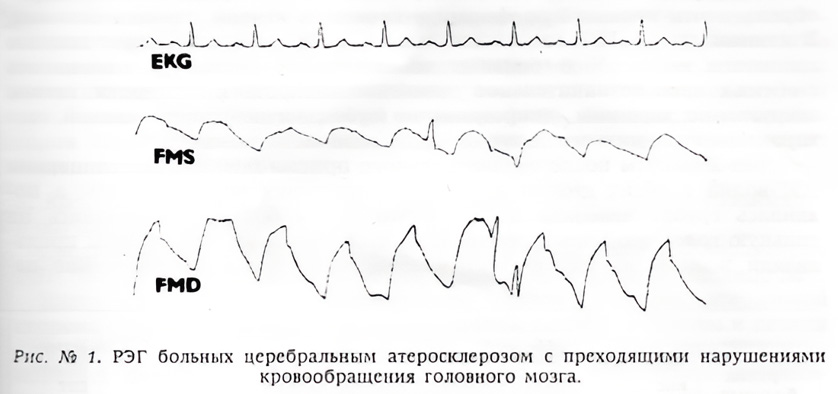
Table 4: Average quantitative and statistical characteristics of REG parameters of patients with cerebral atherosclerosis with transitory cerebral circulatory disorders.

Among the focal symptoms, the most frequently noted were sensory disorders by hemitype. Motor disorders in the form of hemiparesis with predominant weakness in the hand. Visual disorders: greyout, photopsia, diplopia. In blood cholesterol study, no parallelism between clinical manifestations of cerebral atherosclerosis with transitory cerebral circulatory disorders and hypercholesterolemia, as well as with age, could not be noted. When cerebral vessels were predominantly affected, the amount of cholesterol was usually normal or did not exceed 200-220 mg%, a significant increase in cholesterol levels was observed in patients with severe general atherosclerosis and in some cases at younger ages ration up to 350-480 mg%.
2) Quantitative and visual analysis of rheoencephalograms of patients with vasomotor dystonia (Figure 2).
Figure 2.
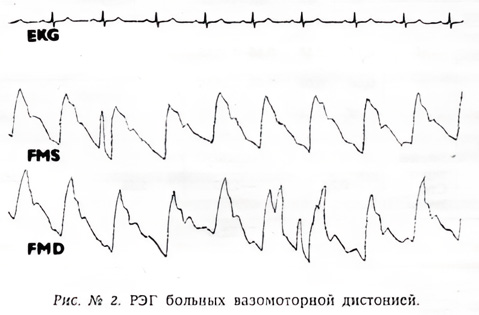
Average quantitative and statistical characteristics of REG parameters of patients with vasomotor dystonia are presented in Table 5. In 23 patients with vasomotor dystonia, the unevenness of the REG wave, normal amplitude of the curve, steep rise of anacrotic limb, sharp apex, elongated and wavy decaying limb due to additional waves, venous wave are visually determined on both sides, which indicates high lability of cerebral vascular tone. In 17 patients of this group the uniformity of the REG wave on both sides, slight rounding of the curve apex due to the dicrotic wave shifted to the apex, sometimes the presence of an additional wave on the anacrotic limb, moderate elongation of the decaying limb are determined. In 2 minutes after sublingual administration of 0.0005 nitroglycerin, the REG wave on both sides acquired almost normal shape in the first and second cases of patients. In this case REG is characterized as in high cerebral vascular tone. In 6 patients with vasomotor dystonia, slight elongation of anacrotic limb and decaying limb, slight rounding of the apex, dicrotic wave at the base of the curve were noted on both sides, which is characteristic of low cerebral vascular tone. In 2 minutes after sublingual administration of 0.0005 nitroglycerin, the REG wave on both sides did not change toward improvement, and a rough venous wave appeared, at which time the patients complained of severe headache with mild nausea.
Table 5: Average quantitative and statistical characteristics of REG parameters of patients with vasomotor dystonia.

Patients in this group complained of rapid fatigability, absent- mindedness, memory decline, performance impairment in the first half of the day, anxious sleep, tearfulness, pain in the heart area, palpitations. Neurological examination revealed no symptoms of organic lesions of the nervous system. Uniform general increase of tendon and periosteal reflexes, trembling of fingers of outstretched hands, eyelid tremor, intense dermographism, large vasomotion were noted. No abnormalities in blood biochemical examination were observed.
3) Quantitative and visual analysis of rheoencephalograms of patients with brain tumors (Figure 3). Average quantitative and statistical characteristics of REG parameters of patients with brain tumors are presented in Table 6. Visually, in patients with hemispheric tumors in the homolateral side, an acute apex, a steep rise of the anacrotic limb and a sharp decline in the beginning of the decaying limb with subsequent elongation are determined; the REG acquires the shape of an isosceles triangle. No dicrotic waves were observed. Venous wave. Gross hemispheric asymmetry due to high amplitude in the homolateral side. In 2 minutes after sublingual administration of 0.0005 nitroglycerin, the decaying limb was sharply elongated with the appearance of dicrotic wave shifted to the base, deep venous wave appeared. The neurologic status of these patients shows hemiparesis with sensory impairment by hemitype and pathologic pyramidal signs. Patients with basal location of the tumor predominantly had visual disorders and general cerebral symptoms. Rheoencephalographic signs in these patients did not differ significantly from the REG of patients with hemispheric location of the tumor.
Figure 3.
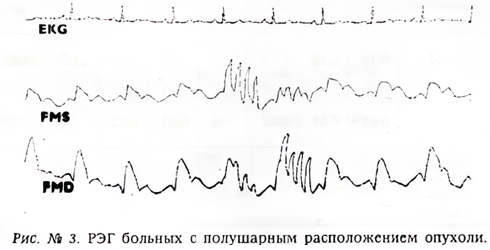
Table 6: Average quantitative and statistical characteristics of REG parameters of patients with brain tumors.

4) Analysis of statistical characteristics of REG parameters of the studied patients and their correlations. Statistically significant difference of anacrotic limb duration (α) at the significance level of P < 0.05 in both hemispheres is well expressed only in patients of the first group – cerebral atherosclerosis with transitory cerebral circulatory disorders (TCA) with the second group – vasomotor dystonia (VD), and the first group with the third group – brain tumors (BT) in the right hemisphere, which can be seen from Table 7. Statistically significant difference of decaying limb duration (β) at the significance level of P < 0.05 is expressed well in both hemispheres only in the first group with the second group of patients, as can be seen in Table 8. Statistically significant difference in the ratio of the duration of anacrotic limb to the duration of the entire wave (α/α+β* 100) at the significance level of P < 0.05 in both hemispheres is well expressed only in the first group with the second group of patients, as can be seen from Table 9. Statistically significant difference in the asymmetry factor (F) at the significance level of P < 0.05 is well expressed in the left hemisphere only in the first group with the second group of patients, as can be seen from Table 10. Statistically significant difference in amplitude (H) at the significance level of P < 0.05 in both hemispheres between all groups of patients is not expressed, as can be seen from Table 11.
Table 7: Statistically significant difference of anacrotic limb (α) of REG of the studied patients.

Table 8: Statistically significant difference in the decaying limb duration (β) of REG of the studied patients.

Table 9: Statistically significant difference in the ratio of the duration of the anacrotic limb to the duration of the entire wave (α/α+β * 100) in both hemispheres.

Table 10: Statistically significant difference in the asymmetry factor (F).

Table 11: Statistically significant difference in amplitude (H) in both hemispheres.

A positive correlation was found between the same parameters of REG of both hemispheres of all 122 patients studied, as can be seen from Table 12. A negative correlation in both hemispheres of all 122 patients between the amplitude (H) and decaying limb (β) (r=- 0.02 on the left and r=-0.06 on the right), and a positive correlation between the amplitude and anacrotic limb (α) in both hemispheres (r=0.23 on the left and r=0.21 on the right) were found. A positive correlation between the amplitude and the ratio of the anacrotic limb duration to the duration of the entire wave (α/(α+β)) (r=0.15 in both hemispheres). A negative correlation between anacrotic and decaying limbs (r=-0.38 on the left, r=-0.32 on the right) and catacrotic limb relative to the anacrotic limb duration to the duration of the entire wave (α/(α+β)) (r=-0.57 on the left, r=-0.6 on the right); positive correlation of anacrotic limb with the ratio of the duration of anacrotic limb to the duration of the entire wave (α/(α+β)) (r=0.74 on the left, r=0.76 on the right. On both sides, a positive correlation of the asymmetry factor (F) with anacrotic limb (α) and (α/(α+β)), a negative one with decaying limb and on the left – with amplitude (H) was found, which can be seen from Table 13. The REG parameters of both hemispheres of all 122 patients studied were compared and no statistically significant differences were found. The test was based on Student’s t-test for paired data, as can be seen from Tables 14 & 15.
Table 12: A positive correlation between the same REG parameters of both hemispheres of all 122 patients under study were found.

Table 13: Positive correlation of the asymmetry factor (F) with anacrotic limb (α) and (α/(α+β)), negative correlation with decaying limb and on the left – with amplitude (Н).
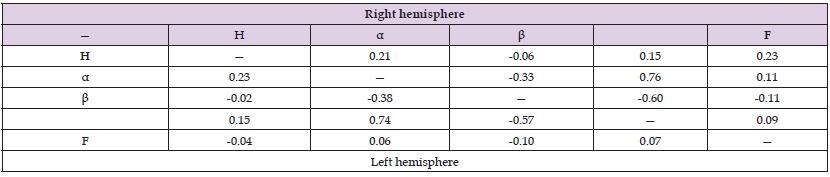
Table 14: Statistical characteristics according to Student’s t-test.

Table 15: Distribution of patients by age and sex.

1) The most reliable data on the visual and quantitative characteristics of rheograms can be obtained in the first 24 hours from the onset of cerebrovascular disease, taking into account the climatic conditions of the place of residence of the patient under study and the norms of REG parameters for each rheograph. This expands the rheoencephalographic capabilities of differential diagnostics of cerebrovascular disease.
2) For the first group of patients with TCA – cerebral atherosclerosis with transitory cerebral circulatory disorders – the following are characteristic:
• Variability in the shape of the REG peak;
• Sharp elongation of anacrotic limb and decaying limb; when comparing the values of these parameters with the second (vasomotor dystonia) and third (brain tumors) groups of patients, statistically significant differences at a significance level of P < 0.05 in both hemispheres were obtained;
• Very gross hemispheric asymmetry, sometimes up to 257%, indicating a pronounced deficiency of blood supply to the affected hemisphere; statistically significant difference at the significance level of P < 0.05 of the value of this parameter is well expressed only with the second group of patients;
• Constantly pronounced venous wave characterizing cerebral hypertension;
• Parallelism between clinical manifestations, rheoencephalogram parameters and hypercholesterolemia, as well as with the age of the first group of patients could not be noted.
3) The second group of patients with VD – vasomotor dystonia – is characterized by:
• Absence of focal symptoms of the nervous system;
• With high vascular tone of the brain, a uniform REG wave, a slight rounding of the peak of the curve due to a displaced dicrotic wave and sometimes on the anacrotic limb; moderate elongation of the decaying limb are noted;
• With lability of cerebral vascular tone, an uneven REG wave, an elongated wave-like catacrotic limb due to additional wave, and a venous wave are observed; after taking nitroglycerin, the REG wave acquires a normal shape;
• With low cerebral vascular tone, a slight elongation of anacrotic and decaying limbs, a dicrotic wave at the base of the curve are observed; after taking nitroglycerin, a rough venous wave with the severe headache and nausea in the patients under study, which may indicate difficulty in the outflow of blood, appears.
4) The third group of patients with BT – brain tumors – is characterized by:
• A steep rise in anacrotic limb, a sharp apex, a sharp decline in the onset of decaying limb with its subsequent elongation, as a result of which the REG wave takes the shape of an isosceles triangle, which may indicate a balanced inflow and outflow of blood from the affected area of the brain with subsequent difficulty in the outflow of blood from the surrounding brain tissue of mechanical origin;
• Absence of dicrotic wave, presence of venous wave;
• Very rough hemispheric asymmetry;
• Taking nitroglycerin does not change the REG wave for the better.
5) Statistically significant difference in amplitude at the significance level of P < 0.05 in both hemispheres between all groups of patients is not expressed.
6) A positive correlation between the same REG parameters of both hemispheres of all 122 patients under study were found.
7) On both sides, a positive correlation of asymmetry factor with anacrotic limb and negative with decaying limb, positive correlation of amplitude with anacrotic limb, in all 122 studied patients was found.
8) The REG parameters of both hemispheres of all 122 patients studied were compared and no statistically significant differences were found. The test was based on Student’s t-test for paired data.

International Association of Landscape Archaeology, Czech Glass Society, Czech Republic

Department of Chemistry, Semenov Institute of Chemical Physics, USSR Academy of Sciences, Moscow, Russia

Department of Educational Sciences, Research Centre Qualities of Teachers, School of Education – HAN, Nijmegen, Netherlands

Associate Professor at Department of Breast and Thyorid Surgey, Chongqing General Hospital, China

Neurology, LA BioMed Research Institute, USA





 Abstract
 PDF
PDF