info@biomedres.us
+1 (502) 904-2126
One Westbrook Corporate Center, Suite 300, Westchester, IL 60154, USA
Site Map
 ISSN: 2574 -1241
ISSN: 2574 -1241
ISSN: 2574 -1241
Received: August 26, 2024; Published: September 13, 2024
*Corresponding author: Hananeh Rahmanpoor, College of Pharmacy, Ajman University, P.O.BOX:346, Ajman, U.A.E
DOI: 10.26717/BJSTR.2024.58.009179
Background: Obesity has become a global public health concern. Categorized by fat accumulation and body mass
index (BMI ≥ 30 kg/m2). Weight management is crucial for a healthy lifestyle and for reducing obesity-related
complications through several strategies: pharmacotherapy treatments along with lifestyle modifications.
This literature review aimed to discuss selected studies and understand the role of semaglutide in weight loss
management.
Methods: The articles have been searched through Google Scholar, Semantic Scholar, ResearchGate, PMC, and
PubMed databases. Studies have been related to the benefits, formulations, adverse effects, clinical trials, and
maintenance after discontinuation of semaglutide been accessed.
Results: Studies reveal the efficacy of semaglutide on weight loss. The adverse effects observed in patients
treated with semaglutide include gastrointestinal adverse events, like nausea, vomiting, diarrhea, constipation,
and abdominal cramps.
Conclusion: The review suggests that semaglutide appears to be beneficial in its contribution to weight loss
management.
Keywords: Obesity; Weight Loss Management; Medication; Semaglutide
Abbreviations: BMI: Body Mass Index; FDA: Food and Drug Administration; NICE: National Institute for Health and Care Excellence; EMA: European Medicines Agency’s; PRISMA: Preferred Reporting Items for Systematic Reviews and Meta-Analyses; AOMS: anti-obesity medications; GLP: Glucagon-like peptide; BS: bariatric surgery; SUSTAIN: Semaglutide Unabated Sustainability in Treatment of Type 2 Diabetes; STEP: Semaglutide Treatment Effect in People with Obesity; PIONEER: Peptide Innovation for Early Diabetes Treatment
Obesity is a chronic disease with continuously rising prevalence that currently affects over a third of the world’s population [1,2]. Obesity means excessive fat accumulation, most commonly defines as body mass index (BMI) equal or higher than 30 kg/m², by calculating: weight (kg)/height² (m²) [3]. Obesity can be caused by unbalance between energy intake and energy expenditure [4]. Weight management through lifestyle modification includes reduced energy intake and increased physical activity [5]. Pharmacotherapy treatments, with lifestyle modifications, are required for effective body weight reduction [6,7]. There are different anti-obesity medications used in weight management to prevent obesity-related complications like cardiovascular risk factors and hyperglycemia [8,9]. Semaglutide belongs to incretin mimetic that binds to glucagon-like peptide-1 receptor, stimulates insulin secretion and inhibits glucagon secretion [10]. Semaglutide, a glucagon-like peptide-1 GLP-1 agonist, induces weight loss through central mechanisms by delaying gastric emptying, increasing satiety, decreasing appetite and reducing energy intake [11- 13]. Semaglutide was approved for weight loss by the UK Medicine and Health Products Regulations Agency in 2021, the Food and Drug Administration (FDA) in 2021, the National Institute for Health and Care Excellence (NICE) in 2022, and the European Medicines Agency’s (EMAs) Committee for Medicinal Products for Human Use in 2022 [14-16]. Semaglutide is used along with reduced-calorie diet and exercise programs to control weight loss in obese or overweight adults [17]. Semaglutide may cause side effects as nausea, vomiting, diarrhea, abdominal pain, constipation, heartburn, fainting or dizziness, rapid heartbeat, sweating, back pain, headache, and blurred vision [18,19]. Multiple papers provided essential insights into using semaglutide in managing obesity, with their potential benefits, side effects, and possible mechanisms of action [20]. This literature review aimed to discuss selected studies and understand the role of Semaglutide in weight loss management.
The articles have been searched through databases like Google Scholar, Semantic Scholar, ResearchGate, PMC, and PubMed. The results were in English and contains keywords of Semaglutide, Weight Management, Obesity. The study selection process flow chart was generated according to the Preferred Reporting Items for Systematic Reviews and Meta-Analyses (PRISMA) guidelines [21].
A total of 1977 articles have been identified via databases. After removing duplicate articles, 384 articles were evaluated for screening and 169 articles were assessed for eligibility. After excluding the duplicates and other parameters, 10 articles have been chosen to be included in the review (Figure 1). Studies have been related to the benefits, formulations, adverse effects, clinical trials, and maintenance after discontinuation of semaglutide been accessed as in Table 1 [22-31].
Figure 1

Table 1: Studies Related to Semaglutide Effects.
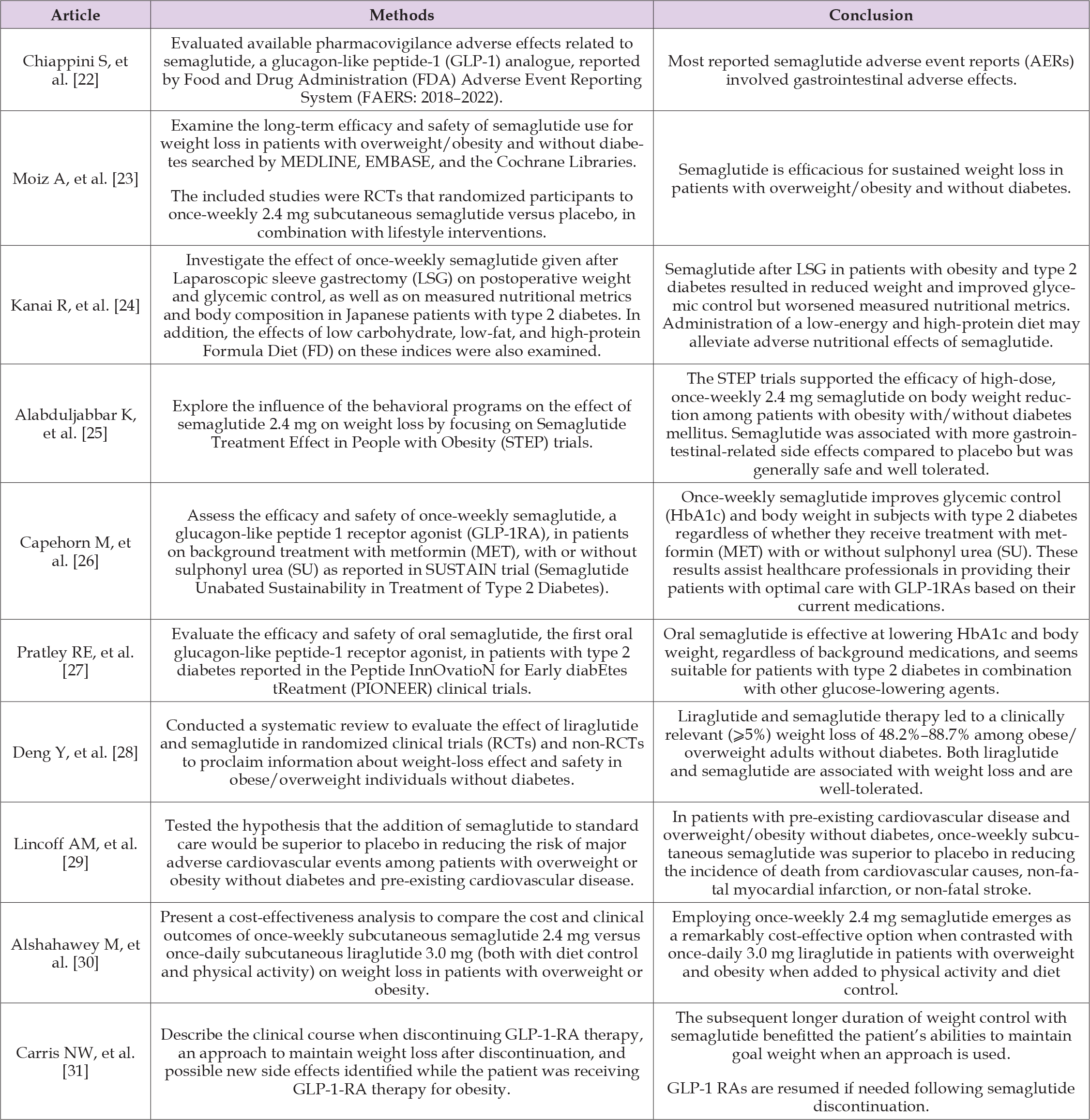
Obesity is a chronic condition with increased risk of obesity-related comorbidities comprising type 2 diabetes, dyslipidemia, and cardiovascular events [32-34]. However, conservative approaches such as lifestyle modification, dietary control and physical activity are usually unsatisfactory to achieve satisfactory weight reduction in patients with obesity [35-37] Successful obesity management expands beyond weight loss, as it is important to highlight the assessment of the life quality and the prevention of obesity-related comorbidities [38]. The ideal treatment for obesity should be a highly individualized, personalized medicine. Treatment decisions will consider age, coexisting diseases, drug tolerance, and economic and local medical conditions [39].
Glucagon-like peptide-1 (GLP-1) is a gut hormone released in response to food intake that acts as a satiety signal, stimulates insulin release, inhibits glucagon secretion, and regulates gastric emptying [40-42]. GLP-1-RAs reduce weight, improve fasting and postprandial glucose and lipid metabolism, and decrease cardiovascular events [43-50]. In the field of anti-obesity medications (AOMs), GLP-1-RAs are the latest class of drugs to be approved for the treatment of obesity [51,52].
Combining obesity medications with different mechanisms of action might be beneficial for individuals with overweight or obesity, providing more effective treatment options for weight management [53]. Semaglutide is a GLP-1 analogue that binds to the GLP-1 receptor in pancreatic β-cells to induce insulin secretion through a glucose concentration-dependent mechanism [54-57]. Semaglutide is a long-acting Glucagon-like peptide-1receptor agonist (GLP-1Ra) that is available as a once-weekly subcutaneous (at doses up to 2.4 mg) and as a once-daily oral (at doses up to 14 mg) and has been shown to have the most potent effect on glucose lowering and weight loss within the class [58,59]. Semaglutide is illustrated as an adjunct to a reduced-calorie diet and increased physical activity for weight loss management in adults with Body Mass Index (BMI) of ≥ 30 kg/ m2 (obesity), or ≥ 27 kg/m2 to < 30 kg/m2 (overweight) in the presence of at least one weight-related comorbidity [60].The efficacy and safety profiles of semaglutide have an overall beneficial risk/benefit in obese/overweight individuals [61-63].
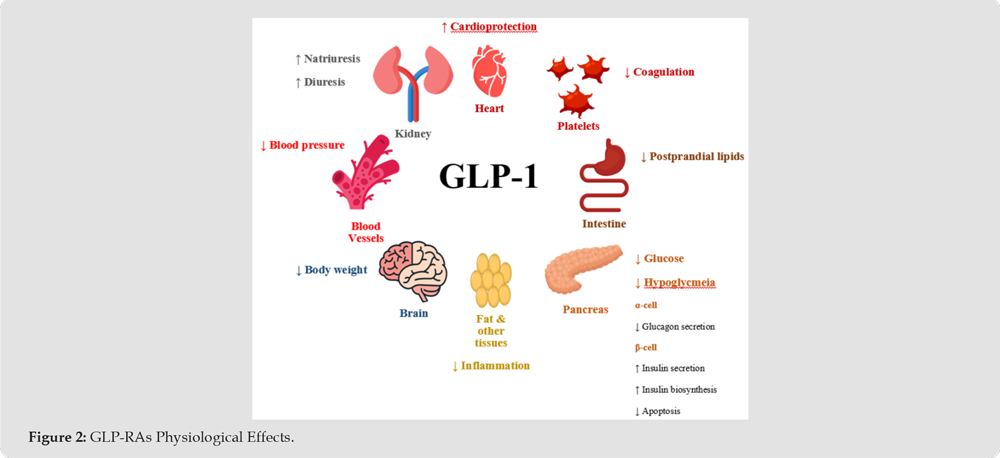
Semaglutide has demonstrated substantial weight reduction in patients with obesity with type 2 diabetes (diabesity) and without as a weight loss adjuvant therapy [64-66]. Switching from other GLP-1 RAs to semaglutide resulted in a significant decrease in HbA1c and body weight [67-75]. Semaglutide provided significant weight loss due to a reduction in fat mass whilst improving body composition along with lifestyle intervention for overweight/obesity in people with and without diabetes [76-78]. results highlighted by Moiz A et al. [23] Semaglutide appears to be a promising agent and more potent than existing GLP-1 RAs for body weight control in obese type 2 diabetes patients as observed in Deng Y, et al. [28] and multiple studies conducted for comparative results between semaglutide and liraglutide [79-84]. Physiological actions of GLP-1 RAs as semaglutide have been discussed in Figure 2 [85] Semaglutide, a glucagon-like peptide- 1 receptor agonist, has been shown to reduce the risk of adverse cardiovascular events in patients with diabetes [86,87] as observed in hypothesis by Lincoff AM et al.29 Weight Reduction by ≥3%, ≥5%, ≥10%, ≥15%, and ≥20% is enough to achieve a significant improvement in cardiovascular events [88,89].Treatment options to manage post-surgery excess weight regain are scarce [90,91]. Kanai R et al. [24] and other studies [92,93] discussed that semaglutide was found to be more effective for treating patients with a history of bariatric surgery (BS),
Figure 2
who have not achieved sufficient weight loss or who have experienced weight regain, and also who are on a waiting list for a bariatric procedure to reduce perioperative complications [94] Treatment with semaglutide improved obese patients’ health and quality of life in people with overweight/obesity and at least one obesity-related comorbidity [95,96].
Glucagon-like peptide 1 receptor agonists (GLP-1RAs) that, until recently, were only available for administration by subcutaneous injection, which frequently represented a treatment barrier for the patient [97]. Recently, oral semaglutide, the first GLP-1RA for oral administration, was made available for use in clinical practice worldwide, and it has been approved by the US Food and Drug Administration (FDA) and the European Medicines Agency (EMA) [98]. Oral semaglutide by using SNAC (sodium N-[8- (2-hydroxybenzoyl)amino] caprylate), an absorption enhancer, facilitates absorption across the gastric mucosa. Oral semaglutide is effective and safe, and associated with high patient satisfaction [99-103]. To reduce semaglutide exposure to gastric mucosa, the approved label instructs to take oral semaglutide with 4 fl oz (120 mL) of plain water on an empty stomach followed by fasting of at least 30 min [104-106]. Semaglutide, administered orally or subcutaneously, provided significant reductions in HbA1c and body weight in patients with type 2 diabetes and obesity [107-116]. Oral formulation of semaglutide, in addition to improving glucose control and body weight, exerts beneficial effects on body composition by reducing fat mass [117,118]. Semaglutide has a pharmacokinetic profile with a long half-life that allows for once-weekly subcutaneous administration. Oral semaglutide is significantly faster than subcutaneous administration [119].
Semaglutide exhibits various adverse events as reported by Chiappini S et al. [22] The main adverse events were related to the gastrointestinal tract as: nausea, vomiting, diarrhea, pancreatitis, fatigue, and dehydration [120-123]. The increase in semaglutide consumption is associated with “off-label” prescribing of semaglutide for weight loss in people without type 2 diabetes [124]. To reduce the risks, especially of severe ADRs or unfavorable outcomes, stakeholders should promote the correct use and dispensing of drug with increased carefulness in patient counselling to improve healthcare outcomes [125].
Clinical trials evaluate the efficacy of GLP-1 agonists in weight management across various patient populations by examining the changes of weight, weight-related comorbidities, and associated adverse events [126]. Moreover, improvements in cardiometabolic risk factors, such as blood pressure, lipid levels, and glycemic control, have been observed alongside weight loss, highlighting the potential for comprehensive metabolic benefits [127]. Most of the studies demonstrated a positive effect of semaglutide for obesity treatment. Some studies also revealed a dose-dependent effect of the therapy in those with poorly controlled diabetes [128]. This literature review discusses the weight loss results from the STEP (Semaglutide Treatment Effect in People with Obesity), SUSTAIN (Semaglutide Unabated Sustainability in Treatment of Type 2 Diabetes), and PIONEER (Peptide Innovation for Early Diabetes Treatment) clinical trials [129,130].
Step Trial
The efficacy and safety of semaglutide for weight management was discussed in Alabduljabbar K et al.25 and multiple studies [131- 144] highlighting the Semaglutide Treatment Effect in People with Obesity (STEP) program, collection of phase-III trials, evaluating once-weekly subcutaneous semaglutide 2.4 mg in people with overweight or obesity. The phase III STEP clinical trials have shown that semaglutide provides remarkedly reduce body weight, improve glycemic control, and improve cardiometabolic risk factors in adult with overweight/obesity with or without type 2 diabetes [145-148]. The researchers conducted 10 trials of semaglutide efficacy in different populations, different measures of semaglutide intake, and different durations to determine semaglutide effectiveness in weight loss as in Table 2, Figures 3 & 4 [149]. The STEP 1 trial [150] (ClinicalTrials.gov identifier: NCT03548935) was a 68-week, randomized, double blind, placebo-controlled trial of once-weekly subcutaneous semaglutide 2.4 mg or placebo, plus lifestyle intervention for weight management in adults with obesity or overweight with type 2 diabetes. In STEP 1, mean weight loss was -14.9% with semaglutide 2.4 mg versus -2.4% with placebo from baseline to week 68. At week 68, more participants in the semaglutide group than in the placebo group achieved weight reductions of 5% (86.4% vs. 31.5%), 10% (69.1% vs. 12.0%), 15% (50.5% vs. 4.9%), and 20% (32.0% vs. 1.7%).
Table 2: STEP Clinical Trials Results in Weight Management.
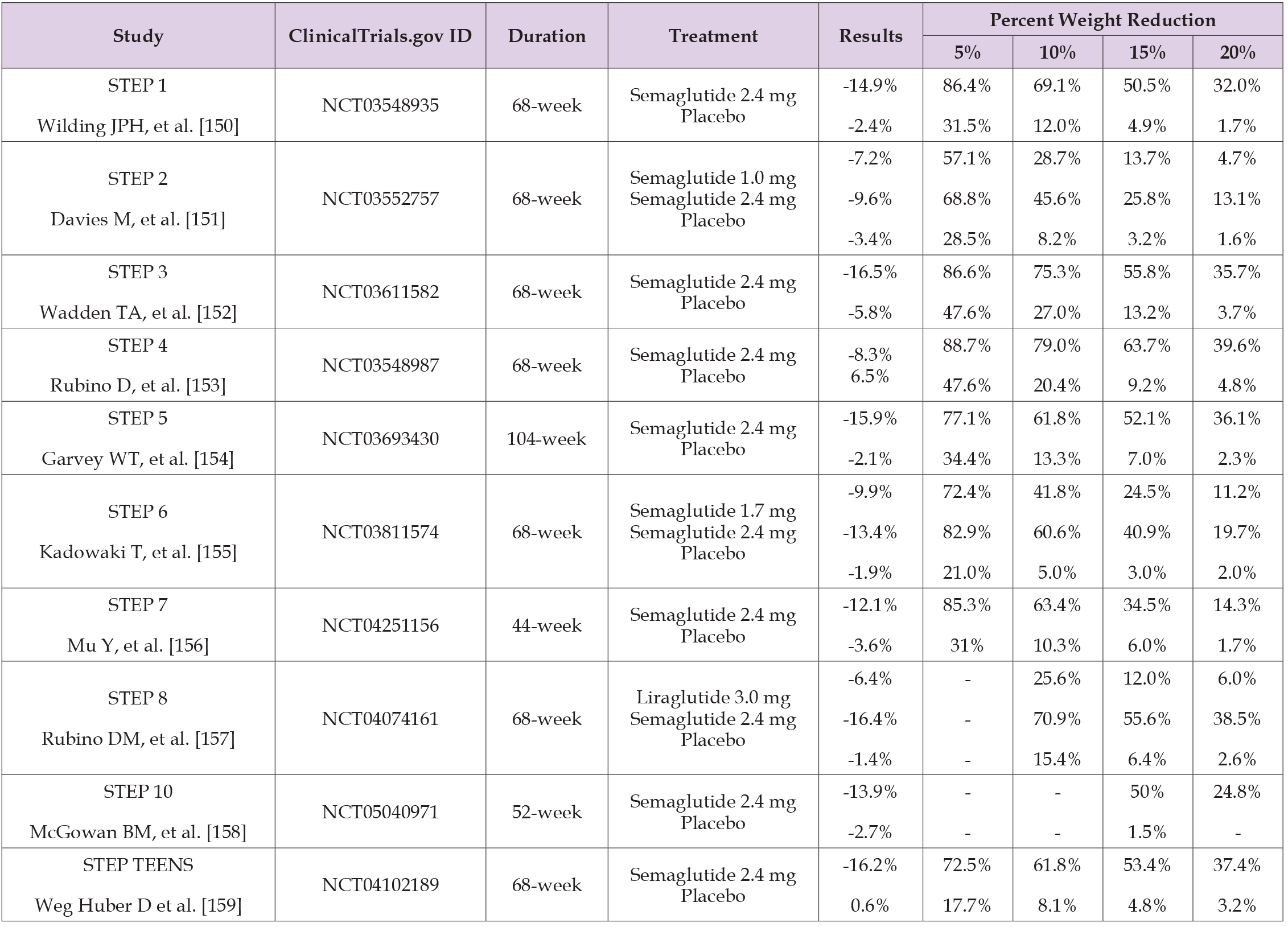
Figure 3
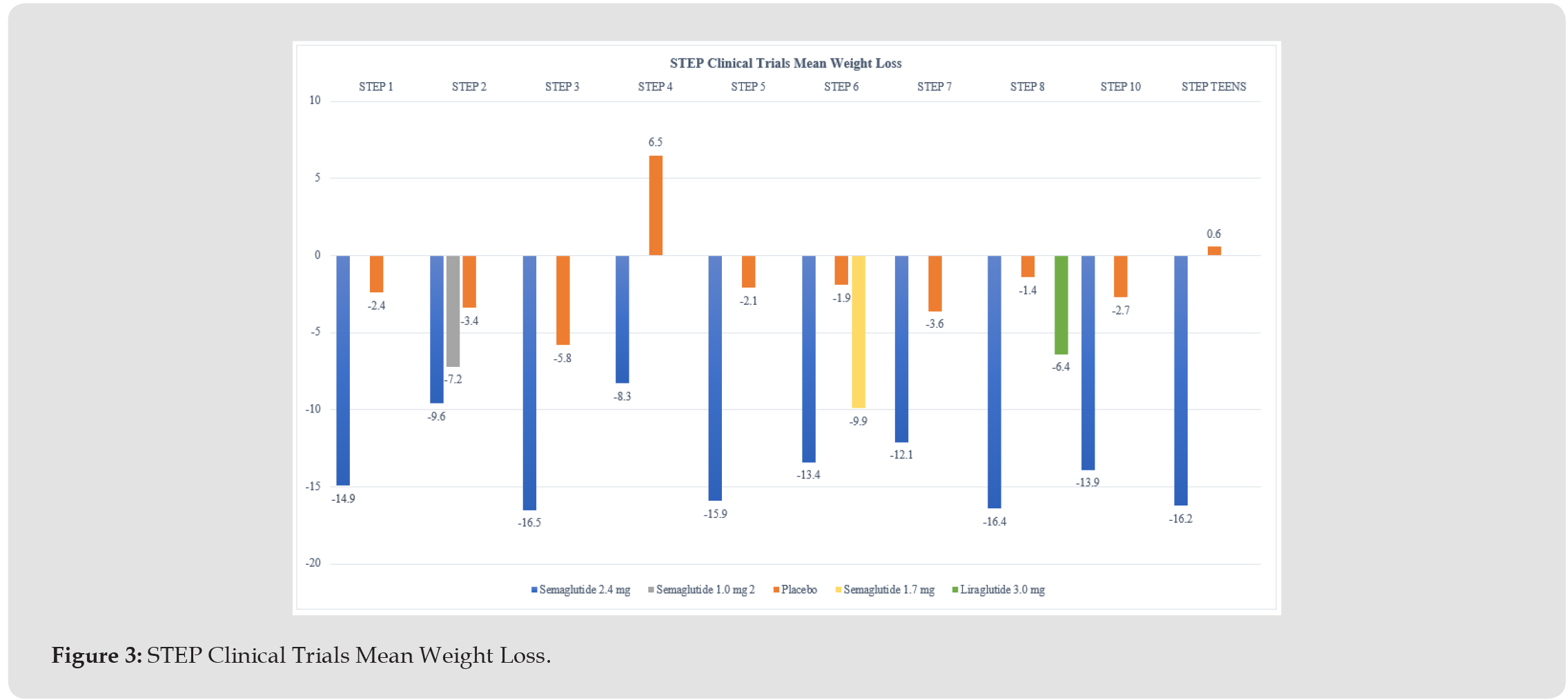
Figure 4
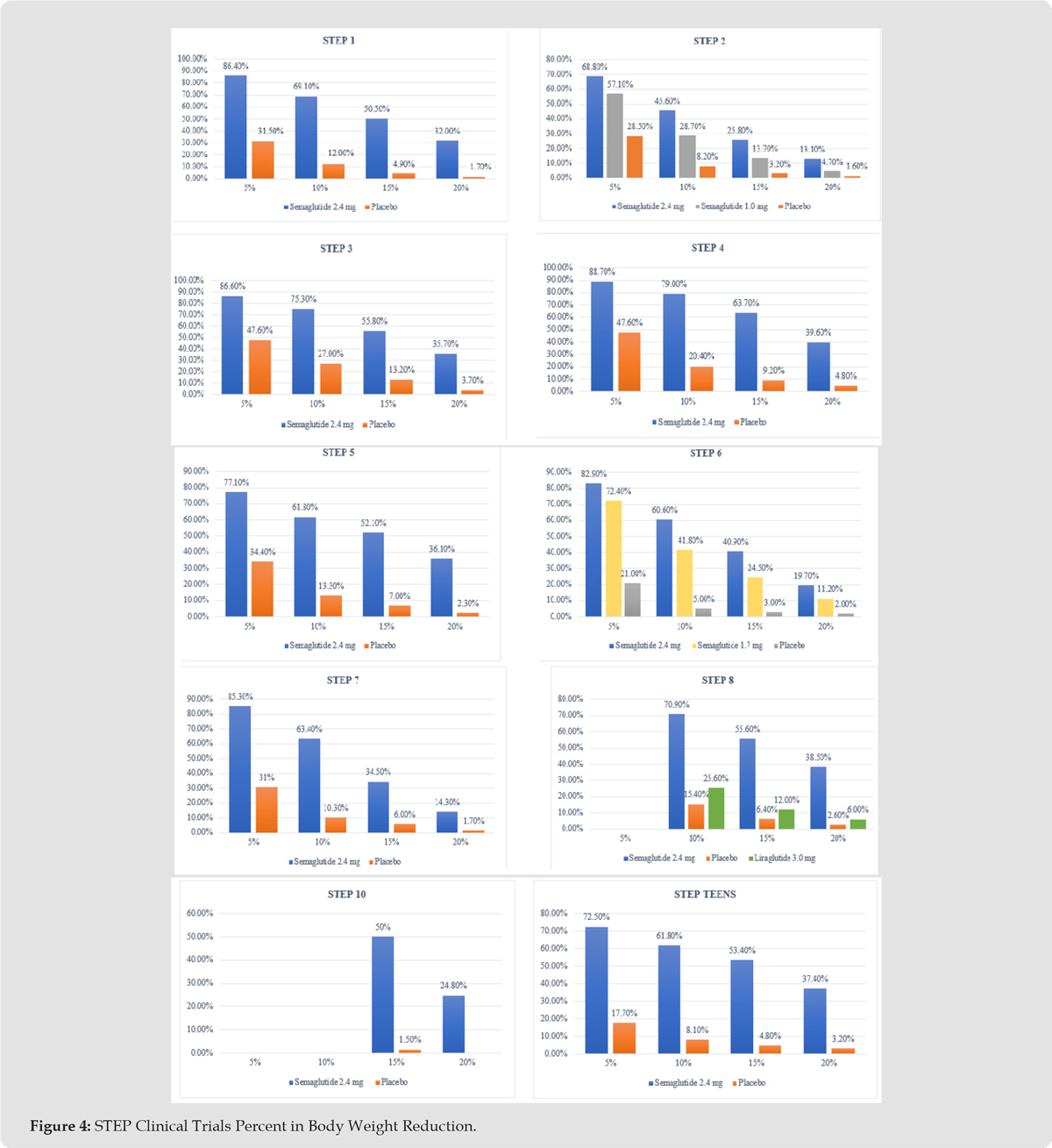
The STEP 2 trial [151] (ClinicalTrials.gov identifier: NCT03552757) was a 68-week, randomized, double blind, placebo- controlled trial of once-weekly subcutaneous semaglutide 2.4 mg, semaglutide 1.0 mg, or placebo for weight management in adults with obesity or overweight with type 2 diabetes. In STEP 2, mean weight loss was -9.6% with semaglutide 2.4 mg and -7.2% with Semaglutide 1.0 mg versus -3.4% with placebo from baseline to week 68. At week 68, more participants in the semaglutide groups (semaglutide 2.4 mg, 1.0 mg) respectively than in the placebo group achieved weight reductions of 5% (68.8%, 57.1% vs. 28.5%), 10% (45.6%, 28.7% vs. 8.2%), 15% (25.8%, 13.7% vs. 3.2%), and 20% (13.1%, 4.7% vs. 1.6%). The STEP 3 trial [152] (ClinicalTrials.gov identifier: NCT03611582) was a 68-week, randomized, double blind, parallel-group, placebo-controlled trial of once-weekly subcutaneous semaglutide 2.4 mg or placebo for weight management in adults with obesity or overweight with type 2 diabetes. In STEP 3, mean weight loss was -16.5% with semaglutide 2.4 mg versus -5.8% with placebo from baseline to week 68. At week 68, more participants in the semaglutide group than in the placebo group achieved weight reductions of 5% (86.6% vs. 47.6%), 10% (75.3% vs. 27.0%), 15% (55.8% vs. 13.2%), and 20% (35.7% vs. 3.7%).
The STEP 4 trial [153] (ClinicalTrials.gov identifier: NCT03548987) was a 68-week, randomized, double blind, placebo- controlled trial of once-weekly subcutaneous semaglutide 2.4 mg or placebo for weight management in adults with obesity or overweight with type 2 diabetes. Semaglutide was administered in a dose-escalated fashion for a 20-week run-in period. In STEP 4, mean weight loss was -8.3% with semaglutide 2.4 mg versus 6.5% with placebo from baseline to week 68. At week 68, more participants in the semaglutide group than in the placebo group achieved weight reductions of 5% (88.7% vs. 47.6%), 10% (79.0% vs. 20.4%), 15% (63.7% vs. 9.2%), and 20% (39.6% vs 4.8%).The STEP 5 trial [154] (Clinical- Trials.gov identifier: NCT03693430) was 104-week, randomized, placebo- controlled trial of once-weekly subcutaneous semaglutide 2.4 mg or placebo for weight management in adults with obesity or overweight with type 2 diabetes. In STEP 5, mean weight loss was -15.9% with semaglutide 2.4 mg versus -2.1% with placebo from baseline to week 104. At week 104, more participants in the semaglutide group than in the placebo group achieved weight reductions of 5% (77.1% vs. 34.4%), 10% (61.8% vs. 13.3%), 15% (52.1% vs. 7.0%), and 20% (36.1% vs 2.3%).The STEP 6 trial [155] (ClinicalTrials.gov identifier: NCT03811574) was a 68-week, randomized, placebo-controlled trial of either semaglutide 2.4 mg or placebo, or semaglutide 1.7 mg or placebo in east Asian adults, with or without type 2 diabetes: only 25% of the patients had diabetes.
In STEP 6, mean weight loss was -13.4% with semaglutide 2.4 mg and -9.9% with semaglutide 1.7 mg versus -1.9% with placebo from baseline to week 68. At week 68, more participants in the semaglutide groups (semaglutide 2.4 mg, 1.7 mg) respectively than in the placebo group achieved weight reductions of 5% (82.9%, 72.4% vs. 21.0%), 10% (60.6% , 41.8% vs. 5.0%), 15% (40.9%, 24.5% vs. 3.0%), and 20% (19.7%, 11.2% vs. 2.0%).The STEP 7 trial [156] (ClinicalTrials. gov identifier: NCT04251156) was a 44-week, randomized, placebo- controlled trial of once-weekly subcutaneous semaglutide 2.4 mg for weight management in people from east Asia with overweight or obesity and with or without type 2 diabetes. In STEP 7, mean weight loss was -12.1% with semaglutide 2.4 mg versus -3.6% placebo from baseline to week 44. At week 44, more participants in the semaglutide group than in the placebo group achieved weight reductions of 5% (85.3% vs. 31%), 10% (63.4% vs. 10.3%), 15% (34.5% vs. 6.0%), and 20% (14.3% vs 1.7%).The STEP 8 trial [157] (ClinicalTrials.gov identifier: NCT04074161) was a 68-week, randomized, placebo-controlled trial of either once-weekly semaglutide 2.4 mg, or once-daily liraglutide 3.0 mg, or placebo in adults with obesity or overweight with type 2 diabetes.. In STEP 8, mean weight loss was -16.4% with semaglutide 2.4 mg, -6.4% with liraglutide 3 mg and -1.4% with placebo from baseline to week 68. At week 68, more participants in the semaglutide, liraglutide groups respectively than in the placebo group achieved weight reductions of 10% (70.9%, 25.6% vs. 15.4%), 15% (55.6%, 12.0% vs. 6.4%), and 20% (38.5%, 6.0% vs 2.6%).
The STEP 10 trial [158] (ClinicalTrials.gov identifier: NCT05040971) was a 52-week, randomized, double-blind, placebo- controlled trial of once-weekly subcutaneous semaglutide 2.4 mg for weight management and glycaemic control in people with obesity and prediabetes. In STEP 10, mean weight loss was -13.9% with semaglutide 2.4 mg versus -2.7% placebo from baseline to week 52. At week 52, more participants in the semaglutide group than in the placebo group achieved weight reductions of 5%, 10%, 15% (50% vs. 1.5%), and 20% (24.8%).The STEP TEENS trial [159] (Clinical- Trials.gov identifier: NCT04102189) was a 68-week, randomized, double-blind, parallel-group, randomized, placebo-controlled trial of once-weekly subcutaneous semaglutide 2.4 mg in adolescents with obesity or overweight. In STEP TEENS, mean weight loss was -16.2% with semaglutide 2.4 mg versus 0.6% placebo from baseline to week 68. At week 68, more participants in the semaglutide group than in the placebo group achieved weight reductions of 5% (72.5% vs. 17.7%), 10% (61.8% vs. 8.1%), 15% (53.4% vs. 4.8%), and 20% (37.4% vs 3.2%).
In all the STEP studies, semaglutide was involved with more gastrointestinal- related side effects than placebo. The side effects were nausea, diarrhea, vomiting, constipation, and nasopharyngitis as in Table 3 [160,161] In STEP 1,150 the rate of any reported side effect was higher with semaglutide contrasted with placebo (80.55% vs. 68.24%). The number of reported serious side effects was greater in the semaglutide arm compared to the placebo arm (9.80% vs. 6.41%). In STEP 2,151 the rate of any reported side effect was higher with 70.47% in semaglutide 2.4 mg and 64.93% in semaglutide 1.0 mg contrasted with 47.26% in placebo. Moreover, the number of reported serious side effects was comparable between all treatment arms as 9.93% in semaglutide 2.4 mg, 7.71% in semaglutide 1.0 mg and 9.20% in placebo. In STEP 3,152 the rate of reported side effect was comparable between the semaglutide and placebo arms (93.12% vs. 86.76%). Moreover, the number of reported serious side effects was greater in the semaglutide arm contrasted with the placebo arm (9.09% vs. 2.94%). In STEP 4,153 the rate of any adverse event was greater in the continued semaglutide arm than the switched placebo arm (55.14% vs. 42.54%). The number of serious side effects was higher in the continued semaglutide arm contrasted with the switched placebo arm (7.66% vs. 5.60%).In STEP 5,154 the rate of any adverse event was greater after semaglutide compared to placebo (92.76% vs. 76.97%). The number of reported serious side effects was unexpectedly lower in the semaglutide arm contrasted with the placebo arm (7.89% vs. 11.84%).
Table 3: STEP Clinical Trials Adverse Events.
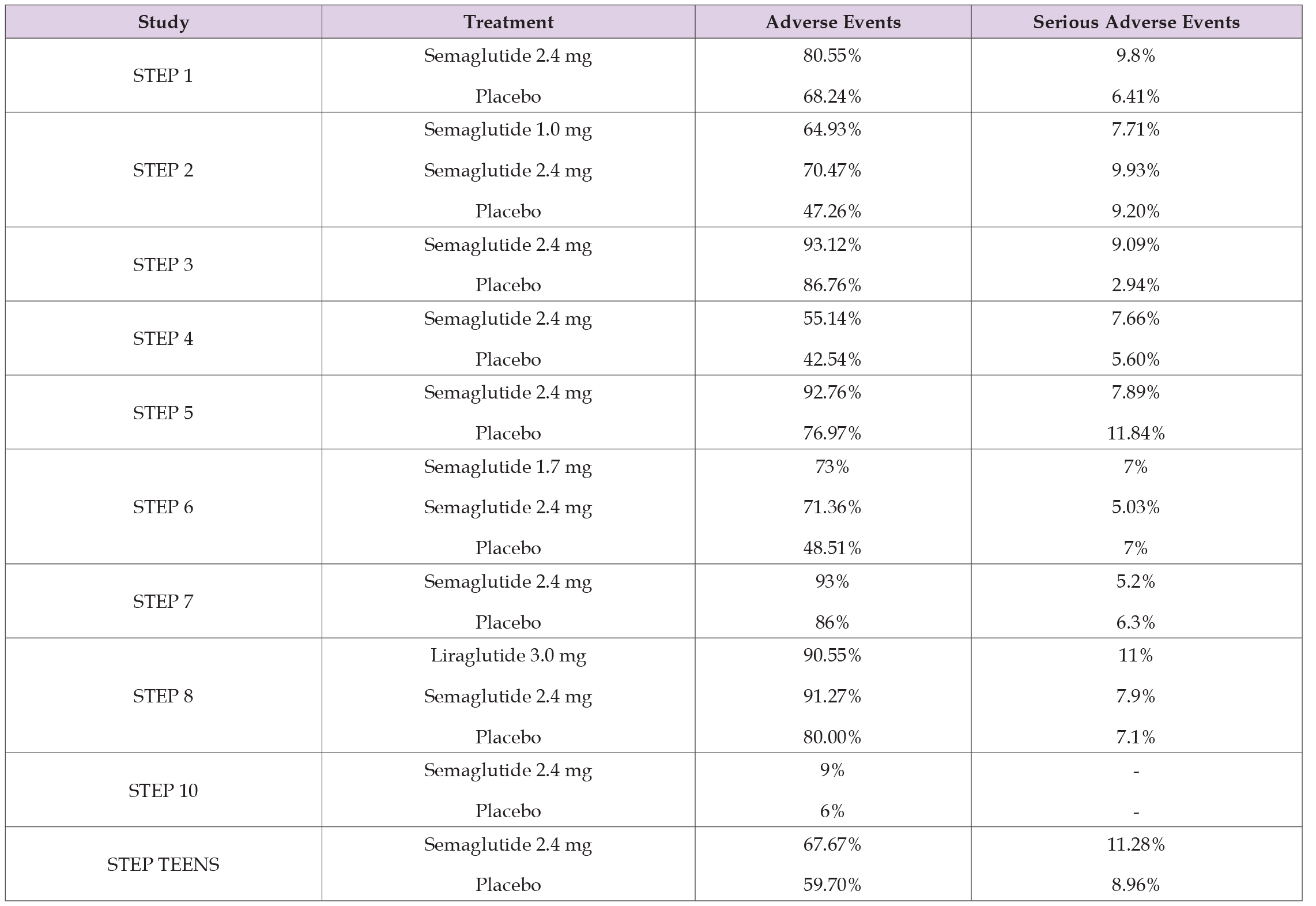
In STEP 6,155 the rate of reported adverse events was 71.36% in the semaglutide 2.4 mg group, 73% in the semaglutide 1.7 mg group, and 48.51% in the placebo group. Unexpectedly, the percentage of serious adverse events was lower in the semaglutide 2.4 mg arm (5.03%) contrasted with semaglutide 1.7 mg and placebo arms (7% each).In STEP 7,156 adverse events were reported by 93% in the semaglutide 2.4 mg group and 86% in the placebo group. The number of reported serious side effects was unexpectedly lower in the semaglutide arm contrasted with the placebo arm (5.2% vs. 6.3%). In STEP 8,157 the rate of any reported adverse events was 91.27% with semaglutide 2.4 mg, 90.55% with liraglutide 3.0 mg, and 80.00% with placebo. The number of reported serious side effects was higher with liraglutide (11%) compared to semaglutide (7.9%) or placebo (7.1%). In STEP 10,158 serious adverse events occurred in 9% receiving semaglutide 2.4 mg versus 6% receiving placebo. In STEP TEENS,159 the rate of any reported adverse events was 67.67% with semaglutide 2.4 mg versus 59.70% with placebo. The number of reported serious side effects was 11.28% in semaglutide versus 8.96% in placebo.
The SUSTAIN (Semaglutide Unabated Sustainability in Treatment of Type 2 Diabetes) clinical trials provide an outline of the efficacy and safety profile of semaglutide and cardiovascular outcomes with once-weekly subcutaneous semaglutide in the treatment of type 2 diabetes as discussed in Capehorn M, et al. [26] and other studies [162- 165]. In the SUSTAIN trials, semaglutide has substantiated reductions in glycemic control and body weight compared with placebo and comparators. The researchers conducted 11 trials of semaglutide efficacy and safety and cardiovascular outcomes to determine semaglutide effectiveness in weight loss as in Table 4, Figures 5 & 6. The SUSTAIN 1 trial [166] (ClinicalTrials.gov identifier: NCT02054897) was a 30- week, double-blind, randomised, parallel-group, placebo-controlled trial of once-weekly subcutaneous semaglutide 0.5 mg, or semaglutide 1 mg compared with placebo in treatment-naive patients with type 2 diabetes. In SUSTAIN 1, mean weight loss was -3.68% with semaglutide 0.5 mg, -4.67% with semaglutide 1 mg and -0.89% placebo from baseline to week 30.The SUSTAIN 2 trial [167] (ClinicalTrials. gov identifier: NCT01930188) was a 56-week, randomised, double- blind, double-dummy, active-controlled, parallel-group trial in patients with type 2 diabetes inadequately controlled on metformin, thiazolidinediones, or both randomly assigned of treatment using semaglutide 0.5 mg plus sitagliptin 100 mg placebo, semaglutide 1.0 mg plus sitagliptin 100 mg placebo, sitagliptin 100 mg plus semaglutide 0.5 mg placebo, or sitagliptin 100 mg plus semaglutide 1.0 mg placebo. In SUSTAIN 2, mean weight loss was -4.28% with semaglutide 0.5 mg plus sitagliptin 100 mg placebo, -6.13% with semaglutide 1.0 mg plus sitagliptin 100 mg placebo and -1.93% sitagliptin 100 mg plus semaglutide 0.5mg and 1.0 mg placebo from baseline to week 56.
Table 4: SUSTAIN Clinical Trials Results in Weight Management.
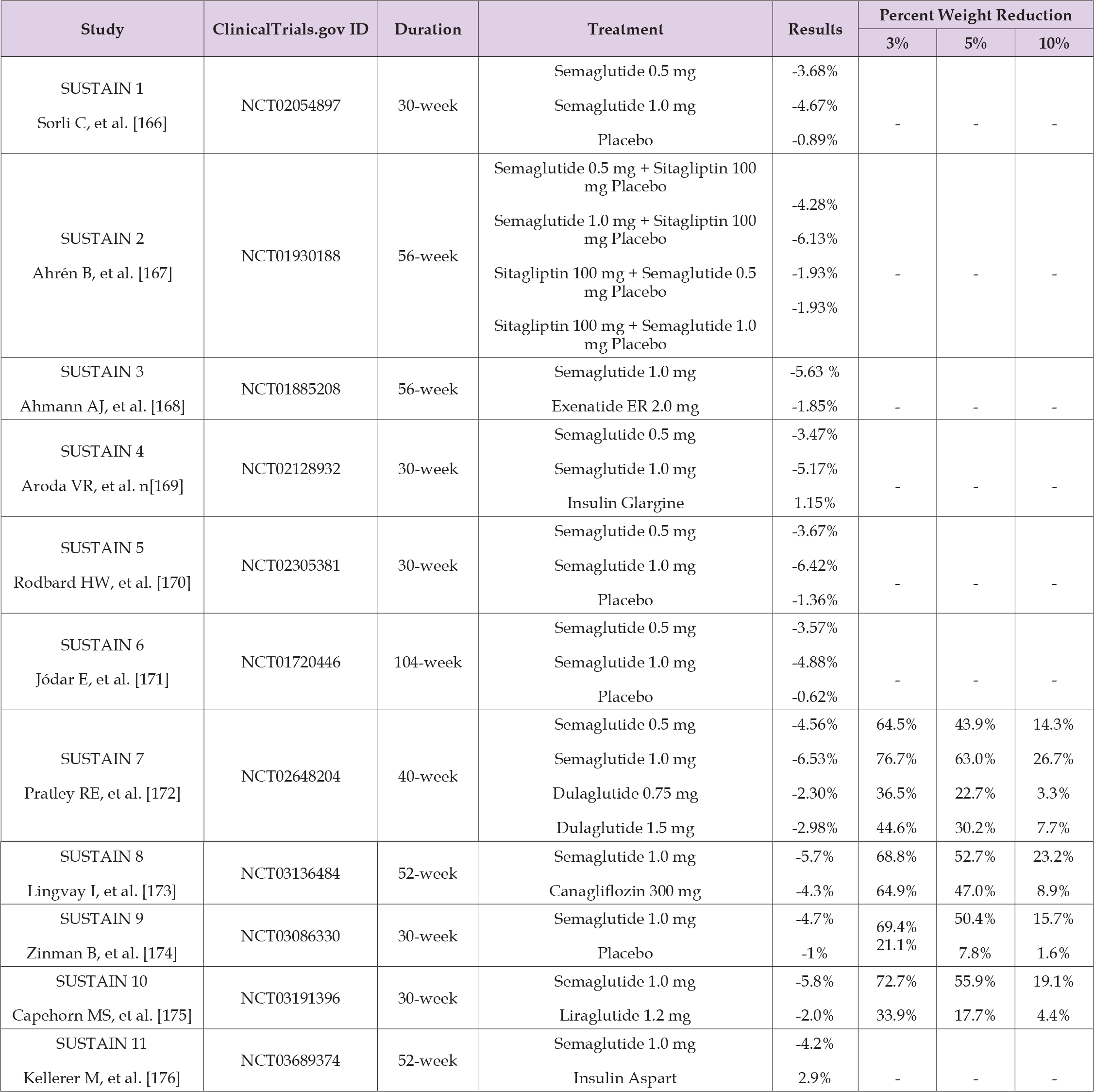
Figure 5
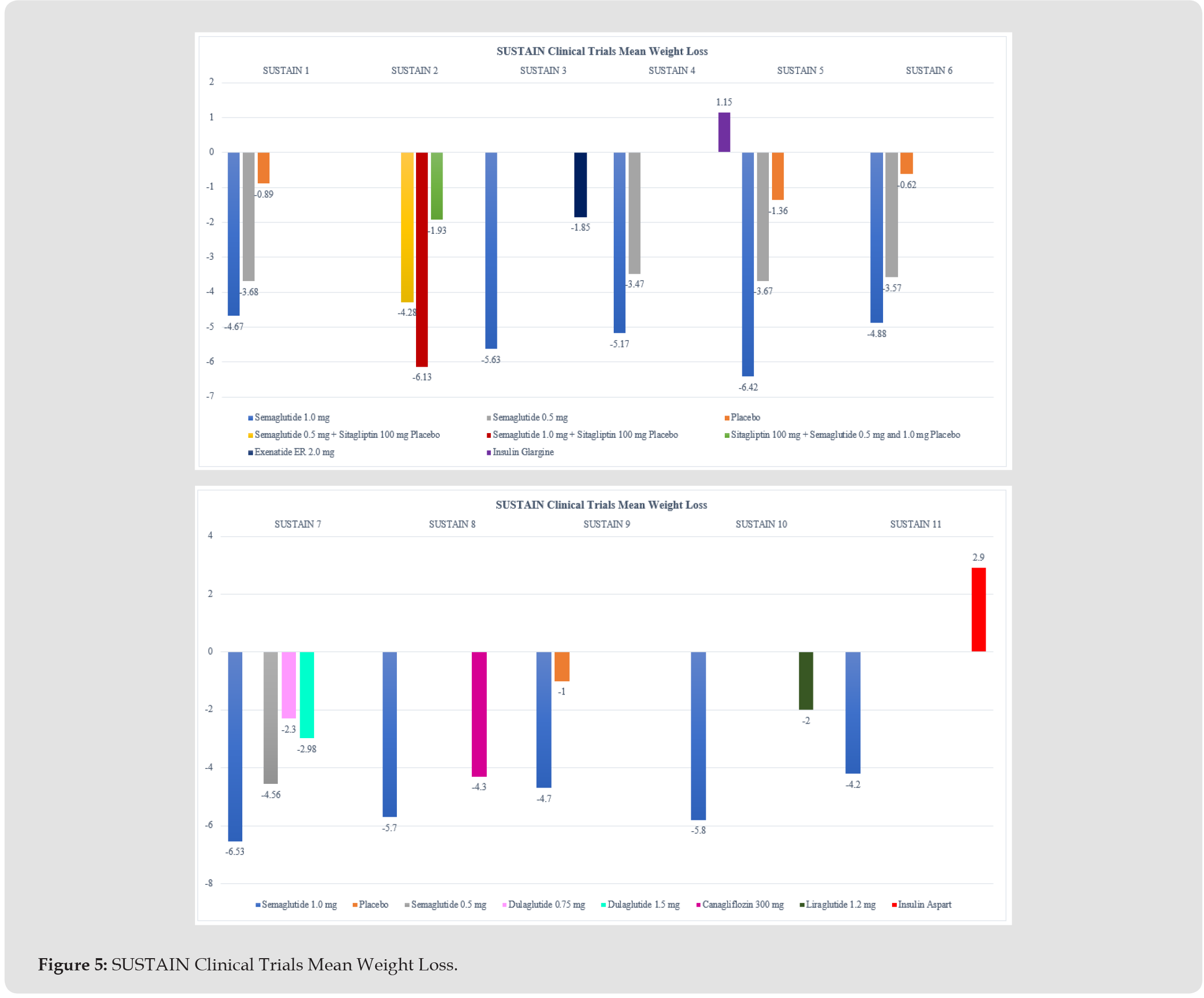
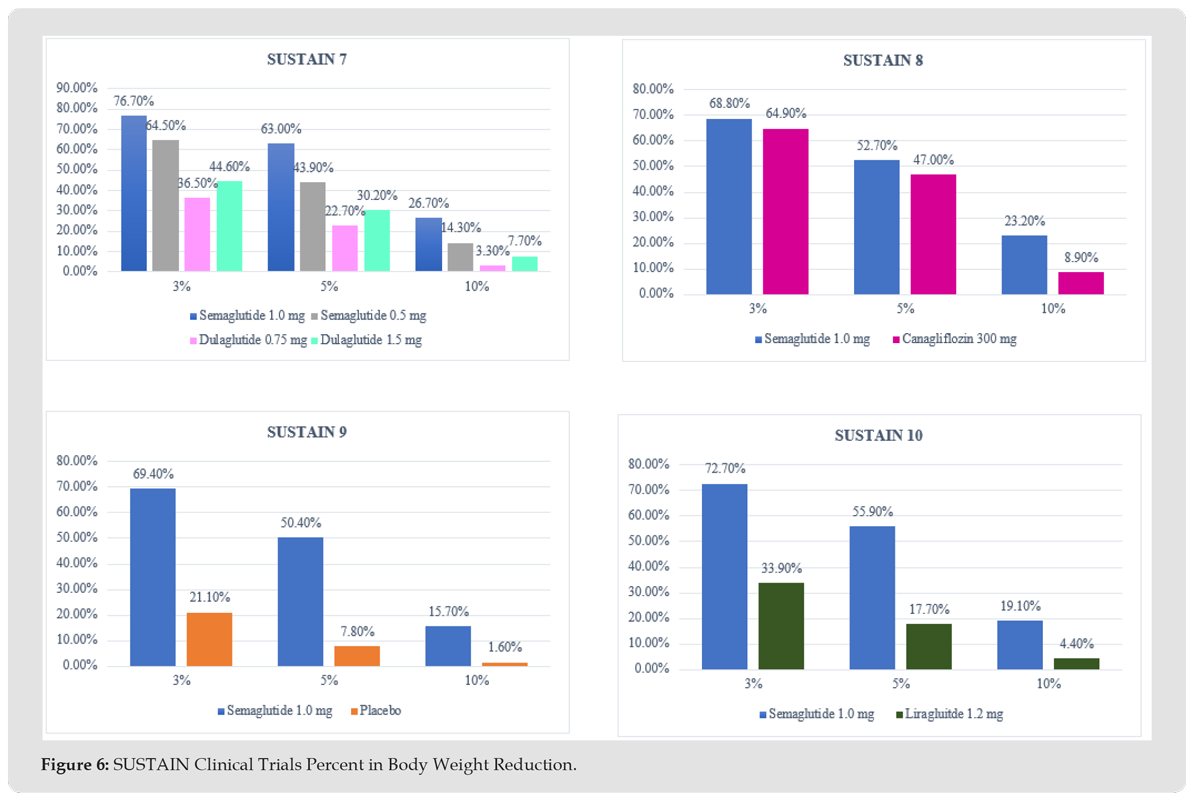
Figure 6
The SUSTAIN 3 trial [168] (ClinicalTrials.gov identifier: NCT01885208) was a 56-week, open-label, parallel-group, randomized controlled trial of once-weekly semaglutide 1.0 mg subcutaneous with exenatide extended release 2.0 mg subcutaneous in patients with type 2 diabetes. In SUSTAIN 3, mean weight loss was -5.63 % with semaglutide 0.5 mg, -1.85% with exenatide extended release 2.0 mg from baseline to week 56. The SUSTAIN 4 trial [169] (ClinicalTrials. gov identifier: NCT02128932) was a 30-week, randomised, open-label, parallel-group trial of once-weekly subcutaneous semaglutide 0.5 mg, semaglutide 1.0 mg or once-daily insulin glargine in patients with type 2 diabetes who were inadequately controlled with metformin (with or without sulfonylureas). In SUSTAIN 4, mean weight loss was -3.47% with semaglutide 0.5 mg, -5.17% with semaglutide 1.0 mg or 1.15% with insulin glargine from baseline to week 30. The SUSTAIN 5 trial [170] (ClinicalTrials.gov identifier: NCT02305381) was a 30-week, double-blind, placebo-controlled trial of once-weekly subcutaneous semaglutide 0.5 mg or semaglutide 1.0 mg versus placebo in patients with type 2 diabetes. In SUSTAIN 5, mean weight loss was -3.67% with semaglutide 0.5 mg, -6.42% with semaglutide 1.0 mg versus -1.36% with placebo from baseline to week 30. The SUSTAIN 6 trial [171] (ClinicalTrials.gov identifier: NCT01720446) was a 104-week, randomised, double-blind, placebo-controlled trial of once-weekly subcutaneous semaglutide 0.5 mg or semaglutide 1.0 mg versus placebo in patients with type 2 diabetes. In SUSTAIN 6, mean weight loss was -3.57% with semaglutide 0.5 mg, -4.88% with semaglutide 1.0 mg versus -0.62% with placebo from baseline to week 104.
The SUSTAIN 7 trial [172] (ClinicalTrials.gov identifier: NCT02648204) was a 40-week, open-label, parallel-group trial of once-weekly subcutaneous semaglutide 0.5 mg, semaglutide 1.0 mg, dulaglutide 0.75 mg, or dulaglutide 1.5 mg in patients with type 2 diabetes. In SUSTAIN 7, mean weight loss was -4.56% with semaglutide 0.5 mg, -6.53% with semaglutide 1.0 mg, -2.30% with dulaglutide 0.75 mg, or -2.98% with dulaglutide 1.5 mg from baseline to week 40. At week 40, more participants in the semaglutide groups (semaglutide 0.5 mg, 1.0 mg) respectively than in the dulaglutide groups (dulaglutide 0.75 mg, 1.5 mg) respectively achieved weight reductions of 3% (64.5%, 76.7% vs. 36.5%, 44.6%), 5% (43.9%, 63.0% vs. 22.7%, 30.2%), and 10% (14.3%, 26.7% vs 3.3%, 7.7%).The SUSTAIN 8 trial [173] (ClinicalTrials.gov identifier: NCT03136484) was a 52- week, double-blind, parallel-group, randomised controlled trial of once-weekly subcutaneous semaglutide 1.0 mg versus oral canagliflozin 300 mg in patients with type 2 diabetes. In SUSTAIN 8, mean weight loss was -5.7% with semaglutide 1.0 mg versus -4.3% with canagliflozin 300 mg from baseline to week 52. At week 52, more participants in the semaglutide group than in the canagliflozin achieved weight reductions of 3% (68.8% vs. 64.9%), 5% (52.7% vs. 47.0%), and 10% (23.2% vs 8.9%).The SUSTAIN 9 trial [174] (ClinicalTrials. gov identifier: NCT03086330) was a 30-week, double-blind, parallel- group trial of once-weekly subcutaneous semaglutide 1.0 mg versus placebo in patients with type 2 diabetes. In SUSTAIN 9, mean weight loss was -4.7% with semaglutide 1.0 mg versus -1.0% with placebo from baseline to week 30. At week 30, more participants in the semaglutide group than in the placebo group achieved weight reductions of 3% (69.4% vs. 21.1%), 5% (50.4% vs. 7.8%), and 10% (15.7% vs 1.6%).
The SUSTAIN 10 trial [175] (ClinicalTrials.gov identifier: NCT03191396) was a 30-week, open-label trial of once-weekly subcutaneous semaglutide 1.0 mg versus once-daily subcutaneous liraglutide 1.2 mg in patients with type 2 diabetes. In SUSTAIN 10, mean weight loss was -5.8% with semaglutide 1.0 mg versus -2.0% with liraglutide 1.2 mg from baseline to week 30. At week 30, more participants in the semaglutide group than in the liraglutide group achieved weight reductions of 3% (72.7% vs. 33.9%), 5% (55.9% vs. 17.7%), and 10% (19.1% vs 4.4%).The SUSTAIN 11 trial [176] (ClinicalTrials. gov identifier: NCT03689374) was a 52-week, randomized, parallel, open-label trial of once-weekly subcutaneous semaglutide versus three times daily insulin aspart in patients with type 2 diabetes. In SUSTAIN 11, mean weight loss was -4.2% with semaglutide versus 2.9% with aspart from baseline to week 52.
The frequency of adverse events leading to treatment discontinuations was generally higher with semaglutide treatment than with comparators as observed across the SUSTAIN clinical trials. Gastrointestinal (GI) adverse events (AEs) are the most common AEs with glucagon-like peptide-1 receptor agonists (GLP-1 RAs) as in Table 5 [177-179]. In SUSTAIN 1,166 the rate of any reported adverse events was 41.41% with semaglutide 0.5 mg, 36.15% with semaglutide 1.0 mg, compared to 20.93% with placebo. The number of reported serious side effects was 5.47% with semaglutide 0.5 mg, 5.38% with semaglutide 1.0 mg, compared to 3.88% with placebo.
Table 5: SUSTAIN Clinical Trials Adverse Events.
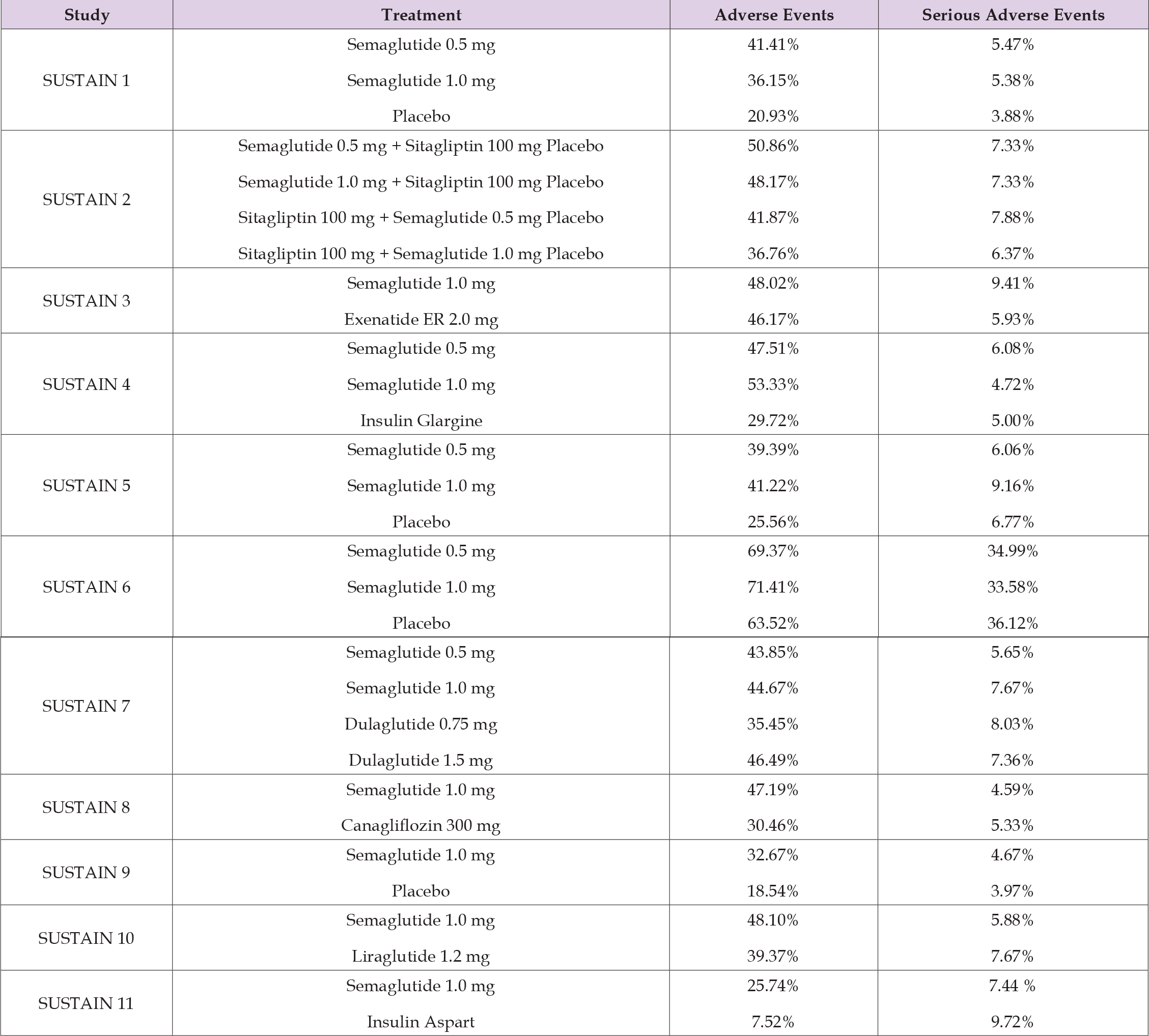
In SUSTAIN 2,167 the rate of any reported adverse events was 50.86% with semaglutide 0.5 mg plus sitagliptin 100 mg placebo, 48.17% with semaglutide 1.0 mg plus sitagliptin 100 mg placebo, 36.76% with sitagliptin 100 mg plus semaglutide 1.0 mg placebo and 41.87% sitagliptin 100 mg plus semaglutide 0.5mg placebo. The number of reported serious side effects was 7.33% with semaglutide 0.5 mg plus sitagliptin 100 mg placebo, 7.33% with semaglutide 1.0 mg plus sitagliptin 100 mg placebo, 6.37% with sitagliptin 100 mg plus semaglutide 1.0 mg placebo and 7.88% sitagliptin 100 mg plus semaglutide 0.5mg placebo.In SUSTAIN 3,168 the rate of any reported adverse events was 48.02% with semaglutide 1.0 mg versus 46.17% with exenatide extended release 2.0 mg. The number of reported serious side effects was 9.41% with semaglutide 1.0 mg versus 5.93% with exenatide extended release 2.0 mg.
In SUSTAIN 4,169 the rate of any reported adverse events was 47.51% with semaglutide 0.5 mg, 53.33% with semaglutide 1.0 mg and 29.72% with insulin glargine. The number of reported serious side effects was 6.08% with semaglutide 0.5 mg, 4.72% with semaglutide 1.0 mg and 5.00% with insulin glargine. In SUSTAIN 5,170 the rate of any reported adverse events was 39.39% with semaglutide 0.5 mg, 41.22% with semaglutide 1.0 mg and 25.56% with placebo. The number of reported serious side effects was 6.06% with semaglutide 0.5 mg, 9.16% with semaglutide 1.0 mg and 6.77% with placebo. In SUSTAIN 6,171 the rate of any reported adverse events was 69.37% with semaglutide 0.5 mg, 71.41% with semaglutide 1.0 mg and 63.52% with placebo. The number of reported serious side effects was 34.99% with semaglutide 0.5 mg, 33.58% with semaglutide 1.0 mg and 36.12% with placebo. In SUSTAIN 7,172 the rate of any reported adverse events was 43.85% with semaglutide 0.5 mg, 44.67% with semaglutide 1.0 mg, 35.45% with dulaglutide 0.75 mg and 46.49% with dulaglutide 1.5 mg. The number of reported serious side effects was 5.65% with semaglutide 0.5 mg, 7.67% with semaglutide 1.0 mg, 8.03% with dulaglutide 0.75 mg and 7.36% with dulaglutide 1.5 mg.
In SUSTAIN 8,173 the rate of any reported adverse events was 47.19% with semaglutide versus 30.46% with canagliflozin. The number of reported serious side effects was 4.59% with semaglutide versus 5.33% with canagliflozin. In SUSTAIN 9,174 the rate of any reported adverse events was 32.67% with semaglutide 1.0 mg versus 18.54% with placebo. The number of reported serious side effects was 4.67% with semaglutide 1.0 mg versus 3.97% with placebo. In SUSTAIN 10,175 the rate of any reported adverse events was 48.10% with semaglutide versus 39.37% with liraglutide 1.2 mg. The number of reported serious side effects was 5.88% with semaglutide 1.0 mg versus 7.67% with liraglutide 1.2 mg. In SUSTAIN 11,176 the rate of any reported adverse events was 25.74% with semaglutide versus 7.52% with insulin aspart. The number of reported serious side effects was 7.44 % with semaglutide versus 9.72% with insulin aspart.
Oral formulation of GLP-1 RA was recently developed and based on the Peptide InnOvatioN for Early diabEtes tReatment (PIONEER) programme (PIONEER) program, phase III clinical trials showing the efficacy and safety of oral semaglutide in comparison with placebo or other medications. Oral semaglutide has been shown to be effective in reducing glycemia (HbA1c) and body mass, in the series of Peptide Innovation for Early Diabetes Treatment (PIONEER) studies as discussed in Pratley RE et al. [27] and other studies [180-184].The researchers conducted 10 trials of semaglutide efficacy to determine semaglutide effectiveness in weight loss as in Table 6, Figures 7 & 8.The PIONEER 1 trial [185] (ClinicalTrials.gov identifier: NCT02906930) was a 26-week, randomized, double-blind, placebo-controlled, parallel- group trial in adults with type 2 diabetes insufficiently controlled with diet and exercise were randomized to once-daily oral semaglutide 3 mg, 7 mg, 14 mg, or placebo. In PIONEER 1, mean weight loss was -1.5% with semaglutide 3 mg, -2.6% with semaglutide 7 mg, -4.0% with semaglutide 14 mg and -1.4% with placebo from baseline to week 26. At week 26, more participants in the semaglutide groups (semaglutide 3 mg, 7 mg, and 14 mg) respectively than in the placebo group achieved weight reductions of 3% (18.0%, 36.9%, 50.6% vs. 10.7%), 5% (19.6%, 26.9%, 41.3% vs. 14.9%), and 10% (2.4%, 8.1%, 14.4% vs 1.2%).The PIONEER 2 trial [186] (ClinicalTrials.gov identifier: NCT02863328) was a 52-week, open-label, randomized trial with oral semaglutide 14 mg or empagliflozin 25 mg in patients with type 2 diabetes uncontrolled on metformin.
Table 6: PIONEER Clinical Trials Results in Weight Management.
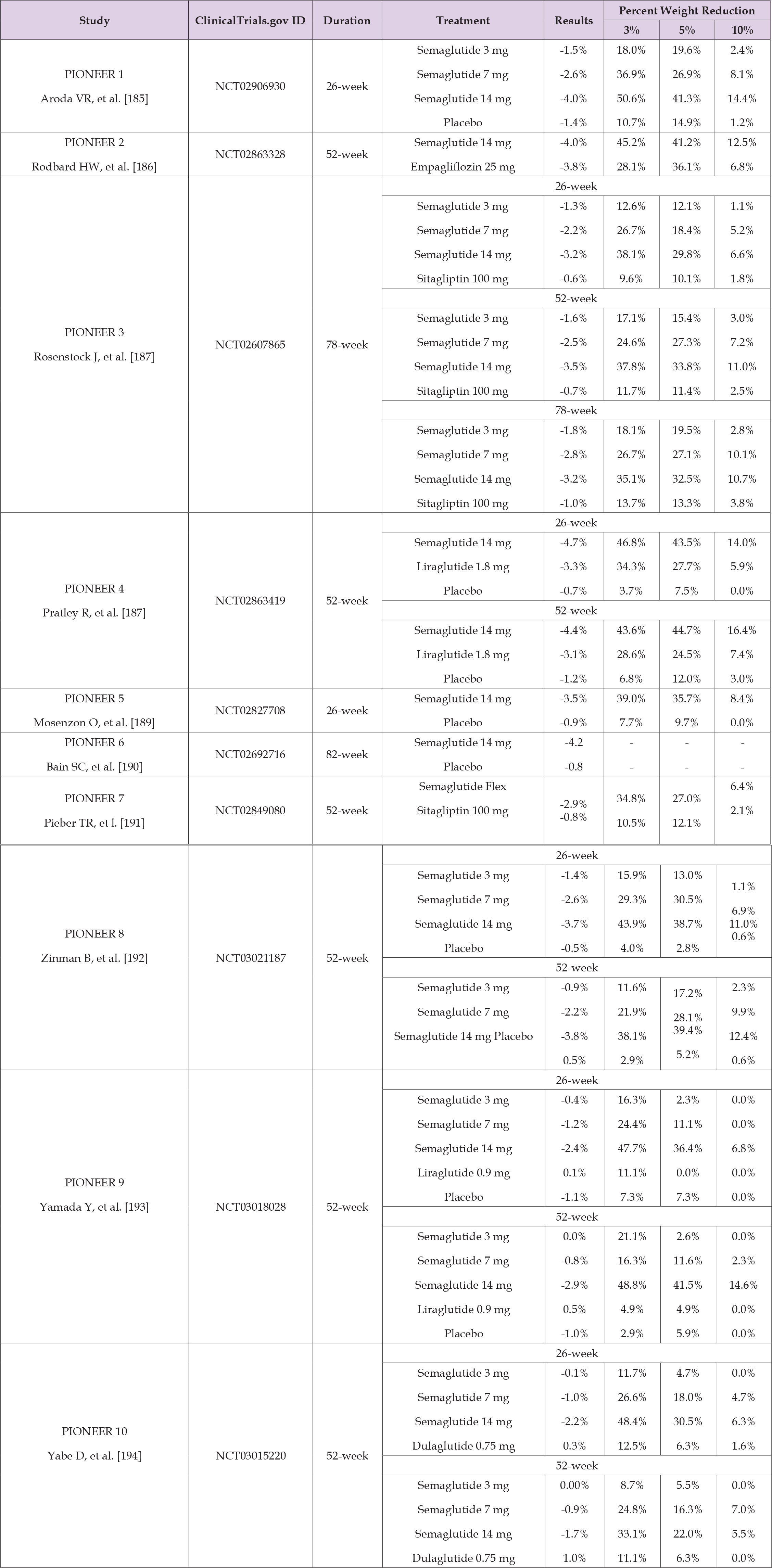
Figure 7
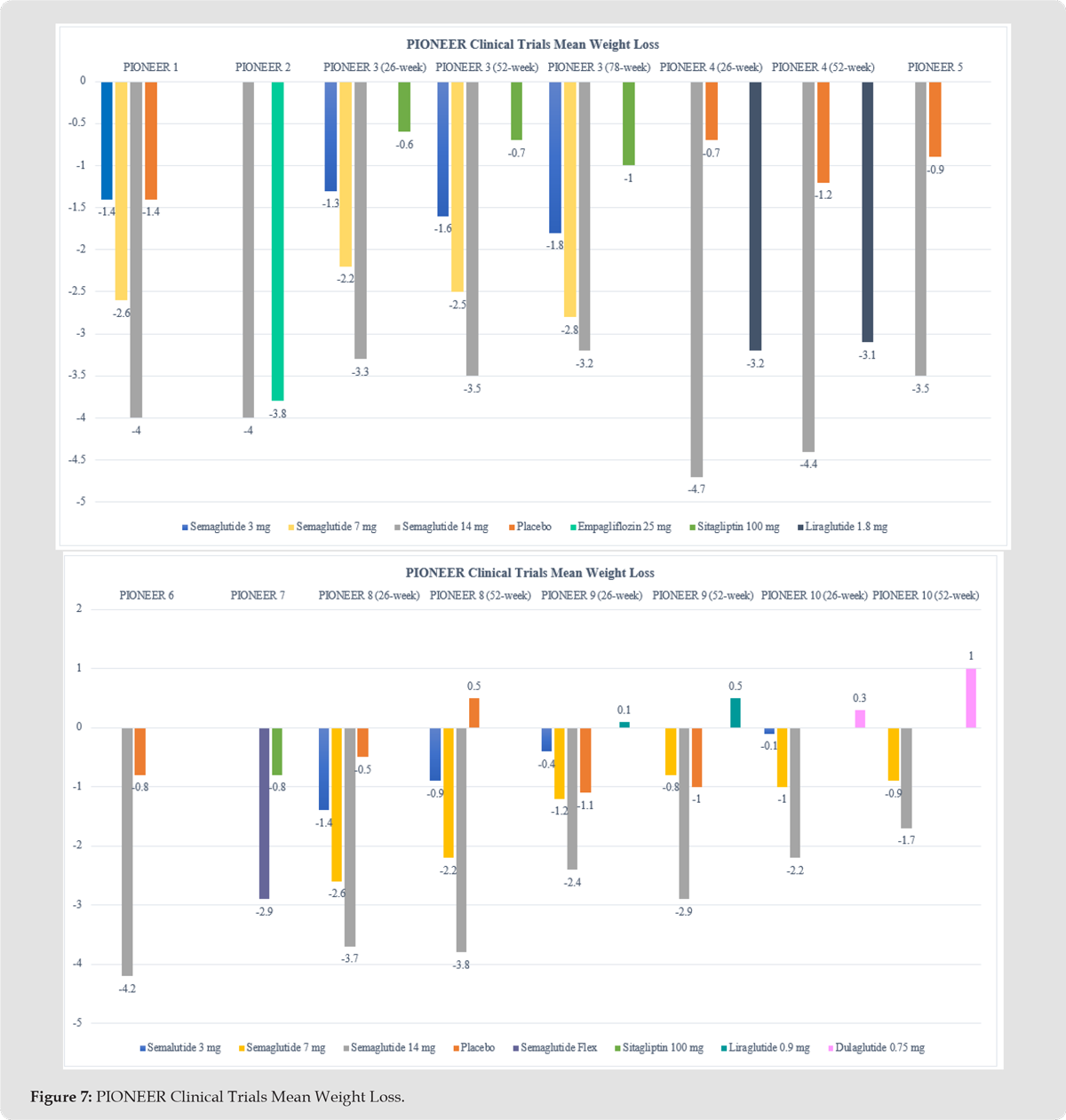
Figure 8
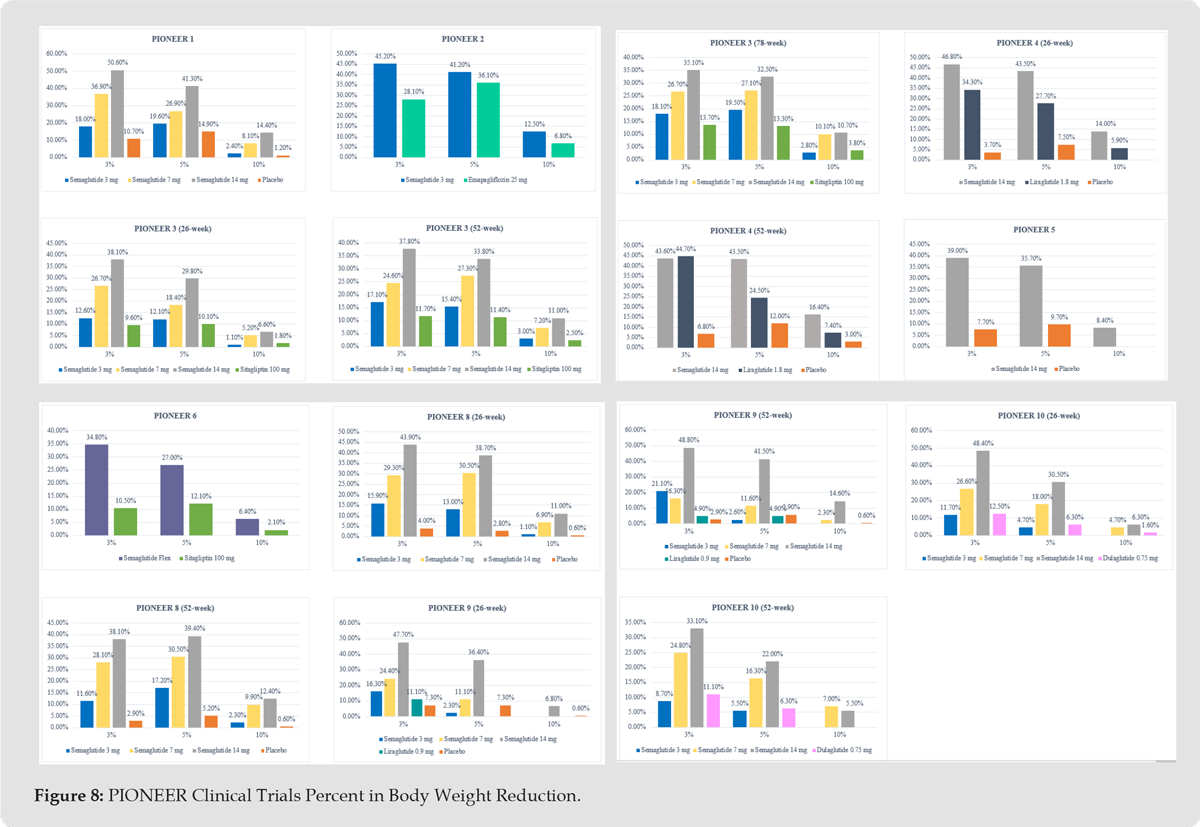
In PIONEER 2, mean weight loss was -4.0% with semaglutide 14 mg versus -3.8% with empagliflozin 25 mg from baseline to week 26. Superior weight loss significantly better was 4.7% with semaglutide 7 mg versus 3.8% with empagliflozin 25 mg at week 52. At week 52, more participants in the semaglutide group than in the empagliflozin group achieved weight reductions of 3% (45.2% vs. 28.1%), 5% (41.2% vs. 36.1%), and 10% (12.5% vs 6.8%).The PIONEER 3 trial [187] (ClinicalTrials.gov identifier: NCT02607865) was a 78-week, randomized, double-blind, double-dummy, active-controlled, parallel- group trial in adults with type 2 diabetes uncontrolled with metformin with or without sulfonylurea were randomized to receive once-daily oral semaglutide 3 mg, semaglutide 7 mg, semaglutide 14 mg, or sitagliptin 100 mg. In PIONEER 3, mean weight loss was -1.3% with semaglutide 3 mg, -2.2% with semaglutide 7 mg, -3.2% with semaglutide 14 mg and -0.6% with sitagliptin from baseline to week 26. Mean weight loss was -1.6% with semaglutide 3 mg, -2.5% with semaglutide 7 mg, -3.5% with semaglutide 14 mg and -0.7% with sitagliptin at week 52. Greater weight loss significantly better was -1.8% with semaglutide 3 mg, -2.8% with semaglutide 7 mg, -3.2% with semaglutide 14 mg and -1.0% with sitagliptin at week 78. At week 26, more participants in the semaglutide groups (semaglutide 3 mg, 7 mg, and 14 mg) respectively than in the sitagliptin group achieved weight reductions of 3% (12.6%, 26.7%, 38.1% vs. 9.6%), 5% (12.1%, 18.4%, 29.8% vs. 10.1%), and 10% (1.1%, 5.2%, 6.6% vs. 1.8%).
At week 52, more participants in the semaglutide groups (semaglutide 3 mg, 7 mg, and 14 mg) respectively than in the sitagliptin group achieved weight reductions of 3% (17.1%, 24.6%, 37.8% vs. 11.7%), 5% (15.4%, 27.3%, 33.8% vs. 11.4%), and 10% (3.0%, 7.2%, 11.0% vs. 2.5%). At week 78, more participants in the semaglutide groups (semaglutide 3 mg, 7 mg, and 14 mg) respectively than in the sitagliptin group achieved weight reductions of 3% (18.1%, 26.7%, 35.1% vs. 13.7%), 5% (19.5%, 27.1%, 32.5% vs. 13.3%), and 10% (2.8%, 10.1%, 10.7% vs. 3.8%).The PIONEER 4 trial [188] (Clinical- Trials.gov identifier: NCT02863419) was a 52-week, randomized, double-blind, double-dummy trial in adults with type 2 diabetes were randomly assigned to once-daily oral semaglutide 14 mg, versus once-daily subcutaneous liraglutide 1.8 mg, or placebo. In PIONEER 4, mean weight loss was -4.7% with semaglutide 14 mg, versus -3.3% with liraglutide 1.8 mg, or -0.7% with placebo from baseline to week 26. Mean weight loss was -4.4% with semaglutide 14 mg, versus -3.1% with liraglutide 1.8 mg, or -1.2% with placebo at week 52. At week 26, more participants in the semaglutide, liraglutide groups respectively than in the placebo group achieved weight reductions of 3% (46.8%, 34.3% vs. 3.7%), 5% (43.5%, 27.7% vs. 7.5%), and 10% (14.0%, 5.9% vs. 0.0%). At week 52, more participants in the semaglutide, liraglutide groups respectively than in the placebo group achieved weight reductions of 3% (43.6%, 28.6% vs. 6.8%), 5% (44.7%, 24.5% vs. 12.0%), and 10% (16.4%, 7.4% vs. 3.0%).
The PIONEER 5 trial [189] (ClinicalTrials.gov identifier: NCT02827708) was a 26-week, randomised, double-blind, placebo- controlled trial in patients with type 2 diabetes and moderate renal impairment were assigned to once-daily oral semaglutide 14 mg versus placebo. In PIONEER 5, mean weight loss was -3.5% with semaglutide 14 mg versus -0.9% with placebo from baseline to week 26. At week 26, more participants in the semaglutide group than in the placebo group achieved weight reductions of 3% (39.0% vs. 7.7%), 5% (35.7% vs. 9.7%), and 10% (8.4% vs 0.0%).The PIONEER 6 trial [190] (ClinicalTrials.gov identifier: NCT02692716) was an 82-week, randomized, placebo-controlled, double-blind trial in patients with type 2 diabetes at high risk of cardiovascular events were assigned to once-daily oral semaglutide 14 mg versus placebo. In PIONEER 6, mean weight loss was -4.2% with semaglutide 14 mg versus -0.8% with placebo from baseline to week 82. The PIONEER 7 trial [191] (ClinicalTrials.gov identifier: NCT02849080) was a 52-week, open-label, randomized trial in patients with type 2 diabetes were assigned to once-daily oral semaglutide flex (with flexible dose adjustments to 3, 7, or 14 mg) versus sitagliptin 100 mg. In PIONEER 7, mean weight loss was -2.9% with semaglutide flex versus -0.8% with sitagliptin 100 mg from baseline to week 52. At week 52, more participants in the semaglutide group than in the sitagliptin group achieved weight reductions of 3% (34.8% vs. 10.5%), 5% (27.0% vs. 12.1%), and 10% (6.4% vs 2.1%).
The PIONEER 8 trial [192] (ClinicalTrials.gov identifier: NCT03021187) was a 52-week, double-blind trial in patients with type 2 diabetes uncontrolled on insulin with or without metformin were assigned to once-daily oral semaglutide 3 mg, semaglutide 7 mg, semaglutide 14 mg or to placebo. In PIONEER 8, mean weight loss was -1.4% with semaglutide 3 mg, -2.6% with semaglutide 7 mg, -3.7% with semaglutide 14 mg and -0.5% with placebo from baseline to week 26. Mean weight loss was -0.9% with semaglutide 3 mg, -2.2% with semaglutide 7 mg, -3.8% with semaglutide 14 mg and 0.5% with placebo at week 52. At week 26, more participants in the semaglutide groups (semaglutide 3 mg, 7 mg, and 14 mg) respectively than in the placebo group achieved weight reductions of 3% (15.9%, 29.3%, 43.9% vs. 4.0%), 5% (13.0%, 30.5%, 38.7% vs. 2.8%), and 10% (1.1%, 6.9%, 11.0% vs 0.6%). At week 52, more participants in the semaglutide groups (semaglutide 3 mg, 7 mg, and 14 mg) respectively than in the placebo group achieved weight reductions of 3% (11.6%, 21.9%, 38.1% vs. 2.9%), 5% (17.2%, 28.1%, 39.4% vs. 5.2%), and 10% (2.3%, 9.9%, 12.4% vs 0.6%).The PIONEER 9 trial [193] (ClinicalTrials. gov identifier: NCT03018028) was a 52-week, randomised, controlled trial in patients with type 2 diabetes in a Japanese population were randomly assigned to receive once-daily oral semaglutide 3 mg, semaglutide 7 mg, semaglutide 14 mg, versus placebo, or subcutaneous once-daily liraglutide 0.9 mg. In PIONEER 9, mean weight loss was -0.4% with semaglutide 3 mg, -1.2% with semaglutide 7 mg, -2.4% with semaglutide 14 mg, 0.1% with liraglutide 0.9 mg and -1.1% with placebo from baseline to week 26.
Mean weight loss was 0.0% with semaglutide 3 mg, -0.8% with semaglutide 7 mg, -2.9% with semaglutide 14 mg, 0.5% with liraglutide 0.9 mg and -1.0% with placebo at week 52. At week 26, more participants in the semaglutide groups (semaglutide 3 mg, 7 mg, and 14 mg) respectively than in the liraglutide, or placebo group respectively achieved weight reductions of 3% (16.3%, 24.4%, 47.7% vs. 11.1%, 7.3%), 5% (2.3%, 11.1%, 36.4% vs. 0.0%, 7.3%), and 10% (0.0%, 0.0%, 6.8% vs 0.0%, 0.0%). At week 52, more participants in the semaglutide groups (semaglutide 3 mg, 7 mg, and 14 mg) respectively than in the liraglutide, or placebo group respectively achieved weight reductions of 3% (21.1%, 16.3%, 48.8% vs. 4.9%, 2.9%), 5% (2.6%, 11.6%, 41.5% vs. 4.9%, 5.9%), and 10% (0.0%, 2.3%, 14.6% vs 0.0%, 0.0%).The PIONEER 10 trial [194] (ClinicalTrials.gov identifier: NCT03015220) was a 52-week, open-label, randomised, active-controlled trial in patients with type 2 diabetes in a Japanese population were randomly assigned to receive once-daily oral semaglutide 3 mg, semaglutide 7 mg, semaglutide 14 mg, or once-weekly subcutaneous dulaglutide 0.75 mg. In PIONEER 10, mean weight loss was -0.1% with semaglutide 3 mg, -1.0% with semaglutide 7 mg, -2.2% with semaglutide 14 mg, 0.3% with dulaglutide 0.75 mg from baseline to week 26. Mean weight loss was 0.00% with semaglutide 3 mg, -0.9% with semaglutide 7 mg, -1.7% with semaglutide 14 mg, 1.0% with dulaglutide 0.75 mg at week 52. At week 26, more participants in the semaglutide groups (semaglutide 3 mg, 7 mg, and 14 mg) respectively than in the dulaglutide group achieved weight reductions of 3% (11.7%, 26.6%, 48.4% vs. 12.5%), 5% (4.7%, 18.0%, 30.5% vs. 6.3%), and 10% (0.0%, 4.7%, 6.3% vs 1.6%). At week 52, more participants in the semaglutide groups (semaglutide 3 mg, 7 mg, and 14 mg) respectively than in the dulaglutide group achieved weight reductions of 3% (8.7%, 24.8%, 33.1% vs. 11.1%), 5% (5.5%, 16.3%, 22.0% vs. 6.3%), and 10% (0.0%, 7.0%, 5.5% vs 0.0%).
The overall safety profile of oral semaglutide was similar in all PIONEER trials and was not unexpected, considering subcutaneous semaglutide and other GLP-1 RAs. The main adverse events reported in the PIONEER program were related to the GI tract, but of mild or moderate severity, and most were transient [195] as in Table 7. In PIONEER 1,185 the rate of adverse side effect was 27.43% with semaglutide 3 mg, 21.14% with semaglutide 7 mg, 25.71% with semaglutide 14 mg and 14.61% with placebo. The number of reported serious side effects was 2.9% with semaglutide 3 mg, 1.7% with semaglutide 7 mg, 1.1% with semaglutide 14 mg and 4.5% with placebo.In PIONEER 2,186 the rate of adverse side effect was 31.22% with semaglutide 14 mg and 10.76% with empagliflozin 25 mg. The number of reported serious side effects was 6.6% with semaglutide 14 mg and 9.0% with empagliflozin 25 mg.In PIONEER 3,187 the rate of adverse side effect was 47.64% with semaglutide 3 mg, 50.43% with semaglutide 7 mg, 49.89% with semaglutide 14 mg, and 51.29% with sitagliptin 100 mg. The number of reported serious side effects was 13.73% with semaglutide 3 mg, 10.13% with semaglutide 7 mg, 9.46% with semaglutide 14 mg, and 12.45% with sitagliptin 100 mg.In PIONEER 4,188 the rate of adverse side effect was 51.93% with semaglutide 14 mg, 42.25% with liraglutide 1.8 mg and 33.10% with placebo The number of reported serious side effects was 10.88% with semaglutide 14 mg, 7.75% with liraglutide 1.8 mg and 10.56% with placebo.
Table 7: PIONEER Clinical Trials Adverse Events.
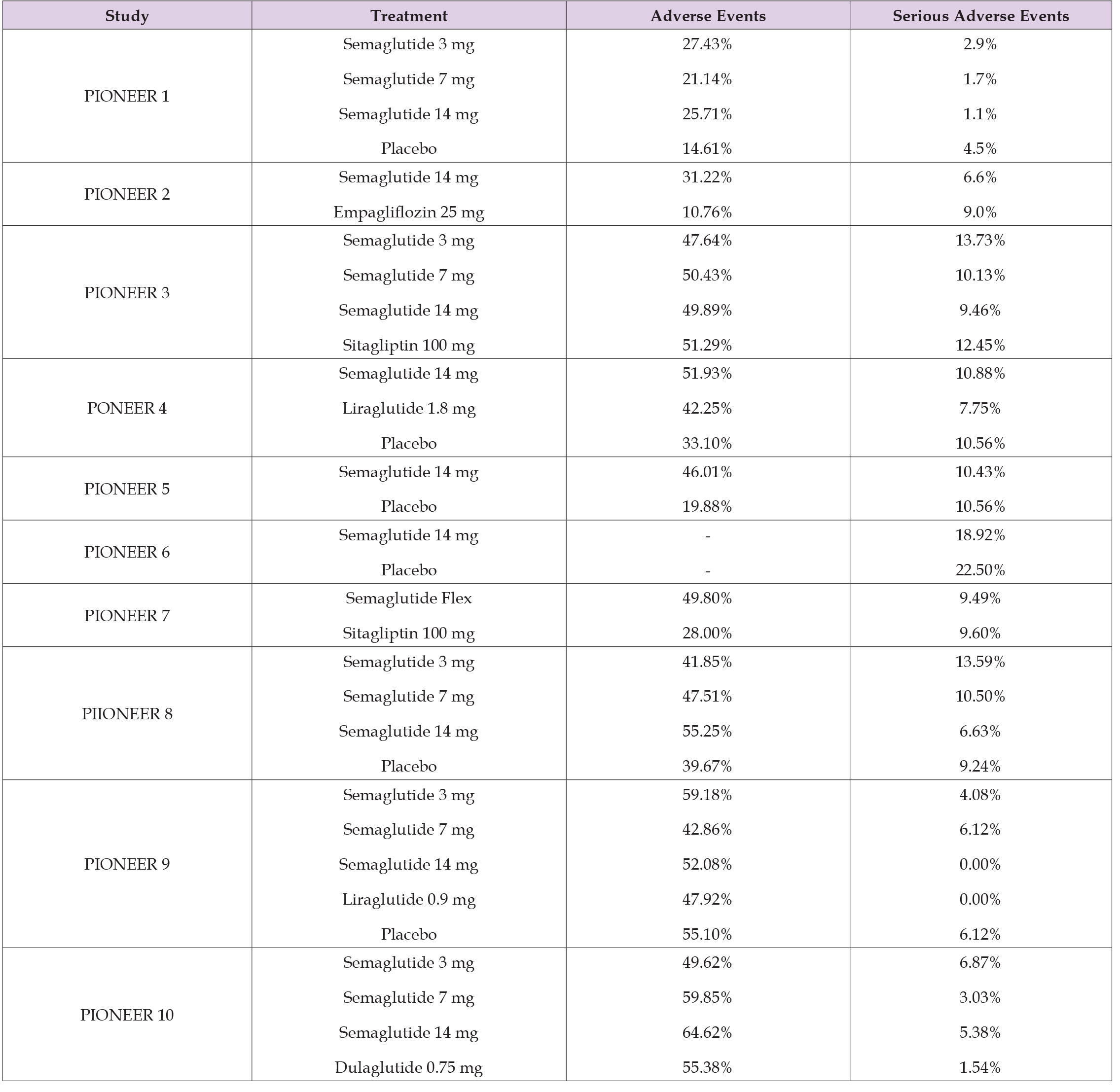
In PIONEER 5,189 the rate of adverse side effect was 46.01% with semaglutide 14 mg versus 19.88% with placebo. The number of reported serious side effects was 10.43% with semaglutide 14 mg versus 10.56% with placebo.In PIONEER 6,190 the rate of serious adverse side effect was 18.92% with semaglutide 14 mg and 22.50% with placebo.In PIONEER 7,191 the rate of adverse side effect was 49.80% with semaglutide 14 mg versus 28.00% with sitagliptin 100 mg. The number of reported serious side effects was 9.49% with semaglutide flex versus 9.60% with sitagliptin 100 mg. In PIONEER 8,192 the rate of adverse side effect was 41.85% with semaglutide 3 mg, 47.51% with semaglutide 7 mg, 55.25% with semaglutide 14 mg, and 39.67% with placebo. The number of reported serious side effects was 13.59% with semaglutide 3 mg, 10.50% with semaglutide 7 mg, 6.63% with semaglutide 14 mg and 9.24% with placebo.In PIONEER 9,193 the rate of adverse side effect was 59.18% with semaglutide 3 mg, 42.86% with semaglutide 7 mg, 52.08% with semaglutide 14 mg, 47.92% with liraglutide 0.9 mg and 55.10% with placebo. The number of reported serious side effects was 4.08% with semaglutide 3 mg, 6.12% with semaglutide 7 mg, 0.00% with semaglutide 14 mg, 0.00% with liraglutide 0.9 mg and 6.12% with placebo.In PIONEER 10,194 the rate of adverse side effect was 49.62% with semaglutide 3 mg, 59.85% with semaglutide 7 mg, 64.62% with semaglutide 14 mg and 55.38% with dulaglutide 0.75 mg. The number of reported serious side effects was 6.87% with semaglutide 3 mg, 3.03% with semaglutide 7 mg, 5.38% with semaglutide 14 mg and 1.54% with dulaglutide 0.75 mg.
Semaglutide 2.4 mg subcutaneous injection as adjunct to diet and exercise (D&E) is a cost-effective therapy in patients with overweight and obesity [196,197]. Subcutaneous semaglutide is more cost-effective than other comparators as discussed in Alshahawey M et al. [30] and other studies [198-205]. The additional costs to produce semaglutide for the oral formulation are cost-effective over a weekly injection [206]. Oral semaglutide represents a cost-effective treatment option versus other comparators for patients with type 2 diabetes and obesity [207,208].
The optimization and maintenance of weight loss are key goals for obesity management, but individuals can vary in their response to treatment [209]. CarrisNW et al. [31] discussed the subsequent longer duration of weight control with semaglutide benefitted the patient’s abilities to maintain goal weight when an approach is used. Multiple factors potentially supporting weight maintenance following semaglutide discontinuation were early drug treatment for new-onset obesity, non-geriatric age, strength training, standard lifestyle counseling and diet modification. Maintaining treatment with semaglutide compared with placebo resulted in continued weight loss over the following 48 week as in STEP 4 Rubino D et al. [153] and other study [210] shows weight loss continued over 65 weeks and was sustained for up to 4 years. After a substantial reduction in body weight during 68 weeks of treatment with once-weekly subcutaneous semaglutide 2.4 mg and lifestyle intervention, withdrawal led to most of the weight loss being regained within 1 year, reinforcing the need for continued treatment to maintain weight loss and cardiometabolic benefits [211].
The efficacy of semaglutide on body weight reduction among patients with overweight/obesity with or without diabetes mellitus have been observed in multiple studies. While semaglutide resulted in more gastrointestinal-related side effects, the medication appeared to be generally safe and well tolerated. Clinicians play a crucial role in choosing suitable treatment designs based on varied individual situations, providing comprehensive education, and monitoring the adverse events to ensure the safe and effective use of semaglutide in weight loss management.

International Association of Landscape Archaeology, Czech Glass Society, Czech Republic

Department of Chemistry, Semenov Institute of Chemical Physics, USSR Academy of Sciences, Moscow, Russia

Neurology, LA BioMed Research Institute, USA

Associate Professor at Department of Breast and Thyorid Surgey, Chongqing General Hospital, China

Professor of Nuclear Medicine, Faculty of Medicine and Surgery, University of Milan, Milan, Italy





 Abstract
 PDF
PDF



























