info@biomedres.us
+1 (502) 904-2126
One Westbrook Corporate Center, Suite 300, Westchester, IL 60154, USA
Site Map
 ISSN: 2574 -1241
ISSN: 2574 -1241
ISSN: 2574 -1241
Received: July 24, 2024; Published: August 01, 2024
*Corresponding author: Daniyal Baig, Gastroenterology Registrar, Blackpool Victoria Hospital
DOI: 10.26717/BJSTR.2024.57.009075
Background: Endoscopy is a key factor in attracting trainees to gastroenterology careers, yet exposure during
Internal Medicine Training (IMT) is often limited. The pandemic’s impact on healthcare provision and training
in gastroenterology and hepatology has led to significant exposure deficits and perceived inadequacies in
preparing for higher specialty applications. Prospective trainees face challenges attending endoscopy sessions
due to demanding work schedules, e-portfolio requirements, and the evolving NHS landscape.
Methods: Health Education England supported a gastroenterology trainee taster day. The half-day workshop
covered GI endoscopy fundamentals, practical simulator experience with anatomical models, and case-based
discussions on endoscopic intervention in upper gastrointestinal bleeding. The training was free of charge,
interactive, and divided into smaller groups for workshops and simulation sessions. The faculty comprised
gastroenterologists and clinical endoscopists.
Results: The study revealed significant findings highlighting the impact of our intervention on participant
satisfaction and outcomes in endoscopic training. Thirteen applicants were selected as delegates, and
participants completed pre- and post-course questionnaires. The course material and delivery were deemed
satisfactory by all respondents (100%), and 69.2% reported a “very satisfied” experience with EndoSim.
With 61.5% indicating moderate comprehension, confidence in fundamental scope management varied. All
respondents (100%) felt more confident in pursuing gastroenterology training after taking the course, while
53.8% felt more confident attending ad hoc endoscopy lists. The successful resolution of significant training
obstacles, such as the absence of access to ad hoc or training lists, significantly impacted the career goals of
84.6% of respondents in gastroenterology.
Conclusion: The study reveals that educational interventions in endoscopy significantly boost trainee
engagement and aspirations, overcoming barriers to exposure and reducing anxiety levels. These findings
underscore the importance of well-structured, practical training programs for improving skills and career
direction.
Keywords: Endoscopy; Gastroenterology; Internal Medicine Training; Gastrointestinal Bleeding; Educational Intervention
Endoscopy is a crucial technique in diagnosing and treating many diseases within the broad field of gastroenterology. The United Kingdom is witnessing a rise in the number of Internal Medicine Trainees (IMTs) selecting gastroenterology as their future specialty [1]. Nevertheless, endoscopic practical skill development opportunities are frequently limited to clinical settings, with minimal early exposure for IMTs [1,2]. This makes considerable theoretical knowledge and ongoing endoscopic training crucial. During foundation and integrated medical training, exposure to endoscopy is very challenging given the frequency of on-calls and ward commitments [3]. The COVID-19 pandemic has significantly impacted gastroenterology training for IMTs, limiting exposure to specialized procedures like endoscopy [4]. This has led to increased uncertainty and anxiety among trainees, necessitating innovative training methodologies and effective strategies to ensure the continued development of skilled gastroenterologists in the healthcare sector [5]. Most hospitals have endoscopy units, and formal training programs were created to start practical instruction [6].
A study conducted by Hosseine, et al. determined that strong mentoring connections were associated with improved training satisfaction and a greater chance of endoscopic career pursuits among trainees [7]. The first training in endoscopic procedures was completed at many UK hospitals under the guidance of experienced gastroenterologists [8]. A study conducted by Huang determined that equitable training opportunities are necessary for ensuring that all learners can achieve high competency levels [9]. A study conducted by Huang determined that equitable training opportunities are necessary for ensuring that all learners can achieve high competency levels.” Additionally, please mention that due to limited opportunities, live patient training will be restricted for IMTs because of multiple issues, including safety and prioritization within an already limited resource pool for trainees, such as Gastroenterology trainees, Surgical trainees, and nurse endoscopists. Simulation training could provide a safe practical environment for IMTs to gain appropriate exposure. “A survey among IMT and foundation trainees in the North-West of England revealed a significant training gap in endoscopy training [10]. Without the stress and dangers of dealing with actual patients, it enables trainees to perform a variety of treatments, from simple diagnostic endoscopy to more intricate therapeutic therapies [11]. By bridging the knowledge gap between theory and practice, the use of simulators in endoscopic training helps trainees feel competent and confident. It has been demonstrated that using simulation in endoscopic training increases learner confidence overall, decreases mistakes, and improves procedural competence. The COVID-19 epidemic had placed restrictions on conventional training techniques, making simulation especially more essential to preserving the caliber and continuity of endoscopic education [12]. The study by Vignesh in 2021 emphasized how the pandemic affected endoscopic training programs, pointing out a significant drop in the number of procedures and trainee exposure. The research recommended that, in order to reduce the educational gaps brought on by the pandemic, virtual and simulation-based training modalities be implemented [13]. The project’s goals were to draw attention to the complexities of endoscopic procedures and provide IMTs with an interest in pursuing gastroenterology a flavor for endoscopy and the exposure one would get as a gastroenterology registrar. The primary objective of the course was to provide a flavour of basic endoscopic instruments and methodologies and practice on simulation machines. Based on their pre-existing abilities and interest in gastroenterology, trainees were selected on a first-come basis. There were no requirements for the candidates to have any hands-on exposure, but limited applications to internal medical trainees as this targeted future gastroenterologist trainees. Our course was essentially to provide a flavor and hope to inspire potential trainees in an open environment so they can ask questions about endoscopy training and in general [14]. A survey among IMT and foundation trainees in liwest England revealed a significant training gap in endoscopy training. 61.1% of respondents had not participated in taster days, indicating a lack of exposure to endoscopic procedures [15]. This lack of exposure hinders skill development and confidence in future specialization in gastroenterology. The survey highlights the need for targeted intervention in endoscopy training, focusing on practical and accessible opportunities for IMTs [16]. To ensure that our candidates got the most out of the day, our course followed a step-by-step approach that began with simulation models in a controlled environment and practical cases with casebased interactive lecture-based discussion. We divided the group into two to allow maximum hands-on exposure to the simulation models with fewer candidates at once.Course Design and Venue
The purpose of the endoscopic taster day was carefully thought out to optimize accessibility and effect. We wanted to ensure the course was free of charge and was supported by our local endoscopy academy. We used a central city location for ease of accessibility and university facilities that allowed us to use simulation services as shown in Figures 1 & 2.
Figure 1

Figure 2

Course Components
The half-day program was divided into several sections, each designed to address a different endoscopic training topic.
Hands-On Experience
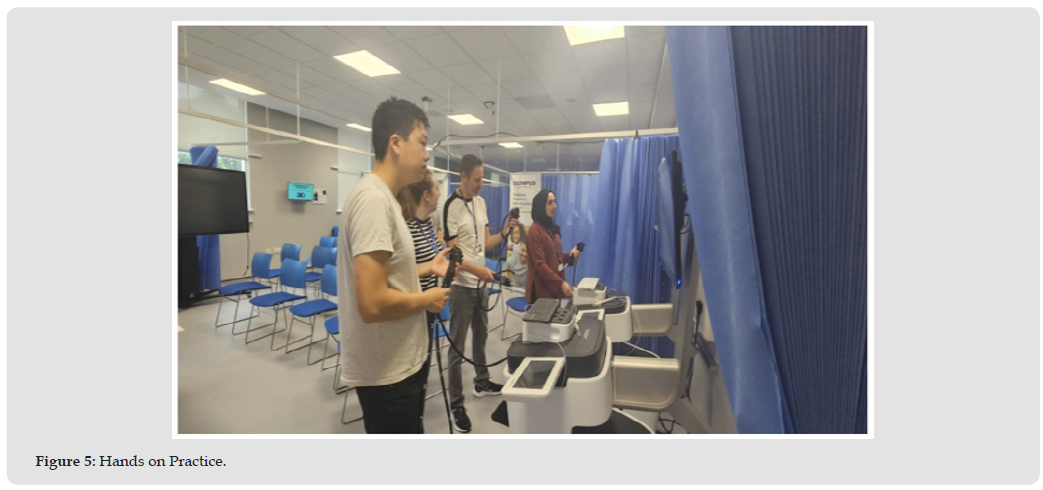
By applying their theoretical knowledge in a monitored and controlled setting using simulators trainees improved their learning process as shown in Figures 3-5.
Figure 3

Figure 4
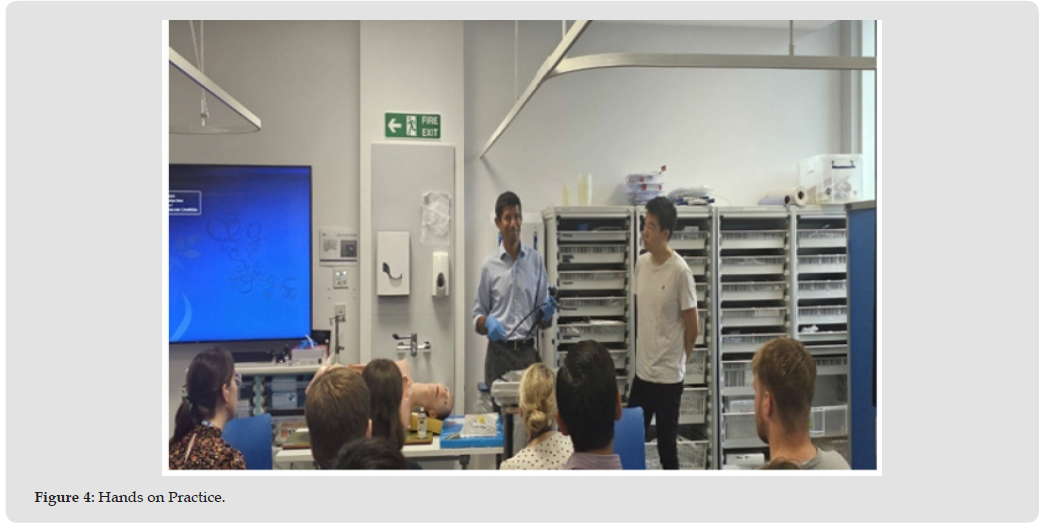
Figure 5
Small Group Teaching
The core knowledge of endoscopic concepts and procedures that were provided by these seminars on the basics of gastrointestinal (GI) endoscopy paved the door for further advanced study, as shown in Figure 6.
Figure 6

Case-Based Discussions
Focused on the typical and crucial situation of endoscopic management for upper gastrointestinal bleeding in urgent medical oncall tasks. These conversations sparked critical thinking and decision- making.
Career Insights
A conversation on what it’s like to be a trainee gastrointestinal specialist offered insightful information about what to expect in the next phase of IMTs’ careers. The goal of this seminar was to provide trainees with a realistic perspective of the opportunities and difficulties that lie ahead in their professional path.
Pre and Post-Taster Day Questionnaires
These instruments were used to assess the effectiveness of the training and ascertain trainees’ views of the obstacles to endoscopic exposure at the IMT level.
Course Structure and Local Leadership
The course was designed to avoid the traditional lecture-based style in favour of participatory workshops and discussions.
Interactive Workshops and Discussions
Designed to provide a more interactive and engaging learning environment, urging trainees to actively participate.
Local Leadership
The discussions were made more relatable and comfortable by the participation of regional endoscopy leaders and registrars. These familiar faces within the trainee community, who were local specialists, brought a feeling of ease and accessibility to the learning process.
Central Location
The central city location reduced delegates’ travel and lodging expenses, increasing the course’s accessibility and practicality for students juggling other obligations.
Skilled Trainers
Regionally certified instructors conducted workshops and endoscopic demonstrations, ensuring pertinent and high-quality instruction.
Challenges and Solutions
The training was designed with the trainees’ requirements in mind, focusing on interactive workshops and discussions covering a range of issues pertinent to trainees in gastroenterology. It was free and offered internally, unlike other paid courses throughout the country that cost between £50 for a half-day and £350 for a two-day course. The cohort was divided into two smaller groups for the day’s activities, which included workshops and simulation exercises. Topics covered included upper GI treatments, endoscopic training, and a day in the life of a gastroenterology registrar. Video and model demonstrations of upper GI therapies such as variceal banding, endoscopic clipping, and thermospray were shown.
Faculty and Sustainability
The faculty consisted of gastroenterologists and clinical endoscopists actively involved in training local trainees and delivering JAG-endorsed endoscopy courses. Sustainability was envisioned, aiming to centralize resources and garner support from endoscopy trainers across the region. The collaboration sought to adapt capacity to meet the training demands of local trainees and recruit sufficient faculty members to sustain the course. In summary, the course’s structure and leadership were carefully curated to create an optimal learning environment. The blend of practical workshops, expert-led demonstrations, and interactive discussions provided a comprehensive and enriching experience for the IMTs, catering to their diverse learning needs and preferences.
The results of our study revealed significant findings that highlight the impact of our intervention. The survey response gives comprehensive knowledge of participant satisfaction and course results pertaining to endoscopic training. The course was well-received by all respondents (100%) who expressed satisfaction with both its content and delivery. The EndoSim experience was delivered with good feedback, as indicated by the 69.2% of respondents who reported being “very satisfied” and the 30.8% who reported being “satisfied.” Participants’ differing degrees of expertise were reflected in their confidence in fundamental scope handling, with 61.5% expressing moderate comprehension, 30.8% a good grasp, and 7.7% an expert understanding. The confidence in attending ad hoc endoscopy lists was also significantly affected by the training; 53.8% of participants reported improvement, 15.4% said they were unsure, and 30.8% said they might improve. Additionally, all responders (100%) expressed increased confidence in their ability to pursue training in gastroenterology, demonstrating the course’s efficacy in preparing participants for further training.
The workshop covered a number of important concerns regarding obstacles and fears associated with beginning endoscopic training. 53.8% of the respondents cited the inability to attend and observe endoscopy lists. Of the participants, 7.7% indicated having responsibilities related to wards or clinics, while 15.4% stated being on call. Even when access restrictions have been successfully addressed, schedule conflicts and prioritizing issues persist. Ultimately, 84.6% of respondents stated that their intention to pursue gastroenterology training was positively impacted by their endoscopic experience, compared to 7.7% who expressed a neutral opinion and 7.7% who expressed a negative one. All responders (100%) expressed overall satisfaction with the course, with the majority expressing they were “very satisfied.” In summary, the results of the study demonstrate a marked improvement in both the practical engagement and the attitudes of participants towards endoscopy following the course. The course effectively addressed several key barriers to endoscopy training, leading to increased opportunities for participation, reduced anxiety, and a positive influence on career aspirations in gastroenterology (Table 1) (Figures 7-14) .
Table 1:

Figure 7
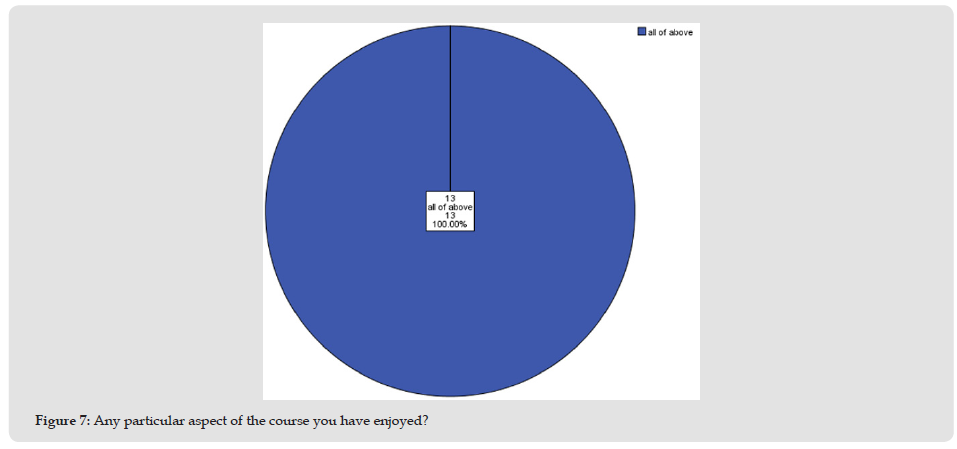
Figure 8

Figure 9
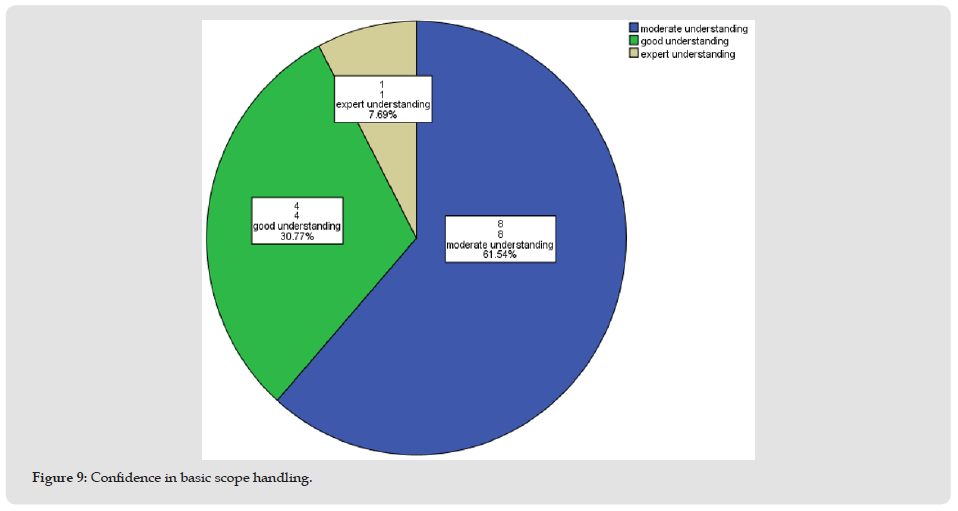
Figure 10
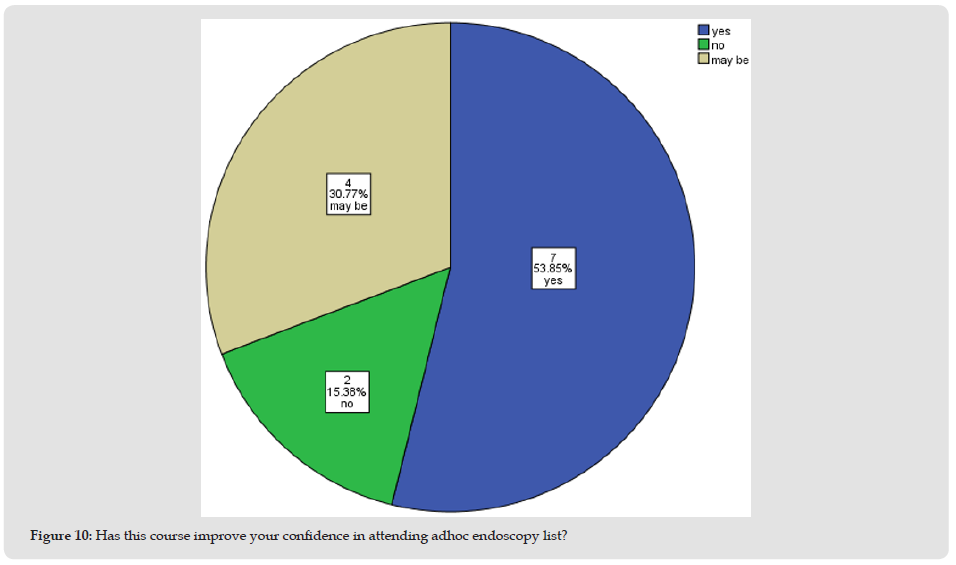
Figure 11

Figure 12

Figure 13

Figure 14

Endoscopy plays an integral part in recruiting trainees for gastrointestinal careers, yet there is often little exposure to it during Internal Medicine Training (IMT) [17]. The endoscopy taster day was an important attempt to close the gap in endoscopic exposure for IMTs and remove obstacles preventing their involvement in this vital area of gastroenterology [18]. In gastroenterology training, simulation- based training provides a methodical way to overcome obstacles, including limited procedural exposure and disturbances like the COVID-19 epidemic [19]. A systematic study that assesses various educational interventions, such as seminars and mentoring programs, and their beneficial effects on skill development and trainee satisfaction provide more evidence for this Studies have demonstrated that decision-making and procedural competence are improved by simulation- based training, as noted in their review of simulation in gastroenterology education [20]. Due to the COVID-19 pandemic’s effects on hepatology and gastrointestinal training programs, there was a significant lack of preparation for applications in higher specializations and a notable lack of exposure [21]. However, it appears that early on in a junior doctor’s training, there is little to no exposure to endoscopy.
When feasible, prospective trainees try to attend endoscopic sessions [22]. The changing NHS landscape, e-portfolio regulations, and hectic work schedules make it difficult for trainees to have enough endoscopic experience [23]. The number of IMTs choosing gastroenterology as their future specialty has increased in the United Kingdom. Studies show that training in gastroenterology involves hands-on anatomical models, simulation, mentorship programs, and innovative tools like virtual and augmented reality. These methods improve trainee competence, confidence, and career satisfaction, emphasizing the importance of continuous innovation [24]. Nevertheless, there is insufficient early exposure for IMTs to endoscopy, and opportunities for developing practical skills are restricted to clinical settings. This demands extensive theoretical understanding as well as continual endoscopic training. These difficulties were exacerbated by the COVID-19 pandemic, which reduced trainee exposure to specialist procedures like endoscopy and increased their level of worry and uncertainty [25]. Our course effectively solved significant barriers to beginning endoscopic training, most notably the common worry (53.8%) about having insufficient access to lists.
These results highlight how the course might help reduce anxiety and increase access to crucial gastrointestinal training opportunities. Most of the participants had little to no experience with endoscopy before the workshop. The main challenges were restricted chances to participate in endoscopic lists, ward/on-call responsibilities, and the prioritization of gastroenterology trainees and clinical endoscopists. These obstacles reflect larger systemic problems within the training framework, where opportunities for specialized training are frequently subordinated to the demands of daily clinical tasks [26]. The study highlights the value of organized, practical training programs in filling knowledge gaps and providing aspiring gastroenterologists with the skills and self-assurance they need for clinical practice [27]. Our study shows a substantial change in the participants’ views toward obtaining training in gastroenterology, with all participants reporting more confidence after the course. The result emphasizes the importance of the course in helping students make wise career decisions and preparing them for specialized positions in GI healthcare.
Post-course, participants showed improved engagement and confidence, an increased likelihood of attending ad-hoc endoscopy lists, and reduced anxiety about endoscopy procedures. This indicates that hands-on, practical training in a supportive environment can enhance trainees’ confidence and readiness to engage in endoscopic procedures. The course combined theoretical knowledge with practical simulator experience and case-based discussions to provide a comprehensive learning experience. It covered endoscopic fundamentals, hands-on simulator practice, and career insights into gastroenterology, enhancing trainees’ competence, confidence, and critical thinking skills. The hands-on experience on anatomical models and case-based discussions on endoscopic intervention in upper gastrointestinal bleeding enriched the learning experience. The course positively influenced 90% of participants’ career aspirations, addressing workforce planning and the need for skilled gastroenterologists in the healthcare sector.
The study concludes that targeted educational interventions in endoscopy significantly enhance trainee engagement and aspirations. Participation in ad-hoc endoscopy lists notably increased postcourse, demonstrating effective overcoming of barriers to endoscopy exposure. The course also significantly reduced anxiety levels about endoscopy among participants, fostering confidence and motivation for further training. Furthermore, the course positively influenced trainees’ interest in specializing in gastroenterology. These findings highlight the necessity and impact of well-structured, practical endoscopy training programs in improving skills, confidence, and career direction for trainees, advocating for more inclusive and comprehensive training approaches in the field.
The endoscopic taster day was intended to be very powerful and approachable. For IMT trainees interested in gastroenterology, there is a great chance on September 15, 2023, at 8:45 AM at the IMT Trainees Endoscopy Taster Day. The course of action includes interactive simulations and talks that provide attendees a quick overview to endoscopy under the direction of knowledgeable professors.
Training simulators allowed trainees to apply their theoretical knowledge in a controlled environment, which improved their learning process. They were able to have firsthand experience with endoscopic treatments.
The fundamentals of gastrointestinal (GI) endoscopy ideas and techniques were covered in seminars, which opened the door for more in-depth research. Through these sessions, trainees were able to communicate directly with peers and instructors in an interactive learning environment.

International Association of Landscape Archaeology, Czech Glass Society, Czech Republic

Department of Chemistry, Semenov Institute of Chemical Physics, USSR Academy of Sciences, Moscow, Russia

Neurology, LA BioMed Research Institute, USA
Associate Professor at Department of Breast and Thyorid Surgey, Chongqing General Hospital, China

Clinical Radiologist (MD) - Department of RADIOLOGY, Cosenza Hospital, Cosenza, Italy





 Abstract
 PDF
PDF