info@biomedres.us
+1 (502) 904-2126
One Westbrook Corporate Center, Suite 300, Westchester, IL 60154, USA
Site Map
 ISSN: 2574 -1241
ISSN: 2574 -1241
ISSN: 2574 -1241
Received: July 08, 2024; Published: July 17, 2024
*Corresponding author: Pralay Maiti, School of Materials Science and Technology, Indian Institute of Technology (Banaras Hindu University), Varanasi 221005, India
DOI: 10.26717/BJSTR.2024.57.009034
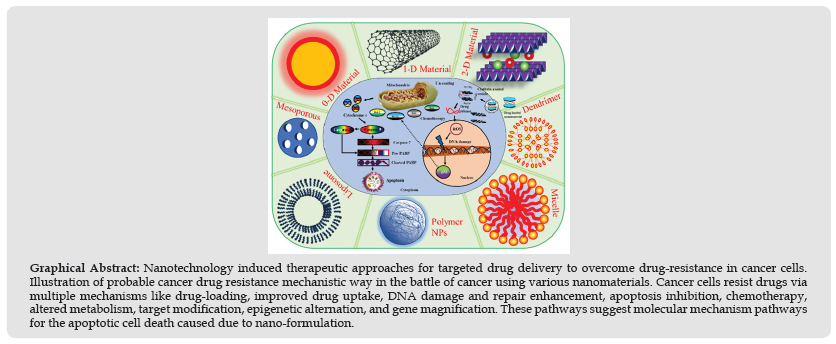
Cancer, with its somber embrace, stands as one of the foremost reasons of mortality across the globe. Chemotherapy stands as the steadfast cornerstone in the battle against cancer. Yet, amidst its promise, a formidable obstacle casts its shadow, impeding the triumph of this therapeutic endeavor is its multidrug resistance. In the intricate realm of medical advancement, nanotechnology emerges as a luminary, its delicate intricacies and infinitesimal wonders offering profound promise in the fight against cancer. Against the backdrop of conventional pharmaceuticals, they unveil a unique advantage with greater precision and purpose. Enhanced stability and biocompatibility grace their essence, while an inherent ability to navigate the labyrinthine pathways of the body while enhances their efficacy. Moreover, in the chronicles of resistance and resilience, nanoparticlebased drug delivery systems emerge as champions, wielding their prowess against the scourge of drug resistance in cancer. Multi-drug resistance stems from various unrelated mechanisms, including overexpression of proteins, reduced drug uptake, altered drug targets, cell cycle checkpoint modifications, agent inactivation, compartmentalization, apoptosis inhibition, and abnormal sphingolipid metabolism. Nanoparticles targeting drug resistance mechanisms can enhance reversal of multidrug resistance. Additionally, as extra resistance mechanism emerges where nanoparticles are progressively utilized to target them. Researchers are exploring nanoparticles’ role in immunotherapy, crucial in cancer treatment. This review examines nanoparticles’ roles, including hybrid nanoparticles, in delivery of drug for immunotherapy, chemotherapy and targeted therapy, highlighting their targeting mechanisms and ability to reverse drug resistance along with cellular and molecular mechanism (Graphical Abstract).
Keywords: Nanotechnology; Drug Resistance; Cancer, Cellular Mechanism; Molecular Mechanism
Figure 1
In the delicate tapestry of human existence, cancer emerges as a somber refrain, the second leading cause of mortality, echoing across the globe as a socio-economic dilemma of profound magnitude [1]. Chemotherapy, surgery, radiation therapy, immunotherapy—all stand as important sentinels against the advance of this relentless foe, though their efficacy remains a realm of formidable challenge, where satisfaction is yet to be fully realized [2-4]. Chemotherapy, a widely used cancer treatment, indiscriminately kills speedily splitting cells, causing serious complicacy like bone marrow suppression, hair loss, and gastrointestinal reactions [5]. Efforts to develop drugs targeting tumor cells specifically have been a major focus of cancer research. While targeted therapy has advanced, significant adverse effects persist, alongside the challenge of drug resistance. Resistance to cancer drugs can occur in two ways: either limited to the specific drug used (single-agent resistance) or affecting many drugs with variable structures and functions (Multi Drug Resistance, MDR). This resistance poses a significant challenge for cancer therapy, undermining desired drug responses and complicating treatment regimens, thus becoming a clinician's nightmare [6]. Drug resistance is a critical issue in cancer treatment [7], alongside challenges like cytotoxic agent resistance and toxic chemotherapy [8]. New approaches targeting molecular aspects of cancer, such as RNA interference (RNAi), oncogenes and tumor suppressor genes, are being explored [9].
These treatments aim to inhibit cell proliferation, enhance immune responses, tailor medications, provide drugs to cancer cells, and minimize the complication of anticancer drugs. Chemotherapy resistance arises from the mechanisms like drug liberation, multi-drug resistance, apoptosis crushing, and altered drug metabolism, changes in epigenetic and targets drug, intensify DNA repair, and gene magnification [10]. In recent decades, nanotechnology has revolutionized medicine, particularly in the battle field of cancer. Nanoparticle mediated drug delivery networks offer precise targeting, reduced difficulties, and improved drug efficacy. These systems deliver chemotherapeutic agents and nucleic acids to tumor cells, enhancing both cytotoxic and gene therapy. Additionally, they encapsulate poorly soluble drugs, prolonging their circulation and accumulation in tumor tissues. This targeted approach protects normal cells, mitigating adverse effects. Examples include doxorubicin-loaded liposomes reducing cardiotoxicity [11] and nanoparticle albumin-bound paclitaxel exhibiting fewer side effects [12]. Nanoparticle drugs also find applications in immunotherapy and ablation treatment [13,14], potentially reversing the tumor immunosuppressive microenvironment [15]. Nanoparticles (NPs) offer advantages in combating anti-tumor multidrug resistance (MDR) by facilitating drug combination therapy and inhibiting specific mechanistic pathway of drug resistance like efflux transporters on cell membranes [16].
Recent studies indicate the potential of nanoparticle-based therapy in overcoming MDR across various cancers, including breast cancer [17], ovarian cancer [18], and prostate cancer [19]. The convergence of nanotechnology and medicine marks a promising frontier in cancer treatment, warranting further exploration through comprehensive research. In this review, we dissected cancer drug resistance mechanisms, examined treatment failures with traditional chemotherapy, and introduced novel strategies to combat resistance. We also discussed basic principles of nanovehicles systems in the cancer treatment, addressed present questionnaire, and outlined future research regulations.
Drug Resistance and its Classification
Drug resistance falls into two main heading: intrinsic and acquired. Intrinsic resistance is the innate capacity of cells to resist treatment with chemotherapeutic drugs, existing prior to their administration [20]. Intrinsic resistance arises from various mechanisms like genetic mutations within tumor cells, emergence of impenetrable society like cancer stem cells in diverse tumors along with mobilization of intrinsic detoxification tracks. Conversely, acquired resistance occurs following anti-cancer treatment. Acquired resistance in cancer can result from different cellular and molecular reactions like initiation of second proto-oncogene post-therapy leading to new mutations or altered expression; changes in drug targets; alterations in drug metabolism within the tumor; efflux of drugs via transmembrane transporters such as ATP binding cassette transporters; epigenomic modifications like acetylation, methylation, and altered microRNA levels affecting receptor pathways; and modifications in the tumor microenvironment (TME) post-treatment [20]. These mechanisms can act independently or simultaneously, promoting multidrug resistance in cancer.
Cellular Mechanistic Pathway for Drug Resistance
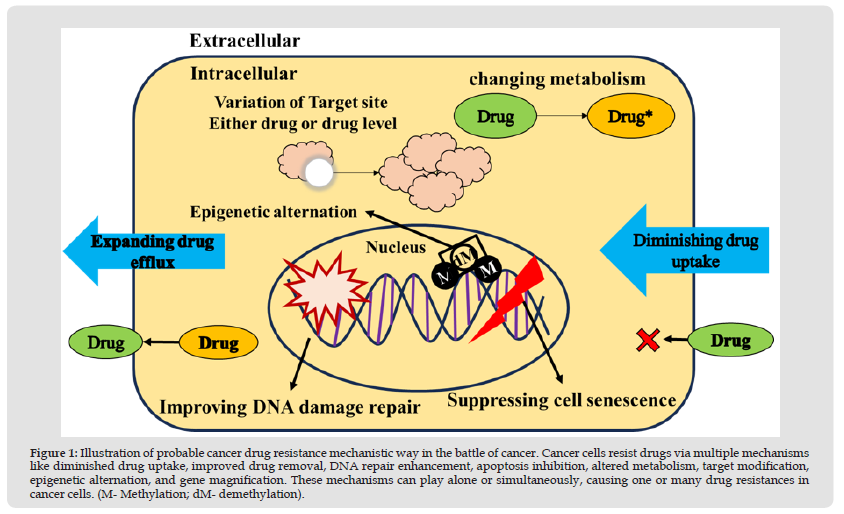
In general, cancer cells constantly adapt to survive, complicating the treatment procedure. Studying biochemical and genetic factors behind multidrug resistance (MDR) may enhance drug design, offering new treatments. Cellular mechanisms contributing to MDR vary, including following different factors, pivotal in drug resistance development [21-23]. Through the presentation of Figure 1, one witness the intricate interplay of pathways, where mutations and cellular signaling converge to fortify cancer cells against the onslaught of pharmaceutical assault. It is a testament to the ingenuity of nature, a reminder of the ceaseless struggle between life and its adversaries (Figure 1). Cancer cells resist drugs via multiple mechanisms like diminished drug uptake, improved drug removal, DNA repair enhancement, apoptosis inhibition, altered metabolism, target modification, epigenetic alternation, and gene magnification. These mechanisms can play alone or simultaneously, causing one or many drug resistances in cancer cells. (M- Methylation; dM- demethylation).
Figure 2
Microenvironment of Tumor: Growing evidence underscores the pivotal part of the tumor microenvironment in fostering drug resistance, a major contributor to cancer sinks along with the treatment ineffectiveness. This microenvironment comprises usual stromal cells (SC), extracellular matrix (ECM), and various solvable components like cytokines and growth agents. Communication between tumor cells, stromal cells, and the ECM, along with the influence of growth factors and cytokines, facilitate direct interactions ruling to drug resistance. This phenomenon, termed as environment-mediated drug resistance (EM-DR), encompasses cell adhesion-mediated drug resistance (CAM-DR) and soluble factor-mediated drug resistance (SM-DR), involving molecules like VEGF (vascular endothelial growth factor), bFGF (basic fibroblast growth factor), SDF-1 (stromal cell-derived factor- 1), IL-6 (interleukin-6), NO (nitric oxide), IL-3(interleukin-3), G-CSF (granulocyte colony stimulating factor), M-CSF (macrophage colony stimulating factor), GM-CSF (granulocyte-macrophage colony stimulating factor), as well as TNF super family members BAFF (B cell-activating factor of the TNF family) and APRIL (a proliferation-inducing ligand) among others, orchestrated by tumor cell interactions [24-26].
Tumor Diverseness: Intra-tumor heterogeneity arises from various factors at the cellular level, leading to proteomic effects, diverse genetic, epigenetic and transcriptomic. Genotypic alters such as mutations, gene stretching, and chromosomal alternation contribute to this heterogeneity, alongside genomic instability. Epigenetic elements, including miRNA alterations along with transcriptomic / proteomic variations, also play a role, influenced by cell cycle phase, stochastic differences, or hierarchical operation as per the theory of the cancer stem cell [27-31]. Intrinsic elements like this drive tumor diverseness, while external ingredients like paracrine signaling interactions, pH and hypoxia further modulate gene products linked to drug resistance and prognosis [32,33].
Cancer Stem Cells Study: The population of cancer stem-cell have been found in various hematopoietic along with solid tumors and are believed to be the origin of these tumors. Chemotherapy, while affecting numerous tumor cells, often fails to target cancer stem cells for their capability to expel chemotherapy agents through mechanisms such as enhancing of ATP-binding cassette (ABC) drug transporters like ABCB1 and ABCG2. These stem cells possess characteristics akin to standard stem cells, including drug resistance, DNA repair capacity, resistance to apoptosis, and dormancy [34-36]. Their stability and ability to metastasize contribute to cancer recurrence. Recognizing and removing these cancer stem cells is crucial to overcoming drug resistance and preventing recurrence.
Cancer Associated Fibroblasts (CAF): Cancer-associated fibroblasts (CAFs) are pivotal in the tumor microenvironment (TME), contributing to tissue remodeling, matrix deposition, immune cell interactions, and extensive communication with cancer cells [37]. CAFs exhibit phenotypic and functional diversity influenced by their origin and stimuli. Besides their role in tumor progression, CAFs drive multidrug resistance (MDR) in anti-cancer therapy [38]. Materializing confirmation suggests that breast cancer-associated fibroblasts confer resistance to doxorubicin in triple-negative breast cancer cells (MDA-MB-231) through HMGB1-induced sustained autophagy. Understanding the various mechanisms employed by CAFs [39], including transporter proteins, to induce drug resistance necessitates further investigation to overcome chemotherapy resistance.
Oxidative Stress: Oxidative stress arises from an imbalance between oxygen radicals and antioxidants, often due to mitochondrial dysfunction. These radicals can induce DNA mutations, aiding tumor development, yet also trigger apoptosis, hindering tumor progression. Certain anticancer drugs generate ROS to combat tumors but can lead to resistance over time. Tumor cells develop survival mechanisms against ROS-induced apoptosis, fostering heterogeneity and drug resistance. Anticancer drugs reliant on ROS production for DNA damage may fail due to limited oxygen supply within cells, enabling cancer cell survival. Alternative pathways, such as cell senescence, also contribute to drug resistance. Understanding ROS and redox signaling in multidrug resistance remains a crucial area for further research in cancer treatment [40].
Cancer Metabolism: Metabolic reprogramming is a hallmark of cancer cells, adapting to their environment through elevated oxidative stress and altered energy production pathways. The "Warburg effect," identified by Otto Warburg, highlights the shift towards less efficient glycolysis over oxidative phosphorylation [41]. This reprogramming extends beyond glucose metabolism to include lipids and glutamine. Lactate, a byproduct of glycolysis, plays a significant role in cancer progression. Glycolytic enzyme, Pyruvate kinase isoform (2PKM2) is upregulated in many cancers, regulating glycolysis and inhibiting oxidative phosphorylation while influencing gene transcription and cell cycle progression. PKM2 also impacts programmed cell death and drug resistance, contributing to the challenge of overcoming drug resistance in cancer therapy [42]. Additional investigation is demanded to appreciate the interplay between cancer metabolism and chemotherapy resistance.
Inflammation: Inflammation, an innate immune response to injury or pathogens, drives tumor growth and development by activating inflammatory cells and releasing pro-inflammatory mediators [43]. This inflammatory microenvironment fosters cancer progression, including angiogenesis, evasion from cell death, and drug resistance [44,45]. Inflammation is recognized as the seventh hallmark of cancer [46]. Immune cell initiation along with pro-inflammatory cytokine liberation nurture drug resistance by altering cellular responses to chemotherapy [47,48]. Understanding the molecular mechanisms linking inflammation and cancer offers avenues to combat multidrug resistance.
Molecular Mechanistic Pathway for Cancer Drug Resistance
Cancer cells from a patient can vary significantly in genetic makeup due to factors like tissue of origin, oncogene activation, tumor suppressor activity, and gene expression related to mutator phenotypes. This leads to diverse drug-resistant gene profiles among cancers. Despite being clonally derived, tumors exhibit considerable heterogeneity, especially in drug resistance mechanisms. Notably, a primary mechanism for multidrug resistance (MDR) in cultured cancer cells is the expression of an energy-dependent drug efflux pump, P-gp, which functions as a multidrug transporter [49] (Figure 2).
Figure 3
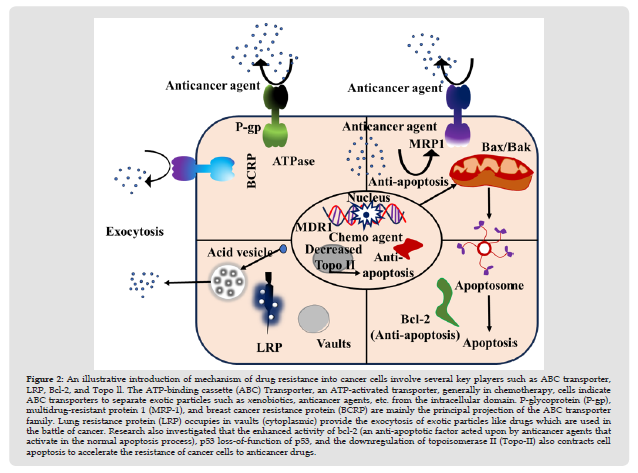
Cancer Drug Efflux by the ATP Binding Cassette (ABC) Transporter Family: A key factor driving drug resistance in cancer is the overexpression of ABC transporter proteins, which expel various drugs across cell membranes via ATP hydrolysis [50]. These transporters reduce intracellular drug levels, hindering chemotherapy effectiveness [51]. Humans have 48 identified ABC transporters [52], many primarily expressed in tissues like the kidney, pancreas, liver, gastrointestinal tract, and certain blood vessels. Thirteen types of ABC transporters are linked to multidrug resistance in cancer, notably ABCB1 (P-glycoprotein/MDR1), ABCC1 (MRP1), and ABCG2 (BCRP) [53]. These transporters, essential for removing toxins, are exploited by cancer cells to resist drugs, with ATP playing a crucial role. Cancer cells with elevated ATP levels exhibit resistance, while ATP depletion enhances chemotherapy sensitivity. Extracellular ATP boosts ABC transporter expression, increasing drug efflux and promoting a resistant tumor microenvironment [54]. Macropinocytosis facilitates intracellular ATP elevation, contributing to multidrug resistance. Major drug-effluxing transporters [40] include the following points and shows in Figure 2.
Permeability Glycoprotein (P-gp)/MDR-1: P-glycoprotein (P-gp) is a large plasma membrane glycoprotein and the first discovered human ABC transporter encoded by the ABCB1 gene on chromosome 7. It consists of 1280 amino acids with a molecular weight of approximately 170 kDa [55], featuring transmembrane and nucleotide-binding domains. P-gp has a flexible drug binding cavity within its membrane-bound domain, allowing interaction with various substrates. ATP binding induces conformational changes, facilitating unidirectional transport [56] of lipophilic substrates out of cells. Its basal expression in tissues like liver, intestine, and blood-brain barrier protects against xenobiotics [57]. Overexpression of P-gp is common in multidrug-resistant cancer cells, diminishing intracellular drug accumulation and contributing to chemotherapy resistance. P-gp also influences drug bioavailability and effects, exhibiting broad substrate specificity and conferring cross-resistance against multiple drugs [58,59]. Cancer cells upregulate P-gp expression in response to cytotoxic agents, hypoxia, and altered cellular signaling, contributing to multidrug resistance [60]. P-gp may be expressed in nuclear and mitochondrial membranes, further facilitating drug efflux and resistance in cancer cells [61].
Multidrug resistance protein (MRPs/ABCC1): The Multidrug resistance protein (MRP1/ABCC1) is a large transporter protein involved in drug resistance, similar to P-glycoprotein (P-gp), belonging to the ABC transporter family. It consists of three transmembrane domains (TMD), two nucleotide-binding domains (NBD), and an additional N-terminal domain. MRP1 [62] is primarily expressed in tumor cells, where it pumps out toxic substances, including anticancer drugs, in an ATP-dependent manner [63]. Its main location is in the proximal tubules of the kidney, aiding in excretory functions. MRP1 is constitutively expressed in various tissues and barriers, with notably higher levels in many cancers like lung, pancreatic, prostate, brain, and breast cancer [64]. It plays a significant role in expelling anticancer agents and organic anion substrates, especially under hypoxic conditions. The expression of MRP1 in cancer cells is influenced by factors unique to cancer cells, often leading to multidrug resistance.
Breast Cancer Resistance Protein (BCRP/ABCG2): BCRP/ABCG2, a transporter protein, and functions to expel toxic substances extracellularly under normal conditions. It is composed of one transmembrane domain (TMD) and one nucleotide-binding domain (NBD), weighing approximately 72 kDa. Typically found in stem cells and epithelial apical membranes, it plays a role in drug disposition [65]. Also known as MXR, it has implicated in mitoxantrone efflux in carcinoma cells, contributing to drug resistance [66]. Upregulated BCRP expression in cancer cells further enhances drug resistance, affecting various anticancer drugs. BCRP is prevalent in breast cancer but also appears in leukemia and lung cancer [67,68], sometimes serving as a cancer stem cell marker. It efficiently transports chemotherapeutic drugs and tyrosine kinase inhibitors. Interactions of ABCB1, ABCC1, and ABCG2 with cancer-related genes were analyzed, confirming their involvement in cancer pathology.
Deactivation of Anticancer Drugs: The effectiveness of anticancer drugs relies on complex mechanisms involving interactions with proteins in vivo. Cancer cells can develop resistance by decreasing drug activity [69]. For instance, cytarabine (AraC) treatment for acute myeloid leukemia illustrates this phenomenon, where its phosphorylated form becomes lethal to cells [70]. Down-regulation or mutations in proteins implicated in this pathway reduce AraC's efficacy, leading to drug-resistant cancer cells [71]. Another example involves the glutathione S-transferase family (GST), comprising cytosolic, mitochondrial, and microsomal (MAPEG) proteins. GST enzymes play a crucial role in detoxifying drugs and inhibiting the MAPK pathway, thereby increasing drug resistance in cancer cells. Elevated GST expression enhances drug detoxification, reduces drug-induced damage, and promotes resistance to apoptosis [72].
Changing the Anticancer Drug Targets and Mutations: Genomic instability plays a crucial role in cancer initiation and progression, stemming from various mechanisms like DNA mutations, chromosomal abnormalities, telomere damage, and impaired DNA repair [73]. This instability fosters tumor growth and leads to tumor heterogeneity and drug resistance, affecting patient survival. Solid tumors and hematological malignancies commonly exhibit genomic instability, ranging from single nucleotide to chromosomal alterations [74]. These alterations can affect drug targets, reducing therapeutic efficacy and promoting resistance. For instance, mutations in genes like the estrogen receptor can cause resistance to anti-cancer drugs like tamoxifen in breast cancer [75], while mutations in tyrosine kinase proteins can lead to resistance in chronic myelogenous leukemia. Mutations in tumor suppressor gene p53 can impair apoptotic balance and promote drug resistance, such as resistance to cisplatin in non-small cell lung cancer [76]. Additionally, mutant p53 stabilization upon drug treatment contributes to resistance against drugs like gemcitabine in cancer therapy [77].
Intensifying the DNA Damage Repair: DNA repair mechanisms contribute significantly to drug resistance in cancer. Chemotherapeutic agents straightly or secondarily damage cancer cell DNA, prompting repair mechanistic path. For instance, platinum-based drugs like cisplatin induce DNA damage, triggering tumor cell apoptosis. Resistance emerges via DNA repair systems like nucleotide excision repair (NER) and homologous recombination repair (RRM). Inhibiting these repair systems enhances drug efficacy by sensitizing cancer cells [78]. Targeting DNA repair system defects, due to mutations or epigenetic changes, presents a therapeutic opportunity. Additionally, increased DNA repair and alkyl transferase activity confer resistance to alkylating agents like doxorubicin [79].
Evasion of Programmed Cell Death: Cell demise is moderated by three main occasions: necrosis, apoptosis, and autophagy, each differing in biological characteristics while facilitating cell death. Apoptosis involves internal and external pathways, with external pathway involving ligands, cell death receptors like FAS and TNF-R, and proteins such as caspases-3, -6, -7, and -8. This leads to proteolysis of actin and nuclear lamin proteins, culminating in apoptosis [80]. The internal pathway, occurring in mitochondria, involves anti-apoptotic proteins like Bcl2 and AKT, and pre-apoptotic proteins like Bax, Bak, and caspase-9. Up-regulation of anti-apoptotic genes and down-regulation of pre-apoptotic genes in tumor cells contribute to chemotherapy resistance [81]. Mutations in p53 gene can induce apoptosis in response to cell stress and DNA damage, but mutations may impair this process, reducing sensitivity to chemotherapy [82].
Epigenetic Changes: One key aspect of drug resistance in cancer therapy is epigenetic alterations, which occur through two main mechanisms: DNA methylation and histone modifications [83]. DNA methylation involves the addition of methyl groups to cytosine bases, particularly in CpG islands near gene promoters, but can occur elsewhere in the genome as well [84]. Histone modifications, such as acetylation and deacetylation, regulate chromatin structure and gene expression, shows in Figure 3. For instance, methylation often silences tumor suppressor genes while hypermethylation can activate oncogenes [85]. In cancer cells, demethylation of genes like MDR1 can lead to multi-drug resistance, reducing the effectiveness of chemotherapy [86] (Figure 3). Combining epigenetic and conventional chemotherapy can be effective against drug-resistant tumors and cancer cells.
Figure 4

Nanoparticles (NPS) in Cancer Treatment
Nanoparticles (NPs) applied in medical diagnostic must have particular sizes, shapes, and surface characteristics, which significantly affect nano-drug delivery efficiency and therapeutic efficacy [87]. NPs ranging from 10 to 100 nm in diameter are preferred for cancer therapy due to their ability to effectively deliver drugs and exploit the enhanced permeability and retention (EPR) effect. Smaller particles risk leakage from normal vasculature or kidney filtration [88], while larger particles face phagocyte clearance [89]. Surface modifications, like coating with hydrophilic materials such as polyethylene glycol (PEG), reduce opsonization, enhancing circulation time and tumor penetration [90]. These tailored characteristics determine NPs' therapeutic impact in cancer management. Figure 4 illustrates different NP types for cancer therapy, with subsequent text detailing their advantages in tumor treatment (Figure 4).
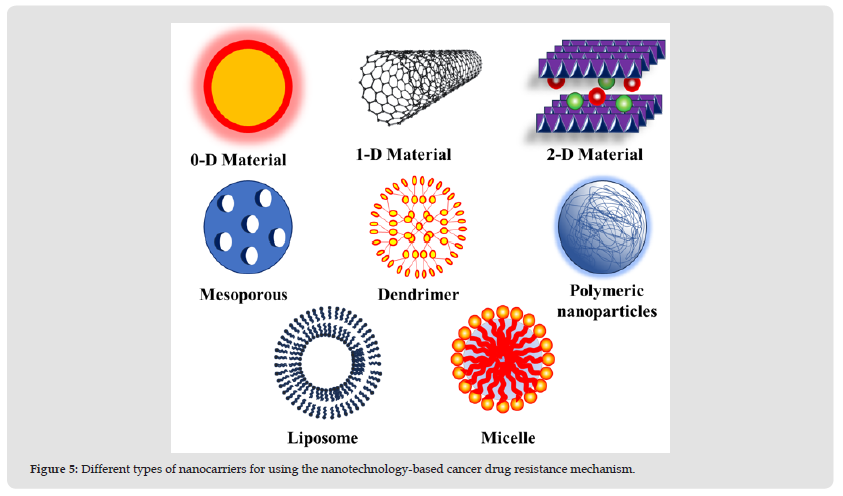
Inorganic Nanoparticles: In recent years, inorganic nanocarrier have been extensively studied for therapeutic along with imaging applications due to their numerous supremacies, including large surface area, high drug loading capacity, improved bioavailability, reduced toxic side effects, sustained drug release, and compatibility with most organic solvents, unlike polymer-based nanoparticles. Quantum dots, carbon nanotubes, layered double hydroxides, mesoporous silica, and magnetic nanoparticles, presented in Figure 5, are commonly utilized in cancer treatment. Quantum dots particularly excel as imaging probes, offering potent capabilities for long-term, multiplexed, and quantitative imaging and diagnostics [91-93]. Zero-dimensional fluorescent nanoparticles, like quantum dots (QDs) sized between 1–10 nm, are highly promising for targeted drug delivery, intracellular monitoring, resistance to photobleaching, and multicolor imaging. However, challenges such as hydrophobicity and aggregation hinder their biological applications. Coating QDs with polar species or ligand shells enhances water solubility and bioactivity. Multifunctional QDs, embedded with imaging agents and hydrophobic drugs, and carrying hydrophilic therapeutic agents and targeting biomolecules, show promise for cancer targeting and therapy. Recently, polymer-coated QDs have emerged as potential vehicles for cancer diagnosis and image-guided chemotherapy [94]. AuNPs, extensively researched inorganic NPs, particularly mixed monolayer-protected clusters with a gold core, show promise in drug delivery.
Figure 5

Figure 6
Their inert, non-toxic gold core, along with surface functionalization, enhances drug accumulation in tumors and overcomes drug resistance. Additionally, AuNPs are explored for multimodal cancer treatment, including gene therapy, photothermal therapy, and immunotherapy [95]. Carbon nanotubes (CNTs) are synthetic one-dimensional nanomaterials composed of rolled sheets of graphene rings made from sp2 hybridized carbon atoms, forming hollow tubes. They are utilized for near-infrared photothermal ablation therapy, elevating tumor temperature upon light exposure. Water-soluble, functionalized CNTs are explored for gene and drug delivery due to their ability to cross biological barriers efficiently without toxicity. Chemotherapeutic drugs are often linked to CNTs through surface functional groups or polymer coatings via cleavable bonds. In antitumor immunotherapy, CNTs serve as antigen-presenting carriers, enhancing the immunogenicity of tumor-based peptides/antigens to stimulate a humoral immune response within tumors [96,97]. Mesoporous silica nanoparticle carriers, known as SNPs, excel in drug delivery due to their large internal pore volume, which maximizes drug encapsulation. Their supramolecular components act as caps, facilitating drug capture and release. SNPs offer superior pharmacokinetics, treatment efficacy, and stability, making them prime candidates for drug delivery vehicles. Additionally, porous silicon NPs exhibit promising potential in immunotherapy by promoting antigen cross-presentation, lymphocyte polarization, and interferon-γ secretion [98].
Magnetic nanoparticles (MNPs) for drug delivery typically consist of metal or metal oxide nanoparticles. To enhance stability and biocompatibility, MNPs are often coated with organic materials like polymers and fatty acids. They exhibit promising effectiveness in chemotherapy and gene therapy for cancer treatment. Additionally, MNPs enable magnetic hyperthermia, allowing for tumor thermal ablation, presenting an alternative cancer treatment option [99]. Among inorganic nanocarriers, 2D layered double hydroxides (LDHs) are gaining attention due to their biocompatibility, anion exchange capability, high drug loading efficacy, pH-responsive release, and ease of preparation. LDHs, composed of divalent and trivalent metal ions, can carry anions between layers, facilitating drug loading and release. They protect drugs, allow functionalization for targeting, and possess high surface area and stability for various applications [94,100] (Figure 5).
Organic Nanomaterials: In general, the nanoparticles of polymer are solid, biocompatible, colloidal, and often biodegradable systems with nanoscale dimensions. They are simple soft materials for nanomedicine, easily modifiable for desired properties such as drug loading efficacy and biodistribution. Made from synthetic (e.g., PLA, PLGA, PCL) [101-103], or natural polymers (e.g., gelatin, chitosan, cyclodextrin) [104-109], they enable controlled drug delivery via various mechanisms. Synthetic polymers offer sustained release benefits over natural ones. Widely investigated for drug delivery, FDA-approved examples include PLA and PLGA. Strategies like drug conjugation and careful manipulation of parameters allow fine-tuning of drug release for effective cancer treatment [94]. Organic NPs, like liposomes, widely explored for decades. Liposomes consist of an outer lipid layer and a drug-containing core. They mimic living cells and enhance therapeutic drug delivery. Liposomes, evolving through generations, are crucial in cancer therapy, delivering drugs like doxorubicin and paclitaxel [110] with higher efficiency. They reduce cardiotoxicity, offer drug combination options, and combat drug resistance. Many liposome-based drugs now in clinical use for cancer treatment.
Hybrid Nanoparticles: Combining organic and inorganic nanoparticles (NPs) enhances drug delivery effectiveness and reduces resistance. Lipid-polymer hybrid NPs are promising for treating various cancers. They encapsulate both hydrophilic and hydrophobic drugs efficiently. Liposome-silica hybrids (LSH) effectively deliver drugs to kill cancer cells. Advanced nano-in-micro platforms improve drug delivery and enhance cell death in resistant cancers. Hybrid NPs like CNTs and chitosan increase anticancer activity while reducing toxicity. Metal multilayer half-shells and PLGA hybrids can target drug delivery and hyperthermia for tumor cell destruction. Hybridizing natural biomaterials with organic or inorganic NPs, like cell membrane coating nanotechnology, enhances NP biological characteristics. Coatings from leukocytes, red blood cells, platelets, cancer cells, and bacteria have shown promise. For example, leukocyte-derived cell membrane coating on nanoporous silicon particles prevents phagocyte clearance, increasing circulation time and tumor accumulation. Cancer cell membrane-cloaked mesoporous silica NPs improve stability and targeting. Dual-membrane coatings, such as erythrocyte-platelet hybrids, enhance stability and circulation life. Multistage NP delivery systems, like protease degradation of 100-nm gelatin NPs to release 10-nm quantum dot NPs, enable deep tumor penetration [111].
Mechanistic Pathways of Targeting
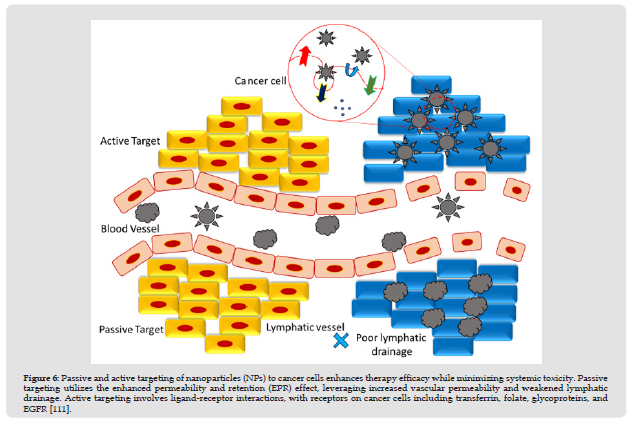
Targeting cancer cells specifically is crucial for nano-carriers in drug delivery, enhancing efficacy while safeguarding normal cells. Extensive studies focus on NP-based drug targeting design. Understanding tumor biology and nano-carrier interaction is essential. Targeting mechanisms include passive and active targeting reflects in Figure 6 (Figure 6). Active targeting in cancer therapy involves ligands on nanoparticles (NPs) interacting with overexpressed molecules on cancer cells, distinguishing them from healthy cells. This interaction induces receptor-mediated endocytosis, enabling targeted drug delivery, especially for macromolecular drugs such as proteins along with siRNAs. Attacking moieties incorporate monoclonal antibodies, peptides, amino acids, vitamins, and carbohydrates, binding to receptors like transferrin receptor, folate receptor, glycoproteins, and the epidermal growth factor receptor (EGFR). Passive targeting exploits tumor characteristics for drug delivery. Cancer cell proliferation induces leaky vasculature, allowing nanocarriers to accumulate in tumors via the EPR effect. Tumor microenvironment, including acidic pH, enhances drug release. Limitations include non-specific distribution and variability in EPR effect and vessel permeability across tumors.
Figure 7
Attacking to Endothelium
Some nanoparticles (NPs) target angiogenesis instead of cancer cells directly. VEGF and VEGFR interaction are crucial in vascularization [112]. Liposomes targeting VEGFR-2 and VEGFR-3 simultaneously enhance efficacy [113]. Integrins, especially avb3, facilitate tumor cell migration. Cationic NPs with avβ3 ligands show promising gene delivery. avβ3 integrin is linked to VEGFR-2 signaling, enhancing anti-VEGFR treatment effectiveness. VCAM-1 is expressed in tumor endothelium, aiding NP drug delivery. VCAM-1 targeted NPs demonstrate high efficiency in breast cancer models. MMP in the tumor microenvironment aids in extracellular matrix remodeling and neovascularization [114].
Mechanisms of Nanomaterials to Overcome the Drug Resistance
Drug resistance remains a significant hurdle in cancer treatment despite advances in therapy methods. Multidrug resistance undermines various treatments, fueling cancer progression and dismal prognoses. Mechanisms include ABC transporter overexpression, faulty apoptotic pathways, and hostile tumor microenvironments.
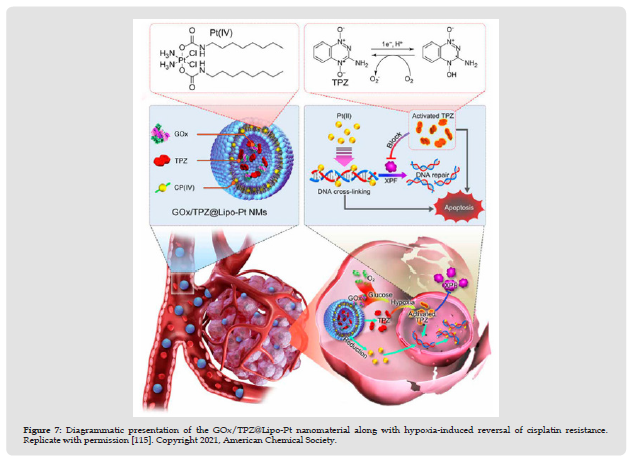
Nanoparticles Attacking Hypoxic Tumor Microenvironment: Hypoxia contributes to multidrug resistance in cancer by inducing tumor cells into a drug-resistant state and increasing tumor heterogeneity. Targeting hypoxiainducible factor 1a (HIF-1a), NPs containing HIF-1a siRNA, and inhibitors of heat shock protein 90 (HSP90) show promise in overcoming drug resistance [111]. Researchers recently proposed a new nano-chemotherapy approach involving a liposome nanodrug holding glucose oxidase (GOx), tirapazamine (TPZ), and platinum (IV) prodrug. This innovative strategy aims to maximize drug utilization and exacerbate intracellular hypoxia in cisplatin-resistant tumor cells, thereby fully activating TPZ's therapeutic effects. Activated TPZ effectively suppresses the expression of the XPF protein, which promotes DNA repair in tumor cells, resulting in synergistically enhanced antitumor therapy when combined with platinum drugs [115]. The schematic presentation is in Figure 7.
Figure 8
Advantage of Nanocarriers to Overcome the Cancer Drug Pump Efflux: The development of nanotechnology has led to the discovery of numerous new nanostructures, with gold nanoparticles (AuNPs) standing out due to their principal optical characteristics and surface plasmon resonance effect. Attaching polyethylene glycol (PEG) to AuNPs enhances stability and circulation time of chemotherapy drugs. Modifying AuNPs' shape to nanorods shifts the surface plasmon band (SPR), enabling near-infrared (NIR) absorption for deeper tissue penetration. AuNPs, including gold nanorods, show promise in circumventing drug resistance, exemplified by Vishwakarma et al. on sorafenib-gold nanoconjugates (SF-GNP) reversing drug resistance in liver cancer cells. Additionally, nitric oxide (NO)-stimulated nanosystems combat multidrug resistance by inhibiting ABC transporters. Nitric oxide (NO) reverses cancer cell drug resistance by reducing P-glycoprotein (P-gp) expression, aiding treatment of doxorubicin (Dox)-resistant cancer cells. Wang et al. developed a sophisticated nano system, ADLAu@CuS YSNPs, releasing NO and doxorubicin (Dox) sequentially, offering a potential avenue for drug-resistant cancer therapy [116]. This system involved embedding an NO-responsive lipid in a liposome's bilayer structure, encapsulating l-arginine/Dox-loaded gold@copper sulfide yolk-shell nanoparticles (ADAu@CuS YSNPs) to generate ADLAu@CuS YSNPs. Under 808 nm laser irradiation, the process generated reactive oxygen species (ROS) that converted l-Arg into NO, progressively destabilizing the liposome and eventually releasing Dox. This sequential release significantly inhibited P-gp expression, enhancing Dox accumulation in Dox-resistant MCF-7/ADR cells and demonstrating promise for MDR cancer therapy. In the eloquence of Figure 8, we find not just a representation, but a narrative-a story of perseverance, of resilience, and ultimately, of triumph over adversity.
Figure 9

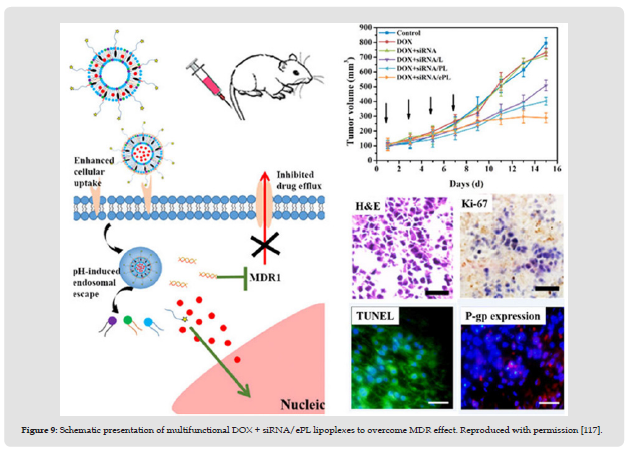
Functions of Co-Delivery Nano-Formulations for Targeting Drug Resistance Mechanism: The co-delivery system of chemo-pharmaceutical agents and siRNA is a potent nano-therapeutic approach for targeting tumor cells. By targeting drug-resistant associated genes like MDR1, STC2, K-Ras, and Bcl2, it effectively overcomes drug resistance in various cancers. Zhang et al. developed a pH-sensitive nanocarrier, DOX + siRNA/ePL, which demonstrated enhanced cellular uptake, endosomal escape, and significant inhibition of proliferation, apoptosis induction, and downregulation of P-gp expression in vivo, making it a promising solution for drug-resistant breast cancer treatment [117] and is presented in Figure 9. Antitumor drugs with siRNA can overcome this resistance. A pH-sensitive and targetable drug delivery system was developed to co-deliver MDR1-siRNA and DOX. This carrier, EphA10 antibody-conjugated pH-sensitive doxorubicin (DOX), MDR1-siRNA lipoplexes (DOX + siRNA/ePL), showed stability and favorable properties. It increased cellular uptake, downregulated P-gp, and enhanced cytotoxicity in breast cancer cells (MCF-7/ADR). Colocalization studies confirmed pH-responsive endosomal escape. In vivo, DOX + siRNA/ePL prolonged circulation, accumulated in tumors via receptor-mediated endocytosis, and demonstrated antitumor effects. This system holds promise for overcoming MDR.
Figure 10
Function of Nanoparticles in Cancer Immunotherapy to Overcome Drug Resistance: The rise of immunotherapy marks a new era in cancer treatment, where nanoparticles (NPs) serve crucial roles in both chemotherapy delivery and immunotherapy applications. Cancer immunotherapy primarily activates the anti-tumor immune response, with NP-associated methods including nanovaccines, artificial antigen-presenting cells (aAPCs), and targeting the immunosuppressive tumor microenvironment (TME). Nanovaccines deliver tumor-associated antigens (TAAs) and adjuvants to antigen-presenting cells (APCs), enhancing immune responses against tumors. Various NPs such as liposomes, gold NPs, PLGA NPs, micelles, and dendrimers aid in cytoplasmic delivery of TAAs into APCs, bolstering immune responses. Inorganic NPs and polymers like mesoporous silica and acetylated dextran (AcDEX) act as adjuvants, stimulating immune responses. Artificial APCs directly activate T cells, while targeting the immunosuppressive TME involves combating tumor-associated macrophages (TAMs), myeloid-derived suppressor cells (MDSCs), and regulatory T cells (Tregs). NPs are often PEG-modified to minimize interactions with the reticuloendothelial system. Combining chemotherapy with immunotherapy shows promise, with studies demonstrating enhanced immune responses and tumor cell death while minimizing toxicity in immune cells. Alternative strategies include co-delivery of chemotherapeutics along with monoclonal antibodies using porous silicon NPs, effectively stimulating immune responses against cancer cells [111].
High lifetime cancer probabilities for men (45%) and women (38%) contribute to 1 in 4 deaths in are alarming. Despite extensive knowledge, cancer continues to outpace our understanding. Development has been shaped in uncovering cellular and molecular mechanisms of progression, metastasis, and invasion, offering potential avenues for nanodrug therapy when conventional treatments fail. However, drug resistance persists as a significant challenge even after initial positive responses [118]. Nanotechnology transforms cancer treatment by enhancing drug delivery, targeting, and reducing toxicity. Nanoparticle-based therapies, spanning chemotherapy to gene therapy, offer improved outcomes and resistance reversal, marking a new era in cancer care. Increasing research has highlighted the efficacy of hybrid NPs in drug delivery, prompting greater interest. Further exploration of cancer biology will refine drug development. Designing hybrid NPs for precise cancer therapy and enhancing targeting mechanisms warrant attention. Nanoparticles interactions with the immune system are intricate, influenced by size, shape, composition, and surface properties. While nano vaccines and artificial APCs show promise, their clinical efficacy requires enhancement, and safety concerns persist. Loaded with immunomodulatory factors, NPs could enhance vaccine effectiveness for immunotherapy. Understanding the tumor microenvironment and nanoparticle-tumor immunity crosstalk is crucial for optimizing drug design and utilization.
The University Grants Commission (UGC), New Delhi, India, provided funding for the author's (SM) fellowship is highly acknowledged. The research support grant of Tata Innovation Fellowship (sanction no. BT/HRD/35/01/02/2020) is also acknowledged. The research support grants of SERB (sanction no. IPAj2020/000025 and CRG/2022/004287) are also acknowledged.
This study's conception and critical analysis were provided by Swapan Maity, Dipesh Kumar Dubey and Prof. Pralay Maiti.
The authors claim to have no conflicts of interest.

International Association of Landscape Archaeology, Czech Glass Society, Czech Republic

Department of Chemistry, Semenov Institute of Chemical Physics, USSR Academy of Sciences, Moscow, Russia

Pharmaco-kinetics, dynamics and Drug Metabolism, Touro College of Pharmacy, USA

Professor of Nuclear Medicine, Faculty of Medicine and Surgery, University of Milan, Milan, Italy

Clinical Radiologist (MD) - Department of RADIOLOGY, Cosenza Hospital, Cosenza, Italy





 Abstract
 PDF
PDF



























