info@biomedres.us
+1 (502) 904-2126
One Westbrook Corporate Center, Suite 300, Westchester, IL 60154, USA
Site Map
 ISSN: 2574 -1241
ISSN: 2574 -1241
ISSN: 2574 -1241
Received: June 25, 2024; Published: July 09, 2024
*Corresponding author: Msughter Eric, Department of Microbiology, University of Calabar, Cross River State, Calabar, Nigeria
DOI: 10.26717/BJSTR.2024.57.009005
HIV infection and AIDS are serious public health issues globally. Nigeria has one of the highest rates of new HIV infections in Sub-Saharan Africa and the world’s second highest HIV burden. Patients’ continuity of treatment (CoT) is critical towards achieving HIV epidemic control. This study aims to explore individual and associated factors of HIV treatment continuity among PLHIV in Nigeria. For this review, the Preferred Reporting Items for Systematic Reviews and Meta-Analyses (PRISMA) checklist and Cochrane guidelines were adapted. Systematically, five databases: PubMed, Cochrane, EMBASE, Web of Science, and the Google Scholar databases (January 2012 – June 2024) and two conference abstract archives: International AIDS Society (IAS) and International Conference on AIDS and STIs (ICASA) (2017 – 2021) were searched to find publications providing data on, individual (Patients demographics), socioeconomic, geographical and clinical factors associated with, antiretrovirals therapy (ART) refill for PLHIV, treatment retention and patients Interruption in Treatment (IIT) were included. 1,076 titles were found through searches, and 18 (all observational studies) with a total of 26,469 participants were included in this review. Most of the included studies did not have standardize metrics for determine continuity of treatment. Findings from the studies showed that individual patient’s demography such as (sex, age, marital status, and educational status), socio economical, geographical, behavioral and clinical factors have significant association with patient continuity of treatment.
Furthermore, 61% of included study had cross cutting of factors associated with continuity of treatment. 89% (n=16), individual factors, 89% (n=16) socio economic factors, 50% (n=9) geographical/environmental settings, 33% (n=6) behavioral factors, and 44% (n=8) clinical factors. The study recommends that HIV prevention, care and treatment information should be embedded in the academic curriculum in Nigeria.
Keywords: Antiretroviral Therapy (ART); Continuity of Treatment (CoT); Retention, Interruption in Treatment (IIT); PLHIV; PRISMA
Abbreviations: CoT: Continuity of Treatment; IAS: International AIDS Society; ICASA: International Conference on AIDS and STIs; ART: Antiretrovirals Therapy; IIT: Interruption in Treatment; HIV: Human Immunodeficiency Virus; WHO: World Health Organization; OIS: Opportunistic Infections; GEE: Generalized Estimating Equation; HAART: HIV AIDS Antiretroviral Therapy; EAC: Enhanced Adherence Counseling
The Human Immunodeficiency Virus (HIV) has been a major global public health concern. An estimated 74.9 million people have acquired the virus since the 1980s, when HIV was first identified, and 32 million have allegedly died from HIV-related illnesses (Singer, Weiser, and McCoy, 2015). The number of people living with HIV is predicted to be 38 million worldwide in 2019, with 2.9 million of those people living in Western and Central Africa (UNAIDS, 2019). According to Singer, Weiser and McCoy (2015), despite increased funding for and programs for HIV, only 62% of the 29.9 million people who knew their status were receiving antiretroviral therapy (ART), and only about 47% of them had viral suppression. Additionally, it is estimated that 8.1 million HIV-positive individuals did not know their status by the end of 2019 (Ahmed [1]). There are 1.8 million people living with HIV in Nigeria, where the prevalence of HIV/AIDS is estimated to be 1.4% of the population (PLHIV). Between 2010 and 2019, the incidence rate fell from 0.74 to 0.52 per 1000 people, resulting in 100 000 new infections (UNAIDS [2]). By 2020, the UNAIDS 90-90-90 plan aims to have 90 percent of people living with HIV (PLHIV) know their status and 90 percent of those people continue receiving antiretroviral medication (ART) (90 percent coverage), in which 90% of those are virally suppressed by 2020 (UNAIDS [2]). Being able to continue HIV treatment is essential for HIV-positive individuals if they are to maintain good health and avoid spreading the virus to others (Zinski, et al. [3]).
Despite considerable advancements in HIV treatment, a sizable minority of HIV-positive individuals do not regularly get antiretroviral medication, frequently because of a decline in long-term clinical care participation. Ugoji, et al. [4] has shown that poorer retention rates in HIV medical treatment are a major barrier to providing effective HIV care. They are also linked to bad outcomes and higher rates of HIV transmission. Nigeria still faces challenges in addressing new HIV infections with an estimated 107,112 new HIV infections, which is about 38% of new infections in the West and Central African region. Nigeria accounts for about 41% of vertically transmitted HIV infections in children in the region in 2018 (UNAIDS [2]). In 2014, the Joint United Nations Programme on HIV/AIDS (UNAIDS) and partners set the ambitious 90-90-90 fast-track goals, which state that by 2020, 90% of people with HIV will be aware of their status, 90% of those who are aware will be receiving treatment, and 90% of those who are receiving treatment will have their viral load suppressed. These goals were established at 95-95-95 by 2030 to stop the AIDS epidemic (Msughter, et al. [5]). If PLHIV are not retained in care, these goals will not be achieved. All PLHIV benchmarks established for 2016 were reportedly unmet, and PLHIV continues to underperform across all cascades (UNAIDS 2016). Also, understanding the relationship between factors that affect a patient’s retention can help healthcare professionals discover social and health behaviours that can be changed to improve the likelihood that an HIV-positive person will access HIV care and continue along the care continuum.
Viral suppression and achieving the best possible quality of life are critical goals for patient retention in treatment. Individuals have a greater likelihood of staying involved in care when gaps in linkage to and retention in care are found and fixed (Airaoje, et al. [6]). In 2019, an estimated 63% of Nigerians living with HIV are currently considered to be adequately retained in care and 75% achieve long-lasting viral suppression (UNAIDS [2]). Even while it might be challenging to predict if a person will remain committed and motivated to receiving HIV therapy, researchers have found many factors that influence patients’ retention in care. In addition to the expense of the reversed gains and advanced infection brought on by the treatment interruption, extra costs are incurred when the patient stops receiving care (Aondover [7]). These costs include the time and effort needed to locate and re-engage that patient in care. So, if HIV patients are kept in care well, it will cost less to care for and treat them, especially in countries with a lot of people with HIV (Ugoji, et al. [4]). Individuals must, however, remain in an HIV treatment program, adhere to ART, and achieve viral suppression in order to reap the benefits of ART. These benefits can be disrupted if patients’ interruption in treatment exists (Akpan, et al. [8]). Studies have shown relationships between patients’ continuity of treatment among PLHIV and the following: sex (Ugoji et al., 2016; Akpan, et al. [8]); distance from health facilities and the cost of transportation to health facilities (Oku, et al. [9]).
Furthermore, clinical and treatment-related parameters including baseline stage of the World Health Organization (WHO) factors not included in the study are baseline CD4 count (Dalhatu, et al. [10]), prevalent opportunistic infections (OIs), baseline functional status, opportunistic infection, prophylaxis, and ART regimen type are associated with PLHIV (Tesha, et al. [11]).
The goal of this study is to examine the factors that are associated with continuity of treatment among PLHIV in Nigeria. The precise research goals for this study are as follows:
I. To study the relationship between patient socio-demographic or individual characteristics and the continuation of treatment among PLHIV.
II. To examine how economic and geographical factors are associated with the continuation of treatment among PLHIV
III. To investigate how patient baseline characteristics influence continuity of treatment among HIV patients who initiated ART treatment.
IV. To find out if HIV patients who started ART were more likely to stick with their treatment if they told others about their HIV status.
In sub-Saharan Africa, Nigeria is the nation with the highest population. The first HIV infection was discovered in 1985 (Nagata, et al., 2011). According to reports, the predominant HIV strains in Nigeria are HIV-1 Group M subtypes A and G. (Aondover, et al. [12]). Moreover, current research indicates that dominant recombinant strains like CRF02 AG are spreading in the southern region of the nation (Kiwanuka, et al. [13]). Additionally, the southern region of Nigeria has continued to exhibit greater HIV incidence rates, necessitating extensive studies to comprehend the most recent developments. Over 80% of the nation’s infections were caused by heterosexual behavior, which has been proven to be a major factor in the spread of HIV in Nigeria and most other African nations (Aondover, et al. [14,]). Other factors contributing to the spread of HIV include mother-to-child transmission, sex workers, men who have sex with men (MSM), and injection drug users. These factors are made worse by low condom use, harsh laws targeting sex workers and MSM, gender inequality, and high levels of sexual networking (PEPFAR [15]). However, because of the coordinated efforts from national and international organizations, HIV prevention services in Nigeria have increased since the early 2000s. More HIV initiatives and clinics have been established to promote access to ARTs and HIV awareness (FMH [16]). Nigeria still experiences difficulties meeting national and international goals for adherence to and retention in early HIV therapy.
For instance, just 53% of adult HIV patients were reported to be on ART in 2018 and only 67% of people were aware of their HIV status (UNAIDS [17]). Although these may be associated with the underdeveloped healthcare systems in the country, it also suggests that barriers exist for people to access and continue receiving ART treatment and that these problems may have been exacerbated by additional economic, structural, and cultural barriers that affect early ART treatment uptake, treatment adherence, and retention (Aondover [18]). It is important to look at how these factors interact to make sure that HIV is found early that people start ART treatment early, and that people stick with and stay on treatment early. In addition, only 44% of HIV-positive pregnant women in 2018 got ART for PMTCT (prevention of mother-to-child transmission) (Kiwanuka, et al., 2019). While these may be attributed to the nation’s underdeveloped healthcare systems, it also suggests that there are challenges for people to access and/or continue to stay in ART treatment and that these issues may have been made worse off by additional economic, structural, and cultural barriers that affect early ART treatment uptake, treatment adherence, and retention (WHO [19]). So, learning more about how these factors interact should help make sure that HIV is found early, that ART treatment is started early, and that people stick with and stay on treatment early (Hile, et al. [20]).
To meet UNAIDS 95-95-95 goals for HIV care and treatment cascade, more ambitious targets have also been set for 2030. Following the “treat all” recommendation made by the World Health Organization (Federal Ministry of Health [16]), significant efforts have been made to make ART widely available to PLHIV. The “test and treat” policy in Nigeria began to be implemented in 2016 (Federal Ministry of Health [16]). The most recent estimate of ART coverage in Nigeria was 65 percent in 2019 (UNAIDS, 2019), which is significantly lower than the global HIV treatment cascade targets (Msughter, et al. [21]). The introduction of antiretroviral therapy (ART) in Nigeria has long contributed significantly to raising the standard of care for PLHIV patients (Mukumbang, et al., [22]). This entails using a combination of antiretroviral (ARV) medications to treat the illness, fend off co-morbidities, stop the spread of the infection, and stop the development of acquired immunodeficiency syndrome (AIDS) and deaths from AIDS. But ART works best when patient adherence and retention are at their highest levels. Between 2012 and 2016, the number of AIDS-related fatalities in Nigeria decreased by 16.9 percent due to the introduction and expansion of ART (National Agency for the Control of AIDS, 2015). One of the biggest issues is the enormous strain on the health system as the number of PLHIV in care in Sub-Saharan Africa (SSA) increases due to the scale-up of ART programs (Kurfi, et al. [23]). This has had a significant impact on the health workforce’s ability to perform effectively and provide PLHIV patients with high-quality treatment. There is a significant shortage of healthcare professionals in the region. In Nigeria, the recommended number of doctors per 1,000 people remains very low (8.7 percent clinician shortage) (WHO [24]).
Patients’ continuity of treatment is important and enables an efficient approach towards monitoring ART, preventing opportunistic infections, and delivering ancillary services (Vithalani [25]). Continuity of treatment in HIV health care services is a critical precursor to antiretroviral therapy (ART) adherence and viral suppression. To mitigate the impact of HIV-related morbidity and mortality, all HIV-positive people must be placed on ART and should remain in care to achieve virologic suppression. Also, according to Kiwanuka, et al. [13], continuation of treatment is essential because PLHIV must achieve a suppressed viral load (VL), efficient patients’ health outcomes, and epidemic control.
A scoping review was carried out to determine how implementation support teams were characterized and analyzed. Scoping reviews are used to get a better understanding of the status of the literature and to investigate how a topic has been framed, applied, and assessed (Arksey [26]). Scoping reviews are especially beneficial when there have not been any previous reviews on the issue and the literature is “complex or varied in form, not appropriate for a more precise systematic review of the facts” (Namadi [27]). Also, scoping reviews aim to paraphrase, share, and spot gaps in published and unpublished studies. The method is completely dependent on literature reviews and asking a wider range of questions. This review followed the framework outlined by (Arksey [26]) and additional recommendations by (Levac, et al. [27]), as shown in Table 1 below.
Table 1.

Stage 1: Formulating Research Questions: Formulating and developing a concise research question in a scoping review is an important stage of the study. Also, these factors show the study should be carried out and the inclusion and exclusion of studies. The scoping review was designed to answer the following question:
1. What are the individual and clinical factors that influence patients’ continuity of treatment?
2. What are the factors that impacted on HIV treatment outcomes?
3. What impact do these factors have towards ending AIDS by 2030?
It is important to define the term “individual and clinical factors”, which comprise patients’ demographics, behaviour, and medical status that may influence patients’ continuity of treatment. Individual factors may be internal or external and can be related to the patient.
Stage 2: Finding Relevant Studies: The electronic search libraries for relevant studies include MEDLINE/PubMed, Web of Science, and Google Scholar. These sources were selected because of their wide range of human service disciplines. The search was conducted using a combination of a non-restricted phrase and Boolean-paired keywords relating to continuity of treatment, HIV treatment continuum, retention, adherence, loss to follow-up, and interruption in treatment. “Continuity of treatment” OR “HIV treatment continuum” OR “retention in treatment” OR “retention in care” OR “ART retention” OR “HIV treatment adherence” OR “Loss to follow up” OR “interruption of treatment”. Consideration was given to articles published between January 2012 and April 2024. The study eligibility criteria (Table 2) were created to guarantee that each included article provided a meaningful variety of information. Studies that were published in peer-reviewed publications and highlighted critical interventions in HIV therapy, retention, and viral suppression were eligible. The necessity of at least two of the stated criteria guaranteed appropriate and meaningful material for the evaluation while also assisting to weed out studies that did not have a strong emphasis on teams. A report that merely addressed HIV therapy and provided no more details, for example, added minimal value to our evaluation. Table 3 lists the inclusion and exclusion criteria. A standardized analysis methodology, and the fundamental research question were used to develop these criteria.
Table 2: Eligibility Criteria.

The criteria were chosen at the start of the evaluation to maintain consistency throughout the whole search and analysis. It’s important to note that the criteria may have left out important studies but getting to know the topic during the evaluation showed where more research could be done. Studies were to be published between January 2012 and April 2024 and based on data acquired at any time between January 2010 and April 2024 to be included. Only English-language publications were considered. Original research publications published in a peer-reviewed journal that incorporated at least two of the descriptions in Table 2 were required. Articles that did not match these requirements were excluded. Table 3. 18 results out of 796 publications from the more specific search were considered salient following the review of abstracts and titles. As a result, out of the 1076 papers that were assessed during the screening phase, 982 were excluded because they did not satisfy the inclusion criteria. Thus, leaving 94 articles for consideration and inclusion, whereby 18 of these were considered by the study.
Table 3.

Step 3: Study Selection: The method selected as a search strategy focused on a specific perspective. Search was streamlined to studies on HIV treatment retention, continuity of treatment, and HIV treatment outcome. All the searched items were within the specified period. A more focused search was conducted to find pertinent research for the countries under consideration After the initial search revealed that there were numerous publications for the scoping study that were irrelevant, having well-defined terminology and important concepts was crucial at this point (Obada, et al. [28]). After doing a preliminary search, the search strategy was improved by using the different MeSH terms and phrases to get rid of studies that weren’t related to the main study question. The inclusion and exclusion criteria stated above were applied to all articles that were identified in the searches and a total of 18 articles that satisfied the inclusion criteria were found using our search approach.
Step 4: Charting the data: The stage where all the obtained data is put together is called charting the data, or more precisely, data extraction. The extracted reviews’ conceptual frameworks and findings are “charted,” “arranged,” and “sorted” with the goal of creating a structured analysis of the data. Furthermore, the essential concerns and subjects on which the analysis will concentrate are sorted out in this phase. After data has been extracted from previously acquired unstructured sources of information that came in various formats, it must be combined in a structured, standard, but distinct way. Since the analysis will be dependent on the data collection, it is crucial to chart the data in the right way. The preliminary charting of the study was to section the articles by factors influencing patients’ continuity of treatment among PLHIV with a focus on the Nigerian context. Of the 18 studies selected, 9 were focused on economic and geographic factors; 5 were focused on patients’ baseline characteristics such as CD4 counts; and 4 were on patients’ behavioural context to HIV status disclosure. All publications had relevant information on socio-demographic factors such as sex, age, and level of education. A summary table was designed. This was used to collate characteristics of each publication that met the inclusion criteria. The Population, Intervention, Comparison, Outcome, and Study PICOS design tool was adapted and used for summarizing the relevant information.
Step 5: Gathering, Summarising, and Reporting of the Findings: The scoping review followed all the steps recommended by (Levac, et al. [29]) for this stage, including data analysis, reporting results, and applying meaning to the results. The following section describes the data analysis. The scoping review aims at providing a summary of high-impact factors associated with continuity of treatment among PLHIV in Nigeria. This is done systematically by ensuring relevant studies are not left out because they are important for decision making. In addition, the scoping review does not intend to assess and compare studies by placing any form of degree of scale to ascertain relevance, nor does it aim at measuring the quality of evidence but rather present it. Furthermore, the scoping review process analyses a wide study of a wide range of evidence, and it is a critical step taken before commencing a more intensive knowledge synthesis, particularly when the phenomenon under investigation is being compiled for the first time or existing literature is limited. The scoping process permits analysts to characterize the extent, range, and nature of research questions, making it useful for determining strategic questions that may be answerable based on available evidence (Shankardass, et al. [30]). The outcomes of high-quality scoping reviews increase the efficiency and quality of future evidence synthesis and can guide the direction of future research and intervention strategies.
A critical limitation of this scoping review is an element of subjectivity from each of the participated researcher. Since it was conducted by more than one researcher, the process of identification, screening, and selection of publications included in the study was very critical. As a result, it may produce an article selection bias that can be seen in the study results.
Data Analysis:
I. Analysis is comprised of both qualitative and quantitative analysis. To understand the selection of publications, a tabular representation of a descriptive study was generated to map the studies systematically, such as study methodology, geographical location, year of publication, study methodology, population, study participants, and outcome, as well as key findings. This section of the analysis provided insight into research gaps, opportunities, and areas of interest within the main topic, factors associated with continuity of treatment among PLHIV. Furthermore, the publications were organized systematically by prevailing factors associated with treatment continuity. Associated factors were categorized into four groups: socio-demographic, economic and geographical factors; patient baseline characteristics; and behavioral factors. These groups were structured to respond to each research question. From the study, several factors fell into two or more categories. The associated factors categorized were the index unit of analysis, and the concluding discussions and review report aligned to these four categories.
II. The outcomes of the reports were mainly research focused. The data used was primarily analysed to respond to the overall goal of the study. This was achieved by retrieving information from multiple studies; matching, relating, and comparing the various facts.
The publications selected consisted of a full-text evaluation from screened articles (n = 94). After screening the articles using the eligibility criteria for inclusion and exclusion, 18 publications were finalized and included for review. Of the 18 publications included, all were specific to Nigeria. The studies included were listed and arranged according to the four factors associated with HIV continuity of treatment among PLHIV previously discussed. As shown in Table 4 below, general characteristics of included studies indicate that some publications fall into more than one category.
Table 4: Factors associated with patient continuity of treatment of the included studies.

In terms of research into associated factors influencing patients’ continuity of treatment, the categories in which most publications fell into were individual and socio-economic factors, respectively. These categories were included in about 89% of the reviewed publications. Individual factors mentioned in this study were age, sex, and marital status, while socio-economic factors included educational status, occupation, and cost of transportation to health facilities. 50% of the publications were included in geographic and environmental settings. The associated factors categorized under the geographical settings were patients residing in urban and rural settings and facilities located in urban and rural settings. The clinical factors had 8 publications representing 44% of the publications for the categories. These factors mentioned focus on the patient’s clinical baseline for CD4, viral load, functional status, and antiretroviral regimen types. Furthermore, behavioral factors had 6 publications for review, representing 33% of the reviewed publications. The behavioral factor mentioned in this study was basically patient HIV status disclosure.
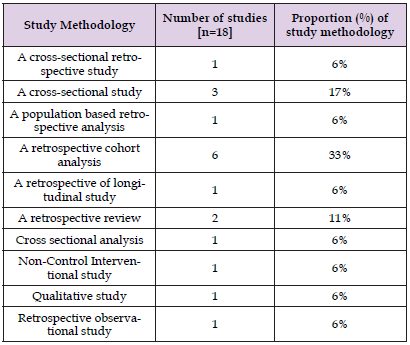
Figure 1 showed a weighted relationship of associated factors influencing continuity of treatment among PLHIV in Nigeria. Each of these has more than one associated factor, as mentioned in the study. This gives a summary of whether the associated factors are studied together and what relationships exist between them. From the included studies, see Table 5 below. 33% (n = 6) studies conducted studies using a retrospective cohort analysis, 17% (3) conducted studies using a cross-sectional study, while 6% [1 each] of the study material focused on the use of a cross-sectional study, a population-based retrospective analysis, a retrospective cohort analysis, a retrospective longitudinal study, non-control intervention study, and retrospective observational study respectively. After reviewing 18 studies, (Table 4) a lot of factors associated with continuity of treatment among PLHIV.
Figure 1.

Table 5: The proportion contribution of study methodologies for all the included studies.
Individual Factors: According to Ugoji, et al. [4], continuity of treatment is defined as having more than one clinic visit in an ARV cycle (i.e., yearly). Patients who are over 30 years of age have higher tendencies to continue treatment compared to those below 30 in age. Also, the female gender has a higher chance of continuing treatment compared to the male gender. Furthermore, (Aina, et al. [31-33]) identified risk factors associated with interruption in treatment and non-adherence to ART. Findings using the COX and Generalized Estimating Equation (GEE) regressions show that female gender was associated with a low risk of interruption of treatment. Patients’ marital status had a significant association with continuity of treatment as stated by Akpan, et al. [8]. However, according to Oku, et al. [9], in the population studied, demographic factors such as age, gender, and marital status did not have a significant impact on patients’ continuity of treatment. Additionally, Charurat, et al. [34] stated that patients who attained post-educational status were associated with a lower risk of interruption in treatment compared to patients with only primary or no educational status.
Socio-Economic Factors: These factors include occupation and cost of transportation to health facilities. They both have significant association with patients’ continuity of treatment. Also, Oku, et al. [9] performed bivariate analysis of factors associated with continuity of treatment and discovered that those who lived outside the state where the health facility is located had a significantly higher likelihood of adhering to HIV AIDS antiretroviral therapy (HAART) than those who lived in the state (p 0.05). That is, 42 (72.4%) of those who came from other locations adhered to HAART. The trend of patients obtaining medications in facilities afar off still buttresses the evidence of stigma and discrimination’s persistence in society. In a similar vein, other significant predictors of adherence were having free ART treatments, perceiving one’s current health state to be outstanding or good, and spending more than a thousand naira (N1000) on transportation to the health care institution (p 0.05 for each).
Geographical Factors: Patients who lived in the urban regions had an odds ratio of 1.90, with a 95% confidence interval ranging from 1.17 to 3.06, suggesting that they were roughly twice as likely to demonstrate acceptable retention as those who lived in rural areas. This was a significant finding according to the statistics (p = 0.005) (Chime, [35]).
Behavioral Factors: The pattern of patients’ behavior during HIV treatment is essential according to (Chime, [35]). Patients who did not use herbal remedies had a greater likelihood of sticking to their prescribed dosages in comparison to participants who did use herbal remedies. Similarly, as compared to individuals who did use alcohol, those who did not consume alcohol had about four times the odds of being compliant with their ART. This fraction showed a difference that was statistically significant (AOR = 3.67, 95% CI = 2.01–6.70, and the p-value was less than 0.001. Also, the influence that disclosing one’s HIV status has on one’s ability to remain in care might be attributed to the social support that it gives. Study had shown that undisclosed HIV status might lead to a poor rate of continuity of treatment among PLHIV. It is important that efforts be made to encourage patients to reveal their status to close friends and family members, since this was a behavior that was seen to be frequent among the group that was the focus of the study. Furthermore, not using herbal treatments, receiving free ART services, reporting an improvement in health, and having a lower pill burden were found to be the most predictive of adherence to HAART among PLHIV seeking treatment at the UCTH PEPFAR clinic. Similarly, those who received free ART services, took no more than two pills per day, and perceived an improvement in their health after starting HAART had a better outcome than those who paid for ART services, took more than two pills per day, and reported that their perceived health status had not improved Oku, et al. [9].
Clinical Factors: Initiating treatment with a combination of ARV regimens was associated with a low risk of interruption in treatment. However, patients whose baseline CD4 counts were 100 were at higher risk of interrupting treatment (Charurat, et al. [34]). Furthermore, according to Dalhatu, et al. [10] individuals with a body mass index (BMI) of 45 kg at baseline were also more likely to have interrupted treatment than those with a BMI of >60 kg at baseline (AHR = 1.65; 95% CI: 1.23 to 2.21, p0.01). Moreover, moderate anemia (AHR = 1.46; 95% CI: 1.13 to 1.90, p = 0.01) and severe anemia (AHR = 1.38; 95% CI: 1.0 to 1.90, p = 0.05) were both linked with interruption in treatment compared with individuals who were not anemic. These clinical factors are numerous in association with patients’ continuity of treatment.
Improving treatment results and decreasing HIV transmission requires a more in-depth understanding of the factors associated with continuity of therapy in HIV care. This study reviewed the factors associated with patients’ continuity of treatment. To attain an efficient treatment outcome, patients’ continuity of treatment is very important. Also, an inefficient intervention on continuity of treatment results in interruption in treatment, an increased risk of community transmission of HIV and poor health outcomes, which include unsuppressed viral load and mortality. Given that continuity of treatment leads to adherence to HIV medications and enhances population- based HIV prevention, therefore findings from this study would inform decision-based intervention in the fight against HIV/AIDS in Nigeria.
As mentioned earlier, individual factors in this study comprised of patients’ demographics, such as age, sex, and marital status. Studies have shown that age, sex, and marital status have significant influences on ART among PLHIV. Findings from the study suggest that patients 18 years of age will require significant attention to improve continuity of treatment. Also, consistently with previous studies (Aina, et al. [31]), females have a higher chance of continuing ART compared to males. This is possibly due to gender differences in health seeking behavior. Hence, this suggests that male-specific interventions are needed to improve ART continuity among this gender. In addition, patients who are married or cohabiting had higher chances of continuing ART. However, it might be difficult to setup interventions targeting single or unmarried people on ART, but HIV treatment interventions targeting adolescents and young people living with HIV/AIDS can be leveraged upon. As mentioned before, patients who attained post-educational status were associated with a lower risk of interruption in treatment compared to patients with only primary or no educational status. This may be because people with minimal or no formal education are less likely to understand the information that is written regarding their condition and the treatment process because it was delivered in English. According to Tweya, et al. [36], the effects of HIV treatment on patients and the factors that lead to patients’ interruption in treatment were as a result of the inability of HIV-positive patients to comprehend. Hence, developing information, communication, and educative materials in the local dialect will contribute to improving patient continuity of treatment.
Socio-economic factors are comprised of occupation status and the cost of transportation. Patients who are employed (i.e., individuals who are either self-employed, business owners, etc.) have a higher chance of continuing ART. Another interesting finding from the study was that those who lived outside the state where the health facility was located had a significantly higher likelihood of adhering to HIV AIDS antiretroviral therapy (HAART) than those who lived in the state where the health facility was situated. This means that HIV stigma and discrimination could be another factor influencing patients’ interruption in treatment. Hence, there is an urgent need for stakeholder sensitization, advocacy, and policy to be strengthened to enhance friendly HIV intervention across health facilities in Nigeria.
As previously mentioned, patients who lived in urban regions had an odds ratio of 1.90, with a 95% confidence interval ranging from 1.17 to 3.06, suggesting that they were roughly twice as likely to demonstrate acceptable retention as those who lived in rural areas. This was a significant finding according to the statistics (p = 0.005) (Chime [35]). In addition, there was a considerable difference in the continuity of treatment throughout the regions of Nigeria as well as the volume of patients treated at each facility. The treatment continuity rates were generally better at high and medium volume sites than they were in the North-east and South-south regions, which are two regions that have experienced significant communal strife and terrorism. High and medium volume sites had the best treatment continuity rates overall. Our research leads us to believe that treatment continuity rates at low-volume locations, as well as sites in the North-East and South-South regions, will require significant focus in order to be improved. Furthermore, findings from the study show that individuals who were receiving ART in a clinic had a higher risk of interrupting treatment as compared to individuals who were receiving ART in hospitals. In Nigeria, tertiary health facilities are classified as general hospitals, specialist hospitals, and teaching hospitals where patients receive comprehensive care. These services are provided by medical professionals and are headed by a doctor. While clinics are in rural communities, which are referred to as primary health centers, often you find only nurses and community health extension workers providing services. Also, the finding may be attributed to the quality of care provided in the secondary and tertiary health facilities compared to the primary health facilities (Mdege, et al. [37]).
Patients’ behavioral patterns are essential to attaining an efficient treatment outcome. Use of alternative medicine has shown a better chance of continuing ART. Likewise, patients who do not drink alcohol also had a higher chance of continuing in care. Also, studies have shown that undisclosed HIV status might lead to a poor rate of continuity of treatment among PLHIV, compared to patients who disclosed their HIV status to their partners (Elopre, et al. [38]). This might be because patients with disclosed HIV status get more support from their partners by improving their self-esteem and confidence [39,40].
The importance of continuity of treatment among PLHIV is critical to addressing the global goal on sustainable development goal (SDG-3) with a target to end the epidemics of AIDS by 2030. As of December 2019, about 63% of PLHIV are on treatment in Nigeria. Furthermore, the need to address patient interruption in treatment is key to address treatment failure. The identified factors associated with patients’ continuity of treatment should be taken into consideration by providing a case-based intervention to reduce attrition among patients on ART. A friendly and sustainable HIV policy addressing sigma and discrimination among PLHIV should be instituted, friendly HIV care and treatment centers should be established, training of health care workers on new technology to improve HIV treatment.
Based on the findings, the study recommends the following:
I. Patients with an interruption in HIV treatment should be initiated in an enhanced adherence counseling (EAC) session, this intervention should be introduced to address patients’ vulnerability to use recommended or an alternative medicine in treating HIV.
II. A gender sensitive intervention on health seeking behaviour for PLHIV should be initiated and integrated across all health programs in Nigeria.
III. A friendly youth HIV intervention should be initiated, such as youth friendly clinics, pub-place for HIV medication refills and other attractive intervention within the target population.
IV. HIV prevention, care and treatment information should be embedded in the academic curriculum in Nigeria.
V. Irrespective of the free HIV care and treatment services provided in the health facilities, initiating an affordable health insurance scheme for PLHIV will address the gaps round the provision of a comprehensive HIV care and treatment services.
VI. Furthermore, community ART intervention should be strengthened to provide HIV intervention to PLHIV who are unable to afford transportation cost to the health facility.

International Association of Landscape Archaeology, Czech Glass Society, Czech Republic

Department of Chemistry, Semenov Institute of Chemical Physics, USSR Academy of Sciences, Moscow, Russia

Neurology, LA BioMed Research Institute, USA

Associate Professor at Department of Breast and Thyorid Surgey, Chongqing General Hospital, China

Clinical Radiologist (MD) - Department of RADIOLOGY, Cosenza Hospital, Cosenza, Italy





 Abstract
 PDF
PDF



























