info@biomedres.us
+1 (502) 904-2126
One Westbrook Corporate Center, Suite 300, Westchester, IL 60154, USA
Site Map
 ISSN: 2574 -1241
ISSN: 2574 -1241
ISSN: 2574 -1241
Received: March 25, 2024; Published: June 04, 2024
*Corresponding author: Rajiv Kumar, University of Delhi, Delhi, 110007, India
DOI: 10.26717/BJSTR.2024.56.008916
Chronic silicosis, interstitial pneumonia, coal worker’s pneumoconiosis, idiopathic pulmonary fibrosis, siderosis, nonspecific interstitial pneumonitis, hypersensitivity pneumonitis, connective tissue- related pulmonary fibrosis, cryptogenic organizing pneumonia, acute interstitial pneumonitis, and desquamative interstitial pneumonitis, sarcoidosis, familial pulmonary fibrosis, and asbestosis are among the commonly known (internal) lung diseases, infections, and injuries [1]. Pneumonia and acute bronchitis are examples of lung infections that can cause serious side effects including pulmonary hypertension and respiratory failure. This editorial examined the general pathophysiological characteristics, mechanisms, and occurrences of various injuries. Severe lung infections initiate acute respiratory distress syndrome and chronic obstructive pulmonary disease that declines lung function [2]. Simultaneously, the lungs become inflamed and make breathing difficult. Moreover, inflammation leads to the overproduction of mucus and thickening of the lining of the lungs. These unnatural alterations disturbed gas exchange for respiration and therefore, excessive inflammation can be life-threatening. Besides, harmful pathogens always remain in the contacts, and inflammation is necessary to eliminate these fatal elements. Therefore, a perfect balance between inflammation and anti-inflammation is critical for the proper functioning of the lung and its homeostasis [3]. These pathological settings initiate various diseases such as pneumonia, acute respiratory distress syndrome, asthma, chronic obstructive pulmonary disease, rheumatoid lung disease, interstitial lung diseases, pulmonary fibrosis, pulmonary sarcoidosis, and pulmonary hypertension.
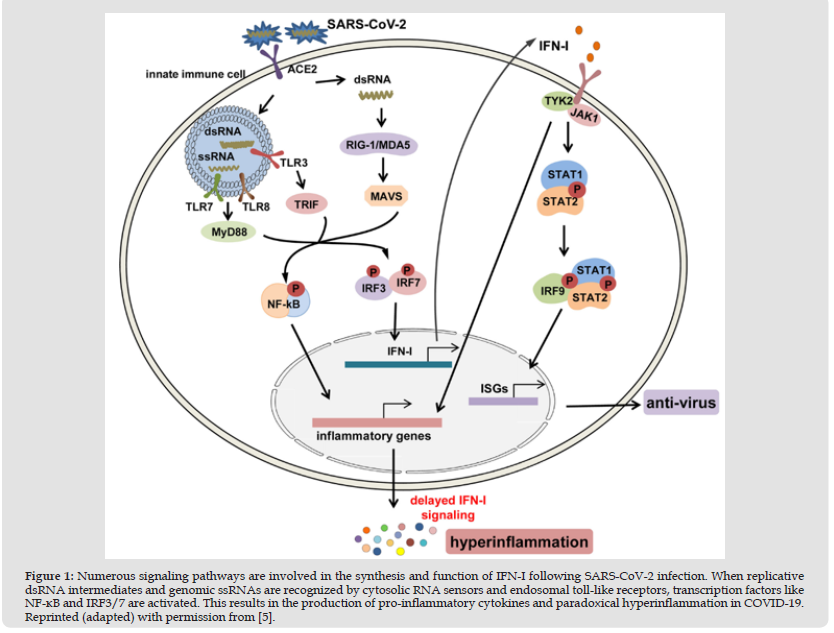
The cellular and molecular aspects of lung inflammation during acute and chronic inflammatory states were described. Alveolar macrophages and alveolar epithelial cells networking operate through extracellular vesicles for cell-cell crosstalk. Intercellular communications influence the releases of cytokines and mediators to modify routes. Oxidative stress initiates the pathogenesis of chronic obstructive pulmonary disease and induces airway hyperreactivity and neutrophilic inflammation, resulting in cell death. The initial oxidant insult initiates the secretion of mitochondrial reactive oxygen species, and proteases that activate NLRP3 inflammasome, alveolar septa destruction, remodeling, fibrosis, cell death pathways, and IL-1, and can be considered novel therapeutic targets. Furthermore, the generation of TNFα initiate inflammatory responses that propagate many diseases, including asthma, chronic bronchitis, and respiratory distress diseases. The suggested pharmacological agents reduce the impact of TNFα in the progression of diseases and inflammation. Immunological elucidation, and anti-TNFα therapeutic strategies can be discovered new therapeutic targets to cure inflammatory diseases and helpful to the diagnosis of inflammation and cell death. The features of host-pathogen, host-allergen, and host-particle interactions were shaped by infiltrating immune cells and secreted innate immune proteins. Apoptotic cell, neutrophil, alveolar macrophages and epithelial cell interactions tackled lung inflammation (Figure 1) [4].
Figure 1
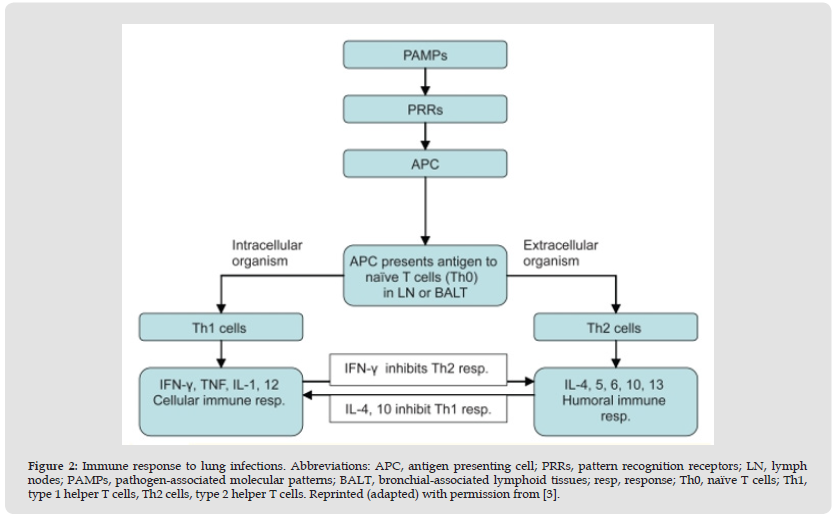
Furthermore, pharmacological manipulation can influence the routes of lung inflammation by dealing with neutrophil/eosinophil. SARC-2 infection initiates predominantly respiratory disease and various disorders of the airway, lung parenchymal, pulmonary vascular, and respiratory neuromuscular. As a result, alveolar injury promotes airway capacity and multi-organ failure that further induce hyper production of cytokines, defined as cytokine storm [5]. Clinical evidence influenced circulating leukocyte subsets and cytokine secretion, including IL-6, MCP-3, TNF, GM-CSF, IFN-induced protein 10), IL- 17, IL-1β, IL-10, and IL-1ra. By blocking proinflammatory cytokines through therapeutics such as immunoregulatory therapy, nanotechnology and corticosteroids, these storms can be prevented [6]. The concerned routes such as neutrophil NETosis, macrophages, and T cell response, that promote cytokine storm and triggered associated diseases, must be examined for searching for the therapeutics targets [5]. These illustrations proved a few similarities of it with pneumonia. The components of the cytokine storm, such as IL-6, TNF, and IL-1β, initiate vascular hyper permeability, multiorgan failure. Overall, overproduction of aforementioned components, after over a time period, becomes uncontrolled induced death. The proposed nanotherapeutics have the potential to target the inflammatory response requisite for pathogen clearance during normal proceedings (Figure 2).
Figure 2
SARS-CoV-2 primarily affects the respiratory system and then spreads systemically to the other organs. The higher ACE-2 expression makes the alveolar epithelial cells more accessible for SARSCoV- 2 [7,8]. In its most severe form, SARS-CoV-2 infection leads to a life-threatening pneumonia, advancing to the acute respiratory distress syndrome (ARDS) and multiorgan failure. Immunopathology of such infection signals toward the dysfunctional innate and adaptive immune pathways in lung alveolar cells [9]. This hyperinflammatory immune crosstalk is explained by the infiltration of activated monocytes/ macrophages and T cells, excessive release of proinflammatory cytokines and chemokines, interleukins (IL), interferon (INF), interferon- γ-inducible protein 10 (IP-10), granulocyte macrophage-colony stimulating factor (GM-CSF), tumour necrosis factor-α (TNF-α), macrophage inflammatory proteins (MIP), transforming growth factors and others [10,11]. The cytokine storm in patients with Covid-19 is associated with the elevated serum levels of IL-1β, IL-6, IP-10, TNF, INF-γ, MIP (1α and 1β), and vascular endothelial growth factor (VEGF) [12]. In most of the cases, a direct correlation is observed between the viral burden (i.e., nasopharyngeal viral load) and cytokine levels (e.g., INF-α, γ, and TNF) [13]. The severity of illness in a small fraction of patients with cytokine storm is also related with the coexisting ailments (like cancer, obesity, hypertension, diabetes and other). The chronic course of infection in such patients is either because of their pre-established chronic inflammation or the possibility of an early onset of organ failure under that cytokine storm. Higher mortality rate of the hospitalized COVID-19 patients is associated with the elevated levels of inflammatory cytokines in several reports [12,14]. Therefore, treatment strategies for an effective suppression of inflammatory cytokine’s activity, along with the restoration of the host’s homeostasis become crucial [15]. However, for various reasons, therapeutic considerations for the treatment of COVID-19 associated cytokine storm are very complex, unlike the several other cytokine storm conditions [5]. Presently, the major therapeutic candidates considered to manage cytokine storm in hospitalized patients include IL-6 inhibitors (Tocilizumab and Sarilumab), JAK/STAT (Janus kinases/signal transducers and activators of transcription) inhibitors (Ruxolitinib and Baricitinib), IL-1 receptor antagonist (Anakinra), and Corticosteroids etc [16,17]. With several candidates in the pipeline, a comprehensive understanding of the molecular mechanisms is essential for their clinical success.
One of the authors, Rajiv Kumar, gratefully acknowledges his younger brother, Bitto.
Not Applicable.
This research received no particular grant from any funding agency in the public, private, or not-for-profit sectors.
The authors declare no conflict of interest, financial or otherwise.
The authors declare that they have no known competing financial interests or personal relationships that could have appeared to influence the work reported in this paper.
Due to the nature of the research, [ethical, legal/commercial] supporting data is not applicable and thus not available.
International Association of Landscape Archaeology, Czech Glass Society, Czech Republic

Department of Chemistry, Semenov Institute of Chemical Physics, USSR Academy of Sciences, Moscow, Russia

Neurology, LA BioMed Research Institute, USA
Associate Professor at Department of Breast and Thyorid Surgey, Chongqing General Hospital, China

Clinical Radiologist (MD) - Department of RADIOLOGY, Cosenza Hospital, Cosenza, Italy





 Abstract
 PDF
PDF