info@biomedres.us
+1 (502) 904-2126
One Westbrook Corporate Center, Suite 300, Westchester, IL 60154, USA
Site Map
 ISSN: 2574 -1241
ISSN: 2574 -1241
ISSN: 2574 -1241
Received: April 20, 2024; Published: May 30, 2024
*Corresponding author: Semuel Leunufna, Pattimura University, Indonesia
DOI: 10.26717/BJSTR.2024.56.008907
A person’s professional journey is a life achievement that develops from a long trajectory, ups and downs, challenges and opportunities passed with the help, encouragement and obstacles of family, co-workers and various parties whose life paths are mutually exclusive. “Years with Mr. Anema: personal and professional” is a summary of the experience passed professionally, in which the stages of learning at the academic level are described through guidance, friendship and cooperation in completing various professional, academic tasks; education, research, community service which are the Three Dharmas of a college / university.
Keywords: Liewe S Anema; Pattimura University; Plant Breeding; University of Guelph; IPK-Gatersleben; Martin Luther Universitaet (MLU)
Abbreviations: ITA: Ambon Institute of Technology; CIDA: Canadian International Development Agency; USA: United States; USAID: University and the United States Agency for International Development; PI: Principal Investigator; IT: Information Technology; FT: Faculty of Engineering; SKS: Semester Credit System; BELT: Basic English Language Training; EAP: English for Academic Purposes; SCCA: Soil Science Society of America; CSSA: Crop Science Society of America; ASA: American Society of Agronomy; AAAS: American Association for the Advancement of Science; HI: House Internatioal; SM: SprachInstitut Muenchen; DAAD: Deutsche Akademicher Austauch Diesnt; MLU: Martin Luther University; RB: Regioanal Bahn; IC: Intercity; MBKM: Merdeka-Merdeka Learning Campus; FGD: Focus Group Discussions; MSM: Maastricht School of Management; MSMEs: Micro, Small, Medium Enterprises; MoU: Memorandum of Understanding; UBC: University of British Columbia; EJAS: European Journal of Applied Science GPA: Grade Point Average; IPK: Leibniz-Institut für Pflanzengenetik und Kulturpflanzenforschung; DSH: Deutsche Sprachprüfung für den Hochschulzugang auslaendischer Studienbewerber.
The development of an institution or one’s career is usually inseparable from the contribution of other parties both individually and in collaboration through their significant roles, both in formal and informal positions, with strong or weak significance depending on the aspects evaluated and the point of view, as well as the preferences of the evaluating party. One example, in my opinion, the development of Pattimura University in the era of the 1980s, was significantly colored by the contribution of Prof. Dr. Ir. Jan L. Nanere, MSc., of course by utilizing the current development of the Indonesian nation through national and international cooperation programs at that time. The firmness of character, vision and management in his position as Rector provides development opportunities, including physical infrastructure, human resources and the quality of learning as well as the intensity of international cooperation [1] Important scientific figures who worked in Maluku such as the German ‘Blind scientist from Ambon’, Rumphius who left not only legacies but fundamental works such as the Herbarium Amboinense neatly stored in the library of rumphius, Catholic Church in Ambon; A. R. Walles, the ‘father of biogeography’ who laid the imaginary line of Wallacea and co-discoverer (Charles Darwin), the Theorist of Evolution, and author of scientific papers including the book “Malay Archipelago” [2] is an example of a great world figure who built a scientific foundation and inspired world scientists, Indonesia Maluku generation to this day [3,4].
It is recorded that A. R. Wallece in the course of his research was supported by a teenage assistant, Ali from Borneo, who collected about 5000 from Wallace’s bird specimen collection of about eight thousand [5,6]. Shaking Mr. Anem’s hand as an official sign of the collaboration of guidance and learning, witnessed by the Dean of the Faculty of Agriculture in the Dean’s Office around 1985 turned out not only to be a work contract for the completion of undergraduate one, it seemed to be a lifetime. Armed with the latest agricultural science in its field, especially Genetics and Plant Breeding as a graduate of Wageningen University and Research in the conditions of the Faculty at that time was something that was rarely obtaially and institutionally. On a certain scale, Mr. Anema is involved in the learning level both as a mentor, then as a colleague, a friend who helps in many things and a collaborator in solving various problems. This paper intends to briefly record various events that occurred in the development of education and the author’s work in relation to the various roles carried out by Mr. Anema in the course of time. It is intended that it may be a note left as a brief report on the task of carrying out cooperation mandated by the institution. It may also be a point of view of understanding the dynamics and development of institutions and human resources in the period 1980-1990s. It may also be a distraction reading for the current and future generations of Moluccan learners from which certain lessons can be taken.
This manuscript was developed from the author’s personal experience, bringing back various events that occurred over the years involving Mr. Anema both directly and indirectly. It is entirely the experience and opinion of the author without confirming or asking for Mr. Anem’s approval even though in some cases asking for help or listening to his words. The rest of the study or literature review is also part of the method of preparing manuscripts in addition to various documentation of images that recall the events that followed. A large number of related publications completed by the author, submitted in the bibliography as evidence of the execution and completion of the assigned work. Most libraries are published in open access journals and thus can be searched on the websites of related journals including the institutions mentioned in the manuscript.
Uraul Village (Lord Anema)
Among the houses with sago leaf roofs, right at the corner of the turn of the road of Uraul village, kilo Mater 4 Seram Island stands a concrete house not too big with the side of the triangle of the house facing the road, on the triangle of the whitewashed house it is written in large letters “WALANG TUAN ANEMA”. The residence of Mr. Liewe Sibrano Anema with his wife Mrs. Willy Anema with his adopted daughter Oriza Sativa Anema, then raised the son of a baby boy, Sibrano Anema, for many years served as Sending from the Netherlands including building the Uraul State Church. Thus Uraul became the Village of Origin of Mr. Anema in Indonesia, here he is known and respected. In family events he was invited and involved in it. People knew him and he understood the customs, customs and even habits that became funny. One of his favorite dishes while still active was a little clear sopi (a special term “plain water”) eaten with celeng (wild boar). One of his great works, the construction of the Church, was completed and inaugurated when I was still a student under Mr. Anema’s guidance, I was ordered to bring a trumpet musical instrument from the Batu gantung flute group, stay at his place and participate in ordaining the new Church by blowing trumpets with the Uraul flute group which all used bamboo musical instruments.
This church was later damaged during the Ambon riots, 1999... and then he woke up again. The story of Mr. Anem’s discipline was also revealed in this village where he once left Sunday worship because he waited too long for the pastor who was late to come to lead the service. One time Mr. Anema and I enjoyed Late coffee at a small shop around the Sanur area of Bali. Due to being a customer, Mr. Anema often talks to his shop keeper. The shopkeeper used English and occasionally turned to me looking for the English equivalent for a particular word to say, I said just say it because he mastered Indonesian very fluently. One time the kaffe guard asked “where are you from?, Mr. Anema immediately wanted to answer but I preceded, “I am from Ambon”: I said, “if this ontua (the Old men) is from Seram, he is a Seram Man but long in Holland” (I mean to explain why he is White, big tall). Mr. Anema saw that I was about to get angry but then laughed. Then he made me a bit wrong when I was together at Starbucks coffee complex beach walk Kuta Beach. When queuing to order a coffee latte, the waiter asks for a name to be called after the coffee is finished, I usually give the name pak sam, but before speaking, Mr. Anema first replied “just say Jokowi” (maybe because I often wear a white shirt with long sleeves that are slightly rolled up when the body is slim). When it was my turn to receive the order, the waiter shouted rather loudly “Jokowi”, I was surprised and then grumbled at Mr. Anema for giving Jokowi his name (hm hm hopefully does not diminish respect for President Jokowi).
Cursory Introduction
Around the mid-70s our younger brother, my adopted/foster brother, the fourth Andre (deceased), entered the Rehoboth kindergarten located around the hanging stone Rehoboth Church, Ambon. Our mother (my adoptive/foster mother) Yul’s mother who always shuttled Andre often told me about Andre’s white Dutch school friend who with his parents lived in a complex of education and theological housing, the small field area. That was when I first learned of a group of sending among the Moluccan community. One of the Sending was later discovered by me to be Mr. Liewe Anema and his family. Mr. Anema’s duty as Sending was only later discovered by me through a photo caption written by the late Rev. Jack Ospara, Chairman of the GPM Foundation for People with Disabilities, a former Member of the House of Representatives of the Republic of Indonesia representative of Maluku, a colleague of Mr. Anema. Furthermore, around the mid-early 80s when I was just studying at the Faculty of Agriculture, Pattimura University, I was invited by Ir. Toby Huwae, a lecturer in the Department of Forestry, to become a member of the Batu Gantung Flute / Trumpet blowing group which every week serves “hymns and introductory songs to the congregation”, at Rehoboth Church. We were given a schedule of serving twice a week (morning and evening services) sometimes three times during ecclesiastical holidays. By the Jama’at assembly, a list of our service schedules for a certain period of time is given and hymns that will be sung by the congregation (accompanied by the blowing of the Flute / Trumpet) are delivered by the church kostor to our trainer Mr. Acil Huwae (ganemo village) for training. Every Saturday night, the congregation’s costumer will deliver a list of hymns or if not delivered sometimes the flute loper (Om Uta, inner hanging stone) is asked to pick up the song list. From the sitting position of the flute group on the back balcony, I could observe a group of white people sitting in the front row of congregational seats, among them Mr. Liewe Anema.
Formal Introduction
In the mid-80s I completed all the credits of courses required at the faculty of agriculture. The Semester Credit System (SKS) which was recently implemented at that time allows students who diligently complete all lecture requirements and may be completed within 4 years because students in even or odd semesters who complete lectures with an Achievement Index above 3.0 can offer up to 24 credits (one course is given a credit score of 2 or 3 credits depending on the workload given, namely theory and practicum), and allowed to offer points in even or odd semesters above. As a result, a student can obtain a bachelor’s degree in a short time and continue his studies at a higher level of S2 and S3 at a young age. At the same time, a drop out (DO) provision is also applied for students who do not meet the lowest cumulative achievement index applied, which will negate the term Abadi student held by some senior students because they have more “Demo” than Study. Around that time period, the thought of Normalization of Campus Life (NKK) saw campus people as the Tri Civitas Academica with the core of lecturers, employees and students as a unit of campus development initiated and implemented by the Minister of Education and Culture of the Republic of Indonesia, Dr. Daud Yusuf. Students are not separate parties who pay and gain knowledge on the campus developed by lecturers and administrative employees but are an inseparable part and need to return and develop the campus. In later developments in the conception of Alma Mater Insight, the unity of the Academic Community was expanded to four units with the addition of Alumni to the suit of Prof. Dr. Nugrorho Notosusanto as Minister of Education and Culture.
Completing the theory in a short time, I along with 3 other colleagues were recruited to work with (Prof.) Dr. P. M. Sitaniapessy, MSi (familiarly called Pak Pe - Peter) who just completed a Doctoral program at Bogor Agricultural University (IPB). Pak Pe who is an expert in Agroclimatology / Agrometeorology initiated the idea of determining the planting season in the Maluku region through analysis of regional climate data and divided into four students according to the district at that time; Ambon City, Central Maluku, North Maluku and Southeast Maluku, I went to Central Maluku [7]. In principle, determining the growing season is done by analyzing mainly rainfall data (and temperature) over the last 20 years, studying the amount and pattern of rainfall distribution, whether unimodal or bimodal, the distribution of wet months, dry months per year on the one hand; then study the physiological conditions of plants, especially the distribution of plant water needs in their development stadia for plants or plants that are the object of research or dominant in the study area, on the other hand; Furthermore, study the incidence or coincidence between the date / month / period of rainfall conditions and plant water requirements in plant development stadia. We immediately completed our research proposal and submitted it to Mr. Pe as a supervisor. In this research will only be needed data analysis without having to do field research and thus it will not take long and guided by an expert who is respected in his field and thus the completion of the study will be shorter and the ambition of obtaining cumlaude predicate will be achieved. The problems faced at that time included first, the recording of climate element data was only carried out on climatological stations, secondly there were only a few climatological stations in Maluku and generally only in areas near the provincial capital, third, the recording of climate element data was uncertain whether the span of the last 20 years or only a few years according to the length of time the station was established, fourth, whether the procedure for obtaining data on the climate element in question will be simple or convoluted through complex institutional procedures; Unlike today where climate element data can be obtained directly on a person’s cellphone personally and permanently, accurately and on a daily basis.
During the waiting period to get the data that had been requested by the supervisor through the Faculty, I was called to the Dean of the Faculty of Agriculture at that time, Ir. J. J. Tuhumury MS. When I arrived at the office of the Dean of the Faculty of Agriculture, on the third floor of the old building left by the Russian-made Ambon Institute of Technology (ITA), there was already a European, tall and burly, I raised my head up to meet him. The Dean introduced Mr. Anema and said that he is a guest scientist from the Netherlands who will work in the field of plant breeding and I will be guided by him in the field of plant breeding. Mr. Anema reached out to me, his big hand tightly squeezed my hand that was immersed in it, and officially my personal and professional journey with Mr. Anema began. When we last met, we promised to enjoy a bottle of beer at Legian beach then continue to have dinner at a Greek restaurant. While waiting for the vehicle that would take Mr. Anema to his inn, I realized that I was almost the same height as him. Had asked the size of the height of Mr. Anema first, it turned out to reach more than 1.9 meters. I still need to say goodbye to the old supervisor Prof. Dr. Ir. P. M. Sitaniapessy, MSi, Mr. Pe’s message; “If you feel there is a big opportunity with Mr. Anema, just continue”.
Dynamics of Higher Education Development of Pattimura University
The development of universities in Indonesia in the decade of the 80s – 90s occurred a lot through international cooperation. Development projects with grants and loans for foreign and domestic studies are offered by various countries; USA, Germany, UK, Belgium, Australia and others. as well as other development projects including workshops, domestic courses utilizing major universities including IPB, UGM and others. Eastern Indonesian Universities as they lagged behind in various aspects of the development in comparison to that of Central and Western Indonesia. University groups considered less developed including Pattimura, Ratulangi, Cendrawasi, Hauleu Universities were given special attention to development programs. During this period of time, Indonesia Canada cooperation through the Canadian International Development Agency (CIDA) provides scholarships for staff who meet the requirements for S2 and S3 scholarships in Canada, workshops/courses/training/seminars for short-term staff development in basic sciences in the fields of physics, biology, mathematics, biodiversity etc. The largest part of CIDA’s training output, especially in English, continues their S2 and S3 education in Canada, Australia, Belgium, the United Kingdom and others. An intensive and extensive collaboration project presents project leaders from Canada to have residency in Ambon, Maluku, including the last Dr. Jan Kwack and Wife, to directly manage the cooperation project with a counterparty institution from Pattimura University, Indonesia.
Cooperation with the United States (USA) presents the Tuber development project “Underexploited Tuberous crops Yams and Aroids” in collaboration with Pattimura University and the United States Agency for International Development” (USAID). This project successfully surveyed, mapped, documented the distribution of potential Moluccan tubers, collected in collection gardens and tissue cultures of more than a hundred different cultivars from various regions of the Moluccan islands, conducted field research; agronomist, taxonomy, breeding, chemical content analysis to plant tissue culture and producing new scholars/graduates at the Faculty of Agriculture Unpatti. The collaboration with the Netherlands presents the LTA72 project which successfully maps, describes the climate distribution of small islands in Maluku, about nine climate regions, allowing wider use in agriculture and other fields. The presence of guest scientists directly handles the learning and development of the Faculty as Mr. Anema is certainly part of cooperation with the Netherlands. In this context, recognition also needs to be given to leadership at both the University and Faculty levels and the synergy built between them other than the Indonesian government at the center of power.
Start a Task
After getting the Dean’s endorsement, Mr. Anema was immediately involved as a lecturer at the Faculty of Agriculture. Fluent in Indonesian, he handled the Genetics lecture offered in semester 4 and attended by a number of enthusiastic students (generally mahasiswi). Of course, it is not an easy material to help with the diktats written by Mr. Anema plus a number of textbooks that are freely available to students, even for me who has completed all the credits offered at the Faculty of Agriculture. The material presented by Mr. Anema was mostly related to molecular genetics (basic material and structure of DNA, protein synthesis and related material), a branch of genetics that at that time was only intensively developing in the world and was still unfamiliar to the Faculty of Agriculture whose material was not clearly structured. Despite a number of initial challenges, Mr. Anem’s work can be seen from the academic display of his students at the end of their studies and career development in the future. He continues to build contacts and follow the development of his students, even knowing where they are in various regions in Indonesia. One of a number of early graduates and researchers under Mr. Anema’s guidance, Dr. Ir. Helen Hetharia (deceased) was recruited as staff and continued her S2 and S3 at IPB Bogor after conducting plant breeding training at the University of Pajajaran Bandung on the contact of Mr. Anema. At the request of Mr. Anema we had the opportunity to visit Mrs. Dr. Helen to express our condolences despite several years of death. Genetics can be said to be a vast scientific area.
In its division or teaching can be in the form of Mendelian genetics (Mendelian Genetics) which discusses the regularity of segregation and the free separation of genetic material in the derivation of genetic traits of organisms which is Mendel’s Law, from its discoverer Gregor Mendel, the father of Modern Genetics, including the history of the discovery and further development of Mendel’s law and its implications. Mendel’s laws underlie changes in plant breeding limits and practices, particularly in self-pollinating plants. Second, Genetics of cells or (cytogenetics) discusses among others organelle cells and the various functions they carry including cell division, mitosis and miosis, which in principle proves Mendel’s laws of segregation and free separation, mutations in chromosomes and so on, Population Genetics is related to the Law of Permanence / balance of allele frequencies and genotypes in populations, better known as the Hardy-Weinberg Law with all the necessary requirements. Fourth, quantitative genetics reviews the variation of visible traits (phenotypes) as a result of polygene expression and environmental factors. Quantitative characters of continuum nature are different from qualititative characters that are discrete, plus genetics in prokaryotic organisms (unicellular, without nuclear membrane). Teaching a number of areas of genetics, each of which is quite broad in its discussion, requires separation in courses or teaching staff. Mr. Anema chose to teach the latest part of genetics while still practicing other parts.
Accompanying Mr. Anema I got the responsibility of student practicum, in addition to concentrating on thesis research. There was quite a fierce discussion at the first meeting of field planting practicum material related to the preparation of planting beds. The beds instructed to students felt right, taking the length and width according to the planting distance from the plants to be planted by taking into account the number of rows of plants and taking half the size of the planting distance from each side of the length and width. The height of the beds is made according to the plants to be planted, tubers are usually higher than vegetables, for example. Mr. Anema questioned the edges of clean and neat beds, according to him, the sides should be left with grass or hardened so that the beds do not collapse easily when hit by heavy rainfall, while in our experience, the beds will decrease in height or in extreme conditions the plants can be somewhat submerged but not to the extent of damaging the plants.
On the next field visit we followed Mr. Anem’s direction by giving a little restraint on the side of the bed, he again protested asking for adjustment to the practice that had been done. In further developments, the practice of plant genetics is related to the observation of plant flowering, emasculation and crossing in peanut flowers, preparation of chromosomal dye sats (Aceto Orcein), introduction of microscopes and enlargement of ocular and objective lenses, observation of mitosis in onion and root plants using the squash / Okada method, counting the segregation of one gene (dominant, recessive) and two genes (epistasis) according to Mendel’s Law, Mendel’s reverse proof of Law (segregation) using simulation data (FMIPA IPB Bogor) and several others.
Some Journeys Introduction to the Working Area
At the beginning of our work, we often traveled to Jakarta and various places in Java visiting agricultural centers and institutions and universities for various purposes, including, observing the collection of fruit plants, buying and repairing laboratory fittings and electronic equipment in Jakarta, buying/collecting literature, visiting the Indonesian- Dutch cooperation project of vegetable/legume breeding in Subang and Sukamandi, location and center of rice breeding Bogor and IPB Bogor, discussing with Prof. G. A. Wattimena MSc. Occasionally I was asked to make a record of activities and trips as a report. In Jakarta we usually stay at the PGI (Indonesian Church Association) Guest House located on Jalan Teuku Umar where Mr. Anema will meet or have an event with his and his foreign colleagues. On the way to Jakarta, usually Mr. Anema will first with his family leave to fulfill their activity schedule and I follow by passenger ship (cruise about 5 days Ambon-Jakarta) with an appointment to meet at the port. As a student just starting to travel out of the area, boat trips are often thrilling due to the uncertainty of encounters or the possibility of getting lost in a crowded port. Fortunately, Mr. Anema who is white and tall, surpassing almost any visitor will be easy to see and find in the crowded crowd of passengers and pick-ups.
Preparation of Plant Breeding Study Program Development
The presence of Mr. Anema coincided with the newly formed interest in plant breeding at the Faculty of Agriculture. Although the level of interest is not known/recogized in the level (structure) of Faculty administrative management (according to government regulations), interests are usually formed according to the vision of Faculty development and adjusted to available resources and dynamics of knowledge development. Interest as the forerunner of the formation of the study program prepares factually to then be further proposed for the ratification / official establishment of the study program by the Ministry of Education and Higher Education. The head of interest or precisely the coordinator of the Interest in Genetics/Plant Breeding at that time Dr. Martin J. Tutupay, MS (Pak Butje), completed his S2 in conventional plant breeding at Gajah Mada University then continued his S3 at IPB Bogor with the affiliation of Wageningen University and Research of the Netherlands, with direction from Prof. Em. Ir. G. A. Wattimena, MSc. PhD, from IPB Bogor and a little help from Mr. L. S. Anema. Mr. Butje is working hard to attract students to choose the interest of Genetics and Plant Breeding, it is hoped that later adequate staff recruitment can be carried out.
I was part of delivering a presentation of breeding interest, competing with Agronomy Interest which at that time was the parent of the Study Program (Agronomy), Plant Disease Pests (HAPPEN) and Soil Science (Ilmu Tanah) including at the inauguration camp of the Agronomy Student Association of the Faculty of Agriculture. With little discussion and perhaps personal pressure because Mr. Butje was part of the senior faculty, the guarantee of getting lectures from competent staff especially Mr. Anema from the Netherlands, the plant breeding interest a few years later, attracted students with the best IPK in the Faculty of Agriculture. Later there was a little friction between Mr. Anema and Mr. Butje where Mr. Anema felt that Mr. Butje’s involvement in the Faculty was not entirely because it was divided into functions as a teacher of Sekolah Menengah Atas (Ambon Christian High School).
Systematically, factual development of interest towards the study program is carried out through the preparation of human resources, preparation of curriculum including courses and syllabus / GBPP, preparation of technical implementation units including laboratories and facilities, as well as adequate literature (library) and experimental gardens. The preparation of plant breeding human resources, although not intensively formally discussed, is applied with due regard to specialization in the field of plant breeding, including conventional breeding involving selection from both generational development populations, testing for the production of new varieties and production of hybrid varieties; collection, conservation and testing of genetic resources for germplasm exchange and natural development as well as crosses, and new high-yielding varieties; and the use of biotechnology to expedite / accelerate plant breeding programs. In its application to the recruitment of Plant Breeding staff, this is certainly not easy or difficult to carry out precisely as ideal, but it can be seen in the future or in recent conditions that there is a clear separation in the field of expertise as well as the intersection of the field of expertise of the teaching staff. Mr. Butje played a lot of role in the recruitment of Dr. Ir. Jollanda Effendy MSc. M. Phil. Completed S2 (MSc. Simon Fraser University, Canada and M. Phil. Massey University, New Zealand), S3 (Dr.) IPB, Bogor, areas of expertise include Plant Biology and Molecular Biology, while Mr. Anema played a role in the recruitment of Dr. Ir. Helen Hetharia, MSi., who completed S2 and S3 at IPB Bogor, areas of expertise include Long Bean Plant Restoration and Biotechnology, Dr. Ir. Edison Jambormias, MSi who was later recruited to complete S2 and S3 at IPB Bogor with the field of conventional breeding expertise and Dr. Jane Laisina SP. MSi., completed S2 and S3 at IPB, Bogor in the field of conventional breeding and Biotechnology.
Another senior staff who has been recruited from IPB Bogor is Prof. Ir. Simon H. T. Raharjo, PhD. completed S3 at Simon Fraser University, Canada with expertise in Biotechnology, Gene Transfer, plant tissue culture while I, Dr. Agr. Ir. Semuel Leunufna, MSc. PhD., completed S2 (MSc., University of Guelph) Canada in conventional breeding (soy) and S3 (Dr. Agr., Martin Luther Universitaet, Helle-Wittenberg; PhD. IPK-Gatersleben), Germany in biotechnology, conservation of plant genetic resources (cryopreservation, plant tissue culture). All teaching staff have expertise in Agronomy. The development of teaching staff mentioned a little or a lot, in the context of preparing Unpatti teaching staff, involves the participation of two important figures Prof. Em. Ir. G. A. Wattimena, MSc., PhD., IPB Bogor and Mr. Liewe S. Anema.
Some courses are added to the lectures of interest, especially in the advance semester as part of the preparation for curriculum development; Breeding resistance to environmental stress, Germplasm Conservation, Advanced Plant Breeding, Quantitative Genetics and others where some of them are introduced/copied from courses at other universities in Indonesia. Plant Breeding Against Environmental Stress is organized to be taught togather with staff of other study programs including Plant Pests and Diseases and Agronomy weighted with SKS 3, in principle discussing the effects of water stress (drought and excess water), salinity, temperature, pests and diseases in plants and breeding procedures and techniques in overcoming them. Plant germplasm conservation was initially given a weight of SKS 2 then 3 with the addition of practicum, generally discussing variability in various plants and general conservation methods and techniques applied in conservation efforts. The two courses above and the like are included in the Field of Expertise Course and Local Content Course because of their specifications and generally discuss the local dominant commodities of Maluku. I was asked by the Head of Interest to coordinate the lectures. As a senior staff, Mr. Anema has an office with the head of the project, the Principal Investigator (PI) of the Indonesian Umbian Cooperation Project (Unpatti) – USAID, Ir. Jeff. R. Lalopua MACD, a soil science researcher who graduated from Washington State University, USA, in a separate building from the Main Faculty building, named Gedung Serba Guna. A long office space is given two office desks on both sides, in the middle is a computer desk with desktops, printers and other accessories. As a senior student, I work on the desktop and thus, share an office and easily interact with Mr. Anema as a mentor.
In this period the use of computers is rare, its use still revolves around typing manuscripts using software including word processors, we use word perfect programs and simple statistical calculations on spreadsheets including Anova, regression and others. With a low-capacity flat wide floppy disk, it is not possible to do work involving large files including pictures, photos and so on. Together with Mr. Anema, we were pioneers in the use of information technology (IT) at the University at that time. The multipurpose building was originally intended for the Unpatti-USAID Cooperation on Tuber Crops project equipped with the PI Office and staff space, meeting rooms, collection and cultivation rooms for plant tissue culture laboratories, materials and tissue culture media preparation, laundry rooms, storage warehouses, acclimatization rooms. In addition to the office space for Mr. Anema, we were given a laboratory room for Genetics and Plant Breeding, which was built specifically for laboratory functions complete with two long stone tables next to each other in the middle and stone tables on the sides surrounding the lab room. At the bottom there is a laboratory equipment storage cabinet and the top at hand level is a cabinet where chemicals are stored, while on the other side there is a cooling cabinet and a wooden cabinet storing certain chemicals and plant seeds. Laboratory equipment for practicum and research, at the beginning of development included research microscopes with magnification reaching 1000 times, 10x ocular lenses and 100x ojectives, binoculars, a number of student microscopes, a number of practicum props, absolute alcohol chemicals, glacial acetic acid, orcein, xylol and others especially for research on microscopes and various other equipment, a number of seeds of various varieties in paper bags to be planted periodically as practicum materials and research descriptions of plant morphology including tubers of various cultivars of Dioscorea.
Some of the existing equipment and materials were purchased with funds from Mr. Anema, others were collected from the storage warehouse of Russian heritage materials and equipment at the former Ambon Institute of Technology (ITA) which changed its name to the Faculty of Engineering (FT) Shipping Unpatti, when Rector Prof. Nanere took a policy of dismantling the warehouse and converting spaces at FT. In an effort to transfer a number of equipment and materials to the laboratory, there was little opposition or disinterest from Mr. Anema to the Rector, because the Rector ordered the immediate destruction of all remaining materials when the transfer was not completed, and Mr. Anema was temporarily outside the area.
One large cabinet, slightly rotted in some places because it was stored for a long time in the Russian heritage warehouse, we made the main storage cabinet in the library of breeding interest. A collection of genetics, breeding books of the latest and most important at that time as well as international and national journals in the collection in the library of interest in Plant Breeding. Genetics books by Strickerberger, Lewontin and Suzuki, including a number of recent books by the Inter- University Center of IPB Bogor, gene expression (Dr. Muhammad Yusuf, FMIPA, IPB), agricultural biotechnology (Prof. Dr. G.A. Wattimena, MSi, Agronomy IPB), cytogenetics, and others; Journal of euphitics and a number of other journals related to chromosome and tuber observation, taxonomy, flora malesiana, flora of java, and others can be found in the library. A number of these libraries were obtained from the Netherlands, others were bought or copied, or given free of charge by the authors. Some of the collections were brought by Mr. Anema, others through the assignment of the PI of the Umbian project to me to travel to complete the Tubers library at IPB Bogor. The collection of a large amount of literature by the tuber project is also a source of complement to the library of plant breeding interests.
Experimental gardens are important for learning agricultural science in universities, including the scientific field of plant breeding. In its implementation, we utilize the collection garden or experimental garden of the Unpatt-USAID tuber project located near the campus, in collaboration with the project. In addition to utilizing the field collection of root crops from the Tuber project, we grow our own research crops including thesis research and other crops including legume plants periodically for the practice of vegetative and reproductive morphology observation, description and taxonomy, production evaluation as well as for circulation and propagation of seeds. Once we received a collection of different varieties of soybeans in paper bags, because of carelessness some soybean seeds from several bags spilled out. Mr. Anema was furious when I tried to collect the fallen seeds. I understood then that in breeding, it is very important especially in self-pollinating plants such as soybeans, each bag is kept separate from the others, because each variety is a pure line/strain of continuous self-pollination. Mixing varieties means polluting the purity of the strains and purifying them requires time, cost and labor-consuming cultivation and separation of intersection types.
In conditions where the number of students is small, we plant practicum plants on a project basis with only a small amount of funds from Mr. Anema. I brought in my adoptive brother Waldy with his men to complete the job of preparing the beds with very satisfactory results. Although a bachelor of economics, Waldy is skilled at growing a variety of vegetables in our home, Wailela region. Waldy is very sociable but is also feared even by criminals around and many young people make friends asking for his advice. Some of the young men are involved in the GPM Youth Force organization of which I am chairman, making two groups; who were in spiritual and other activities several times got into fights. Later, the young people around our area became reliable cadres in the community. Research consultations or work-related talks other than being conducted in the office, also took place on our trip together in Mr. Anem’s diesel car which was probably only one in the province sent by ship to Maluku. I would sit in front and ask questions or give opinions on the way back to Karang Panjang, his residence with his family and I would go down around the city of Ambon, to my host mother in Kudamati. At the end of his service, Mr. Anema had difficulty selling his car until finally sent to the island of Sumatra to the new owner who offered it.
Determining the Title of Research and Implementation
Although carrying its own mission, namely the development of genetic teaching and plant breeding at Pattimura University, the presence of Mr. Anema, in many ways, integrated, helped and succeeded in the implementation of the Unpatti-USAID Umbian project, which can be seen through the same work environment, input of thoughts through informal discussions and submission of papers at scientific seminars on project research results by Mr. Anema, determination of my research title and assignment in complementing Project library, tuber survey team, to the implementation of survey and research results material in the final project report including appointment as project research staff for the last year of implementation. In terms of survey and collection of tuber germplasm by the project, in addition to the team surveying the Central Maluku region, Seram Islands, Saparua and Ambon, I was assigned to survey the island of Yamdena and its surroundings. In my conduct with an officer of the Taniminbar islands agriculture service, Pak Made, I traced about half of the island of Yamdena, visited a large number of villages including Tumbur, Lorulun, Bomaki, collected about 40 different cultivars, including Arumat dare, arumat fufulu, arumat atutmune, arumat ngalerap, arumat yarbulan, syabu tarbalyame, syabu kreme, syab nure, syab sruene, described various field characters including local names etc., following the traditional ceremonies of harvesting and planting, burning land and so on in the practice of shifting cultivation practiced by the Yamdena community at that time.
The title of our research is the biggest part of it is Mr. Anema’s contribution; “Taxonomy of some dioscorea specimens, Carbohydrate-Diosgenin ratio and its Impact on Dioscorea breeding procedures” [8]. The background of determining the title of the research can be clearly seen from the important aspects stated. First is the taxonomic section. A total of more than one hundred cultivars of mainly Dioscorea spp. with small numbers of Xanthosoma spp. and Colocasia spp., were collected from a survey in the province of Maluku by the project survey team. An earlier survey 10 years earlier by the IPB Bogor research team had reported 8 species of Dioscorea spread in Maluku out of about 33 species spread in Indonesia and about 400 species in the world. of course, you want to know how many species are still left or how much genetic erosion has occurred in Dioscorea germplasm over the last 10 years (1978 and 1987) in terms of the number of species in Maluku? To answer the above question, of course, it will be necessary to include the dioscorea descriptor, which is a list of morphological characteristics with the addition of a number of other characters including chromosome observations (if possible) and other literature studies, applied to a number of examples of Dioscorea cultivars collected, including in his 17 cultivars of my thesis research material.
The results of morphological descriptions on the Dioscorea germplasm collection in the experimental garden of the tuber project identified 4 different species from the survey area including the islands of Seram, Ambon, Saparua, Yamdena and surrounding areas. The four species in question are D. alata, D. esculenta, D. hispida and D. pentaphylla where D. hispida is represented by only one cultivar and D. petaphilla 2 cultivars. A few years after the end of the tuber project, another species was discovered on the Kei islands that were not surveyed: D. bulbifera. The second aspect is Diosgenin and carbohydrates (chemical content of tubers). Diosgenin is a chemical, secondary metabolism produced by Dioscorea and used in the production of steroid drugs, one of the uses of diosgenin is as an active ingredient in the contraceptive pill a product whose promotion can be found in a number of IT media at that time. Since the 1960s the USDA has introduced and cultivated a number of diocorea species from Latin America, including D. floribunda, D. mexicana for diosgenin production. Analysis of diosgenin content in Dioscorea in Maluku, thus important to understand its commercial value in the future. The carbohydrate content in dioscorea has been widely studied and is one of the main carbohydrate foods that support the food security of the islands in Maluku. How big the amount of carbohydrate content of Maluku tubers is certainly interesting to know and compare with the results of previous studies in other regions in Indonesia and in the selection of cultivars for their designation.
At that time Pattimura University had developed a soil chemistry laboratory at the Faculty of Agriculture that was able to analyze the carbohydrate content of foodstuffs, and with the carbohirat content of tubers was handed over to the soil chemistry laboratory to be carried out on 17 samples of tubers / cultivars of research materials. Analysis of diosgenin content could not be carried out in Indonesia and thus brought to the Netherlands by Mr. Anema for analysis and at that time carried out at the Laboratory of Pharmacognition, Uthrecht University, Uthrecht Netherlands. The whole analysis procedure certainly took time and although it was a bit late to get it to discuss it at length in the thesis discussion, Mr. Anema once handed me a number of documents containing the results of the analysis of diosgenin content in tuber samples that he brought to the Netherlands. It turned out that the results of the analysis showed that the sample used had a low diosgenin content, which was 1 percent. The carbohydrate content of tubers from laboratory analysis shows a fairly high percentage and looks varied according to the color of the tuber flesh where the purple color provides a lower carbohydrate content than the white color. Another observed carbohydrate content in the species D. esculenta of the subgenus Comblium, contains branched chain starch, amylopectin which makes it somewhat difficult to digest compared to D. alata of the subgenus Enantiophyllum which predominantly contains amylose, a straight-chain starch that is relatively easy to digest.
One other aspect of the study was determining the relationship between the specific gravity of tubers and their carbohydrate content or diosgenin. Regression relationships with the resulting equations can be of practical benefit, especially in the case of surveys of distant forest or mountainous areas finding wild species of Dioscorea. In this condition it can be practically predicted / estimated how much carbohydrate or diosgenin content of tubers, by simply carrying a scale, without waiting for the results of chemical analysis or bringing dioscorea tubers that are quite heavy to the laboratory from a distant place. Technically, the implementation of determining the specific gravity of tubers is something that is not easy to do. From the literature offered by Mr. Anema I saw that the equipment used in previous studies determined the specific gravity of an object (biological material), but the same equipment was difficult to construct in the laboratory of Genetics and Plant Breeding of Pattimura University. Simply determine the specific gravity of the object obtained from the weight of the object in the air minus the weight of the object in water, then the value obtained divided by the weight of the object in the air. We construct this condition in the laboratory, then send the image to the supervisor for examination. In an effort to reduce errors, a regression relationship can be obtained for carbohydrate content with R2 of about 78 percent, which means a fairly strong relationship. Specific gravity regression and tuber diosgenin were not performed due to the very low diosgenin content.
From the results of the analysis obtained, conclusions related to the procedure and direction of breeding dioscorea can be put forward; that selection over generations of dioscorea by the Moluccans from the wild form of dioscorea resulted in current cultivars high in carbohydrate content; that the selection carried out was a negative selection of the diosgenin content or produced cultivars with low diosgenin content; that the selection by the community in question occurred unconsciously because diosgenin has a bitter taste and by selecting or consuming and planting continuously from generation to generation cultivars that did not taste bitter, the Moluccans have unconsciously selected cultivars with high carbohydrate content. Regarding the field of taxonomy, it can be concluded that within ten tanun there has been an erosion of the genetic diversity of Dioscorea in Maluku both at the species and cultivar level with the loss of 3 species and of course a large number of cultivars in it and in the species found.
Questioning the Predicate of Cumlaude
During the thesis preparation period, Mr. Anema was in the Netherlands for several activities, he asked to send the thesis that had been prepared to be evaluated with the shipping costs paid back. I was then asked to prepare for the exam when he returned in the near future. A few days before the undergraduate exam was held, Mr. Anema and I discussed with Mr. Jef Lalopua, Principal Inverstigator of the Umbian Project. Mr. Jeff asked and wanted to know the corrections that had been made to the Thesis, Mr. Anma jokingly but also seriously said that the fault lies with me that there is no error in the thesis, if I want to get input and correction from him. I have to make mistakes. I was quiet but understood that I got full marks for my thesis. Assessment of the overall success of a student’s studies in line with the application of the Semester Credit System (SKS) is carried out at several assessment points, first the cumulative achievement index (Grade Point Average-GPA) for courses offered during the study period including real work lectures (KKN), then research and thesis writing, thesis seminars and undergraduate examinations. It should also imply other achievements including co-curricular and extra-curricular activities of students including involvement in professional organizations, student senate and others. The predicate obtained by students according to the weighting on the creteria above includes “Cumlaude”, the highest predicate that can be obtained for universities in Indonesia, slightly below the predicate “Very satisfactory”. To obtain the highest Cumlaude certificate, in the credit system and according to the rules developed in the Faculty of Agriculture, a student must be able to complete his education within a maximum period of 4 years with a cumulative achievement index (GPA) equal to or exceeding 3.5.
I did not get the highest cumulative achievement index (4) for learning and practical work conducted throughout the learning period; some courses do not get A grades for several reasons, one of which is a collision of lecture schedules and / or exams because the courses offered are in different semesters, and there is a change in the schedule in the implementation of the course, thus in the end, the cumulative achievement index is close to 3.7. The thesis seminar was conducted a few days before the undergraduate exam, assessed by the supervisor and head of the department in this case Mr. Anema and Ir. L. L. Orzaer (Mrs. Len Oszaer). After finishing presenting the seminar followed by a round of questions, Mrs. Len filled out the assessment form and submitted one exemplar to Mr. Anema. Back at the office, I then asked Mr. Anema for his assessment regarding the seminar that had just finished, he handed me a blank assessment sheet along with the assessment sheet from Mrs. Len and asked me to rate myself. I briefly looked at the form sheet and the grade given by Mrs. Len, listed the final score of the seminar 98. I filled in 97 on the blank sheet that Mr. Anema gave me and handed it back to him with a little small talk. The undergraduate examination takes place as scheduled, followed by supervisor I, Supervisor II, examiners, examination committee, department and Faculty leaders (Dean). The questions asked and discussions that took place I was able to complete well and felt very happy with the learning results that had been resolved. However, there was a fierce discussion in giving final grades among the examiners, the explanation given later was that I could not be given laude predicate because I completed my studies in more than 4 years or precisely 5-6 years. Because laude predicate is only given at a IPK of 3.5 or above, my final learning results are adjusted to 3.49.
I didn’t think about it at the time, but then realized that such judgments were very unfair and wrong and very detrimental and erased all the hard work that had been done during the learning period. It is not wrong not to give the title laude for reasons that have already become an agreement. But lowering the entire cumulative achievement index to 3.49 to adjust to the predicate given is very wrong because IPK is the result of student work and is his right. To get a IPK of 3.7 students have to study hard, manage time, endure sleepiness, hunger and so on as well as in preparing research, writing a thesis, preparing seminars and so on to get full marks, 98 and 97 and so on. Eliminating or eliminating all grades and giving a grade of 3.49 not only harms students on exams but also their future and reduces the pride of parents who have sacrificed so much for their children’s success.
Genetic Transplant FMIPA IPB Bogor
Dr. Muhammad Yusuf, Head of the Genetics laboratory of the Faculty of Mathematics and Natural Sciences (FMIPA) IBP Bogor, a PhD. graduate from France, was invited as a lecturer at a biotechnology workshop at Pattimura University in his position as Head of the Indonesian Inter-University Center (PAU) for Biotechnology. The workshops are part of the basic sciences development program of the CIDA-Unpatti project. The interesting material encouraged me to participate in conveying questions in Mr. Yusuf’s delivery. At the end of the workshop, Mr. Yusuf invited me, with Mr. Anem’s approval and talks with the leadership of CIDA-Unpatti as a financial supporter, to intern in his laboratory. Apprenticeship or transplant in principle is a staff assigned to an institution or university that first developed to work and learn from the progress achieved in order to then practice it at the institution / university of origin. Together with two assistants of Mr. Yusuf at that time, Ence Dharmo Jaya Sopeno PhD (Pak Ence), then graduated from Wageningen University and Research and Dr. Utut Widiastuti (bu Utut-IPB Bogor) we managed Practicum and Genetics lectures. The Molecular Genetics lecture was given by Mr. Yusuf in a large lecture hall that accommodated hundreds of students at once, I was asked to sit in (attend lectures but no other obligations), but then asked to take the final exam. For practicum purposes, students are divided into 4 groups according to the number of practicum teachers/assistants. The first group was taught by Mr. Yusuf, the second group was taught by Mr. Ence, the third group was taught by me and the fourth group was taught by Mrs. Utut. Learning materials and practicum materials are the same for each group. A number of practicum materials are taught and practiced including Mendel’s Law and its proof using computer simulation products for the segregation of 5 different genes, the inheritance of traits in fruit flies including sex and segregation traits and other materials. Fruit flies whose life cycle is about 4 weeks are excellent learning material because the nature of segragation can be seen in individuals and explained using a chessboard. Fruit flies should be carefully farmed and fed around the clock with boiled sweet potatoes.
For the study, I was given the task of researching and counting the number of chromosomes of large chilies (Capsicum annum L.) using plant material that was also being researched in our lab. Chromosome counting studies utilize Colchicine material on specific consentrations. The use of cochinine will disrupt the formation of spindle threads in cell division (mitosis and miosis) and in the absence of spindle threads, chromosomes will not arrange in the equatorial plane at the metaphase cell division stage but are scattered in cells with large sizes in other words cell division does not occur and chromosomes are in tetraploid (polyploid) form. In my research I used root organs and organs of newly developing young flowers. The use of flower organs at the beginning of formation / growth succeeded in displaying good chromosomal preparations, Mr. Yusuf and I counted together the number of chromosomes scattered on the preparations after being photographed at the SEAMEO-BIOTROP laboratory, Bogor. The publication of our writing was hampered because the report was written on a typewriter and its correction required retyping the entire manuscript while the internship time was nearing completion. Another task is to attend advanced genetics lectures with Prof. Alex Hartana, PhD (Mr. Alex). Mr. Alex uses the thick book Thick Genetic Analysis from Lewontin, Griffiht and Suzuki. Intensive lectures with students with good achievements made me stressed, but the final results did not disappoint. Although the senior lecturer, Mr. Alex got married a bit late and his marriage with colleagues at IPB became an interesting story by several lab colleagues.
In addition to the various functions carried out, Mr. Yusuf also seems to be a counselor of PT Benih Prima, evaluating the planting of breeding plants in order to strengthen the standards of planting and producing seeds and selling them later. Technically, periodic inspections were assigned to Mr. Ence and I was included. We were given motorbikes and periodically visited the planting site of PT Benih prima. Mr. Ence’s wedding was also a unique talk, the wedding plan was set and I planned to get the invitation but Mr. Ence’s father-inlaw passed away and was immediately called home to get married in front of his father-in-law’s body. The wedding seemed to be attended by only a few friends including Mr. Yusuf. Meeting Mr. Ence again in Berlin, 2003 at the Indonesian-European Indonesian student scientific conference, we presented the material to the same group, biotechnology, previously I offered to be the moderator of Mr. Ence’s paper but there was a change from what was scheduled by the committee. Mr. Ence talked about his children.
Master of Science, Crop Science Department, University of Guelph, Guelph, Ontario, Canada
Indonesia-Canada cooperation through CIDA offers scholarships to study in Canada but with heavy requirements including TOEFL must reach 570. To support the policy, CIDA organizes intensive English courses gradually starting with Basic English Language Training (BELT) and even Pre-BELT, held at Pattimura University to English for Academic Purposes (EAP 1 and 2), UGM Jokjakarta and Jakarta, supported by the Rector’s policy to free Young Lecturers from excessive academic tasks and concentrate on learning English. Although not many attend Canada, the improved English language skills have led a large number of Unpatti staff to attend further education to a number of foreign countries including the United Kingdom, Belgium, Australia, the Philippines etc. In the placement selection, I was asked to determine between BELT and Pre BELT-2, I chose pre BELT-2 and then got the opportunity to EAP 1 and 2 without going through BELT then passed the selection to Canada and was accepted at the University of Guelph, in the small town of Guelph, Ontario Province, Canada, historically used to be part of the University of Toronto, then stood alone. Following lectures at U of G, both undergraduate courses and graduate courses, I realized the importance of understanding the language of instruction well and appreciating the high language requirements imposed by CIDA.
Meeting before leaving for Canada, Mr. Anema told of a Van-couver brother and a classmate at Wageningen University who worked at the University of Guelph, while handing over a letter to be handed over to Prof. Theisj Tolenaar, Mr. Anema’s friend. Prof. Tolenaar is a respected plant physiologist in the Crop Science Department of U of G both by his graduate students and by colleagues and international scientists. Each teaching staff at Crop Science UoG is rigorously selected and ends their duties as Prof. Emeritus because of their brilliant scientific work. Unlike Prof. Tolenaar, I was accepted into the Plant Breeding specialization under the guidance of Prof. Jack W. Tanner. I was asked by graduate students coordiator Prof. Lyn Kannenberg, to choose between Prof. Tanner, Prof. Steve Bowley and Prof. Duane Falk. The advisory committee consisted of Prof. Wally Beversdorf who later moved to the company Ceiba gaigi, Prof. Dave Hume, chair of the Department of Crop Science, Prof. Rick Upholt and Prof. Tom Micheals. Under the guidance of Prof. Jack Tanner and the solid soybean breeding team, I worked and studied intensively, completing 11 courses while researching and writing a thesis [9]. The five examining professors expressed satisfaction on the final exam assessment sheet. The learning atmosphere is familiar and friendly but strict and demands high achievement, making every graduate student, especially international stdents and especially from Asia have to work extra hard.
For international students, after completing a study assignment, there is usually an opportunity to become a Canadian citizen, work and build a life, even if certain requirements are required or the government is selective in accepting applications to become immigrants. Political events or conflicts within a country are usually quite convincing grounds for proposing to become landed immigrants in Canada by paying administrative costs of about 400 Canadian dollars, at that time, for example the Chinese Tiannanmen incident. A close friend from Menado, Indonesia, and his family decided to stay, and currently live a prosperous life and vacation a lot to various countries. For Indonesian students who receive scholarships (including grants) for international cooperation, given or registered in the Cabinet Secretary letter (SETKAB) and get a State Service Passport, usually a service period of 2n + 1 year is applied to the original institution after studying abroad where n is the length of study abroad.
The Scholars; Unforgetable Memories from Canada
To commemorate my university days and life in Canada, I wrote a number of articles and published them in newspapers, local dailies, usually the daily Pagi Siwlima [10-37]. Articles that are quite long are usually divided into two daily pages and in two or three issues until completion. The dozens of articles were compiled into a small book of more than 300 pages and titled the Scholar; unforgettable memories from Canada. Every time an article was published, I would rush to buy a daily, but it often happened that the daily published that day was sold out in a subscribed place. It seems that the Moluccans, especially on the island of Ambon, like to read the articles I wrote or maybe it was a coincidence. My adoptive mother also loved to read it and I usually bought and brought it for the adoptive mother to read, several times she jokingly called me “writer”.
For science work, I translated a book written by one of my professors at the UoG Crop Science Department, Prof. Niel Stoskopf with two colleagues from different institutions, entitled Plant Breeding; Theory and Practice. The more than 500-page tome, translated into Indonesian of more than 600 pages, reviews in detail the history of plant breeding, the use of statistics in plant breeding, the selection of elders for crosses, conventional breeding methods and techniques, and the release of new varieties while emphasizing the importance of biotechnology in speeding up conventional breeding procedures. First published in early 1992 and to date it has not been replaced by quality and relevance in the practice and teaching of plant breeding, agree with the opinions of scientists I have heard. I also heard a little comment from Prof. Lyn Kannennberg, Graduate Student Coordinator, Crop Science Department, on our trip from Guelph to Bettendorf Iowa to attend the Corn Breeding Conference, explaining how Prof. Stoskopf transferred the complicated and uneasy knowledge and practice of plant breeding into beautiful, readable language. This book I use in plant breeding lectures, although not in its entirety chapters. At least two important international scientific conferences we attended; American Society of Agronomy (ASA), Crop Science Society of America (CSSA) and Soil Science Society of America (SCCA) Conference, Cincinnati Ohio, 1993 and Corn Breeding Conference, Bettendorf, Iowa USA, 1994, became important lessons in my future scientific development, in which I was accepted and listed as a member of CSAA, ASA, SSSA (Crop Science Vol. 36 March – April, 1996: 515 - 538). Additionally, I was invited to become a member of the American Association for the Advancement of Science (AAAS), 1994 by Special Invitation.
Invitation Netherlands; Renkum, Amsterdam
I received an e-mail from Mr. Anema a few days after defending my thesis at the Department of Crop Science at the University of Guelph, was invited to the Netherlands and had several talks. Graduation (convocation) was still a few months away, October 1995, and in the waiting period, the opportunity to have informal talks with other colleagues or work approaches with professors, while some gave positive responses or looked for opportunities to continue their PhD either in Canada or the USA could still be explored, but I decided to respond to Mr. Anema’s invitation. Immediately I went to the university administration asking for a list of study results containing courses with results obtained during the study, discussing the trip to Indonesia with the sponsor in Van Couver and requesting a trip back through the Netherlands. Mrs. Robin Kask, the coordinating secretary of the CIDA scholarship recipients, agreed and prepared a return ticket, namely through the Van Couver to meet Mrs. Thea Hinds, the coordinator of the Canadian scholarship recipients, and complete administrative matters including sending a number of books and goods directly to Indonesia.
In the visa process at the Dutch Embassy in Toronto, there is a slight obstacle, namely the need for an official invitation letter from the former supervisor as an inviter, while the flight departure schedule is the next day. It turned out that the invitation letter could be completed and the next day I was given a visa and went straight to the departure airport to Amsterdam Airport Schiphol.
I lived for some time in Renkum with the Anema family; Willy’s mother and their two adopted children, Oriza who has just entered school and is very excited and Sippi (Sibrano) who is still often held by her mother. Some of the scheduled activities with family or with Mr. Anema include visiting the heritage house of Mr. Anema’s parents in Amsterdam, sightseeing trips around Amterdam and its surroundings, enjoying beer on garten beers scattered in the city of Amsterdam in the summer. I also took several private trips, including visiting Uthrecht, the Hague and other cities, such as Dutch cities can be visited in a short time by train. Professional talks included meeting the invitation of a group of student activists and staff of Wageningen University who wanted to interview about the issue of Yamdena Island which was quite hot at that time. The policy of clearing forests on Yamdena island for sugarcane cultivation for the sugar industry in Indonesia, received international attention. Problems that caused criticism from a number of experts at that time included land suitability, especially soil that was easily eroded and so on which would have an impact on land productivity and environmental crisis. Until now, the planting and development project of the sugarcane industry on the island of Yamdena is no longer heard from. It turned out later that the shipment of goods to Indonesia from Canada experienced a problem where on the Jakarta-Ambon transport trip, the container with the side of my goods was submerged in water and damaged most of the goods inside; Seeking redress required conditions that were even more difficult to complete at the time.
Nutsbarmachung Der Pflanzengeneticher Resourchen Als Beitrag Zur Ernehrungsicherung (Utilization of Genetic Resources as A Contribution to Food Security)
Returning to the original institution in 1995, although there was a lot of academic work that had to be completed without the company of Mr. Anema again, it felt that there was no right momentum to fully contribute to the development of the institution. I found an advanced training advertisement on the theme of food security in the Federal Republic of Germany and despite being in a completely foreign language, I tried to send the requested files to the embassy of the Federal Republic of Germany to Indonesia, Jakarta. It turned out that it was successful and along with 2 other Indonesians were given a short course in German and departed for Munich to attend training preceded by 4 months of language courses at the SprachInstitut Muenchen (SM) led by Dr. W. Rall (Frau Dr. Rall). About 135 participants from about 35 Asian, African and Latin American countries lived in the House Internatioal (HI) near Munich’s 1972 Olempiade Stadium where there was an association of Israeli athletes by the Black September group, a beautiful area especially in autumn and historic and thrilling.
The beauty of the Bavarian region that we immersed during language training and cultural visits to various tourist and cultural objects including museums Bayerische Motoren Werke– BMW, Schloss Neuschwanstein, Oktoberfest events, colorful scattering of leaves by the treatment of the seasons etc. is reminiscent of Frau Lange Neorsewan, a German Embassy official who evaluated my application for training and encouraged me to participate including with promoting the beauty of his native Bavaria. After returning from training, I usually call Frau Lange, every time, to convey my arrival in Jakarta; often invited to share his experiences in the office he even had coffee in Frau Lange’s office room after getting about 4-5 stages of inspection / check point and was picked up directly before entering the Embassy yard, also apologized for repeated checks for security reasons, Hosting is very important. My adoptive mother loved to laugh out loud when all these experiences were told to her. The training, sponsored by the German International Development Institute and the German Centre for Food and Agriculture (Deutsche Stiftung fuer Internationale Entwicklung/Zentralle Ernaehrung und Landwirtschaft - DSE/ ZEL), was divided into several areas including forestry, animal husbandry, and conservation of plant genetic resources. Our group then consisted of participants from Ethiopia, Egypt, Syria, Bangladesh, Nepal, China and Indonesia with Dr. Hehne in charge of training assisted by his assistant Dr. Alchinawi an Iraqi of German nationality and most of the time the training was done through work involvement by doing at the institute for Plant genetics and Crop plant Research (IPK) Gatersleben, located in a small village, Gatersleben, Saxony Anhalt State, part of the former East German Socialist Republic.
Centered on the Gene Bank Department (Chairman of Dr. Adreas Borner/Prof. Andreas Granner) and Taxonomy (Chairman of Prof. Karl Hammer), I moved between laboratory or working groups of Molecular Markers (Head of Dr. Klaus Dehmer), In vitro-Culture and cryopreservation (Head of Dr. Joachim Keller) and plant characterization and identification. Periodically we make short and multi-day visits to a number of other institutions including the Dresden apple gene bank, the plant breeding institute, the Gatersleben IPK germplasm collection branches, the Austrian community society gene bank and are fully briefed, attending a number of lectures at the Department of Agriculture (ZEL) Zchortau, Leipzig (Prof. Fuchs), presenting papers at the International Seminar on Germplasm Conservation, and other activities. A very intensive training with solid programmed activities and high discipline but very fun because of the literacy built between participants and IPK employees who are mostly middle-aged mothers. We learn from them, know each other’s names and birthdays and celebrate, tell stories and laugh after work. I tried to describe the conditions we experienced in the valedictorian that I gave on behalf of my fellow participants. Prof. Dr. Habil. Ulrich Wobus, the head of IPK at that time was present and he took the time to say hello briefly before leaving the farewell ceremony. Fierce disagreements and debates among participants as well as the application of discipline by the assistant training coordinator also occurred and were a fun part and learning resource of the training.
On the occasion of attending the training, I also tried to get a professor’s recommendation to make it easier to continue learning at the doctorate level and through the services of the head of the laboratory where I worked (Dr. Joachim Keller), the recommendation was signed by Prof. Konrad Bachman, Department of Taxonomy. I then submitted the application file to obtain a German scientific exchange scholarship (Deutsche Akademicher Austauch Diesnt - DAAD) and accepted. A few years after completing the Ph.D. program at Martin Luther Universitaet Halle-Wittenberg and IPK Gatersleben, Prof. Dr. Andreas Granner who is the Head of the Gene Bank Department and Head of the Institute for Plant Genetics and Crop Plant Research (IPK) Gatersleben, together with Dr. Joachim Keller, head of the lab. where I work, wrote on the job application recommendations that I was one of the best in German training classes and it became the basis for continuing doctoral studies at IPK Gatersleben and Martin Luther Universitaet Halle- Wittenberg under the guidance of Prof. Dr. W. E. Weber. A number of articles related to the above training are presented in the bibliography [38-47].
Deutsche Sprachprüfung Für Den Hochschulzugang - DSH (German Test for University Studies)
The recipients of DAAD scholarships departing in 2000 amounted to around 60 people divided into 2 intensive German language training classes for 6 months at the Goethhe Institute Jakarta, some of whom came from Pattimura University, which like other universities is active in developing human resources. The experience of living and speaking German for a year while attending the training gave a great advantage at the Goether Institut training, Jakarta, I was among the two or three participants with excellent predicate (sehr gut, summa cumlaude) and was given the opportunity to deliver a waiver speech on behalf of the scholarship recipients. Language training is continued in Germany in several regions/cities/institutions according to regional divisions as well as universities and fields of study of student work. Together with some colleagues, I was assigned to the Goethe Institut Dresden in the city of Dresden with a training period two months shorter than other Indonesian participants. Intensive training with various learning methods and classmates from various nationalities; Russia, Colombia, Australia, Syria, Belgium, Bulgaria, Italy, India, USA, Brazil etc., plus the great beauty of Dresden, provide opportunities for a more developed understanding of the language although German is not as easy to understand as many fellow learners suggest. Class learning is more aimed at understanding German culture, it feels like studying German literature (my guess is even though I have never attended a German Literature lecture); poets, art workers, great inventors, the beauty of the city and the architecture of its buildings, history in addition to studying language structure (grammar) and vocabulary specifically, essay writing, story comprehension etc.
In practical material, our class once toured around Germany by train visit various important monuments including the residences of Goethe, Schiller, Martin Luther, the historic city of Weimar and others. To practice social language, a week-long “Kneipen Tag” (Bar Day) is scheduled where students from different countries will visit and meet in a bar or beer garden, order a few drinks, interact in German language while building friendships with each other. Deutsche Sprachprüfung für den Hochschulzugang auslaendischer Studienbewerber - DSH is one of the main barriers to entering universities in Germany especially for international students, and to pass this standard it seems that one needs be made german (culturally) first and then carefully study the academic part through the test guidelines and previous test materials before taking the DSH test. With the slight advantage of having previously lived in Germany for a year, I tried to read the newspapers even though not every word was understood, practiced with previous test materials to get used to the DSH test and then dared to write a letter to Frau Sachse the head of the Goethe Institut Dresden and ask for the support of the Professor to take the DSH Test organized by Technische Universitaet Dresden und GOETHE Institut Dresden. The test is divided into two, writing and interview, unofficially I was informed that I had passed the written exam which means free from the interview exam, but was officially asked to take the interview exam. After the test interview, Frau Sache approached and said: “Her Leunufna, Sie sind deutlich bestanden”.
Doctor Agriculturaraum (Dr. Agr.) Martin Luther Universitaet Halle-Wittenberg - Gatersleben IPK
The laboratory / working group / arbeitsgruppe in vitro Kultur und Kryolagerung is familiar to me when starting PhD research because I have undergone several months of training and have been introduced to the techniques and research materials to be carried out. With a well-developed working atmosphere with skilled technicians responsible for specific tasks, senior researchers and coordination of work by Dr. Joachim Keller and Secretary Frau Doris Buechner, I have a very supportive place in carrying out tasks, receiving a wide range of support, direction and input that greatly assists the research work. Prof. Dr. W. E. Weber is a senior Professor at the Department of Plant Breeding, Martin Luther University (MLU) Halle-Wittenberg Faculty of Agriculture. As Doctor Vater (Promoter) he manages and is responsible for the entire promotion program of my PhD including evaluating research progress through regular seminars in the Department, consultation and completion of the dissertation, regular reports to DAAD sponsors, Phd examinations, administrative needs and so on. A person who is very happy to be approached by students although often strict with subordinates.
One time after finishing the seminar where he was always the moderator for all participants, I as usual met him in the office while mentioning the questions raised by the seminar participants, asking for a more detailed explanation and a little cornering. I say: “die wollen auch die Zellen statistich berechnen” (they want a statistically counting of living cells), a little exaggerating, the question is how many cells are alive when removed from liquid nitrogen (cryopreservation) in order to re-grow into new plants, in the observation of the Electron microscope?, something that is still difficult to know. I expected a soothing explanation from him but Prof. Weber responded by saying “I laughed dead” (Ich lach Mich Tot). Although it was a pleasure to be defended, I was shocked and choked up. The promotion of a PhD. in Germany is generally done only by Universities and not at Research Institutes including IPK Gatersleben where I work and research. In later developments IPK Gatersleben developed his own Doctoral program and was followed by a large number of PhD students who researched at this institution, including me. The program includes participation in lectures in gaterleben (Gatersleben Lectures) by various invited speakers, learning or using additional laboratory techniques in addition to the techniques used in the laboratory where work, presenting seminars related to own research and other topics that are free to choose and attending other seminars. Program coordinator Dr. Andreas Houben asked to collect evidence of participation in Gatersleben lectures to get a diploma, I did not have time to do so, although I did deliver a seminar defending a dissertation at the Vavilov Seminar, a seminar at the Bank Department which was considered very prestigious. However, I often use two PhD degrees, feeling that I have completed all the requirements, somewhat different from the currently promoted system where PhD students from domestic universities complete part of their programs at foreign universities and are then tested and get double degrees recognized by both institutions. From the studies conducted during the promotion period of the PhD., a number of scientific articles were published both in international journals and in conference proceedings and as presentation material at various scientific meetings in the period to date, [48-79].
During the holiday period entering Christmas while in Germany, I was invited by Mr. Anema to the Netherlands to celebrate together. Germany’s railways are among the best in Europe and perhaps in the world, boasting timekeep, speed and comfort with beautiful surrounding scenery. While sometimes you have to hurry up when you switch trains once or twice between Regioanal Bahn (RB), Intercity (IC) etc., a trip to Holland is exactly what to be proud of. We spent the Christmas holidays on the island of Texel at Mr. Anem’s holiday home as a family, enjoying good cuisine from Mrs. Willi while Oriza had become a young woman and Sipi was still spoiled for her adoptive parents. On the eve of Christmas, we planned to attend the worship together at the peak of the celebration, but before the time of the service, Sipi insisted to buy pizza which was a place a little far from the residence. While waiting to make pizza, there was a trumpet sound from a very close place, it turned out that Christmas service was taking place and I followed it. On the way back I told Mr. Anema that I was not obliged to attend the worship together for a while because I had finished it while waiting for pizza making, as the saying goes “once grabbing oars, two three islands exceeded”, we laughed out loud. Of course, the peak of Christmas celebrations together is not missed.
Two days before the Dissertation defense exam, Mr. Anema visited me in Gatersleben. The Guest House room I stayed in was new when I entered with modern furniture that is rarely used due to the hectic work schedule and extracurricular activities, has become somewhat less shiny after 4 years. We took the time to enjoy beer on garten beer while catching up with their latest developments, in Quetlinburg, a small town near Gatersleben that has been neatly arranged for hundreds of years and has become one of the world heritage cultural sites. Another world heritage cultural city is Wernigerode, we visited later after touring the surrounding area. In addition to the wellknown IPK institute, the surrounding area is still rural, well organized with a number of farmland and forest trees.
Two small towns, Aschersleben and Halberstad flank the village of Gatersleben along the railway, along with other smaller villages Weggeleben, Hedesrleben, Harsleben there are small stations where trains drop off passengers. Gatersleben and the surrounding region are not only famous for IPK, but also for racism (Auslanderfeindlichkeit), something that for me is not true at all. I once entered the news of a local newspaper with a picture of a face plastered and a comment with a rather large headline written. ‘How do you respond to racism in Gatersleben”; asked reporters. “Are you going to run or fight or just shut up or how?”: He continued. “I feel safe”, I replied; in my country recently, there was a major conflict that killed thousands of people (Maluku conflict 1998-2002). The Dissertation defense examination was attended by Prof. Weber (Supervisor / Doctor Vater), Prof. Schuller (Study Program), the leadership element of the Faculty of Agriculture (Landwirtschaftliche Fakultaet) MLU, Prof. Andreas Granner (Supervisory committee and Head of IPK Gatersleben concurrently Head of Department of IPK Gene Bank Gatersleben), Dr. Joachim Keller (Head of Lab./Working group In vitro kultur und Kryolagerung, Department of Gene Bank IPK Gatersleben, Direct supervisor) and Dr. Zoglauer, Technische Universitaet, TU- Berlin (Guest examiner). When invited to enter the exam arena, Mr. Anema approached me and said, “Semi, for every question, there is an answer”, probably asking me not to hesitate to answer every question submitted. I completed the exam with Cumlaude Predicate, officially read and written on the Diploma.
After three years working as a DAAD scholarship recipient, I signed an employment contract or was hired as a research staff at the Gatersleben IPK for a year, certainly a record of achievement that will underlie further job applications, as well as additional income compared to being a scholarship recipient. Another thing is our closeness among laboratory colleagues (Mitarbeitern/inen). Most of my colleagues took the time to attend the dissertation exam (Verteidigung) and I tried to express my gratitude by sitting close to each other without having to speak. When invited to deliver a word in front of my colleagues, I introduced Mr. Anema by saying that he was my undergraduate supervisor, lived in Maluku for a long time and understood the language and culture of Maluku including jokes / humor. A colleague asked to explain an example of our joke, but I didn’t explain it, a moment I regretted later. One day Mr. Anema and I want to meet Prof. Em. G.A. Wattimena (deceased), something we usually do when we are in Bogor. We have been touring the Baranang Siang Campus between offices, laboratories, administrative departments and other laboratories and feel tired walking around the campus. Because it coincides with Friday and prayer time for Muslims, we only found many Friday worship participants in a number of prayer rooms scattered on the IPB campus. Still haven’t found sir. Wattimena, we stopped and I turned to Mr. Anema asking where else to look. Mr. Anema replied quickly; “Maybe we go to Mushola”, we then laughed knowing that Prof. Wattimena is a Christian. In Maluku, Muslims and Christians often joke with each other and even certain television broadcasts are scheduled for similar events such as “Onggo (Dominggus) and Dullah (Abdullah)”, although sometimes these religious differences are targeted by incitement to spark disputes.
Gute Nacht Freunde, DAAD Chapter Indonesia
When I returned to Indonesia, I wrote a small book, half a page of paper, a little over a hundred pages thick, entitled “Kleine Geshichten Aus Deutschland” (Little Stories From Germany) as part of my memories in Germany. The preferred title of the DAAD Chairman seems to be “Geshichten Aus Deutschland” (Stories From Germany), I infer from his preface. Through a senior DAAD official I asked DAAD Leader Frau llona Krüger-Rechmann to write an introduction to the book. After several appointments and coming to the DAAD Office, I was asked to wait a while. The head of the DAAD then came out to meet me with the booklet I had written, sat down and immediately sang Gute Nacht Freunde by German Songwriter and Singer Reinhart Mey, which became one of the sub-titles in the little story I presented. This song as well as the singer became my favorite when I was at the Goethe Institut Dresden. I immediately, without being asked, sang along loudly and we both loudly finished a verse of the song.
Gute Nacht Freunde, Es wird Zeit für mich zu geh’n
(Good night guys, it’s time for me to go),
Was ich noch zu sagen hätte, dauert einer Zigarette
(What I want to say, the length is limited to a cigarette),
Und ein letztes Glas im steh’n
(And the last remaining glass)...
Für den Tag für die Nacht unter eurem Dach habt Dank
For day and night under your roof, thank you
Für den Platz an eurem Tisch, für jedes Glas, das ich trank
For every place on your table, for every glass of drink I sip
für den Teller, den ihr mit zu den euren stellt,
for a plate for me that is put together with your plate
als sei selbstverständlicher nichts auf der Welt
As if it were commonplace, there was nothing
I still wanted to continue the other verse but Frau Kugel Rechman stopped and grabbed the ballpoint pen beside her and signed the preface she had prepared. It feels like this song aptly describes every experience experienced in Germany during the year of Training and 4 years of completion of the PhD program.
Current Conditions of Unpatti Plant Breeding Development
It must be admitted that all facilities built with Mr. Anema could not be maintained and continued in development instead disappeared or destroyed due to several reasons including impartial policies for further development, social conflicts that took place in Maluku and involved the Unpatti Poka Campus, as well as lack of good management personnel. One thing that can be noted is the success of teaching staff in the field of plant breeding and genetics completing the Doctoral education level and is expected to coordinate in the development of interests and plant breeding study programs in a good and directed manner. Some other related activities that are still being carried out by Mr. Anema include efforts to recover important lost literature, the addition of new literature from abroad to complete the library and several other projects. The plant breeding study program of Faculty of Agriculture Unpatti was only formed less than five years ago. Starting from writing a term of reference (TOR) of about 2-3 pages where Mr. Anema as one of the supporters. I handed over the TOR to the Head of the Department of Agricultural Cultivation, Handri Amanupunyo SP. MP. and a copy was delivered to the then Vice Rector for Academic Affairs Dr. R. Uluputti to be championed to become the Plant Genetic Resources Breeding and Conservation Study Program. When its establishment was approved at the central level, Mr. Ridho visited the Faculty and discussed it with several other staff colleagues to review the data and curriculum of the study program that was formed and named Plant breeding because in Indonesia there is only a name for the Plant Breeding Study Program.
There was a long debate regarding the naming of study programs between Breeding and Biotechnology versus Breeding and Conservation. For me it is clear, firstly that biotechnology is a tool in conventional breeding that accelerates the achievement of breeding results that generally take years, some biotechnology techniques are even a separate breeding method shortening the selection time from generation to generation. Conservation, on the other hand, is a conception or an understanding of science and techniques that involves the preservation of plant genetic resources as a reservoir of genetic material in which important genes are collected so that they can be exploited and integrated into breeding populations to achieve superior breeding results according to the goals to be achieved. Second, the issue of conservation is an important matter in general in Indonesia, especially in Maluku with the physiography of small islands, hilly, mountainous topography, steep slopes, small cultivation land, high biodiversity and endemic but with a narrow population or with a small buffer zone so that it is prone to erosion and extinction. Biotechnology as a newly developing field of science may be quite appealing, sexy, attractive to the younger generation or said to have high selling power but the same technology is also used in the field of conservation as empowered as plant genetics and by intagrating it into the breeding and conservation study program, all interests and arguments expressed can be accommodated. The naming between Plant Breeding and PGR Breeding and Conservation is an innovation that is in line with the conception of the Merdeka-Belajar-Kampus Merdeka - MBKM (Freedom of Learning-Freedom of Campus) directed by the Ministry of Education and Culture of the Republic of Indonesia where the campus is free to manage the elaboration and development of its knowledge, as long as it is with the right arguments, according to the vision that refers to the development of its territory. It often happens that small universities refer to and model the rules and practices developed at the center or large University and forget about the uniqueness of one’s own territory.
The naming then needs to be described in the curriculum with courses that will characterize the name for the achievement of the desired goals (Graduate Learning Outcomes-CPL) and of course the implementation of quality practical lectures with fully filled learning materials and time. With the number of credits that must be fulfilled around 140-150 credits or a total of 50-60 courses divided into Compulsory Courses, General Basics, Vocational Basics, vocational specialties and local content are expected to answer the challenges of regional development as well as readiness to compete for the job market in various coverage areas. A further challenge that for me needs attention is the competence of teaching staff. Although a number of teachers have obtained high degrees in the world of S2, S3 education, not all are recognized as competent as teachers (lecturers) in the national education system and the government has provided competency measuring tools, namely through competency examinations to obtain adequate certificates and benefits. This often does not get attention by the institution or maybe because there is still a lack of teaching staff needed and causes problems including in terms of preparing teaching documents such as Semester Learning Plans (RPS), Lecturer Workload (BKD) and others as well as in its implementation, such as insufficient lectures, material and required time periods and others.
Getting around the above problems, one of them can be approached through a blend-based learning system (Blended Learning), one of the forms outlined in the Guide for the Preparation of Higher Education Curriculum in the Industrial Era 4.0 to Support Independent Learning – Independent Campus [80]. The learning system that has been tested successfully on the campus of the Faculty of Agriculture, Pattimura University is able to combine competent lecturers from major universities both in Indonesia and from abroad and lecturers at the original university campus to provide intensive and maximum learning in accordance with the desired CPL.In order to implement the above inputs, one of them is needed leadership that is competent in formulating and implementing the vision-mission and managing available resources to achieve the desired goals where to obtain such leadership requires a structured, inclusive, honest and fair networking and election system at every level of leadership, especially at the highest leadership of the institution and then preserved into a tradition for sustainable development.
Efforts to Recover and Enlarge Bibliography
A number of important and historical libraries including literature that were lost with the loss of the genetics and plant breeding library, although the multipurpose building still stands intact after the Moluccan social conflict, Mr. Anema arranged efforts to restore it through the procurement of additional libraries from Europe by writing to university libraries or professors who ended their tenure and intended to donate literature collected during his tenure and Collect information on whether there is a library rescue in the conflict. The second attempt has not yielded good results considering his presence in Ambon is usually not for a long time. The first attempt was quite successful with the delivery of a container containing a large number of textbooks intended for the Faculty of Theology of the Christian University of Maluku (UKIM) and about 250 titles of which were agricultural libraries intended for the Faculty of Agriculture, Pattimura University, Ambon. The container that has arrived in Ambon is very difficult to remove from the port because of various procedural problems imposed by the port. To overcome this, Mr. Anema asked for help from his colleague, Rev. Jack Ospara, who was then a member of the House of Representatives of the Republic of Indonesia in the Maluku constituency. Rev. Jack risked his position as a member of the House of Representatives to influence the port and paid a fee to remove the container containing the literature.
Literature collected in the collection at the UKIM library which was then moved to Kusu-kusu Village for rescue from social conflicts. During my visit to Ambon, I was asked by Mr. Anema to jointly review the Kusu-kusu Library and observe the library that had been neatly arranged on the library shelves and discussed with the head of UKIM library, Rev. Lex Relmasira, MACE. In an effort to return literature in agriculture to the Faculty of Agriculture Unpatti, the two of us again met the Dean of the Faculty of Theology, Dr. Sonny Hetharia, MTh. then the Rector of UKIM, Rev. Dr. C. A. Alyona, M.Th., together with Rev. Jack Ospara, S. TH, M. TH. and Rev. Lex Relmasira to talk about it. In the discussion session, there was no agreement to return literature to the Faculty of Agriculture Unpatti. I was under the impression that UKIM wanted to keep the literature.
Diversity of Banana Varieties Maluku Unpatti - Wageningen University and Research - Agrofair Company
Having positive international contacts is definitely an advantage in the development of the institution. In 2016 I received leaked information from Mr. Anema in the Netherlands that a professor from the Department of Bio-based Research Wageningan University and Research planned a survey and research project on the diversity of Moluccan bananas,and was asked to write a letter of request for cooperation with Prof. Ersnt Woltering PhD, currently Prof. Emeritus (Em.), If I wanted to get involved. Prof. Woltering agreed and together with other fellow professors, in collaboration with the multinational company Agrofair Company of the Netherlands represented by the managing director, Mr. Hans-Willem Van der Waal, we conducted an intensive survey and data collection on the island of Ambon for a period of about 2 weeks including public lectures by Prof. Ernst and Mr. Van der Waal at the Faculty of Agriculture, Pattimura University and a number of focus group discussions (FGD). The results of our research were published in the African Journal of Agricultural Research 14(33):1693-1712 DOI:10.5897/AJAR2018.13541, October 2018 [81], then published as a book chapter by BP International in a book entitled Research Advances and Challenges in Agricultural Sciences Prof. Marcello Iriti, Eds, Vol. 1, 2 January 2024 , Pages 47-79 https:// doi.org/10.9734/bpi/racas/v1/7014B Published: 2024-01-02 [82] (Prof. Marcello Iriti, Eds, 2024) in addition to being presented as a virtual presentation at the 6th Edition of Euro Global Conference on Food Science and Technology, 2023, Valencia, Spain [83].
Blended Learning – Value Chain Project: Indonesia-Netherlands
Mr. Luud Clerks of the Agrofair Company of which Mr. Van der Wall is Managing Director proposed a project to the Netherlands Organization for the Internationalization of Education (NUFFIC) entitled “Setting Up a Blended Learning Program for Sustainable Inclusive Agricultural Value Chain In Indonesia”. Mr. Luud invited me to discuss it with Pattimura University to participate in being a beneficiary of the project or where the project took place where two counterpart institutions were also involved, Bogor Agricultural University (IPB) Indonesia and Maastricht School of Management (MSM) Netherlands. I sent an SMS to the Rector of Pattimura University asking for a willingness to meet, the Rector directed to the Vice Rector for Academic Affairs (VR 1) and I met WR 1 who proposed to discuss with the Head of the Research Institute. Given the short time to complete the data and files before submitting the proposal to the funding institution, I decided to discuss it with the Dean of the Faculty of Agriculture and was accepted. Mr. Luud’s proposal was then accepted by NUFFIC and we made preparations for the implementation of the project preceded by an exploratory visit by project leader Mr. Luud Clerks, Agrofair Company; Counterpart, Dr. Diederik de Boer, Maastrich School of Management (MSM) and Dr. Idqan Fahmi, IPB Bogor, were received by me who acted as local managers and a number of staff of the Faculty of Agriculture.
The opportunity to visit a number of important institutions and meet experts and business activists in the Netherlands and then focus on learning the cultivation and international trade of cavendis bananas in the world’s largest exporter country, Ecuador, was part of an important learning experience as a BLVC project manager and Pattimura University delegation. The institutions mentioned include Wageningen University and Research, Naturalis Biodiversity Center, Leiden, Verstagen Spices and Sauces Company, Rotterdam, Agrofair Company Headquarters, Barrendrecht etc., as well as farmers’ associations with every link of the chain of value chains of the world Cavendis banana trade. The project which was planned to last 3 years, was extended to 4 years without additional costs due to the Covid-19 pandemic disaster and earthquakes thousands of times in the Maluku islands, one of which had a magnitude of 5.9 on the Richter scale, cracked the campus building of the Faculty of Agriculture where the project activity center was located, stopping all lecture activities. In addition to periodic reports and final reports submitted to NUFFIC, all project activities are published in the Open Access Journal of Agricultural Research (OAJAR), 2021, under the title Preparing and Implementing the Project “Setting Up a Blended Learning Program for Sustainable Inclusive Agricultural Value Chain Development in Indonesia (BLVC); Indonesia-Netherlands Joint Project, in Maluku Islands [84] was later published as a book chapter by BP International under the title Implementation of Indonesia – Netherlands Joint Project-in Maluku Islands: Activities and Outcomes, edited by Prof. Chen Chin Chang under the title Emerging Issues in Agricultural Sciences [85].
Other publications as a further development of the results of the project research were delivered in annual seminars/webiars and proceedings [86] which summarized the presentations of lecturers and students including key speakers, as well as journal publications related to five important Moluccan communities, cloves, nutmeg, bananas, coconuts and sago. Some of them are published in journals and presented at webinars both locally, nationally and internationally [87- 96] including; Development of Maluku Nutmeg (Myristica Fragrans Houtt.): Collaborations, Opportunities and Challenges , European Journal of Applied Sciences: Vol. 10 No. 3 (2022): European Journal of Applied Sciences [97], Development of Maluku Nutmeg Towards Sustainable Living, National Webnar, [98] The Spice Path, Cultural Road to “Sustainable Living” organized by the Archipelago Solidarity Foundation (ARSO), Kemendikbud-Dikti and kompas, https://www. youtube.com/watch?app=desktop&v=Is4yDx-S_TA. The rest of the publications in BJSTR related to the bioprospecting of the Sky Stick Banana [99] and analysis of the banana value chain in Maluku were published in the International Journal of Innovations in Agriculture, 2020, [100].
A total of 11 best students were produced from the project through two lecture editions of Maluku-specific community-based agricultural Value Chain Analysis with programs; 15 face-to-face and online lectures related to concepts and theories of value chain analysis and development as well as value chain research methods and tools; assignment and practicum as well as concrete analysis in one of the selected communities from the five proposed communities, based on literature studies and/or field research; participation in two-day seminars/webinars in each academic year at the Faculty of Agriculture, Pattimura University; preparation of material and presentation of research results on the second day of the two-day seminar held. Each student is awarded an international certificate signed by four institutions; Agrofair Company Netherlands, Maastricht Schhol of Management (MSM), Netherlands, Bagor Agricultural University (IPB), Bogor Indonesia, and Pattimura University, Indonesia.
As an effort to institutionalize the project output of a platform or forum for discussion and implementation of development in the form of nutmeg community “nutmeg innovation platform” involving research institutions (BPTP Maluku), Regional Planning and Development Agency (BAPPEDA) Maluku, Pattimura University (Faculty of Agriculture, MIPA), vocational education institutions on Ambon Island and Seram Island, Micro, Small, Medium Enterprises (MSMEs) Maluku, small to multinational companies, local and international businessmen, government bureaucracy, farmers and farmer groups and communities. This cooperation charter was signed as a Memorandum of Understanding (MoU) by the Governor of Maluku Irjen Pol. Murad Ismail, Rector of Pattimura University Prof. Johannes Sapteno and Managing Director of Agrofair Company, Mr. Hans Willem Van der Waal.
Triple-Helix Strategy, Maluku Living Laboratory
The introduction to Mr. Frits Blessing (Pak Frits) began with a visit with a banana diversity research team to the nutmeg exporting family company Hila Kaitetu, PT Olop, Ambon Island. Mr. Frits is a senior advisor for nutmeg development in Maluku in collaboration with PT Olop as well as with other nutmeg development family companies including Kamboti Pusaka Maluku, fostering farmers and businesspeople and preparing quality nutmeg for export to the Netherlands. In addition to nutmeg, Mr. Frits also paid attention to the development of other fields in Maluku including the conception of close cooperation between various stakeholders that is popular (in Europe) with the term triple Helix; Research Institutes, private parties / businesses and the Government, then added communities / including farmers became the Helix Quadruple and later the term quintuple Helix appeared with the addition of mass media / journalists components. The term clearly arises from the structure of the DNA rope ladder found by James Watson and Fransis Krick in the form of rope ladders that are tightly twisted to each other connected through bonds between nitrogenous bases as steps related to phosphate sugar which is the main framework of the ladder. This picture provides a close cooperation and mutual support to produce important products for the development of organizations, regions, institutions etc.
On one occasion seminar, open science meeting (2017) managed at Gajah Mada University with the theme “Towards Resillient Society” as part of the implementation of bilateral cooperation between Indonesia and belands, Mr. Frits sought a presentation session specifically discussing Maluku, https://opensciencemeeting.org/science-and-applied- research-in-a-3-helix-settingthe-maluku-case/. Mr. Frits and I co-chaired the session featuring a number of speakers from Pattimura University, the Maluku Regional Government / Ambon Municipality, as well as a number of educational/research/biodiversity conservation institutions from the Netherlands. The results of the seminar were summarized in proceedings distributed to the participants, through both co-chairs [101,102]. Through good connections internationally, Mr. Frits was invited to deliver lectures related to the development of Maluku nutmeg through the nutmeg innovation platform, to graduate students of the Institute Mines Telecom Business School Paris, for the care course of Prof. Anuragini Shirish (https://www. linkedin.com/in/anuragini-shirish-054012b/?originalSubdomain=- fr). As part of the founder of the Maluku nutmeg Innovation Platform, I was asked by Mr. Frits as a refutator and assessor in a student group presentation, virtually [103]. A number of seminar meetings and intensive discussions and cooperation planning with Mr. Frits were carried out with the city of Madya Ambon, LIPI Ambon and Pattimura University related to waste management in Ambon City, development of biodiversity collection gardens etc., including initiating the thought of Maluku as a Living Laboratory where various research and development activities in various aspects are pursued mainly by involving the younger generation.
Maluku Biodiversity Conservation Center
As always Mr. Anema often commutes between Indonesia, Maluku in particular and the Netherlands, always I will be given a message of his arrival and an appointment to enjoy a bottle of beer. In our meeting in Jakarta, when returning from Germany, I submitted a TOR of about 3 pages related to germplasm conservation, while discussing it, this paper, along with other writings was later developed and published and presented at a national seminar in Maluku [104,105]. Sometime later after returning from the Netherlands for the umpteenth time he gathered a number of colleagues from the Faculty of Agriculture to conduct an audience with the Governor of Maluku, BridJen (Ret.) K. A. Ralahalu, discussing the conservation of Moluccan genetic resources and the possibility of establishing a conservation institution. The hearing gave birth to several recommendations, first it is necessary to hold a comparative study with Papua Province to then seek to make regulations related to sago conservation or make a sago PERDA by BPRD Maluku, second, a delegation needs to be sent to attend a seminar which is also related to germplasm conservation which will take place in Bogor, third needs to be explored conservation funding procedures through the Dept for Nature Swapt (DNS), a system of foreign debt relief offered by several countries to Indonesia in exchange for biodiversity conservation programs/activities, the fourth is in accordance with the initial spirit of the meeting, namely the establishment of a Moluccan genetic conservation institution.
The comparative study to Papua province at that time as far as I know has not been carried out, but I and several colleagues were asked to prepare a scientific basis for the establishment of the sago regional regulation whose preparation was then more on biodiversity conservation in general. Until now, the sago regional regulation or biodiversity has not been socialized even though information circulated that the sago regional regulation has been produced. Participation in the national seminar in Bogor was represented by me, and Dr. A. Leatemia, we met Former Unpatti Rector Prof. J. L. Nanere at the seminar location while Mr. Liewe Anema was unable to attend. The assessment of funding through DNS is currently still a literature study and there are no concrete results, then the formation of a conservation organization was carried out after an audience at the level of the Department of Agricultural cultivation and a Decree of Establishment was made by the head of the Department with Dr. Max Pattinama as the head of the organization. In subsequent developments, there was an intensive debate regarding activities, vision and mission in the development of the institution and I declared my resignation as part of the conservation organization majoring in Agricultural Cultivation, Faculty of Agriculture Unpatti, through a letter of resignation submitted to the chairman.
A few months after resigning I prepared a proposal to be submitted to the Governor of Maluku, Year 2006 [106]. The proposed institution is centered and implemented at the Maluku Province level with the Governor of Maluku as Protector, but with a broad scale of cooperation including local, national and international. The proposal in which Mr. Anema and Prof. Em. G. A. Wattimena as part of the advisory body, was accepted and then submitted for opinions to several service heads. I met with the Head of the Forest Service and talked about it sometime before the end of Governor Bridgen K. A. Ralahalu’s term. At the international conference “the 9th International Conference on Small Islands Culture (ISIC 9th)” held in Tual-Langgur, Maluku, Indonesia, 10 – 13 July 2013, opened by the Governor of Maluku Bridjen (ret.) Ralahalu, I met Prof. Mike Evans from Southern Cross University Australia, currently Dean of Irving K. Barber Faculty of Arts and Social Sciences Okanagan, University of British Columbia (UBC) Canada. Prof. Mike Evans, michael.evans@ubc.ca interested in the conservation of genetic resources for food security, a theme that I presented on poster [107] that I presented at the conference. We discussed and developed it more deeply, agreed to publish it as an article in an international journal with Prof. Evans as corresponding author. A few months later our article was published in the Journal of Marine and Island Cultures [108] and later became one of the main reference materials in presentations at an international conference organized by the Faculty of Agriculture, Pattimura University [109]. Furthermore, I asked for Prof. Evans’ willingness to become one of the members of the advisory board of the Maluku biodiversity conservation center (PPKM), he expressed his willingness and was sent proposals and reports on the development of the institution.
After two terms of BridJend Ralahulu’s administration ending his term as Governor of Maluku, I met him on one occasion in his office as a Party branch leader, discussed conservation institutions including a number of policies he had during his tenure as Governor as well as asked for his willingness as chairman of the PPKM Advisory board and was approved. I was asked to contact Dr. Sihaloho, the acting head of the Maluku Regional Development Agency (BAPEDDA) during his administration to obtain a co-authored book outlining some of Ralahalu’s strategic policies. Another input was to request an audience with Governor Ir.S. Assagaf who was then in office to discuss further the PPKM institution. Various discussions, inputs and literature materials obtained were then part of a publication compiled with Mr. Liewe Anema in Bali and submitted to the European Journal of Applied Science (EJAS) [110].
The audience with Governor Ir. S. Assegaf did not last long, but was also producive. He set aside time at 10.00 a.m. the next day when asked for an audience on an occasion to open a semester public lecture at the Faculty of Agriculture, Pattimura University. Important things discussed include, one that the establishment of the Maluku Biodiversity Conservation Center (PPKM) legally/officially will be based on a Decree (SK) of the Governor of Maluku and for this I need to contact the Legal Bureau of the Maluku Governor’s Office, secondly the establishment of PPKM needs to be discussed with the Maluku Agriculture Office. The second thing has been carried out through a focused discussion (FGD) involving several important staff of the Maluku Agricultural Office through the direction of the Head of Service, Ir. Diana Padang, MSi. The second thing has not had time to be fulfilled.
Foundation for People with Disabilities of the Protestant Church of Maluku (GPM)
Rev. Jack Ospara, a well-known figure in Maluku for his involvement not only in the service of the Maluku Protestant Church congregation both as a pastor / servant of God and as part of the gerja management organization through the Daily Workers Body of the GPM Synod, but also as a community leader and Member of the Indonesian People’s Representative Council for the Maluku Electoral Area. A colleague and friend of Mr. Anema who helped each other in a number of tasks performed. Rev. Jack Ospara is the founder and chairman of the Board of Trustees of the GPM Foundation for Persons with Disabilities in which Mr. Anema sits as a member of the trustees. In the last few years before being called home to the creator, Rev. Jack invited me to a meeting attended by a number of managers and trustees of the foundation. I was asked and appointed at the meeting, to be the chairman of the foundation development institution with the main task of formulating proposals for foundation development, especially efforts to provide education and training for people with disabilitieswho become students of the foundation to be able to stand alone to support their lives in the future.
He is optimistic about a number of parties who are willing to provide financial support for the development if the planning has been completed. In addition to a number of assets owned, a plot of family land and an additional number of hectares granted to other areas for the development of the foundation are ready to be measured and mapped in the White Elpa area and will be the location for the development of training facilities including agriculture and animal husbandry. I prepared several fellow land mappers from the Department of Soil, Faculty of Agriculture, Unpatti under the direction of Ir. Elly Gaspers, SU, to immediately go to the location after several preparatory meetings. Its implementation was then abandoned with the death of the Chairman of the Foundation Rev. Jack Ospara.
Mr. Anema took the initiative to gather the chairman/executive secretary and a number of administrators and trustees held a meeting to discuss the sustainability of the Foundation. Mr. Anema and I further visited a number of foundation schools and met principals and teachers in the Latuhalat and Mardika areas to listen to problems and possible solutions in the future. The efforts made with Mr. Anema are enough to give new enthusiasm for the future development of the foundation, but the most important thing is the legal status/legality of the foundation organization after the death of the founder and chairman of the board of trustees of the foundation. Mr. Anem’s efforts to approach the family do not seem to have given optimal results.
Village Development Center Team Prof. Em. G. A. Wattimena
Professor Gustaf Adolf Wattimena, a Moluccan scientist who is respected in Indonesia and abroad. The permanent lecturer of Bogor Agricultural Institute (IPB) Bogor with MSc. and PhD. The graduate of the University of Wisconsin is one of the few Indonesian scientists who is a reference for the development of biotechnology in the country. At the end of his term of service he was awarded prof. Emeritus as part of the appreciation of outstanding achievements obtained during his work as a scientist.Prof. Em. Wattimena fostered many Moluccan students, especially from the Faculty of Agriculture and Fisheries Unpatti who continued their learning at IPB Bogor, both directly as a thesis/dissertation supervisor and indirectly, both academically and outside academia. His house is often a stopover and reference for consultations for seniors regarding the current conditions and development policies of Faultas and Pattimura University in the context of national development in his time.
It is undeniable that sometimes there are differences in attitude with postgraduate students from Maluku because of the discipline applied to themselves and those around them and wanting a high academic performance at the IPB Alma mater. He often reminded not to avoid lectures (courses) that are difficult and require hard work. In my opinion and some fellow IPB graduate students, even other colleagues outside IPB, he deserves to be given a work mark as a tribute to the Moluccans and a booster of enthusiasm and pride in a scientist as great as Prof. Em. G. A. Wattimena. We prepared a project proposal, consulted with a number of Moluccan colleagues both at IPB Bogor, Jakarta and others as well as Prof. Em. Wattimena. We put Ir. J. J. Tuhumury former Dean of the Faculty of Agriculture as chairman, me as secretary and Mr. Anema as deputy head of the project implementation team called the Village Development Center Prof. Em. G. A. wattimena. Mr. Anema as the current head of the implementation team, has visited Prof. Em’s birth village. Wattimena is exploring interest and the possibility of further project development. The project proposal was published in the Dewa general daily, Ambon [111].
Drinking Companion and Smile Developer’s Little Story
Every meeting with Mr. Anema will begin with social media communication and an appointment to enjoy a beer together. Beer is a social drink, common for Dutch, Germans and Europeans in general. We enjoyed beer together in Amsterdam, Quetlinburg, Jakarta, Ambon, Bali and others while telling each other about our days. Later, as we aged, we reduced the number of bottles we drank from two to one or replaced them with coffee lattes, or the occasional iced cream without the addition of other additions to the occasional addition of meat. The culture of the Uraul people also involves homemade sopi from coconut or enau and is often combined with wild boar meat. The concentration of alcohol in sopi is much higher so that the drinking dose is not as large as beer which only contains about 5% alcohol. The people of Teon Nila Serua, my village, have the same custom, using sopifor various traditional events and other purposes, they include those who do not agree if sopi is eradicated in Maluku. Government policy, presented at socialization events or in limited collegial discussions, develops sopi in a more controlled and profitable way, for example, one of them, producing at a trademark for trade that is legal, in accordance with regulations, for personal use on a small scale is acceptable, not necessarily regulated. A person’s closeness to a particular culture is often judged by humorous attitudes born from daily life experiences in society. Pak Anema understood well the funny attitudes and stories of the Moluccans and made us laugh together. I once explained to him that a man from the Moluccans saying “little” has nothing to do with numbers; “Eat a little”, “add a little”, or “sleep a little”, will equal or even more the amount he eats, adds or sleeps, the word little just to reinforce his initial statement. As usual, we then laughed together. In our discussion with a Dean, the Dean wanted to explain about “sopi”, but Mr. Anema changed it to “water”.
Divorce and Marriage for the Second Time
In the preparation period to return to Indonesia from Germany, I occasionally called Renkum and talked to Willy’s mother, Mr. Anema was not at home and occasionally Willy’s mother grumbled. In Jakarta Mr. Anema and I met as usual for drinks together and on one occasion he said seriously that he was divorced from his wife in the Netherlands, we continued drinking without any further conversation. On another occasion I was invited by Mr. Anema to meet Ruth’s friend and some of Ruth’s co-workers, then conveyed their plans to get married and I was asked to be a witness to Mr. Anema’s marriage, as well as assist in the administration of civil registration at the local sub-district office. I agree as a former subordinate and also as a good friend of his. In the meeting between the two families, as well as arranging the wedding procedures, Mr. Anema and I were present and I was given the position of treasurer in the structure of the wedding implementation committee.
The management of civil registration registration is somewhat challenging in terms of operating costs. On the official fee list posted on the notice board of the office, the registration fee is 300. 000 rupiah, but because it already uses intermediaries and it may be known that those who marry are of foreign descent, the cost becomes five times. I initially argued with the clerk but later agreed with the stipulation that some be paid at the Office and others paid later at the wedding after receiving the certificate. The wedding went smoothly, I signed the wedding minutes with slightly trembling hands then as treasurer, paid in full all the performers with funds from the groom.
Seeking Matchmaking
Being in your 60s and not having a life partner has its own advantages and disadvantages. The judgment of the other party can be negative and positive generally depending on their interests and not the interests of the party concerned. In the past, several times I asked Mr. Anema for his willingness to find a suitable partner or without being asked, Mr. Anema seemed to want to meet someone. Currently, the opportunities are getting narrower considering the increasing age. The development of information technology and the openness of the world and people’s attitudes towards arranged marriages seem to have a positive influence on the opportunity to get a soul mate. The emergence of a large number of matchmaking sites and other social media such as Facebook, Instagram, Telegram, TikTok and others provides an opportunity to introduce themselves to their respective choices according to the desired creteria even between different countries.
In a discussion with Mr. Anema once I thought that finding a mate through social media is easier in approach, but there can be incompatibility when meeting. Conversely, direct meetings will immediately be known interest in each but it is rather difficult to start, a supportive liaison is needed, on the other hand it is also rather difficult or rigid to decide if one party does not feel interested. Of course this is a personal opinion.
Adding that I could have given a different age on social media, Mr. Anema argued seriously that it would definitely be known later. The other time I blackened my gray hair and explained that with black hair I could cheat on age, we smiled.
Working with Mr. Anema means completing work and respecting time, every plan is carried out, problems that arise are resolved and not allowed to become obstacles or reasons for not completing a job. He happened to be in the position of guest of the institution and was known and appreciated by many officials of his time. It is not uncommon for technical work to be completed on its own without going through complicated and convoluted procedures; When completing the laboratory filling work with a number of equipment from the former laboratory of the Ambon Institute of Technology (ITA), he personally lifted the necessary equipment and materials without asking for technical assistance. The same thing happens when meeting officials; several times he immediately entered the office if he wanted to meet the Rector or Governor. When meeting Governor Ralahalu at the Mess Maluku Jakarta, Mr. Anema immediately went to the Governor as soon as he met, but there were other regional governors who had already made an appointment so Mr. Ralahalu signaled to wait a while, then approached us and held the meeting informally.
Mr. Anema asks for hard work and responsibility, building discussion habits, freedom to give opinions and input, providing encouragement and reinforcement and providing necessary facilities for both learning and research, and assessing fairly when being a mentor. After completing my S2 and S3 education levels, I became a colleague, occasionally arguing fiercely at official meetings, being a good friend who was comfortable meeting and discussing, talking about little cuteness and laughing, enjoying life, anywhere and anytime.
Mr. Anema may also reap displeasure from a number of parties, one of which is because he is considered to have violated the applicable procedures, speeded up the completion of work, but many also appreciate because of the results obtained and especially in the past, because of his attention to various things that have escaped the concern of many parties. On the other hand, in the position as a visiting / foreign scientist in institutions, as well as regions, it is precisely in his place to work between or at the level of high officials of institutions and regions, and it is his duty and obligation to complete the work according to the assignment. We have tried to develop genetic learning and plant breeding at Pattimura University at least following the example of Bogor Agricultural University (IPB) with provisions from Wageningen University and Research, and experience from the Netherlands, through the provision of various physical and non-physical infrastructure and further development planning, but the desired sustainability seems to be very dragging in achievement due to various factors that are beyond reach, including social conflicts that take place in Maluku, inconsistent vision and mission that need to be the legacy of the next generation, and other factors.
The author thanks his foster parents, Mr. and Mrs. Alex and Jul Pelupessy for supporting his personal and professional development. Different personalities at different institutions and times have offered supports and encouragements.
Story in Picture
Visit to Amsterdam and Renkum
Figure 1
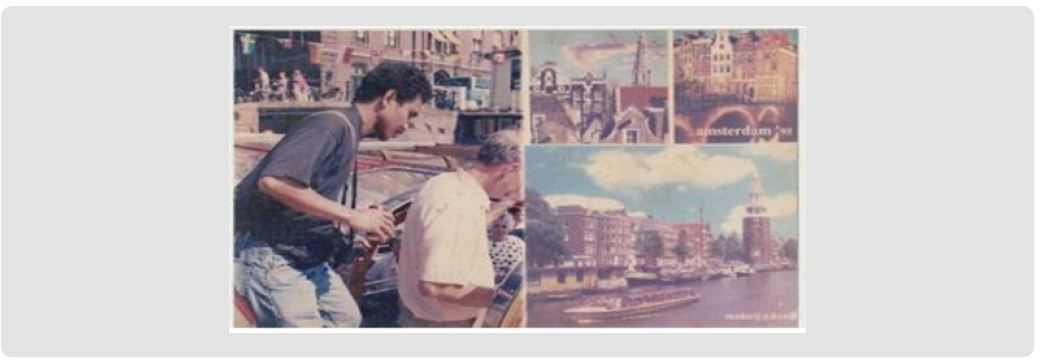
Fulfilling Mr. Anema’s invitation to the Netherlands after completing MSc. Crop Science Dept. University of Guelph, Canada. Get around Amsterdam by river by water vehicle. 1995.
Canadian International Development Agency (CIDA)
Figure 2
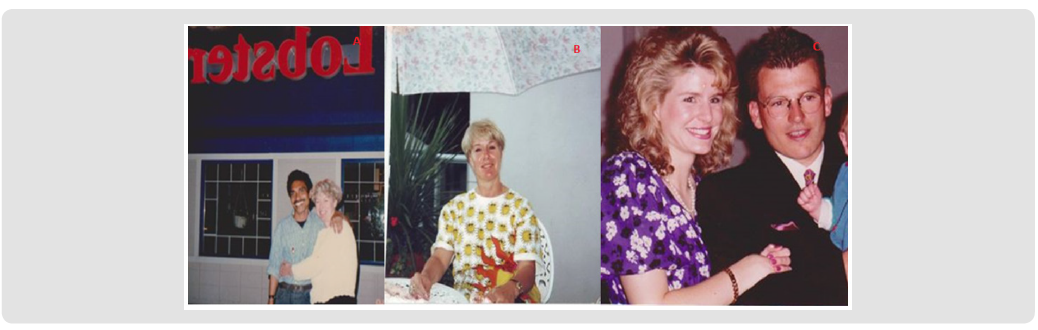
(a) and (b); Mrs. Thea Hinds, (c) Mrs. Robin Kask and Mike (husband). Thea and Robin are the Chairmen and Coordinating Secretary of Canada-Indonesia scholarship recipients, based at Simon Fraser University Burnaby, Van Couver, Canada. Their duties include managing the overall preparation and travel of students including cultural orientation, placement and travel of students to and from receiving universities, administration and support of CIDA to students, etc. Mrs. Thea toured the university several times and talked with supervisors regarding student development and welfare.
University of Guelpf, Guelph Ontario, Canada
Figure 3
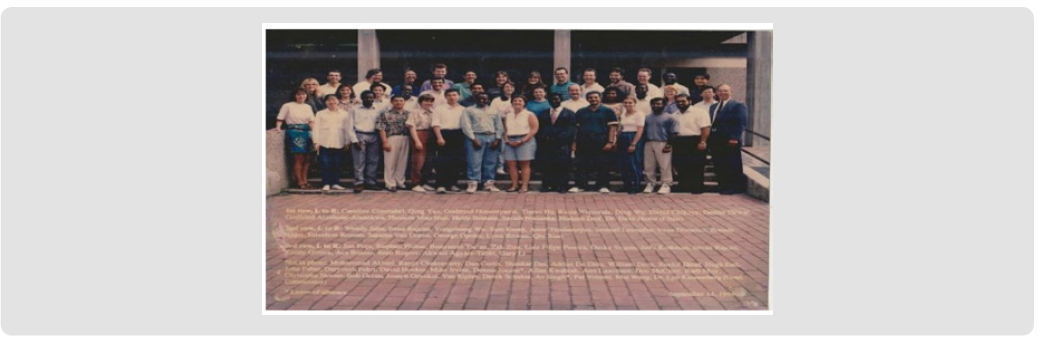
Crop Science Graduate Students, pose with Prof. Dave Hume (Department’s chair – left end front row) 1995. I stood in the middle position of the second row.
Figure 4
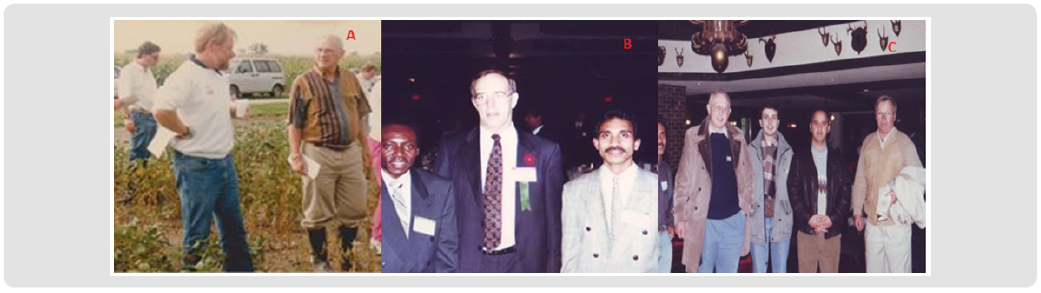
(a) Prof. Jack W. Tanner (MSc. Supervisor, in boots, brown pants) and Don Mc. Lure (in white T-shirt, Crop Science Graduate classmate and same supervisor, a breeder in a private company). As a member of the Canadian Seed Grower Association (CSGA), Prof. Tanner and team examined new varieties of soybeans that were tested multi-site before being recommended. I was required to take a ride in prof. Tanner’s car around a number of Ontario locations/farmers, conducting inspections. (b). Prof. Dave Hume (Crop Science Department’s Chair, center) and Sam Essah (Mhs. Post Ghanaian), Prof. Hume was awarded Fellow CSA, ASA, SCSA, at the third conference of this body in Cincinnati, Ohio, USA, 1993. (c). Prof. Lyn Kannenberg (coordinator mhs. Postgraduate, Crop Science, beside me, at the end wearing a black sweater), John Poppy and Darius (Mhs. Post, center), a senior corn breeder from a private company, colleague of Prof. Kannenberg, attended the Corn breeding conference, Bettendorf, IOWA, USA, 1994, as the closing of the Corn Breeding lecture supervised by Prof. Kannenberg.
Figure 5
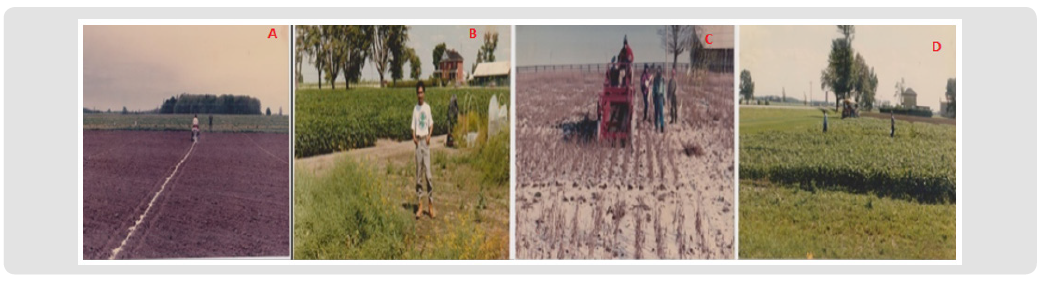
Research and breeding of soybeans. (a). Land mapping for research planting, (b). Maintenance of research plants and data collection, (c). Advanced data management and measurement, Elora research station. (d). At the direction of the supervisor, Prof. Jack Tanner, I assisted the soybean field breeding crew led by Wade and Call to be assisted in research as well as support and learn from the soybean field breeding program. Roguing or discarding off types in segregating generations of soybean cross, weeding, etc., are frequently held in St. Paul and Woodstock, Ontario.
Figure 6
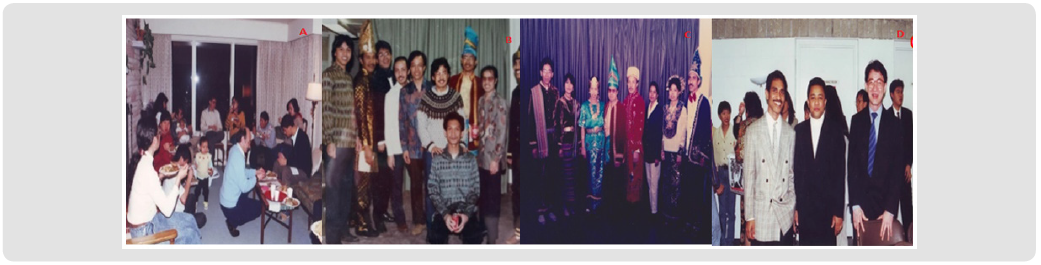
(a). Dave and Linda Buchner provided their venue for a Christian FOCUS group for international students. (b), (c). Representing the diversity of Indonesian tribes and cultures at various events. (d). In various Indonesian national activities, Guelph students are always involved and coordinate with the Consulate General of the Republic of Indonesia in Toronto.
Figure 7
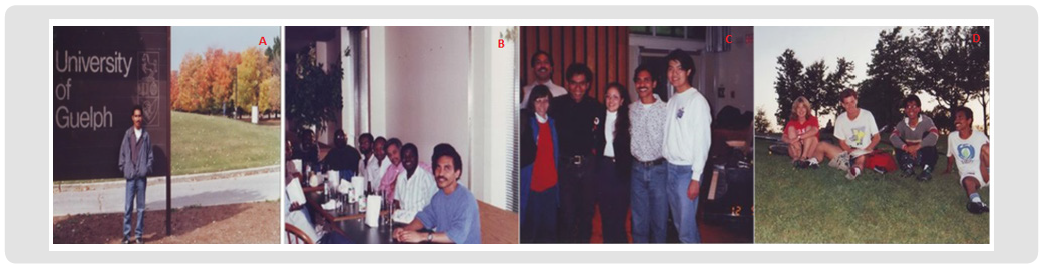
(a). Posing in front of the university signboard in the fall, (b). Graduate lounge where graduate strudents usually gather from e. q. various countries in Africa, debate about political, leadership, and security conditions in African countries, (c). Join hands after the “sing a long” Christmas concert in the Art Department hall with Denis (piano), Martin (guitar), me (bamboo flute), Jerry (Msh. post Hong Kong origin) and friends, (d). An intermural championship soccer match is held every year, Crop Science always participates, this photo is part of a practice with Martin and other colleagues.
Figure 8
(a). Guelh Indonesian student event with some foreign friends, Ms. Melody (Mel) Melzer churchmate at Korthright Presbyterian Church, to and from church. (b). Ms. Jennifer (Jenny) Cotton, undergraduate student, classmate in Plant Breeding Course, got to know Jenny more closely through James, a student from Hong Kong where my house is my boarding house. (c). Posing with Erni at the wedding of Non Norimarna and Rilus Kinseng. (d). Gathering with fellow Indonesian students and family in Guelph (Rilus, Lyn Siregar, Helly, Remolu, Siregar and family.
Figure 9
Enjoy day life in Guelph: hanging out with Canadian and Indonesian friends, celebrating birthdays, entertaining each other with available music instruments. (a). Cal and Laura Klager, Sam Esah, the Bonengs (Jus and Helly and the children), Subi, Indian-Canadian brothers. (b). Edy (businessman from Surabaya) from Toronto and other partners, (c) Martin and Subi, (d) Non Norimarna, Martin Nanere).
Visit to USA
Figure 11
(a) With Lake Potomac and the Lincoln Memorial Washington DC. USA at the background (b, c, d) Posing in front of Lincoln Memorial Hall and the White House, President Bill Clinton (d) is not at the residence (information from nearby officers). (e, f, g) Take pictures and record the atmosphere around the Washington Monument.
Figure 12
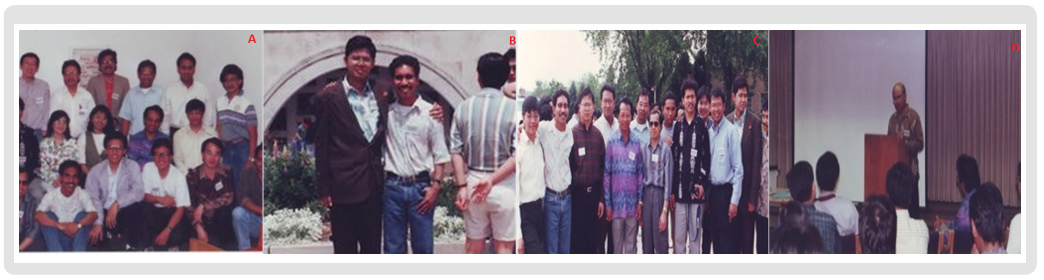
A conference of Indonesian students abroad, Wisconsin, USA, 1994; Joko Saputro, Ki Eng Go, Roy Sembel, Togu Manurung, Edward Purba, Johny Jeremias, Rilus Kinseng, Farida Nababan and others.
Nutzbarmachung der Pflanzengenetischen Resourchen as Beitrak Zur Aernehrungssicherung/ Utilization of plant genetic resources as a contribution to food security
Figure 13
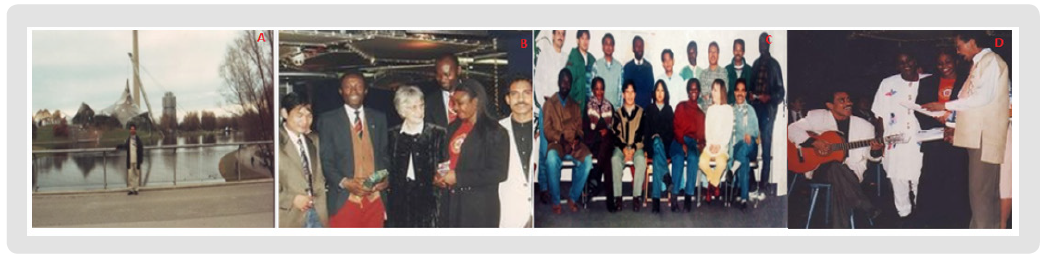
Hause International (HI) Munich (Munich) and SprachInstitut Munich (SIM) in 1997; (a). HI our residence for 4 months opposite the Olempia park area, the venue of the Munich Olympics, 1972 which was colored by the assassination of Israeli athletes by the Black September group, from the top of the olempia turm behind me, the view of Munich can be observed well, the architecture of the building inside resembles tents constructed with metal, the famous Bayern Munich football stadium is also inside. (b). Frau Dr. W. Rall (Leiterin der SIM) while talking to Ms. Betsi from Nigeria, (c). Some of the participants in the German course with Ms. Bettina Grimm (Grammar teacher, sitting next to me at the far end), (d). A chorus of vocals filled the Christmas celebration, “long time a go in Bethlehem (Merry Boy’s Child)”. Vocalists, Rija from Madagascar, Betsi from Nigeria, Frau Da from Ethiopia, Her Nakanabo from Burkina Faso (back invisible) and Frau.. from the Philippines (back, invisible)
Figure 14
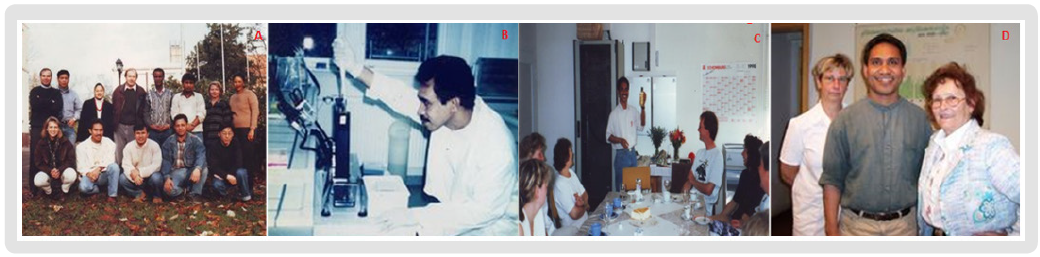
(a). Together with Dr. E. Hehne (Person in charge of training on standing at the background, from right to left; Dr. Alchinawi, a German of Iraqi descends, field coordinator of the training, Mr. Tra van Tu from the North Vietnam, Ms. from Egipt, Dr. Eberhard Hehne, Mr. Mulugetha Wogayehu from Ethiopia, Mr. Yadaw Rambaran from Nepal, Mrs. Secretary of Dr. Hehne (Center for the Nutrition and Agriculture/ ZEL, Zchortau) and Ms. Da from Ethiopia. Sitting, front row, from right to left; Ms. Assistant of Dr. Alchinawi, me, Mr. Achmed from Bangladesh, Mr. Vekry from Egipt and Mr. Chen Gang from the mainland China. Venue; Zentralle fuer Aernehrung und landwirtschaft (ZEL), Zchortau, Germany, Fall 1988. (b). Learn RAPD and ALFP techniques in the Molecular Markers laboratory, GPA Gatersleben, (c). Presented birthday gifts from laboratory colleagues with lab head Dr. Klaus Dehmer, (d). With Frau Doris Buechner, chief laboratory technician of in-vitro culture and cryopreservation (back) and Frau Christa Seidel, Chief Technician of the Molecular Marker laboratory, IPK Gatersleben.
Martin Luther Universitaet Halle-Wittenberg, Institut Fuer Pflanzengenetik und Kulturpflanzenforschung (IPK) Gatersleben, Deutschland/Dissertation Defense.
Verteidigung
Figure 15
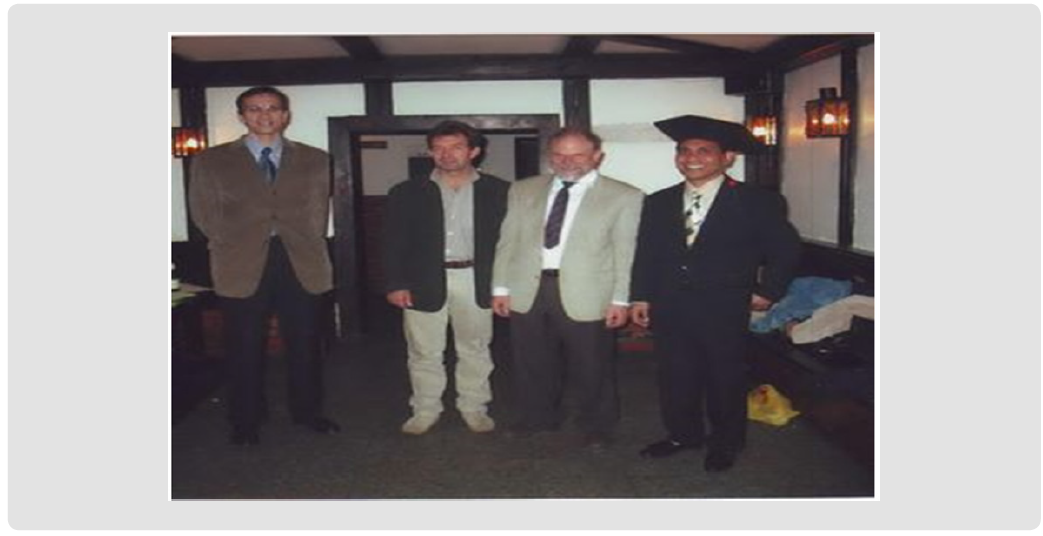
After defending the dissertation, posing with Prof. Dr. W. E. Weber, (Doctor Vater/Promoter), standing aside, Dr. Zoglauer, Techniche Universitaet (TU) Berlin (Guest examiner), center, Prof. Dr. Andreas Granner, Director of IPK Gatersleben, Head of Department of Gene Bank, IPK Gatersleben (Advisory Committee, Examiner).
Goethe Institute Dresden
Figure 16
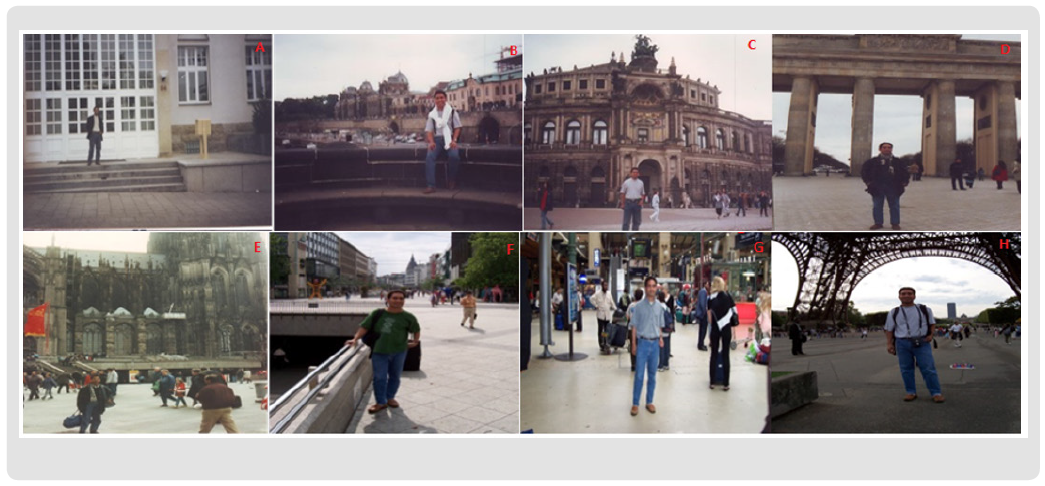
(a). Standing at the door of the Goethe Institut Dresden, here we deepen the German language for 4 months then take the DSH test before continuing our education, geographically the Goethe Institut is in the area of the Neue Stadt (new city of Dresden) bounded by the river Elbe with the Alte Stadt (Old Town) which is filled with old architectural buildings with extraordinary beauty. (b) sitting on a bridge against the backdrop of the beautiful and magnificent Frauen Kirche, heavily damaged by allied bombardment at the end of World War II (the war was over but Dresden was bombed as well), the church was later renovated exactly as the original using the latest technology. (c) Semper oper, the famous theater. From Dresden (as well as from other cities in Germany) students can reach various cities in Germany and even in Europe including (d) Berlin with its Brandenburger Tor, usually a symbol of presence in Germany, (e) Cologne with its Koelner Dom, (f) Hannover with its wide streets and (g, h) Paris with its Eifel tower
In Vitro Kultur Cryolagerungslaboar, (In-Vitro Culture and Cryopreservation Laboratory), IKP Gatersleben
Figure 17
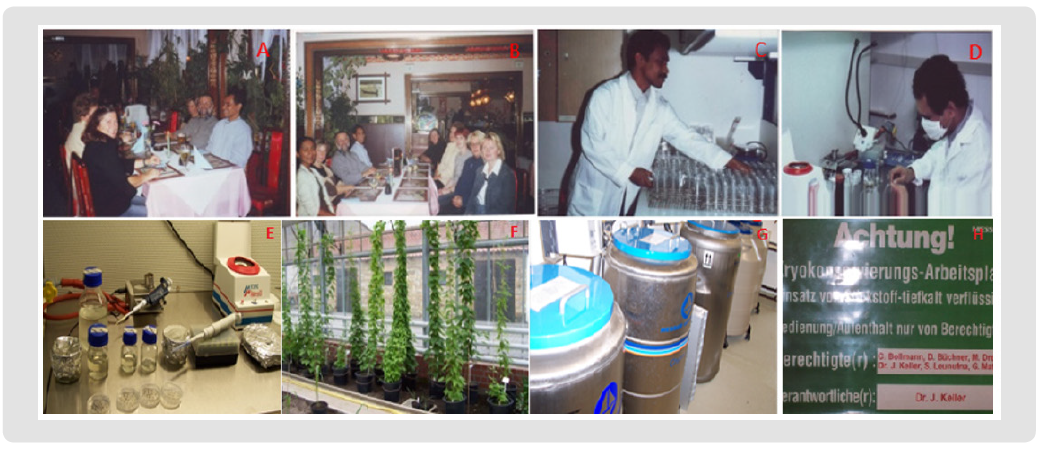
(a), (b) Colleagues (Mit-arbeiterinnen) at In-vitro Kultur und Kryokonservierungslaboar (Department of Gene Bank IPK Gatersleben, Head of Lab. (Working Group Leader) Dr. Joachim Keller (wearing a gray sweater) flanked by me and Frau Doris Buechner (Chief technicians/Secretary Dr. Keller), Frau Dr. Angelika Senula (in black jacket), Frau Carolla Bollmann, Frau Gaby Matzig and a number of other colleagues and Sheron Verenasuria Student work from Bangladesh At a meal in the small town of Quetlinburg, Frau Isburga Hoffman and Frau Marion Dreiling-Grube and senior researcher Frau Dr. Shaefer Menuhr were absent. (c), (d), (e), (f) Each stage of work is carried out with the latest, fully available equipment and materials. (g) The collection room of the preservation (h) is restricted to security purposes only.
Moluccan Banana Diversity Research Project
Figure 18
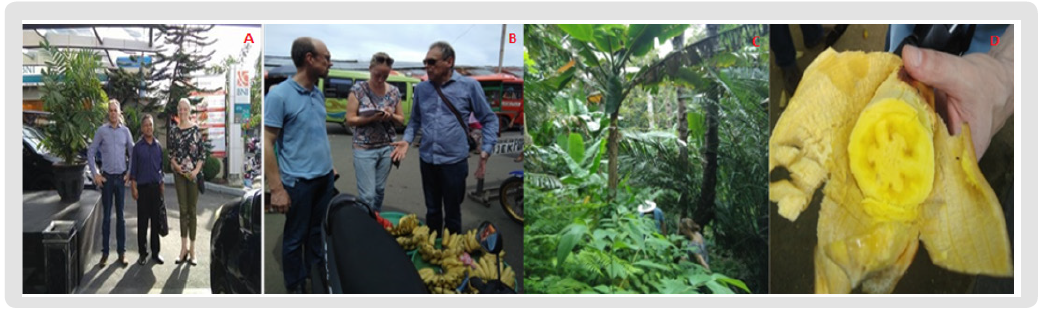
(a). A research team from Bio-based Research Wageningen University and Research arrived in Ambon; Prof. Ernst Woltering and Prof. Ester Hoogeven-van Echtelt, (b) Observation, discussion and data collection on the main traditional market “Pasar Mardika” Ambon, with the researchers from Agrofair Company Mr. Hans Willem Van Der Waal (Manging Director). (c). Visit to the location of banana planting Villages (Naku, Kilang, Hatalai, Eri etc.) Ambon island, (d). The Sky Hold banana with orange flesh indicates a high content of beta-carotene (vitamin A precusor).
Setting Up a Blended Learning Program for Sustainable Inclusive Agricultural Value Chain Development in Indonesia (BLVC); Indonesia-Netherlands Joint Project, in Maluku Islands
Lectures On Agricultural Value Chain Analysis
Figure 19
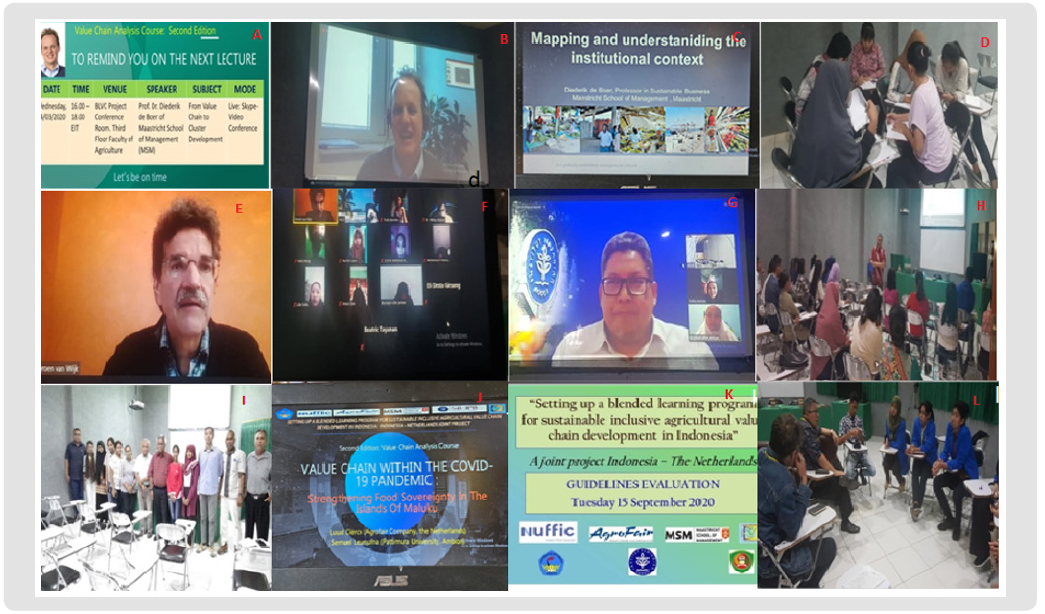
The value chain course is completed in a hybrid or blended learning system (on-line; recorded lecture or direct virtual meeting and face to face meeting), core material was delivered by Dr. Diederik de Boer and Dr. Jeroen Van Weyk from MSM Netherlands and Dr. Idqan Fahmi from SB-IPB Bogor, implications in the context of agriculture delivered by guest lecturers from Agrofair company, Faculty of Agriculture Unpatti, BPTP Maluku, Maenusu family company, kamboti Spice Maluku, and the Dutch Maluku business society. (a, b) invitations and reminders of lectures Prof. diederik de Boer, MSM from Maastricht Netherlands (video conference), (c) lecture material section and (d) class group work. (e) lecture by Prof. Jeroen van Wijk, MSM from the Hague Netherlands (virtual), (f) participating students. (g) Lectures from Dr. Idqan Fahmi, IPB Bogor, from Bogor, Indonesia, virtually and (h) face-to-face. (i) Face-to-face lectures of guest lecturers, Mr. Frans Palijama, Mr. Jailani Lating from Kamboti Spice Maluku and Mr. Charlie from the business society of Maluku, Netherlands attended by Mr. Marfin Lawalata, SP., MScdari Agrbisnis Faperta Unpatti. (j) Closing lecture from Mr. Luud Clercx, Agrofair Company, Netherlands and Dr. Semuel Leunufna, Faperta Unpatti, Ambon (k, l) Evaluation of the implementation of the lecture program.
Project Annual Seminars/Webinars
Figure 20
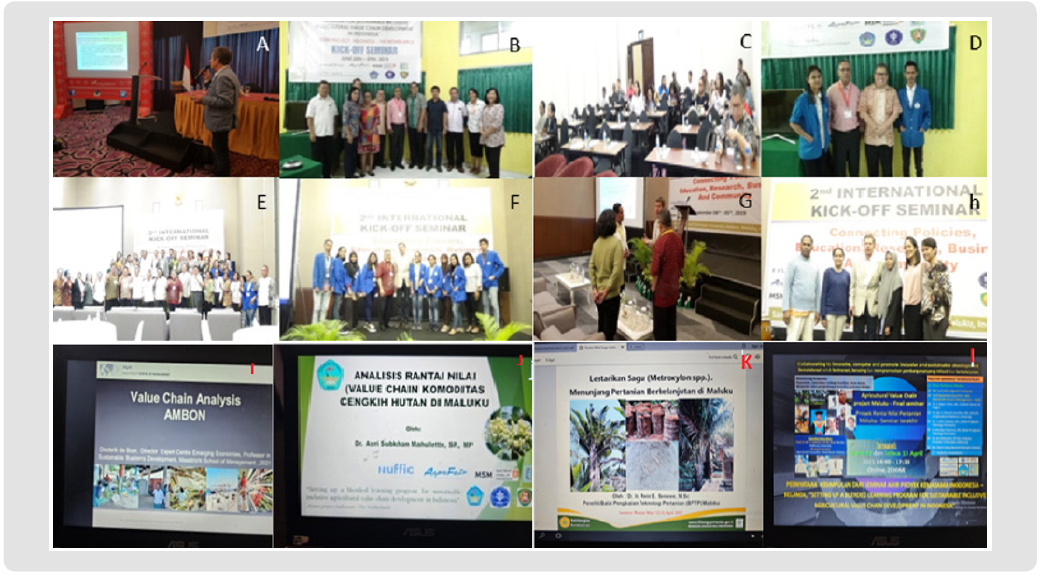
(a) Mr. Luud Clercx from Agrofair Company, Netherlands, BLVC Project Manager delivered a speech and explained the project objectives at the opening of the first Kick off seminar (2018), (b) Dean of the Faculty of Agriculture. John Matinahoru and Mr. Luud Clercx pictured with a number of keynote speakers and BLVC project student supervisors, (c) Seminar Participants on Swiss-Bell Hotel Ambon (d) organizing committee and main speakers Dr. Idqan Fahmi from IPB Bogor and Dr. Semuel Leunufna from Pattimura University Ambon. (e) Participants The second kick-off-seminar, the first day, took place at Santika Hotel, Tantui Ambon, officially opened by assistant IV to the Governor of Maluku, (f) Mr. Luud Clercx and Dr. Idqan Fahmi pictured with the organizing committee, students participating in the Maluku Typical Agricultural Value Chain Analysis course, (g) Special guest, Mr. Atus Leleury, Vice Bupat of Central Maluku discussed with the leaders and organizers of the BLVC Project. (h) Mr. Luud Clercx with representatives of small businesses Kamboti Spice Maluku, guest lecturers at the Value Chain lecture and keynote speaker of the Seminar. Several presentations at the final Webinar of the BLVC project. (i) (Value chain Analysis by Prof. diederik De Boer, Maastrich School of Management (j) Clove Value Chain Analysis by D. Asri Mahulette, Pattimura University and (k) Sago Preservation to Support Maluku Islands Agriculture by Dr. Rein Senewe, BPPT, Maluku. (k) The webinar concluded a total of eight main conclusions from the overall implementation of the project for more than 3 years at the Faculty of Agriculture, Pattimura University as a beneficiary institution with session leaders Mr. Luud Clercx from Agrofair Company, Netherlands and Dr. Semuel leunufna from Pattimura University, Ambon.
Observation/Learning Visit of the Netherlands-Ecuador Cavendish Banana Value Chain
Figure 21
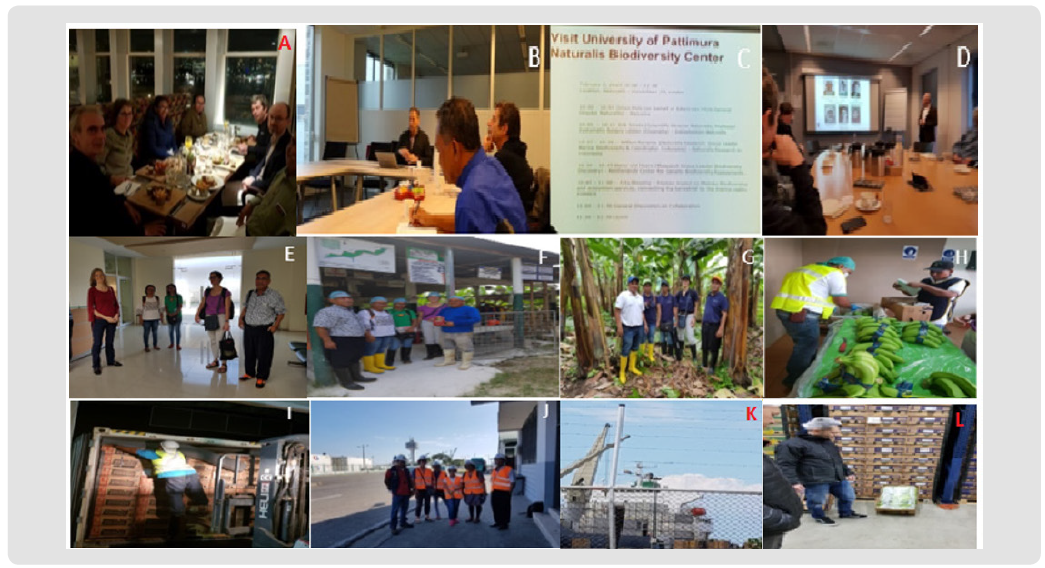
(a) Dinner with Unpatti delegation, Agrofair Company and colleagues; my right side Mr. Hans Willem Van der Waal, Managing Director of Agrofair Company Mr. Luud Clercs, BLVC Project Manager, Agrofair Company, two members of Unpatti delegation, Dr. Hellen and Misye Tuhumury, Mrs. Karin Bleijleven, Ecuador visit guide and Mr. Frits Blessing, senior advisor of family company PT Olop Hila Kaitetu, Maluku living laboratory. (b) Prof. Erns Woltering presented his work then gave a tour of research facilities at Bio-based Research, Wageningen University and Research, Netherlands, (c, d) the delegation was received with a neatly arranged activity plan at the Naturalis Biodiversity Center, Leiden, including a welcome words from the leadership by Dr. John Mols, a seminar presentation from Prof. Erik Smets, Dr. Willem Renema and Dr. Berry van der Hoorn. (e-l) Cavendish Banana Value Chain, Ecuador. (e) Mrs. Liane Zoeteweij, Director of Assoguabo in her office with delegates from Unpatti and Mrs. Karin Bleijleven, (f) before entering the Cavendish banana plantation, each guest must change shoes and wear a head covering and even spraying prevents the spread of disease especially Fusarium wilt, panama disease by Fusarium oxysporum), (g) Prepare to observe and obtain explanations related to various aspects of organic cultivation of cavendish bananas with good agricultural practices (GAP) including land management, plant maintenance, identification of symptoms of sigatoka disease, intercropping research, use of ground cover crops and others upto harvesting, (h) After harvesting, internal inspections upto giving stickers and code numbers, the box will be reopened at the assoguabo ware house and randomly taking sample boxes for external inspection before, arranged in pellets and loaded on truck (i) which will deliver them to the port ship of Machala (I) to be transported to Rotterdam Netherlands, Germany, Russia, USA etc. (k). (l) Upon arrival at the Agrofair Company, the Netherlands, a re-check was carried out on the condition of banana products before being distributed to various super markets in Europe.
Multiple Learning and Testing Certificates
Figure 22
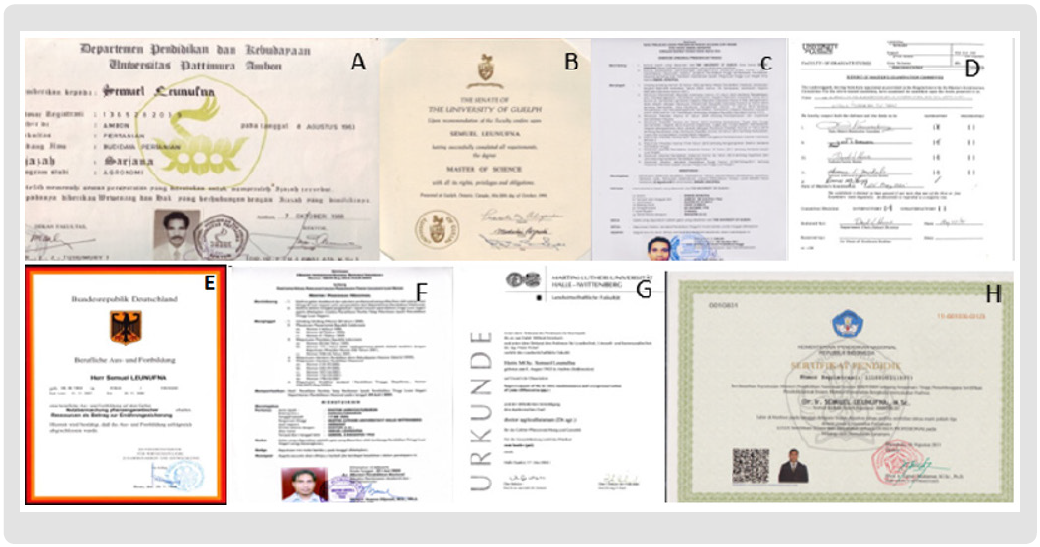
(a) Undergraduate degree at the Faculty of Agriculture, Pattimura University, Ambon, (b) trata 2, MSc at the Crops Science Department of the University of Guelph, Guelph, Ontario, Canada. (c) Ratification of MSc Certificate by the Directorate of Higher Education of the Ministry of Education and Culture of the Republic of Indonesia, (d) Thesis examination documents carried out by professors; Prof. Lyn Kannenberg (coordinator Graduate Students)), Prof. Jack W. Tanner (Supervisor), Prof. Dave Hume, Department’s Chair, Advisory Committee), Prof. Tom Michael (Advisory Committee), Prof. Bruce Luzi (Examiner, Georgia USA, will occupy the position of Soybean Breeder replacing Prof. Tanner). (e) A year’s training certificate in Germany, utilization of plant genetic resources as a contribution to food security. (f) diploma (Doctor of Agriculturarum, Dr. Agr.) Martin Luther Universitaet Halle-Wittenberg, Germany, (g) Ratification of S3 Certificate by Higher Education (h) Certificate of Lecturer Certification by the State, stating that the person concerned is a Professional Lecturer in the Field of Plant Breeding.
The Latest Condition of Mr. Anema
Figure 23
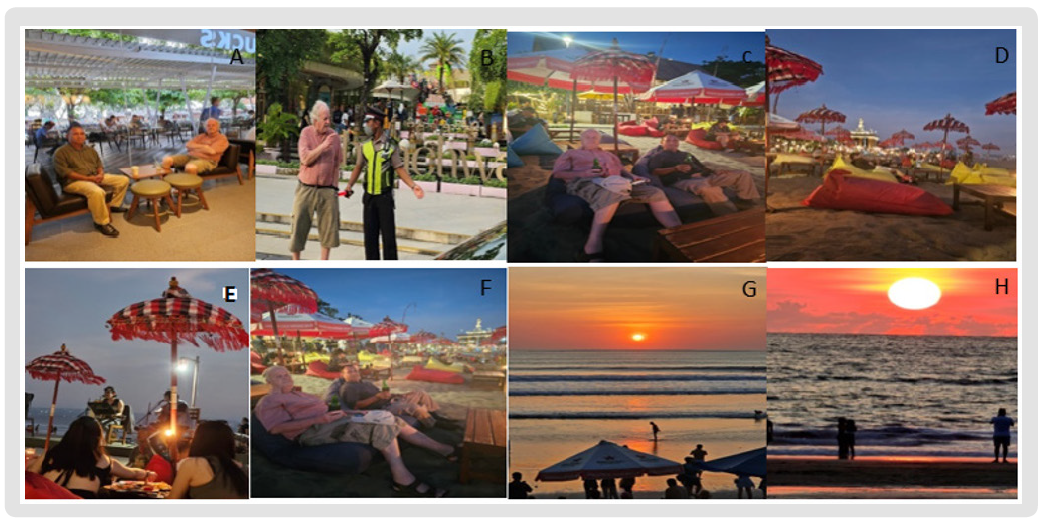
In his 80s, Mr. Anema still flies through the time zone between the Netherlands-Ambon-Bali planning and completing various works. While discussing and publishing joint manuscripts related to biodiversity conservation of small islands and the institution “Center for the Conservation of Maluku’s biodiversity”, (EJAS, 2023) we enjoyed beer, koffee and dinner at a number of restaurants in Kuta, Seminyak, Sanur or ushered in sunset while listening to music and enjoying the beautiful beaches of Kuta (a), (b), Legian and Seminyak (c)-h).
International Association of Landscape Archaeology, Czech Glass Society, Czech Republic
Department of Chemistry, Semenov Institute of Chemical Physics, USSR Academy of Sciences, Moscow, Russia

Department of Educational Sciences, Research Centre Qualities of Teachers, School of Education – HAN, Nijmegen, Netherlands
Associate Professor at Department of Breast and Thyorid Surgey, Chongqing General Hospital, China
Neurology, LA BioMed Research Institute, USA





 Abstract
 PDF
PDF