info@biomedres.us
+1 (502) 904-2126
One Westbrook Corporate Center, Suite 300, Westchester, IL 60154, USA
Site Map
 ISSN: 2574 -1241
ISSN: 2574 -1241
ISSN: 2574 -1241
Received: May 20, 2024; Published: May 28, 2024
*Corresponding author: Tariq Malik, Schwab Rehabilitation Hospital, Chicago, IL, USA
DOI: 10.26717/BJSTR.2024.56.008905
Low back pain is the most common musculoskeletal-related pain in adults, affecting two-thirds of adults in the United States during their lifetime. The sacroiliac joint (SIJ) is a frequent source of chronic back pain, accounting for 15-30% of all cases of axial low back pain. Common etiologies for SI joint pain include rheumatoid arthritis, osteoarthritis, and other degenerative changes. However, cancer patients, who often have the same underlying pathology, are frequently overlooked. Primary bone tumors or metastases to the spine may directly involve the SI joint, and regional cancer spread can cause imbalances in the pelvis. Additionally, cancer treatments can promote or exacerbate arthritis, worsening symptoms. For metastatic cancer, by the time bone metastasis occurs, the aim of treatment is palliative: to relieve pain and maintain quality of life, with a strong emphasis on preventing future spinal and skeletal complications. The purpose of this paper is to outline how Radiofrequency Ablation (RFA) can be a potential palliative care intervention for sacroiliac joint pain and to discuss various RFA techniques currently in use.
Keywords: Low Back Pain; Sacroiliac Joint Pain; Radiofrequency Ablation; Cancer Pain
Low back pain is a common concern for many individuals worldwide. In the United States, it affects two-thirds of Americans during their lifetime [1]. The sacroiliac (SI) joint is a frequent cause of low back pain, with its incidence increasing if a patient develops low back pain after lumbar fusion surgery [2]. The spine, pelvis, and legs are functionally interconnected. The SI joint serves as a shock absorber and engages in force transmission between the upper body and legs during activities such as walking, running, jumping, and bending. It acts as a stress reliever and adds resilience to the pelvic girdle, preventing fractures under the tremendous forces it endures during various bipedal activities [3]. Risk factors for SI joint dysfunction include obesity, leg length discrepancy, scoliosis, pregnancy, and repetitive or chronic microtrauma [4]. A leg length discrepancy can increase the stress across the SI joint fivefold. Age-related changes begin early in life and continue throughout. The primary function of the SI joint is to provide stability, allowing little movement. Movement in the SI joint has been measured in all planes but is limited to 2 mm horizontally and less than 6 degrees in rotation. While hypermobility is not typically associated with pain, pain is commonly seen with instability, multiparity, and muscle-related weakness.
The SI joint is a large diarthrodial joint located between the iliac bones and the sacrum (Figure 1). It is synovial only in the anterior superior part with fused posterior inferior part. There is significant variability between individuals regarding the shape and size, the surface area of the SI joint is about 17.5 cm2, and the volume is 0.6–2.5 ml [5]. The innervation of the SI joint is not well established. The ventral and dorsal parts have separate sources of innervation. The dorsal part is innervated by the lateral branches of the L4-S3 dorsal rami, while the ventral part is innervated by the ventral rami [6]. Myelinated and unmyelinated fibers have been found in the capsule, and small fibers positive for substance P and calcitonin gene-related polypeptide have been found in the cartilage [7]. The nociceptors in the SI joints have a higher threshold than those in the facet joints but a lower threshold compared to those in the discs. The network created by the lateral branches of the dorsal rami is the target of diagnostic blocks and ablative therapy [8]. These nerves consistently course over the lateral sacral crest. The SI joint provides stability during movement, better withstanding medially directed forces than torsion or axial compression loads [9]. Torsion and axial forces preferentially injure the weaker anterior joint capsule [10]. Strong ligaments and muscles support the joint, but as we age, our bones can become arthritic, and these ligaments may stiffen, causing the bones to rub together and produce pain.
Figure 1

In addition to low back pain from irritation to the free nerve endings in the joint, SI joint pain can cause symptoms such as numbness, tingling, or weakness that radiates to the lower extremities [11]. Symptoms are typically worsened by sitting on the affected side, and patients may present with difficulty riding in a car, prolonged sitting or standing, or climbing stairs. SI joint pain can mimic other conditions such as herniated discs or hip pathology, making proper diagnosis crucial. In addition to a detailed medical history, experienced providers use joint manipulation and various functional tests, such as Patrick’s test, Gaenslen’s test, SI joint shear test, Yeoman’s test, compression test, and thrust test, to assist in diagnosis. If pain is reproduced with most of these stress maneuvers, the SI joint is considered the primary pain generator. However, the validity of these maneuvers has been questioned recently [12]. Imaging studies, such as X-ray, CT, or MRI, have poor sensitivity, specificity, and diagnostic utility for SI joint pain. Their main utility is to exclude other dysfunctions in the neighboring spine and hips. Typically, a diagnostic SI joint injection is performed to confirm the cause of the pain. SI joint involvement is confirmed if the patient’s pain level decreases by more than 75% with the diagnostic injection. Image-guided injections, either intra-articular or targeting the lateral sacral network, are the only reliable methods for selecting patients for ablative therapy.
Dual diagnostic blocks with at least 70% pain relief have Level II evidence for accurately diagnosing the SI joint as the source of pain, while single diagnostic blocks with at least 75% pain relief have Level III evidence. Single injections cannot detect false positives, which have a prevalence of 12-26% with dual blocks. Intra-articular injections underdetect SI joint area pain, which is more effectively identified by lateral sacral branch blocks, predicting better ablation outcomes [13]. SI joint pain is initially treated with non-interventional modalities, including physical therapy, NSAIDs, and muscle relaxants. The evidence for NSAIDs in treating SI joint pain is not conclusive and is based on expert opinion. Interventional treatment options include intra-articular steroid injections, prolotherapy, percutaneous sacroiliac joint fusion, and radiofrequency ablation [14]. There are various causes of SI joint pain, both traumatic and non-traumatic. Non-traumatic causes include rheumatoid arthritis, pregnancy, inflammatory bowel disease, and metastatic cancer [15]. Spinal metastases are a frequent complication of cancer that often goes overlooked. Autopsy studies indicate that about 30% of all cancer patients will develop some kind of spinal metastasis [16].
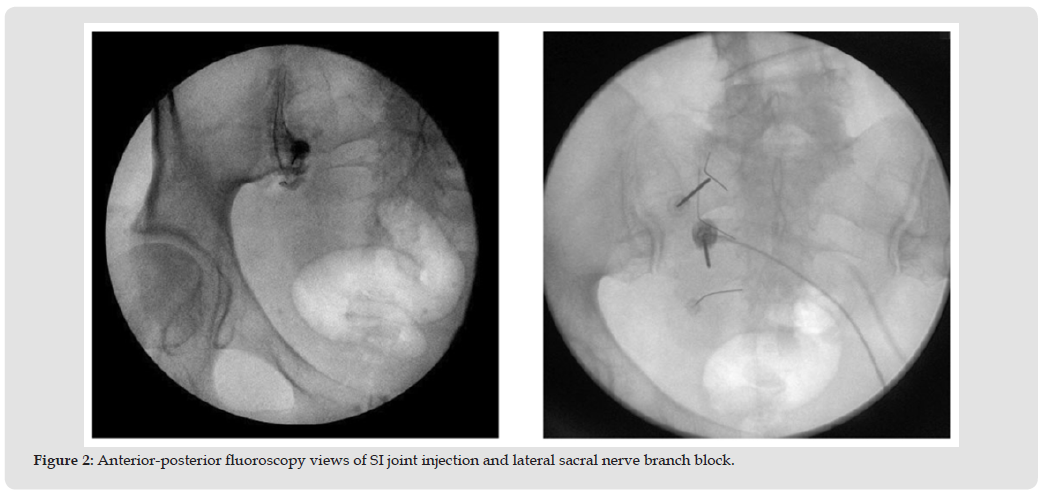
Although the liver and lungs are more common sites for overall metastasis, autopsy reports show that 60-70% of patients with metastatic cancer acquire spinal metastasis. The thoracic spine is the most common location for spinal metastasis (60-80%), followed by the lumbar spine (15-30%) and the cervical spine (<10%) [17]. Such involvement of the spine can cause instability and deformity and may lead to complications such as pathologic vertebral compression fractures (pVCF) and metastatic epidural spinal cord compression (MESCC). Approximately one in ten patients with spinal metastases will develop MESCC, and another 12.6% will develop a pVCF [18]. The SI joint can be subjected to indirect stress from primary, secondary, or metastatic cancer in the spine, resulting in pelvic imbalances and unequal weight distribution. By the time bone metastasis occurs, treatment aims to control pain and maintain quality of life. Understanding the epidemiology should increase awareness of the first symptoms and promote early diagnosis, emphasizing the prevention of future skeletal complications, and thus improving overall outcomes [17] (Figure 2).
Figure 2
Pain is always best managed when the underlying pathophysiology is treated. However, the pathophysiology of chronic SI joint pain, even when cancer-related, often cannot be effectively treated. The innervation of the SI joint is accessible for ablation, making it a suitable target for intervention. Radiofrequency Ablation (RFA) uses electrical energy to create thermal energy that destroys the nerves causing pain. In 1931, Martin Kirschner used a direct current (DC) via an uninsulated needle to ablate the Gasserian ganglion to treat trigeminal neuralgia [19]. High frequency alternating current (AC) produced controlled lesions, with frequencies (300-500 kHz) similar to those used by radio transmitters, hence the name “radiofrequency ablation” [20]. The rapidly alternating electrical field in RFA causes ion vibrations (including water molecules) at the same frequency, generating heat that denatures proteins and leads to cell death. Although RFA has been a treatment option for SI joint pain since 2001 [21], it may sometimes be overlooked for cancer-related pain. Because RFA is a localized procedure at the site of pain, it tends to have fewer unwarranted systemic side effects compared to oral medications, which is advantageous for palliative care patients. Additionally, there are few contraindications for RFA beyond the standard risks of infection and bleeding common to any surgical procedure. Multiple RFA techniques for the SI joint are used in practice today. These techniques vary in target visualization methods, lesioning techniques, and target sites. The outcome of RFA depends on proper patient selection and accurate needle placement during the ablative treatment.
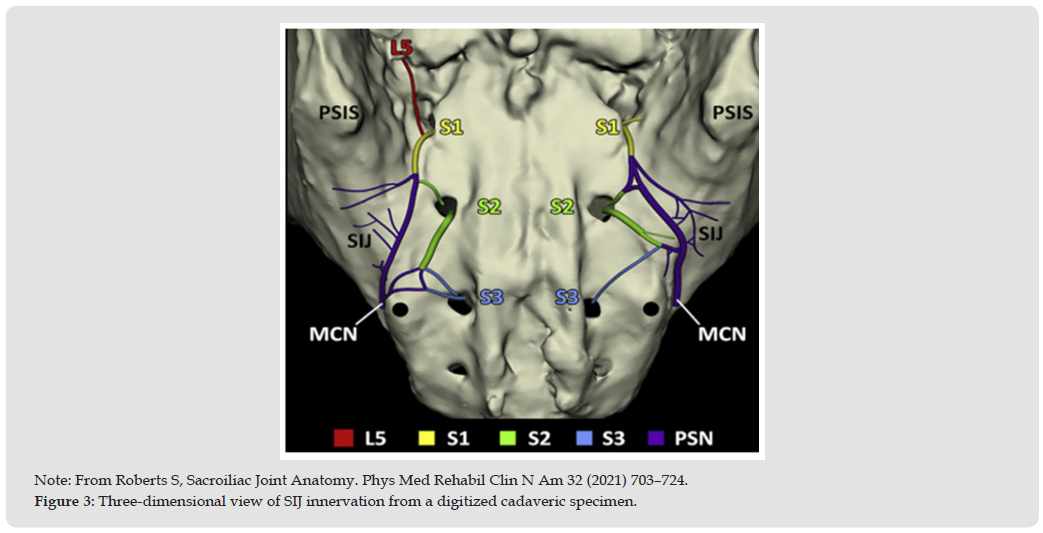
The SI joint is extensively innervated by the L5 dorsal ramus and the lateral branches of the S1, S2, and S3 dorsal rami of the sacral nerves. The unique innervation of the SI joint and its anatomical variations present various challenges for clinicians. The purpose of this article is to review these different techniques and demonstrate how Radiofrequency Ablation (RFA) can be a valuable intervention for chronic SI joint pain including in terminal cancer patients seeking palliative care options (Figure 3). There are numerous approaches, each with varying levels of evidence. A systemic review favors cooled RF approach over conventional RF. Irrespective of the technique the target is the same, lateral branches form L5- S3. Traditional target sites around the sacral foramina for lesioning have been questioned. Stout et al in a cadaver study demonstrated that RFA lesioning using traditional targets would result in incomplete lesioning in 40% of cases [22]. New specific targets were found through cadaver dissection with overlaying radius epsilon then captured by fluoroscopy. They proposed 4:30 and 6:00 for S1; 2:30, 4:00, and 5:30 for S2 (unchanged); and 1:00 and 2:30 for S3 on the right side. The targets for the left are the mirror image on the right: 6:00 and 7:30 for S1; 6:30, 8:00, and 9:30 for S2; 9:30 and 11:00 for S3. They claimed 95% success rate assuming ablation size is as expected. Robinson et al quantified the relationship between the posterior sacral network and bony anatomical landmarks [23].
Specifically, the first, second, and third transverse sacral tubercles (TSTs) of the lateral sacral crest are consistent bony landmarks identifiable by ultrasound. The study used digitization and 3D modeling to then determine mean distances for posterior sacral foramina and interforaminal distance in tested sacra for males and females. The aim of these anatomical studies is to better quantify the anatomical relationship of nerves to bony landmarks which allows for better accuracy for lesioning with RFA. In general, the lateral branches of L5 and S1-S3 dorsal rami are targeted lateral to the posterior sacral foramina and a larger lesion area will minimize missing a nerve due to anatomical variations. Exact needle locations vary depending on the device and technique being used.
Figure 3
Conventional Radiofrequency
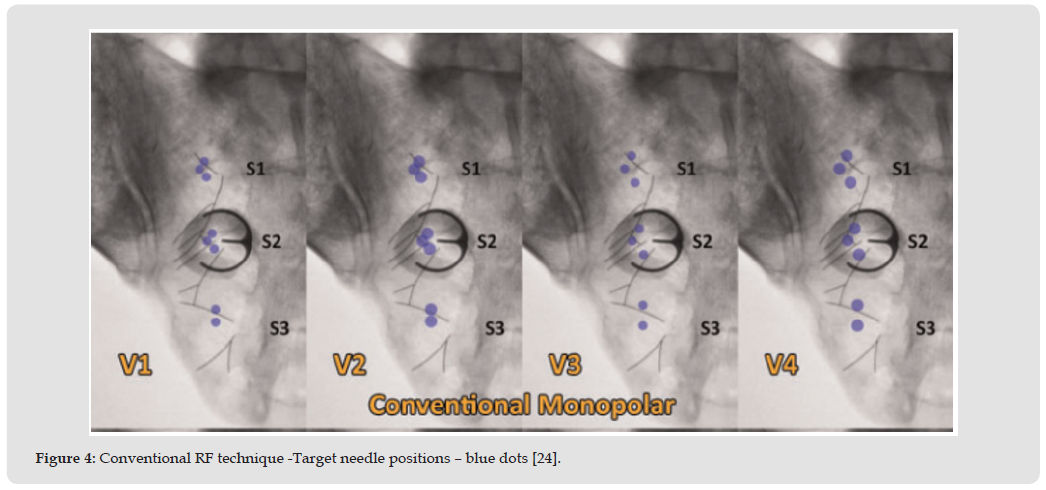
Conventional RF is performed using monopolar or bipolar technique. In monopolar technique needle gauge and orientation determine the burn size while in bipolar the spacing between the needle tips must be optimal for ablation as burn area is between the needle tips. Roberts at al studied seventeen different ablation approaches and found bipolar approach is more successful in ablating lateral nerves than conventional monopolar radiofrequency ablation [24]. In conventional monopolar approach, the sacral foramina are imagined as face of the clock and needles are placed at regular intervals around the lateral edge of the foramen. The usual positions are 1:00, 3:00, 5:30 on the right and 11:00, 9:00 and 630 on the left at S1 and S2. At the S3 and S4 levels, the needle clock face positions are 1:30 and 4:30 on the right, and 7:30 and 10:30 on the left (Figure 4). A number of bipolar approaches are used to ensure effective ablation of lateral branches. Multiple needles of various gauges are placed along the line from S1 to S4 5- 10 mm from the lateral margins.
Figure 4
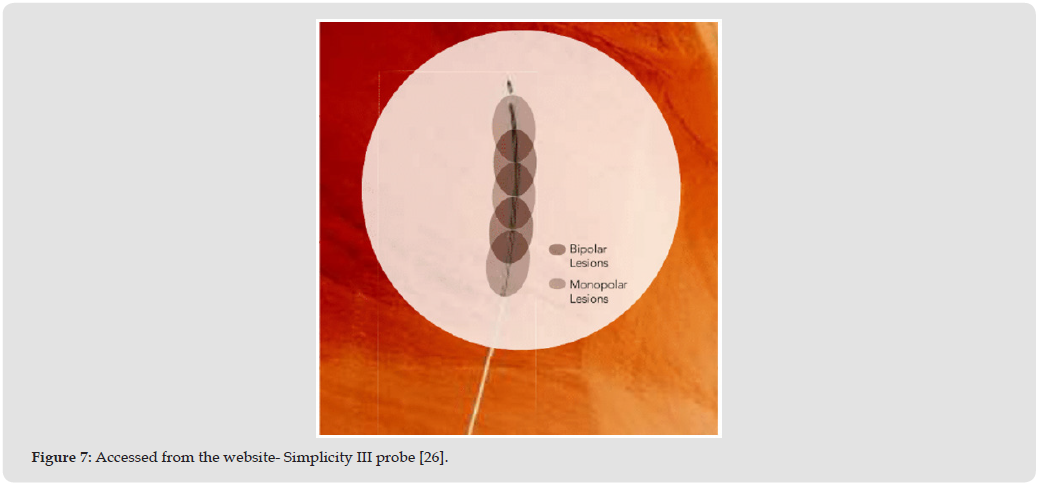
Needle gauge varies from 22 to 17 and they are placed 4 mm to 15 mm apart. Four commonly used techniques are leapfrog technique (22g needles placed 4mm apart), palisade technique (20 g needles placed 10 mm apart), Nimbus continuum technique (17 g needles placed 15 mm apart), and lateral crest technique (same as palisade). The bipolar approach is considered less cumbersome with reduced cost as produce can be done in a shorter time [15,25] (Figures 5 & 6). Multi-lesion probes such as Simplicity III are available which can produce continuous strip lesions for more complete denervation. The probe has three active sites which create overlapping three monopolar lesions and two bipolar lesions resulting in a total burn area of 9mm x 52.5mm [26] (Figure 7).
Figure 5
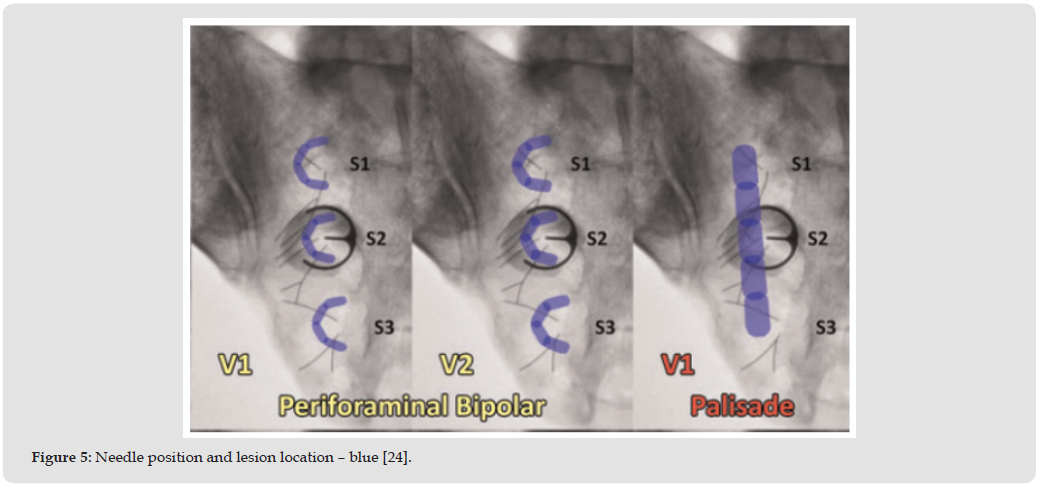
Figure 6
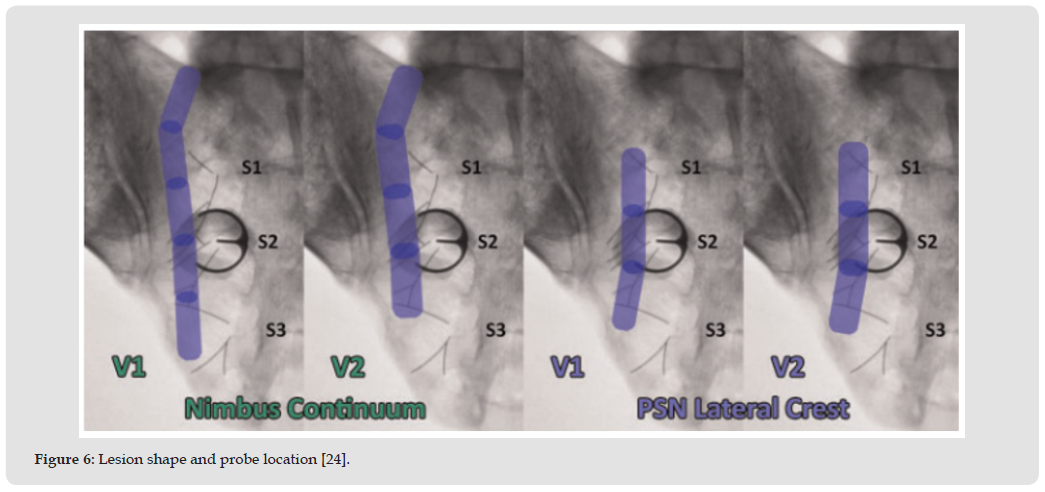
Figure 7
Cooled RFA
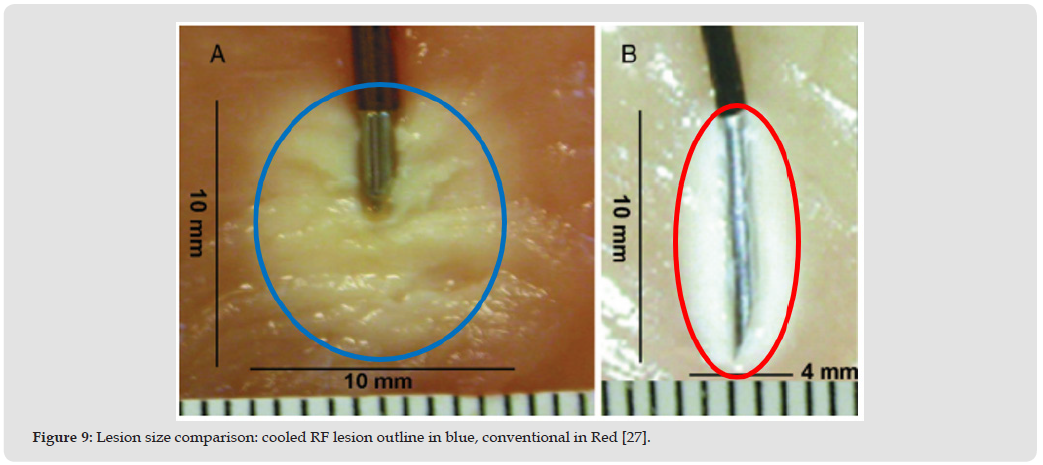
Cooled RF is a variation of conventional RF approach that has been used to treat SI joint pain since 2013. Thermal energy in standard RFA is limited by desiccation and overheating of the targeted tissue, which limits consistent lesioning during the procedure. In cooled RFA, water is used to keep the needle tip temperature at 60C which results in consistent and uniform heating of the surrounding tissue resulting in on average lesion that is twice the size of lesion compared to conventional RFA which results in more complete ablation of the target nerve fibers [27]. The probe is 17 g in size with a 4 mm active tip. The target points around the sacral foramen are the same as in conventional RF (Figures 8 & 9). The safety and effectiveness of cooled RFA was reviewed in a met analysis by Sun et al. [28] and found that the procedure is effective and safe. The mean drop in pain score was 3.81 or 3.74 depending upon the scale used. Furthermore, one study suggests that repeat cooled RFA procedures resulted in longer pain relief than single procedures. For standard cooled RFA procedures, the average duration of relief was 5.5 months after the first procedure and 9 months after the second procedure. Through a further review of patient records, the study found that RFA reduces utilization of medical care (41%) and repeat RFA resulted in a 59% reduction in utilization of medical care, and a reduction in medical costs accordingly [29].
Figure 8

Figure 9
Level of Evidence for Various RF Approaches
Three systemic and one narrative reviews have been published evaluating the effectiveness of various RFA techniques. In the most recent systematic analysis Lee at al analyzed 37 studies encompassing 8 RCT, 14 retrospective and 11 prospective studies including 4 case reports. Despite the variability in types of radiofrequency technology, technique, nerve targets, and study methodology, most studies found that substantial proportions of patients achieved at least 50% or more relief at 1, 3, 6, and 12 months following lateral nerve ablation. Using the GRADE system, evidence was rated at moderate level to effectively reduce pain and disability in majority of patients with posterior joint complex SI joint pain at 1, 3, 6, and 12 months. The level of evidence was upgraded to high quality when only anatomically validated techniques were assessed.
Endoscopic RFA
Recently, endoscopic visualization has been used to localize the posterior sacroiliac ligament in the effort to treat SIJ pain. Ablation of the lateral branch nerves innervating the posterior capsule of the SIJ and overlying soft tissues using a bipolar radiofrequency probe through the endoscope’s working channel has had favorable clinical outcomes [30]. The endoscope allows visualization of sensory nerve fibers with a diameter between 0.21 and 1.51mm, allowing precise targeting of the L5 dorsal rami and lateral sacral branches from S1, S2 and S3 dorsal sacral rami Therefore, this approach may be particularly useful when a patient’s anatomy and/or previous fusion/surgical hardware may obscure the view using traditional fluoroscopic visualization. Chen CM, et al. even compared the efficacy of performing endoscopic rhizotomy vs Cooled RFA approaches for treatment of SIJ pain [31] (Figure 10). The study compared outcomes of 72 patients over the course of 1 year and found better functional outcomes and longer duration of symptoms in the full endoscopic rhizotomy group vs the cooled RFA group. In addition, only 8% (3 out of 36) of patients in the endoscopic group experienced recurrence of pain as opposed to a 61% recurrence rate after 1 year from RFA. Of note, however, the average operation time for the navigation-assisted endoscopic procedure was 61.8 minutes, which was almost double the time for cooled RFA procedure [32].
Figure 10

Cryoneurolysis
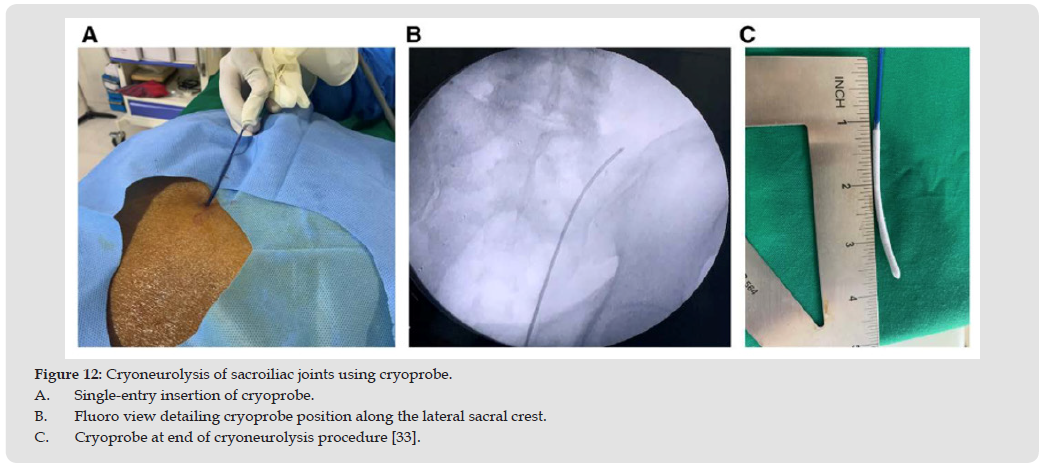
Cryoneurolysis is a technique that targets nerves with extremely cold temperatures to temporarily destroy the nerves (the application of cryoneurolysis). Cryoneurolysis is used in a wide array of pain management plans. Cryoneurolysis probes are larger and would result in larger lesions thus avoiding the pitfall of missing lateral sacral nerve branches seen with various RF approaches. Sahoo et al. [33], outline five case studies that used cryoneurolysis for SI joint pain specifically. All five patients were selected after at least 50% pain improvement to 2 ml intraarticular injection of 2 ml 2% lidocaine. Cryoneurolysis was performed a week later. Ultrasound was utilized to confirm the probes were localized lateral sacral crest and 14g cryoprobe was placed with ultrasound guidance along the lateral crest. Fluoroscopy was used to confirm that the probe is lateral to sacral foramina in AP view and is lying on the sacral bone in lateral view. The optimal position was verified by checking sensory and motor stimulation with electrical stimulation at 50 hertz and 2 hertz respectively (Figures 11 & 12). The technique included two cycles of four minutes split into a three-minute freezing cycle and a one-minute defrosting cycle. Freezing and defrosting was visualized under ultrasound. After this procedure, patients were followed up at one month, three-month, and six-month intervals. At one month, three patients had no complaints of pain and two patients had 1/10 pain. At the three and six months, all the patients reported greater than 50% pain relief. These initial results show promise for cryoneurolysis to be more widely used for SI joint pain. There are many advantages to this procedure as well. One advantage is that cryoneurolysis only requires a single skin entry point as opposed to cooled RFA which requires at least eight points of entry. The complication rate as high as 20% has been reported after RF of SI joint [34]. Cryoneurolysis is potentially a less expensive approach with potential to have lower incidence of numbness and tingling. Cryoneurolysis shows promise as an option for SI joint pain but requires further study.
Figure 11
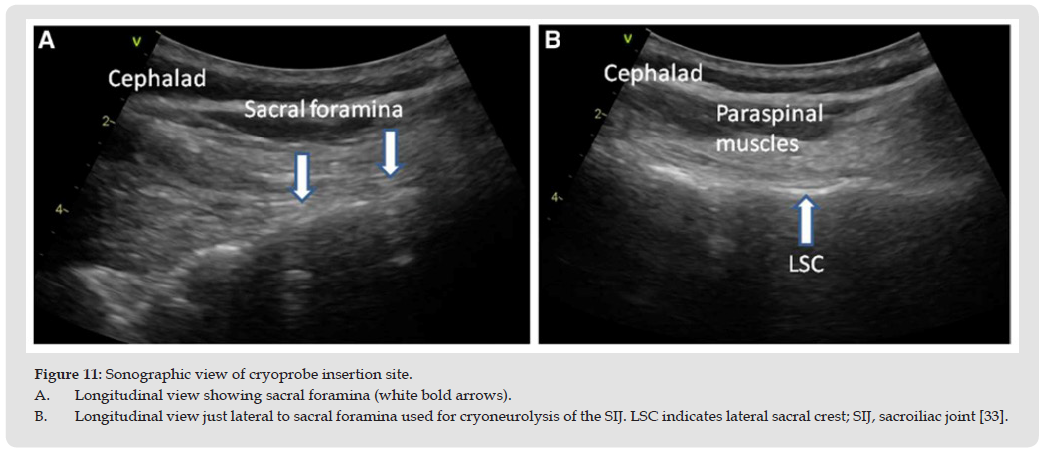
Figure 12
MR-HIFU
Another option for patients with SIJ pain is MRI guided high intensity focused ultrasound (MR-HIFU) [35]. With this technique, patients undergo MRI imaging and use ultrasound probes to generate enough heat that can effectively treat SI joint pain. Thus, the main advantage with this technique is that it is non-invasive and avoids the use of radiation. In addition, with the use of MRI, pain centers can be more precisely targeted over standard X-ray imaging such as with RFA. But the procedures require immobility necessitating some form of anesthesia. Planning is done using a 3D T2w paramedian MRI image directly lateral to sacral foramen. The dorsal L5 ramus and the lateral branches of the S1–S3 dorsal rami are targeted. Target picked are treated with US 1.2 MHz probe using 60-120 W power with the aim to generate temperature over 60C within the tissue. Therefore, MR-HIFU provides alternatives for patients with SI joint pain and who may not be able to undergo ablation with usual radiofrequency approaches. In one case report reported in literature, patients had no pain issue at 6 months follow. This is an attractive technique for patients on anticoagulants as no needle is inserted [36] (Figure 13).
Figure 13

Radiofrequency ablation is an effective treatment modality for SI joint-related pain from any reason including cancer. New techniques continue to emerge, allowing for more precise and better outcomes. Outcome is very much dependent on proper patient selection. Endoscopic RFA allows for greater visualization and accuracy in patients with varying anatomy and/or obscuring surgical hardware. Cryoneurolysis reduces the number of entry points into the skin and potentially increases duration of pain relief. MR-HIFU provides a non-invasive and more accurate approach to treating SIJ pain which can be especially useful for sick patients who are coagulopathic or taking anticoagulants. Furthermore, refinement of procedural intricacies such as the use of hypertonic saline to increase lesion areas emerge as RFA is becoming more widely used. Moreover, its implementation has shown it is a great overall option to address some of the nuances which are specific to the palliative population Improvement in pain will result in lower opioid need that can lead to better quality of life and lower opioid-related side effects. RFA is an established analgesic intervention for SI joint pain, the option of RFA use should be considered in patients with low back pain.

International Association of Landscape Archaeology, Czech Glass Society, Czech Republic

Department of Chemistry, Semenov Institute of Chemical Physics, USSR Academy of Sciences, Moscow, Russia

Department of Educational Sciences, Research Centre Qualities of Teachers, School of Education – HAN, Nijmegen, Netherlands

Associate Professor at Department of Breast and Thyorid Surgey, Chongqing General Hospital, China

Neurology, LA BioMed Research Institute, USA





 Abstract
 PDF
PDF



























