info@biomedres.us
+1 (502) 904-2126
One Westbrook Corporate Center, Suite 300, Westchester, IL 60154, USA
Site Map
 ISSN: 2574 -1241
ISSN: 2574 -1241
ISSN: 2574 -1241
Received: May 01, 2024; Published: May 22, 2024
*Corresponding author: Fatima Mazhar, Department of Microbiology, MNSUAM, Pakistan
DOI: 10.26717/BJSTR.2024.56.008892
Joint and muscular discomfort associated with temporomandibular joint disease is a common symptom of TMJ disorder. The following symptoms may manifest simultaneously: vertigo, ringing in the ears, hearing loss, jaw stiffness, restricted mobility, or locking of the jaw; when opening or shutting the mouth, there may be painful clicking, popping, or grating in the jaw joint. Their genetics and processes are studied by scientists.
Keywords: TMDs; Symptoms; Treatment; Causes
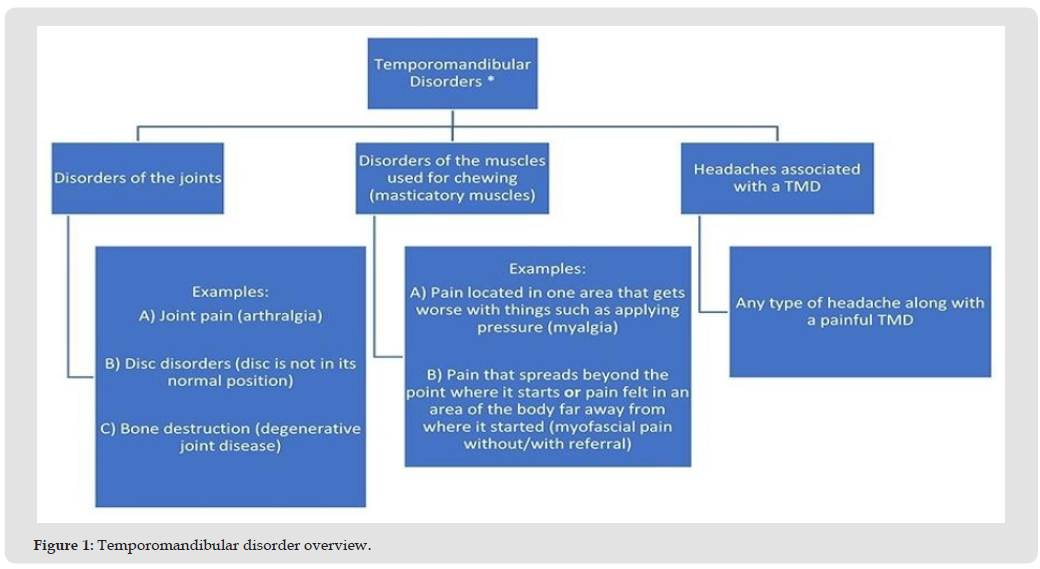
More than 30 different conditions that cause discomfort and dysfunction in the jaw joint and muscles are together known as “temporomandibular disorders” (TMDs). (Jerjes, Upile, et al. [1]) defined “TMJ” as referring exclusively to the temporomandibular joint, whereas “TMDs” denotes the diseases. Each side of a person’s jaw is home to a one TMJ. To listen to them, place your fingers in front of your ears and open your lips (Joint [2]). Justifications for TDMs include although jaw or temporomandibular joint injuries are potential causes of TMDs, the exact etiology is often uncertain. A lot of folks say they can’t put their finger on what started their symptoms. A person’s pain tolerance, genetics, and psychological and life stresses may all impact the incidence and prognosis of TMD, according to recent studies (Vrbanović, Zlendić et al. [3]). Because TMDs are more common in women than in men, researchers are trying to determine if this is due, in part, to the fact that the architecture and mechanics of the TMJ vary across the sexes. Research does not support the concept that TMDs are caused by orthodontic braces or a bad bite (Johansson, Unell et al. [4]). These are the signs. Keep in mind that clicking or popping sounds without discomfort in the TMJs are typical, natural, and do not require treatment. But these signs could indicate a TMD: Discomfort in the jaw and muscles used for chewing (the most prevalent symptom), Inflammation that moves up the body, Jaw pain, jaw lock, restricted jaw mobility, Discomfort during chewing due to clicking, popping, or grinding in the jaw joint, Vertigo, hearing loss, ringing in the ears, and A shift in the relationship between the two sets of teeth (Pai, Poojari et al. [5]) (Figure 1).
Figure 1
Diagnosis
The patient checks for soreness in the jaw, jaw clicking or popping, or trouble moving their jaw, neck, face, or head. Dental and medical professionals may also recommend imaging tests including CT scans, x-rays, or magnetic resonance imaging (MRI). Whether or whether TMDs are to blame for facial, jaw, or mouth pain is debatable. Prior to making a diagnosis of TMD, a doctor or dentist may need to rule out other possible causes (Petrikowski [6]).
Treatment
Things you should know before undergoing therapy in TMDs include: 1. It is not necessary to seek medical assistance if you experience common, usual, and non-painful sounds in the temporomandibular joints. Without therapy, many TMD patients report significant improvement in their symptoms. 2. Most treatments for TMD do not have enough evidence to support them, therefore experts advise against surgeries or treatments that alter the bite, jaw joints, or teeth permanently (Slade, Bair et al. [7]).
Nonsurgical Treatments
Many issues with the jaw’s joints and muscles are short-lived and do not worsen with time, so a basic therapy may be sufficient. As soon as you detect any soreness in your jaw or affected muscles. Stick to soft foods. Heat or cold treatment applied to the face might be helpful in conjunction with jaw muscle stretching and strengthening exercises. 1. Use NSAIDs (nonsteroidal anti-inflammatory medicines), such as ibuprofen, which are available without a prescription. 2. Cut back on bad behaviours like chewing gum, clenching your jaw, or biting your nails (Razook [8]).
Your dentist or doctor may identify a specific form of TMD at this time, or they may suggest one or more of the following therapies if they don’t work.
Physical Therapy: The goal of physical therapy is to help people regain, improve, or keep their mobility and function. Physical therapy can take several forms. A form of this is manual treatment, which entails. A therapist may apply manual stretching techniques to the muscles and connective tissues around a joint. The effects of manual therapy on pain and function have been well-documented. (Muscolino [9]). It has been demonstrated that certain behavioural health methods, often provided by psychologists, can aid in the management of TMDs. Some examples of these are biofeedback and cognitive behavioural therapy. As well as teaching coping mechanisms, cognitive behavioural therapy aims to help patients recognise and alter unhelpful ways of thinking. Sensors that track vital signs including temperature, respiration rate, heart rate, and muscular contractions are used in biofeedback. A sensor located on your jaw may detect when you clench your muscles. With the help of a therapist, you may recognise the negative conduct and develop relaxation techniques (Dennis [10]).
Medications: To alleviate your symptoms, your doctor or dentist may prescribe medication. Among these are:
1. Medications sold without a prescription, such as: o Pain relievers called non-steroidal anti-inflammatory medications (NSAIDs).
2. Prescription drugs, including:
• Medications for anxiety.
• Pharmaceuticals used to treat depression.
• Medication to prevent seizures.
• Substances that are opiates (Ouanounou, Goldberg, et al.
[11]).
Intraoral Appliances: Intraoral appliances are those that fit over teeth. They have no effect on the teeth or bite. Inter occlusal splints, splints, stabilisation appliances, bruxism splints, night guards, and splints are some of the other names for these devices. Few studies have shown that they alleviate discomfort associated with TMD. If a medical professional or dentist recommends their use:
1. It is not intended to alter your bite permanently.
2. If it causes pain, stop using it and visit your dentist or doctor.
(Aboghrara [12]).
Complementary Treatments: Complementary treatments are those that are not part of conventional medicine but are used in combination with it. Acupuncture and transcutaneous electrical nerve stimulation (TENS) are two complementary treatments that have been studied for TMDs (Zender [13]). The term “acupuncture” describes a method in which trained hands apply pressure to certain anatomical sites, usually by use of very tiny needles inserted under the skin. The evidence that it aids TMDs is scant. TENS is a skin-applied, battery-operated device that employs electrodes. It is possible that the electrical impulses generated by the device can change the perception of pain. Despite little evidence from trials using brief TENS treatments, transcutaneous electrical nerve stimulation (TENS) has showed promise in alleviating discomfort associated with TMJs and improving the capacity to open the mouth (UYSAL [14]).
Surgery and Other Medical & Dental Procedures
The procedures described here are more involved and invasive than others; they require inserting instruments into your jaw muscles or temporomandibular joints or altering your bite and teeth. Some of these procedures, such as occlusal treatments (discussed below), don’t work and may worsen your problem. Before undergoing any of these procedures, you should:
1. Research less invasive options; try them out.
2. Ask your doctor or dentist for a detailed explanation of the
procedure in a way that you can understand.
3. Find out how the procedure will help your particular TMD.
4. Ask about the risks involved.
5. Seek the advice of competent medical or dental specialists.
Occlusal Treatments: A person’s occlusion is the fit of their
teeth. The long-held belief that malocclusion (misaligned teeth) was
the root cause of TMDs has been disproven by research. Orthodontic
treatment modifies the jaw and dental alignment (Balaji, Senkumar
[15]). Here are a few examples:
1. Sealing the teeth with dental crowns.
2. Grinding one’s teeth (bruxism).
3. Using orthodontic therapy or procedures to move one or
more teeth into a different position.
These occlusal therapies may exacerbate the issue and lack any
proof of efficacy.
Toxin from Botulinum
A kind of botulinum toxin that relaxes muscles is how it works. While it has FDA approval for other medical disorders (such as migraines), it has not been authorised for TMDs. To alleviate painful spasms in the chewing muscles, researchers have investigated injecting botulinum toxin type A. It is unclear, however, if this medicine is effective in alleviating TMD symptoms, and the data from these research is few (Rao, Sangur et al. [16]).
Prolo Therapy: An irritant solution is injected into the TMJ region as part of Prolo treatment in order to stimulate the body’s healing response and restore joint function. In the case of TMDs, prolo treatment has shown encouraging results, particularly in cases where the joint is dislocated or hypermobilized, meaning that it moves beyond its usual range of motion. This form of therapy for TMD has not been the subject of many investigations (Vahedifar [17]).
Arthrocentesis: A needle is used to inject fluids into the TMJ during this procedure. Scar tissue (adhesions) is removed by the pressure of the fluids. Additionally, the joint is cleansed of inflammatory- causing substances when the liquid is drained out. While arthrocentesis may alleviate discomfort and increase mouth opening for patients with a misaligned temporomandibular disc, these benefits wear off quickly (Grossmann, Poluha et al. [18]).
Arthroscopy: During an arthroscopy, the doctor inserts a device with a small video camera into the jaw joint. It is easier to diagnose when the doctor can see the joint. In addition, he or she may remove adhesions or reposition the joint disc. Both functional capacity and pain levels are marginally improved by this method (White [19]).
Surgery: During open surgery, the temporomandibular joint may be accessible by an incision created next to the ear. Keep in mind that after surgery, your joint will be changed irreversibly. Open surgery for TMDs has not been the subject of any long-term trials examining its efficacy or safety in relieving symptoms. You should only think about getting an if: There is irreparable damage to the joint that other operations cannot repair. Other treatments have little effect on the severe symptoms (pain and/or difficulty opening the mouth).
TMJ Replacements
To restore mobility in the jaw or the tyre joint, artificial devices called implants are used. Three TMJ implants have been approved by the FDA so far. When may implants be considered? There’s an injury to the joint. You need medical attention because of a problem that is present from birth (congenital condition). Injury or infection is the most prevalent cause of ankylosis, often known as a frozen joint.
1. The injury to the joint is significant.
2. The pain is not gone.
3. We have exhausted all less complex therapeutic options.
Several studies have shown that in very specific cases, TMJ implants
may improve function and quality of life. Move cautiously, like
you would during any operation. Dental implants that were popular
in the past but are no longer available caused serious problems for
individuals, including irreparable harm to their jaw joint(s). Consequently,
researchers have called for studies to follow TMJ implants
for a long time to determine their efficacy and safety. The risks of any
surgery, including implant surgery, must be carefully considered, and
patients should consult with more than one doctor before undergoing
the procedure. Surgeons who focus in treating TMD should be consulted
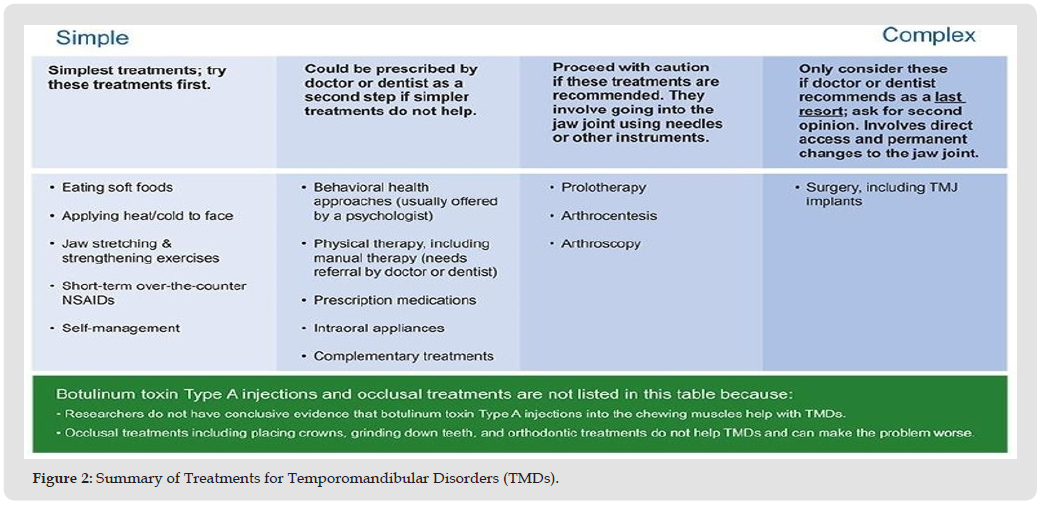
whenever possible (Figure 2). Keep in mind that symptoms of
TMD often resolve without therapy and that it is best to start with
modest remedies. You should talk to a doctor or dentist.
1. Get as much information as you can about your TMD.
2. Stay away from procedures, such as TMJ implants or surgery,
that include entering or permanently changing the jaw joints
if at all feasible.
3. Seek the advice of an orofacial pain clinic if possible, and be
very cautious about undergoing surgery or any other dental or
medical operation that alters your appearance permanently.
Figure 2
The authors have no conflict of interest.
All authors contribute equally.
No funding for this research.

International Association of Landscape Archaeology, Czech Glass Society, Czech Republic

Department of Chemistry, Semenov Institute of Chemical Physics, USSR Academy of Sciences, Moscow, Russia

Department of Educational Sciences, Research Centre Qualities of Teachers, School of Education – HAN, Nijmegen, Netherlands

Associate Professor at Department of Breast and Thyorid Surgey, Chongqing General Hospital, China

Neurology, LA BioMed Research Institute, USA





 Abstract
 PDF
PDF



























