
 Research Article
ABSTRACT
This paper presents a modular approach to generic exergame design that combines custom exercises into a meaningful and motivating story. As a novelty, it can be individually tailored and adapted to people with different needs and progression of the disorder, making it applicable to different diseases or therapies. To prove the wide range of possible users, evaluative tests were performed on 14 patients with different types and degrees of neuromuscular disorders, who were classified into three groups according to strength and autonomy. The game is based on motion capturing with Kinect X360 and integrates four example exercises, adjustable via our therapeutic web platform “Blexer-med”. Scores and three questionnaires (before, during, and after the intervention) revealed similar experiences in all groups, while the weakest ones had the most fun and satisfaction. Players preferred exercises that provided the necessary points to advance and win. The freely chosen schedule revealed a weekly use of 2.5 days with an average duration of 20 minutes per session. Pure exercise time was about half the total playing time. The concept has been proved to be feasible and sets a good basis for further development. Full 3D exercises need further fine tuning to enhance fun and motivation.
Keywords: Kinect; Exergames; Neuromuscular Disorders; Disabled Children; VR Rehabilitation
Introduction
People with physical impairments caused by injury or disease need to do physical exercise for recovering or maintaining their level of fitness, as well as to prevent muscle loss. Due to their restricted possibilities to access regular sports activities, they must perform personalized physiotherapy, which usually is a costly and time-consuming burden (Esfahlani, et al. [1]). Besides, it often requires additional unsupervised exercises at home (Ortiz-Catalan, et al. [2]). According to (Bonnechere, et al. [3]), Virtual Reality Rehabilitation (VRR) is a promising solution: Serious Games (SG) based on 3D motion capturing provide the possibility for additional physical training in combination with conventional treatments. Furthermore, motivation enhances performance and progress can be monitored. However, (Howard [4]) reported in his meta-analysis, that more efforts are needed in this field to make therapeutic games truly appealing and adaptive to the specific needs and possibilities of the patient. Many studies on VRR can be found in the literature, but most address the elderly with stroke or Parkinson’s, i.e., the navigation system developed by (Pool, et al. [5]), “ReHabgame” (Esfahlani, et al. [1]), three low-cost games presented by (Seo, et al. [6]), “Rehab @ Home” (Jonsdottir, et al. [7]) or “Motion Rehab AVE 3D” (Trombetta, et al. [8]). Far fewer studies can be found for children and young adults, although they are the ones who play video games more frequently. Most of them are aimed at cerebral palsy (CP) patients, who, together with those affected by neuromuscular disease (NMD), form the main group of young people with motor dysfunction (Bonnechere, et al. [3,5,9- 11]; Lorentzen et al., 2019). However, NMD patients often cannot use the same applications as CP patients. They have less muscle strength and are unable to perform frequent and rapid movements.
Apart from lacking adaptability to different types of disorders, as well as special functionality to personalize therapies, VRR still does not pay enough attention to the possibilities that good game design offers. While commercial exergames are extensive, engaging, and completely immersive, rehabilitative exergames are implemented generally in the form of minigames by translating conventional exercises into a virtual environment (EVOLV [12-17]; MITII, 2017). We distinguish minigames from “full-play games”, which are based on grasping game mechanics like fantasy worlds, compelling stories, missions to fulfill, brave protagonists, collectables, inventories, etc. and contain the exercises as part of the whole. To the best of our knowledge, our proposal for a “full-play exergame” is the first one. Researchers are aware and agree that simplicity and the lack of cognitive challenges lead to boredom and that cognitive tasks have a positive effect on motivation and therefore on physical performance and progress (Mihelj [18]). Various authors showed this effect (Gorsic, et al. [18-20]) highlight that training scenarios must be adaptable to specific patient capabilities to lead to better improvements in motor and cognitive capabilities.
These ideas are not new, but to the best of our knowledge, there is no research or development of games that try to close these identified gaps. To do this, we started in 2015 to develop the therapeutic web platform “Blexer-med” (Eckert, et al. [21]), which allows to manage different exergames, personalize their difficulty and monitor the user’s results. “Phiby’s Adventures” (Eckert, et al. [22]) is the first prototype of a full exergame to be played with corporal movements attached to the platform. The game architecture combines four scenes of upper limb exercise in a modular way. They can be arranged in different sequences and frequencies, or replaced by any others, the ones proposed here are examples and have been tested for feasibility on a similar group of users (Eckert, et al. [23]).With the here presented study, we wanted to prove our hypothesis that the proposed game design is enjoyable and efficient for people with very different physical conditions and thus could be a basis for a generalized architecture to build versatile and adaptive exergames. It is not a clinical trial and no health outcomes (e.g., improvements in movement) are evaluated.
Materials and Methods
Game Architecture
The proposed game, “Phiby’s Adventures v1”, forms part of the “Blexer” system, which has been described in detail in multiple previous publications (Eckert, et al. [23]). The game is hosted together with a middleware (Eckert, et al. [24]), on the user’s personal computer. The middleware communicates between the game, the Kinect X360, and the “Blexer-med” database and web portal. The game was developed with Blender as a third-person video game and its architecture is based on a 2D grid map (Figure 1, upper left rectangle). The task of the main character, “Phiby”, moved by the player with one hand, is to explore the map by passing from cell to cell, to find the way out. Between the cells are four obstacles, a trunk, a river, a tree, or a lake, which represent the physical exercises (Chop, Row, Climb or Dive). The player performs the needed movements and Phiby copies them. A limited range of movement is compensated by an amplification mechanism. Figure 1 shows two example cells on the right and the four exercise scenes below. Difficulties (time limit and objectives) can be adjusted for each exercise type through the web platform. The cell structure was chosen to combine any number and type of exercises in a meaningful story. It allows the user to freely choose their path, failing one exercise, the same or a different route can be chosen. In this way, the order and frequency of the exercises are different for each player. Additionally, the map could be personalized through the arrangement of obstacles and walls. Multiple game mechanics keep the player motivated, as, e.g., finding apples and apple trees to recover energy, collecting wood to build bridges (allow returning a river without rowing) or huts (needed for saving the game state). Those mechanics make users think, plan, and decide independently and let forget the physical effort.
Study Design and Participants
Quantitative focus group design was selected to evaluate the motivations and barriers to the exergame system described before. Informed consent was obtained from parents and participants. Approval for the study was obtained from the Ethical Committee of the Universidad Politécnica de Madrid. All procedures followed were in accordance with the ethical standards of the responsible Committee on human experimentation (institutional and national) and with the Helsinki Declaration of 1975, as revised in 2000.
We recruited the participants from ASEM (Madrid Association of People with Neuromuscular Diseases) and FUNDAME (Spinal Muscular Atrophy Foundation Spain). Inclusion criteria were aged between 7 and 25 years, clinical diagnosis of a neuromuscular disorder, ability to understand and follow simple guidelines and perform the required tasks, time, and technical possibilities (Personal computer with 64-bit, 4 GB RAM, Windows 7, Internet access) to use the videogame at home for about three weeks, living in Madrid area.

Figure 1: Top row, left: grid map containing 16 x 8 cells; right: two cells of the map. Bottom row: exercise scenes from left to right, up-down: “Chop”, “Climb”, “Dive”, and “Row”.
Participants were divided into homogeneous groups according to their muscle strength and degree of autonomy. Muscle strength of the shoulders, elbow, wrist, and torso was assessed with the Daniels’ 6-stage manual muscular test (Daniels, et al. [25]). Functional autonomy was evaluated with Barthel’s index (Mahoney, et al. [26]). The values of both scales have been summed up for each subject k and normalized over all subjects as shown in equations (1) and (2), where sik are the average values of the three measurements for each: both shoulders, both elbows, both wrists (flexion and extension) and the torso (front and back), and where bik are the scores obtained for autonomy (eating, bathing, dressing etc.), each question scaling between 0 and 10.
Daniels’s strength index: 
“Bartels autonomy index: 
The correlation of both values revealed three separable clusters that let form three groups of homogeneous ability: Group A (4 strongest subjects), Group B (4 medium abled), and Group C (weakest 6), see (Table 1).
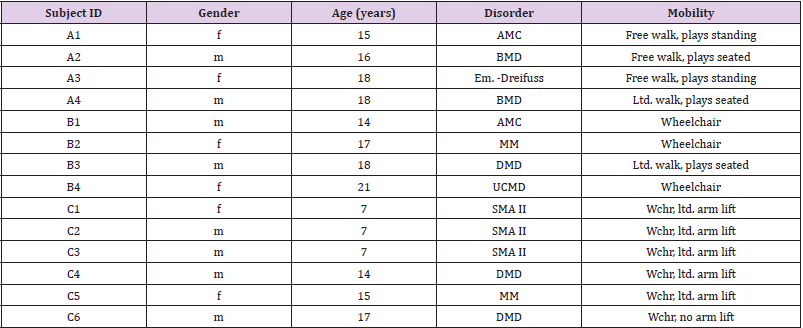
Table 1: Baseline Characteristics of the Participants.
Note: AMC = Arthrogryposis Multiplex Congenita, BMD = Becker Muscular Dystrophy, DMD = Duchenne Muscular Dystrophy, MM = Mitochondrial Myopathy, SMA = Spinal Muscular Atrophy, UCMD = Ullrich Congenital Muscular Dystrophy
The day of installation, the game was calibrated to the range of the user’s movements and the difficulty parameters were adjusted according to their strength values. The playing schedule was planned by the participants and annotated in the initial survey (our proposal was 2 or 3 days per week during 20 to 30 minutes). Scores and follow-up survey answers were checked daily on the web portal. In case of poor performance or negative feedback, we reduced the level of difficulty or asked if a problem had occurred.
We considered the intervention to be finished when either the goal of the game was reached, or the player stopped playing for more than a week and was not motivated to continue.
Data Collection and Analysis
Quantitative and qualitative data were gathered: frequency and duration of play, scores and time per session and exercise, as well as three surveys: initial, follow-up (after each interaction with the game) and final. The surveys were developed according to the System Usability Scale (SUS) (Brooke, et al. [27]), the Game Experience Questionnaire (GEQ) (Ijsselsteijn, et al. [28]) and the work of (Brockmyer, et al. [29]). For data analysis, descriptive statistics were used to calculate demographic and clinical features. For analyzing the surveys and scores, frequency distributions, central tendency, and standard deviations were calculated. When in doubt [30], we chose medians instead of means to avoid extreme outliers that could change the result. In addition, analysis of variance (ANOVA) with Tukey’s post hoc test was used to compare differences between groups [31]. The alpha level of statistical significance was set to p < 0.05. Statistical analyses were conducted with IBM SPSS Statistics® v. 26. As some participants played or responded more often than others, we rely on the average of their responses and ratings.
Results
Twenty three out of 43 eligible individuals met the inclusion criteria, nine showed no interest in the study, leaving 14 participants: 6 females and 8 males; aged 7-21; average age 14.14 ± 1,266. All users had restricted movement of the lower extremities, only two were able to play standing. Table 1 shows the demographic information and groups. During six months, each 6-8 people had the Kinect simultaneously at home, as long as necessary. Table 2 provides statistics of the usage frequency and compares the real gaming time with the time planned by the user. “Intervention days” are the number of days having the game, except the day of installation, “Gaming days” count the days the game was used. The participants reserved an average of 5.2 days per week with an average playing time of 27.5 minutes (bold numbers) per session. This would have resulted in a total playing time of around 2.5 hours per week. Finally, they only played 1.9 days a week with an average playing time of 18.9 minutes per session. However, these times include parts without physical exercise (e.g., moving Phiby towards an obstacle, building a hut, catching an apple, watching the map, etc.). Detailed analysis of the time stamps shows that the pure training time (highlighted in grey in Table 2) was approximately half of the playing time: 43.4 out of 87.1 minutes, which is an average of 9.5 minutes of exercise during 18.9 minutes of play. Based on the number of days the game was available at home, the average usage rate was 36% (approximately 2.5 days a week). The most active player (Group A) used the game on 6 of 8 days (75%). He was one of three (two of Group A, one of Group B) who completed the game.
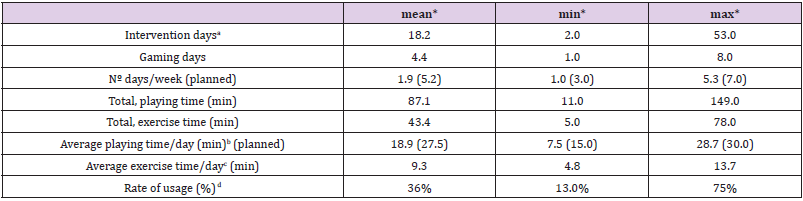
Table 2: Playing statistics.
Note: aSpan between dates of first to last game played; bmean (Total playing time/Game days); cmean (Total exercise time/Game days) dmean (Game days/Usage days); *out of 14 values. Gray rows show pure exercising time (not considering the time needed to cross the cells).
Follow-up Survey
Questionnaire responses were averaged for each participant and a descriptive analysis was made for each group. The six questions are listed in Table 3 along with the results averaged per group. The survey’s ranking evaluation is based on a 6-point Likert scale ranging from 0 (absolutely disagree) to 5 (absolutely agree). Questions Q1 and Q2 (“fun” and “satisfaction”) must be rated high, while Q3 to Q6 (difficulty) must be rated low to indicate positive feedback. Group C scored lower, as they tired more easily, but despite this, they had the most fun and felt more satisfied than the other groups (4.5 over 5 points). We used the ANOVA test twice to determine if responses differed significantly between groups: once for the entire set of responses and once for the averages per user, because of the differing number of survey answers received per user. In both cases, the result was σ > 0.05 for all questions except Q6. Tukey’s post hoc report showed that C differs from A and B, which means that two subgroups can be formed out of A+B vs. C, which means that the target values were set too high in that group.
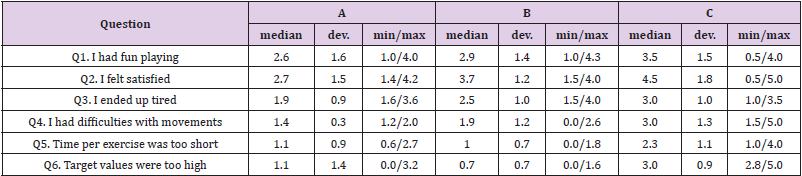
Table 3: Answers of the Follow-up Survey (averaged per participant).
Performance
As shown in Figure 2 (top left), Group A members registered on average a higher number of gaming sessions (x ̃=6.5) than groups B (x ̃=5) and C (x ̃=5). When examining the individual exercises, we found that Group A clearly outnumbered the others in all exercises (x ̃chop=35, x ̃climb=11.5, x ̃dive=33.5, x ̃row=30.5) and that B ( x ̃chop=27, x ̃climb=9.5, x ̃dive=22.5, x ̃row=14) did each exercise more often than Group C ( x ̃chop=17.5, x ̃climb=5.5, x ̃dive=19.5, x ̃row=13.5). Per session, Group A completed 16 exercises on average, Group B 13, and Group C 10. Climbing was practiced less because it appeared less frequently in the map. The ANOVA test was also carried out for these results, but no significant differences were found on any parameters studied. Figure 2 (top right) shows the relationship between successful and unsuccessful exercises. In general, the number of minigames won exceeds the number of lost games, except for Group C in “Dive”. Groups A and B also had difficulties, but they won more often than they lost.

Figure 2: Top left: Average number of sessions and minigames played per group. Top right: Achievements per exercise by groups. “Win” = score was reached in the time limit. Bottom left: Subjective improvements. Bottom right: Stress due to time limits.
Final Survey
The most popular exercise was “Chop” (μ = 3.4), followed by “Row” (μ = 2.6) and “Climb” (μ = 2.4), leaving “Dive” (μ = 1.6) on the last position. ¡Error! No se encuentra el origen de la referencia. (Bottom row) shows, by comparison, the perception of positive (improvement of ability) and negative experiences (stress) with each exercise. In terms of skill improvement, the results are quite similar for all groups and exercises. However, the stress factor was very high for the diving exercise, most notably for Group C. Finally, in Table 4, we summarize some interesting comments on the overall experience.
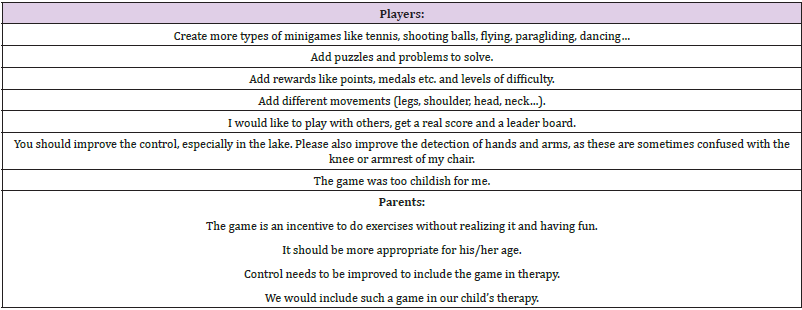
Table 4: Suggestions for future improvements.
Discussion
The exercises can be divided in two types: one that requires a complex control of the avatar through the 3D environment (Dive), and three based on arm movements with a fixed avatar. The complex control was difficult to handle for all groups and thus led to the least improvement and highest stress. Especially Group C participants were more limited in movement due to their wheelchair’s backrest. When control failed, the players ended to exaggerate their movements, which worsened the control and led to frustration in some cases. Regarding the other three exercises, Chop was probably the favorite one because it provides the player with the wood needed to build bridges and huts. Group C players, although the weakest ones, were improving their skills at most in this exercise and had the most fun. On the other two exercises, Group B was performing best. The follow-up survey answers (Table 3) show a good general motivation, above all for the most vulnerable Group C. In addition, since we had not set a schedule, we were able to determine how much motivation the participants had to use the game without feeling obliged. On average, they played around two weekly 20-minute sessions. This is less than half the time planned, but people tend to overestimate their motivation and we consider this result as quite positive. However, the survey shows that after some sessions, users rated Q1 (having fun) and Q2 (feeling satisfied) lower. This is probably related to the statements given in the final survey (Table 4) that the game would be funnier if it offered more types of movement and cognitive challenges. Style and diversity are also essential to address the interests of different users. The greatest satisfaction was shown when the final goal was reached.
As expected, the strongest Group A exploited the game most, playing more frequently (Figure 2, top left) and achieving the highest scores (Figure 2, top right), even though Group B was very close. Nevertheless, we consider that the weakest Group C obtained the greatest benefit, because the winning scores were still high enough to experience success. The perception of improvement was high in all exercises but one, and, most importantly, Q1 and Q2 revealed that they had the most fun and felt most satisfied. This is a very positive outcome and shows that the most vulnerable group enjoyed the game most. In contrast to minigames, which directly focus on the performance of individual exercises, in full games only part of the play time is spent doing exercises. In the remaining time, the character is moved around, etc., which helps the player to recover and experience less fatigue. Thus, that type of game could be used frequently (daily or more) in addition to the conventional physiotherapy sessions, without overexercising the patient. Due to the possibility of monitoring and difficulty adjustment at a distance, the levels of difficulty could be constantly adapted to the players’ performance. It was decreased to augment motivation and increased when the challenge was low. This led to a global increase of the performance due to a personalized adaptation.
Contrary to most studies found, our study shows comparative results for a variety of diseases (7 different neuromuscular diseases) with a wide range of impairments (from standing to severe physical disability). Through motion amplification and individual configuration of difficulties, similar performance and playing times have been achieved. 90% of the suggestions for improvement from participants and their families (Table 4) relate to the “gaming experience”, the rest to gesture control issues. All parents confirmed that they would like to integrate an exercise game in their children’s therapy.
Limitations
Further studies with larger patient populations and unimpaired control groups are needed to make our results more significant and reliable. Moreover, long-time studies and inclusion into therapy would be necessary to reveal if the game has a positive effect on health and if it adapts well the progression of certain diseases. The game should also be tested with different exercises and configurations, more motivating game mechanics, and a more precise camera. The Kinect X360 fails in capturing movements near the body center, confuses the armrests of the wheelchair with the user’s arms, and sometimes fails with small children (problems in subjects C1, C2 and C3) when lighting is inadequate. The corporal control in the 3D environment is very challenging for people with physical disabilities and specific tests are needed to find an efficient method to achieve personalized calibration.
Conclusion
To the best of our knowledge, this is the first work that presents a generic architecture for a full play exergame that can be individually tailored and adjusted to the user’s needs. Tests showed enjoyment and favorable scores for all users despite different types and degrees of affection. The most vulnerable participants had the most fun and satisfaction, in spite of lower scores and more difficulties regarding 3D control. This means that also people suffering from progressive disorder could take advantage from a game built according to the proposed adaptive architecture, which confirms our hypothesis that our approach can build a basis for a versatile game design.
Authorship Confirmation Statement
All authors contributed to the study conception and design. Material preparation, data collection, and analysis were performed by Alicia Aglio. Technical advice on programming and web design was provided by Maria Luisa Martín-Ruiz, Victor Osma-Ruiz was supervising the work and trial. The first draft of the manuscript was written by Martina Eckert and all authors commented on previous versions of the manuscript. All authors read and approved the final manuscript.
Authors’ Disclosure Statement
All authors declare that they have no conflict of interest nor any financial interest.
Funding Statement
This work was supported in part by the Spanish and European Social Funding Committee provided through the Europe 2020 program for the employment of young people (Ref. PEJD-2017- PRE/TIC-4825) and Alicia Aglio received a research grant from this funding.
References
- Esfahlani SS, Tommy T, Ali DP, Lan B, Silvia C (2018) ReHabgame: A non-immersive virtual reality rehabilitation system with applications in neuroscience. Heliyon 4(2).
- Ortiz-Catalan M, et al. (2014) Virtual reality. In: Emerging Therapies in Neurorehabilitation, New York: Springer, pp. 249-265.
- Bonnechere B, B Jansen, L Omelina, V Wermenbol, M Rooze, et al. (2014) Can serious games be incorporated with conventional treatment of children with cerebral palsy? A review. Research in developmental disabilities 35(8): 1899-1913.
- Howard MC (2017) A meta-analysis and systematic literature review of virtual reality rehabilitation programs. Computers in Human Behavior 70: 317-327.
- Pool SM, John MH, Laurie AM, Lioyd C, CS Bickel, et al. (2016) Navigation of a virtual exercise environment with Microsoft Kinect by people post-stroke or with cerebral palsy. Assistive Technology 28(4): 225-232.
- Seo NJ, Jayashree AK, P Hur, Vincent C, Binal M, et al. (2016) Usability evaluation of low-cost virtual reality hand and arm rehabilitation games. Journal of rehabilitation research and development; 53(3): 321-334.
- Jonsdottir J, Rita B, Michael L, Angelo M, Thomas B, et al. (2018) Serious games for arm rehabilitation of persons with multiple sclerosis. A randomized controlled pilot study. Multiple sclerosis and related disorders 19: 25-29.
- Trombetta M, Patricia PBH, Manoela RB, Eliane LC, Rafael C, et al. (2017) Motion rehab AVE 3D: a VR-based exergame for post-stroke rehabilitation. Computer methods and programs in biomedicine 151: 15-20.
- Camara Machado FR, Pereira Antunes R, de Moura Souza J, Cardoso dos Santos A, Centenaro Levandowski D. et al. (2017) Motor Improvement Using Motion Sensing Game Devices for Cerebral Palsy Rehabilitation. Journal of Motor Behavior 49(3): 273-280.
- James S, Jenny Z, Robert SW, Roslyn NB (2015) Randomized controlled trial of web‐based multimodal therapy for unilateral cerebral palsy to improve occupational performance. Developmental Medicine & Child Neurology 57(6): 530-538.
- Luna-Oliva L, Ortiz-Gutiérrez RM, Cano-de la Cuerda R, Martínez Piédrola R, Alguacil-Diego I M, et al. (2013) Kinect Xbox 360 as a therapeutic modality for children with cerebral palsy in a school environment: A preliminary study. NeuroRehabilitation 33(4): 513-521.
- EVOLV Rehabilitation Technologies 2018, VirtualRehab Body - A suite of therapy modules for upper and lower extremity rehabilitation.
- Galna B, Dan K, Guy S, Roisin M, Mary W, et al. (2014) Retraining function in people with Parkinson’s disease using the Microsoft Kinect: game design and pilot testing. J Neuroeng Rehabil 11: 60.
- (2021) Imaginary SRL. REHABILITY: Suite of Pathology-Specific Rehabilitation Solutions.
- (2021) MIRA Rehab Limited 2021. MIRA software platform.
- Pirovano M, Mainetti R, Baud-Bovy G, Lanzi PL, Borghese NA (2016) Intelligent Game Engine for Rehabilitation (IGER). IEEE Transactions on Computational Intelligence and AI in Games 8(1).
- Urturi ZD, Zorilla AM, Zapirain BG (2012) JeWheels: Kinect based serious game aimed at wheelchair users. In Ambient Assisted Living and Home Care, In: J Bravo, R Hervás and M Rodríguez (Eds.)., Springer, Berlin, Germany, pp. 391-398.
- Mihelj M, Domen Novak, Maja Milavec, Jaka Ziherl, Andrej Olenšek, et al. (2012) Virtual Rehabilitation Environment Using Principles of Intrinsic Motivation and Game Design. Presence-Teleoperators and Virtual Environments 21(1): 1-15.
- Gorsic M, Imre C, Nika G, Domen N (2017) A multisession evaluation of an adaptive competitive arm rehabilitation game. Journal of NeuroEngineering and Rehabilitation. 14: 128.
- Zimmerli L, Maro J, Lars L, Robert R, Marc B (2013) Increasing patient engagement during virtual reality-based motor rehabilitation. Arch Phys Med Rehabil 94(9): 1737-46.
- Eckert M, Jiménez M, Martín-Ruiz ML, Meneses J, Salgado L (2018) Blexer-med – A medical web platform for administrating full play therapeutic Exergames. 3rd EAI International Conference on Smart Objects and Technologies for Social Good, Pisa, Italy, Nov, p. 29–30.
- Eckert M, Gomez-Martinho I, Esteban C, Peláez Y, Jiménez M, et al. (2018) The Blexer system -- Adaptive full play therapeutic exergames with web-based supervision for people with motor dysfunctionalities. EAI Endorsed Transactions on Serious Games 5.
- Eckert M, Gómez-Martinho I, Meneses J, Martínez J-F (2017) New Approaches to Exciting Exergame-Experiences for People with Motor Function Impairments. Sensors 17(2): 354
- Eckert M, Gómez-Martinho I, Meneses J, Martínez J (2016) A modular middleware approach for exergaming. In: IEEE, ed. Int Conf on Cons Elect.
- Daniels L, Worthingham C (1986) Muscle Testing Technique of Manual Examination (5th )., Philadelphia: WB Saunders Co.
- Mahoney FI, Barthel D (1965) Functional evaluation: The Barthel Index. Maryland State Medical Journal 14: 56-61.
- Brooke J (1996) SUS-A quick and dirty usability scale. Usability evaluation in industry 189(194): 4-7.
- Ijsselsteijn WA, de Kort YAW, Poels K (2013) The game experience questionnaire, Eindhoven: Technische Universiteit Eindhoven.
- Brockmyer JH, Christine MF, Kathleen AC, Evan M, Kimberly MB, et al. (2009) The development of the Game Engagement Questionnaire: A measure of engagement in video game-playing. Journal of Experimental Social Psychology 45(4): 624-634.
- Lorentzen J, Line ZG, Mette KD, Betina R, PE Bild, et al. (2015) Twenty weeks of home-based interactive training of children with cerebral palsy improves functional abilities. BMC neurology 15(75): 1-12.
- (2020) MITII – “Move it to improve it”.
